Book Review: Stages of Faith (spoiler – a useful read!)

I have found this book to be a tremendous value in my own faith journey specifically and in my overall psychological development generally.

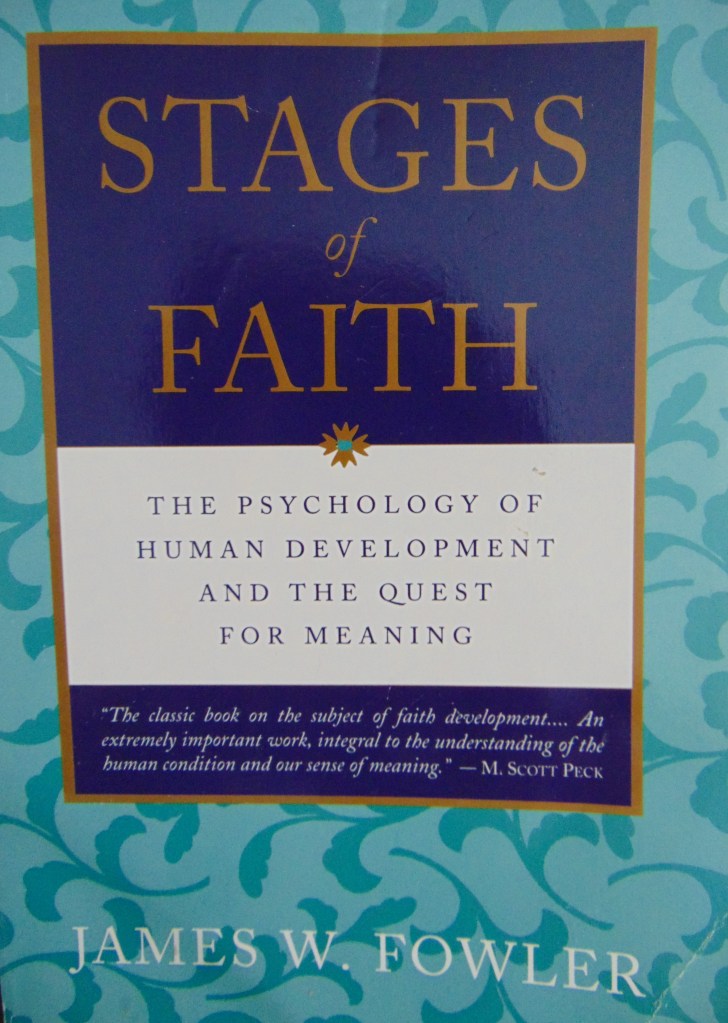
When I returned to church in 2016 – after a 20-year hiatus – the pastor with whom I connected listened to my story about my experience with church and he made a comment about my “stage of faith.” He rather suggested that my “stage of faith” was younger than my chronological age of maturity. Ouch! But, okay, was he perhaps correct? I took an interest in his turn of phrase, “stage of faith.” I Googled the phrase, found my way to this book by academic-sociologist-theologian James Fowler (in later conversations, I found out that the pastor had read this book).

Fowler had interviewed hundreds of people – from young children to seniors – to hear about how their experience faith and a search for meaning within a western context. Fowler drew from these interviews and from existing theories of psychological development to profile six descriptive/normative stages of faith development. Most people, it turns out, grow to somewhere between stages three and five….. I looked for myself in this book; discovered – in re-reading parts of the book several times – that my “stage of faith” was pretty close to where the pastor had guessed I was at – I had gotten stuck in the transition between stages three and four (a common place to get developmentally detoured, according to James Fowler).

When I read this book, I had known for some time that I had been “stuck” in my effort to grow further in faith; I wasn’t sure how to get “unstuck.” This book provided tremendous value in this regard. Once I identified “where I was” (i.e., 3.5), I re-read the next stage – stage four – to get an idea of where to head next. Once I saw a roadmap of the direction to head in (without this book being tied to a particular denomination), this helped me to begin moving forward, thankfully (the particulars of moving forward are guided by my denomination, as are each of us).

In addition to finding faith assistance from this book, I found in this book that various aspects of my faith-mental-emotional “developmental stages” weren’t entirely lined up in one neat age-chronology phase. Life wasn’t “tidy.” This book helped me to grow and mature various aspects of my self-hood to get my “various aspects” closer to one chronological age. I come back to this book occasionally to monitor my ongoing progress…. On the whole, a worthwhile read that I often recommend to people I meet.

Since I read this book, I have also sought-out and found additional topic-relevant books for follow up. For example, Jane Regan’s book Toward an Adult Church is a worthwhile read.

Kim Burkhardt blogs at A Parish Catechist and The Books of the Ages.

Open Mind, Open Heart (Thomas Keating): Book review

I was introduced to this book when I got involved in Contemplative Outreach Northwest, a regional chapter of the Contemplative Outreach organization founded by this book’s author, Thomas Keating. This book is a popular introduction to getting started with contemplative prayer, also called centering prayer. Step-by-step instructions.

I struggled for a time when I first got active in Contemplative Outreach and read this book. I had already been gifted with contemplative prayer prior to joining Contemplative Outreach, but lacked the vocabulary to discuss what I was experiencing. In time, I realized that this book and the intro sessions offered by Contemplative Outreach are geared toward introducing people to what I was already experiencing. While it took me awhile to “piece this together,” I did slowly find the ability to talk – in some measure – to other pray-ers about our prayer lives. As a friend told me, each one of us has our own personal relationship with God; therefore everyone experiences prayer differently. Therefore, the best we can hope for is to occasionally find a few people with whom we can share some measure of our experience with prayer. ….For me personally, prayer rarely involves human language anymore for dialogue with God; rather, prayer is most often about simply being in God’s presence – in whatever level I’m able to do so at any given time.

I appreciate this book – and Contemplative Outreach – for bringing me into contact with other pray-ers who are approximating a prayer path that has some similarity to my prayer life.

Kim Burkhardt blogs at A Parish Catechist and The Books of the Ages.

Another “church as a field hospital” week….

I wrote recently about being drawn to Pope Francis’s idea that church is a “field hospital” for the needs of humanity (see previous post).

There are times when I feel this in my own life. This week, I again needed the “field hospital” services of church – life’s hard knocks taking their toll. This time, as sometimes is the case, it’s self-inflicted challenges for which I need an emotional “field hospital.”

It’s always uncomfortable when we create our own difficulties.

Coming out of these times, though, it truly is heartening when God heals our hearts and prepares us better for life. This DOES require that we let God work within us (free will). In recent years, I have observed the inner work of God re-arranging my inner life so as to be on a better footing in life. Healthier, more functional – with a more mature place in the world than I would arrive at on my own. Christ came “that we might have life, and have it more abundantly” (John 10:10).

Kim Burkhardt blogs at A Parish Catechist and The Books of the Ages.

The Tradition of Catholic Prayer: Book review, reflections

In their book The Tradition of Catholic Prayer, The Benedictine monks of Saint Meinrad Monastery (editors: Christian Raab and Harry Hagan) bring us a rich and rewarding read. When we want to read about prayer, it’s natural to want to turn to monks!

The depth and breadth of this book are summarized well on the book’s back cover, beginning with the following sentence: “Catholics have a rich and ancient prayer tradition that informs contemporary practice.” No wonder that people looking to deepen their prayer life look – among other places – to the Catholic Church. The variety of Catholic prayer experience and the historical context for this “rich and ancient prayer tradition” are covered engagingly in this very readable book. It’s worth a read for anyone looking to deepen their prayer life; it has helped nourish my ever-present hunger to sustain an rich and deep prayer life.

Kim Burkhardt blogs at A Parish Catechist and The Books of the Ages.

Living in the Presence (Tilden Edwards): book review

I came upon Tilden Edwards’ Living in the Presence perhaps five or six years ago in a Little Free Library. It immediately became part of my lectio divina reading on contemplative prayer. Lectio divina refers to prayerful, reflective reading of scripture; I sometimes read non-scriptural books in much the same way.

I had been gifted a state of contemplative prayer starting in October, 2016. In the period that followed, I actively – in a reflective way – read a good number of books on contemplative prayer. Living in the Presence was among these books; it provided an ample amount of nourishment for my prayer journey.

This book also brought to my attention an organization founded by the book’s author, Shalem Institute for Spiritual Formation. While Living in the Presence gave me much nourishment as I read and re-read the book, finding that groups such as the Shalem Institute exist provided me with a good amount of hope.

A valuable read for individuals who want to nurture contemplative prayer.

Kim Burkhardt blogs at A Parish Catechist and The Books of the Ages.

Teresa of Avila (autobiography): book review, reflection

It must have been 2017 where I first heard of Teresa of Avila. Fr. Bryan Dolejsi mentioned her one weekday at St. Benedict parish (Seattle), calling her a “Doctor of the Church.” “What,” I wondered, “is a Doctor of the Church….and there is a woman recognized as a Doctor of the Church? I must find out who she is!” That led me to a Seattle Public Library copy of Mirabai Starr‘s English translation of the autobiography of this 16th century Spanish mystic.

Now, my own dog-eared and frequently-consulted copy of this book is on my bookshelf. Inside the front cover is a photograph of me with the translator, Mirabai Starr, at her speaking engagement at St. Mark’s Cathedral (Episcopal) in Seattle (yes, Mirabai graciously autographed my copy of the book).

Teresa of Avila’s autobiography – her life, her mystical, contemplative experience – has actively nourished my own prayer life. When I returned to church in 2016, it was a result of a “God moment” (including a broken ankle, long story) in which God gifted me an unanticipated and emotionally nourishing period of contemplative prayer. I didn’t have the vocabulary to talk about the inner state I was experiencing (now, I know to call that period of time “an encounter with God”); Teresa’s autobiography provided me with exquisite articulation about mystical prayer. Since finding and eagerly re-reading this book over time, I’ve heard people refer to the writings of Teresa and her protege (John of the Cross) as poetry-about-prayer. I don’t feel that a “poetry” description gives justice to their writing (accurate perhaps, but the description pales); I prefer to think of the writing of these two Carmelite saints as “the voice of lived experience.”

Kim Burkhardt blogs at A Parish Catechist and The Books of the Ages.

You are the Beloved: book review and reflections

Somehow, it took me until 2019 to discover the writer and priest Henri Nouwen. In 2019, our pastor at my church had us read one of Henri Nouwen’s books (With Burning Hearts). I was immediately drawn into Nouwen’s way of making a reader feel presently closer to the reality of Christ. I have since read several of Nouwen’s books and brought With Burning Hearts to my prayer group; the book was well received and led to fruitful discussions.

This book, You are the Beloved, is written as 365 daily meditations to walk a reader through a year. Gulp – I read all the meditations in several weeks. The reflections bring us closer toward “Love God, love your neighbor.” God loves us and wants to have a relationship with us. Rather than a one-way phone call in which either God or us is phoning the other (and us feeling like it is a dropped call), God wants a two way relationship in which that relationship is felt, experienced and deepened by both us and God – leading us to also love our neighbor. This reflections in this book cultivate our ability to pick up the phone and engage in such a two-way loving communication with God – and then also with our neighbor.

Kim Burkhardt blogs at A Parish Catechist and The Books of the Ages.

Yes: Churches as Field Hospitals

I am increasingly drawn to Pope Francis referring to church as “a field hospital.”

All of us experience life’s aches and pains. Sometimes, people turn to church in times of need. When churches function best, churches serve people in their greatest need – lifting people above life’s aches and pains, lifting all of us into and/or toward dignity. Christ came to heal.

I was moping this evening, groaning about an emotional ache. “How am I going to fix X problem in my life? I feel miserable, despairing!” I prayed at some point during the day – in the morning, perhaps – asking God to move me toward a solution to this current “miserable ache in my life” (I’ve learned better than to expect what God’s solutions should look like). In the afternoon, I was feeling like there couldn’t possibly be a solution. I’m doomed to misery! Later this evening, a church friend called. She gushed with praise about what I’m doing with A Parish Catechist. Gradually, I began to feel hope as we talked.

When my friend and I got off the phone, I sat and reflected on our phone call. I saw that my “miserable despair” was rooted partially in seeing only my side of the situation about which I’m feeling miserable. Time to go and be nice to the person about whom I feel miserable. Thank you, God, for an answered prayer.

Field Hospital: What are each of us – and our churches – doing to lift up the people around us?

Kim Burkhardt blogs at A Parish Catechist.

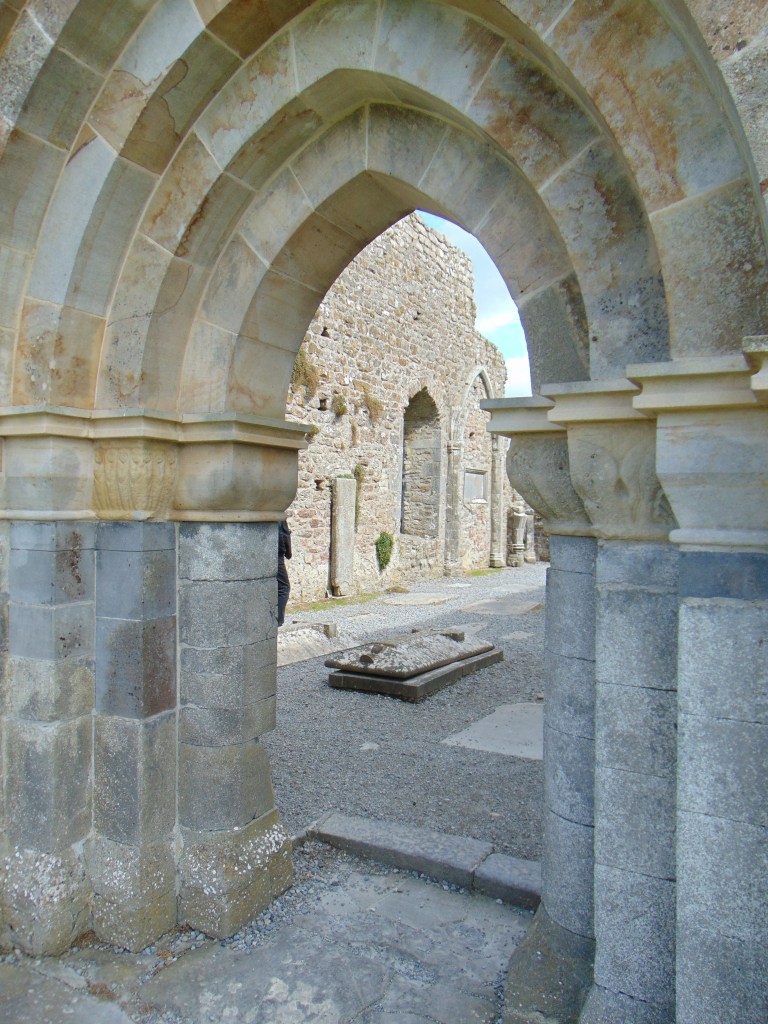
Photo: Ballintubber Abbey, Ireland.

2018, photo taken by the author.

Feeling blue? Anxious? How do you pray?

For many of us, we first conceptualize prayer as mentally talking to God. Mentally speaking in sentences, much like we would talk to a person. Telling God what we want to say, submitting prayer requests (intercessions, our “wish list”), hoping for “an answer.”

Such prayer is certainly one way to initiate a prayer life.

There are many more ways to pray. Prayer is meant to be communication, a relationship. An analogy I heard – and like – compares prayer to a phone call. We wouldn’t just call a person we know, tell them what we want to say, then hang up as if communication were complete. Such phone calls wouldn’t help us sustain relationships with the people in our lives. That approach to prayer wouldn’t produce a full prayer life, either. Communication is relational. Prayer is relational.

God hungers to have a relationship with us – more than “one way phone calls” from us.

God hungers to be present in our lives, to transform our lives. God hungers to share love with us in a relational way in which we feel and experience God’s love for us. In order for this to happen, we need to participate in a two-way relationship with God. Prayer can be a truly interactive, relational activity in which we allow God to transform our lives. More than just a one-way phone call.

There are a myriad of ways pray. Several ways to pray include:

  • Attending church is prayer
  • Rote prayer, prayers of the liturgy: Lord’s Prayer, etc.
  • Psalms (they are always sung!)
  • Lectio Divina (reading faith books reflectively to take in the book’s meaning prayerfully)
  • Talking to God the way we would talk to a person
  • Contemplative Prayer (resting in God’s presence – sitting with God)

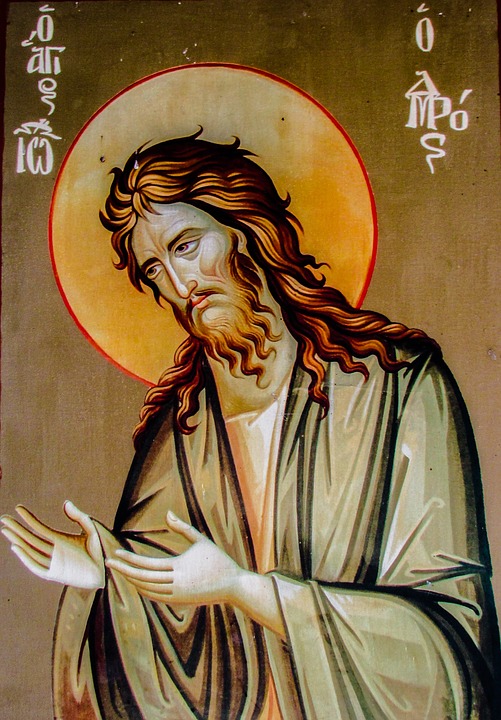
Personally, contemplative prayer is the type of prayer I find most meaningful – relationship-building. I have largely given up any “human language” in prayer (except for when I specifically do intercessory prayer); rather, my prayer life mostly consists of “resting in God’s presence.” I’m fortunate – I responded in 2016 to a “nudging of the Holy Spirit” in which I was gifted with a sustained period of feeling God’s presence in prayer. It was a life-transforming period of time; I found my way to Contemplative Outreach Northwest and now I talk to people about the power of God our lives. At present, my morning prayer consists of reflecting on the Anastasis icon above – an iconographic representation of the Harrowing of Hell; the Harrowing of Hell was Christ’s descent into Hell (between his death and resurrection) to free Adam and Eve from the result of The Fall. This particular version of Anastastis iconography is located in the chapel at St. Andrew’s Episcopal parish in Seattle, Washington. I find Anastasis to be a powerful depiction of God’s desire to free us, to transform us. God wants us to experience God’s love for us.

If prayer is unfamiliar to you or “less than what you’d like it to be,” consider taking on “prayer homework.” Pray twice per day for five minutes each time. Try out the various types of prayer listed above to find a style of prayer that you find to be of value. If you’d like to learn more about several types of prayer, my favorite book describing multiple types of prayer can be found here.

“Be still and know that I am God.”   Psalm 46:10

Kim Burkhardt’s blog can be found at A Parish Catechist.

Grieving life’s losses – book review and reflections

I recently ordered Beth L. Hewitt’s Grief on the Road to Emmaus.

I read a lot of books; I am finding this one to be a book that is both readable and experiential. Given that I spent years keeping my mind and emotions separate, I now appreciate a book that engages both mind and heart in a life-engaging, reflective manner.

Beth Hewitt observes in this book that not only do we need to grieve the loss of our loved ones who pass on (or move out of our lives, I suppose), we have to grief life’s pathways that don’t go the way we would have preferred. Lost a job? Grieve. Lost a limb? Grieve. Got robbed? Grieve. Got seriously injured in an accident? Grieve. I’ve probably heard this before, but it didn’t sink in. “Just move on” is the motto many of us expect shall get us through life’s challenges. Wrong. We need to grieve. When we don’t grieve, we don’t heal. When we don’t heal, we don’t really move on.

Further, Hewitt’s instructions on how to be present with people who are grieving has application in daily life. If we were to start treating everyone with the approaches described in this book – such as # – life would be less transactional, more interactional.

Something I didn’t know when I ordered this book is that Beth Hewitt wrote this book from a Benedictine view. Wow, added bonus. I am a parishioner at a St. Benedict parish and, as such, have learned some Benedictine lessons from this parish in recent years; this book is complimenting those lessons in helpful and meaningful ways. Loving the book!