Growing through the seasons of the church year

I have spent time pondering the idea of growing in faith at times that organically or spontaneously occur in our own life cycle (I have experienced that!) or focusing on growing in step with the organized calendar of Christianity’s liturgical seasons.   Really, I don’t think it needs to be an either/or – it can be both/and.  Faith growth that sprouts at our own times – based upon the seasons and circumstances of our own personal lives – sprouts and grows depending upon our own situations.  Our own circumstances are infinitely varied.   With this growth, I like to think of it happening within a phrase I recently came upon – within “The Hermitage Within.” What, though, of faith development that is nurtured by liturgical seasons?

With Pentecost some time behind us, we are well into what the Christian liturgical calendar (for many liturgically-oriented denominations) calls “Ordinary Time” – the times in the year that are not part of Advent, Christmas, Lent, Easter.  Our first period of “Ordinary Time” in the annual liturgical  calendar (the calendar itself starts at the beginning of Advent) is between the Feast of the Baptism of the Lord (after the Christmas season) and the beginning of Lent.  Our second period of Ordinary Time happens between Pentecost and the beginning of Advent.

When we talk of “Ordinary Time” in our liturgical calendar, we are not simply describing “ordinary” time in the sense of “plain” or “a period of nothing special.” Rather, the term “ordinary” comes from the word “ordinal” – meaning numbered/ordered (“1st Week of Ordinary Time,” “2nd week of Ordinary Time,” etc.)

So, what are we – as parishioners – to do with this counted (ordinary) time on our liturgical calendar?    Our personal and communal faith need never be “ordinary” in the sense of “plain,” or “nothing special.”   God loves us and we are adopted daughters and sons of God.   We always have the opportunity to allow God to transform us into the people God intends for us to be – there is absolutely nothing “ordinary” about that!   Such transformation – when we surrender to allowing God to change us – truly is extraordinary.  We absolutely can surrender to this process year-round – including during “Ordinary Time.”

Liturgies – every church service we attend – is designed to help us surrender to this transformative encounter with God.

Looking for a deeper encounter with liturgy when you attend church?  Be fully present – attentive with no distraction.  Pray before church, ask God to help you to fully experience the service.  Get involved in church beyond attending on Sunday.   Volunteer at church – volunteering requires being attentive to what’s happening – a great bonus! Read faith books regularly. In short, be an attentive participant!

Kim Burkhardt blogs at A Parish Catechist. If you are a new visitor, it would be great to have you subscribe to follow this blog (it’s free – thank you!). If you know someone who would like this blog, please share it with them and invite them to subscribe (thank you!).

Book Review: Paths to the Heart – Sufism and the Christian East

Book: Paths to the Heart
Paths to the Heart: Sufism and the Christian East

I have recently been reading books about Eastern Orthodox Christianity. I have a particular interest in the contemplative tradition within Christianity and have discovered that there is a strong contemplative aspect within the Eastern Orthodox tradition.

Paths to the Heart: Sufism and the Christian East is a compilation of presentations from a conference held shortly after 9/11 where a group of people met to discuss similarities of the religious views between the Christian East (i.e.., Eastern Orthodox) and Sufi Muslim.

I am more than half-way through this book. What emerges in this book is engaging observations about the contemplative aspects of Eastern Orthodox and Sufi Islam. For anyone interested in the contemplative aspects of Eastern Orthodox, Sufi Islam, or both….. Paths to the Heart: Sufism and the Christian East is an insightful read.

For my particular area of interest – the contemplative prayer aspect within Christianity – I am learning in this book about Hesychasm – described by Wikipedia as “a contemplative monastic tradition in the Eastern Christian traditions of the Eastern Orthodox Church and Eastern Catholic Churches in which stillness (hēsychia) is sought through uninterrupted Jesus prayer. While rooted in early Christian monasticism, it took its definitive form in the 14th century at Mount Athos.”

Kim Burkhardt blogs at A Parish Catechist. If you are a new visitor, it would be great to have you subscribe to follow this blog (it’s free – thank you!). If you know someone who would like this blog, please share it with them and invite them to subscribe (thank you!).
The many moods of prayer

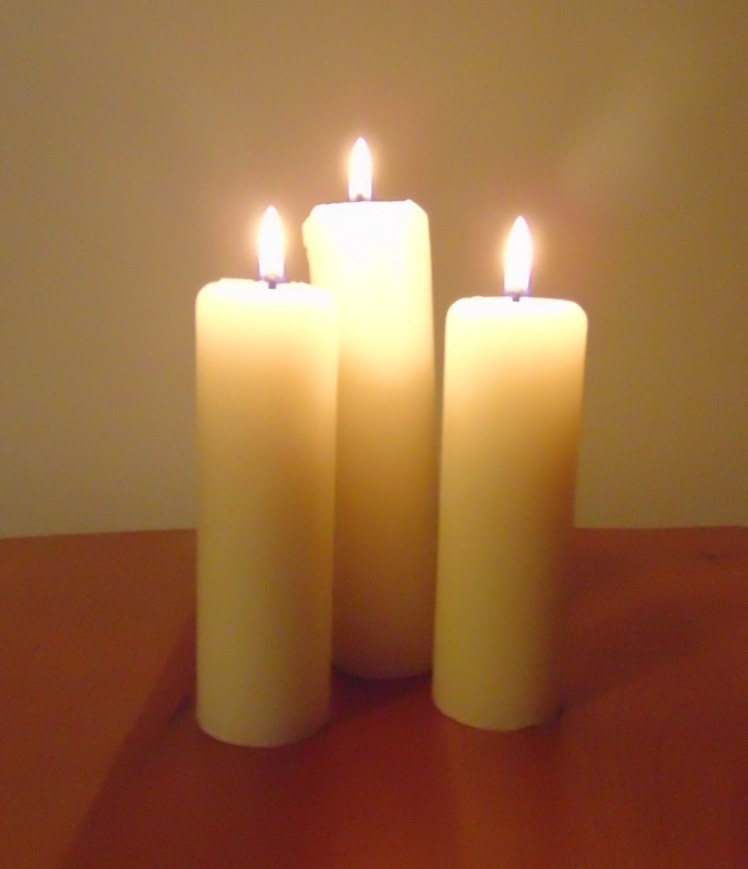
Trinity of candles

In the book Reading Lolita in Tehran, author Azar Nafisi writes of learning from her introverted husband about “the many moods and nuances of silence: the angry silence and the disapproving one; the appreciative silence and the loving one.”

There are, likewise, “many moods and nuances” in the silence of personal prayer:

  • The awe when we encounter God’s presence
  • The lonely distance when we feel separated from God
  • Our outpouring of self – our emotions and experiences – when we offer everything within us and within our lives to God
  • Angst when we bring the frustrations of our human experience to God

Then, there are the “many moods and nuances” of public prayer:

  • The psalms we sing in church to bring to God our wide range of human experience and petitions
  • Intercessory prayers we “offer up” at church
  • The joy inherent to our “songs of praise”
  • Rote prayers during services – The Lord’s Prayer, etc.
  • Prayers offered at public events

Just as there are many variables and phases in our relationships with people, there are changing variables and phases in our relationship with God.   This is a good thing.

Whatever we might expect of prayer, our prayer needs to be active, regular and ongoing, dynamic, and changing.  We grow and change over time.   Therefore, our relationship with God cannot be what it was when we were children.  Or when we were teenagers.  Or five years ago.   While God is ever God’s-self, the relationship between us and God is ever adjusting to “where we are” in that relationship and – if we actively pray on an ongoing basis – adjusting as we move through our lives………… 

How does one pray? 

Just as we have many differing relationships with the various people in our lives – and a variety of ways that we communicate with the people in our lives – there are any number of ways of communicating with God. A prayer style that works for one person may be very different than what works for the next person. Here are several approaches to prayer:

  • Rote prayer (formal, memorized prayers – these are often provided to us by our houses of worship). Prayers such as the Lord’s Prayer are full of meaning and help us learn to pray. Such prayers give us ready prayer content that we can easily put to use.
  • Psalms. The Book of Psalms – which were meant to be sung – are summarized by Wikipedia thus: the Book of Psalms are “an anthology of Hebrew religious hymns…including hymns or songs of praise, communal and individual laments, royal psalms, imprecation, and individual thanksgivings.  The book also includes psalms of communal thanksgiving, wisdom, pilgrimage, and other categories.”
  • “Talking to God.” Our spontaneous thoughts and words directed to God. God wants to have a relationship with us; relationships are two-way, be open to feeling God’s presence in response.
  • Contemplative Prayer. Resting reflectively in prayer, without a need for words or any human language. Contemplative prayer can – and for some people, does – include a sense of God’s presence in prayer. For more information about contemplative prayer, visit Contemplative Outreach.
  • Praying the Rosary. The rosary is a reflective way of praying a set of rote prayers with a formulaic set of Catholic prayer beads (focusing time on specified topics). Instructions for praying the rosary is available here.
  • Lectio Divina. Lectio Divina “describes a way of reading the Scriptures whereby we gradually let go of our own agenda and open ourselves to what God wants to say to us” (this particular description provided by the Carmelites).
  • Singing at church. “Those who sing pray twice” (a popular phrase in churches).
  • Intercessory prayer. Intercessory prayer that we pray for other people. We come to God with the challenges of those who are in need of support.

Kim Burkhardt blogs at A Parish Catechist. If you are a new visitor, it would be great to have you subscribe to follow this blog (it’s free – thank you!). If you know someone who would like this blog, please share it with them and invite them to subscribe (thank you!).
Book Review: Spiritual Direction in the Early Christian East

Book cover
Authors: Irenee Halisherr, Foreward Bishop Kalistsos Ware

I very much enjoyed finding this book, Spiritual Direction in the Early Christian East. I was equally thrilled to discover that it was published by Cistercian Publications (I worked for a Cistercian monk-priest for a time……).

This is among books written on very specific topics – it’s great to find such books when they are written on a topic of personal interest. I take an interest in the history of religious thought in the Medieval period and earlier. I am also currently exploring spiritual direction. Thus, I was excited to order this book and read it.

A number of passages in the foreward prove tangible to the reader interested in spiritual direction:

  • “The ministry of the spiritual father is already foreshadowed in the New Testament; ‘Though you have countless guides in Christ, you do not have many fathers. For I became your father in Christ Jesus through the Gospel.’ (1 Cor 4:15)”
  • “He helps his children in Christ precisely because he is willing to share himself with them, identifying his own life with theirs.”

Within the book itself, any number of passages artfully describe spiritual direction:

  • “Desert fathers have, if not brought into being….at least, systemized this magnificent thing….’the divine art of healing another.'”
  • “We should examine ….[the qualities]…. the Byzantines deemed most necessary to the exercise of spiritual direction.” This section of the book starts with discussion of any would-be spiritual director needing to possess the quality of charity with the aspect of charity that involves being loving ( spoiler alert: read the book to discover the other deemed-necessary qualities!).
  • Later chapters of the book discuss how to enter into spiritual direction as a directee in such a way as to benefit from receiving spiritual direction – a useful topic of instruction.

In addition, any number of passages interestingly discuss Eastern Christianity:

  • “This book is addressed to Western Christians interested in the East: the main intention is to make them breathe the spirit of which animated the great spiritual masters of the past….”
  • “Almost all the documents [referenced in the main of the book] belong to monastic literature. It could not be otherwise. Spiritual direction was not taught and practiced to perfection except among monks.”
  • “….abba Elias and abba Dorotheos….devoted themselves to a large monastery of virgins in Antripe, upper Egypt…..Their role, which they assumed spontaneously out of compassion consisted in maintaining or re-establishing peace among the some three hundred ascetrie (women ascetics) who had been accepted there…..” [Note: I now find myself wondering what literature is available for learning more about ascetrie!]

Spiritual Direction in the Early Christian East is an important contribution to books on spiritual direction and literature about Eastern Christianity – particularly the practice of spiritual direction. I encourage anyone interested in one or both topics to pick up this book.

Kim Burkhardt blogs at A Parish Catechist. If you are a new visitor, it would be great to have you subscribe to follow this blog (it’s free – thank you!). If you know someone who would like this blog, please share it with them and invite them to subscribe (thank you!).

The Hermitage Within (an important location!)

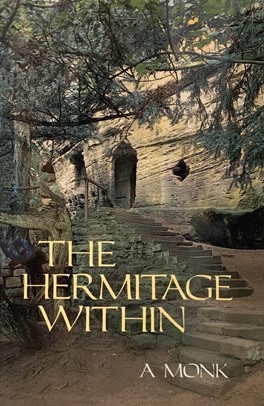
Book and Topic: The Hermitage Within
The Hermitage Within

I was looking up a url link to another book I am currently reading to prepare a book review; while looking up that other book, I happily came across the book The Hermitage Within on Liturgical Press’s website (I read a lot of books by Liturgical Press – they have great books!).

I wish I had thought of this phrase “The Hermitage Within” and had chosen this title as the name for my blog. This phrase gets to the heart of what I want to convey in this blog….

Liturgical Press summarizes this book with articulation I’ve been seeking to describe about people’s inner experience: “Not everyone can, or should, live as a hermit. Yet all Christians need an inner hermitage, a place apart where we come face-to-face with our true selves, and listen to the still small voice of God. It is a place of silence, of fear and fascination, of anguish and grace. The writer of this profound yet simple volume encourages us to find our own inner hermitage—a place of calm and contemplation, apart from the demands of the modern world, a place so silent that we can hear God. The desert, the mountain, and the temple provide the focus of the anonymous author’s reflections. He meditates on the wilderness experiences of such biblical persons as Jesus, John the Baptist, and Mary Magdalen. He considers the place held in the Christian story by Mount Sinai, the Mount of Olives, and Calvary. He ponders the idea of temples, using such images as our inner temple and Christ the temple, the foundation of the Church.”

I encourage everyone to connect with and cultivate regular time spent in your inner hermitage – such time can and should be nourishing. Western culture largely encourages us to be outwardly focused….. Sometimes it can be tempting to avoid the challenges of encountering the difficult aspects of our inner experience. Yet we must encounter these difficult aspects of our own inner experience, wrestle with these aspects of our experience, and surrender this to God’s healing grace. Further, there is much richness available to us within our own inner hermitage. It is in our own inner hermitage that we experience both the essence of our own self and a relationship with the divine. Yes, our own inner hermitage is an important place where we can “allow God in” so God can foster God’s healing grace in our lives.

Daily time spent alone in our own inner hermitage is important for encountering and cultivating those aspects of our life experience that can only be experienced by going inward. Going inward is an opportunity to experience rich vibrancy. For more of my reflections on our inner hermitage, visit my previous post Geography of Grace.

Kim Burkhardt blogs at A Parish Catechist. If you are a new visitor, it would be great to have you subscribe to follow this blog (it’s free – thank you!). If you know someone who would like this blog, please share it with them and invite them to subscribe (thank you!).

Inspiring other’s faith by talking about our own brokenness

Stained glass windows at Assumption Church, Bellingham

I was struck by a recent article by Seattle Bishop Frank Schuster published in Northwest Catholic. In that article, Bishop Schuster (a friendly guy!) quotes both the famed Archbishop Fulton Sheen and poet-and-opium-addict Francis Thompson. Francis Thompson (who is new to me!) wrote poetic ideas such as “I fled [God], down the nights and down the days; I fled Him, down the arches of the years, I fled Him down the labyrinthine ways of my own mind; and in the midst of tears, I hid from Him and under running laughter.”

In our current times – when the U.S. surgeon general is talking about the dangers and health consequences of an “epidemic of loneliness,” I rather think we would do well to talk to other from a place of genuineness – including talking more often and more frankly about our own brokenness.

When we really talk about our human brokenness, we connect meaningfully with other people. Less isolation. Further, really talking about our human brokenness somehow allows us to see and connect with meaningful with the love and spiritual nourishment that God offers to us. It is, after all, in our brokenness that we need God.

When we interact with people, we are typically encouraged to “put our best foot forward.” We talk about how to achieve more, succeed more. We post photos of our great moments on social media. Yet, many people are also lonely, socially isolated. Too often, people are not connecting with people in faith communities or finding spiritual nourishment. Part of the solution to our woes, I think, is to really express ourselves – including our brokenness. In talking about our brokenness, we somehow become more receptive to the loving grace offered to us by God.

Try talking about your brokenness. Listen for God’s loving grace.

Kim Burkhardt blogs at A Parish Catechist. If you are a new visitor, it would be great to have you subscribe to follow this blog (it’s free – thank you!). If you know someone who would like this blog, please share it with them and invite them to subscribe (thank you!)

Book Review: Ars Celebrandi

Book
Ars Celebrandi: Celebrating and Concelebrating Mass

This book, written for priests to inspire artful presiding at mass, brings to life the nuts and bolts of how the Catholic mass brings liturgy – the work of the people – is celebrated. For the non-ordained among us, Ars Celebrandi: Celebrating and Concelebrating Mass provides insight into how the liturgy is designed to invigorate the faith of the faithful.

In practical terms, this book picks up where the General Instruction of the Roman Missal (the “GIRM”) ends….. The GIRM is the instruction manual of “how to do a Catholic mass,” whereas Ars Celebrandi gets into the art of how to preside.

Two examples of this book’s insights come from the foreward of Ars Celebrandi (written by Bishop Mark Seitz):

“The liturgy is the action of the entire people of God who are being more perfectly formed into the Body of Christ.  The Second Vatican Council’s seminal teaching that the people of God are called to full, conscious, and active participation is based upon this fundamental recognition.”

“The liturgy, as we know,  is a language and a certain style of communication that comes down to us from the ages but is also constantly adapting under the guidance of the Spirit in every age.  It a language of signs and symbols that are read universally by people in the church.  To be sure, there are regional and cultural aspects that are rightly represented as local communities worship, but these are secondary to the expressions that unite us across times and places.”

Then, we lay readers learn in this book about the complexity of presiding at church services. For example:

“[Presiding at a liturgy] involve a marriage of books and ministers. The liturgical norms [i.e., what is suppose to be done] encounter a real-time relationship with the individual persons ordained to carry them out….The relationship presumes that priests know the liturgical norms. However, the rules are complex. The books detailing them are many. Some laws keep changing….Furthermore, not every aspect of liturgy is prescribed. When presiding, a typical priest is suppose to do certain things, is free to do certain other things, and takes freedom to do even more….” [Subsequent paragraphs delve into specific examples of these “certain things” and “certain other things.}

Reading this book is of interest for we lay people in that we become more observant of the nuts and bolts of what happens at church. A book worth reading.

Kim Burkhardt blogs at A Parish Catechist. If you are a new visitor, it would be great to have you subscribe to follow this blog (it’s free – thank you!). If you know someone who would like this blog, please share it with them and invite them to subscribe (thank you!).

How many people pray? How do people pray?

According to Pew’s most recent “religious landscape study” (2023-2024), 44% of U.S. residents indicate praying daily:

If you are among the people who pray regularly, how do you pray?

The question “how do you pray” really asks “how do you have an interactive relationship with God?” There are as many experiences of prayer as their are people.

A prayer style that works for one person may be very different than what works for the next person.

Personally, my most meaningful prayer – and preferred way to pray – is contemplative prayer. simply being in God’s presence. No language necessary. In 2016, I was gifted with an extended – and unexpected – period of contemplative prayer in which I felt God’s presence loving me (that story surround that experience is told here); the experience set me on a new footing.

Several approaches to prayer include:

  • Rote prayer (formal, memorized prayers – these are often provided to us by our houses of worship). Prayers such as the Lord’s Prayer are full of meaning and help us learn to pray. Such prayers give us ready prayer content that we can easily put to use.
  • Psalms. The Book of Psalms – which were meant to be sung – are summarized by Wikipedia thus: the Book of Psalms are “an anthology of Hebrew religious hymns…including hymns or songs of praise, communal and individual laments, royal psalms, imprecation, and individual thanksgivings.  The book also includes psalms of communal thanksgiving, wisdom, pilgrimage, and other categories.”
  • “Talking to God.” Our spontaneous thoughts and words directed to God. God wants to have a relationship with us; relationships are two-way, be open to feeling God’s presence in response.
  • Contemplative Prayer. Resting reflectively in prayer, without a need for words or any human language. Contemplative prayer can – and for some people, does – include a sense of God’s presence in prayer. For more information about contemplative prayer, visit Contemplative Outreach.
  • Praying the Rosary. The rosary is a reflective way of praying a set of rote prayers with a formulaic set of Catholic prayer beads (focusing time on specified topics). Instructions for praying the rosary is available here.
  • Lectio Divina. Lectio Divina “describes a way of reading the Scriptures whereby we gradually let go of our own agenda and open ourselves to what God wants to say to us” (this particular description provided by the Carmelites).
  • Singing at church. “Those who sing pray twice” (a popular phrase in churches).
  • Intercessory prayer. Intercessory prayer that we pray for other people. We come to God with the challenges of those who are in need of support.

My favorite pray-ers:

  • Teresa of Avila, (16th-century mystic, Doctor of the Church, Carmelite nun, reformer of the Carmelite religious order, Carmelite saint)
  • John of the Cross (16th-century mystic, Doctor of the Church, Carmelite monk and priest, co-reformer of the Carmelite religious order, Carmelite saint)
  • Edith Stein, Carmelite nun, Carmelite saint
  • Fr. Thomas Keating, founder of Contemplative Outreach

Books for further reading:

Clinging: The Experience of Prayer (Emilie Griffin)

The Tradition of Catholic Prayer (The Monks of Meinrad Monastery)

Kim Burkhardt blogs at A Parish Catechist (and is a member of the Association of Catholic Publishers). If you are a new visitor, it would be great to have you subscribe to follow this blog (it’s free – thank you!). If you know someone who would like this blog, please share it with them and invite them to subscribe (thank you!).
Book Review: Hope – Pope Francis’ Autobiography

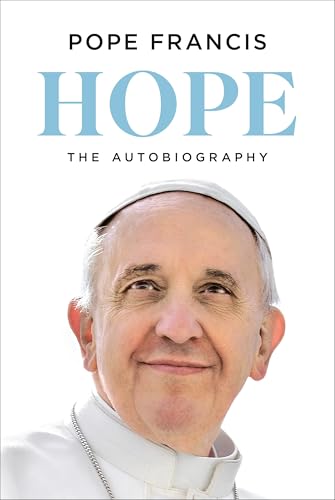
Book
Pope Francis’ autobiography

Several weeks ago, a friend gave me a copy of Pope Francis’ autobiography.

I looked forward to reading it out of interest about Pope Francis and because I recently worked with a guy who had moved from Buenos Aires to Seattle and had known the Pope when he was the Buenos Aires archbishop.

When I started reading the book, Pope Francis was still Pope. I discovered on the inside cover that this is the first papal autobiography by a sitting pope. In our digital age, we want to know about our leaders in a way that makes an autobiography makes sense.

I am just a few pages into the book. Already, I learned that Pope Francis was the son of Italian ancestors – an insightful discovery about a pope not born in Italy. I look forward to reading the rest of the book.

Normally, I would wait to post a book review until I had finished reading the book. In this instance, it’s worth posting now that Pope Francis’ autobiography is available for readers who are interested in the new timeliness of this book. Certainly a book worth picking up for people interested in current affairs.

Kim Burkhardt blogs at A Parish Catechist (and is a member of the Association of Catholic Publishers). If you are a new visitor, it would be great to have you subscribe to follow this blog (it’s free – thank you!). If you know someone who would like this blog, please share it with them and invite them to subscribe (thank you!).
Our faith stages: developmental growth

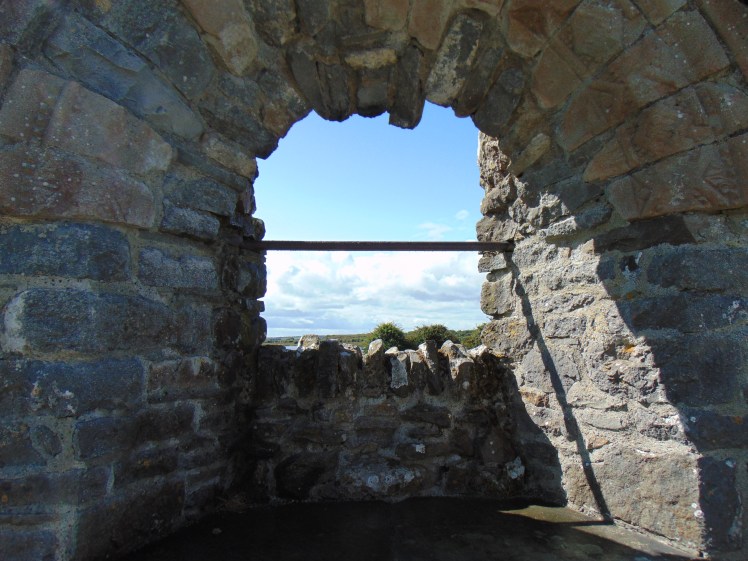
Clonmacnoise window

Growing in our faith is meant to involve life-long growth. Our religious understanding isn’t meant to stop after completing Sunday School. Just as our growth in other aspects of life continue maturing into adulthood, so should our faith.

The U.S. Conference of Catholic Bishops (USCCB) says the following: adult faith formation “fosters a baptismal spirituality for adults…to embrace the invitation and challenge of an ever deepening faith in Jesus.”

On many levels, our human experience involves continuing emotional and mental development throughout our adult lives. Job training develops us for the workforce. Continuing education and book reading foster our intellectual development. Just as we learn adult levels of emotional maturity throughout our lives and train as adults for workforce competence, adult faith formation must move beyond an introductory level to mature. Our faith life can only continue to mature through intentional development.

Individuals who grow up in a faith tradition and then continue to develop their knowledge and perceptions about religion – and engagement with their faith – navigate maturing stages described by development psychologists and theologians such as James Fowler.

For those who grow up in a faith tradition, learning one’s faith tradition is experienced early in life with sacraments, attending services, learning prayers, learning basic tenet’s of one’s faith tradition. For those who come to a faith tradition later, on, faith formation happens….well, later. Teen years and/or the early twenties are often a time for faith reflection and perhaps struggle. Do I believe in and accept the faith tradition I have been raised in? Can I see a path to greater and deeper faith maturity in my current faith tradition or another tradition? For those who continue on within an organized faith tradition, the teen-to-early-adult period is also one of transition: figuring out religious meaning on new levels (what are the underlying concepts represented by the symbolism of my faith tradition?, etc.), taking a deeper level of new responsibility for one’s faith (i.e., “this faith tradition was given to me as a child, now I’m evaluating my decision about if and how to stay, how to participate.” “I was given A, B, or C religious concepts as a child….What do these concepts mean to me now? Am I seeing these concepts differently or on a new level??). beyond “taking things at face value” or just “reciting back what you’ve heard.”).

As we navigate an adult level of faith, some adults need to navigate the faith stages of youth if those stages were not navigated earlier in life. Then – if we continue to grow in faith as adults – we surrender into additional levels of understanding faith and finding our way to new levels of relationship with God (and, therefore, with one another!).

The opportunity for faith to continue to develop and mature, however, is often stunted when there is no continued connection as an adult to faith formation. Adults can be surprised – if they take time away from religion or don’t engage with “beyond Sunday” faith formation within their religious tradition – to find out that their faith tradition offers a deeper level of understanding faith on a level of “come to weekend services and take faith concepts literally.”

An adult faith is one that continues to mature developmentally – deciding to take personal responsibility for one’s faith path, thinking through the faith concepts one was taught while growing up (if one grew up in a faith tradition), surrendering to new levels of understanding of religious concepts, etc. Many individuals who live an active faith as adults engage in – and experience – such maturing faith stages. Pastors recognize parishioners who navigate through such stages. Authors such as Jane Regan write about cultivating the maturing faith of adults (check out her book, “Toward an Adult Church“).

Further, there is the need for “life-long learning” of what faith traditions have to offer. There are boundless amounts of religious content available for we lay people to lean into – and an endless amount of ways for us to learn to bring that content into our lives. I am glad to be journeying with you via this blog.

Kim Burkhardt blogs at A Parish Catechist (and is a member of the Association of Catholic Publishers). Blogging is sustainable via blog readership (i.e. readers/subscribers). If you are a new visitor, it would be great to have you subscribe to follow this blog (thank you!). If you know someone who would like this blog, please share it with them and invite them to subscribe (thank you!).