Into the mist…..List: welcoming God into our daily lives

“The Greek Fathers liken man’s encounter with God to the experience of someone walking over the mountains in the mist: he takes a step forward and suddenly finds that he is on the edge of a precipice, with no sold ground beneath his foot but only a bottomless abyss.”

The Orthodox Way (Revised Edition, page 13), Bishop Kallistos Ware

The passage above is my favorite quote from the Orthodox tradition.

Beginning in October, 2016, I was gifted with an extended period of contemplative prayer (more of that story is told here). I didn’t have words at the time to describe what I was experiencing. Not only did I not have words to describe the experience, no human words were needed in prayer during that period. I experienced that prayer can simply be – in the type of rich abundance written about by Teresa of Avila and John of the Cross – “being with God.” Later, I heard a Seattle priest talk about experiencing “an encounter with God” he had in his twenties while living in the U.S. Southwest. Ah, the words to describe my prayer experience from 2016 and extending for a time: an encounter with God.

The extended prayer encounter I experienced began with a responding to a prompting of the Holy Spirit. We all occasionally feel an emotional tug encouraging us to act. Sometimes we respond. In 2016, I responded.

I’ve come to recognize since 2016 that we can all see the opportunity to be loved by God. Related to this, we can also continually learn to better love the people around us (Matthew 22: 34-40: “The greatest commandments are…love the Lord your God….and….love your neighbor as you love yourself”).

Just as I took time to learn to do photography – and thereby recognized that a misty day was a great time for the photo of Seattle’s Green Lake shown above (with “Duck Island” in the background, where my maternal grandmother learned to swim), we can all look for opportunities for “the experience of someone walking over the mountains in the mist: he takes a step forward and suddenly finds that he is on the edge of a precipice, with no sold ground beneath his foot but only a bottomless abyss.” Those moments – those steps – are moments of grace offered to us by God. Yet, we can be open to those moments of grace.

Ways of being open to God’s grace:

  • Make regular time to participate in your faith tradition.
  • Read writings of the mystics. A few reading suggestions are offered here.
  • Make time to step away from busyness. Westerners, for the most part, live in “busyness”. We need to “do this, go there, run from one life experience to another.” In so doing, we ignore our inner life. We ignore any emotional ugliness or challenges that we’d rather ignore. We also lose the opportunity to resolve “the ugly stuff” and we lose the opportunity to be with God. We reduce the opportunity to notice the “emotional tugs” that are promptings of the Holy Spirit inviting us into encounters with God.
  • Make time for prayer and solitude.
  • Be reflectively observant about what goes on around you and of what comes out of prayer and solitude.

Kim Burkhardt blogs at A Parish Catechist and The Books of the Ages (and a member of the Association of Catholic Publishers). If you are a new visitor, it would be great to have you follow this blog (thank you!). If you know someone who would like this blog, please share it with them (thank you!).

We need each other: small group faith sharing

Clonmacnoise window

As we seek to grow in faith, we need each other.

This idea that we need each other in faith is observed and communicated time and again:

  • “No man is an island.”
  • “We are all radically incomplete. And we need each other.” Timothy Radcliffe at the October, 2023 Synod in Rome.
  • A person of faith who I admire wrote: “we all need to have encouragement and some checks & balances from other seekers in regard to our experiences, otherwise we can fall into despair, or begin to believe that our own experience is the fullest measure of truth, which is dangerous.”
  • Etc.

We learn in faith from faith leaders – pastors, book authors, etc. We also learn from one another.

Sometimes, there is a desire to go it alone in our faith:

  • “I am independent. I am capable of learning. I know my conscience – I will find a faith path that suits my conscience and my lifestyle. I will grow in faith by sitting home alone reading books on spirituality.”
  • Sometimes, people variously add….. “I don’t like our current pastor at church…” Or, “I don’t care for organized religion…”
  • Perhaps: “I will supplement faith reading by going on nature walks or going to occasional conferences or retreats.”
  • “I have an active prayer life. I will allow God to direct my life. It’s ‘me and God.'”
  • “Of course, I will work continually be a better person.”

In fact, we need each other. The email I quoted above goes on to say, “we need each other, and I believe that God designed us that way.” Even hermits at monasteries have occasional contact with the other members of their monastic communities!

Christ was asked, “Which of the commandments is greatest?” He responded, ““Love God and love your neighbor as yourself” (Matthew 22:34-40). Loving your neighbor, of course, involves generosity of spirit to the people in our lives and supporting people who need support – it involves us interacting with one another, being in community.

Faith communities provide just that – communities where our faith is nurtured, where we hold ourselves to account, where we support the faith growth of our fellow faith travelers, and where we learn to more fully love our neighbor. Within such a context, small group faith sharing provides distinct and useful opportunities to learn and grow in faith, to support our fellow faith travelers. Local faith communities – churches, topic-specific communities such as prayer-based organizations, etc. – often provide small group settings ranging from Bible studies to prayer groups, life-stage groups (young adults, moms, retirees, etc.), topic-specific learning communities, and service activities (cleaning the parish, feeding the homeless, etc.). Please feel welcome to look up and join a faith sharing small group in your community.

Kim Burkhardt blogs at A Parish Catechist and The Books of the Ages (and a member of the Association of Catholic Publishers). If you are a new visitor, it would be great to have you follow this blog (thank you!). If you know someone who would like this blog, please share it with them (thank you!).

Prayer: two-way communication (interesting in an MRI)

Daily prayer is a critical component of a faith-filled life. There’s a saying: “There can be no faith without prayer” (source uncertain). Within a theistic vision of faith, a life of faith must involve a relationship with the divine. Our relationships with the people in our lives are defined by relationship: social interactions. This also applies in our faith life – there can be no spiritual life without a relationship with God. Thus, a relationship with God through prayer.

Relationships are two-way. I like the analogy of comparing prayer to a phone call (it might be Fr. Mike Schmitz, “Bible in a Year” who put forward this analogy). We don’t sustain relationships with the people in our lives by phoning someone and saying, “I’m calling to tell you X” – then hanging up. Rather, a phone call is a give-and-take, two-way interaction. Prayer is the same way. We don’t just send our communication to God in a one-way phone call.  We both communicate to God in prayer and also rest in stillness to allow God to present to us.

This two-way nature of communication with God came to mind yesterday morning. I normally view prayer-based two-way-communication-with-God as “me communicating with God in a style that suits my prayer style, while God’s response is to be present with me in prayer.” That concept was “tested” yesterday morning. I was at a medical clinic getting an MRI. I knew I was going to be in the MRI tube/machine for about an hour and wouldn’t be able to move. Perhaps five minutes into the MRI, I realized “This would be a good time for prayer. I’m rendered unable to do anything other than to lay perfectly still while I’m in this machine. Prayer would be a good use of my time. ” So, I started to pray. I wasn’t thinking of imploring God’s aid; rather, this could be a good time to simply spend time with God. A brief moment after I started to pray, a perfectly audible voice asked me – plain as day – “Are you okay?”

Smile, irony….. The perfectly audible voice asking me “Are you okay” was the MRI technician speaking through the MRI’s microphone to ask if I felt physically comfortable in the machine.

“Yes,” I replied with a smile (“This is an ironic moment of communication,” I thought), “I am okay.” (….well…. I want my test results, but…yes….In this moment, I am okay…”).

There are many ways to pray:

  • Talking to God as we would talk to a friend (either verbally or through what’s often called “mental prayer”)
  • Simply being present with God, resting-in-God’s-presence as I’ve heard this called (we can do this anywhere)
  • Lectio Divina (a method of praying the scriptures reflectfully)
  • Attending church services (church is itself a form of prayer)
  • Religious singing (“Those who sing pray twice”)
  • Contemplative prayer (for example, learn about this form of prayer through an organization called Contemplative Outreach)

Interested in reading more about prayer? A couple of great books include:

Clinging: The Experience of Prayer (Emilie Griffin)

The Tradition of Catholic Prayer (The Monks of Meinrad Monastery)

Kim Burkhardt blogs at A Parish Catechist and The Books of the Ages (and a member of the Association of Catholic Publishers). If you are a new visitor, it would be great to have you follow this blog (thank you!). If you know someone who would like this blog, please share it with them (thank you!). You can also support this blog by clicking here when you are going to shop on Amazon (that lands A Parish Catechist a commission on Amazon sales).

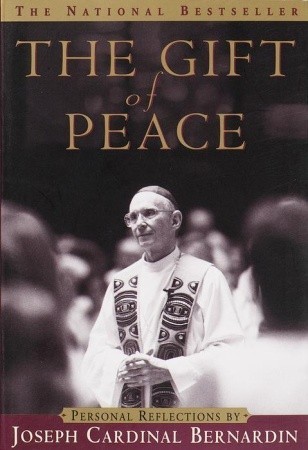
Book Review: The Gift of Peace

Book: The Gift of Peace

The Washington State Library for the Blind sent my mother an audio copy of Joseph Cardinal Bernardin’s book The Gift of Peace. My mother liked the book, so she ordered a print copy for me. I hadn’t heard of the book or the author; I wasn’t entirely sold on reading it….. Once I started reading the book….well… I’m sold.

This book of personal reflections includes reflections about prayer that resonate with my own experience and/or provide further encouragement in prayer:

  • “….it [an intro to a particular style of prayer] certainly introduced me to the importance of prayer and the fact that prayer is not a one-sided practice. Rather, prayer involves speaking and listening on both sides. [page four]” Blogger note (i.e., Kim Burkhardt): I find my best experience with prayer to be when I am simply quiet and allow God’s presence to be present.
  • “I decided to give God the first hour of my day, no matter what, to be with him in prayer and meditation where I wold try to open the door even wider to his entrance. This put my life in a new and uplifting perspective; I also found that I was able to share the struggles of my own spiritual journey with others. [page six]” Blogger note (i.e., Kim Burkhardt): I likewise found that active prayer makes it possible for me to share “the struggles of my own spiritual journey with others.”
  • “To close the gap between what I am and what God wants of me, I must empty myself and let Jesus come in and take over. [page 16]”
  • “[Jesus] wants me to focus on the essentials of his message…..Essentials ask us to to give true witness and to love others more. Nonessentials close us in on ourselves. [pages 16-17]”.

I am finding this book to be transparently, refreshingly self-revealing about the human journey in faith. A worthwhile read.

Kim Burkhardt blogs at A Parish Catechist and The Books of the Ages (and a member of the Association of Catholic Publishers). If you are a new visitor, it would be great to have you follow this blog (thank you!). If you know someone who would like this blog, please share it with them (thank you!). You can also support this blog by clicking here when you are going to shop on Amazon (that lands A Parish Catechist a commission on Amazon sales).

Book Review: Timothy Radcliffe, Listening Together

Book: Listening Together, Meditations on Synodality

Pope Francis convened a College of Bishops “Synod on Synodality” in Rome last October in which a worldwide group of bishops and lay people gathered for discussion following worldwide parish-level synodal listening sessions. The synod began with a series of talks by the engaging Dominican Timothy Radcliffe [Timothy Radcliffe served for several years as Master General of the Order of Preachers (Dominicans)]. Radcliffe’s presentations can be watched online here:

Now, wonderfully, Timothy Radcliffe’s conference presentations are available in print. Liturgical Press has published his collected presentations in a new book: Timothy Radcliffe: Listening Together. The publisher indicates that this book also contains “Radcliffe’s further reflections on our current challenges and where we could be headed as a church.”

I watched Timothy Radcliffe’s synodal presentations (from a computer in Seattle!). Timothy Radcliffe is thoughtful and articulate. I quoted his “We are all radically incomplete” statement from the Synod in one of my earlier blog posts here; he’s got plenty more insightful points to consider in his synodal presentations. I recently received a copy of the “Listening Together” book and look forward to spending time with it – much as one would spend time with a good friend! Given the historical nature of the synod meetings in Rome and Radcliffe’s thoughtful presentations, this book is bound to become “a book for history.”

Kim Burkhardt blogs at A Parish Catechist and The Books of the Ages (and a member of the Association of Catholic Publishers). If you are a new visitor, it would be great to have you follow this blog (thank you!). If you know someone who would like this blog, please share it with them (thank you!). You can also support this blog by clicking here when you are going to shop on Amazon (that lands A Parish Catechist a commission on Amazon sales).

Update: Faith reading challenge – Brothers Karamazov

In March, I challenged readers to consider reading Dostoevsky’s The Brothers Karamazov and to read it from a faith perspective.

In March, I stated: “I attended a state university and we read The Brothers Karamazov as secular literature. While we read the book as secular literature, I do remember our instructor posing a question about a particular point for one of the books’ characters. I found myself responding as seeing the character as analagous to a friend of mine who was serving as a spiritual guide for me at the time. My instructor and classmates found this odd and laughed as such. It was an awkward moment…….Since then, I have periodically heard reference to “The Brothers K” as being a book – in part – about faith. Goodreads (an online book portal) says of the book, ‘Through the gripping events of their story, Dostoevsky portrays the whole of Russian life, is social and spiritual striving, in what was both the golden age and a tragic turning point in Russian culture.’ Put May 1 on your calendar as the date to start reading The Brothers Karamazov through the lens of faith. I will post dates to begin discussing the book.”

We are now into the month of May. I did start to try reading “The Brothers K” again. In addition, a reader of this blog indicated that she accepted the challenge to read the book and has started reading – that’s great.

When I got a few pages into “The Brothers K” this time, I discovered that – indeed – the book includes more faith insights than I noticed the first time around. From the beginning, the book talks about faith being about love! Love is the root of what Christianity is about! When I first read the book for a secular literature class in college, I didn’t fully appreciate how infused the book is with faith concepts. Now, I see it.

Unfortunately, I am discovering that this very long Russian novel is a “bigger read” than I have an attention span for at this time. I am putting the book back on my bookshelf – with a fuller appreciation of what Dostoevsky put into the book.

For readers of this blog who open the pages of “The Brothers K,” I applaud your decision to read it!

Kim Burkhardt blogs at A Parish Catechist and The Books of the Ages (and a member of the Association of Catholic Publishers). If you are a new visitor, it would be great to have you follow this blog (thank you!). If you know someone who would like this blog, please share it with them (thank you!). You can also support this blog by clicking here when you are going to shop on Amazon (that lands A Parish Catechist a commission on Amazon sales).

Book Review: Gerald May’s The Dark Night of the Soul

Gerald May's book: The Dark Night of the Soul

Teresa of Avila and her protege John of the Cross – two 16th-century Spaniards – are my favorite mystics and two of my favorite faith writers. When I began reading their books in 2017 or 2018, they articulated my own (more modest!) experience with contemplative prayer.

Since then, I have tried to explain to people that John of the Cross’s book Dark Night of the Soul is not about tribulations or depression. It’s not.

More recently, I came upon Gerald May’s book of the same title. Gerald May is a physician, psychiatrist, and writer of faith books). Gerald May, in his book, accessibly explains John of the Cross’s ideas in today’s language. I am grateful that he makes John of the Cross’s ideas more understandable to people than I have been able to present.

Treading into the Spiritual Depths: The (not depressing!) Dark Night of the Soul

In his book Dark Night of the Soul, John of the Cross writes about how the sometimes unviewable-to-us aspects of our inner faith journey are part of where God works within us to transform us (rather than this title being about a depressive view on things!). Attentiveness to our inner journey can allow us some small glimpse of when this (at least somewhat) unviewable aspect of our spiritual growth is being wrought within us – particularly if we have an active relationship with God in prayer.

Gerald May’s book of the same title speaks to this idea about “The Dark Night of the Soul”: “May emphasizes that the dark night is not necessarily a time of suffering and near despair, but a time of deep transition, a search for new orientation when things are clouded and full of mystery. The dark gives depth, dimension and fullness to the spiritual life.”

While John of the Cross’s book Dark Night of the Soul is not about suffering, modern day writer Gerald May does touch on the fact of suffering from a useful perspective on page nine of his book Dark Night of the Soul . His is a perspective that occurred to me in some fashion several years ago: “….suffering does not result from some divine purgation….Instead, suffering arises from the simple circumstances of life itself.”

Teresa of Avila and John of the Cross’s books are very worth reading. Gerald May’s book is also worth reading.

Kim Burkhardt blogs at A Parish Catechist and The Books of the Ages (and a member of the Association of Catholic Publishers). If you are a new visitor, it would be great to have you follow this blog (thank you!). If you know someone who would like this blog, please share it with them (thank you!). You can also support this blog by clicking here when you are going to shop on Amazon (that lands A Parish Catechist a commission on Amazon sales).

Book Review: Dictionary of Early Christian Beliefs

Dictionary: Early Christian Beliefs

There was a time when I would have read this reference book from cover to cover (I am among the readers who believe that when I read a book, I should read the entire book…..).

This is a useful, scholarly book to have on one’s bookshelf as a reference to inform one’s study of any number of topics. I am reading some of it now and plan to refer to it on occasion as the reference book it is intended to be.

Christianity is 2,000 years old. In 2024, the majority of us – with the possible exception of those Biblical scholars who specialize in Early Christian Literature – are not going to be familiar with the ins and outs of the topics discussed in the early church. Nor are most of us current on the etymology of what every word meant 2,000 years ago (“dictionary definitions” of words and the cultural context of vocabulary changes over time…).

“Sure,” some will say, “We know what early Christians were talking about. They were talking about Jesus, the resurrection, the gospels, and how to be Christian.” Yes, that’s true. But how exactly did those conversations unfold in Palestine, Greece, Turkey, etc. in, say, the year 75, 125, or 300 AD?

The gospels weren’t written down until several decades after Christ’s death. Jesus said during his lifetime that he would return during “this generation;” thus, it initially seemed unnecessary to Jesus’ contemporaries to write down his life and teachings for future generations…. Eventually, it started to become clear that he wasn’t coming back imminently, so his narrative began to be written for posterity. It then took time for the early church to decide which gospels – from among the gospels that were written down – are canonical (accepted as church doctrine). It wasn’t immediately clear to the early church that “the Bible” was going to include (and only include) Matthew, Mark, Luke, and John.

Likewise, it took time for the early church to develop and “come together” on any number of topics that we recognize today as “Christianity.”

So, precisely which “Christian topics” were under discussion in the early days of Christianity? This book – A Dictionary of Early Christian Beliefs – provides useful insights in to this question. Having this reference on one’s bookshelf can inform our understanding in any number of settings – when studying Sunday’s readings at church, when we want to learn more about a specific aspect of Christianity, when studying church history, etc.

A sampling of several topical entries in this 704-page resource include:

  • Christ, Divinity (how the early church came to understand this one topic gets 25 pages!)
  • Descent into Hades
  • Gifts of the spirit
  • “Keys of the Kingdom”
  • Patriarchs
  • Paul, apostle
  • Prayer
  • Rapture
  • Schism
  • At the end of the book, there are “Quotable quotes from the Early Christians.”

I appreciate having this book on my bookshelf.

Kim Burkhardt blogs at A Parish Catechist and The Books of the Ages (and a member of the Association of Catholic Publishers). If you are a new visitor, it would be great to have you follow this blog (thank you!). If you know someone who would like this blog, please share it with them (thank you!). You can also support this blog by clicking here when you are going to shop on Amazon (that lands A Parish Catechist a commission on Amazon sales).

Rumi: Live where you fear to live

Abbey window Ballintubber

“Run from what’s comfortable. Forget safety. Live where you fear to live.” Rumi

Too often, we make decisions based on fear. “I couldn’t possibly travel alone. How would I navigate the travel experience on my own?” “I couldn’t live alone as a single person. (Because…..).” “I couldn’t (fill in the blank).”

Okay, I cheated. The fears I listed above are fears that I don’t experience. I have my own list of fears – sometimes making decisions in reaction to those fears. In some ways, people view me as living a fearless life – I simply never learned how to have some of the fears that many people have. In some other aspects of my life, I don’t live fearfully because I was taught growing up to be pragmatic about living my life as I see fit – a good skill in the sense that I learned a healthy dose of independence (perhaps not enough interdependence and cooperation). In other ways, I am occasionally immobilized by aspects of life that don’t seem to phase other people. We are each living our own experience….

When we make decisions based on fear, we spend our time trapped in self-constructed prisons rather than fulling living.

God does not want us to live partial lives, self-restricted due to fear-imposed limitations. Jesus came “…That you may have life and live it to the full” (John 10:10). Making decisions based on fear is not being trustful in God, nor are we – by so doing – living the lives God wants for us. Not living the lives God wants for us is shortchanging the God who gave us life and the lives we are given. We are not truly being people of faith when we make decisions based on fear.

Really, one cannot be both faithful and allow fear to limit any aspect of our lives. We all have fears of one sort or another. A full and abundant life is one in which we live anyway, living without allowing fears to hold us back, allowing fear to define what we are going to do or how we are going to live…..Rumi: “Live where you fear to live.”

There is also the truism that perfect love casts out fear (1 John 4:18). To the degree that we live in fear, fear is diminished to the degree that we learn to live in loving connections with God and the people in our lives. Not sure that there’s a correlative force between increased love and decreased levels of fear in our lives? On a macro scale, people living in war zones will be living in fear (not love). On an individual level, the same principle applies. Give it a try.

Kim Burkhardt blogs at A Parish Catechist and The Books of the Ages (and a member of the Association of Catholic Publishers). If you are a new visitor, it would be great to have you follow this blog (thank you!). If you know someone who would like this blog, please share it with them (thank you!). You can also support this blog by clicking here when you are going to shop on Amazon (that lands A Parish Catechist a commission on Amazon sales).

Faith Reading challenge: The Brothers Karamazov

The Brothers Karamazov

I took a literature class in college in which we read Dostoevsky’s The Brothers Karamazov.

I attended a state university and we read The Brothers Karamazov as secular literature. While we read the book as secular literature, I do remember our instructor posing a question about a particular point for one of the books’ characters. I found myself responding as seeing the character as analagous to a friend of mine who was serving as a spiritual guide for me at the time. My instructor and classmates found this odd and laughed as such. It was an awkward moment.

Since then, I have periodically heard reference to “The Brothers K” as being a book – in part – about faith. Goodreads (an online book portal) says of the book, “Through the gripping events of their story, Dostoevsky portrays the whole of Russian life, is social and spiritual striving, in what was both the golden age and a tragic turning point in Russian culture.”

Because I have repeatedly heard of the book as having spirituality dimensions, I am planning to read “The Brothers K” again, after I finish reading another book (a long book that I’m reading rather slowly). This time, I will read “The Brothers K” through the lens of spirituality. I invite each of you to join me in reading the book to consider its’ faith dimensions; we can then discuss the faith ideas in book.

Put May 1 on your calendar as the date to start reading The Brothers Karamazov through the lens of faith. I will post dates to begin discussing the book.

Kim Burkhardt blogs at A Parish Catechist and The Books of the Ages (and a member of the Association of Catholic Publishers). If you are a new visitor, it would be great to have you follow this blog (thank you!). If you know someone who would like this blog, please share it with them (thank you!). You can also support this blog by clicking here when you are going to shop on Amazon (that lands A Parish Catechist a commission on Amazon sales).