Surrender – a perennial need

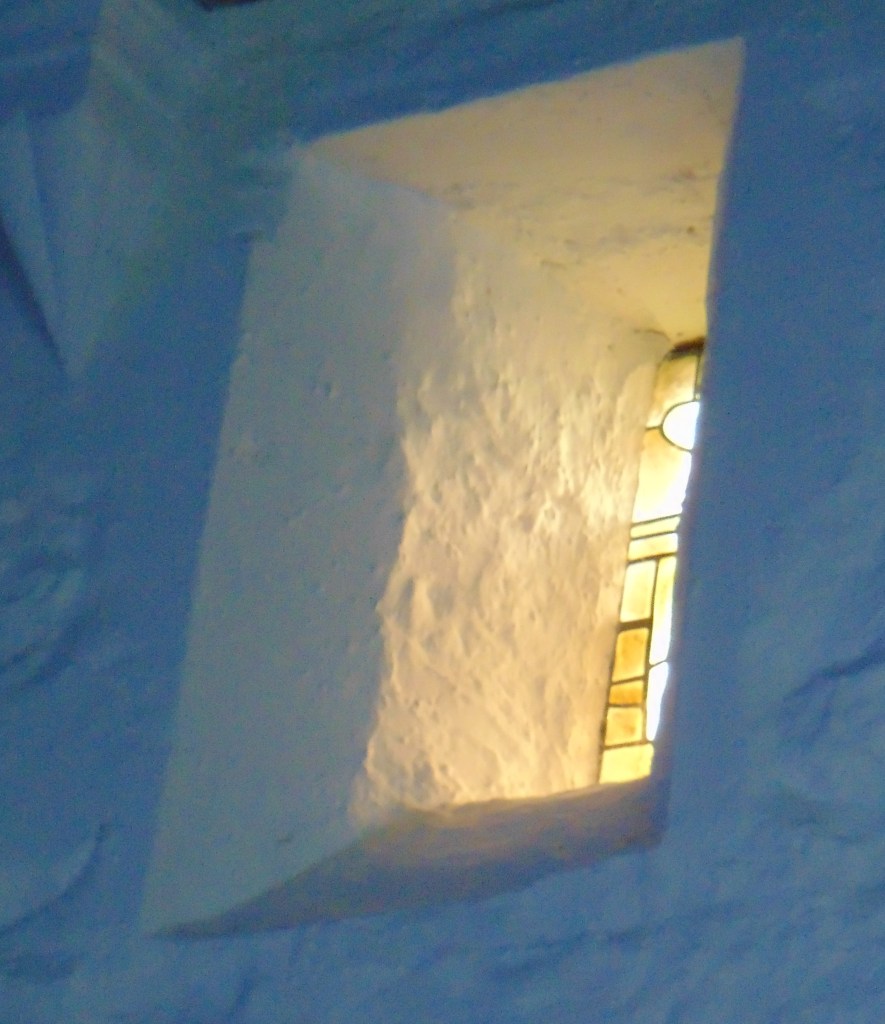
Candle

I wrote a post in July titled Surrender in Prayer. In that post, I wrote “Despite our western ideas about individual autonomy and self-agency, us permitting God’s agency to mold and shape us is liberating. God loves us, wants good for us and our world, and and has capacity for transformational good beyond our comprehension. There is no room for a negative outcome when we allow God to work within and through us.”

Surrendering to God’s will needs to be ongoing. The people who can stay in a perpetual state of surrender to God’ work in their lives – well, some of them are saints! They get the ongoing joy found in Acts 17:28: “For it is in him that we live and move and have our being.”

I live at times in Acts 17:28 – sometimes longer periods of time, sometimes shorter. Then, there are times when I get caught up in life’s challenges, fears, etc. It happened again yesterday. I arrived home in an emotional fit about one of life’s challenges. A few weeks ago, I spoke to a priest (who reads this blog) and mentioned some kind of discomfort about another challenge – he told me that I need to follow my own advice that I write about in this blog! Hmf!! ….I was then awake at 1:30 this morning fretting about the current life challenge. Embarrassingly, it took me until 5:00 am to come back to “surrender this in prayer.”

God loves us. When we surrender, God provides us with strength and turns us into better people. “I can do al things through Christ who gives me strength” (Philippians 4:13).

I see ways in which God has made me a better person in recent years. I look forward to God continuing to transform how I live in the world – (re) surrender required on my part.

Kim Burkhardt blogs at A Parish Catechist and The Books of the Ages (and a member of the Association of Catholic Publishers). If you are a new visitor, it would be great to have you follow this blog (thank you!). If you know someone who would like this blog, please share it with them (thank you!). You can also support this blog by clicking here when you are going to shop on Amazon (that lands A Parish Catechist a commission on Amazon sales).

Pondering Judas, Job, and the Prodigal Son

Every year. we hear the salvation story at Easter . God loved us so much that he sent his only son to die for our sins.

Our salvation involved Jesus’ death, so his death was predestined. So, someone – some human – had to somehow be complicit in Jesus’ death?

When Judas came to realize what he had done – that he had betrayed Jesus such that this betrayal was to involved in the circumstances of Jesus’ death – he took his own life.

Given that it seems that one of us – some human – had to somehow be complicit in Jesus’s death…. Hmmm…. This raises difficult questions about the circumstances involvingJudas.

It’s fine for God to decide to die for our sake. But to necessitate that some human(s) be complicit? Have some human(s) end up with Jesus’ betrayal on their conscience? How fair is that?

When I raised this for discussion with someone recently, I heard it argued that Judas had free will. He didn’t have to betray Jesus. Further, Judas repented to the chief priests and elders when he realized the consequences of what he had done (that Jesus was to be crucified). But, somehow someone had to be complicit in Jesus’ death (betrayal, hanging Christ on the cross)? So, someone was going to have this on their conscience – somehow? I also heard it said that free will means that Judas didn’t have to take his own life. He could have asked God for forgiveness (in fact, he did go so far as repenting to the chief priests – Matthew 27: 1 – 10).

What would you or I have done if we saw that we had betrayed Jesus toward death? Would we give in to despair the same way Judas did and take our own lives? Would we request forgiveness? Become bitter? Or??? It feels to me that such a burden would be worse than being Job.

Is there a way that Christ could have died for us without any individual humans ending up with a burden heavier than Job?

It didn’t occur to me until this week – when pondering Judas’ perspective – that Judas had the option of asking God’s forgiveness rather than giving into despair to the point of taking his own life. Requesting such forgiveness would have been amazingly difficult to do!!!! It took some effort to wrap my head around this. If Judas had the option of asking for God’s forgiveness – “The Prodigal Son on a much grander scale” – then what of us?

When we fall into despair – whether because of challenging circumstances seemingly beyond our control or because of difficult results of our own choices – how well do we turn to God and accept God’s love – and redemption, when necessary – in our lives? Compared to Judas [“Anguish beyond that of (of course, innocent rather than guilty] Job!” is my new phrase to contemplate guilty Judas), what’s so impossible in our circumstances that we can’t turn to God…. and to enter into a healing relationship with God in whatever form is necessary (forgiveness, redemption, allowing God to love us toward wellness, etc.)?

Kim Burkhardt blogs at A Parish Catechist and The Books of the Ages (and a member of the Association of Catholic Publishers). If you are a new visitor, it would be great to have you follow this blog (thank you!). If you know someone who would like this blog, please share it with them (thank you!). You can also support this blog by clicking here when you are going to shop on Amazon (that lands A Parish Catechist a commission on Amazon sales).

“We are all radically incomplete”

St. Benedict Steeple

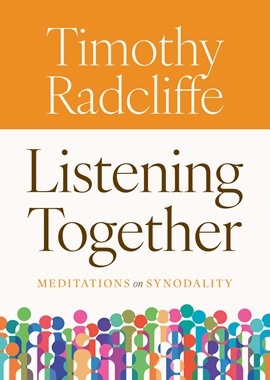
The assertion that “we are all radically incomplete” – a statement quoted by Timothy Radcliffe – is the what I’ve grabbed onto from his series of opening reflections for the synod meetings in Rome last October (and, he said, “we all need each other”)..

Many of us are aware of our own inadequacies. We only need to read the news and reflect on our own selves to see that “we are all radically incomplete.”

In response to this, society would have us increase our life skills and “build up our self-esteem.” “I am enough.” In Christianity:

  • We acknowledge being radically incomplete as a fundamental aspect of our humanity.
  • We recognize that it is in God that “we live and move and have our being” (Acts 17:28).

God is complete. We are God’s daughters and sons. God loves us. When we allow God to live in us – “It is no longer I but God who lives in me” (Galatians 2:20) – we experience the rest of Galatians 2:20: “The life I now live in the body, I live by faith in the Son of God, who loved me and gave himself for me.”

It is in allowing God to “live and move within us” that God’s completeness – coupled with God’s love – heals us and makes us whole. This is beautiful.

Kim Burkhardt blogs at A Parish Catechist and The Books of the Ages (and a member of the Association of Catholic Publishers). If you are a new visitor, it would be great to have you follow this blog (thank you!). If you know someone who would like this blog, please share it with them (thank you!). You can also support this blog by clicking here when you are going to shop on Amazon (that lands A Parish Catechist a commission on Amazon sales).
Death and new life

bird nest in tree

This image of an empty bird’s nest in a winter tree – with spring approaching – speaks visually to nature’s annual cycles of death and the anticipation of new life.

Seattle – where I live – is in the midst of a cold snap after a period of relative winter warmth. Many of us are ready for the increasing warmth and life that comes with the pending spring.

When I saw this empty bird’s nest and the similar-or-contrasting lack of leaves on the tree, I immediately thought of our own spiritual death, rebirth, and – for many people – the perpetual hope of new life. In Christianity, we learn to die to self. Christ died and rose again – for our salvation. Bird nests are often used year after year for the next year’s new baby birds. Annual cycles of new life. Soon, new leaves – another year of life (the color green of leaves symbolizes vibrancy) – will also begin to spring forth on this winter-cold, bare tree.

When I first tried to photograph this bird’s nest, I zoomed in with my camera in an attempt to photograph the bird’s nest and leaf-less tree branches – without the electrical and phone wires that are also visible when photographing the entire tree (i.e., the photo above).

I then realized that there is also value in photographing the broader tree showing the phone and electrical wires showing (see the photo below). Too often, we desire the vibrant new life that comes from dying to the darkest parts of ourselves…. Yet we let the wires in our lives – those distractions that prevent us from allowing God to rejuvenate new life in us – to prevent new vibrancy of life to emerge in us. Sticking to such distractions serves no good in our lives. How stubborn we can be in refusing to let go of that which keeps us bound to the darkness in and around us.

During this Lenten season, we anticipate the anniversary of Christ’s death and resurrection at Easter. Let us – during this Lenten season – allow God into our hearts to clean out that in each of us that needs to be cleansed. Welcome in new life of the spirit.

Allowing God to transform us into new life requires surrender. We give up control. We give up autonomy. In a sense, we give up whatever sense of “self” we cling to (“I may not like all of me, but ‘me’ is what I’ve got”). In today’s society, many of us must also begin to give up rampant individualism – an individualism that isolates us – to join the community of people around and among us. We are meant to live amongst one another.

Easter is coming.

bird nest in tree with wires


Kim Burkhardt blogs at A Parish Catechist and The Books of the Ages (and a member of the Association of Catholic Publishers). If you are a new visitor, it would be great to have you follow this blog (thank you!). If you know someone who would like this blog, please share it with them (thank you!). You can also support this blog by clicking here when you are going to shop on Amazon (that lands A Parish Catechist a commission on Amazon sales).
Third Sunday in Lent: Reading Reflection

river

This Sunday, we hear the Gospel reading of the woman at the well.

Jesus offered “living water” to the woman at the well. The Samaritan – who was viewed by Jews as “the other” – accepted Jesus’ offer of “living water.”

Jesus also offers us “The Living Water.”

How well do we – of the Christian faith – drink of “The Living Water?”

Do we come to the well? If we come to the well – Christ’s offer of vibrancy of life in faith – do we just skirt around the edges of the well (such as simply sitting in a pew on Sunday morning), or do we open our hearts to drink freely of what is offered?

To “drink of the living water,” there are times of grace when the water flows freely. Those moments of grace are like a river flowing through our lives. Beyond those moments, we have to surrender to allow God into our lives. Such surrender can seem a high price to pay. In recent years, I most fully surrendered my very being to “being changed” following one of those periods of grace in 2016 (that grace began at a Catholic mass in the Irish language followed by a broken ankle). Since then, I find that I periodically have to surrender again, in varying degrees (depending on how much I have un-surrendered at any given time). The sense that I am somehow autonomous creeps (often slowly) back into me thinking that I have “sense of independent self-hood” – that I am “my own person.” This false idea of independent self-hood separates me from God.

There comes a level when it becomes clear that the false idea of independent self-hood has re-asserted in my day-to-day way-of-being. I get too busy. My chronic pain disorder rears its’ ugly head again. My physical skin begins to feel again like a wall separating me from other people (actual physical tension like a wall becomes present). Prayer begins to become rote rather than an interactive no-need-for-human-words relationship between me and God. Life’s challenges become overly burdensome again. The Living Water trickles to mere drips of water rather than a free-ish flow of water. Time to surrender again to allow God to roam my existence freely (“It is no longer I, but God who lives in me” Galatians 2:20).

Kim Burkhardt blogs at A Parish Catechist and The Books of the Ages (and a member of the Association of Catholic Publishers). If you are a new visitor, it would be great to have you follow this blog (thank you!). If you know someone who would like this blog, please share it with them (thank you!). You can also support this blog by clicking here when you are going to shop on Amazon (that lands A Parish Catechist a commission on Amazon sales).

Book Review: Martin Laird’s ‘Into the Silent Land’

Book Cover: Into the Silent Land

I was recently given a copy of Martin Laird’s Into the Silent Land: Christian Practice of Contemplation.

As a contemplative pray-er, I find this book refreshing. Rather than only being a how-to book on the mechanics of how to pray contemplatively, this is the type of contemplative prayer book I look for: a description of what happens when we do a deep dive into contemplative prayer. It is – to paraphrase a speaker I heard once – the “poetry of our lives” that demonstrates the animation of one’s prayer life when prays contemplatively. Such poetry – it seems to me – helps lead readers into the experience of contemplative prayer via surrender into what we read in the books’ text.

A few “poetry of our prayer lives” excerpts:

  • “Silence is an urgent necessity for us: silence is necessary if we are to hear God speaking in eternal silence; our own silence is necessary if God is to hear us” (page 2).
  • “This book…proceeds from an ancient Christian view that the foundation of every land is silence (Ws 18:24), where God simply and perpetually gives himself” (page 6).
  • “…the grace of Christian wholeness that flowers in silence….dispels (the) illusion of separation [from God]” (page 16).

This is a short book, but it takes a long time to read – its’ contents are contemplated rather than merely read. It contributes meaningfully to one’s prayer life. This is a book I will keep.

Kim Burkhardt blogs at A Parish Catechist and The Books of the Ages (and a member of the Association of Catholic Publishers). If you are a new visitor, it would be great to have you follow this blog (thank you!). If you know someone who would like this blog, please share it with them (thank you!). You can also support this blog by clicking here when you are going to shop on Amazon (that lands A Parish Catechist a commission on Amazon sales).
Second Sunday in Lent: Reading Reflection

James Tissot's painting of Jesus praying

Many of Christianity’s denominations read the same Bible readings each Sunday – the three-year cycle of weekend readings decided upon by the Catholic church after Vatican II.

This Sunday, we hear in the First Reading of Abraham following God’s orders by going to a mountaintop to sacrifice his only son – the son he was given later in life to be the son who God had said would provide Abraham with countless descendants. At the last moment – when Abraham had demonstrated his willingness to follow God’s instructions – he was told not to sacrifice his son.

In the second reading (Romans 8:31-34), we hear reference to God not saving his own son – a son biologically descended from Abraham – from death.

In the Gospel reading, Jesus goes to a mountaintop – just as Abraham had gone to a mountaintop in the first reading (the readings each weekend are paired based upon shared topics or themes) – and is transfigured in dazzling white, having discourse with two prophets of old, all before three of Jesus’ apostles.

When we surrender to allow God to work in our lives, we are also transformed. To the degree that we allow God to work in our hearts, we become the people God meant for us to be. When we give up the false perception of being in control of our lives, it can be tempting to think that we are surrendering our independence and self-determination. How well is independence and self-determination working in today’s increasingly lonely, socially-distanced, and broken world? The people we are meant to be are people who are daughters and sons of God – daughters and sons who live in relationship with God and who are transformed through God’s love for us. We subsequently find ourselves transformed into living the two commandments Christ said are the two greatest: Love God and love your neighbor as yourself. Transformed into a life of joy that passes all understanding. In surrender, a new life is given to us.

Kim Burkhardt blogs at A Parish Catechist and The Books of the Ages (and a member of the Association of Catholic Publishers). If you are a new visitor, it would be great to have you follow this blog (thank you!). If you know someone who would like this blog, please share it with them (thank you!). You can also support this blog by clicking here when you are going to shop on Amazon (that lands A Parish Catechist a commission on Amazon sales).
Book Review: The Person…Readings in Human Nature

The Person

I came upon this The Person…Readings in Human Nature – edited by William O Stephens – recently in a Little Free Library. While skimming through it at the Little Free Library, I found the book to be – as per the book’s description – be an anthology of modern and historical perspectives on “personhood” from well-recognized writers and philosophers over the centuries (our modern view of personhood is actually a fairy recent perspective….).

I’ve always taken an interest in the psychology of human development. I brought home this particular book as it speaks to a particular interest I have at the moment: the distinct impact of living a Christian life on the human person (and, how a person lives their life).

Many of the historical and contemporary thinkers whose perspectives are included in this book are secular. One of them is St. Thomas Aquinas (13th century). The opportunity to look at these multiple perspectives is interesting…..

Anyone who has ever sat in a church pew knows that what we hear of Christianity on Sunday is suppose to be applied in our lives…. And, that it isn’t always applied in people’s lives Monday through Saturday.

Last Wednesday, I was at mass listening to an Ash Wednesday homily. During the homily, it occurred to me that the perspective was a perspective that has infused my life “more than I had realized.” I found myself noticing that the perspective offered in the homily was a perspective that I had learned growing in my denomination and that it had fundamentally become part of my worldview….. Several years ago, I was struggling through a difficult period. Myself and the people around me were trying to make sense of my situation and how I might move out of the difficult period. I was away from church at the time and simply saw my perspective at the time as “my perspective” (and, a perspective – if you would have asked me at the time – was a perspective no different than anyone else’s. Or, since we all have a perspective, I might have thought my perspective to be a secular one since I wasn’t religiously active at the time)….. As we searched for ways to mentally frame both my situation and a solution, I noticed that myself and secular folks around me at the time were framing an effort to find a solution very differently. I didn’t have a sense at the time of what those differing perspectives were…… Later – during last Wednesday’s Ash Wednesday homily – I realized that the perspective I was applying at the time was rooted in a very Catholic perspective; even though I wasn’t religiously active at the time. Having grown up Catholic, I had absorbed a world view that was more distinct than I had realized. Fish don’t realize they are swimming in water as water is what they know.

A solution to my above-mentioned challenge was found later – in the Catholic pews to which I had returned. Allowing God to work in my life brought me to a solution to a vexing challenge.

I am looking forward to reading at least several sections The Person…Readings in Human Nature. I look forward to reflecting via this book – from the perspective of “how we live in the world as persons” – the distinctiveness of the worldview I pondered on Ash Wednesday. How well I apply that worldview to living well and being of service is always up for review…..

Kim Burkhardt blogs at A Parish Catechist and The Books of the Ages (and a member of the Association of Catholic Publishers). If you are a new visitor, it would be great to have you follow this blog (thank you!). If you know someone who would like this blog, please share it with them (thank you!). You can also support this blog by clicking here when you are going to shop on Amazon (that lands A Parish Catechist a commission on Amazon sales).

Lent in 40 Days: Day Five (repentance)

I was in the confessional earlier this month.

Blessed Sacrament Parish in Seattle does a great job of “setting the mood” for reconciliation on Friday evenings – low lighting, the presence of the Blessed Sacrament, brief song.

Among other items on my list that evening, I told the priest “I hate crows.”  I went on tell him about my road rage about crows who hop around in the streets of Seattle.

In addition to not liking crows, I don’t like going to reconciliation (i.e., “confession”). I know a person who says they like going to reconciliation because they feel forgiven when they’re done. I know that reconciliation is about being sorry for what we’ve done and being forgiven. I don’t feel forgiven when I’m done in the confessional. Despite that, I go because I’m trying to really live my faith.

While I don’t feel forgiven when I go to reconciliation, I do often feel closer to God afterward. In my case, the act of my living out my faith by doing something I don’t want to do is a good thing….. Somehow, I think God likes that I’m doing what’s asked of me despite my grumblings about attending reconciliation (i.e., confession). Also, having to tell another human how I’ve sinned is good for humility (there are ways in which I’m stubbornly vain).

I considered a key point while in the confessional. After saying, “I hate crows” and told the priest about my ongoing road rage about crows, the priest made a comment geared toward trying to get me to ease up about crows. An act of contrition happened at the end of reconciliation and my sins were forgiven. However, I hadn’t fully gotten done with my animosity toward crows-in-the-streets-of-Seattle. ”Why,” I was thinking, “can’t crows just wise up and stay out of the road! Sociologists who study crows talk about how smart crows are!

Perhaps, however, some good is now being achieved by my acknowledgement of hating crows-in-the-street – and then blogging about it. I am blogging about this to illustrate the need for us to focus on repentance during Lent (we’re all called to be penitent during Lent).  I started to explain the following: “This ‘hating crows’ matter is a case of ‘road rage.’ Crows hang out in the road, getting in the way of traffic. Do they think they own the road? What business do they have interrupting my day and the days of other drivers by hopping around in the road?” This got me to thinking. Hmmm…. “Perhaps this is about me being self-absorbed. How am I suppose to expect crows to take into the consideration drivers’ self-perceived needs to drive around uninterrupted by crows hopping around in the street? Crows are a part of nature. They have as much right to live in Seattle as I do. I can’t reasonably expect crows to figure out human perceptions (i.e., about drivers not wanting our driving to be interrupted by hopping crows). I should be able to co-exist with crows.”

Yes, Lent is a time for us to be repentant. One small positive outcome of Lenten reconciliations this year (okay, I actually went to reconciliation just before Lent started….) is that Seattle’s crows and I may end up on better terms (including these crows that I photographed at Seattle’s Green Lake – they had no idea that I’ve been experiencing road r). We’ve all got something for which to repent.

Kim Burkhardt blogs at A Parish Catechist and The Books of the Ages (and a member of the Association of Catholic Publishers). If you are a new visitor, it would be great to have you follow this blog (thank you!). If you know someone who would like this blog, please share it with them (thank you!). You can also support this blog by clicking here when you are going to shop on Amazon (that lands A Parish Catechist a commission on Amazon sales).

Lent in 40 Days: Day Four (more on temptation)

Two rows of trees

Lent is a time when we anticipate Christ’s death and resurrection. We experience the wonder of Christ’s death and resurrection for our salvation.

Christ died for our salvation due to our fallen nature. It could be tempting to look at Christianity’s focus on our fallen nature as Christianity taking a needlessly dark view of humanity that doesn’t build us up. Not the case. The fact is that all of us do things we shouldn’t do. We all know that we all due things we shouldn’t do. Original sin and the opportunity of redemption through Christ is actually freeing. Christianity – through Christ – offers us a tangible pathway to becoming the best of the people we are meant to be.

Due to our fallen nature, temptation (temptation to do what we shouldn’t do) is one of the themes we consider during Lent.

In Matthew, Mark, and Luke’s gospels (depending on whether we are in Year A, Year B, or Year C of the liturgical cycle of readings), we hear in the first Sunday of Lent about Christ spending 40 days in the desert and being tempted by the devil. He resisted the devil’s temptations.

How do we deal with temptation when we find ourselves faced with temptation in our own lives? In my previous Geography of Faith post, I make poetic reference to the times we wander down detours in our lives. 

For starters, succumbing to temptation leads us into the wilderness. Not in a good way. Giving in to temptation to behave as we shouldn’t can take us where we ultimately don’t want to go. Keeping that in mind can sometimes be an effective deterrent from doing what we shouldn’t do.

Sometimes, the temptations we face are clear.  Eat that extra sugar we don’t need. Lie to avoid unwanted consequences. Walk away rather than be a Good Samaritan in a difficult situation. Other times, temptations are more subtle. C.S. Lewis’ classic book The Screwtape Letters creatively presents the subtle and alluring nature of many temptations. If we don’t recognize something as a wrongful temptation or as guaranteed to cause trouble, so much easier to succumb to it….. For example, we sometimes find ourselves attracted to negative temptations – to sin – precisely because we think we’d benefit from it. ”It’s okay for me to ‘carry tales’ against another because it will achieve a greater good” (when we actually want to slander the person because we don’t like them – eather than holding ourselves to a standard of evaluating whether what we are going to say is true, necessary, and kind). As another example, no one slides into an alcohol problem intending to become an alcoholic. ”Life’s hard right now, I can have a few drinks to relax until this current situation gets easier……” (years later…rehab). ”Yes, I can take out that extra credit card” (when I already have enough funds to meet my needs and the unsolicited credit card being offered is designed to entice me to buy things I don’t need and can’t afford….).

When we are tempted to do something that we clearly know we shouldn’t do, how do we avoid temptation? If we can walk away on our own, great. Sometimes, getting moral support from someone we know is needed (and usefully helpful!). An active prayer life is also essential. Going to reconciliation before succumbing to temptation can also be an effective deterrent. An active prayer life is also always a good idea! An active prayer life and involvement in a faith community helps with many kinds of temptation. Read more about prayer in this prayer post….. Surrendering to allow God to lead us in the direction God wants us to go has positive outcomes in all kinds of ways!

Kim Burkhardt blogs at A Parish Catechist and The Books of the Ages (and a member of the Association of Catholic Publishers). If you are a new visitor, it would be great to have you follow this blog (thank you!). If you know someone who would like this blog, please share it with them (thank you!). You can also support this blog by clicking here when you are going to shop on Amazon (that lands A Parish Catechist a commission on Amazon sales).