Lent in 40 Days: Day Three (Temptation)

We are called to give something up during Lent. ”Fish on Fridays.”

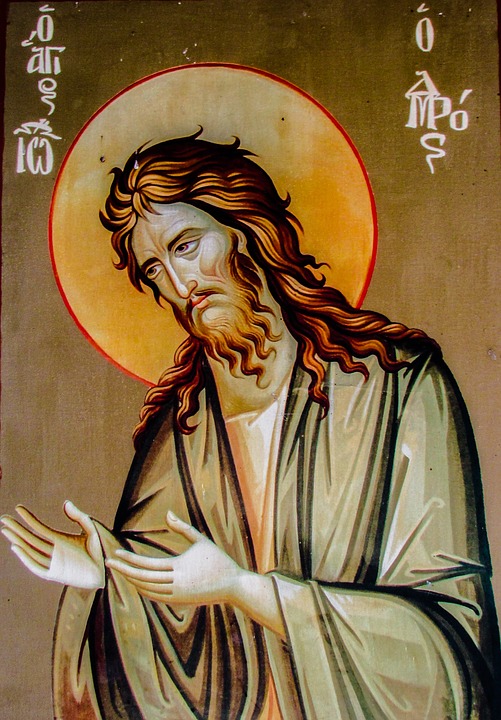
Jesus faced temptation in the desert. He didn’t give in when offered things many of us would have been tempted to accept. He prayed. A lot. Whenever Christ’s time on earth was difficult, we hear repeated stories about him going alone to pray. Often, he prayed at places where there would likely have been no easy distractions (such as in the desert). Good advice for us. As the saying goes, there can be no faith life without prayer.

If you haven’t given up something for Lent yet, now would be a good time to start (also, this would be a good time to start praying more if regular prayer isn’t part of your life).

What if there’s something we CAN’T give up? I’ve been in that situation. For several years in a row, I couldn’t give up sugar during Lent. At first, I came up with excuses (“Oh well, my prayer life is growing year-round anyway – I don’t have to limit my growth in faith to 40 days on a liturgical calendar…..”). Slowly, I became honest about the bottom line: I couldn’t give up sugar. I had to look at my earthly attachments – and how unhealthy attachments to things such as sugar negatively impact my life. Giving up something that’s hard to give up counts more than giving up something we don’t care about (such as an established vegetarian “giving up meat” during Lent).

We are called to not be so bound to anything in this life that we can’t give it up; rather, we must be willing – capable – of being attached only to God. “If anyone comes to Me and does not hate his own father, mother, wife, children, brothers, sisters, yes, and even his own life, he cannot be My disciple.” (Luke 14:26). ”The one who loves his life loses it, and the one who hates his life in this world will keep it to eternal life” (John 12:25). 

If there’s something we can’t give up – such as an inordinate attachment to sugar, money, alcohol, sex, prestige, a cell phone – why? Underneath such attachments, we’re going to find some kind of emotional dis-ease. And, probably, negative consequences. God doesn’t want us to live with dis-ease and negative consequences. If we surrender to allowing God to turn us into the person God wants us to be, God will transform us from being the person we aren’t meant to be. Such surrender requires a willingness to be in relationship with God and to go wherever that leads – a commitment.

Allowing God to help us move beyond attachments that we aren’t capable of giving up also goes beyond being a self-help fix (if we’re just looking for help improving our own life, there’s more to being a person of faith than this!). Certainly, God loves us and wants us to be happy. In addition, however, a vibrant faith is about more than just God making us healthy. Ultimately, a vibrant faith is about “Love God and love your neighbor as yourself” (Matthew 22:34-40). As children of God, our first priority is a relationship with God – which we must be able to put before all else. Further…..when we become the people God meant for us to be, we are in a position to contribute to healthy families and vibrant communities.  

Kim Burkhardt blogs at A Parish Catechist and The Books of the Ages (and a member of the Association of Catholic Publishers). If you are a new visitor, it would be great to have you follow this blog (thank you!). If you know someone who would like this blog, please share it with them (thank you!). You can also support this blog by clicking here when you are going to shop on Amazon (that lands A Parish Catechist a commission on Amazon sales).
Lent in 40 Days: Day Two

Rosary and two wooden crosses

Religious seasons follow an established liturgical calendar (calendars with quite a surprising intricate level of planning).

Having a regularly-scheduled liturgical calendar provides a rhythm to our communal faith experience and the opportunity to connect with the myriad of faith concepts during the times set aside to celebrate – and engage with – these concepts.

Our faith experience is at the same time personal. I have struggled at times with engaging with liturgical seasons on a fixed calendar, preferring to engage with faith concepts when such concepts become personally meaningful – and therefore easy to connect with – in the seasons of my own life.

Yet, the photo above speaks to the communal nature of faith. The rosary shown above is the rosary I was given for my First Communion at age seven. My classmates and I received our First Communion together – in community. The occasion was special enough that I’ve kept my first communion rosary all these years (I keep it in a special place at home where it won’t get lost). The wooden cross outside of the rosary was handmade for me by an acquaintance when I was in high school. I don’t remember the name of the fellow who made the cross for me, but the communal nature of the gift was meaningful – I’ve likewise kept the cross all these years. The cross laid inside the rosary likewise has a story; when churches were again able to have limited church services as we began emerging from COVID lockdowns, we couldn’t each “kiss a cross” at my parish at the Easter Vigil – so we were each given one of these small crosses at the Easter Vigil. Again, a communal experience. Again, I kept the cross….. Rosaries can be prayed alone, anywhere; rosaries are also often prayed communally. Placing one wooden cross in the rosary speaks to Jesus within prayers to his mother, while another cross placed outside the rosary (on purple fabric for the color of Lent) speaks to Jesus’ sacrificial death being for all of us – those of us who are both within community and for all those who are not in community.

We grow in faith in community. We are meant serve our communities. We have the opportunity to grow religiously in community with one another during liturgical seasons such as Lent – as well as within the flow of our own life’s seasons. 

Welcome to 2024’s communal season of Lent – a time of reflection, fasting, being of service. We spend 40 days anticipating Christianity’s holiest religious day of the year – the anniversary of God’s ultimate display of love for all of us.

Kim Burkhardt blogs at A Parish Catechist and The Books of the Ages (and a member of the Association of Catholic Publishers). If you are a new visitor, it would be great to have you follow this blog (thank you!). If you know someone who would like this blog, please share it with them (thank you!). You can also support this blog by clicking here when you are going to shop on Amazon (that lands A Parish Catechist a commission on Amazon sales).

Lent in 40 days: Day One

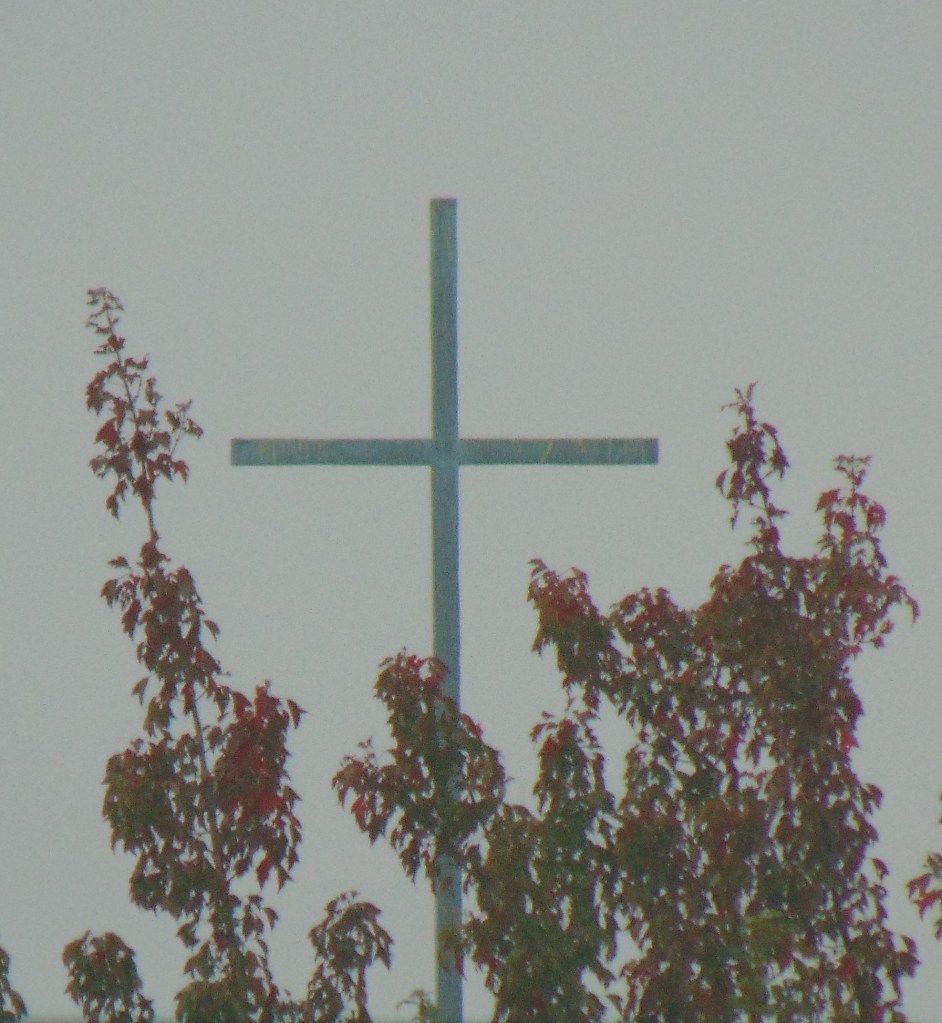
Wooden cross

Welcome to Lent. A Parish Catechist looks forward to journeying with you for the next 40 days!

Major liturgical seasons of the Christian year include:

  • Advent: four weeks of anticipating Christmas
  • Christmas Day: Always on December 25
  • Christmas Season: Christmas Day until Epiphany (January 6)
  • Lent: 40 days of anticipating Easter (starts on Ash Wednesday)
  • Easter Day: The first Sunday after the first full moon after the Spring Equinox (therefore, a date between late March and late April)
  • Easter season: the fifty days between Easter Day and the day we celebrate Pentecost
  • Pentecost: The day when Holy Spirit descended upon the Apostles following Christ’s Ascension

This year, the beginning of Lent (i.e., Ash Wednesday) – due to Easter being a moveable feast – coincides with Valentine’s Day (February 14).

Just as Mardi Gras famously occurs the day before Ash Wednesday – a day of plenty before we begin 40 days of fasting, prayer, and alms giving – some Catholic schools planned ahead this year to celebrate Valentine’s Day on February 13.

What kind of fasting are you planning for Lent this year? Some restaurants know to offer “Fish on Fridays” during Lent to attract fasting guests. Food is famously a way to fast during Lent. We eat less, give up foods such as no-meat-on-Fridays or giving up sugar. What matters spiritually is that we abstain from something that we personally find difficult to give up. For several years, I couldn’t give up chocolate during Lent. I had to take a look at why I was so attached to chocolate (and how that was impacting my health!). We are to attach ourselves to God, not to earthly things. For many people, reducing the use of technology (such as phones) can be an earthly thing that is hard to set aside – reducing phone usage could be a good Lenten discipline.

What kind of enhanced prayer activity are you planning for Lent this year? Prayer is about having an active relationship with God. It is famously said that “There can be no faith life without prayer.” A Parish Catechist blogged in January about the value of prayer and how to approach prayer (please feel free to give that post a read). Lent is a great time to build up a regular prayer practice.

What kind of alms-giving are you planning for Lent this year? The U.S. Conference of Catholic Bishops (USCCB) have this to say about almsgiving during Lent: “The foundational call of Christians to charity is a frequent theme of the Gospels….  During Lent, we are asked to focus more intently on ‘almsgiving,’ which means donating money or goods to the poor and performing other acts of charity.  As one of the three pillars of Lenten practice, almsgiving is ‘a witness to fraternal charity’ and  ‘a work of justice pleasing to God.’ (Catechism of the Catholic Church, no. 2462).”  There are many types of social and economic need in our communities. Please consider being charitable in a way that makes a difference in your local community!

Kim Burkhardt blogs at A Parish Catechist and The Books of the Ages (and a member of the Association of Catholic Publishers). If you are a new visitor, it would be great to have you follow this blog (thank you!). If you know someone who would like this blog, please share it with them (thank you!). You can also support this blog by clicking here when you are going to shop on Amazon (that lands A Parish Catechist a commission on Amazon sales).

Pondering our spiritual landscape

Harrison Hot Springs

I was born in Colorado (a high-altitude, mountainous geography with some areas dry, flat, and/or farmland areas); I have spent most of my life in North America’s Pacific Northwest. When I periodically drive to Colorado to visit relatives, I am struck by the contrast of the lush geography of where I live and the simple beauty of the semi-arid geography found in parts of Wyoming located between Washington State/B.C./Oregon and Colorado. Wyoming’s dry stretches with layered, red cliffs and “red rocks” particularly attract my imagination.

We humans sometimes use our physical surroundings as an analogy for reflecting upon our spiritual, emotional, and intellectual lives. I am deeply rooted, for example, in the rainforest-esque rich landscape of where I live and I appreciate the opportunity to take photos such as the one above. I find it appealing to compare such geography to luscious experience of spiritual realms. Yet, arid geographies also have their beauty. 

Deserts can be analogous to dry periods in one’s spiritual life. We all experience spiritual deserts at one time or another (sometimes, for long, perplexing, and/or difficult periods!). Finding out way out of such periods can be challenging (listening for the quiet voice of the spirit inviting us out of such deserts can be helpful!). With that said, the beauty – and simplicity – of semi-arid geography can also be an opportunity to focus on our spiritual life without distraction. Rather than being a barren or desolate experience, such times can be fruitful opportunities to clear away the clutter in our faith journeys. Times to focus on simplicity and directness with clarity of vision. What really matters in our lives? What do I need to clear out of my life? When feeling emotionally depleted or spiritually bankrupt, going to dry, arid geography can sometimes help to to cultivate a focused relationship with the divine. Such simplicity draws some people to contemplative prayer and/or to a life in which we focus more on the inner experience of faith and on being of service to other people – the aspects of faith that matter – rather than opting for the avoiding-what-matters (or, avoiding-what-I-don’t-want-to-deal-with) distractions available in more abundant geographies and in cities.

For anyone interested in exploring contemplative prayer, please feel welcome to check out Contemplative Outreach or the writings of mystics (such as Teresa of Avila, John of the Cross, or Julian of Norwich). For anyone interested in spirituality in dry geographic locations, I came upon an appealing blog: 11 Sacred Places in New Mexico.

Kim Burkhardt blogs at A Parish Catechist and The Books of the Ages (and a member of the Association of Catholic Publishers). If you are a new visitor, it would be great to have you follow this blog (thank you!). If you know someone who would like this blog, please share it with them (thank you!). You can also support this blog by clicking here when you are going to shop on Amazon (that lands A Parish Catechist a commission on Amazon sales).
Transformation in Christ: Representation in Imagery

anastasis

When I saw the iconography shown above – at St. Andrew’s Episcopal Church’s chapel in Seattle – I was drawn to it. Then, drawn back to it again and again. This iconographpy depicts Anastasis: Jesus descending into Hades to retrieve Adam and Eve between his own death on Friday and his resurrection on Sunday. Compelling. I am still coming back to this imagery.

This imagery gets to the heart of Christianity. Christianity is about God’s love for us, God’s grace in our lives, our surrender to allow God to transform us into the people we are meant to be. W are meant to be God’s daughters and sons who live in God’s love and who love one another.

I had already encountered God’s loving grace – starting at an Irish-language mass in 2016 (that story is told here) – and have continued moving through a faith transformation… including when I came across the Anastasis image above. We humans surrendering to God’s transformative grace is redemptive – when we experience this, we then want to grow in faith. As a result of such experience, I am now learning to talk about God’s transformative nature (I’m such an introvert that I’m having to take workshops to “come out of my shell” and more outwardly demonstrate what I’m learning and experiencing).

More recently, I came upon French artist James Tissot’s depiction of Jesus praying alone at night on a mountaintop:

James Tissot's painting of Jesus praying

This image of the illuminated Christ is also compelling.  Jesus is shown illumined on a mountain top in prayer, illumined in his relationship with God the father. Further, God transforms us through Christ. God the father transforms us – transforms our faith experience in prayer. This is an image through which I yearn to continue experiencing God’s transformative grace.  How can one not want to grow in faith – connect with God’s love for us – when seeing this depiction of Christ illumined in prayer? ”It is in him that we live and move and have our being” (Acts 17:28).

Prayer gets to the heart of having a faith in we have a relationship with God and allow God to turn us into the people God wants us to be. I wrote more on prayer in my recent monks-in-training post.

Kim Burkhardt blogs at A Parish Catechist and The Books of the Ages (and a member of the Association of Catholic Publishers). If you are a new visitor, it would be great to have you follow this blog (thank you!). If you know someone who would like this blog, please share it with them (thank you!). You can also support this blog by clicking here when you are going to shop on Amazon (that lands A Parish Catechist a commission on Amazon sales).

Further consideration of “Embodying Forgiveness”

Embodying Forgiveness: A Theological Analysis

I reviewed L. Gregory Jones’ book Embodying Forgiveness: A Theological Analysis in early January. The book is important enough to discuss a second time. 

Embodying Forgiveness is not a quick read. It’s written rather academically. It is densely packed with important ideas that require thoughtful reading. The book is about a sometimes difficult topic that can take great commitment to apply in one’s life. The book also supports a well-lived faith in which we – as a friend often says – do the “adulting” of living one’s faith (i.e., we grow up and live out the responsibilities we are called to do. In fact, this book helps us “find our inner adult!”). This is the type of book to read when we want to move beyond “easy principles of faith” and fluffy phrases to a faith in which we grow and mature. In other words – it draws us toward meaningful liberation and to living in right relationship with God and the people in our lives. The principles in this book can be intimidating, but that doesn’t mean that the book is a “nonjoyous downer – it’s liberating. In this book, we learn about living for our community rather than being self-centric. We learn about giving up self without being a doormat.  Good news: the author draws readers toward practicing forgiveness, making it palatable when forgiveness feel unpalatable.

This book is so important that I’m posting several excerpts (hint: yes, this is an effort to tempt readers to read the book!):

  • “Forgiveness has long been hard to embody, even among those committed to its importance” (page xi).
  • “…the craft of forgiveness involves the ongoing and ever deepening process of unlearning sin through forgiveness and learning, through specific habits and practices, to live in communion – with the Triune God, with one another, and with the whole Creation” (page xii).
  • The ideas in this book move “beyond….pious, sentimental affirmations that ‘Jesus is my friend,'” to friendship being “a much more formative and transformative relationship” (page xiii).
  • “….forgiveness serves primarily not to absolve guilt but as a reminder, a gracious irritant, of what communion with God and with one another can and should be: and so it should enable and motivate our protest against any situation where people (either ourselves or others) are diminished or destroyed” (page xvi).
  • “….the purpose of forgiveness is the restoration of communion, the reconciliation of brokenness” (page 5).

I am the type of reader who thinks that a book worth reading should be read in its’ entirety. In the case of this book, reading even just a chapter or two – and really applying it in one’s life – would move a person forward in a faith well-lived. A worthwhile read!

Kim Burkhardt blogs at A Parish Catechist and The Books of the Ages (and a member of the Association of Catholic Publishers). If you are a new visitor, it would be great to have you follow this blog (thank you!). If you know someone who would like this blog, please share it with them (thank you!). You can also support this blog by clicking here when you are going to shop on Amazon (that lands A Parish Catechist a commission on Amazon sales).

We can all strive to be monks-in-training!

leather-bound book
Book with leather binding

I was recently given a leather-bound journal.

Leather-bound books can bring to mind monks hand-copying books in medieval monasteries (surviving copies of such books sometimes have page border notations such as “it is very cold”). Alternately, we may think of learned scholars in the earliest days of books who wandered from place to place via dirt roads with a leather-bound manuscript in their possession.

We sometimes connect such imagery with thoughts of more spiritual times. ”If I lived in a medieval monastery, I would have been more faith-focused than I am today in a technologically-advanced city in the twenty-first century.”  Different times and places each have their own zeitgeist, certainly. And, of course, there are places specifically dedicated to faith pursuits.

We can all be people of faith.Teresa of Avila, a sixteenth-century mystic in Spain, took on reforming the Carmelite religious order (she was a Carmelite nun) to return it to a more religiously-focused character than it had been for a period of time. Just as specifically religious environments can undergo re-invigoration, we can work to make our own lives spiritually vigorous even if we live in a secular environment. A commitment to growing in faith, participating in a faith tradition, daily prayer, making time regularly for activities such as reading faith-focused books and participating in faith-sharing groups, sharing about our faith development efforts (with a friend, a prayer group, a spiritual director, a pastor, etc.), living one’s faith by being of service to others – we can be faith-filled through a combination of all these things.

Daily prayer is a critical component of a faith-filled life. There’s a saying: “There can be no faith without prayer” (source uncertain). Within a theistic vision of faith, a life of faith must involve a relationship with the divine. Our relationships with the people in our lives are defined by relationship: social interactions. This also applies in our faith life – there can be no faith without a relationship with God. Our relationship with God unfolds in two ways – through focused interaction with God (prayer!) and by being of service to God’s children (every human being is a child of God). In the Acts of the Apostles (Acts 1:14), we read that the apostles – following Jesus’ ascension – “all joined together constantly in prayer, along with the women and Mary the mother of Jesus, and with his brothers.”

Not sure how to pray? Not sure how to deepen one’s prayer life? The first thing to know is to pray daily. Relationships aren’t built sporadically – they develop and grow through sustained interaction. Further, relationships are two-way. I like the analogy of comparing prayer to a phone call. We don’t sustain relationships with the people in our lives by phoning someone and saying, “I’m calling to tell you X” – then hanging up. Rather, a phone call is a give-and-take, two-way interaction. Prayer is the same way. We don’t just send our communication to God in a one-way phone call.  We both communicate to God in prayer and also rest in stillness to allow God to present to us.

There are many ways to pray:

  • Talking to God as we would talk to a friend (either verbally or through what’s often called “mental prayer”)
  • Lectio Divina (a method of praying the scriptures reflectfully)
  • Attending church services (church is itself a form of prayer)
  • Religious singing (“Those who sing pray twice”)
  • Contemplative prayer (for example, learn about this form of prayer through an organization called Contemplative Outreach)

Interested in reading more about prayer? A couple of great books include:

Clinging: The Experience of Prayer (Emilie Griffin)

The Tradition of Catholic Prayer (The Monks of Meinrad Monastery)

Kim Burkhardt blogs at A Parish Catechist and The Books of the Ages (and a member of the Association of Catholic Publishers). If you are a new visitor, it would be great to have you follow this blog (thank you!). If you know someone who would like this blog, please share it with them (thank you!). You can also support this blog by clicking here when you are going to shop on Amazon (that lands A Parish Catechist a commission on Amazon sales).

Perspectives: how we engage with specific faith concepts

Christian writers and denominations variously emphasize different religious ideas. ”Are we justified by faith or by works,” etc…..

In being a person of faith, we don’t get to choose whether the principles of faith are applicable in our lives. Just as we don’t choose whether gravity affects our physical movement or whether we need oxygen to survive, we don’t get to choose whether being faithful is contingent upon growing in “love your neighbor,” whether we should live the ten commandments, if we should develop our prayer lives, etc.

While we don’t get to choose whether truths of faith are applicable in our lives, it’s interesting to ponder how we engage with these ideas. Right now, for example, I’m reading L. Gregory Jones’ book Embodying Forgiveness (an important read!). He states in the book’s early pages that we can only receive God’s grace through learning to forgive (that’s how I read what he said, anyway). Yes, forgiveness is a nonnegotiable, important practice and we receive grace by forgiving others (“forgive us our trespasses as we forgive….”). With that said, I have experienced God’s grace in a situation unrelated to forgiveness (I tell that story here). Just because I’ve experienced God’s loving grace in a situation other than one of forgiveness -seemingly at odds with what I read – doesn’t mean that I don’t accept the need to forgive others in order to be in good relationship with God and with the people around me. 

As for the question of whether we are justified by faith or by good works, I accept my denomination’s argument that we are justified by faith. There are people who do good works without being a person of faith – but one cannot be truly faithful without performing good deeds. A faithful life calls us to care for other people (i.e., “faith without works is dead”).

Some faith precepts “get our attention” at different times in our lives (and in different ways). That’s okay. Engaging with the faith principles that reach us at any given time will lead us in “continuous conversion.” “The first work of the Holy Spirit is conversion. Moved by grace, man turns towards God…..(CCC#1989).” As long as we are engaged in growing in faith – with a healthy level of discipline – we are moving forward (I am drawn to the idea of continuous conversion!). What matters most – I think – is that we allow God to direct us in the direction(s) God wants us to go. When dry periods in our faith experience come along – and they do – we must simply continue trying to grow in faith. Even John of the Cross (my second-favorite mystic, after Teresa of Avila with whom he worked) wrote of seemingly dry periods (he said to continuing praying even when prayer seems dry – or dark; he rightly said that we’ll see afterward that God has worked within us during dry/dark periods of prayer, even if we didn’t see it at the time).

Kim Burkhardt blogs at A Parish Catechist and The Books of the Ages (and a member of the Association of Catholic Publishers). If you are a new visitor, it would be great to have you follow this blog (thank you!). If you know someone who would like this blog, please share it with them (thank you!). You can also support this blog by clicking here when you are going to shop on Amazon (that lands A Parish Catechist a commission on Amazon sales).

List: examples of faith being hard work, path to joy

Stairs, moss

Living Christianity is both hard work and a path to joy and freedom.

Examples of having to work at living Christianity include:

  • “It is easier for a camel to pass through the eye of a needle than for a rich man to enter the kingdom of God” (Matthew 19:24). Putting faith into practice – such as giving up our attachment to worldly goods – is a challenge.
  • The bumper sticker “Love your neighbor means everybody” (a reflection on Matthew 22: 34-40: “The greatest commandments are…love the Lord your God….and….love your neighbor as you love yourself.”) speaks to the heart of Christianity and of the Christian faith being hard work.  It’s easy to love the people we like. It’s harder to love people who we are naturally inclined to dislike (the disheveled homeless person who went through our trash and left a mess, a political figure we disagree with, the difficult relative, an argumentative person at work, etc.). Yet, “love your neighbor” does mean “everybody” – we don’t get to pick and choose. Many or all aspects of living the Christian faith are required to practice treating everyone with dignity and grace. Loving people is a verb – a self-giving action. If we were all to practice this well (hard work!), the world would be a better place.
  • The pastor and writer L. Gregory Jones writes (in his book Embodying Forgiveness) ““Christian forgiveness involves a high cost, both for God and for those who embody it. It requires the disciplines of dying and rising with Christ, disciplines for which there are no shortcuts, no handy techniques to replace the risk and vulnerability of giving up ‘possession’ of one’s self, which is done through the practices of forgiveness and repentance.” Yes, there is a ‘high cost’ to doing forgiveness – but also high rewards.

While there are plenty of examples of how living one’s faith is a lifelong effort (an “ongoing conversion,” in challenging ways such as those noted above), there are also joys:

  • “And the peace of God, which surpasses all comprehension, will guard your hearts and minds in Christ Jesus (Phillipians 4:7).”
  • “Blessed are those who hunger and thirst for righteousness, for they will be filled (Matthew 5:6).”
  • Living faith principles – including surrender to allowing God to transform us – turns us into the people God intends for us to be. God wants us to be happy and will – if we allow it – adjust who we are to that purpose.
  • In living out the principles of faith, we contribute positively to our communities – helping to make the world a better place.
  • Living faith principles teaches us to bring joy into the lives of other people – which is among the primary reasons for us to be alive. We are all God’s children; bringing joy into the lives of God’s children is a wonderful thing!

The Christian path is a great, joyous path. A loving path that turns us into better people.

Kim Burkhardt blogs at A Parish Catechist and The Books of the Ages (and a member of the Association of Catholic Publishers). If you are a new visitor, it would be great to have you follow this blog (thank you!). If you know someone who would like this blog, please share it with them (thank you!). You can also support this blog by clicking here when you are going to shop on Amazon (that lands A Parish Catechist a commission on Amazon sales).

Loving God (Reflection, part two: Matthew 22:34-40)

I frequently quote Matthew 22: 34-40: “The greatest commandments are…love the Lord your God….and….love your neighbor as you love yourself.” In a recent post, I focused on the aspect of loving one’s neighbors (“love your neighbor means loving everybody”).

As mentioned in that recent blog post, there’s a lot that goes into living each aspect of love God, love your neighbor, love yourself.

For the aspect of loving God, loving God necessitates investing time and effort into a continuing relationship with God.

A crucial aspect of faith gets to “the heart” of a loving relationship with God: God is love, God loves us, and God wants to have a relationship with us. It is God’s very nature to love. Given that it is God’s inherent nature to love, the Catholic Catechism speaks to God’s nature needing to be Trinitarian – Father, Son, Holy Ghost – because God needed someone to love before God had humans to love; the three aspects of the Trinity could love each other – each aspect of itself – until we humans came along….and, of course, the Trinity continues loving each aspect of itself. Paragraph 221 of the Catechism reads: “God himself is an eternal exchange of love, Father, Son, and Holy Spirit, and he has destined us to share in that exchange.”).

Us loving God in response to God’s love for us requires intentionality on our part. A relationship with God happens in prayer. There can be no faith without prayer (I don’t recall where I first heard this. It’s true!). Westerners live in an activity-focused society; sitting in communal presence with God (prayer!) – as well as with the people in our lives – requires the willingness to pause contemplatively. Pausing contemplatively can be uncomfortable for those unfamiliar with the practice – forcing presence with inner experience that is sometimes avoided. The fruit of being present with God can bring us to the joy of loving God and experiencing being loved by God.

I have heard prayer compared to a phone call. We wouldn’t phone someone and say, “I’m calling to tell you about X.  Here’s what I have to say,”  then hang up, ending the call.  It’s the same way with prayer.  Too often, prayer is thought to be one way – us talking to God.  Remember to listen (“resting in God’s presence”). Prayer is a two-way communication – us communicating to God and – for many of us – allowing God to be present with us (a few saints sense direct verbal communication!).   Be still and know that I am God (Psalm 46:10).

Loving God is one of the aspects of how we are meant to live. Living in right relationship with God – loving God – turns out to be its’ own reward, bring joy to both God and to ourselves. 

Loving God also requires loving our neighbor.  Because each of us is a child of God, loving God inherently requires loving God’s children.  “If someone says, ‘I love God,; and hates his brother, he is a liar; for the one who does not love his brother whom he has seen, cannot love God whom he has not seen (1 John 4:20).”  To whatever degree we live “love all of God’s children,” we contribute to making this world a better place.

Kim Burkhardt blogs at A Parish Catechist and The Books of the Ages (and a “Content Creator/Individual” member of the Association of Catholic Publishers). If you are a new visitor, it would be great to have you follow this blog (thank you!). If you know someone who would like this blog post, please share it with them (thank you!). You can also support this blog by clicking here when you are going to shop on Amazon (that lands A Parish Catechist a commission on Amazon sales).