List: several aspects of an inner relationship with God

Every one of us are daughters and sons of God.

God loves us wants to have a relationship with each of us.

Relationships, to truly be a relationship, are two-way and interactive. A great analogy I heard about our relationship with God being two-way is that of comparing prayer to a phone call. We typically wouldn’t call a person we know only to tell them something and then hang up; rather, the dialog goes back and forth – with both parties participating in communication. Prayer is the meant to be the same way – two way and interactive, not just uni-directional thoughts from us sent to God.

We know what it is like to interact socially with the people in our lives – family, friends, co-workers, etc. We value human relationships that are rich, varied, and interactive.

A relationship with God is an inner experience that happens in prayer.

There are many ways to pray, from intercessions (“Hey God, I/we need this-or-that, please help out”) to lectio divina, attending church (“those who sing pray twice”), and contemplative prayer (and, and, and). My favorite book about the many types of prayer is The Tradition of Catholic Prayer from the monks of St. Meinrad Abbey (it can be purchased online!).

Personally, I find the greatest depth of inner social interaction with God through contemplative prayer. No human language is necessary in such prayer. Rather, it’s simply – and meaningfully – being in (and feeling!) God’s presence.

I began experiencing contemplative prayer as a grace given in 2016. It began with one of those “promptings of the Holy Spirit” that many of us feel from time to time (these are initiated by the Holy Spirit, we can’t initiate these promptings but we can opt to be receptive to these promptings and respond!). The prompting I experience in 2016 happened, naturally enough, at a church service; during the homily (sermon), the priest’s faith filled an empty hole I’d been walking around with but hadn’t been able to fill. I sat with that experience in the days that followed; this grace resulted in an extended period of feeling God’s presence – and love – in contemplative prayer. Since then, my experience of contemplative prayer has brought about wonderful positives:

  • A sense of God’s presence in my life (i.e., a social connection in prayer)
  • An experience of God’s love for me
  • Emotional rest from life’s challenges by “resting in God’s presence” in prayer
  • Allowing God to more fully turn me into the person God wants me to be (we are suppose to be saints-in-training!)
  • Letting God emotionally rearrange my emotional and psychological experience such that I am gradually-but-noticeably becoming emotionally healthier and happier – and becoming a better person to the people around me. In the New Testament, Galatians 5:22-3 states that “the fruit of the Spirit is love, joy, peace, longsuffering, kindness, goodness, faithfulness, gentleness, self-control.”

A great place to learn about contemplative prayer is the organization Contemplative Outreach.

Interested in having a two-way, interactive relationship with God? Try taking up prayer twice per day, five to fifteen minutes each time. Stick with it, ask God to be present in your life. Notice and respond to any promptings that come your way. Not sure how to pray? If you’d like to try multiple approaches to prayer, maybe try reading the book mentioned above (The Tradition of Catholic Prayer) to learn more about prayer or check out the Contemplative Outreach website. Most importantly:

  1. Pray daily and actively
  2. There is no wrong way to pray. Each of us is an individual; how we connect with God will be unique to us.

Kim Burkhardt blogs at A Parish Catechist and The Books of the Ages. If you are a new visitor, it would be great to have you follow this blog (thank you!). If you know someone who would like this blog post, please share it with them (thank you!).

Engaging faith tradition’s meaning via religious symbolism

I was in high school when I realized that my prayer life needed to move beyond communicating to a God sitting on a literal physical throne located high in the skies above. Growing in faith requires, at some point, learning to think beyond the literal (i.e., “The Garden of Eden story was literally about an apple and a snake”).

It took me several years longer to reach another stage of faith maturity: to begin grasping faith lessons with more of the breadth and meaning that religious symbolism is meant to impart. (The academic and theologian James Fowler did groundbreaking work on how we understand and navigate faith throughout our life stages in his book Stages of Faith).

Encyclopedia Britannica states that in religious symbolism, “The symbol object, picture, sign, word, and gesture require the association of certain conscious ideas in order to fully express what is meant by them. To this extent it has both an esoteric and an exoteric, or a veiling and a revealing, function” (the parables that Jesus told also had both revealing and veiling purposes).

Faith becomes more multifaceted when conceptualizing faith at this more varied level. Examples of recognizing the meaning of religious symbolism include:

  • There’s the apple and the snake (Garden of Eden)….. Adam and Eve were provided a terrestrial paradise with the condition that a life of terrestial paradise be contingent upon living as instructed by God; Adam and Eve violated the covenant given to them by God, thereby bringing sin and unhappiness into the world. Following God’s instructions would have allowed for the human happiness that God intended for us; we have free will, God can’t force us to live in right relationship with God. The lesson for us is that happiness for humanity as a whole and for us as individuals is contingent upon living in right relationship with God – something that we, in our broken state, have to work toward (and, we are dependent upon God’s grace). The message of us following God’s will is more important than the apple and snake in the Garden of Eden….
  • Robert Barron states in his book Catholicism A Journey to the Heart of the Faith that “One of the typical biblical names for the devil is ho diabalos, derived from the term diabalein (to throw apart). If God is a great gathering force, then sin is a scattering power.” God brings us together in love and unity, the devil divides us (I heard the bishop of the U.S. Episcopalian Church, Michael Curry, indicate that sin is based in selfishness). In referencing a passage about historical Israel, Fr. Brandon discusses that “Ever since humanity’s first parents fell out of paradise, that is, broke their relationship with God, God has been hard at work trying to mend that brokenness…..God’s intention was that a unified and spiritually vibrant Israel would function as a magnet for the rest of humanity, drawing everyone to God by the sheer attractive quality of their way of being.”

Coming to recognizing the meaning intended by religious symbolism involves maturing attentiveness to what is communicated in one’s faith tradition. Surrendering to the process provided by one’s faith tradition helps to incorporate the meaning provided by religious symbolism into one’s life.

Which religious symbolism – and its’ meaning – is providing meaning in your life?

Kim Burkhardt blogs at A Parish Catechist and The Books of the Ages. If you are a new visitor, it would be great to have you follow this blog (thank you!). If you know someone who would like this blog post, please share it with them (thank you!).

Important aspects sought in interior spirituality: encounters with God, personal transformation, love

I am active in prayer groups – in addition to broader church involvement – and talk to people frequently about prayer. On a related note, I wonder when I attend church services why I don’t hear more conversations in church pews about the interior aspects of how people experience their faith. Perhaps these conversations happen most often in small groups that come together for this purpose. Perhaps, too, it’s my role to cultivate such conversations (thus, this blog post as a step in that direction).

I participated in a recent discussion in which a phrase came up that is currently being used by the U.S. Conference of Catholic Bishops (USCCB) in their National Eucharistic Revival: Encountering Christ. I’ve heard folks use the word encounter before in faith settings (“an encounter with God,” marriage encounter, etc.). I am now realizing that this may be a key word that people might use if there were to be more of the conversations about how people experience faith. It seems – I haven’t quantified this in statistically validated surveys – that the main topics of interest to people regarding the interior aspects of how we experience faith (or want to experience faith) are:

Encounters with God

Any number of saints write about their encounters with God. Some everyday people talk about their encounters with God. It seems that these encounters are initiated by God. We can cultivate being welcome receivers of such encounters (deepening an active prayer life, etc.). We can also respond to the inner promptings provided occasionally by the Holy Spirit – those “emotional nudgings” that we can either respond to or ignore (some nudgings are more obvious or poignant than others). It also seems that we are more likely to notice – and engage with – these promptings if we regularly connect meaningfully with our inner lives – something not always encouraged in our outwardly-focused culture (also, some people avoid the inner life to avoid inner challenges; having inner challenges is a universally human experience) – can make it easier to notice and reply to the Holy Spirit’s “emotional nudgings” welcoming us to an encounter with God.

What are these encounters with God? While the contours of each encounter is going to be personal to us, these encounters involve us sensing God’s presence – often with God making it possible for us to be somehow transformed. These encounters can range from a one-time occurrence to an ongoing or recurring experience. I responded to such an “emotional nudging” at a church service in 2016. I had been away from church for some years and attended a special service for social reasons – with the explicit intention of “I am only coming to this service for social reasons; I am NOT returning to church.” When I arrived, the service became more socially meaningful than I anticipated and the homily (sermon) impacted me – my sense was that the priest’s faith filled in empty hole in my soul that I hadn’t been able to fill. As the evening unfolded, I then stepped off a curb wrong on my way home from the service and broke my ankle – which left me on the couch at home; I was stuck not being able to actively distract myself from the “emotional nudging” I had experienced at church. Within days, this experience brought me back to church. In an extended period that followed, I experienced daily contemplative prayer that was given to me; I felt God’s presence in that prayer. All of this led to my faith broadening in wonderful ways and my emotional life growing and maturing in positive ways.

A crucial aspect of encounters with God gets to “the heart” of a relationship with God: God is love and God loves us. It is God’s very nature to love. Given that it is God’s inherent nature to love, the Catholic Catechism speaks to God’s nature needing to be Trinitarian – Father, Son, Holy Ghost – because God needed someone to love before God had humans to love; the three aspects of the Trinity could love each aspect of itself until we humans came along….and, of course, the Trinity continues loving each aspect of itself. Paragraph 221 of the Catechism reads: “God himself is an eternal exchange of love, Father, Son, and Holy Spirit, and he has destined us to share in that exchange.”).

Personal Transformation

  • How do we mature in faith?
  • How are we maturing – or not maturing – in faith? What are the roadblocks that we encounter in this regard? How can we get around these roadblocks?
  • How can we grow through the most stubborn and challenging emotional difficulties and life challenges?

The Fruits of the Spirit – the outcomes of growing in faith – are listed in the New Testament (Galatians 5:22-23): love, joy, peace, forbearance, kindness, goodness, faithfulness, gentleness, and self-control.

Then, the most important result of growing in faith: love of God and neighbor

When Christ was asked which of the commandments was greatest, he replied that the two greatest commandments are Love God and love your neighbor (Matthew 22:36-40).

How well are we present to the people in our lives – our loved ones, friends, neighbors, co-workers, etc? How much do we attend to their daily needs? How often do we buy people flowers, send them cards, etc? Do we step up to “be there” when someone is having a difficult time? Do we listen? Loving people necessarily involves being present to them. People need each other. Being present involves focusing upon the person – taking an interest in their emotional state and interacting so they sense our interest in them (not thinking about what we’re going to interject when they are done with their next sentence!). When I stayed with a cousin following her surgery, I was moving around her house looking for physical activities to do that would be helpful (wash dishes, etc.); she finally told me, “Please stop. I just need you to be here. Come, sit with me.”

Beyond caring about the people who we are happy to have in our lives, we can’t say that we love God if we don’t love our neighbor – all of our neighbors, including strangers. Every person alive is a child of God. We are called to be good to everyone. Of course, we find that some people are easy to love, while some are harder to love. It’s easy to be nice to the people we like. We are measured, I suppose, by how well we treat the people we find hardest to get along with. Sometimes I do well in this regard, sometimes I don’t.

In today’s lonely and divisive world (us-against-them political divisions, etc.), each of us becoming more kind toward “the other side” would go along way toward improving our social divisions (it’s not just about waiting for them to “see the light” and be nice to us!)….. Loving more of the people we come into contact with – taking the time to acknowledge people – would also go along way toward reducing what the U.S. Surgeon General is calling our Epidemic of Loneliness. There’s a saying that gets posted occasionally (source unknown): Always be a little kinder than is necessary.

Kim Burkhardt blogs at A Parish Catechist and The Books of the Ages. If you are a new visitor, it would be great to have you follow this blog (thank you!). If you know someone who would like this blog post, please share it with them (thank you!

List: Ways of connecting your daily life to the sacred

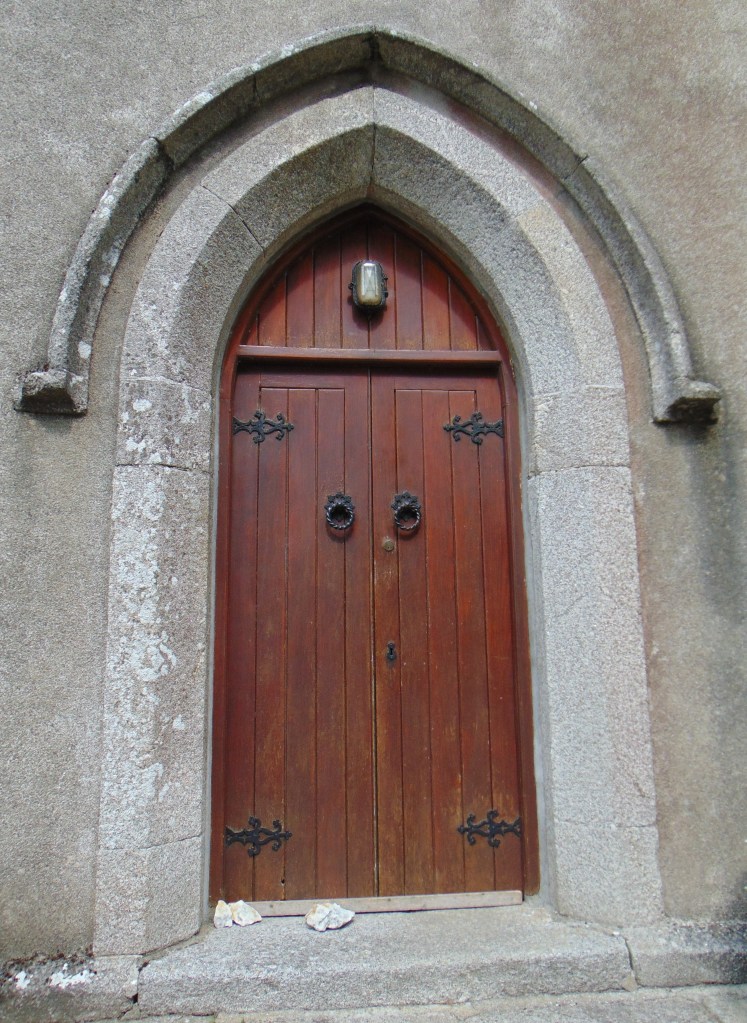
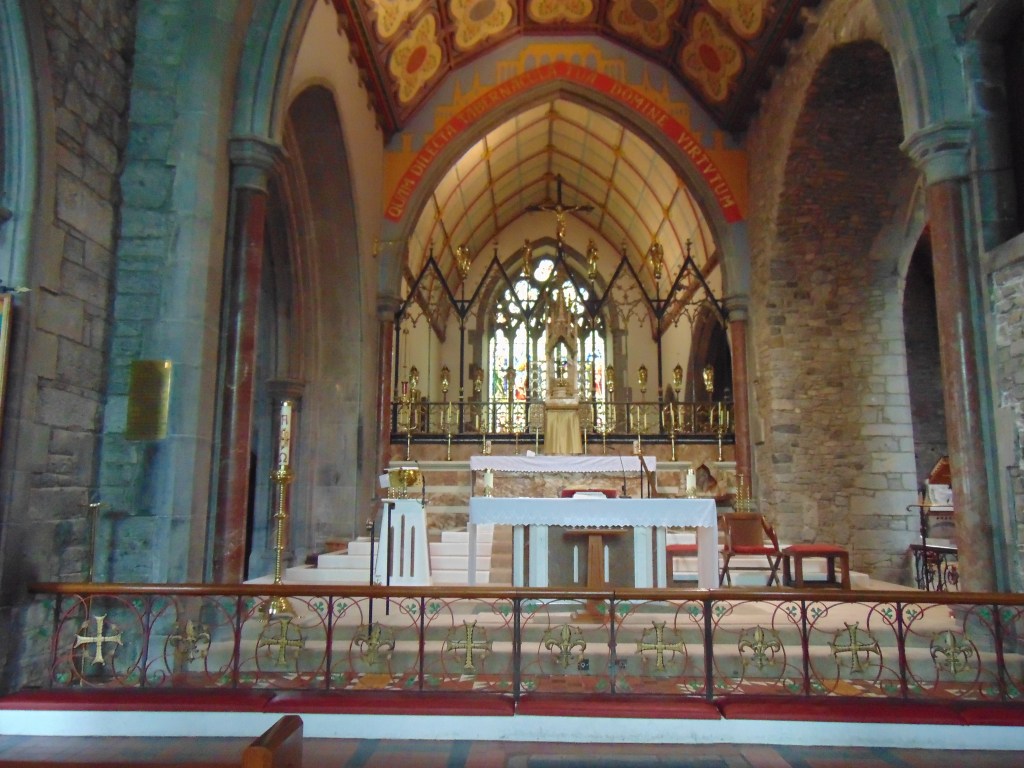
St. Fiaac’s Church, Co. Wicklow, Ireland

I recently came across the phrase “Doors to the Sacred” (in reference to sacraments – baptism, etc.). A beautiful phrase!

How do you connect to the sacred?

Here are ways that I connect to the sacred in daily life. Perhaps these will provide you with ideas for connecting to the sacred each day!

  • Prayer

I regularly and actively engage with an encounter with God through prayer. God wants to have a relationship with us; prayer is how we cultivate a personal relationship with God. My preferred form of prayer is contemplative prayer (more on types of prayer here). Personally, my most fruitful prayer time used to be before going to sleep (though I pray several times per day!). More recently, the morning is becoming my most comfortable time to pray. The how and when of meaningful prayer varies for each person!

  • Building up other people, treating people with dignity

The two greatest commandments are “love God” and “love your neighbor” (Matthew 22:36-40). Therefore, being good to God’s children is a sacred activity (we are all God’s children!). Building up other people is good for them and good for me. Lately, I have been building up other people by complimenting complete strangers (“Your hairstyle is great!” “That was a super thing you just did!”). Often, complimenting strangers results in them smiling! Treating people with dignity contributes toward making the world a better place. Everyone is fighting some kind of personal battle; treating everyone with dignity helps lighten their load!

  • Becoming the person God wants me to be

We are all beloved children of God, God wants us to be happy. God knows how I could become the person I am meant to be. Starting in 2016, I came back around – in prayer – to letting God change me. I tried that once before (starting in my teens), I am experiencing more “fruits of the spirit” this time around (Galatians 5:22-23).

  • Emotionally engaging when I attend church (I attend regularly)

Faith is a verb. Church is meant to be participated in, a time when we encounter God in community.

  • Getting to church via the same route every time I attend (Sunday services and weekday services)

For me, church services don’t start when I arrive at church. When I get up on Sunday morning, I don’t turn on the news or connect with other distractions. I get up thinking about church. I then routinely take the same route to get to the church; as I make my way there, I ponder the experience of church – who’s going to be there, is today a special religious feast day, etc. By the time I arrive at the church, I am reflectively “in full church mode,” ready to “take in” the service.

  • Daily reading of faith-related books

I am always reading a book on faith. Many people who read have routines of when they read. For me, I tend to read faith-related books in the evening before going to sleep.

  • Religious items on display at home

I keep religious items on display at home. For example, I have a bookshelf where I display denomination-specific church items (everything from prayer beads to candles). In addition, I keep memorabilia around – such as a photo of the church door at St. Fiaac’s Church in Co. Wicklow, Ireland where my great-grandfather was baptized; that’s the photo I used at the beginning of this post (I took the photo when I visited the church several years ago).

Kim Burkhardt blogs at A Parish Catechist and The Books of the Ages. If you are a new visitor, it would be great to have you follow this blog (thank you!). If you know someone who would like this blog post, please share it with them (thank you!)

Feast day of St. Anne and St. Joachim (Jesus’ grandparents)

Today, July 26, is the feast day celebrating St. Anne and St. Joachim – the parents of the Virgin Mary.

Information about these two saints is available via Britannica and the Catholic News Agency.

One might think, “The Church sets aside a day (known as a feast day) to recognize the maternal grandparents of Jesus? Hmmm…. A person has to be very church-involved to think about there being a feast day recognizing Jesus’ maternal grandparents.”

Yes, there is a feast day to recognize Jesus’ maternal grandparents. This does make sense…. After all, they raised a daughter who was “immaculately conceived” so as to be worthy – without sin – of giving birth to a sinless son. They are involved lineally, therefore, in Christ’s presence on earth for humanity. Momentous indeed – worthy of a feast day.

One has to wonder what grandparents would have thought about Mary’s pregnancy and about the identity – status – of her son as Savior. Apparently, Joachim died before May became a mother. However, reports indicate that her parents had dedicated Mary to the “service of the Lord,” bringing her to the Temple of Jerusalem at age three to be raised at the Temple; they are said to have done so out of thanksgiving for having been given a child after their period of barrenness. (Hmmm….. I don’t know enough theology….I think of “The Lord” as referencing Jesus; the story goes that her parents brought Mary to be raised at the Temple before she conceived the Jesus. So, either her parents knew Mary’s intended fate or I’m missing something linguistically).

So, Mary’s parents were devout. They could have accepted being the grandparents of a Savior? Would it have been difficult for Mary’s mother to anticipate such a trajectory when Mary became pregnant prior to her marriage? Perhaps not, since they offered her to be raised at the Temple….. Further, they had been told by an angel that their child would be a “most wondrous child.”

Was Anne aware of Mary’s pre-marital conception prior to Mary’s marriage? Anne had given Mary to the Temple to be raised, so how aware was Anne of the daily details of Mary’s life – was Anne in a position to know that Mary had conceived pre-maritally? Joseph, Mary’s fiance, found out about Mary’s pre-marital pregnancy before he married her and considered “divorcing her quietly,” so it’s possible that Anne also knew about the pregnancy. It would be sociologically curious to find out more about the social mores of the time – to find out the social dynamics of how much Anne would have likely known about the daily life of her teenager who Anne had given to be raised at the Temple of Jerusalem. Did Anne see Mary daily, weekly, or monthly? Did Anne and Mary talk about Mary’s daily life? Was Anne involved in choosing a spouse for Mary, given that Mary was being raised at the Temple? Did Mary of regular contact with her extended family?

Family and lineage is known to have been socially important in Jesus’ time. Therefore, I would think it’s possible that Anne and Mary kept in touch. Further, it’s thought that Anne – after Joachim’s death – may have became a step-grandmother to several of the people who became Jesus’s apostles; if true, this would suggest close social ties within the community of which Mary lived (close social ties seem likely from what I do know).

Perhaps there are literary scholars and sociologists who know more about the time in which Mary lived…..who would have insights about how likely it would have been for Anne to know of Mary’s pre-marital conception of Jesus. Hmmm…..An archangel invited Mary to accept become the mother of Jesus. Then, Mary’s betrothed – Joseph – didn’t know how Jesus was conceived until an angel came to him when he was thinking of walking away from Mary for her pre-marital pregnancy. Would a similar angelic communication been brought to Anne about her grandchild prior to Jesus’ birth? An angel had told Anne (and Joachim) prior to Mary’s birth that Mary would be “a wondrous child” – did Mary tell her own mother that she had also been visited by an angel and that the angel had asked her to conceive? Hmm…. I pondered in a previous post about Mary (here) saying yes to God when asked to be Jesus’ mother – Mary had said yes willingly, I pondered the possibility that there may have been a previous potential mother who had “said no” to that request (given that the Mary response was optional); it now seems unlikely that there a previous request would have been needed given that an angel told Joachim and Anne that Mary would be a “wondrous child” (i.e., God and the angels must have thought it likely that Mary would say yes to God). While Mary’s “yes to God” was voluntary, it seems that she was created with an inclination toward a saintly response to God.

Kim Burkhardt blogs at A Parish Catechist and The Books of the Ages. If you are a new visitor, it would be great to have you follow this blog (thank you!). If you know someone who would like this blog post, please share it with them (thank you!).

Experiencing the Liturgy of the Mass

Is church attendance defined simply as “something we attend?” Or something in which we are active participants? A form of prayer? How much a person engages in being present at mass depends on the person. Mass meant to be experienced – we are meant to be active participants and pray-ers.

There’s a lot to unpack about participating in mass:

First of all, there’s the concept of being fully present. The intention is for parishioners to enter into the mass as attentive and engaged attendees.

Be on time, pay attention, be engaged. If you don’t feel connected, there is an option of getting involved as a volunteer parishioner (becoming an usher, greeter, lector, etc.).

In addition, there are multiple ways to actively pray at mass. We all verbally recite the prayers of the mass. Beyond that, we can all pray personally during mass as a form of cultivating a relationship with God. God wants to have a relationship with us; relationships require communication. Prayer is a two-way communication in which we communicate our thoughts, feelings, hopes, and needs to God and are also receptive to allowing God to be present to us, with us. Find personal prayer styles that work for you.

Faith is a verb. Faith is something we do – cultivating a relationship with God, allowing God to be present to us, living out our faith by allowing God to turn us into better people, by being good and useful people in the world.

Understanding the Ritual of the Mass

It’s commonly known that the Catholic mass is a ritual and that the ritual has much the same formula – or format – each time we attend mass, with some variations. Some variations are easy to recognize. During the more exceptional times of the liturgical year, mass “ramps up” during Advent, Christmas, Lent, Easter, etc. (in this post, we are looking at the Latin Rite; the Latin Rite is one of multiple Catholic rites that are in communion with Rome). An Advent wreath is present at mass during the four weeks of Advent (heading into Christmas), with candles being lit at weekend masses (purple candles on three of the weeks, a pink candle the other week). The liturgical colors present at mass (i.e., the colors of banners, the priest’s vestments, and the like) change throughout the year, corresponding to the colors specified for each liturgical season (green for Ordinary Time, etc.). The Gloria and Alleluia are not sung during Lent. There are several Holy Days of Obligation throughout the year on which days Catholics are expected to attend mass and there are feast days for various saints throughout the year.

It’s less widely considered that there are sequentially specified “principal parts” of a Catholic mass that are referred to by those who prepare and deliver the mass (priests, liturgists, sacristans, etc.). There are four principal parts of the mass, to be precise – each spelled out as “The Order of the Mass.”

The Order of the Mass begins with the Introductory Rites (the priest’s procession into the church, the greeting, the penitential act, Glory to God, the collect). Thus begins the mass.

Then the mass moves into the first of the two main parts of the mass – The Liturgy of the Word. During the Liturgy of the Word, readings are read, the homily is delivered, parishioners participate in the Profession of Faith, and we have the Prayers of the Faithful.

During most of the calendar year, the three readings during the Liturgy of the Word at weekend masses come – in sequential order – from the Old Testament (read by parishioners who are lectors), the New Testament (also read by a lector), and a Gospel reading (read by a priest or deacon). In the weeks between Easter and Pentecost – commemorating the time between Christ’s resurrection and his Pentecost visit to the Apostles when he instructed them to go forth, carrying his message – both the first and second readings come from the Acts of the Apostles (New Testament) so as to focus on the mission of the Apostles to build the Church.

There is a three-year cycle of assigned readings for weekend masses and a two-year cycle for assigned readings for weekday masses; these cycles (Years A, B, and C) are repeated on an ongoing basis so that people who attend mass regularly hear the major themes of the Bible read over time.

The homily brings the message of the readings into our lives as prepared and delivered by the priest or deacon. The style and content of homilies vary from priest to priest, deacon to deacon.

Following the Liturgy of the Word, the mass moves into the second of the two main parts of the mass – the Liturgy of the Eucharist……..

The Liturgy of the Eucharist is the preparation for and the receiving of the Eucharist (Communion). Receiving the Eucharist is “the source and summit of our faith” – from which we derive and achieve the high point of our faith (physically receiving Jesus is immediate intimacy of receiving Christ within us). This part of the mass begins with the unconsecrated bread and wine being brought to the altar. Then the priest proceeds into consecrating the bread and wine. Consecration is when the bread and wine become the body and blood of Christ. Once the bread and wine are consecrated, the host and wine remain the body and blood of Christ. Sacristans – the parishioners who help set up before mass – set out an amount of bread (hosts) and wine thought to be enough for the number of people expected to attend mass, with a few additional communion hosts kept to be held in the Tabernacle for the next mass (DID YOU KNOW: the Tabernacle always has communion hosts – the physical presence of Christ – present every day of the year except Good Friday. Good Friday, heading into Easter, is the anniversary of Christ’s crucifixion, so on that day we don’t keep hosts recognizing Christ’s alive status in the Tabernacle). After the bread and wine are consecrated, mass attendees receive the Eucharist during the portion of the mass called The Communion Rite (i.e., the source and summit of our faith). After everyone “receives” (i.e., receives the Eucharist), remaining hosts are placed in the Tabernacle and any remaining wine/blood is consumed by the priest.

Finally, the fourth and final portion of the mass is the Concluding Rites – announcements, blessings, and dismissal. The dismissal is when the priest (with any special guests, lectors , and altar servers) process out of the sanctuary and nave of the church (i.e., exit the church).

Did you know? Priests, deacons, support staff, and volunteers involved in the mass have access to publications on the various aspects of the mass – publications such as the General Instruction of the Roman Missal (GIRM) and liturgical texts kept in the parish sacristy.

More about The Order of the Mass can be read on the USCCB website here (the U.S. Conference of Catholic Bishops).

Kim Burkhardt blogs at A Parish Catechist and The Books of the Ages. If you are a new visitor, it would be great to have you follow this blog (thank you!). If you know someone who would like this blog post, please share it with them (thank you!).

Prayer: a heart-and-soul, “all in” activity

A couple of years ago, I read a title for a social media post that stayed with me: “Worry is not a plan.” If you need to get something done or figure out how to do something, worrying about it is not “an activity or a plan that counts toward doing something.”

That statement of “worry is not a plan” is eye-catching because it is insightful about how we emotionally engage with challenging aspects of our lives.

Prayer, on the other hand, is a meaningful activity – fruitful in and of itself (and quite the opposite of worry! In prayer, we are to allow God to be in control rather than worrying that nothing positive is going to happen. Further, God has no ill intention when we give God the reigns.). It is most meaningful when we emotionally engage with prayer.

A perusal of Google Trends (a free online way to look up what people have been searching for online since 2004), indicates that people are searching more often for information about “how to pray.”

There are a good variety of “techniques” for prayer. When I teach classes for people interested in joining my denomination, one of the topics we cover is “types of prayer, ways to pray” (with an assignment to start praying if they aren’t already!) There is intercessory prayer (asking God to intercede – or help – with this or that), contemplative prayer, lectio divina, attending church services (yes, being at church is – in and of itself – prayer, “talking to God” (in a general yet personal sort of way), denomination-specific techniques such as using prayer beads (rosaries, etc.), singing (did you know that the psalms were all meant to be sung and that “everyone who sings prays twice”?) the list goes on. Some approaches to prayer will suit one person, while other forms of prayer work better for the next person. What matters most about prayer is that “we are all in” when we pray.

What’s being “all in” when we pray? It involves actually engaging. Being present. Being present to God. Prayer is communication, a two-way communication – not just us talking at God. When we phone people we know, we wouldn’t just talk at them (one-directional communication) and then hang up, without listening to them in reply; it’s the same with God when we pray – prayer is meant to be a a meaningful, two-way connection (give-and-take).

When I pray, there is rarely human language involved. Perhaps surprisingly, human language isn’t necessarily necessary to communicate within prayer. I tend only to use human language in prayer when doing intercessory prayer (a small percentage of my prayer time). Most of the time, my prayer experience involves “resting in God’s presence” (a phrase from Contemplative Outreach). In other words, “Be still and know that I am God” (Psalm 46:10). Being in God’s presence, allowing God’s presence to be within my conscious awareness, surrendering to allow God turn me into the person that God wants me to be – this for me leads me toward feeling the fullness of God’s love and toward being a better human being. Feeling God’s presence is an aspect of communication and a productive one at that (like having a loved one or a pet with you in front of a fire when you are feeling down). Feeling loved by God is a form of communication. Sensing that God is changing how I live in the world is a fruitful aspect of prayer.

Prayer in which “we are all in” is life-changing. A meaningful relationship with God is only possible with prayer. Having an active life of faith is only possible with prayer.

We each our best approach to prayer by trying out prayer. Wondering how to have a meaningful relationship with God? Pray regular – at least twice per day, five minutes each time (if that feels like a lot, there are some prayer practices that pray for 20 minutes to an hour at a time – or more). Try out the various types of prayer listed earlier in this post. There is absolutely no “right type of prayer.” There are a number of types of prayer that most certainly have time-tested value; it’s also true that we are all individuals and we all connect with God in our own way.

“How,” might you ask, “will I know when I have found an approach to prayer that works for me?” You’ll know. Prayer will become something that you won’t be able to live without – any more than you can live without air or water.

Kim Burkhardt blogs at A Parish Catechist and The Books of the Ages. If you are a new visitor to this parishcatechist.org blog, you are invited to start following this blog (thank you!)!

Surrender in Prayer

Prayer is communication, a relationship with God. A few thoughts about this prayer relationship and about our role of surrender within this prayer relationship:

Be still and know that I am God (Psalm 46:10).

Relationships are two-way, interactive.

We typically wouldn’t call someone on the phone and have a one-way communication whereby we solely speak to the other person without giving the other person an opportunity to speak, then hang up. Just as human communication is a two-way process, our prayer time with God is meant to be a two-way relationship; we communicate to God and receive God’s communication to us.

In order for us to have a two-way prayer relationship with God, we have to listen to – and be present to – God’s presence in our lives. God wants to have a relationship with us.

How do we go about listening to God’s presence in prayer? My own experience with this is reflected in both Psalm 46:10 (“Be still and know that I am God”) and Contemplative Outeach’s concept of “resting in God’s presence.” Can everyone expect to hear God’s voice in the sense of hearing human language spoken to us by God? Hearing spoken language directed to me by God isn’t something I experience. What I personally experience in prayer is feeling God’s presence; feeling loved by God, feeling that God is directing the course in which I move in life because I am allowing God to do so – this “more than suffices” in my view as two-way communication. The love found in God’s presence provides “peace that passes all understanding” (Phillipians 4:7).

It is in our surrender that we win…..

Our relationship with God is a relationship that happens only when we choose to participate in such a relationship. Again, God the creator wants to have a relationship with us. We have free will; no relationship is a true relationship when it is forced – rather, God gives us the option of whether we are willing to have God be present in our lives.

Our God-and-us relationship is one of creator-and-created, parent-and-child.

Within this creator-and-created relationship, there is a natural place for our surrender to God as our leader-who-molds-and-fashions-our-will-toward-good.

Despite our western ideas about individual autonomy and self-agency, us permitting God’s agency to mold and shape us is liberating. God loves us, wants good for us and our world, and and has capacity for transformational good beyond our comprehension. There is no room for a negative outcome when we allow God to work within and through us.

He must become greater, I must become less (John 3:30).

When we allow God to work in and through us, this leads naturally toward life becoming about God – and, by extension, us focusing on God’s other children – rather than our life being about us. We move out of the way, more of our being becomes about God’s presence within us. Rather than us being me-centered, we become God-centered. In time, this turns into “It is no longer I, but God who lives in me” (Galatians 2:20). As a result, we experience the “peace that passes all understanding” (Phillipians 4:7).

Kim Burkhardt blogs at A Parish Catechist and The Books of the Ages. If you are a new visitor, you are invited to click through and start following this blog (thank you!).

Book Review: Dorothy Day’s Autobiography – The Long Loneliness

Dorothy Day is one of those occasional figures whose lives – and how they live their lives – captures our attention….. In her case, part of how she captivates our attention is because she absolutely – and unfailingly – lived her conscience. It is possible to live one’s conscience.

In her autobiography (The Long Loneliness), Dorothy Day tells her story of growing up, becoming a journalist, her involvement in the Greenwich village scene and political anarchy, and on to her conversion to Catholicism and founding the Catholic Worker Movement.

This is one of the books that I read slowly; I read it slowly to take in the fullness of her life and how she lived her convictions, being a force for good in the world. I will read it again.

Kim Burkhardt blogs at A Parish Catechist and The Books of the Ages.