Growing in faith is an act of community

“There’s a longing in our hearts…..” So goes the song. A longing to connect with the divine.

On the matter of how we develop a relationship with the divine… In recent decades, there has been a growing number of people who identify as “spiritual but not religious.” The Barna Group, in their studies on “spiritual but not religious (SBNR)” individuals, describe this SBNR demographic as having a “spirituality that looks within;” that “to be religious is to be institutional—it is to practice one’s spirituality in accordance with an external authority. But to be spiritual but not religious is to possess a deeply personal and private spirituality. Religions point outside oneself to a higher power for wisdom and guidance, while a spirituality divorced from religion looks within. Only a fraction of the two spiritual but not religious groups (9% and 7%) talk often with their friends about spiritual matters. Almost half (48% each) say they rarely do it, and they are 12 (24%) to eight (17%) times more likely to never talk with their friends about spiritual matters than both practicing Christians and evangelicals (2% each).”

In western society, we also have an “epidemic of loneliness” in which too many lonely individuals are longing for community. The U.S. Surgeon General, in his 2023 report on the “Epidemic of Loneliness,” speaks – on page 23 – about a return to more involvement in faith-based communities as part of the solution to this epidemic.

A “spirituality that looks within” and is divorced from formal religion can certainly be tempting (I’ve “been there, done that.” I am actively learning to grow out of that perspective! Even many mystics and hermits live in some degree of community.). While we absolutely and essentially need time for personal reflection and quiet prayer (daily, for me), to look within can too easily become a lonely, isolated endeavor – rather than a community-centered faith in which a significant aspect of our faith is an outward-driven focus on being of service to other people.

The two greatest commandments are “Love God and love your neighbor” (Matthew 22:36-40). Love – like faith – is a verb! As a verb, love is more than having positive feelings about or toward someone; it’s about an outwardly-focus doing of loving actions. Love your neighbor requires faith-driven community (rather than loneliness!), despite any protestations to the contrary. …..”Yes,” some will say, “But I can be good to people as a result of my inward spiritual-but-not-religious faith pursuit.” To some degree, perhaps. A faith community, however, pulls us actively out of ourselves more than we typically achieve solo. In a faith community, a group’s social dynamics pull us out if ourselves (serve the good of the group and individuals within the group). Further, there are group “love your neighbor” volunteer activities (soup kitchens, etc.).

Cultivating one’s faith within a faith community – rather than doing faith solo – is an active antidote to our “epidemic of loneliness.” “There’s a longing in our hearts…..” (so goes the song). The results are in; we have to give up some of our treasured inward-looking autonomy to gain some freedom from our epidemic of loneliness. Joining a faith community and becoming active in that faith community is good for our health.

Kim Burkhardt blogs at A Parish Catechist and The Books of the Ages.

Book Review: C.S. Lewis’ Screwtape Letters

I was in third grade when I started reading C.S. Lewis. I was attending parochial school and our third grade teacher encouraged us to read the Chronicles of Narnia. I was so enamored by the books that I read the chronicles six times.

C.S. Lewis has been wandering in and out of my reading life ever since.

A friend gave me The Screwtape Letters when I was in high school – probably when I was in grade eleven or twelve. Developmentally, this timeless class was a great book to read in high school; it was a readable, accessible book that was a developmental step toward reading adult-level books about faith. Just as I read the Chronicles of Narnia several times as a child, I periodically come back around to The Screwtape Letters as an adult.

In this book, exchanges between the devil and one of his underlings provide witty and engaging insight into how the devil seeks to tempt us into sin via his deep understanding of human psychology and our natural foibles and temptations. Crafty and cunning, the devil is shown to use trickster techniques to outwit any effort on our part to live a just and upright life. The book engages us to see just how tempting sin is; how “it is easier for a camel to go through the eye of a needle than for someone who is rich to enter the kingdom of God” (Matthew 19:24) – that staying on the right and narrow road to righteousness becomes an increasingly narrow path that requires both our active participation and our willingness to allow God to direct us (“small is the gate and narrow the road that leads to life, and only a few find it” Matthew 7:14).

The Screwtape Letters is worth reading.

Kim Burkhardt blogs at A Parish Catechist and The Books of the Ages.

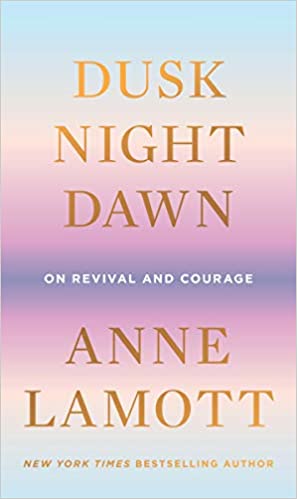
Book Review: Anne Lamott’s Dusk Night Dawn

It somehow took me until 2020 to hear of Anne Lamott. …..Came upon one of her quotes on social media. When I mentioned the quote that I’d come across, a friend said “I love Anne Lamott.”

When I then read two of Anne Lamott’s books, including Dusk Night Dawn, I discovered why my friend Sue “loves Anne Lamott.” She’s a good writer, yes. She’s real, she’s real-like-us (ordinary people can see ourselves in her). When Lamott writes about her life, faith, and the world and society in which we find ourselves,, she writes about real life lessons and tackles some of life’s subjects that people would often rather avoid. She’s not shy about taking – and sharing – a social and political perspective on life and the world in which we live.

I am keeping two of Anne’s books on my bookshelf at home. A real-like-us writer. Refreshing.

Kim Burkhardt blogs at A Parish Catechist and The Books of the Ages.

Day of Solemnity: Recognizing John the Baptist’s birth

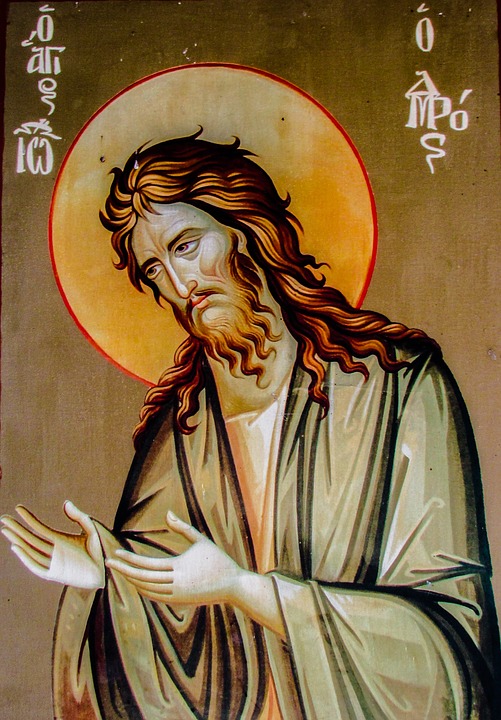
Today we recognize the birth of John the Baptist.

John the Baptist was born six months before Jesus. While we don’t know their exact dates of birth, it makes sense chronologically that we celebrate John the Baptist’s birthday six months ahead of the day we celebrate Jesus’s birth.

This day of solemnity – June 24 – comes three days after the start of summer. The first day of summer is the longest day of the year, after which days begin to get shorter.

Likewise, we celebrate Jesus’s birthday – December 25 – four days after the darkest day of the year, when the darkest days of the year are beginning to get lighter. Metaphorically, Jesus is bringing light into the world.

Just as we recognize Jesus as bringing light into the world, we look at the current seasonal calendar and see another metaphor correlated to celebrating the birth of John the Baptist. Days are now getting shorter; we look to 3:30 in the fourth gospel: “He must become greater, I must become less.” In other words…..Just as John the Baptist recognized Jesus as greater than himself (“I am not worthy to untie his sandals”), we look at today’s days getting shorter as symbolically representing that we must reduce ourselves (we are less important) as we give Jesus a greater place in our lives.

Kim Burkhardt blogs at A Parish Catechist and The Books of the Ages.

* Royalty paid for use of image.

Who might you talk to this week about your prayer life?

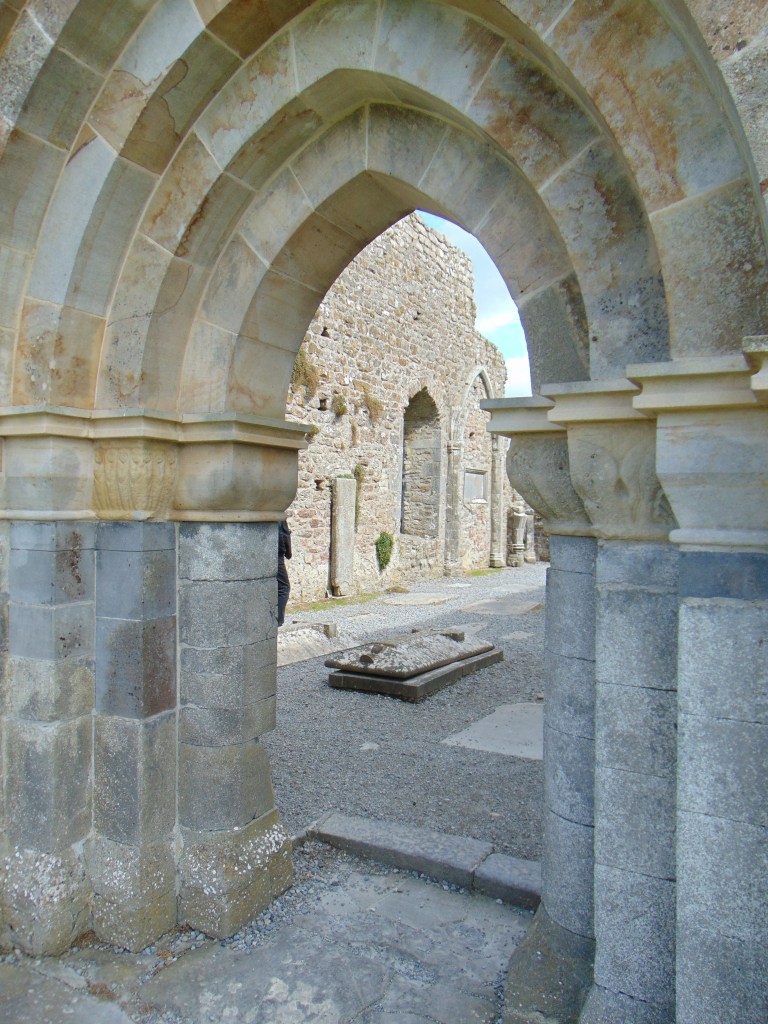
Image: Ruins of historic Clonmacnoise monastery, Ireland

I was gifted with a grace-infused re-conversion experience in October, 2016. This included an extended period of life-changing contemplative prayer (the story of my re-conversion experience is told here).

During that period (and for awhile afterward), I was at a loss as to how to communicate my continuing prayer experience that was underway.

Along the way, I found my way to the writings of two Spanish mystics (saints) from the 1500’s – Teresa of Avila and John of the Cross (I recently blogged about them here). Their writings about prayer provided me with much faith nourishment, so I approached their religious order – the Carmelites – about getting involved in their order as a lay person (“third order”). They invited me to perhaps come back to them at a later time…. I was still at much of a loss to communicate to the Carmelites – or to anyone – what I was experiencing and how I was drawn to the charism of Teresa of Avila and John of the Cross, so I can perhaps see the Carmelites wondering whether I was a good fit to get involved in their order….. Over the next while, I found my way into Contemplative Outreach Northwest (which is also a good place for contemplative types).

I found myself puzzled by the frequent lack of dialogue “in the pews” among parishioners about their inner experience of faith – including their experience with prayer.

…..In my thirst for dialogue about prayer, I slowly found more and more writers who write capably about prayer; most recently, I’ve found author Emilie Griffin’s book Clinging: The Experience of Prayer. Prayer can be – and is meant to be – an “encounter with God.” I’ve had a taste of this, it seems that such encounters among parishioners would feed jubilant conversations “in the pews.” I now look for ways to likewise cultivate this type of communication among parishioners – dialogue in the pews – about prayer (including this blog post!).

…..Understandably, everyone one of us different. Different temperaments, different life experiences, etc…. Thus, a friend (Dan Oberg) replied to my query to him about discussing prayer experiences, “You talk about the chasm between your experience in prayer and the ability to communicate it to others.  I think that is a very universal, human issue.  On one level, prayer is a very personal communion with God that is meant to be personal, and unique to you…. If we can find just a few folks who can hear about our experience and relate to it in some way, and be willing to share their own experience, humbly and vulnerably, than we’re doing pretty good…. But for each of us, at some point in that path, we will find ourselves just with God, as the only One who can walk the entire journey with us.”

I encourage each of you to stretch yourself in how you discuss your inner experience of prayer with people you know. There are fruitful rewards – I believe – in talking about how we inwardly experience our relationship with God. Increased community (an important factor in today’s “epidemic of loneliness”), an opportunity for us to learn from one another and encourage each other….. (hint: the U.S. Surgeon General’s”epidemic of loneliness” report cited above mentions – on page 23 – involvement in faith-based communities as part of the solution) … If you could use a launching point for discussing how you experience prayer, the following quote – from Emilie Griffin’s Clinging: The Experience of Prayer – may be of help:

“[Methods of prayer] are not yet prayer itself. They are paths toward prayer, the stepping stones from our furious activity and movement into His life, his being…..When we begin to pray, it is His power and grace that helps us pray…..[When we yield in prayer,] Something happens now for the first time between the Lord and us, something springs from His reality and our response, from His identity and ours in him. We do not speak….our prayer moves beyond words….He is calling us and we are following….His presence moves us….shows us gleams of an existence we hardly guessed at….stepping free of where we were and who we were into new selves, made in his image and likeness, selves of His likeness, selves of His making, made for heaven and for Him. (pages 27-28).”

With whom might you discuss your prayer life in the next week?

Kim Burkhardt blogs at A Parish Catechist and The Books of the Ages.

Image: Ruins of historic Clonmacnoise monastery, Ireland

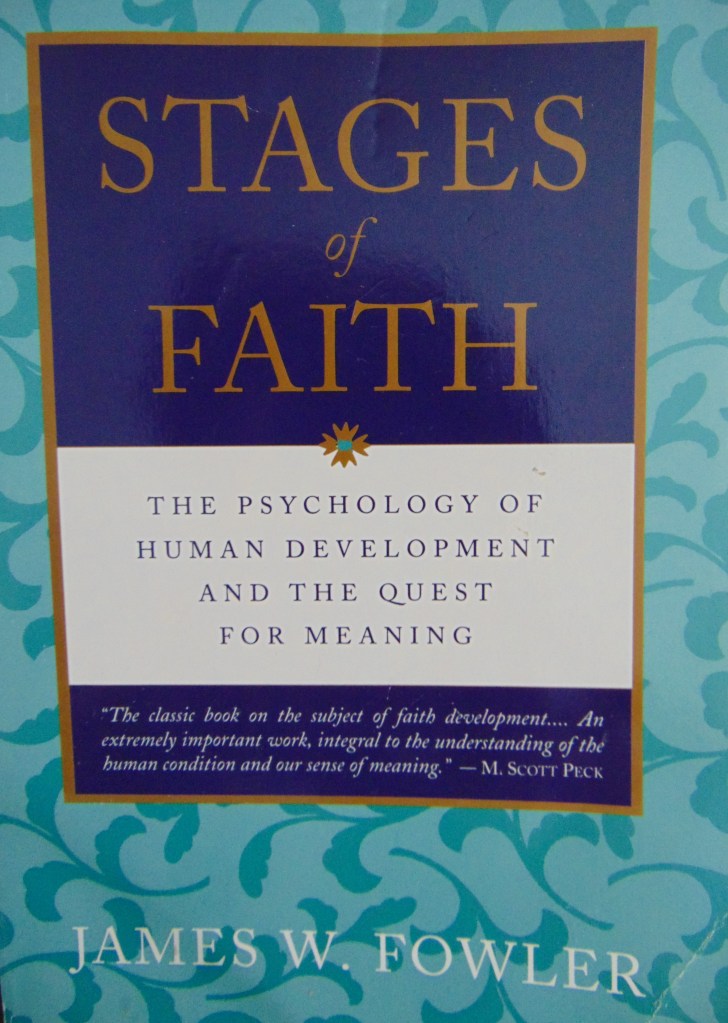
Book Review: Stages of Faith (spoiler – a useful read!)

I have found this book to be a tremendous value in my own faith journey specifically and in my overall psychological development generally.

When I returned to church in 2016 – after a 20-year hiatus – the pastor with whom I connected listened to my story about my experience with church and he made a comment about my “stage of faith.” He rather suggested that my “stage of faith” was younger than my chronological age of maturity. Ouch! But, okay, was he perhaps correct? I took an interest in his turn of phrase, “stage of faith.” I Googled the phrase, found my way to this book by academic-sociologist-theologian James Fowler (in later conversations, I found out that the pastor had read this book).

Fowler had interviewed hundreds of people – from young children to seniors – to hear about how their experience faith and a search for meaning within a western context. Fowler drew from these interviews and from existing theories of psychological development to profile six descriptive/normative stages of faith development. Most people, it turns out, grow to somewhere between stages three and five….. I looked for myself in this book; discovered – in re-reading parts of the book several times – that my “stage of faith” was pretty close to where the pastor had guessed I was at – I had gotten stuck in the transition between stages three and four (a common place to get developmentally detoured, according to James Fowler).

When I read this book, I had known for some time that I had been “stuck” in my effort to grow further in faith; I wasn’t sure how to get “unstuck.” This book provided tremendous value in this regard. Once I identified “where I was” (i.e., 3.5), I re-read the next stage – stage four – to get an idea of where to head next. Once I saw a roadmap of the direction to head in (without this book being tied to a particular denomination), this helped me to begin moving forward, thankfully (the particulars of moving forward are guided by my denomination, as are each of us).

In addition to finding faith assistance from this book, I found in this book that various aspects of my faith-mental-emotional “developmental stages” weren’t entirely lined up in one neat age-chronology phase. Life wasn’t “tidy.” This book helped me to grow and mature various aspects of my self-hood to get my “various aspects” closer to one chronological age. I come back to this book occasionally to monitor my ongoing progress…. On the whole, a worthwhile read that I often recommend to people I meet.

Since I read this book, I have also sought-out and found additional topic-relevant books for follow up. For example, Jane Regan’s book Toward an Adult Church is a worthwhile read.

Kim Burkhardt blogs at A Parish Catechist and The Books of the Ages.

Open Mind, Open Heart (Thomas Keating): Book review

I was introduced to this book when I got involved in Contemplative Outreach Northwest, a regional chapter of the Contemplative Outreach organization founded by this book’s author, Thomas Keating. This book is a popular introduction to getting started with contemplative prayer, also called centering prayer. Step-by-step instructions.

I struggled for a time when I first got active in Contemplative Outreach and read this book. I had already been gifted with contemplative prayer prior to joining Contemplative Outreach, but lacked the vocabulary to discuss what I was experiencing. In time, I realized that this book and the intro sessions offered by Contemplative Outreach are geared toward introducing people to what I was already experiencing. While it took me awhile to “piece this together,” I did slowly find the ability to talk – in some measure – to other pray-ers about our prayer lives. As a friend told me, each one of us has our own personal relationship with God; therefore everyone experiences prayer differently. Therefore, the best we can hope for is to occasionally find a few people with whom we can share some measure of our experience with prayer. ….For me personally, prayer rarely involves human language anymore for dialogue with God; rather, prayer is most often about simply being in God’s presence – in whatever level I’m able to do so at any given time.

I appreciate this book – and Contemplative Outreach – for bringing me into contact with other pray-ers who are approximating a prayer path that has some similarity to my prayer life.

Kim Burkhardt blogs at A Parish Catechist and The Books of the Ages.

Another “church as a field hospital” week….

I wrote recently about being drawn to Pope Francis’s idea that church is a “field hospital” for the needs of humanity (see previous post).

There are times when I feel this in my own life. This week, I again needed the “field hospital” services of church – life’s hard knocks taking their toll. This time, as sometimes is the case, it’s self-inflicted challenges for which I need an emotional “field hospital.”

It’s always uncomfortable when we create our own difficulties.

Coming out of these times, though, it truly is heartening when God heals our hearts and prepares us better for life. This DOES require that we let God work within us (free will). In recent years, I have observed the inner work of God re-arranging my inner life so as to be on a better footing in life. Healthier, more functional – with a more mature place in the world than I would arrive at on my own. Christ came “that we might have life, and have it more abundantly” (John 10:10).

Kim Burkhardt blogs at A Parish Catechist and The Books of the Ages.

The Tradition of Catholic Prayer: Book review, reflections

In their book The Tradition of Catholic Prayer, The Benedictine monks of Saint Meinrad Monastery (editors: Christian Raab and Harry Hagan) bring us a rich and rewarding read. When we want to read about prayer, it’s natural to want to turn to monks!

The depth and breadth of this book are summarized well on the book’s back cover, beginning with the following sentence: “Catholics have a rich and ancient prayer tradition that informs contemporary practice.” No wonder that people looking to deepen their prayer life look – among other places – to the Catholic Church. The variety of Catholic prayer experience and the historical context for this “rich and ancient prayer tradition” are covered engagingly in this very readable book. It’s worth a read for anyone looking to deepen their prayer life; it has helped nourish my ever-present hunger to sustain an rich and deep prayer life.

Kim Burkhardt blogs at A Parish Catechist and The Books of the Ages.

Living in the Presence (Tilden Edwards): book review

I came upon Tilden Edwards’ Living in the Presence perhaps five or six years ago in a Little Free Library. It immediately became part of my lectio divina reading on contemplative prayer. Lectio divina refers to prayerful, reflective reading of scripture; I sometimes read non-scriptural books in much the same way.

I had been gifted a state of contemplative prayer starting in October, 2016. In the period that followed, I actively – in a reflective way – read a good number of books on contemplative prayer. Living in the Presence was among these books; it provided an ample amount of nourishment for my prayer journey.

This book also brought to my attention an organization founded by the book’s author, Shalem Institute for Spiritual Formation. While Living in the Presence gave me much nourishment as I read and re-read the book, finding that groups such as the Shalem Institute exist provided me with a good amount of hope.

A valuable read for individuals who want to nurture contemplative prayer.

Kim Burkhardt blogs at A Parish Catechist and The Books of the Ages.