Surrendering to God transforming us

I was in high school when I was first introduced to surrendering to allowing God to change us. At the time, I was challenged by a particular type of life difficulty. I surrendered that difficulty to God and asked for assistance in having my life change. How I was living in the world did improve. I also developed the rudiments of an expanded prayer life. I still tell the story about my prayer life expanding at that time – I, as an adolescent, grew beyond the basics of childhood prayer (“Now I lay me down to sleep” and literal conceptions of Jesus sitting on a physical throne in the clouds) and saw my prayer life expand incrementally toward more of an interactional relationship with God.

In recent years, I surrendered again to allowing God be present in my life. This time, the surrender was broader. “God change me in whatever ways you want me to be different.” Again, my life is changing. I am experiencing emotional reorganizations that I couldn’t have anticipated – transformations beyond what I would have brought about on my own. More freedom, increased life functionality, some measure of more contentment. Growing commitment to being useful to other people. This came about from a prompting of the Holy Spirit – a moment at a church service in October, 2016 when I felt – and responded to – an invitation to allow God to be more fully present in my life (that story is told here).

God wants to be present in our lives. God wants us to be the people we are meant to be, to be fully alive. In the words of Timothy Radcliffe, “We are all radically incomplete. And, we need each other.” We, with our human limitations, need God’s movement in our lives to become the people who we are meant to be. We move toward being complete when we allow God to be the center of our lives and to act in changing us. Acts 17:28: For in God we live and move and have our being.

Allowing God to become the center of our lives, we cease to be the center of our lives. Ceasing to be the center of our live can feel threatening (“But what about me? I’m all I’ve got?”). It turns out that when we step out of the way, God brings freedom into our lives – we become the people we are meant to be and we become more useful in the world. God loves us!

Kim Burkhardt blogs at A Parish Catechist (and is a member of the Association of Catholic Publishers). Blogging is sustainable via blog readership (i.e. readers/subscribers). If you are a new visitor, it would be great to have you subscribe to follow this blog (thank you!). If you know someone who would like this blog, please share it with them and invite them to subscribe (thank you!).
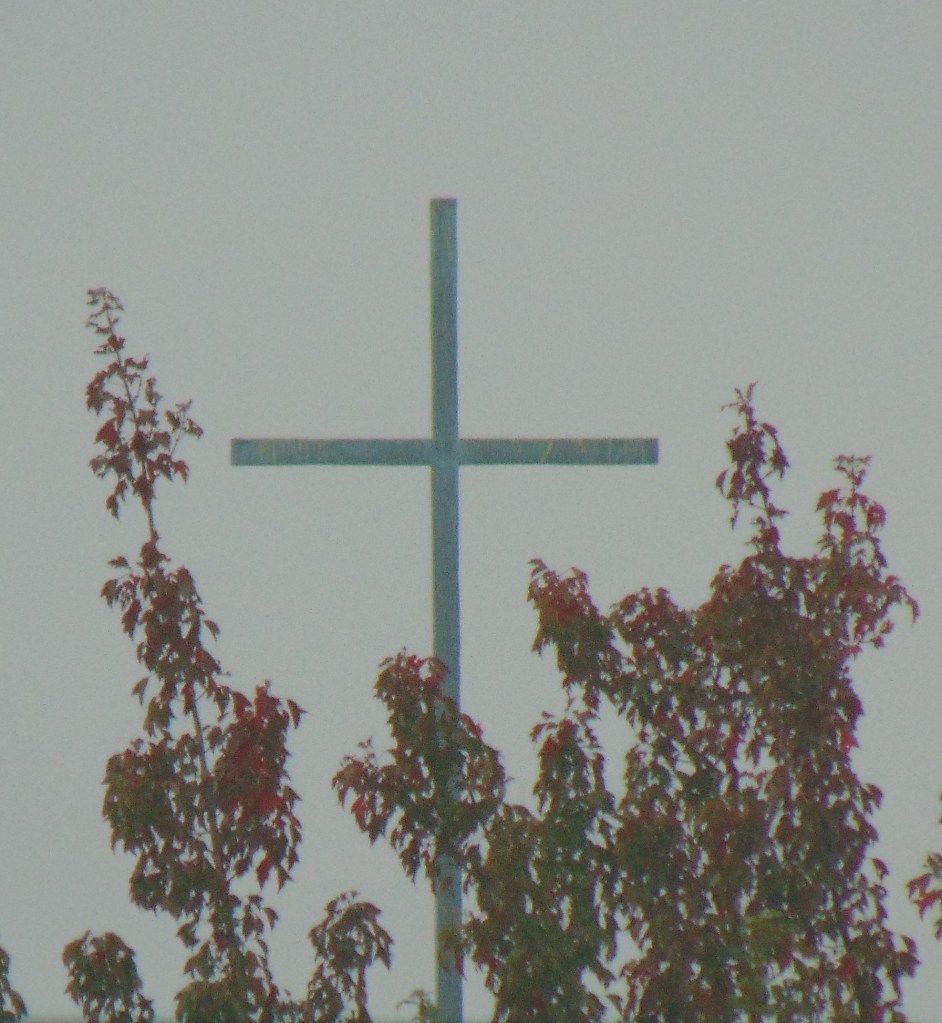

“We are all radically incomplete”

St. Benedict Steeple

The assertion that “we are all radically incomplete” – a statement quoted by Timothy Radcliffe – is the what I’ve grabbed onto from his series of opening reflections for the synod meetings in Rome last October (and, he said, “we all need each other”)..

Many of us are aware of our own inadequacies. We only need to read the news and reflect on our own selves to see that “we are all radically incomplete.”

In response to this, society would have us increase our life skills and “build up our self-esteem.” “I am enough.” In Christianity:

  • We acknowledge being radically incomplete as a fundamental aspect of our humanity.
  • We recognize that it is in God that “we live and move and have our being” (Acts 17:28).

God is complete. We are God’s daughters and sons. God loves us. When we allow God to live in us – “It is no longer I but God who lives in me” (Galatians 2:20) – we experience the rest of Galatians 2:20: “The life I now live in the body, I live by faith in the Son of God, who loved me and gave himself for me.”

It is in allowing God to “live and move within us” that God’s completeness – coupled with God’s love – heals us and makes us whole. This is beautiful.

Kim Burkhardt blogs at A Parish Catechist and The Books of the Ages (and a member of the Association of Catholic Publishers). If you are a new visitor, it would be great to have you follow this blog (thank you!). If you know someone who would like this blog, please share it with them (thank you!). You can also support this blog by clicking here when you are going to shop on Amazon (that lands A Parish Catechist a commission on Amazon sales).

Being a person of faith: more than mental beliefs about religion

Photo: Window at Clonmacnoise Monastery, Co. Offaly, Ireland

In his book Opening to God: Lectio Divina and Life as Prayer, Irish poet David G. Benner writes “Too often faith is reduced to beliefs. But cognitive ascent to propositions has very little to do with genuine faith, which is more a posture of the heart than of the mind. Faith in God is leaning with confidence into God. (page 32)”

I spent years “trying to think my way to God.” That doesn’t work. In 2016, I had a re-conversion experience in which I felt God’s love for me; my faith moved into “a posture of the heart” that I had been trying for years to experience (my faith story is told in more detail here.).

So, how does one move from merely “reducing faith to a set of beliefs” to faith that is experienced and lived? A few thoughts:

  • Certainly, a living faith does necessitate religious learning. Who is God? Who are we in relationship to God? What are the precepts of a life of faith? Individual faith traditions provide such instruction. It is then up to us to allow these precepts to move into our being and to incorporate these precepts into our lives (i.e., incorporate these ideas into how we relate to God, relate to other people, and live our lives).
  • Faith is experiential: a relationship with God. Faith becoming experiential involves doses of grace, surrender, prayer, and love. Living faith is made possible through grace given to us by God (in the Christian tradition, this grace is conferred upon us beginning with baptism….and then grace continues to show up at other times when God knocks on our door). Our portion of “doing faith” – what David G. Benner describes as “leaning with confidence into God” – requires surrender and prayer. Surrender is an emotional giving up, ascenting to allow God to take the driver’s seat in our lives. Prayer is where we participate in a relationship with God. Rather than prayer being a uni-directional monologue of us talking at or to God, prayer is relational and interactive. In prayer, we both communicate to God and receive the presence of God (analogy: our relationships with the people in our lives are likewise interactive rather than uni-directional). I write more about prayer here. The fruits of grace, surrender, and prayer become “the fruits of the spirit” listed in Galatians 5:22-23: “”love, joy, peace, forbearance, kindness, goodness, faithfulness, gentleness and self-control.”
  • We live our faith through how we live. Growing into being a person of faith involves allowing our inner work of faith (grace, surrender, prayer, and resulting love – listed above) to direct our being-ness in the world. A life of faith is absolutely about our own relationship with God, but it is also essentially more than that – life isn’t just about us personally or about our own relationship with God. We are here to be of service to all of God’s children. Everyone is a beloved child of God, our lives are measured to the degree that we move into loving God’s children in thought and deed. Living our faith is about “love God and love your neighbor” (Matthew 22: 36-40) and applyin the precepts of one’s faith tradition (“The Golden Rule,” “Christian charity,” etc.).

Faith is more than a set of beliefs – it is how we relate to the divine and live among God’s children. Acts 17:28: “It is in God that we live and move and have our being.”

Kim Burkhardt blogs at A Parish Catechist and The Books of the Ages. If you are a new visitor, it would be great to have you follow this blog (thank you!). If you know someone who would like this blog post, please share it with them (thank you!).