We are a resurrection people

St. Benedict Steeple

“We are a resurrection people.”

This statement struck me when I recently started reading the book Guide for Celebrating Holy Week and The Triduum.

This statement resonates with what drives me to share with people about growing in faith.

We are indeed “A resurrection people,” a good phrase to discuss during this Lenten season.

Christ died for our salvation.   We don’t celebrate Easter each year for the sole purpose of being mournful about Christ’s death.   Yes, we look at Christ’s passion and our own sinful nature during Lent.   That’s not all, though.   Each Lenten season is an opportunity to celebrate that our redemption is made possible as a result of Christ’s death on the cross.   There’s a redemptive joy possible through God’s ability to transfigure us – when we allow God to work in us – that motivates my continued prayer life (prayer is a relationship with God in which we rest in God’s presence and take joy in that transformative relationship, allowing God to turn us into the people we are meant to be.  There is, too, everything else that prayer is – bringing all of our life to God, having a back-and-forth relationship).   There’s both the opportunity for joy and a responsibility that comes with redemption.

When we fully enter into our Christian faith tradition, we have the opportunity to experience the “already” aspect of the “already but not yet” Kingdom of God.   Specifically, Christ’s resurrection inaugurated the Kingdom of God, while, of course, the fullness of this is “yet to come” (as stated by the US Conference of Catholic Bishops:  “The tension is often described in terms of “already but not yet”: i.e., we already live in the grace of the kingdom, but it is not yet the completed kingdom.”).

We have the opportunity to really do a deep dive into the fullness of Christianity.   In doing so, God will bring us to the fullest measure of joy that we can experience in this life and to be a meaure of goodness in the lives of the people around us.   Further, we have a responsibility to do this.   Christ didn’t die on the cross so that we would bypass the opportunity to fully experience what we’re being offered.

Actively participating in Christianity provides a multitude of ways to “jump in to a life of faith with both feet.”  Being of service, participating in faith development programs at church – there are so many ways to get involved….

Kim Burkhardt blogs at A Parish Catechist (and is a member of the Association of Catholic Publishers). Blogging is sustainable via blog readership (i.e. readers/subscribers). If you are a new visitor, it would be great to have you subscribe to follow this blog (thank you!). If you know someone who would like this blog, please share it with them and invite them to subscribe (thank you!).
Already, but not yet…. Lenten lessons in faith

bread
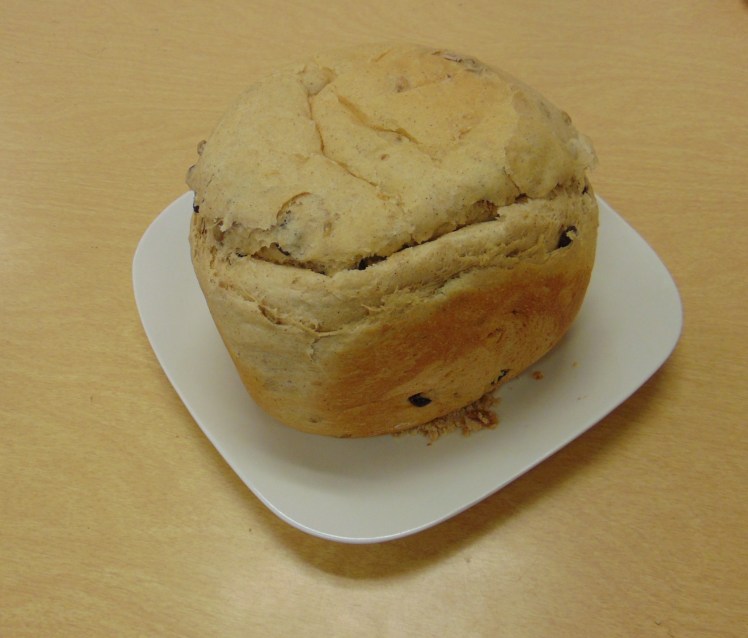
Loaf of homemade bread

“Already, but not yet” – as is said about our experience of the Kingdom of God.

I enjoy the smell of bread rising when I pour water, salt, sugar, an egg, olive oil, bread flour, cinnamon, and yeast into my bread maker and turn it on.  Part way through the bread-making process, I add raisins and sunflower seeds.

Recently, I was enjoying the yeast scent of baking, half-risen loaf of bread.   Forget waiting for the bread to fully rise – I wanted to open the bread maker and experience the yeast-laden bread, impatiently wanting what was only half risen.

My thoughts turned to the Risen Christ.   This year, as we enter the anticipatory season of Lent, we have 2,000 years of Christianity.  As is said, the Kingdom of God is “already [here], but not yet.”

To the degree that we experience God’s love for us and express love toward other people, the Kingdom of God is already here.  To the degree that we experience the frustrations of the human experience, we are reminded that the Kingdom of God is “not yet.”

Until “the not yet” comes, how do we live with our half-experience of the “already, but not yet?”

This Lenten season, we can again commit ourselves to deepening our faith within the “already.” If no yeast has yet been added to start one’s faith journey, yeast can now be added for a start to a faith journey.   For those of us already on a faith journey, we often have at least some inkling of which aspects of our faith experience need to flourish more robustly.  If our bread – faith – is rising but not rising well, Lent (anytime, really) is a good time to add the cinnamon, raisins, and sunflower seeds….

In my life, I actually have a hard time fasting. A problem with self-retraint, self-denial. For several years, I justified this during Lent: “I’m actively doing so many aspects of living a life of faith, who cares if I can’t fast?” We are so skilled at the nuance of making excuses… The fact that I lack the self-restraint to fast – to participate in this form of self-denial – actually indicates that there’s some lesson for me to learn with fasting. I’m certain that the lesson to learn has nothing to do with physical food….. I’m not sure yet what that lesson is, but I’m working toward finding out. I am going to trying fasting during Lent this year.

Kim Burkhardt blogs at A Parish Catechist (and is a member of the Association of Catholic Publishers). Blogging is sustainable via blog readership (i.e. readers/subscribers). If you are a new visitor, it would be great to have you subscribe to follow this blog (thank you!). If you know someone who would like this blog, please share it with them and invite them to subscribe (thank you!).