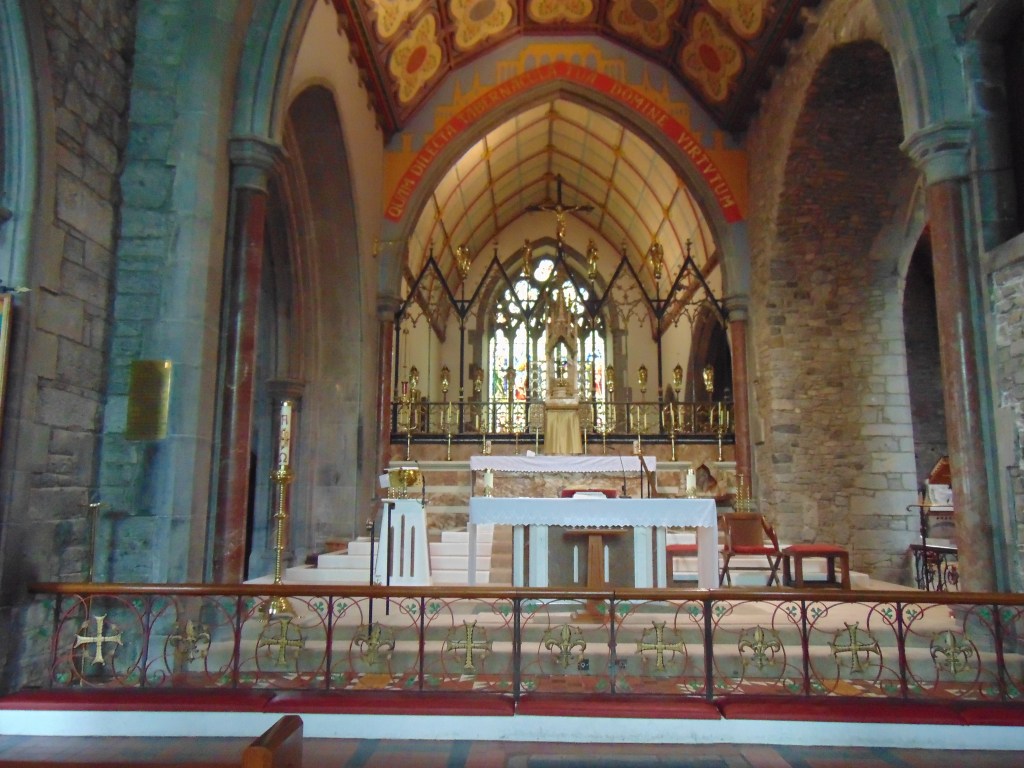
Is church attendance defined simply as “something we attend?” Or something in which we are active participants? A form of prayer? How much a person engages in being present at mass depends on the person. Mass meant to be experienced – we are meant to be active participants and pray-ers.
There’s a lot to unpack about participating in mass:
First of all, there’s the concept of being fully present. The intention is for parishioners to enter into the mass as attentive and engaged attendees.
Be on time, pay attention, be engaged. If you don’t feel connected, there is an option of getting involved as a volunteer parishioner (becoming an usher, greeter, lector, etc.).
In addition, there are multiple ways to actively pray at mass. We all verbally recite the prayers of the mass. Beyond that, we can all pray personally during mass as a form of cultivating a relationship with God. God wants to have a relationship with us; relationships require communication. Prayer is a two-way communication in which we communicate our thoughts, feelings, hopes, and needs to God and are also receptive to allowing God to be present to us, with us. Find personal prayer styles that work for you.
Faith is a verb. Faith is something we do – cultivating a relationship with God, allowing God to be present to us, living out our faith by allowing God to turn us into better people, by being good and useful people in the world.
Understanding the Ritual of the Mass
It’s commonly known that the Catholic mass is a ritual and that the ritual has much the same formula – or format – each time we attend mass, with some variations. Some variations are easy to recognize. During the more exceptional times of the liturgical year, mass “ramps up” during Advent, Christmas, Lent, Easter, etc. (in this post, we are looking at the Latin Rite; the Latin Rite is one of multiple Catholic rites that are in communion with Rome). An Advent wreath is present at mass during the four weeks of Advent (heading into Christmas), with candles being lit at weekend masses (purple candles on three of the weeks, a pink candle the other week). The liturgical colors present at mass (i.e., the colors of banners, the priest’s vestments, and the like) change throughout the year, corresponding to the colors specified for each liturgical season (green for Ordinary Time, etc.). The Gloria and Alleluia are not sung during Lent. There are several Holy Days of Obligation throughout the year on which days Catholics are expected to attend mass and there are feast days for various saints throughout the year.
It’s less widely considered that there are sequentially specified “principal parts” of a Catholic mass that are referred to by those who prepare and deliver the mass (priests, liturgists, sacristans, etc.). There are four principal parts of the mass, to be precise – each spelled out as “The Order of the Mass.”
The Order of the Mass begins with the Introductory Rites (the priest’s procession into the church, the greeting, the penitential act, Glory to God, the collect). Thus begins the mass.
Then the mass moves into the first of the two main parts of the mass – The Liturgy of the Word. During the Liturgy of the Word, readings are read, the homily is delivered, parishioners participate in the Profession of Faith, and we have the Prayers of the Faithful.
During most of the calendar year, the three readings during the Liturgy of the Word at weekend masses come – in sequential order – from the Old Testament (read by parishioners who are lectors), the New Testament (also read by a lector), and a Gospel reading (read by a priest or deacon). In the weeks between Easter and Pentecost – commemorating the time between Christ’s resurrection and his Pentecost visit to the Apostles when he instructed them to go forth, carrying his message – both the first and second readings come from the Acts of the Apostles (New Testament) so as to focus on the mission of the Apostles to build the Church.
There is a three-year cycle of assigned readings for weekend masses and a two-year cycle for assigned readings for weekday masses; these cycles (Years A, B, and C) are repeated on an ongoing basis so that people who attend mass regularly hear the major themes of the Bible read over time.
The homily brings the message of the readings into our lives as prepared and delivered by the priest or deacon. The style and content of homilies vary from priest to priest, deacon to deacon.
Following the Liturgy of the Word, the mass moves into the second of the two main parts of the mass – the Liturgy of the Eucharist……..
The Liturgy of the Eucharist is the preparation for and the receiving of the Eucharist (Communion). Receiving the Eucharist is “the source and summit of our faith” – from which we derive and achieve the high point of our faith (physically receiving Jesus is immediate intimacy of receiving Christ within us). This part of the mass begins with the unconsecrated bread and wine being brought to the altar. Then the priest proceeds into consecrating the bread and wine. Consecration is when the bread and wine become the body and blood of Christ. Once the bread and wine are consecrated, the host and wine remain the body and blood of Christ. Sacristans – the parishioners who help set up before mass – set out an amount of bread (hosts) and wine thought to be enough for the number of people expected to attend mass, with a few additional communion hosts kept to be held in the Tabernacle for the next mass (DID YOU KNOW: the Tabernacle always has communion hosts – the physical presence of Christ – present every day of the year except Good Friday. Good Friday, heading into Easter, is the anniversary of Christ’s crucifixion, so on that day we don’t keep hosts recognizing Christ’s alive status in the Tabernacle). After the bread and wine are consecrated, mass attendees receive the Eucharist during the portion of the mass called The Communion Rite (i.e., the source and summit of our faith). After everyone “receives” (i.e., receives the Eucharist), remaining hosts are placed in the Tabernacle and any remaining wine/blood is consumed by the priest.
Finally, the fourth and final portion of the mass is the Concluding Rites – announcements, blessings, and dismissal. The dismissal is when the priest (with any special guests, lectors , and altar servers) process out of the sanctuary and nave of the church (i.e., exit the church).
Did you know? Priests, deacons, support staff, and volunteers involved in the mass have access to publications on the various aspects of the mass – publications such as the General Instruction of the Roman Missal (GIRM) and liturgical texts kept in the parish sacristy.
More about The Order of the Mass can be read on the USCCB website here (the U.S. Conference of Catholic Bishops).
Kim Burkhardt blogs at A Parish Catechist and The Books of the Ages. If you are a new visitor, it would be great to have you follow this blog (thank you!). If you know someone who would like this blog post, please share it with them (thank you!).