More on the trajectories of our faith journeys…..

I wrote in my last post that I am interested in people “exploring and sharing the trajectories of our (faith) lives” with one another….I am interested in Augustine’s “interiority.”….. I’ve been trying to figure out for several years how to get church people today to talk to each other in more depth about how we each experience our faith…..”

It can take a long time, it seems, to uncover how to speak to one another about what we experience inwardly……

…..More of how to speak of my inner journey seems to be coming to light. So, here goes an effort to articulate some of my own experience…..

At a point in life when I was particularly discouraged – swallowed up in a dark emotional abyss – social circumstances led me to attend a Friday evening mass. I avowed that I was there as a one-off, with no intention of returning to the faith tradition of my childhood. Much to my surprise, the priest’s faith “filled an empty hole I had been walking around with” during the homily. On my way home, I fell off a curb and broke my ankle – rendering me stuck on the couch at home with no way to distract myself from considering the impact of that homily. By Monday, I decided that perhaps I needed to talk to the priest about returning to church. By the end of the month, I was a parishioner at a nearby parish and “no one could get rid of me with dynamite” (that story is told here).

In the period that followed, I had an extended period of feeling God loving me. Directly.

An inner transformation unfolded. Over time, I told several people that an inner reorganization was taking place, but I had no words to describe it. I wanted to discuss the particulars of it, but had no way to talk about it…… As an aside, the priest at the parish I joined seemed rather puzzled to see me at mass at least twice on many weekends. I needed what was happening at mass – being at mass contributed to this inward transformation.

The following summer, I heard mention at daily mass of Teresa of Avila – a “Doctor of the Church.” What? What is a “Doctor of the Church?” I must find out about this Teresa of Avila…….

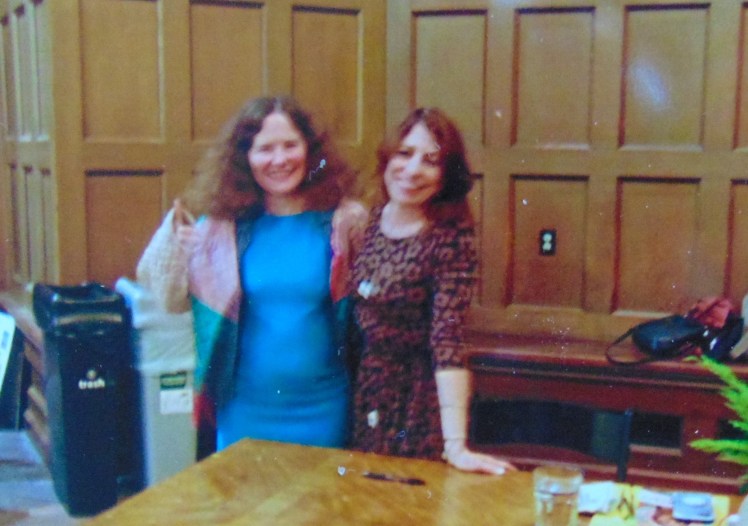
In the weeks that followed, I read Teresa of Avila’s autobiography. It provided me with much nourishment. I continued to read and re-read parts of it for a time. And, fortunately, I was able to meet the translator who had written the English copy I had read (Mirabai Starr came to Seattle on a book tour for one of her other books. I attended her presentation at St. Mark’s Episcopal Cathedral and she graciously signed my copy of her translation).
Later – perhaps another three or four years later – I was discussing Teresa of Avila with another nearby priest. This Trappist studied in Rome….. He said, “Oh, yes, I took a class once about Teresa of Avila.” I replied – simply – “Oh. I just understood her.” He looked at me and stammered. “You,” he said, “were given a GRACE.”

Yes, I had been given a grace that allowed me to “simply understand” Teresa of Avila. What was crucial to the story, however, was that the depth of the discouragement I had experienced (above) was such that God recognized my need for grace. Conditions dictate circumstances……

God loves us enough to offer us grace. Sometimes, that grace shows up when we particularly need it.

…..We have to be inwardly attentive enough to recognize this grace when it is offered. And, we have free will. It’s up to us whether or not we are going to accept this grace when it is offered…… Sometimes, I suppose, God may be very specific in these offers of grace to be sure we notice – I reference my “broken ankle story” as an example (I also acknowledge that I sometimes simply trip in the course of walking around….. I was born with faulty joints in my feet that render me physically clumsy. Make of that what you will…..).

…..”For God so loved the world that God gave his only son” for us (John 3:16). Absolute love for us – sacrificial love – is the only possible way that Jesus’ death on a cross and his resurrection makes any sense. The cross-and-resurrection story makes no sense at all when considered from a biology perspective. Self-sacrificing love, though – redeeming and loving beyond measure…… Such love is redemptive on a level that heals us……

So how does one go about describing an inner transformation of the sort I am writing about here? ……. I am currently reading Frederick Bauerschmidt’s Catholic Theology: An Introduction for one of my master’s in theology classes. In it, Bauerschmidt describes the differing Catholic and Protestant views on Justification by faith (i.e., do we experience justification by faith alone or by a combination of faith and our willingness to thus love people around us to therefore take care of the people around us), Bauerschmidt goes in depth about various theological ideas over the centuries about grace. There’s not simply the happening of “God’s grace and that’s that.” No. Rather, there are levels, types, degrees, and consequences of grace. For example (I’m gleaning this from Bauerschmidt’s book):

  • There’s prevenience grace – God providing us with grace because we need it (we need it because of original sin. If you wonder if original sin actually happened or actually exists, just turn on the evening news. No other explanation – psychological or otherwise – fully explains the scope of human brokenness).
  • There is “cooperative grace” in which we cooperate with God by allowing God to transform us when grace is offered. Oh, okay. Following the homily and broken ankle I mentioned earlier, it looks as though I participated in “cooperative grace” (it was the only good path forward at the time….).
  • At the Council of Trent (1545 – 1563), Catholics reasserted the traditional teaching that we are justified in Christ by a faith that is shaped by love of God (fides caritate fomata), a love that manifests itself in good works. The council’s Decree on Justification summarizes this process as ‘a transition (translatio) from the state in which a person is born a child of the first Adam to the state of grace and of adoption as children of God through the agency of the second Adam, Jesus Christ our savior’ (c. 4 in D 124). This transition ‘consists not only in the forgiveness of sins but also in the sanctification and renewal of the inward being by a willing acceptance of the grace and gifts whereby from being unjust becomes just…. (ch. 7…..)……”

So, when we are sufficiently inwardly attentive to God’s grace and we allow that grace to unfold, God changes us. God makes of us a new creation.

That inner transformation of becoming a new creation is experienced as truly miraculous.

At the same time, while I found the period of time I experienced to be truly transformative I also found it to be painfully slow. God, I found, offers us grace and still allows us to experience our daily foibles and the day-to-day consequences of our choices amidst “the human condition.” The parish priest I had during that time heard in the confessional the “too slow and human foibles” aspects of what goes on during periods of transformative change (I feel for him for what he found himself hearing in the confessional).

What I do know for sure:

  • We can experience God’s love for us.
  • What we hear in church about being made a new creation is for real.
  • God’s grace does happen.
  • The implementation of God’s grace in our lives is dependent upon our observation of this grace and our cooperative grace (i.e., God doesn’t act in our lives without our cooperation).
  • My day-to-day life today still has the very human hallmarks of the human condition (“saints we ain’t”). But, this “new creation” experience is yet transformative…. My prayer life is on a very different foundation than it was before “the homily and the broken ankle.”
  • God expects us to learn to love other people and to learn how to put that into practice. That’s what we’re here to do……

I hope to continue toward finding ways to facilitate conversations about our interior faith journeys……

Kim Burkhardt blogs about faith at The Hermitage Within. Thank you for reading this faith blog and for sharing it with your friends. While you are here, please feel welcome to provide support to sustain this blog ($$).
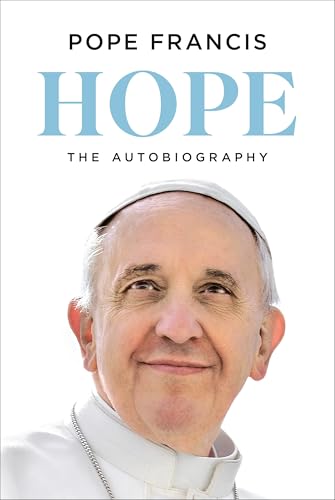
Book Review: Hope – Pope Francis’ Autobiography

Book
Pope Francis’ autobiography

Several weeks ago, a friend gave me a copy of Pope Francis’ autobiography.

I looked forward to reading it out of interest about Pope Francis and because I recently worked with a guy who had moved from Buenos Aires to Seattle and had known the Pope when he was the Buenos Aires archbishop.

When I started reading the book, Pope Francis was still Pope. I discovered on the inside cover that this is the first papal autobiography by a sitting pope. In our digital age, we want to know about our leaders in a way that makes an autobiography makes sense.

I am just a few pages into the book. Already, I learned that Pope Francis was the son of Italian ancestors – an insightful discovery about a pope not born in Italy. I look forward to reading the rest of the book.

Normally, I would wait to post a book review until I had finished reading the book. In this instance, it’s worth posting now that Pope Francis’ autobiography is available for readers who are interested in the new timeliness of this book. Certainly a book worth picking up for people interested in current affairs.

Kim Burkhardt blogs at A Parish Catechist (and is a member of the Association of Catholic Publishers). If you are a new visitor, it would be great to have you subscribe to follow this blog (it’s free – thank you!). If you know someone who would like this blog, please share it with them and invite them to subscribe (thank you!).

Religious liturgical seasons and the faith experiences of individuals

visual display of liturgical seasons

With Christmas just around the corner, I have been pondering how to follow up on my previous post about the liturgical year and our faith journeys as individuals (the image above is a visual representation of Christianity’s liturgical seasons). In my last post, I wrote “On a personal level, Church seasons and religious holidays provide opportunities for us to journey deeper into our faith experience. When we truly engage in the processes provided in the Church’s liturgical calendar, what I have heard called ‘the genius of Christianity’s processes’ brings us into a deeper relationship with God. Our own inner workings are stirred in such a way that our spirituality broadens, deepens, and matures.”

There is a deep spiritual beauty in the flow of the church’s liturgical seasons that stirs us.

There’s also a question of whether one’s faith journey is expected to be organized around the liturgical seasons. Is Advent automatically when we should be prompted toward anticipatory hope (i.e., us looking forward to the Saviour’s birth)? While the established liturgical seasons offer rich faith development opportunities for us, each of us are also experiencing our faith journey at times and in ways that are specific to our own lives. For example, I’ve written about my re-conversion experience here; my re-conversion experience began unexpectedly in October, 2015 – during Ordinary Time. Similarly, I meet people who arrive at churches because they feel compelling faith stirrings that propel them into church pews. In the last couple of years, I have journeyed with several individuals who arrived at churches because they felt stirrings in which God was reorganizing their emotional lives in fruitful and amazing ways. They arrived in churches at times when they felt prompted by the workings of the Holy Spirit – not in accordance with a specific liturgical season.

Journeying with people whose inner lives are being transformed by the Holy Spirit is a blessed journey. Individuals having such experiences can’t be identified by looking for some outer clue (i.e., “look for the person where a specific color shirt standing at X location”). Rather, encountering people having such experiences requires talking with people – often, strangers – and listening to what they have to say (and, being attentive in looking for people having such experiences). People often want to talk about these experiences (I did!). Often, efforts to talk about such experiences can involve clunky or disjointed communication. We are all on our own journey toward a deeper relationship with God and it can be hard to articulate our own person encounter with the divine – especially if someone is new to such experiences. What I am finding is that there are ways to “talk around” such experiences – verbally acknowledge a person’s experience (“I recognize that you are having a profound inner experience”) and being present with the person. Reflectively find ways – even if the ways feel superficial – to compare notes on their and your faith journeys. Communicate joy that a person is experiencing a spiritual transformation.

What matters about liturgical seasons and our individual faith journeys? It matters that each of us be intentional about being on a faith journey. It matters that we respond to promptings of the Holy Spirit (those unexplainable inner promptings that come along occasionally). It matters that we be attentive to our inner experiences and look toward an ever deeper relationship with God (it can be tempting in today’s frenzied world to avoid one’s inner experiences). It matters that we learn to better love God and love our neighbor (putting faith into practical action in the aspects of our lives beyond our own internal experience). Engaging with religious liturgical seasons provides a communal structure for deepening our faith experience and for walking with each other in faith.

Kim Burkhardt blogs at A Parish Catechist (and is a member of the Association of Catholic Publishers). Blogging is sustainable via blog readership (i.e. readers/subscribers). If you are a new visitor, it would be great to have you subscribe to follow this blog (thank you!). If you know someone who would like this blog, please share it with them and invite them to subscribe (thank you!).

The Tradition of Catholic Prayer (book review, reflections, invite)

Book The Tradition of Catholic Prayer

I recently started re-reading The Tradition of Catholic Prayer from the Benedictine monks of Saint Meinrad Monastery (I have a shelf dedicated to faith books that I return to re-read periodically). When we want to read about prayer, one of the natural places to turn is books written monks!

The depth and breadth of this book is summarized well on the book’s back cover, beginning with the following sentence: “Catholics have a rich and ancient prayer tradition that informs contemporary practice.” No wonder that people looking to deepen their prayer life look – among other places – to the Catholic Church. The variety of Catholic prayer experience and the historical context for this “rich and ancient prayer tradition” are covered engagingly in this very readable book. It’s worth a read for anyone looking to deepen their prayer life; it has helped nourish my ever-present hunger to sustain a rich and deep prayer life. I have been getting copies of this book into the hands of several people each year in recent years…..

A couple passages from this book and my reflections upon them:

  • “….the prayer of real people over the centuries….[who] opened their hearts and minds to God in prayer and came away changed by the living God whom they encountered” (page XI).” I have heard two sayings: “There can be no faith life without prayer” and “Prayer is a relationship (i.e., a relationship between the pray-er and God).” When we actively engage in prayer, we do open our hearts and minds to God; an encounter with “the living God” does change us. We can’t help but be changed by an encounter with God. I experienced as a result of an encounter with God in 2016 – after having heard it said in church innumerable times – that God loves me.

  • “As Benedictines [the monks who wrote this book] they practice prayer day in and day out, with their brothers in choir, alone in their cells, using formal rites and wordless sighs of the heart” (page XII). There are as many ways to pray and encounter God as there are people who pray – each of us is different and will therefore have our own relationship with God. Personally, my deepest experience of praying to or toward God – in addition to resting in God’s presence when God’s grace comes my direction – happens in “wordless sighs of the heart.” God doesn’t need the sentences and grammar of humanly-constructed language to receive what’s inside of us. Simply presenting oneself to God – in full inner transparency – is the prayer that I find most direct, prayerful, engaging, productive.

Daily prayer is transformative. Wondering how to pray? Check out this previous post on approaches to prayer. Also, attend our Saturday morning Zoom sessions about prayer (info here). Wishing you all the best in deepening your prayer life….

Kim Burkhardt blogs at A Parish Catechist and The Books of the Ages (and a member of the Association of Catholic Publishers). Blogging is sustainable via blog readership (i.e. readers/subscribers). If you are a new visitor, it would be great to have you subscribe to follow this blog (thank you!). If you know someone who would like this blog, please share it with them and invite them to subscribe (thank you!). Also, your support ($$) to help sustain this blog is welcome.

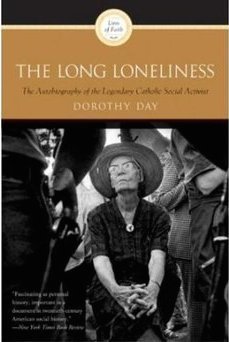
Book Review: Dorothy Day’s Autobiography – The Long Loneliness

Dorothy Day is one of those occasional figures whose lives – and how they live their lives – captures our attention….. In her case, part of how she captivates our attention is because she absolutely – and unfailingly – lived her conscience. It is possible to live one’s conscience.

In her autobiography (The Long Loneliness), Dorothy Day tells her story of growing up, becoming a journalist, her involvement in the Greenwich village scene and political anarchy, and on to her conversion to Catholicism and founding the Catholic Worker Movement.

This is one of the books that I read slowly; I read it slowly to take in the fullness of her life and how she lived her convictions, being a force for good in the world. I will read it again.

Kim Burkhardt blogs at A Parish Catechist and The Books of the Ages.