Acknowledging our sins at mass: The Confiteor

Photo of a red apple

At Catholic masses, we acknowledge our sins at the beginning of mass:

The Confiteor

I confess to almighty God,
and to you my brothers and sisters, that I have greatly sinned,
in my thoughts and in my words,
in what I have done and what I have failed to do,
through my faults, through my faults, through my most grievous faults;
therefore I ask the blessed Mary ever-virgin,
all the angels and saints,
and you my brothers and sisters
to pray for me to the Lord our God

We all know that we’re imperfect – part of “The human condition.” Lately, I’ve been commenting “If anyone is wondering about human sinfulness, just turn on the evening news” (i.e, human sinfulness is reported on daily!).

Our human imperfections are not viewed universally as caused by sin or by human brokenness. Some would argue that while we humans aren’t perfect, calling us sinful has an unnecessary harmful emotional effect; some counter-argue that an alternate and better route to improved well-being is that human effort is all we need to overcome our imperfections: social training, psychological and social supports, a good family environment, and “pull yourself up by your bootstraps.” Thes things, in and of themselves, are all important and good (and, arguably, not enough).

Again…..turn on the evening news. We humans do plenty wrong. The longer I sit in pews, the more convinced I am that we’ve inherited a sinful nature (Adam and Eve, the apple….). However, this view isn’t one for keeping us down (“I’m unredeemable, horrible!”). Rather, there’s freedom. When we surrender and allow God to work in our lives, God redeems us. Allowing God to transform us is an unequivacal path to becoming better people.

Several years ago (2016), I surrendered in prayer to allow God to do whatever he wanted in me. This occurred after a re-conversion experience in which I felt God’s love….. Yet, part of me was apprehensive. “What’s God going to do to me (or in me?)?” In hindsight, this fear was ridiculous. God is love, God loves us, God wants the best for us. What exactly did I think that a loving God was going to do “to me” or “in me?” Now that I’ve had some time following that surrender, I’m seeing the result of God working in me. I am becoming happier and I am starting to be nicer to other people. Pretty good results.

As time unfolds, I am also finding deeper meaning in confessing The Confiteor at mass. Confessing publicly that we have sinned is an acknowledgement of our human imperfection and an education into who we are and Church teaching. Further, such public confession has social value. When we acknowledge together that we are all sinners, then we have to forgive one another – none of us holier (above our neighbor in the pew next to us), nor can we condemn the person in the pew next to us. Further, we call others to pray for us while we also pray for everyone else. The Confiteor is a great prayer!

Join A Parish Catechist’s Zoom call on Tuesday evening at 7:00 pm Pacific to discuss topics of faith – such as the Nicene Creed and The Confiteor. Small group sharing is one of the ways we broaden and deepen our faith. You are welcome: Zoom sign in passcode is 898 322 8983 .

Kim Burkhardt blogs at A Parish Catechist and The Books of the Ages (and a member of the Association of Catholic Publishers). If you are a new visitor, it would be great to have you follow this blog (thank you!). If you know someone who would like this blog, please share it with them (thank you!). Also, your support ($$) to help sustain this blog is welcome.

“What We Believe”: believing the Nicene Creed

John the Baptist

Many Christians grow up reciting the Nicene Creed, Christianity’s central statement of belief.

A passing thought about the history might assume that Christian theology was fully and immediately self-evident as a result of Jesus’ time on earth. Yet, Christianity didn’t have the New Testament and a fully articulated theology in writing within weeks, months, or even decades following Christ’s death and resurrection.

By the early 300’s, the early church recognized that there was not full consensus of Christian belief. Therefore, church bishops met in 325 in the city of Nicea – in modern-day Turkey – to clearly articulate “what we believe” as Christians.  Thus, we now have the regularly-cited Nicene Creed (“The Council of Nicea”).

We also have the similarly worded Apostle’s Creed.

While many of us often recite the Creed at church, how many of us believe the Creed in its’ entirety?  The Creed IS “What we believe…..”

Growing up, I sat in pews believing in “God the Father” and “The Holy Spirit.”  I believed in having a personal relationship with God.   I believed in a historical Jesus Christ, but felt rather ambivalent about we humans needing a “God the Son.”  As a child who felt very orthodox in many ways, I flat-out questioned what I now call “biological implausibilities” – a virgin birth, Christ’s resurrection, Mary’s assumption into heaven.  For real?  These “biological implausibilities” simply didn’t square, in my mind, with our modern understanding of human biology….

In my mid-twenties, I determined that I needed to resolve these matters if I was going to remain in pews.  End result:  I wasn’t in the pews for twenty years.

A powerful re-conversion experience (told here) brought me back.  I knew then that God loves me; I still hadn’t made peace with the Nicene Creed.   I brought this challenge to a couple of pastors.  They both said, in essence, “We want you in a pew.  Come back, spend some time mulling over the things you’re struggling with.  Look for ways to make peace with these things.”  To a large degree, I’ve made peace…..  Further, my faith has matured.  I know that God loves me, God wants me to love other people, and trying to square with the Nicene Creed has brought me faith lessons that I couldn’t have anticipated.

What about you?

It’s easy to recite a creed when we’re in a pew on Sunday morning and everyone is reciting the Creed.  On a personal level, do you believe everything that we recite in the Creed?  Really? 

There’s plenty in the Nicene Creed to unsettle modern-day sensibilities.  I’ve met people who accept it all because “this is what our faith believes.”   Other people are like me: we wrestle with a topic before we “make it our own.”

Read through the Nicene Creed, shown below.  Reflect on what parts you believe, what parts challenge you.  Then, feel free to join A Parish Catechist Zoom call on Tuesday evening at 7:00 pm Pacific to discuss the Creed (Zoom sign in passcode: 898 322 8983).

The Nicene Creed

I believe in one God,
the Father almighty,
maker of heaven and earth,
of all things visible and invisible.

I believe in one Lord Jesus Christ,
the Only Begotten Son of God,
born of the Father before all ages.
God from God, Light from Light,
true God from true God,
begotten, not made, consubstantial with the Father;
through him all things were made.
For us men and for our salvation
he came down from heaven,
and by the Holy Spirit was incarnate of the Virgin Mary,
and became man.
For our sake he was crucified under Pontius Pilate,
he suffered death and was buried,
and rose again on the third day
in accordance with the Scriptures.
He ascended into heaven
and is seated at the right hand of the Father.
He will come again in glory
to judge the living and the dead
and his kingdom will have no end.

I believe in the Holy Spirit, the Lord, the giver of life,
who proceeds from the Father and the Son,
who with the Father and the Son is adored and glorified,
who has spoken through the prophets.

I believe in one, holy, catholic and apostolic Church.
I confess one Baptism for the forgiveness of sins
and I look forward to the resurrection of the dead
and the life of the world to come. Amen.

Join A Parish Catechist’s Zoom call on Tuesday evening at 7:00 pm Pacific to discuss the Nicene Creed. Zoom sign in passcode: 898 322 8983 .

Kim Burkhardt blogs at A Parish Catechist and The Books of the Ages (and a member of the Association of Catholic Publishers). If you are a new visitor, it would be great to have you follow this blog (thank you!). If you know someone who would like this blog, please share it with them (thank you!). Also, your support ($$) to help sustain this blog is welcome.

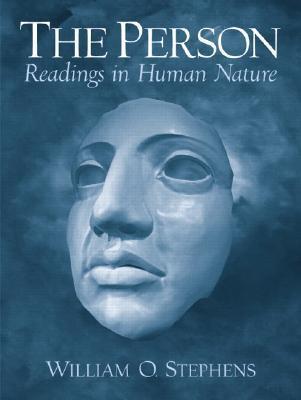
Book Review: The Person…Readings in Human Nature

The Person

I came upon this The Person…Readings in Human Nature – edited by William O Stephens – recently in a Little Free Library. While skimming through it at the Little Free Library, I found the book to be – as per the book’s description – be an anthology of modern and historical perspectives on “personhood” from well-recognized writers and philosophers over the centuries (our modern view of personhood is actually a fairy recent perspective….).

I’ve always taken an interest in the psychology of human development. I brought home this particular book as it speaks to a particular interest I have at the moment: the distinct impact of living a Christian life on the human person (and, how a person lives their life).

Many of the historical and contemporary thinkers whose perspectives are included in this book are secular. One of them is St. Thomas Aquinas (13th century). The opportunity to look at these multiple perspectives is interesting…..

Anyone who has ever sat in a church pew knows that what we hear of Christianity on Sunday is suppose to be applied in our lives…. And, that it isn’t always applied in people’s lives Monday through Saturday.

Last Wednesday, I was at mass listening to an Ash Wednesday homily. During the homily, it occurred to me that the perspective was a perspective that has infused my life “more than I had realized.” I found myself noticing that the perspective offered in the homily was a perspective that I had learned growing in my denomination and that it had fundamentally become part of my worldview….. Several years ago, I was struggling through a difficult period. Myself and the people around me were trying to make sense of my situation and how I might move out of the difficult period. I was away from church at the time and simply saw my perspective at the time as “my perspective” (and, a perspective – if you would have asked me at the time – was a perspective no different than anyone else’s. Or, since we all have a perspective, I might have thought my perspective to be a secular one since I wasn’t religiously active at the time)….. As we searched for ways to mentally frame both my situation and a solution, I noticed that myself and secular folks around me at the time were framing an effort to find a solution very differently. I didn’t have a sense at the time of what those differing perspectives were…… Later – during last Wednesday’s Ash Wednesday homily – I realized that the perspective I was applying at the time was rooted in a very Catholic perspective; even though I wasn’t religiously active at the time. Having grown up Catholic, I had absorbed a world view that was more distinct than I had realized. Fish don’t realize they are swimming in water as water is what they know.

A solution to my above-mentioned challenge was found later – in the Catholic pews to which I had returned. Allowing God to work in my life brought me to a solution to a vexing challenge.

I am looking forward to reading at least several sections The Person…Readings in Human Nature. I look forward to reflecting via this book – from the perspective of “how we live in the world as persons” – the distinctiveness of the worldview I pondered on Ash Wednesday. How well I apply that worldview to living well and being of service is always up for review…..

Kim Burkhardt blogs at A Parish Catechist and The Books of the Ages (and a member of the Association of Catholic Publishers). If you are a new visitor, it would be great to have you follow this blog (thank you!). If you know someone who would like this blog, please share it with them (thank you!). You can also support this blog by clicking here when you are going to shop on Amazon (that lands A Parish Catechist a commission on Amazon sales).