Christianity: “A Path”
In her book Centering Prayer and Inner Awakening, Cynthia Bourgeault tells a story about centering prayer guru Thomas Keating when he was the abbot of St. Joseph’s Abbey in Spenser, Massachusetts. “A few miles down the road from the abbey, a former Catholic retreat house had closed down and had been sold to a Buddhist group. When the facility reopened as the Insight Meditation Center….teaching the path of Vipassana…. suddenly the monks at St. Joseph’s began to notice an increase of people, almost inevitably young people, stopping by the monastery guest house asking for directions about how to get to the Insight Meditation Center! Dismayed but intrigued, Keating began to engage some of these young pilgrims in dialogue. What was it they were seeking at the Insight Meditation Center? To which the response nearly always came, in the vernacular of the Sixties, ‘A path, man! We’re seeking a Path!’ Discovering that the vast majority of these seekers had been raised as Christians, he asked the sixty-four-dollar question – ‘So, why don’t you search for a path within your own tradition?’ To which he received the genuinely astonished answer: ‘Christianity has a path?’ St. Joseph Monastery’s response was to develop the technique of Centering Prayer (which Keating then popularized when he was at Snowmass, Colorado) to help people in today’s modern context find Christianity’s long tradition of contemplative prayer.
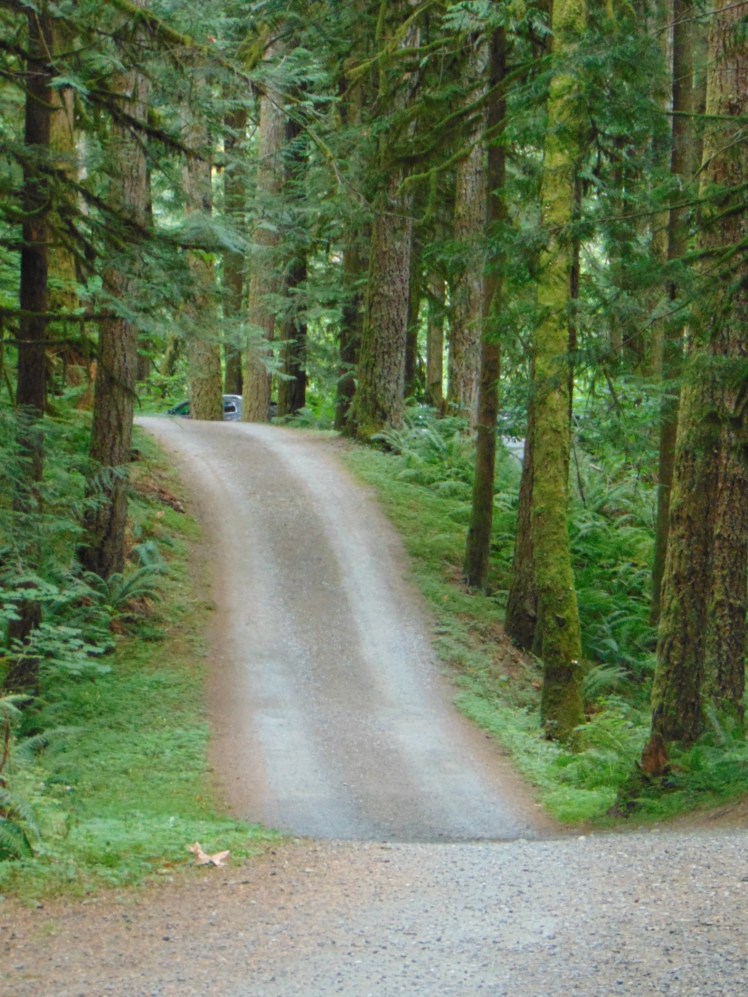
It seems today – in the 2020’s – that there still seems to be a frequent lack of recognition that Christianity has “a path.”
What of that path? How do we get onto that “path?”
I tell some of my own journey to that path here. Having grown up Catholic and then having left for twenty years, I had a profound re-conversion experience in 2016. That re-conversion experience began when I attended a Friday evening mass for social reasons, vowing that “I wasn’t going to return to Catholicism” – a gift of God’s presence proved me wrong!
In the period following that Friday evening mass, I was graced with an unexpected period of contemplative prayer – I simply rested in God’s presence as I experienced God loving me. Emotional healing from a challenging period began as I reconnectws with God and church, God-via-church-and-prayer.
In the years since the autumn of 2016, I have slowly discovered Christianity’s “path.” Surrender to allowing God’s presence to work in our lives. “Love God and love your neighbor” (Matthew 22::36-40) (I often find it easier to love God “who is love” than to love sometimes-challenging people, while some people find it easier to “love the people we can see” than to love the God we can’t see). Accept that God’s will for us is “a narrow path” that’s hard to follow, but ultimately freeing. “Again I tell you, it is easier for a camel to pass through the eye of a needle than for someone who is rich to enter the kingdom of God” (Matthew 19:24) [Jesus goes on to say that this task is impossible for humans alone, but that all things are possible in God} [This “passing through the eye of a needle is said to be a metaphor referring to a “narrow entrance” at Jerusalem’s gate whereby a camel would have to kneel at night to pass through the narrow passage when the city’s gate had been closed for the night for security.]. Participate in having the parts of ourselves that aren’t in alignment with God’s will for us slowly “cut away” (God is the principal actor in this “cutting away,” but we can participate in allowing this process to unfold and doing what we can). As we grow in all of these things, we learn of “It is no longer I, but God who lives in me” (Galatians 2:20). We start encountering the Catholic “both/and” of having a taste of “heaven on earth” (i.e., heaven later, but we get a taste of it now); In thinking about heaven, I tell people that “I need God now.” In living God’s will for us, there’s freedom, joy, peace among people.
God loves us. And, yes, Christianity has “a path.”
Kim Burkhardt blogs about faith at The Hermitage Within. Thank you for reading this faith blog and for sharing it with your friends. While you are here, please feel welcome to provide support to sustain this blog ($$).