Book Review: Bourgeault’s Centering Prayer and Inner Awakening

Book: Centering Prayer and Inner Awakening
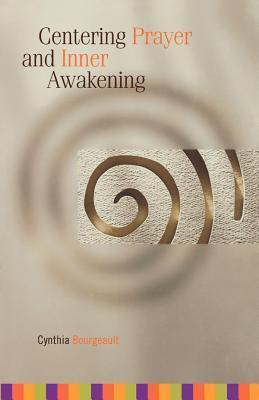
Centering Prayer and Inner Awakening

I have been hearing for several years – mostly through Contemplative Outreach Northwest – about Episcopalian priest Cynthia Bourgeault. She is known for her active, thoughtful leadership within contemplative/mystical Christianity.

I finally got around to reading one of her books: Centering Prayer and Inner Awakening.

I am “beyond thrilled” to have come upon this book.

In 2016, I was gifted with a sustained period of contemplative prayer during which I had a solid sense of God loving me. This was “a gift I didn’t see coming.” The outline of that story is told here. A challenge I encountered was that I didn’t have the vocabulary to articulate my experience to people. A real challenge – I was experiencing something profoundly meaningful, but I had no means to talk to people about it (I’ve since seen a couple of other people wander into churches with a similar scenario – each time, a make an effort to “walk with them,” encouraging them as best I can along their journey…..). In time, through church attendance and involvement in Contemplative Outreach Northwest, I started grappling my way toward being more able to discuss the “outer contours” of my experience. A respected friend (who also happens to be Episcopalian, like Cynthia Bourgeault) pointed out that each of us has a different prayer relationship with God and that the best we can hope for is to find a few people with whom can share some basic aspects of our prayer experience in relating to God.

Then, I read Centering Prayer and Inner Awakening.

Actually, I skipped through several “how to” reflection portions of the book – that was information I didn’t need.

Early portions of the book, though, grabbed my attention. When Cynthia Bourgeault encountered “centering prayer” (i.e., how to learn to do contemplative prayer) groups as a priest, she said she immediately grasped the concept based on having grown up attending a Quaker school. I have periodically read about Quaker spirituality – this intrigued me.

Then, I got to later chapters of the book.

While God’s faith path for us within Christianity is a very different realm than the secular study of human psychology, Cynthia Bourgeault has artfully drawn from both in this book to discuss how we experience changes within our inner realm when Christ changes us via contemplative prayer. Of course, Bourgeault discusses within the book the very real differences between “doing Christianity” and “doing psychology.” I am currently reflecting – with an inner joy – upon Bourgeault’s artful communication within the later chapters of this book. It’s as if she put our inner human experience to poetry (I can’t take credit for this statement – I once heard someone else use this analogy in another context). In the next few weeks, I expect to be able to start talking more actively to people – based on this book – about my own inner changes and experience wrought by contemplative prayer.

And, I will be reading more of Cynthia Bourgeault’s books.

(For any reader who is interested, Teresa of Avila’s autobiography is also of tremendous interest regarding contemplative prayer.)

Kim Burkhardt blogs about faith at The Hermitage Within. Thank you for reading this faith blog and for sharing it with your friends. While you are here, please feel welcome to provide support to sustain this blog ($$).

Advent and Christmas: Being Present to One Another

Candle

I visited a friend yesterday. She’s terminally ill and is aware that “this is probably her last Christmas.” She and I have a storied bond. Our mothers were friends since they were four years old. Then, our mothers brought her and I into the world three days apart. Now that she’s entering the final phase of her life, I’ve thought of something said two or three years ago by another friend – a triplet (two identical sisters and a third fraternal sister). One of the identicals was dying, the other identical said “I don’t know how to do this” (i.e., how to be “alone” – she’s never “not had” her identical). In my own measured way, I understand – I’ve never “not had” the friend who was born three days before me.

I was lying awake in the early hours of this morning, unable to sleep and pondering yesterday’s visit. These ponderings relate to a host of other recent ponderings – there’s a lot to unpack. Bottom line, being present in people’s lives matters.

Yesterday – for those of us in the Northern Hemisphere – was the first day after the Winter Solstice. The day after the shortest day of the year. Yesterday had a brief more amount more of daylight that the day before.

When we are truly present in each other’s lives, that presence matters. Being consciously present brings light and joy into people’s lives.

During this morning’s 2:00 am hour, I laid awake in bed listening to my cat’s breath (she finally sleeps with me, two years after I adopted her). I thought of the times when either someone has been present in my life or when I have been present in someone’s life. All of us remember such moments in our lives. We can all bring to mind stories of people who have present to us and times we have been present for someone else.

There’s a Christmas lesson here.

Christ came into the world to be present with humanity. We celebrate this every Christmas (for those interested in liturgical seasons, since we celebrate Jesus’ birthday on December 25 we celebrate Jesus’s conception – the Feast of the Anunciation – nine months earlier on March 25. Further, we celebrate the Feast Day of John the Baptist – who “leapt in his mother’s womb” when Mary came to visit his pregnant mother – on June 24).

We are called by our faith to be present in people’s lives and to bring positivity where we can:

  • Churches are present in the community by providing social services (soup kitchens, food banks, etc.). We are all called to meet the needs in our communities through active volunteerism.
  • One of my friends has taken on leading a grief and loss support group – a great service.
  • We can all find ways to communicate the message of God’s loving presence. Through our baptism, we are called to be “priests, prophets, and kings.”

When I tell stories about being present to other people I become animated (at other times, I am occasionally told that my conversational tone is rather flat or monotone!). I am seeing that other people’s willingness to be present in my life and me being present to other people has been integral to the times when my life has been most transformed.

Please don’t get the idea that I always to do a great job of being present in other people’s lives. This blog post came to be because I am seeing the poignancy – both from being present and from having people be present with me – of how being present transforms lives. All of us have someone with whom we can be present. During this Advent and Christmas season, we can all share the joy of Christ’s love.

Kim Burkhardt blogs about faith at The Hermitage Within. Thank you for reading this faith blog and for sharing it with your friends. While you are here, please feel welcome to provide support to sustain this blog ($$).

Integrating ourselves into our faith

Clonmacnoise window

Sometimes, multiple threads weave themselves into our awareness such that we come to recognize each thread as belonging to one tapestry.

Such has happened in reference to several books I’ve come across in recent years.

Several years ago, a comment someone made about “stages of faith” led me to James Fowler’s book of that title (Stages of Faith). I learned in that book about the developmental faith stages we progress through as we age and (hopefully!) mature. I come back to that book occasionally.

Since then, I have come across faith-related books such as The Deeply Formed Life and a book called Integral Spirituality (there are actually several books with that phrase part of their titles). While I haven’t yet read those two books, I brought them home to at least ponder their titles and/or topics. This led me to a phrase within Catholicism called Integral Human Development – the full development of each person.

I considered these books and topics as I explored how to fully bring together what then seemed to be disparate (compartmentalized) aspects of my life and the experience of living as a person of faith.

Truly, being a person of faith must mean what I will call “integral faith development.”

To truly be people of faith, we can’t be “church people” on Sunday morning, work people during the week (Monday to Friday, 9:00 – 5:00 – or whenever we work), athletes at the gym or the beach, etc.

Being a person of faith means that our faith must integrate into every aspect of our lives. And, every aspect of our lives must integrate into our faith.

This doesn’t mean that everyone who goes to church should give up their job, their athletic activities, etc. to become “church ladies.”

It means that we can’t compartmentalize our Sunday morning pew from the rest of our lives.

When I first read James Fowler’s Stages of Faith, I came to recognize that the various aspects of my own human development had developed at different rates. I did well academically in school – my mental development was great! The development of my social, emotional, and career aspects were “all over the map” in terms of development. My faith development? I had been away from church for twenty years and had left my faith development in a high school phase. Yikes! I don’t think I’m alone in this. I am calling this a “mountain peaks” approach to “non-integrated human development.” I was born in a mountainous geographic region and now live in another region where we have mountain peaks, several snow-capped (inactive) volcanoes, and an ocean – I notice each mountain peak within a mountain range being a different height. When we live our lives in such a way that each aspect of our development – emotions, mental development, social development, faith development – is in a different age-phase, we are living with differing developmental “mountain peaks” within who we are. Such a non-integrated way of living doesn’t result in personal health, well-being, or maturity. When I recognized that the then-segmented aspects of myself had been developing at different rates, I set out to bring the various aspects of myself into developmental alignment. I reviewed various models of faith and psychological development and “mapped out” which of my own mountain peaks were at higher and lower levels of development. I gave myself a couple of years to bring the lower mountain peaks up to approximately the same age-level of development as the higher peaks. The end result? A more content and more functional self.

However, there’s more to this than just a well-developed and well-rounded self. While the outcome I described in the previous paragraph is absolutely beneficial, the pew we sit in at church doesn’t exist solely to be a self-help pew. Sitting in a pew on Sunday and being a person of faith is about “love God and love your neighbor,” fully growing into a relationship with God, allowing God to turn us into the people God wants us to be, being present and lovingly impactful in the lives of God’s children (we are all God’s children – including the driver who smashed up your car, the politician you don’t like, the bully at your child’s school, the operator who accidentally dropped your call, the relative you dislike, etc. and etc.).

We can’t fully live into being a person of faith by compartmentalizing each part of our lives. We have to bring our lives into our faith – our joys, our successes, our athletic activities, our family events, our recent car accident, our difficult boss, etc. We have to bring our faith into all aspects of our lives – finding ways to talk about being a person of faith in the community (even if we live in a secular city), into driving and the crows we hate (I confessed in the confessional once that my irritation with heavy traffic was resulting in angry irritation directed at crows who were in the roadway. I learned to pray the Hail Mary while driving…..), etc.

We are people of faith when we integrate all aspects of our lives. We grow into living the Gospels in our lives.

Kim Burkhardt blogs about faith at The Hermitage Within. Thank you for reading this faith blog and for sharing it with your friends. While you are here, please feel welcome to provide support to sustain this blog ($$).
Book Review: The Ecumenical Councils of the Catholic Church

Book: The Ecumenical Councils of the Catholic Church
Book: The Ecumenical Councils

This book – The Ecumenical Councils of the Catholic Church: A History (author: Joseph E. Kelly) – is anything but a dry read.  

More than just a book for religious historians, this book provides wide details and context on how church leaders came together – and sometimes didn’t come together – over the centuries to debate and articulate Christian theology.

I count myself among the bibliophiles who believe that every word of a book should be read to consider the book as having been read.   In the case of this book, there is so much historical detail about each council, and historical context surrounding each council, and absorbing trivia that I am finding myself selectively choosing how much to summarily read about each time period the first time through this book (I may satisfy myself with selectively reading the book once through and keeping it a reference book).   “Really?,” I found myself pondering.  “A, B, X, Y really happened at this or that council or during this or that period in Church history?!?!?”  As I read, I am scribbling trivia on sticky-notes to tell friends and fellow church folk about what I am learning about the history of the Christianity’s twenty-one ecumenical councils.  As many of us know, the first council was the Council of Nicea in 325 through to Vatican II in the 1960’s. 

Just this afternoon, I learned that an Empress was involved in the second council of Nicea in 786/7.   Some councils were more ecumenical than others – in some cases, the councils were more heavily attended by bishops from the east than bishops from the west; today, individual denominations decide for themselves which of these historical councils were “ecumenical” (of note, the book’s author provides a listing within the book of which denominations consider with councils to have been ecumenical).

For non-historians, reading this book seriously will take the reader into reading additional books to learn more about the history and context of what was happening at the time of each council. 

There’s plenty in this book for both historians and fans of religious trivia.   It’s a book that really needs to be read over time so as to really absorb the content covered for each time period.

Kim Burkhardt blogs about faith at The Hermitage Within. Thank you for reading this faith blog and for sharing it with your friends. While you are here, please feel welcome to provide support to sustain this blog ($$).
Prayer: “Wordless sighs of the heart”

Candle

When I read The Tradition of Catholic Prayer from the Benedictine monks of Saint Meinrad Monastery, one of the types of prayer they mention is “wordless sighs of the heart.”

I am drawn to this phrase – I find prayer to be most meaningful when it is heartfelt. How about you?

,,,,,It’s been said, “There can be no faith life without prayer.” It’s also said that we cannot pray and continue sinning; when we really engage in prayer, we find that we have to allow God to change us for the better. Personally, I experience in prayer that God loves us!

True prayer goes beyond mere statements or superficial monologues directed in God’s direction. True prayer is dialogue, meaningful communication, presence. A “wordless sigh of the heart,” for example, is us opening ourselves bare before God.

How often does human prayer involve allowing our innermost selves to be fully transparent before God? Such vulnerability is a real interaction. While God certainly knows our hearts – God made us and knows us – it’s also true that we have free will. God doesn’t force us to into relationship; it’s up to us whether we are willing to be fully present before God.

When we aren’t in active relationship with God, the Holy Spirit occasionally knocks on our heart’s door; it’s up to us whether we respond to such promptings. We can also open our heart’s door to God by taking the initiative ourselves to communicate – God will show up when invited in. Sometimes, we feel God’s presence in prayer (I have!); other times, God may work “under the surface” in ways that we don’t observe; God working to change us “under our radar” is what John of the Cross wrote about in his book Dark Night of the Soul (“Dark Night” being a period of inner transition that isn’t fully transparent to us, rather than necessarily being a depressive period!).

There are many forms of prayer in which we have an active relationship with God. Contemplative prayer (for example, visit the network of Contemplative Outreach) is one way, being engaged while at church is another way – as are meditative prayers such as praying the rosary, talking to God, heartfelt intercessions, prayers of praise (including music)……… What makes prayer meaningful is that we pray in a way that makes it relational. There are as many ways to pray as there are people!

Interested in learning more about prayer? Check out A Parish Catechist’s previous blog post, “List: ways to pray.

Kim Burkhardt blogs about faith at A Parish Catechist. Thank you for reading this faith blog and for sharing it with your friends. While you are here, please feel welcome to provide support to sustain this blog ($$).
Growing through the seasons of the church year

I have spent time pondering the idea of growing in faith at times that organically or spontaneously occur in our own life cycle (I have experienced that!) or focusing on growing in step with the organized calendar of Christianity’s liturgical seasons.   Really, I don’t think it needs to be an either/or – it can be both/and.  Faith growth that sprouts at our own times – based upon the seasons and circumstances of our own personal lives – sprouts and grows depending upon our own situations.  Our own circumstances are infinitely varied.   With this growth, I like to think of it happening within a phrase I recently came upon – within “The Hermitage Within.” What, though, of faith development that is nurtured by liturgical seasons?

With Pentecost some time behind us, we are well into what the Christian liturgical calendar (for many liturgically-oriented denominations) calls “Ordinary Time” – the times in the year that are not part of Advent, Christmas, Lent, Easter.  Our first period of “Ordinary Time” in the annual liturgical  calendar (the calendar itself starts at the beginning of Advent) is between the Feast of the Baptism of the Lord (after the Christmas season) and the beginning of Lent.  Our second period of Ordinary Time happens between Pentecost and the beginning of Advent.

When we talk of “Ordinary Time” in our liturgical calendar, we are not simply describing “ordinary” time in the sense of “plain” or “a period of nothing special.” Rather, the term “ordinary” comes from the word “ordinal” – meaning numbered/ordered (“1st Week of Ordinary Time,” “2nd week of Ordinary Time,” etc.)

So, what are we – as parishioners – to do with this counted (ordinary) time on our liturgical calendar?    Our personal and communal faith need never be “ordinary” in the sense of “plain,” or “nothing special.”   God loves us and we are adopted daughters and sons of God.   We always have the opportunity to allow God to transform us into the people God intends for us to be – there is absolutely nothing “ordinary” about that!   Such transformation – when we surrender to allowing God to change us – truly is extraordinary.  We absolutely can surrender to this process year-round – including during “Ordinary Time.”

Liturgies – every church service we attend – is designed to help us surrender to this transformative encounter with God.

Looking for a deeper encounter with liturgy when you attend church?  Be fully present – attentive with no distraction.  Pray before church, ask God to help you to fully experience the service.  Get involved in church beyond attending on Sunday.   Volunteer at church – volunteering requires being attentive to what’s happening – a great bonus! Read faith books regularly. In short, be an attentive participant!

Kim Burkhardt blogs at A Parish Catechist. If you are a new visitor, it would be great to have you subscribe to follow this blog (it’s free – thank you!). If you know someone who would like this blog, please share it with them and invite them to subscribe (thank you!).

Book Review: Paths to the Heart – Sufism and the Christian East

Book: Paths to the Heart
Paths to the Heart: Sufism and the Christian East

I have recently been reading books about Eastern Orthodox Christianity. I have a particular interest in the contemplative tradition within Christianity and have discovered that there is a strong contemplative aspect within the Eastern Orthodox tradition.

Paths to the Heart: Sufism and the Christian East is a compilation of presentations from a conference held shortly after 9/11 where a group of people met to discuss similarities of the religious views between the Christian East (i.e.., Eastern Orthodox) and Sufi Muslim.

I am more than half-way through this book. What emerges in this book is engaging observations about the contemplative aspects of Eastern Orthodox and Sufi Islam. For anyone interested in the contemplative aspects of Eastern Orthodox, Sufi Islam, or both….. Paths to the Heart: Sufism and the Christian East is an insightful read.

For my particular area of interest – the contemplative prayer aspect within Christianity – I am learning in this book about Hesychasm – described by Wikipedia as “a contemplative monastic tradition in the Eastern Christian traditions of the Eastern Orthodox Church and Eastern Catholic Churches in which stillness (hēsychia) is sought through uninterrupted Jesus prayer. While rooted in early Christian monasticism, it took its definitive form in the 14th century at Mount Athos.”

Kim Burkhardt blogs at A Parish Catechist. If you are a new visitor, it would be great to have you subscribe to follow this blog (it’s free – thank you!). If you know someone who would like this blog, please share it with them and invite them to subscribe (thank you!).

The many moods of prayer

Trinity of candles

In the book Reading Lolita in Tehran, author Azar Nafisi writes of learning from her introverted husband about “the many moods and nuances of silence: the angry silence and the disapproving one; the appreciative silence and the loving one.”

There are, likewise, “many moods and nuances” in the silence of personal prayer:

  • The awe when we encounter God’s presence
  • The lonely distance when we feel separated from God
  • Our outpouring of self – our emotions and experiences – when we offer everything within us and within our lives to God
  • Angst when we bring the frustrations of our human experience to God

Then, there are the “many moods and nuances” of public prayer:

  • The psalms we sing in church to bring to God our wide range of human experience and petitions
  • Intercessory prayers we “offer up” at church
  • The joy inherent to our “songs of praise”
  • Rote prayers during services – The Lord’s Prayer, etc.
  • Prayers offered at public events

Just as there are many variables and phases in our relationships with people, there are changing variables and phases in our relationship with God.   This is a good thing.

Whatever we might expect of prayer, our prayer needs to be active, regular and ongoing, dynamic, and changing.  We grow and change over time.   Therefore, our relationship with God cannot be what it was when we were children.  Or when we were teenagers.  Or five years ago.   While God is ever God’s-self, the relationship between us and God is ever adjusting to “where we are” in that relationship and – if we actively pray on an ongoing basis – adjusting as we move through our lives………… 

How does one pray? 

Just as we have many differing relationships with the various people in our lives – and a variety of ways that we communicate with the people in our lives – there are any number of ways of communicating with God. A prayer style that works for one person may be very different than what works for the next person. Here are several approaches to prayer:

  • Rote prayer (formal, memorized prayers – these are often provided to us by our houses of worship). Prayers such as the Lord’s Prayer are full of meaning and help us learn to pray. Such prayers give us ready prayer content that we can easily put to use.
  • Psalms. The Book of Psalms – which were meant to be sung – are summarized by Wikipedia thus: the Book of Psalms are “an anthology of Hebrew religious hymns…including hymns or songs of praise, communal and individual laments, royal psalms, imprecation, and individual thanksgivings.  The book also includes psalms of communal thanksgiving, wisdom, pilgrimage, and other categories.”
  • “Talking to God.” Our spontaneous thoughts and words directed to God. God wants to have a relationship with us; relationships are two-way, be open to feeling God’s presence in response.
  • Contemplative Prayer. Resting reflectively in prayer, without a need for words or any human language. Contemplative prayer can – and for some people, does – include a sense of God’s presence in prayer. For more information about contemplative prayer, visit Contemplative Outreach.
  • Praying the Rosary. The rosary is a reflective way of praying a set of rote prayers with a formulaic set of Catholic prayer beads (focusing time on specified topics). Instructions for praying the rosary is available here.
  • Lectio Divina. Lectio Divina “describes a way of reading the Scriptures whereby we gradually let go of our own agenda and open ourselves to what God wants to say to us” (this particular description provided by the Carmelites).
  • Singing at church. “Those who sing pray twice” (a popular phrase in churches).
  • Intercessory prayer. Intercessory prayer that we pray for other people. We come to God with the challenges of those who are in need of support.

Kim Burkhardt blogs at A Parish Catechist. If you are a new visitor, it would be great to have you subscribe to follow this blog (it’s free – thank you!). If you know someone who would like this blog, please share it with them and invite them to subscribe (thank you!).

Book Review: Spiritual Direction in the Early Christian East

Book cover
Authors: Irenee Halisherr, Foreward Bishop Kalistsos Ware

I very much enjoyed finding this book, Spiritual Direction in the Early Christian East. I was equally thrilled to discover that it was published by Cistercian Publications (I worked for a Cistercian monk-priest for a time……).

This is among books written on very specific topics – it’s great to find such books when they are written on a topic of personal interest. I take an interest in the history of religious thought in the Medieval period and earlier. I am also currently exploring spiritual direction. Thus, I was excited to order this book and read it.

A number of passages in the foreward prove tangible to the reader interested in spiritual direction:

  • “The ministry of the spiritual father is already foreshadowed in the New Testament; ‘Though you have countless guides in Christ, you do not have many fathers. For I became your father in Christ Jesus through the Gospel.’ (1 Cor 4:15)”
  • “He helps his children in Christ precisely because he is willing to share himself with them, identifying his own life with theirs.”

Within the book itself, any number of passages artfully describe spiritual direction:

  • “Desert fathers have, if not brought into being….at least, systemized this magnificent thing….’the divine art of healing another.'”
  • “We should examine ….[the qualities]…. the Byzantines deemed most necessary to the exercise of spiritual direction.” This section of the book starts with discussion of any would-be spiritual director needing to possess the quality of charity with the aspect of charity that involves being loving ( spoiler alert: read the book to discover the other deemed-necessary qualities!).
  • Later chapters of the book discuss how to enter into spiritual direction as a directee in such a way as to benefit from receiving spiritual direction – a useful topic of instruction.

In addition, any number of passages interestingly discuss Eastern Christianity:

  • “This book is addressed to Western Christians interested in the East: the main intention is to make them breathe the spirit of which animated the great spiritual masters of the past….”
  • “Almost all the documents [referenced in the main of the book] belong to monastic literature. It could not be otherwise. Spiritual direction was not taught and practiced to perfection except among monks.”
  • “….abba Elias and abba Dorotheos….devoted themselves to a large monastery of virgins in Antripe, upper Egypt…..Their role, which they assumed spontaneously out of compassion consisted in maintaining or re-establishing peace among the some three hundred ascetrie (women ascetics) who had been accepted there…..” [Note: I now find myself wondering what literature is available for learning more about ascetrie!]

Spiritual Direction in the Early Christian East is an important contribution to books on spiritual direction and literature about Eastern Christianity – particularly the practice of spiritual direction. I encourage anyone interested in one or both topics to pick up this book.

Kim Burkhardt blogs at A Parish Catechist. If you are a new visitor, it would be great to have you subscribe to follow this blog (it’s free – thank you!). If you know someone who would like this blog, please share it with them and invite them to subscribe (thank you!).

Inspiring other’s faith by talking about our own brokenness

Stained glass windows at Assumption Church, Bellingham

I was struck by a recent article by Seattle Bishop Frank Schuster published in Northwest Catholic. In that article, Bishop Schuster (a friendly guy!) quotes both the famed Archbishop Fulton Sheen and poet-and-opium-addict Francis Thompson. Francis Thompson (who is new to me!) wrote poetic ideas such as “I fled [God], down the nights and down the days; I fled Him, down the arches of the years, I fled Him down the labyrinthine ways of my own mind; and in the midst of tears, I hid from Him and under running laughter.”

In our current times – when the U.S. surgeon general is talking about the dangers and health consequences of an “epidemic of loneliness,” I rather think we would do well to talk to other from a place of genuineness – including talking more often and more frankly about our own brokenness.

When we really talk about our human brokenness, we connect meaningfully with other people. Less isolation. Further, really talking about our human brokenness somehow allows us to see and connect with meaningful with the love and spiritual nourishment that God offers to us. It is, after all, in our brokenness that we need God.

When we interact with people, we are typically encouraged to “put our best foot forward.” We talk about how to achieve more, succeed more. We post photos of our great moments on social media. Yet, many people are also lonely, socially isolated. Too often, people are not connecting with people in faith communities or finding spiritual nourishment. Part of the solution to our woes, I think, is to really express ourselves – including our brokenness. In talking about our brokenness, we somehow become more receptive to the loving grace offered to us by God.

Try talking about your brokenness. Listen for God’s loving grace.

Kim Burkhardt blogs at A Parish Catechist. If you are a new visitor, it would be great to have you subscribe to follow this blog (it’s free – thank you!). If you know someone who would like this blog, please share it with them and invite them to subscribe (thank you!)