“What We Believe”: believing the Nicene Creed

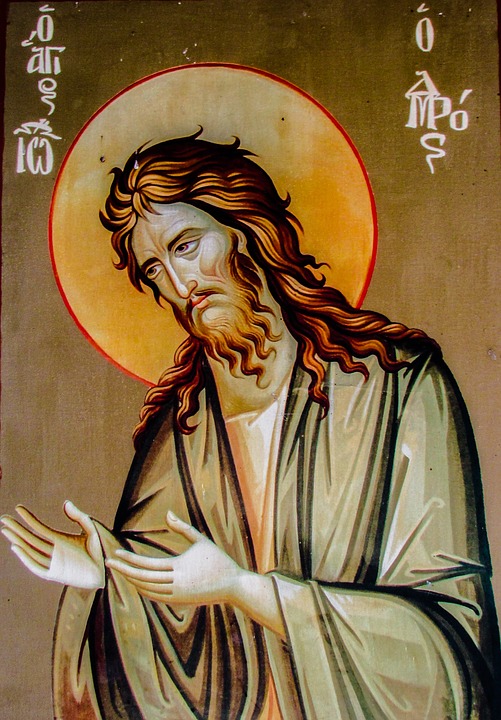
John the Baptist

Many Christians grow up reciting the Nicene Creed, Christianity’s central statement of belief.

A passing thought about the history might assume that Christian theology was fully and immediately self-evident as a result of Jesus’ time on earth. Yet, Christianity didn’t have the New Testament and a fully articulated theology in writing within weeks, months, or even decades following Christ’s death and resurrection.

By the early 300’s, the early church recognized that there was not full consensus of Christian belief. Therefore, church bishops met in 325 in the city of Nicea – in modern-day Turkey – to clearly articulate “what we believe” as Christians.  Thus, we now have the regularly-cited Nicene Creed (“The Council of Nicea”).

We also have the similarly worded Apostle’s Creed.

While many of us often recite the Creed at church, how many of us believe the Creed in its’ entirety?  The Creed IS “What we believe…..”

Growing up, I sat in pews believing in “God the Father” and “The Holy Spirit.”  I believed in having a personal relationship with God.   I believed in a historical Jesus Christ, but felt rather ambivalent about we humans needing a “God the Son.”  As a child who felt very orthodox in many ways, I flat-out questioned what I now call “biological implausibilities” – a virgin birth, Christ’s resurrection, Mary’s assumption into heaven.  For real?  These “biological implausibilities” simply didn’t square, in my mind, with our modern understanding of human biology….

In my mid-twenties, I determined that I needed to resolve these matters if I was going to remain in pews.  End result:  I wasn’t in the pews for twenty years.

A powerful re-conversion experience (told here) brought me back.  I knew then that God loves me; I still hadn’t made peace with the Nicene Creed.   I brought this challenge to a couple of pastors.  They both said, in essence, “We want you in a pew.  Come back, spend some time mulling over the things you’re struggling with.  Look for ways to make peace with these things.”  To a large degree, I’ve made peace…..  Further, my faith has matured.  I know that God loves me, God wants me to love other people, and trying to square with the Nicene Creed has brought me faith lessons that I couldn’t have anticipated.

What about you?

It’s easy to recite a creed when we’re in a pew on Sunday morning and everyone is reciting the Creed.  On a personal level, do you believe everything that we recite in the Creed?  Really? 

There’s plenty in the Nicene Creed to unsettle modern-day sensibilities.  I’ve met people who accept it all because “this is what our faith believes.”   Other people are like me: we wrestle with a topic before we “make it our own.”

Read through the Nicene Creed, shown below.  Reflect on what parts you believe, what parts challenge you.  Then, feel free to join A Parish Catechist Zoom call on Tuesday evening at 7:00 pm Pacific to discuss the Creed (Zoom sign in passcode: 898 322 8983).

The Nicene Creed

I believe in one God,
the Father almighty,
maker of heaven and earth,
of all things visible and invisible.

I believe in one Lord Jesus Christ,
the Only Begotten Son of God,
born of the Father before all ages.
God from God, Light from Light,
true God from true God,
begotten, not made, consubstantial with the Father;
through him all things were made.
For us men and for our salvation
he came down from heaven,
and by the Holy Spirit was incarnate of the Virgin Mary,
and became man.
For our sake he was crucified under Pontius Pilate,
he suffered death and was buried,
and rose again on the third day
in accordance with the Scriptures.
He ascended into heaven
and is seated at the right hand of the Father.
He will come again in glory
to judge the living and the dead
and his kingdom will have no end.

I believe in the Holy Spirit, the Lord, the giver of life,
who proceeds from the Father and the Son,
who with the Father and the Son is adored and glorified,
who has spoken through the prophets.

I believe in one, holy, catholic and apostolic Church.
I confess one Baptism for the forgiveness of sins
and I look forward to the resurrection of the dead
and the life of the world to come. Amen.

Join A Parish Catechist’s Zoom call on Tuesday evening at 7:00 pm Pacific to discuss the Nicene Creed. Zoom sign in passcode: 898 322 8983 .

Kim Burkhardt blogs at A Parish Catechist and The Books of the Ages (and a member of the Association of Catholic Publishers). If you are a new visitor, it would be great to have you follow this blog (thank you!). If you know someone who would like this blog, please share it with them (thank you!). Also, your support ($$) to help sustain this blog is welcome.

Fear-and-faith or fear-vs-faith?

When I was ten years old, we were playing dodge ball at school on a December afternoon.  I woke up in the hospital the next morning with a concussion and hairline skull fracture.

A month later, after physically recovering, I cued up to play dodge ball again.  A classmate who was cued up next to me said, “Kim, you don’t have play.”  In other words, “We know what happened to you.  You don’t have to prove anything to us.”  No, actually, I did need to play.  I needed to not end up afraid of a game that landed me in the hospital.  So, I played several times until I was satisfied that I wasn’t afraid of dodge ball.  I then gave up the game, having discovered that I had lost interest.

There were, however, other facets to fear stemming from that afternoon game of ball. Several years later, I happened upon a red ball of the fateful dodge ball type. Upon seeing that red ball, my stomach instantly tied up with fear. It hadn’t occurred to me at age ten that I needed to work through fear of the red ball; later, it took me too long to work through the lingering fear of that ball. Another facet of fear from that game was a social fear. I had been friends with the classmate who threw the dodge ball that had hit me in the head. He and I were socially awkward children. When I returned to school six days after landing in the hospital, I naturally looked around the school campus for him. I spotted him alone, navigating the playground. He, myself, and the likely the whole school knew that he had thrown the ball. Had his older brother told their mother about what happened at school? He and I – two awkward kids – never spoke again, apart from one awkward “hello” in the hallway during high school. On my end, I was racked with guilt. My concussion was my fault; I had gotten distracted watching another group of kids play hopscotch instead of paying attention to the ball that I should have dodged. But, I didn’t know how to talk to my classmate. He didn’t know how to talk to me. A friendship ended. If his mother found out what had happened at school, he may have been blamed for knocking a girl unconscious. ….When my mother and I discussed the dodge ball game in the days following the event, she blamed neither me nor the child who threw the ball – her view was that the school staff should have prevented the injury (she said so the school principal the day after the dodge ball game)…..

So much fear from that situation. My potential fear afterward of a game. My fear of red textured balls. Social anxiety for two children. My mother’s fear when the doctor spoke about the possibility of me ending up in a coma. At least some of these fears were understandable. Yet, the ending of a childhood friendship could have been prevented if the other child and I could have figured out how to talk to one another. Or, if the adults around us – teachers, parents – had perhaps thought to make sure that there wasn’t any lingering tension between the two of us.

The vast majority of us live with fear. Fear of all kinds of things. Some fears are understandable, even reasonable (fear of getting run over by an oncoming vehicle, for example). Too often, we allow fear to immobilize us.

Fear has consequences. Friendships ended, opportunities lost, lives stilted. Far too often, we don’t fully live because we allow our fears to hinder us. “I couldn’t take that job, I couldn’t try that new thing, I couldn’t learn to overcome X or Y obstacle, I couldn’t deal with A or B emotional issue, resolve a matter with that person…. How many ways do you allow fear to keep you from fully living your best life? How many regrets do you have because you allowed fear to hold you back?

Perfect love casts out all fear (1 John 4:18). I heard this any number of times over the years. This began to make sense after I returned to church in 2016. My return to church involved a re-conversion experience told here. In that re-conversion experience, I experienced that God loves me. In the time that followed, a person of faith took the time to care. When we are in a place of love, fear fades.

Decades after the dodge ball game (this week!), I was at a grocery store and saw red textured balls in the children’s toy section. Less stomach knotting when I see these red textured balls now, but still an instant memory of a dodge ball game on a school playground. And, the instant memory of a lost friend who now lives in another state. I know he’s living in another state because I looked him several years ago – thinking then that I should phone him. I had thought through the potential phone call when I looked him up several years ago – he would likely see my name on call display when I would call, likely invoking a reaction on his end. If he answered the phone, I would start the conversation by saying, “I am sorry.” He would know what I was sorry for. I would then remark, “It was my fault.” Beyond my introduction, I would then let him talk. I would talk only enough to keep the conversation going, if he was at a loss for words, with the goal of healing an old emotional wound…..

Yesterday afternoon, I looked him up again. Found what appeared to be a current phone number. Waited until he would likely be home from work, called the phone number intending to attempt to finally clear the air. A turning stomach when I dialed the number. Earlier in the day, I was hoping for reconciliation. When I actually dialed the number, I was unfortunately relieved to discover that the phone number was disconnected (“Upon dialing the number, I am nervous to talk to him. Can an old hurt actually be resolved decades later? Does he even want to hear from me after all this time? Is my attempted phone call to him self-serving?”)….. If circumstances allow us to cross paths again (say, a high school reunion), I am now ready to talk to him.

Some say that courage is acting even when we are afraid. Sure. There’s also more available to us, beyond our own courage. We know there are times when we don’t conjure up courage, when we detrimentally stay in fear.

Staying in fear is not trusting in God. If we allow fear to keep us in fear, then we believe – or resign ourselves to believing – that what we fear has more control over us than God can conquer. Feeling that the things we fear are bigger than God’s ability to lead us out of what scares us is not living in faith, no matter how faithful we might otherwise want to believe ourselves to be.

How willing are you to move beyond fear? If you might be willing to move beyond your fears that you allow to hinder your life (in whatever ways), try surrendering. Allow God to resolve your situation(s) and your fears. This is an act of faith, requiring a trusting relationship with God (there’s going to be prayer involved!). This might also involve a conversation with people in your life (“Hey, here’s a fear in my life…..I’m going to see about getting past this fear…..”).

God loves us. When we allow God’s love to be present to us, perfect love casts out fear.

Kim Burkhardt blogs at A Parish Catechist and The Books of the Ages (and a member of the Association of Catholic Publishers). If you are a new visitor, it would be great to have you follow this blog (thank you!). If you know someone who would like this blog, please share it with them (thank you!). Also, your support ($$) to help sustain this blog is welcome.

Living faith: challenging, rewarding, becoming who we should be

Seattle Sunset

We occasionally meet someone who has clearly become the person they were meant to be. I know such a person right now – aspiring to be like them helps push me forward in living my faith, to put faith concepts into practice.

Truly being a person of faith isn’t merely about sitting in a pew on Sundays.

Certainly, sitting in a pew is part of “showing up.” The pews are part of where we learn – a gateway into faith, so to speak.

Whether we are truly living our faith is about whether we engage when attending church combined with what we do outside of church.

This was articulated well by Bishop Frank Schuster (Seattle): “God doesn’t want to be an app that we pull up occasionally. Rather, God wants to be our operating system that runs our lives.”

What does it mean to have God be the operating system that runs our lives? Simply put, God is only going to be the operating system that runs our lives when we assent to allow this.

Assenting to allow God be our operating system means:

  • Learning about God and faith, to the limited degree that we can (another Seattle-area priest, Fr. Tim Clark, verbally observed that our efforts to understand God and describe God really only “get around the edges…. Think of God as a circle, with our efforts to understand God and describe God as sometimes touching some parts of that circle).
  • Assenting that it’s God who is the ultimate reality, that we are junior parties to a relationship with God, that we are meant to follow God’s lead.
  • Developing a prayer-centered relationship with God. Just as our relationships with people require communication and social interaction, having a relationship with God requires communication and social interaction – which happens in prayer. More on prayer here.
  • Truly letting God into our hearts. “It is no longer I, but God who lives in me” (Galatians 2:20). We often don’t do such a great job of transforming our lives on our own. Allowing God to shape us is crucial to becoming the people we are meant to be.
  • Loving the people around us. Christ was asked, which of the commandments is greatest? He responded in Matthew 22:34-40: “The greatest commandments are…love the Lord your God….and….love your neighbor as you love yourself.”
  • “Let all that you do be done in love” (1 Galatians 16:14). There’s a lot to unpack here. If we hold up everything we think and do to this standard, we can spend our entire lives getting closer to living the loving lives we are meant to live.

Interested in an improved prayer life? Reminder: faith sharing groups about our prayer lives are starting on Zoom with A Parish Catechist on Saturday, July 20 (8:00 am, Pacific Time). More info here (including a Zoom link) – we would love to have you join in!

Kim Burkhardt blogs at A Parish Catechist and The Books of the Ages (and a member of the Association of Catholic Publishers). If you are a new visitor, it would be great to have you follow this blog (thank you!). If you know someone who would like this blog, please share it with them (thank you!). Also, your support ($$) to help sustain this blog is welcome.

How-to list: steps to living our faith as love

Stairs, moss

The purpose of being a person of faith is ultimately about “Let all that you do be done in love” (1 Corinthians 16:14).

Christ was asked, “Which of the commandments is greatest?” He responded, ““Love God and love your neighbor as yourself” (Matthew 22:34-40).

So, how do we live our lives as our faith calls us to? Several steps – if applied – move us forward in love (kudos for these steps you already put into practice!):

  • Love God. God is love. We spend time with the people we love; thus, loving God requires spending time with God in prayer (note: prayer isn’t just a one-way conversation of us talking to God. Prayer is a relationship. Relationships go both ways – in addition to communicating to God, allow God to be present in prayer, be attentive to God’s loving presence.). Twenty minutes in daily prayer is feasible. Regular prayer transforms us, increases both our faith and how our faith unfolds in our lives!
  • Loving God requires loving God’s children. This is both a spiritual truth and applies our faith toward the greater social good (this spiritual truth is spoken of in 1 John 4:20). Everyone is a child of God – no exceptions. Even the people we don’t like are beloved children of God (that’s hard!). It can be easy to cultivate a loving relationship with God (the “faith is exclusively a relationship between me and God” syndrome) – it’s harder to apply our faith to learning to love any people we’d rather avoid. However, learning to love people we’d rather avoid (or even hate!) forces us to grow into becoming better people – faith in action! The world becomes a better place as a result.
  • Apply generosity of spirit throughout each day. As the saying goes, “everyone loves a cheerful giver.” Through this principle, we become better people and contribute positively to our communities and the individuals within our communities.
  • Go the extra mile to be a caring person when interacting with people. Be the one to help build community, to be a force for good. Result: people feel cared for!
  • Get involved in relieving the needs in your community. Volunteer where needed, donate to charity. We can all be involved in making our community a better place.
  • Make time for people when they need you. Be present when someone is vulnerable. This is sometimes easy when it’s someone we care about it, when the topic-at-hand is an easy one, and we can easily make time. Sometimes, though, being present when someone feels vulnerable is hard. Work at it, people need you. It’s a good, important way to support people.
  • Be the one to forgive, even when it’s hard. This is the right thing to do, it heals relationships. Sometimes, we need to be the bigger person (even when we don’t want to!).
  • Find something good in everyone. Nearly everyone – even the people who are difficult – have positive traits. Compliment people’s strengths.
  • In marriages, apply the “60/40 rule.” If both spouses spend 60% of their marital effort thinking about meeting the other spouse’s needs (rather than focusing on “what do I want out of this marriage”), the marriage will go well. A great strategy!
  • Build people up. Family, friends, co-workers.
  • Give children and pets – everyone who is vulnerable (sick folks, marginalized individuals, etc. – your undivided attention. When we are good to people who can’t do anything for us – we’re living as well as we ought to.
  • Commit random acts of kindness. The more, the better.
  • Cultivate empathy.
  • Allow God to clean up your character flaws. Often time, our flaws get reduced better with God’s help. Our imperfections don’t help anybody!

Kim Burkhardt blogs at A Parish Catechist and The Books of the Ages (and a member of the Association of Catholic Publishers). If you are a new visitor, it would be great to have you follow this blog (thank you!). If you know someone who would like this blog, please share it with them (thank you!). Also, your support ($$) to help sustain this blog is welcome.

Book Review: The Orthodox Way

Book Title: The Orthodox Way

The back cover of this book describes The Orthodox Way as follows:

“This book is a general account of the doctrine, worship and life of Orthodox Christians by the author of the now classic THE ORTHODOX CHURCH. It raises the basic issues of theology…. helps to fill the need for a modern Orthodox catechism… Throughout the book, Father Ware shows the meaning of Orthodox doctrine for the life of the individual Christian.”

For readers who have anything of a contemplative bent or an interest in mysticism, I find the book to be an important read for growing one’s faith (the Orthodox church has a very definite contemplative vein within it). I recently quoted The Orthodox Way by Bishop Kallistos Ware in a previous blog post:

“The Greek Fathers liken man’s encounter with God to the experience of someone walking over the mountains in the mist: he takes a step forward and suddenly finds that he is on the edge of a precipice, with no solid ground beneath his foot but only a bottomless abyss.”

I read this book a year or two ago. I find myself coming back to it; statements such as the one above feed my prayer life. This is the type of book I read before going to bed – a book to lift one’s spirits. A worthwhile read!

Kim Burkhardt blogs at A Parish Catechist and The Books of the Ages (and a member of the Association of Catholic Publishers). If you are a new visitor, it would be great to have you follow this blog (thank you!). If you know someone who would like this blog, please share it with them (thank you!).

We need each other: small group faith sharing

Clonmacnoise window

As we seek to grow in faith, we need each other.

This idea that we need each other in faith is observed and communicated time and again:

  • “No man is an island.”
  • “We are all radically incomplete. And we need each other.” Timothy Radcliffe at the October, 2023 Synod in Rome.
  • A person of faith who I admire wrote: “we all need to have encouragement and some checks & balances from other seekers in regard to our experiences, otherwise we can fall into despair, or begin to believe that our own experience is the fullest measure of truth, which is dangerous.”
  • Etc.

We learn in faith from faith leaders – pastors, book authors, etc. We also learn from one another.

Sometimes, there is a desire to go it alone in our faith:

  • “I am independent. I am capable of learning. I know my conscience – I will find a faith path that suits my conscience and my lifestyle. I will grow in faith by sitting home alone reading books on spirituality.”
  • Sometimes, people variously add….. “I don’t like our current pastor at church…” Or, “I don’t care for organized religion…”
  • Perhaps: “I will supplement faith reading by going on nature walks or going to occasional conferences or retreats.”
  • “I have an active prayer life. I will allow God to direct my life. It’s ‘me and God.'”
  • “Of course, I will work continually be a better person.”

In fact, we need each other. The email I quoted above goes on to say, “we need each other, and I believe that God designed us that way.” Even hermits at monasteries have occasional contact with the other members of their monastic communities!

Christ was asked, “Which of the commandments is greatest?” He responded, ““Love God and love your neighbor as yourself” (Matthew 22:34-40). Loving your neighbor, of course, involves generosity of spirit to the people in our lives and supporting people who need support – it involves us interacting with one another, being in community.

Faith communities provide just that – communities where our faith is nurtured, where we hold ourselves to account, where we support the faith growth of our fellow faith travelers, and where we learn to more fully love our neighbor. Within such a context, small group faith sharing provides distinct and useful opportunities to learn and grow in faith, to support our fellow faith travelers. Local faith communities – churches, topic-specific communities such as prayer-based organizations, etc. – often provide small group settings ranging from Bible studies to prayer groups, life-stage groups (young adults, moms, retirees, etc.), topic-specific learning communities, and service activities (cleaning the parish, feeding the homeless, etc.). Please feel welcome to look up and join a faith sharing small group in your community.

Kim Burkhardt blogs at A Parish Catechist and The Books of the Ages (and a member of the Association of Catholic Publishers). If you are a new visitor, it would be great to have you follow this blog (thank you!). If you know someone who would like this blog, please share it with them (thank you!).

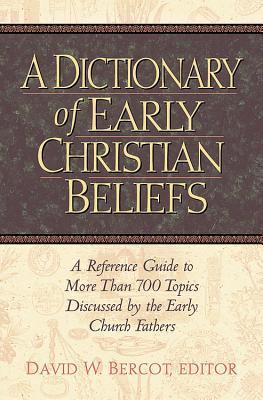
Book Review: Dictionary of Early Christian Beliefs

Dictionary: Early Christian Beliefs

There was a time when I would have read this reference book from cover to cover (I am among the readers who believe that when I read a book, I should read the entire book…..).

This is a useful, scholarly book to have on one’s bookshelf as a reference to inform one’s study of any number of topics. I am reading some of it now and plan to refer to it on occasion as the reference book it is intended to be.

Christianity is 2,000 years old. In 2024, the majority of us – with the possible exception of those Biblical scholars who specialize in Early Christian Literature – are not going to be familiar with the ins and outs of the topics discussed in the early church. Nor are most of us current on the etymology of what every word meant 2,000 years ago (“dictionary definitions” of words and the cultural context of vocabulary changes over time…).

“Sure,” some will say, “We know what early Christians were talking about. They were talking about Jesus, the resurrection, the gospels, and how to be Christian.” Yes, that’s true. But how exactly did those conversations unfold in Palestine, Greece, Turkey, etc. in, say, the year 75, 125, or 300 AD?

The gospels weren’t written down until several decades after Christ’s death. Jesus said during his lifetime that he would return during “this generation;” thus, it initially seemed unnecessary to Jesus’ contemporaries to write down his life and teachings for future generations…. Eventually, it started to become clear that he wasn’t coming back imminently, so his narrative began to be written for posterity. It then took time for the early church to decide which gospels – from among the gospels that were written down – are canonical (accepted as church doctrine). It wasn’t immediately clear to the early church that “the Bible” was going to include (and only include) Matthew, Mark, Luke, and John.

Likewise, it took time for the early church to develop and “come together” on any number of topics that we recognize today as “Christianity.”

So, precisely which “Christian topics” were under discussion in the early days of Christianity? This book – A Dictionary of Early Christian Beliefs – provides useful insights in to this question. Having this reference on one’s bookshelf can inform our understanding in any number of settings – when studying Sunday’s readings at church, when we want to learn more about a specific aspect of Christianity, when studying church history, etc.

A sampling of several topical entries in this 704-page resource include:

  • Christ, Divinity (how the early church came to understand this one topic gets 25 pages!)
  • Descent into Hades
  • Gifts of the spirit
  • “Keys of the Kingdom”
  • Patriarchs
  • Paul, apostle
  • Prayer
  • Rapture
  • Schism
  • At the end of the book, there are “Quotable quotes from the Early Christians.”

I appreciate having this book on my bookshelf.

Kim Burkhardt blogs at A Parish Catechist and The Books of the Ages (and a member of the Association of Catholic Publishers). If you are a new visitor, it would be great to have you follow this blog (thank you!). If you know someone who would like this blog, please share it with them (thank you!). You can also support this blog by clicking here when you are going to shop on Amazon (that lands A Parish Catechist a commission on Amazon sales).

Pondering Judas, Job, and the Prodigal Son

Every year. we hear the salvation story at Easter . God loved us so much that he sent his only son to die for our sins.

Our salvation involved Jesus’ death, so his death was predestined. So, someone – some human – had to somehow be complicit in Jesus’ death?

When Judas came to realize what he had done – that he had betrayed Jesus such that this betrayal was to involved in the circumstances of Jesus’ death – he took his own life.

Given that it seems that one of us – some human – had to somehow be complicit in Jesus’s death…. Hmmm…. This raises difficult questions about the circumstances involvingJudas.

It’s fine for God to decide to die for our sake. But to necessitate that some human(s) be complicit? Have some human(s) end up with Jesus’ betrayal on their conscience? How fair is that?

When I raised this for discussion with someone recently, I heard it argued that Judas had free will. He didn’t have to betray Jesus. Further, Judas repented to the chief priests and elders when he realized the consequences of what he had done (that Jesus was to be crucified). But, somehow someone had to be complicit in Jesus’ death (betrayal, hanging Christ on the cross)? So, someone was going to have this on their conscience – somehow? I also heard it said that free will means that Judas didn’t have to take his own life. He could have asked God for forgiveness (in fact, he did go so far as repenting to the chief priests – Matthew 27: 1 – 10).

What would you or I have done if we saw that we had betrayed Jesus toward death? Would we give in to despair the same way Judas did and take our own lives? Would we request forgiveness? Become bitter? Or??? It feels to me that such a burden would be worse than being Job.

Is there a way that Christ could have died for us without any individual humans ending up with a burden heavier than Job?

It didn’t occur to me until this week – when pondering Judas’ perspective – that Judas had the option of asking God’s forgiveness rather than giving into despair to the point of taking his own life. Requesting such forgiveness would have been amazingly difficult to do!!!! It took some effort to wrap my head around this. If Judas had the option of asking for God’s forgiveness – “The Prodigal Son on a much grander scale” – then what of us?

When we fall into despair – whether because of challenging circumstances seemingly beyond our control or because of difficult results of our own choices – how well do we turn to God and accept God’s love – and redemption, when necessary – in our lives? Compared to Judas [“Anguish beyond that of (of course, innocent rather than guilty] Job!” is my new phrase to contemplate guilty Judas), what’s so impossible in our circumstances that we can’t turn to God…. and to enter into a healing relationship with God in whatever form is necessary (forgiveness, redemption, allowing God to love us toward wellness, etc.)?

Kim Burkhardt blogs at A Parish Catechist and The Books of the Ages (and a member of the Association of Catholic Publishers). If you are a new visitor, it would be great to have you follow this blog (thank you!). If you know someone who would like this blog, please share it with them (thank you!). You can also support this blog by clicking here when you are going to shop on Amazon (that lands A Parish Catechist a commission on Amazon sales).

Death and new life

bird nest in tree

This image of an empty bird’s nest in a winter tree – with spring approaching – speaks visually to nature’s annual cycles of death and the anticipation of new life.

Seattle – where I live – is in the midst of a cold snap after a period of relative winter warmth. Many of us are ready for the increasing warmth and life that comes with the pending spring.

When I saw this empty bird’s nest and the similar-or-contrasting lack of leaves on the tree, I immediately thought of our own spiritual death, rebirth, and – for many people – the perpetual hope of new life. In Christianity, we learn to die to self. Christ died and rose again – for our salvation. Bird nests are often used year after year for the next year’s new baby birds. Annual cycles of new life. Soon, new leaves – another year of life (the color green of leaves symbolizes vibrancy) – will also begin to spring forth on this winter-cold, bare tree.

When I first tried to photograph this bird’s nest, I zoomed in with my camera in an attempt to photograph the bird’s nest and leaf-less tree branches – without the electrical and phone wires that are also visible when photographing the entire tree (i.e., the photo above).

I then realized that there is also value in photographing the broader tree showing the phone and electrical wires showing (see the photo below). Too often, we desire the vibrant new life that comes from dying to the darkest parts of ourselves…. Yet we let the wires in our lives – those distractions that prevent us from allowing God to rejuvenate new life in us – to prevent new vibrancy of life to emerge in us. Sticking to such distractions serves no good in our lives. How stubborn we can be in refusing to let go of that which keeps us bound to the darkness in and around us.

During this Lenten season, we anticipate the anniversary of Christ’s death and resurrection at Easter. Let us – during this Lenten season – allow God into our hearts to clean out that in each of us that needs to be cleansed. Welcome in new life of the spirit.

Allowing God to transform us into new life requires surrender. We give up control. We give up autonomy. In a sense, we give up whatever sense of “self” we cling to (“I may not like all of me, but ‘me’ is what I’ve got”). In today’s society, many of us must also begin to give up rampant individualism – an individualism that isolates us – to join the community of people around and among us. We are meant to live amongst one another.

Easter is coming.

bird nest in tree with wires


Kim Burkhardt blogs at A Parish Catechist and The Books of the Ages (and a member of the Association of Catholic Publishers). If you are a new visitor, it would be great to have you follow this blog (thank you!). If you know someone who would like this blog, please share it with them (thank you!). You can also support this blog by clicking here when you are going to shop on Amazon (that lands A Parish Catechist a commission on Amazon sales).

Further consideration of “Embodying Forgiveness”

Embodying Forgiveness: A Theological Analysis

I reviewed L. Gregory Jones’ book Embodying Forgiveness: A Theological Analysis in early January. The book is important enough to discuss a second time. 

Embodying Forgiveness is not a quick read. It’s written rather academically. It is densely packed with important ideas that require thoughtful reading. The book is about a sometimes difficult topic that can take great commitment to apply in one’s life. The book also supports a well-lived faith in which we – as a friend often says – do the “adulting” of living one’s faith (i.e., we grow up and live out the responsibilities we are called to do. In fact, this book helps us “find our inner adult!”). This is the type of book to read when we want to move beyond “easy principles of faith” and fluffy phrases to a faith in which we grow and mature. In other words – it draws us toward meaningful liberation and to living in right relationship with God and the people in our lives. The principles in this book can be intimidating, but that doesn’t mean that the book is a “nonjoyous downer – it’s liberating. In this book, we learn about living for our community rather than being self-centric. We learn about giving up self without being a doormat.  Good news: the author draws readers toward practicing forgiveness, making it palatable when forgiveness feel unpalatable.

This book is so important that I’m posting several excerpts (hint: yes, this is an effort to tempt readers to read the book!):

  • “Forgiveness has long been hard to embody, even among those committed to its importance” (page xi).
  • “…the craft of forgiveness involves the ongoing and ever deepening process of unlearning sin through forgiveness and learning, through specific habits and practices, to live in communion – with the Triune God, with one another, and with the whole Creation” (page xii).
  • The ideas in this book move “beyond….pious, sentimental affirmations that ‘Jesus is my friend,'” to friendship being “a much more formative and transformative relationship” (page xiii).
  • “….forgiveness serves primarily not to absolve guilt but as a reminder, a gracious irritant, of what communion with God and with one another can and should be: and so it should enable and motivate our protest against any situation where people (either ourselves or others) are diminished or destroyed” (page xvi).
  • “….the purpose of forgiveness is the restoration of communion, the reconciliation of brokenness” (page 5).

I am the type of reader who thinks that a book worth reading should be read in its’ entirety. In the case of this book, reading even just a chapter or two – and really applying it in one’s life – would move a person forward in a faith well-lived. A worthwhile read!

Kim Burkhardt blogs at A Parish Catechist and The Books of the Ages (and a member of the Association of Catholic Publishers). If you are a new visitor, it would be great to have you follow this blog (thank you!). If you know someone who would like this blog, please share it with them (thank you!). You can also support this blog by clicking here when you are going to shop on Amazon (that lands A Parish Catechist a commission on Amazon sales).