New book: honor the church volunteers in your life!

Churches are many things – religious institutions, places for religious worship, architectural buildings… Churches are also a place of community. Volunteers are integral to the daily functioning of churches and the experience of how church happens.

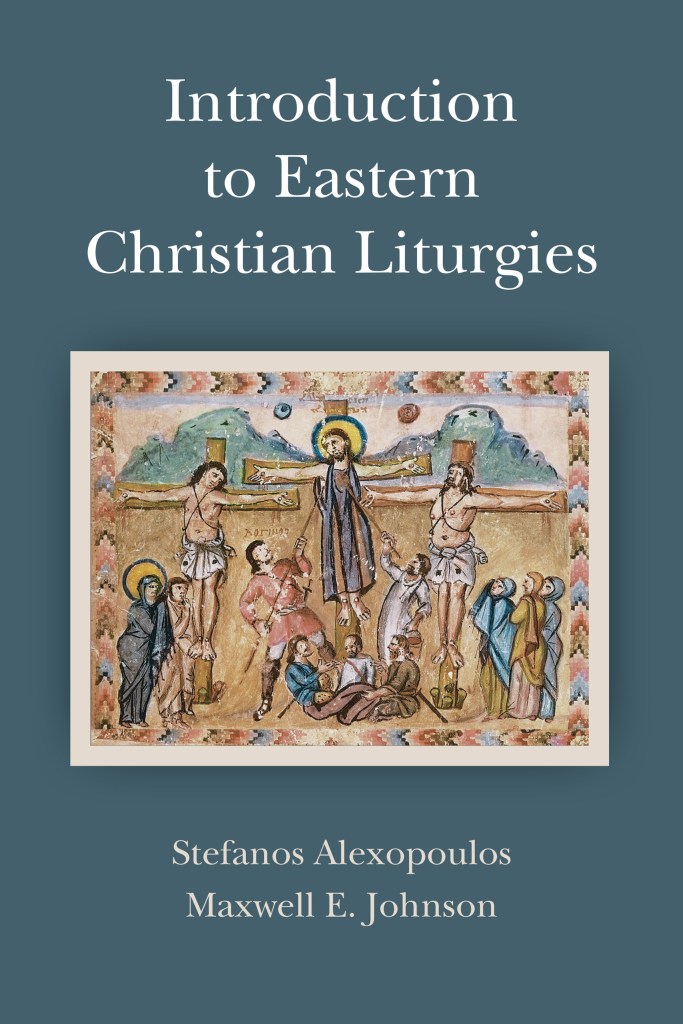
I have written a book rejoicing in the religious and social contributions of church volunteers. The book is currently at the printer with a scheduled arrival date of December 20, 2024.

Is there a church volunteer in your life? Would you like to recognize them – say, on New Year’s Day? Ordering them a copy of this book is a great way to acknowledge the contributions they make to their faith community and, by extension, to the communities where they live. Pre-orders are being accepted here (you can also learn more about the book at the web page provided)!

Advent is just around the corner!

Kim Burkhardt blogs at A Parish Catechist and The Books of the Ages (and a member of the Association of Catholic Publishers). If you are a new visitor, it would be great to have you follow this blog (thank you!). If you know someone who would like this blog, please share it with them (thank you!).

Surrendering to God transforming us

I was in high school when I was first introduced to surrendering to allowing God to change us. At the time, I was challenged by a particular type of life difficulty. I surrendered that difficulty to God and asked for assistance in having my life change. How I was living in the world did improve. I also developed the rudiments of an expanded prayer life. I still tell the story about my prayer life expanding at that time – I, as an adolescent, grew beyond the basics of childhood prayer (“Now I lay me down to sleep” and literal conceptions of Jesus sitting on a physical throne in the clouds) and saw my prayer life expand incrementally toward more of an interactional relationship with God.

In recent years, I surrendered again to allowing God be present in my life. This time, the surrender was broader. “God change me in whatever ways you want me to be different.” Again, my life is changing. I am experiencing emotional reorganizations that I couldn’t have anticipated – transformations beyond what I would have brought about on my own. More freedom, increased life functionality, some measure of more contentment. Growing commitment to being useful to other people. This came about from a prompting of the Holy Spirit – a moment at a church service in October, 2016 when I felt – and responded to – an invitation to allow God to be more fully present in my life (that story is told here).

God wants to be present in our lives. God wants us to be the people we are meant to be, to be fully alive. In the words of Timothy Radcliffe, “We are all radically incomplete. And, we need each other.” We, with our human limitations, need God’s movement in our lives to become the people who we are meant to be. We move toward being complete when we allow God to be the center of our lives and to act in changing us. Acts 17:28: For in God we live and move and have our being.

Allowing God to become the center of our lives, we cease to be the center of our lives. Ceasing to be the center of our live can feel threatening (“But what about me? I’m all I’ve got?”). It turns out that when we step out of the way, God brings freedom into our lives – we become the people we are meant to be and we become more useful in the world. God loves us!

Kim Burkhardt blogs at A Parish Catechist (and is a member of the Association of Catholic Publishers). Blogging is sustainable via blog readership (i.e. readers/subscribers). If you are a new visitor, it would be great to have you subscribe to follow this blog (thank you!). If you know someone who would like this blog, please share it with them and invite them to subscribe (thank you!).

Book Review: The Search for the Twelve Apostles

image, book cover

I took a recent interest in “Early Christian Literature” – Christian literature written after the time of Paul. I was rather surprised to not find a systemic overview of the early centuries of Christianity.

I then happened upon this book, The Search for the Twelve Apostles by William Steuart McBirnie, Ph.D. The author spent decades traveling to the Holy Land, Europe, etc. to find and visit places where the twelve apostles spent time and to study their lives.

As I read this book, I am finding the topic interesting. The author starts the book with a description of his trips to places where the apostles spent time and his own discovery that not much is written about the early centuries of Christianity.

The chapters dedicated to each apostle are written in a rather dry academic style, but I don’t fault the author – I appreciate his effort to write about the lives of the apostles. I am glad to be learning where each apostle likely spent time.

Kim Burkhardt blogs at A Parish Catechist (and is a member of the Association of Catholic Publishers). Blogging is sustainable via blog readership (i.e. readers/subscribers). If you are a new visitor, it would be great to have you subscribe to follow this blog (thank you!). If you know someone who would like this blog, please share it with them and invite them to subscribe (thank you!).

Book Review: Corrie Ten Boom’s The Hiding Place

Book: The Hiding Place

I just took a break from reading another book to read (re-read?) Corrie Ten Boom’s The Hiding Place.

When I recently happened upon a copy of The Hiding Place, I thought “Yes, I read this.” Perhaps I did read it in high school or in my twenties. I decided to read it again – this time for its’ Christian insight. As I read it this time, I didn’t remember the details of the book. If I read it before, I think I probably read it as a historical account of WWII.

The book absolutely is a historical account of WWII and of a family who participated in Dutch resistance. It is also the account of a family who deeply put their Christian faith into practice.

Most evenings, I pick up the latest faith book I am reading to read a few pages before I go to sleep. Last night, I finished The Hiding Place and then found myself unable to sleep because of the distress of reading about the horrors in Germany’s concentration camps. I was also compelled – as the author intended – about the author’s conviction that we are compelled to forgive. At the end of the book, she wrote of spending time after the war – and after being released from Ravensbrück concentration camp – helping WWII survivors to heal and educating people about forgiveness (prompted significantly from her sister’s witness on this topic before dying). At the very end of the book, Corrie Ten Boom wrote of encountering a guard from Ravensbrück where her beloved sister Betsy perished. Forgive even him? She had to reach deep into herself to try forgiving, then ask God to help her forgive. Ten Boom wrote compellingly that it was God who made it possible for her to forgive.

For anyone trying to live a life of faith, this book is a must-read. Corrie Ten Boom absolutely challenges us to go farther than we think we can in putting our faith into practical practice.

Kim Burkhardt blogs at A Parish Catechist (and is a member of the Association of Catholic Publishers). Blogging is sustainable via blog readership (i.e. readers/subscribers). If you are a new visitor, it would be great to have you subscribe to follow this blog (thank you!). If you know someone who would like this blog, please share it with them and invite them to subscribe (thank you!).

The detours we take from God’s love

When I was teaching baptism prep classes for parents and godparents who come to have their child baptised, I would explain that baptism is a grace that frees us from original sin. “Why, though,” a very kind grandmother asked me (in another type of class), “do babies need to be freed from original sin? Babies don’t hurt anybody. Babies are good.” Understandable question.

I would tell parents and grandparents in baptism prep classes that the longer I am alive, the more convinced I am that we have inherited original sin from Adam and Eve. “Has anyone here [at baptism prep classes] never done anything that we shouldn’t do? We all do stuff we shouldn’t do. I’m increasingly convinced that original sin makes sense to explain our behavior…..And…. God’s grace – including the grace we receive at baptism – makes it easier for us to not do the things we shouldn’t do.” …..In time, I came back to the kindly grandmother and suggested that perhaps the grace of baptism is like the inoculations we receive against medical illnesses – vaccinations help us to not get physically ill and God’s grace helps us to not sin as much. The kindly grandmother accepted that explanation….. (caveat: I am not a theologian. I later checked with a pastor to make sure I wasn’t off the mark with the vaccination analogy. He said that he wouldn’t have used that analogy, but that I’m not theologically wrong).

……. The esteemed Dominican friar Timothy Radcliffe has stated, “We are all radically incomplete.” God is complete (whole, holy….), we aren’t. Understood rightly, this reality is freeing – it frees us into a healthy right-sizing and right relationship with God. We are who we are.

…….Yet, in our incompleteness and tendency toward sin – and as very beloved children of God – we humans have the ability to come up with some screwball ideas. Yesterday I was confronted very directly with one of my screwball ideas. I’ve been walking around with this screwball idea for decades and failed to recognize it as such (it’s my own personal screwball idea…. We’re all capable of coming up with screwball ideas). Ugh…. Over the last couple years, I’ve been taking online classes from Franciscan University’s Catechetical Institute (if you’re looking for some online religious ed classes, these are very affordable and useful courses). A few days ago, I started another class – this one about discerning what we’re suppose to be doing with our lives vocationally…. As I did the homework, I was to answer some questions, reflect on the course content. Boom – I got hit square between the eyes with two incongruities. On the one side, I know without a doubt that God loves me. On the other side, I was thinking about a personal circumstance in which I stubbornly apply the above-mentioned mental idea I’ve been clinging to for decades. Ka-pow! I suddenly recognized that my self-constructed idea I’ve been clinging to for decades is incongruent with the vocation content I’m learning in class and incongruent with God’s love for me. In an unhealthy way, I saw yesterday that what I’m now calling my “screwball idea” says that I’m “impossibly – therefore stupidly or uselessly – incomplete” rather “radically incomplete.” “Stupidly or uselessly incomplete” is NOT the same thing as radically incomplete. In being radically incomplete, we can accept God’s love – God love us brings us to the good place where God wants us to be. Very different than uselessly incomplete – perceiving ourselves as such happens only as a result of our own human distortions.

When we earnestly walk in faith, these moments come along – opportunities to grow and allow God to help us shed our human distortions. God loves us and wants to help us become the people we are meant to be!

Kim Burkhardt blogs at A Parish Catechist (and is a member of the Association of Catholic Publishers). Blogging is sustainable via blog readership (i.e. readers/subscribers). If you are a new visitor, it would be great to have you subscribe to follow this blog (thank you!). If you know someone who would like this blog, please share it with them and invite them to subscribe (thank you!).

Book Review: Be healed (Bob Schuchts)

I was given a copy of this book: Be healed – A guide to encountering the powerful love of Jesus in your life (author: Bob Schuchts).

Because the book came to me with a recommendation from someone I respect, I started reading it with positive anticipation. I then got a few pages into the book and wondered, “Is this book along the lines of the old revival meetings in big tents? Can I get through this book?” I set it aside while I read another book.

When I came back to the book, I found that yes – this book resonates, meaninfully. The thrust of this book is such:

  • God loves us and wants us to be healthy and whole.
  • Healing in our lives happens when we allow God to love us. This requires a relationship in which we allow God into our lives.

A book worth reading!

Kim Burkhardt blogs at A Parish Catechist (and a member of the Association of Catholic Publishers). Blogging is sustainable via blog readership (i.e. readers/subscribers). If you are a new visitor, it would be great to have you subscribe to follow this blog (thank you!). If you know someone who would like this blog, please share it with them and invite them to subscribe (thank you!).

Our perception of God, God’s love for us, our responsibility

A pastor told me a few months ago that humanity’s effort to describe God can be compared to God as being like a circle with our limited human efforts to describe God merely approaching various touching points of the circle; often, he said, without our descriptions actually touching the circle – let alone ever grasping the entire circle. We shouldn’t fret about the imperfections of our descriptions. Rather, he indicated, we should continue with our efforts as best we can.

I thought of that description when I took the photo (above) – an orange sunset shining through window shades onto my living room wall. Left to ourselves, we live in some measure of darkness (Fr. Timothy Radcliffe: “We are all radically incomplete”). At the same time, God loves us. To the degree that we allow God into our lives, we experience some of the light of God’s love for us (due to our finite capacity, we probably only sense some of that love, as if filtered sunlight making its’ way through the shades)!

Prayer, of course, is a significant aspect of how we allow God into our lives – how we experience a relationship with our God who loves us. Prayer is not meant to be a uni-directional monologue of us sending our thoughts, feelings, requests, or rote prayers to a Santa-God. The fullness of prayer is one in which we engage in a two-way, in-person relationship with our parent-God who wants to have a loving, engaging relationship with us and who wants to help us become the people we are meant to be.

In addition to God loving us, it is our job to love one another and to do what we can to shed light into the lives of our fellow humans (see the passage below from Matthew 22:34-40). Martin Luther King said, “Life’s most persistent and urgent question: What are you doing for others?” Loving other people and taking care of God’s children is what we are here to do.

The “60/40” plan prescribed for marriages is a principle that all of us can actually apply in our relationships with everyone so as to be the loving people we are meant to be. If each of us spends 60% of our time focusing on what we can do to be of service to the people around us and only 40% (or less!!!) of our time thinking about our needs, then everyone wins!

Kim Burkhardt blogs at A Parish Catechist and The Books of the Ages (and a member of the Association of Catholic Publishers). Blogging is sustainable via blog readership (i.e. readers/subscribers). If you are a new visitor, it would be great to have you subscribe to follow this blog (thank you!). If you know someone who would like this blog, please share it with them and invite them to subscribe (thank you!). Also, your support ($$) to help sustain this blog is welcome.

Acknowledging our sins at mass: The Confiteor

Photo of a red apple

At Catholic masses, we acknowledge our sins at the beginning of mass:

The Confiteor

I confess to almighty God,
and to you my brothers and sisters, that I have greatly sinned,
in my thoughts and in my words,
in what I have done and what I have failed to do,
through my faults, through my faults, through my most grievous faults;
therefore I ask the blessed Mary ever-virgin,
all the angels and saints,
and you my brothers and sisters
to pray for me to the Lord our God

We all know that we’re imperfect – part of “The human condition.” Lately, I’ve been commenting “If anyone is wondering about human sinfulness, just turn on the evening news” (i.e, human sinfulness is reported on daily!).

Our human imperfections are not viewed universally as caused by sin or by human brokenness. Some would argue that while we humans aren’t perfect, calling us sinful has an unnecessary harmful emotional effect; some counter-argue that an alternate and better route to improved well-being is that human effort is all we need to overcome our imperfections: social training, psychological and social supports, a good family environment, and “pull yourself up by your bootstraps.” Thes things, in and of themselves, are all important and good (and, arguably, not enough).

Again…..turn on the evening news. We humans do plenty wrong. The longer I sit in pews, the more convinced I am that we’ve inherited a sinful nature (Adam and Eve, the apple….). However, this view isn’t one for keeping us down (“I’m unredeemable, horrible!”). Rather, there’s freedom. When we surrender and allow God to work in our lives, God redeems us. Allowing God to transform us is an unequivacal path to becoming better people.

Several years ago (2016), I surrendered in prayer to allow God to do whatever he wanted in me. This occurred after a re-conversion experience in which I felt God’s love….. Yet, part of me was apprehensive. “What’s God going to do to me (or in me?)?” In hindsight, this fear was ridiculous. God is love, God loves us, God wants the best for us. What exactly did I think that a loving God was going to do “to me” or “in me?” Now that I’ve had some time following that surrender, I’m seeing the result of God working in me. I am becoming happier and I am starting to be nicer to other people. Pretty good results.

As time unfolds, I am also finding deeper meaning in confessing The Confiteor at mass. Confessing publicly that we have sinned is an acknowledgement of our human imperfection and an education into who we are and Church teaching. Further, such public confession has social value. When we acknowledge together that we are all sinners, then we have to forgive one another – none of us holier (above our neighbor in the pew next to us), nor can we condemn the person in the pew next to us. Further, we call others to pray for us while we also pray for everyone else. The Confiteor is a great prayer!

Join A Parish Catechist’s Zoom call on Tuesday evening at 7:00 pm Pacific to discuss topics of faith – such as the Nicene Creed and The Confiteor. Small group sharing is one of the ways we broaden and deepen our faith. You are welcome: Zoom sign in passcode is 898 322 8983 .

Kim Burkhardt blogs at A Parish Catechist and The Books of the Ages (and a member of the Association of Catholic Publishers). If you are a new visitor, it would be great to have you follow this blog (thank you!). If you know someone who would like this blog, please share it with them (thank you!). Also, your support ($$) to help sustain this blog is welcome.

“What We Believe”: believing the Nicene Creed

John the Baptist

Many Christians grow up reciting the Nicene Creed, Christianity’s central statement of belief.

A passing thought about the history might assume that Christian theology was fully and immediately self-evident as a result of Jesus’ time on earth. Yet, Christianity didn’t have the New Testament and a fully articulated theology in writing within weeks, months, or even decades following Christ’s death and resurrection.

By the early 300’s, the early church recognized that there was not full consensus of Christian belief. Therefore, church bishops met in 325 in the city of Nicea – in modern-day Turkey – to clearly articulate “what we believe” as Christians.  Thus, we now have the regularly-cited Nicene Creed (“The Council of Nicea”).

We also have the similarly worded Apostle’s Creed.

While many of us often recite the Creed at church, how many of us believe the Creed in its’ entirety?  The Creed IS “What we believe…..”

Growing up, I sat in pews believing in “God the Father” and “The Holy Spirit.”  I believed in having a personal relationship with God.   I believed in a historical Jesus Christ, but felt rather ambivalent about we humans needing a “God the Son.”  As a child who felt very orthodox in many ways, I flat-out questioned what I now call “biological implausibilities” – a virgin birth, Christ’s resurrection, Mary’s assumption into heaven.  For real?  These “biological implausibilities” simply didn’t square, in my mind, with our modern understanding of human biology….

In my mid-twenties, I determined that I needed to resolve these matters if I was going to remain in pews.  End result:  I wasn’t in the pews for twenty years.

A powerful re-conversion experience (told here) brought me back.  I knew then that God loves me; I still hadn’t made peace with the Nicene Creed.   I brought this challenge to a couple of pastors.  They both said, in essence, “We want you in a pew.  Come back, spend some time mulling over the things you’re struggling with.  Look for ways to make peace with these things.”  To a large degree, I’ve made peace…..  Further, my faith has matured.  I know that God loves me, God wants me to love other people, and trying to square with the Nicene Creed has brought me faith lessons that I couldn’t have anticipated.

What about you?

It’s easy to recite a creed when we’re in a pew on Sunday morning and everyone is reciting the Creed.  On a personal level, do you believe everything that we recite in the Creed?  Really? 

There’s plenty in the Nicene Creed to unsettle modern-day sensibilities.  I’ve met people who accept it all because “this is what our faith believes.”   Other people are like me: we wrestle with a topic before we “make it our own.”

Read through the Nicene Creed, shown below.  Reflect on what parts you believe, what parts challenge you.  Then, feel free to join A Parish Catechist Zoom call on Tuesday evening at 7:00 pm Pacific to discuss the Creed (Zoom sign in passcode: 898 322 8983).

The Nicene Creed

I believe in one God,
the Father almighty,
maker of heaven and earth,
of all things visible and invisible.

I believe in one Lord Jesus Christ,
the Only Begotten Son of God,
born of the Father before all ages.
God from God, Light from Light,
true God from true God,
begotten, not made, consubstantial with the Father;
through him all things were made.
For us men and for our salvation
he came down from heaven,
and by the Holy Spirit was incarnate of the Virgin Mary,
and became man.
For our sake he was crucified under Pontius Pilate,
he suffered death and was buried,
and rose again on the third day
in accordance with the Scriptures.
He ascended into heaven
and is seated at the right hand of the Father.
He will come again in glory
to judge the living and the dead
and his kingdom will have no end.

I believe in the Holy Spirit, the Lord, the giver of life,
who proceeds from the Father and the Son,
who with the Father and the Son is adored and glorified,
who has spoken through the prophets.

I believe in one, holy, catholic and apostolic Church.
I confess one Baptism for the forgiveness of sins
and I look forward to the resurrection of the dead
and the life of the world to come. Amen.

Join A Parish Catechist’s Zoom call on Tuesday evening at 7:00 pm Pacific to discuss the Nicene Creed. Zoom sign in passcode: 898 322 8983 .

Kim Burkhardt blogs at A Parish Catechist and The Books of the Ages (and a member of the Association of Catholic Publishers). If you are a new visitor, it would be great to have you follow this blog (thank you!). If you know someone who would like this blog, please share it with them (thank you!). Also, your support ($$) to help sustain this blog is welcome.

Fear-and-faith or fear-vs-faith?

When I was ten years old, we were playing dodge ball at school on a December afternoon.  I woke up in the hospital the next morning with a concussion and hairline skull fracture.

A month later, after physically recovering, I cued up to play dodge ball again.  A classmate who was cued up next to me said, “Kim, you don’t have play.”  In other words, “We know what happened to you.  You don’t have to prove anything to us.”  No, actually, I did need to play.  I needed to not end up afraid of a game that landed me in the hospital.  So, I played several times until I was satisfied that I wasn’t afraid of dodge ball.  I then gave up the game, having discovered that I had lost interest.

There were, however, other facets to fear stemming from that afternoon game of ball. Several years later, I happened upon a red ball of the fateful dodge ball type. Upon seeing that red ball, my stomach instantly tied up with fear. It hadn’t occurred to me at age ten that I needed to work through fear of the red ball; later, it took me too long to work through the lingering fear of that ball. Another facet of fear from that game was a social fear. I had been friends with the classmate who threw the dodge ball that had hit me in the head. He and I were socially awkward children. When I returned to school six days after landing in the hospital, I naturally looked around the school campus for him. I spotted him alone, navigating the playground. He, myself, and the likely the whole school knew that he had thrown the ball. Had his older brother told their mother about what happened at school? He and I – two awkward kids – never spoke again, apart from one awkward “hello” in the hallway during high school. On my end, I was racked with guilt. My concussion was my fault; I had gotten distracted watching another group of kids play hopscotch instead of paying attention to the ball that I should have dodged. But, I didn’t know how to talk to my classmate. He didn’t know how to talk to me. A friendship ended. If his mother found out what had happened at school, he may have been blamed for knocking a girl unconscious. ….When my mother and I discussed the dodge ball game in the days following the event, she blamed neither me nor the child who threw the ball – her view was that the school staff should have prevented the injury (she said so the school principal the day after the dodge ball game)…..

So much fear from that situation. My potential fear afterward of a game. My fear of red textured balls. Social anxiety for two children. My mother’s fear when the doctor spoke about the possibility of me ending up in a coma. At least some of these fears were understandable. Yet, the ending of a childhood friendship could have been prevented if the other child and I could have figured out how to talk to one another. Or, if the adults around us – teachers, parents – had perhaps thought to make sure that there wasn’t any lingering tension between the two of us.

The vast majority of us live with fear. Fear of all kinds of things. Some fears are understandable, even reasonable (fear of getting run over by an oncoming vehicle, for example). Too often, we allow fear to immobilize us.

Fear has consequences. Friendships ended, opportunities lost, lives stilted. Far too often, we don’t fully live because we allow our fears to hinder us. “I couldn’t take that job, I couldn’t try that new thing, I couldn’t learn to overcome X or Y obstacle, I couldn’t deal with A or B emotional issue, resolve a matter with that person…. How many ways do you allow fear to keep you from fully living your best life? How many regrets do you have because you allowed fear to hold you back?

Perfect love casts out all fear (1 John 4:18). I heard this any number of times over the years. This began to make sense after I returned to church in 2016. My return to church involved a re-conversion experience told here. In that re-conversion experience, I experienced that God loves me. In the time that followed, a person of faith took the time to care. When we are in a place of love, fear fades.

Decades after the dodge ball game (this week!), I was at a grocery store and saw red textured balls in the children’s toy section. Less stomach knotting when I see these red textured balls now, but still an instant memory of a dodge ball game on a school playground. And, the instant memory of a lost friend who now lives in another state. I know he’s living in another state because I looked him several years ago – thinking then that I should phone him. I had thought through the potential phone call when I looked him up several years ago – he would likely see my name on call display when I would call, likely invoking a reaction on his end. If he answered the phone, I would start the conversation by saying, “I am sorry.” He would know what I was sorry for. I would then remark, “It was my fault.” Beyond my introduction, I would then let him talk. I would talk only enough to keep the conversation going, if he was at a loss for words, with the goal of healing an old emotional wound…..

Yesterday afternoon, I looked him up again. Found what appeared to be a current phone number. Waited until he would likely be home from work, called the phone number intending to attempt to finally clear the air. A turning stomach when I dialed the number. Earlier in the day, I was hoping for reconciliation. When I actually dialed the number, I was unfortunately relieved to discover that the phone number was disconnected (“Upon dialing the number, I am nervous to talk to him. Can an old hurt actually be resolved decades later? Does he even want to hear from me after all this time? Is my attempted phone call to him self-serving?”)….. If circumstances allow us to cross paths again (say, a high school reunion), I am now ready to talk to him.

Some say that courage is acting even when we are afraid. Sure. There’s also more available to us, beyond our own courage. We know there are times when we don’t conjure up courage, when we detrimentally stay in fear.

Staying in fear is not trusting in God. If we allow fear to keep us in fear, then we believe – or resign ourselves to believing – that what we fear has more control over us than God can conquer. Feeling that the things we fear are bigger than God’s ability to lead us out of what scares us is not living in faith, no matter how faithful we might otherwise want to believe ourselves to be.

How willing are you to move beyond fear? If you might be willing to move beyond your fears that you allow to hinder your life (in whatever ways), try surrendering. Allow God to resolve your situation(s) and your fears. This is an act of faith, requiring a trusting relationship with God (there’s going to be prayer involved!). This might also involve a conversation with people in your life (“Hey, here’s a fear in my life…..I’m going to see about getting past this fear…..”).

God loves us. When we allow God’s love to be present to us, perfect love casts out fear.

Kim Burkhardt blogs at A Parish Catechist and The Books of the Ages (and a member of the Association of Catholic Publishers). If you are a new visitor, it would be great to have you follow this blog (thank you!). If you know someone who would like this blog, please share it with them (thank you!). Also, your support ($$) to help sustain this blog is welcome.