Book Review: Bourgeault’s Centering Prayer and Inner Awakening
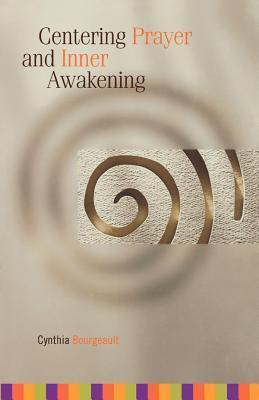
Book: Centering Prayer and Inner Awakening
Centering Prayer and Inner Awakening

I have been hearing for several years – mostly through Contemplative Outreach Northwest – about Episcopalian priest Cynthia Bourgeault. She is known for her active, thoughtful leadership within contemplative/mystical Christianity.

I finally got around to reading one of her books: Centering Prayer and Inner Awakening.

I am “beyond thrilled” to have come upon this book.

In 2016, I was gifted with a sustained period of contemplative prayer during which I had a solid sense of God loving me. This was “a gift I didn’t see coming.” The outline of that story is told here. A challenge I encountered was that I didn’t have the vocabulary to articulate my experience to people. A real challenge – I was experiencing something profoundly meaningful, but I had no means to talk to people about it (I’ve since seen a couple of other people wander into churches with a similar scenario – each time, a make an effort to “walk with them,” encouraging them as best I can along their journey…..). In time, through church attendance and involvement in Contemplative Outreach Northwest, I started grappling my way toward being more able to discuss the “outer contours” of my experience. A respected friend (who also happens to be Episcopalian, like Cynthia Bourgeault) pointed out that each of us has a different prayer relationship with God and that the best we can hope for is to find a few people with whom can share some basic aspects of our prayer experience in relating to God.

Then, I read Centering Prayer and Inner Awakening.

Actually, I skipped through several “how to” reflection portions of the book – that was information I didn’t need.

Early portions of the book, though, grabbed my attention. When Cynthia Bourgeault encountered “centering prayer” (i.e., how to learn to do contemplative prayer) groups as a priest, she said she immediately grasped the concept based on having grown up attending a Quaker school. I have periodically read about Quaker spirituality – this intrigued me.

Then, I got to later chapters of the book.

While God’s faith path for us within Christianity is a very different realm than the secular study of human psychology, Cynthia Bourgeault has artfully drawn from both in this book to discuss how we experience changes within our inner realm when Christ changes us via contemplative prayer. Of course, Bourgeault discusses within the book the very real differences between “doing Christianity” and “doing psychology.” I am currently reflecting – with an inner joy – upon Bourgeault’s artful communication within the later chapters of this book. It’s as if she put our inner human experience to poetry (I can’t take credit for this statement – I once heard someone else use this analogy in another context). In the next few weeks, I expect to be able to start talking more actively to people – based on this book – about my own inner changes and experience wrought by contemplative prayer.

And, I will be reading more of Cynthia Bourgeault’s books.

(For any reader who is interested, Teresa of Avila’s autobiography is also of tremendous interest regarding contemplative prayer.)

Kim Burkhardt blogs about faith at The Hermitage Within. Thank you for reading this faith blog and for sharing it with your friends. While you are here, please feel welcome to provide support to sustain this blog ($$).
Book Review: Martin Laird’s ‘Into the Silent Land’

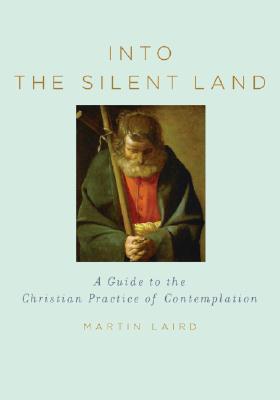
Book Cover: Into the Silent Land

I was recently given a copy of Martin Laird’s Into the Silent Land: Christian Practice of Contemplation.

As a contemplative pray-er, I find this book refreshing. Rather than only being a how-to book on the mechanics of how to pray contemplatively, this is the type of contemplative prayer book I look for: a description of what happens when we do a deep dive into contemplative prayer. It is – to paraphrase a speaker I heard once – the “poetry of our lives” that demonstrates the animation of one’s prayer life when prays contemplatively. Such poetry – it seems to me – helps lead readers into the experience of contemplative prayer via surrender into what we read in the books’ text.

A few “poetry of our prayer lives” excerpts:

  • “Silence is an urgent necessity for us: silence is necessary if we are to hear God speaking in eternal silence; our own silence is necessary if God is to hear us” (page 2).
  • “This book…proceeds from an ancient Christian view that the foundation of every land is silence (Ws 18:24), where God simply and perpetually gives himself” (page 6).
  • “…the grace of Christian wholeness that flowers in silence….dispels (the) illusion of separation [from God]” (page 16).

This is a short book, but it takes a long time to read – its’ contents are contemplated rather than merely read. It contributes meaningfully to one’s prayer life. This is a book I will keep.

Kim Burkhardt blogs at A Parish Catechist and The Books of the Ages (and a member of the Association of Catholic Publishers). If you are a new visitor, it would be great to have you follow this blog (thank you!). If you know someone who would like this blog, please share it with them (thank you!). You can also support this blog by clicking here when you are going to shop on Amazon (that lands A Parish Catechist a commission on Amazon sales).

Teresa of Avila (autobiography): book review, reflection

It must have been 2017 where I first heard of Teresa of Avila. Fr. Bryan Dolejsi mentioned her one weekday at St. Benedict parish (Seattle), calling her a “Doctor of the Church.” “What,” I wondered, “is a Doctor of the Church….and there is a woman recognized as a Doctor of the Church? I must find out who she is!” That led me to a Seattle Public Library copy of Mirabai Starr‘s English translation of the autobiography of this 16th century Spanish mystic.

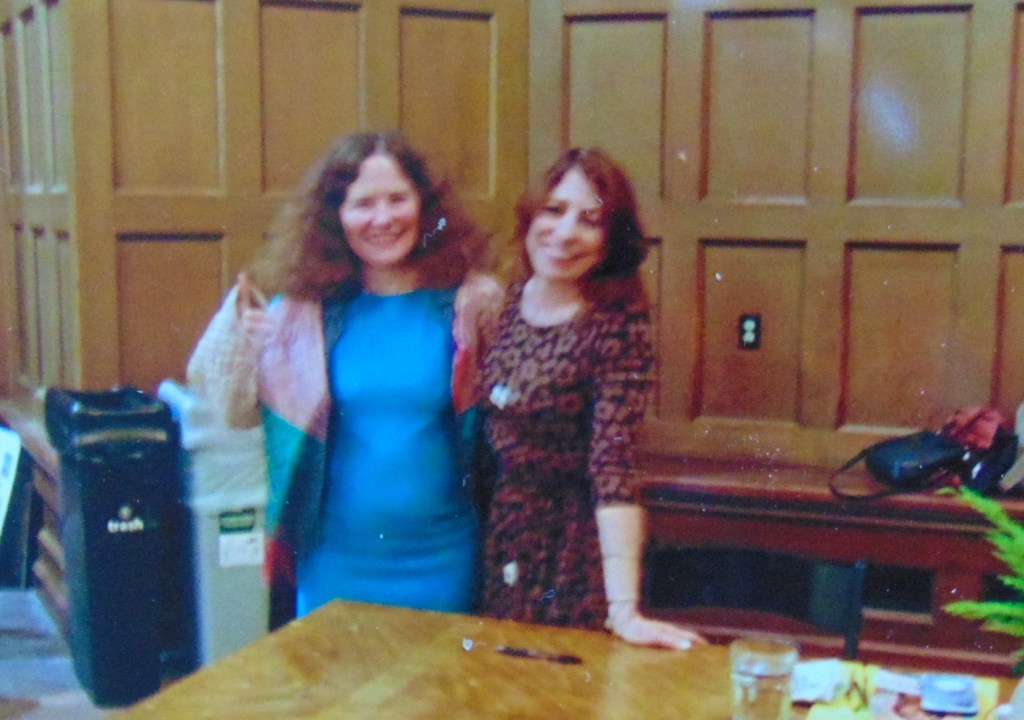
Now, my own dog-eared and frequently-consulted copy of this book is on my bookshelf. Inside the front cover is a photograph of me with the translator, Mirabai Starr, at her speaking engagement at St. Mark’s Cathedral (Episcopal) in Seattle (yes, Mirabai graciously autographed my copy of the book).

Teresa of Avila’s autobiography – her life, her mystical, contemplative experience – has actively nourished my own prayer life. When I returned to church in 2016, it was a result of a “God moment” (including a broken ankle, long story) in which God gifted me an unanticipated and emotionally nourishing period of contemplative prayer. I didn’t have the vocabulary to talk about the inner state I was experiencing (now, I know to call that period of time “an encounter with God”); Teresa’s autobiography provided me with exquisite articulation about mystical prayer. Since finding and eagerly re-reading this book over time, I’ve heard people refer to the writings of Teresa and her protege (John of the Cross) as poetry-about-prayer. I don’t feel that a “poetry” description gives justice to their writing (accurate perhaps, but the description pales); I prefer to think of the writing of these two Carmelite saints as “the voice of lived experience.”

Kim Burkhardt blogs at A Parish Catechist and The Books of the Ages.