Prayer: “Wordless sighs of the heart”

Candle

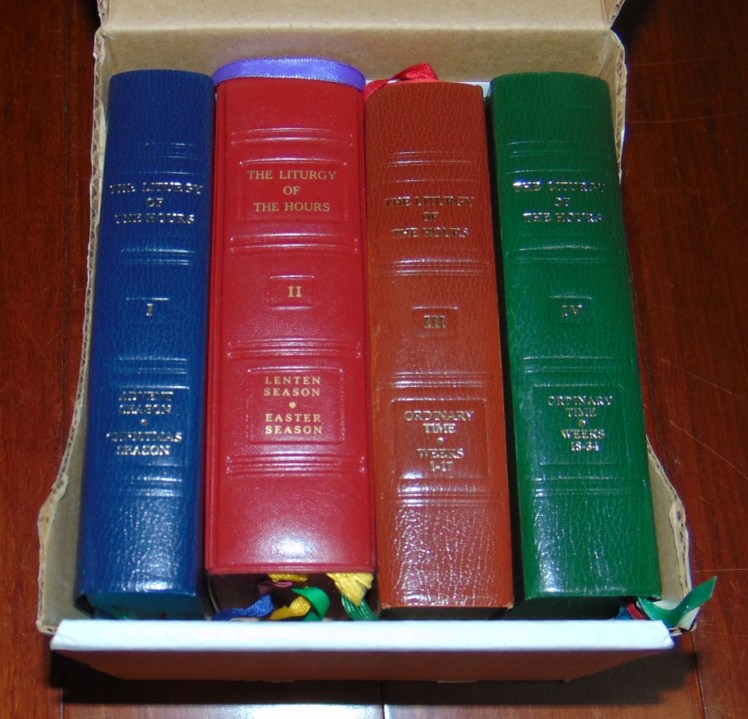
When I read The Tradition of Catholic Prayer from the Benedictine monks of Saint Meinrad Monastery, one of the types of prayer they mention is “wordless sighs of the heart.”

I am drawn to this phrase – I find prayer to be most meaningful when it is heartfelt. How about you?

,,,,,It’s been said, “There can be no faith life without prayer.” It’s also said that we cannot pray and continue sinning; when we really engage in prayer, we find that we have to allow God to change us for the better. Personally, I experience in prayer that God loves us!

True prayer goes beyond mere statements or superficial monologues directed in God’s direction. True prayer is dialogue, meaningful communication, presence. A “wordless sigh of the heart,” for example, is us opening ourselves bare before God.

How often does human prayer involve allowing our innermost selves to be fully transparent before God? Such vulnerability is a real interaction. While God certainly knows our hearts – God made us and knows us – it’s also true that we have free will. God doesn’t force us to into relationship; it’s up to us whether we are willing to be fully present before God.

When we aren’t in active relationship with God, the Holy Spirit occasionally knocks on our heart’s door; it’s up to us whether we respond to such promptings. We can also open our heart’s door to God by taking the initiative ourselves to communicate – God will show up when invited in. Sometimes, we feel God’s presence in prayer (I have!); other times, God may work “under the surface” in ways that we don’t observe; God working to change us “under our radar” is what John of the Cross wrote about in his book Dark Night of the Soul (“Dark Night” being a period of inner transition that isn’t fully transparent to us, rather than necessarily being a depressive period!).

There are many forms of prayer in which we have an active relationship with God. Contemplative prayer (for example, visit the network of Contemplative Outreach) is one way, being engaged while at church is another way – as are meditative prayers such as praying the rosary, talking to God, heartfelt intercessions, prayers of praise (including music)……… What makes prayer meaningful is that we pray in a way that makes it relational. There are as many ways to pray as there are people!

Interested in learning more about prayer? Check out A Parish Catechist’s previous blog post, “List: ways to pray.

Kim Burkhardt blogs about faith at A Parish Catechist. Thank you for reading this faith blog and for sharing it with your friends. While you are here, please feel welcome to provide support to sustain this blog ($$).


How many people pray? How do people pray?

According to Pew’s most recent “religious landscape study” (2023-2024), 44% of U.S. residents indicate praying daily:

If you are among the people who pray regularly, how do you pray?

The question “how do you pray” really asks “how do you have an interactive relationship with God?” There are as many experiences of prayer as their are people.

A prayer style that works for one person may be very different than what works for the next person.

Personally, my most meaningful prayer – and preferred way to pray – is contemplative prayer. simply being in God’s presence. No language necessary. In 2016, I was gifted with an extended – and unexpected – period of contemplative prayer in which I felt God’s presence loving me (that story surround that experience is told here); the experience set me on a new footing.

Several approaches to prayer include:

  • Rote prayer (formal, memorized prayers – these are often provided to us by our houses of worship). Prayers such as the Lord’s Prayer are full of meaning and help us learn to pray. Such prayers give us ready prayer content that we can easily put to use.
  • Psalms. The Book of Psalms – which were meant to be sung – are summarized by Wikipedia thus: the Book of Psalms are “an anthology of Hebrew religious hymns…including hymns or songs of praise, communal and individual laments, royal psalms, imprecation, and individual thanksgivings.  The book also includes psalms of communal thanksgiving, wisdom, pilgrimage, and other categories.”
  • “Talking to God.” Our spontaneous thoughts and words directed to God. God wants to have a relationship with us; relationships are two-way, be open to feeling God’s presence in response.
  • Contemplative Prayer. Resting reflectively in prayer, without a need for words or any human language. Contemplative prayer can – and for some people, does – include a sense of God’s presence in prayer. For more information about contemplative prayer, visit Contemplative Outreach.
  • Praying the Rosary. The rosary is a reflective way of praying a set of rote prayers with a formulaic set of Catholic prayer beads (focusing time on specified topics). Instructions for praying the rosary is available here.
  • Lectio Divina. Lectio Divina “describes a way of reading the Scriptures whereby we gradually let go of our own agenda and open ourselves to what God wants to say to us” (this particular description provided by the Carmelites).
  • Singing at church. “Those who sing pray twice” (a popular phrase in churches).
  • Intercessory prayer. Intercessory prayer that we pray for other people. We come to God with the challenges of those who are in need of support.

My favorite pray-ers:

  • Teresa of Avila, (16th-century mystic, Doctor of the Church, Carmelite nun, reformer of the Carmelite religious order, Carmelite saint)
  • John of the Cross (16th-century mystic, Doctor of the Church, Carmelite monk and priest, co-reformer of the Carmelite religious order, Carmelite saint)
  • Edith Stein, Carmelite nun, Carmelite saint
  • Fr. Thomas Keating, founder of Contemplative Outreach

Books for further reading:

Clinging: The Experience of Prayer (Emilie Griffin)

The Tradition of Catholic Prayer (The Monks of Meinrad Monastery)

Kim Burkhardt blogs at A Parish Catechist (and is a member of the Association of Catholic Publishers). If you are a new visitor, it would be great to have you subscribe to follow this blog (it’s free – thank you!). If you know someone who would like this blog, please share it with them and invite them to subscribe (thank you!).

From darkness to light

Photo of Seattle at night

In the words of (Cardinal) Timothy Radcliffe, “We are all radically incomplete.”

In our incompleteness, each of us have areas of darkness. The fact, though, that all of us are radically incomplete provides comfort – we aren’t alone in experiencing the human condition (in Radcliffe’s statement that we are all radically incomplete, he immediately goes on to say “And we need each other”).

It is in the embrace of God’s love for us that we move from darkness to light.

It is because of all of this – such compelling aspects of our human experience (darkness, love, light) – that there are repeating threads of “from darkness to light” within the Christian faith tradition.

We celebrate the redeemer’s birth at the darkest time of the year (northern hemisphere) – the earthly appearance of the one who provides us with hope and light through the Resurrection (the Risen Christ).

We are now into January: each day is lighter and longer than the previous day. Joyousness. This is how I choose to look at the daily time of darkness and contrasting light at this time of year. In contrast, I met a person several years ago (2013?) who talked about – and focused on – “how short and dark the days are from October through February” (an accurate but dreary assessment!). I, on the other hand, choose to start counting in November who many weeks and then days there are until days start getting lighter and longer (i.e., counting toward the Winter Solstice). Then, I take joy each day after the solstice in having more light that day.

Days are getting longer now – for those of us in the northern hemisphere. When I drive to work in the early hours of the morning, I see the Seattle skyline in contrast to the night sky – a lovely image. I recently made a point of taking the photo of this Seattle skyline shown here before it gets too light in the early morning to take such a photo. In the midst of my dark drive to work, though, I also feel the joy of increasing light and God’s love for us.

A loving relationship with God does bring us from the darkest corners of our human experience to hope and love. Personally, I find the experience of this loving relationship in the stillness and deep surrender of contemplative prayer. And in being good to other people.

Photo of Seattle at night

Kim Burkhardt blogs at A Parish Catechist (and is a member of the Association of Catholic Publishers). Blogging is sustainable via blog readership (i.e. readers/subscribers). If you are a new visitor, it would be great to have you subscribe to follow this blog (thank you!). If you know someone who would like this blog, please share it with them and invite them to subscribe (thank you!).

Book Review: The Orthodox Way

Book Title: The Orthodox Way

The back cover of this book describes The Orthodox Way as follows:

“This book is a general account of the doctrine, worship and life of Orthodox Christians by the author of the now classic THE ORTHODOX CHURCH. It raises the basic issues of theology…. helps to fill the need for a modern Orthodox catechism… Throughout the book, Father Ware shows the meaning of Orthodox doctrine for the life of the individual Christian.”

For readers who have anything of a contemplative bent or an interest in mysticism, I find the book to be an important read for growing one’s faith (the Orthodox church has a very definite contemplative vein within it). I recently quoted The Orthodox Way by Bishop Kallistos Ware in a previous blog post:

“The Greek Fathers liken man’s encounter with God to the experience of someone walking over the mountains in the mist: he takes a step forward and suddenly finds that he is on the edge of a precipice, with no solid ground beneath his foot but only a bottomless abyss.”

I read this book a year or two ago. I find myself coming back to it; statements such as the one above feed my prayer life. This is the type of book I read before going to bed – a book to lift one’s spirits. A worthwhile read!

Kim Burkhardt blogs at A Parish Catechist and The Books of the Ages (and a member of the Association of Catholic Publishers). If you are a new visitor, it would be great to have you follow this blog (thank you!). If you know someone who would like this blog, please share it with them (thank you!).

Into the mist…..List: welcoming God into our daily lives

“The Greek Fathers liken man’s encounter with God to the experience of someone walking over the mountains in the mist: he takes a step forward and suddenly finds that he is on the edge of a precipice, with no sold ground beneath his foot but only a bottomless abyss.”

The Orthodox Way (Revised Edition, page 13), Bishop Kallistos Ware

The passage above is my favorite quote from the Orthodox tradition.

Beginning in October, 2016, I was gifted with an extended period of contemplative prayer (more of that story is told here). I didn’t have words at the time to describe what I was experiencing. Not only did I not have words to describe the experience, no human words were needed in prayer during that period. I experienced that prayer can simply be – in the type of rich abundance written about by Teresa of Avila and John of the Cross – “being with God.” Later, I heard a Seattle priest talk about experiencing “an encounter with God” he had in his twenties while living in the U.S. Southwest. Ah, the words to describe my prayer experience from 2016 and extending for a time: an encounter with God.

The extended prayer encounter I experienced began with a responding to a prompting of the Holy Spirit. We all occasionally feel an emotional tug encouraging us to act. Sometimes we respond. In 2016, I responded.

I’ve come to recognize since 2016 that we can all see the opportunity to be loved by God. Related to this, we can also continually learn to better love the people around us (Matthew 22: 34-40: “The greatest commandments are…love the Lord your God….and….love your neighbor as you love yourself”).

Just as I took time to learn to do photography – and thereby recognized that a misty day was a great time for the photo of Seattle’s Green Lake shown above (with “Duck Island” in the background, where my maternal grandmother learned to swim), we can all look for opportunities for “the experience of someone walking over the mountains in the mist: he takes a step forward and suddenly finds that he is on the edge of a precipice, with no sold ground beneath his foot but only a bottomless abyss.” Those moments – those steps – are moments of grace offered to us by God. Yet, we can be open to those moments of grace.

Ways of being open to God’s grace:

  • Make regular time to participate in your faith tradition.
  • Read writings of the mystics. A few reading suggestions are offered here.
  • Make time to step away from busyness. Westerners, for the most part, live in “busyness”. We need to “do this, go there, run from one life experience to another.” In so doing, we ignore our inner life. We ignore any emotional ugliness or challenges that we’d rather ignore. We also lose the opportunity to resolve “the ugly stuff” and we lose the opportunity to be with God. We reduce the opportunity to notice the “emotional tugs” that are promptings of the Holy Spirit inviting us into encounters with God.
  • Make time for prayer and solitude.
  • Be reflectively observant about what goes on around you and of what comes out of prayer and solitude.

Kim Burkhardt blogs at A Parish Catechist and The Books of the Ages (and a member of the Association of Catholic Publishers). If you are a new visitor, it would be great to have you follow this blog (thank you!). If you know someone who would like this blog, please share it with them (thank you!).

Book Review: Gerald May’s The Dark Night of the Soul

Gerald May's book: The Dark Night of the Soul

Teresa of Avila and her protege John of the Cross – two 16th-century Spaniards – are my favorite mystics and two of my favorite faith writers. When I began reading their books in 2017 or 2018, they articulated my own (more modest!) experience with contemplative prayer.

Since then, I have tried to explain to people that John of the Cross’s book Dark Night of the Soul is not about tribulations or depression. It’s not.

More recently, I came upon Gerald May’s book of the same title. Gerald May is a physician, psychiatrist, and writer of faith books). Gerald May, in his book, accessibly explains John of the Cross’s ideas in today’s language. I am grateful that he makes John of the Cross’s ideas more understandable to people than I have been able to present.

Treading into the Spiritual Depths: The (not depressing!) Dark Night of the Soul

In his book Dark Night of the Soul, John of the Cross writes about how the sometimes unviewable-to-us aspects of our inner faith journey are part of where God works within us to transform us (rather than this title being about a depressive view on things!). Attentiveness to our inner journey can allow us some small glimpse of when this (at least somewhat) unviewable aspect of our spiritual growth is being wrought within us – particularly if we have an active relationship with God in prayer.

Gerald May’s book of the same title speaks to this idea about “The Dark Night of the Soul”: “May emphasizes that the dark night is not necessarily a time of suffering and near despair, but a time of deep transition, a search for new orientation when things are clouded and full of mystery. The dark gives depth, dimension and fullness to the spiritual life.”

While John of the Cross’s book Dark Night of the Soul is not about suffering, modern day writer Gerald May does touch on the fact of suffering from a useful perspective on page nine of his book Dark Night of the Soul . His is a perspective that occurred to me in some fashion several years ago: “….suffering does not result from some divine purgation….Instead, suffering arises from the simple circumstances of life itself.”

Teresa of Avila and John of the Cross’s books are very worth reading. Gerald May’s book is also worth reading.

Kim Burkhardt blogs at A Parish Catechist and The Books of the Ages (and a member of the Association of Catholic Publishers). If you are a new visitor, it would be great to have you follow this blog (thank you!). If you know someone who would like this blog, please share it with them (thank you!). You can also support this blog by clicking here when you are going to shop on Amazon (that lands A Parish Catechist a commission on Amazon sales).

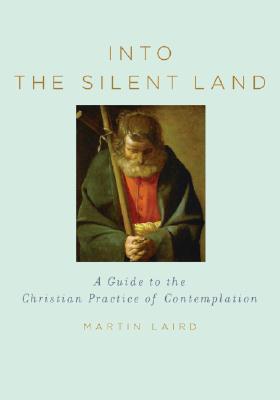
Book Review: Martin Laird’s ‘Into the Silent Land’

Book Cover: Into the Silent Land

I was recently given a copy of Martin Laird’s Into the Silent Land: Christian Practice of Contemplation.

As a contemplative pray-er, I find this book refreshing. Rather than only being a how-to book on the mechanics of how to pray contemplatively, this is the type of contemplative prayer book I look for: a description of what happens when we do a deep dive into contemplative prayer. It is – to paraphrase a speaker I heard once – the “poetry of our lives” that demonstrates the animation of one’s prayer life when prays contemplatively. Such poetry – it seems to me – helps lead readers into the experience of contemplative prayer via surrender into what we read in the books’ text.

A few “poetry of our prayer lives” excerpts:

  • “Silence is an urgent necessity for us: silence is necessary if we are to hear God speaking in eternal silence; our own silence is necessary if God is to hear us” (page 2).
  • “This book…proceeds from an ancient Christian view that the foundation of every land is silence (Ws 18:24), where God simply and perpetually gives himself” (page 6).
  • “…the grace of Christian wholeness that flowers in silence….dispels (the) illusion of separation [from God]” (page 16).

This is a short book, but it takes a long time to read – its’ contents are contemplated rather than merely read. It contributes meaningfully to one’s prayer life. This is a book I will keep.

Kim Burkhardt blogs at A Parish Catechist and The Books of the Ages (and a member of the Association of Catholic Publishers). If you are a new visitor, it would be great to have you follow this blog (thank you!). If you know someone who would like this blog, please share it with them (thank you!). You can also support this blog by clicking here when you are going to shop on Amazon (that lands A Parish Catechist a commission on Amazon sales).

List: How many ways to pray (types of prayer)?

The Benedictine monks of Saint Meinrad Monastery succinctly state on the back cover of their book The Tradition of Catholic Prayer, “Catholics have a rich and ancient prayer tradition that informs contemporary practice….” It’s no wonder that people seek out the variety of prayer options available within Catholicism.

Catholic prayer is a vibrant and varied tradition, bringing to fullness a life-giving relationship between us and God. Jesus came “that we might have life, and have it more abundantly” (John 10:10). “…prayer is not merely an exchange of words, but it engages the whole person in a relationship with God the Father, through the Son, and in the Holy Spirit” (U.S. Conference of Catholic Bishops, USCCB).

How many ways are there to pray?

The essence of prayer is communication, a relationship with God, a being-with or being-in-the-presence-of. When we find a relationship with God – an interactive, two-way interaction rather than a one-way monologue (we wouldn’t relate to the people in our lives exclusively via uni-directional monologues!) – there comes a discovery that God is present with us in prayer.

A friend said to me, “prayer is a very personal communion with God that is meant to be personal, and unique to you….People are… very different in their personal experience in prayer, and that in itself is a beautiful thing.”

Just as we have many differing relationships with the various people in our lives – and a variety of ways that we communicate with the people in our lives – there are any number of ways of communicating with God. A prayer style that works for one person may be very different than what works for the next person. Here are several approaches to prayer:

  • Rote prayer (formal, memorized prayers – these are often provided to us by our houses of worship). Prayers such as the Lord’s Prayer are full of meaning and help us learn to pray. Such prayers give us ready prayer content that we can easily put to use.
  • Psalms. The Book of Psalms – which were meant to be sung – are summarized by Wikipedia thus: the Book of Psalms are “an anthology of Hebrew religious hymns…including hymns or songs of praise, communal and individual laments, royal psalms, imprecation, and individual thanksgivings.  The book also includes psalms of communal thanksgiving, wisdom, pilgrimage, and other categories.”
  • “Talking to God.” Our spontaneous thoughts and words directed to God. God wants to have a relationship with us; relationships are two-way, be open to feeling God’s presence in response.
  • Contemplative Prayer. Resting reflectively in prayer, without a need for words or any human language. Contemplative prayer can – and for some people, does – include a sense of God’s presence in prayer. For more information about contemplative prayer, visit Contemplative Outreach.
  • Praying the Rosary. The rosary is a reflective way of praying a set of rote prayers with a formulaic set of Catholic prayer beads (focusing time on specified topics). Instructions for praying the rosary is available here.
  • Lectio Divina. Lectio Divina “describes a way of reading the Scriptures whereby we gradually let go of our own agenda and open ourselves to what God wants to say to us” (this particular description provided by the Carmelites).
  • Singing at church. “Those who sing pray twice” (a popular phrase in churches).
  • Intercessory prayer. Intercessory prayer that we pray for other people. We come to God with the challenges of those who are in need of support.

My favorite Catholic pray-ers:

  • Teresa of Avila, (16th-century mystic, Doctor of the Church, Carmelite nun, reformer of the Carmelite religious order, Carmelite saint)
  • John of the Cross (16th-century mystic, Doctor of the Church, Carmelite monk and priest, co-reformer of the Carmelite religious order, Carmelite saint)
  • Edith Stein, Carmelite nun, Carmelite saint
  • Fr. Thomas Keating, founder of Contemplative Outreach

Books for further reading:

Clinging: The Experience of Prayer (Emilie Griffin)

The Tradition of Catholic Prayer (The Monks of Meinrad Monastery)

Kim Burkhardt blogs at A Parish Catechist and The Books of the Ages. If you are a new visitor, it would be great to have you follow this blog (thank you!). If you know someone who would like this blog post, please share it with them (thank you!).

Hearing God’s voice….in stillness

…….It is often in the stillness where we hear – and can respond to – the promptings of God’s voice.

In 1 Kings Chapter 19 (19:11-13), we read: “The Lord said, ‘Go out and stand on the mountain in the presence of the Lord, for the Lord is about to pass by.’ Then a great and powerful wind tore the mountains apart and shattered the rocks before the Lord, but the Lord was not in the wind. After the wind there was an earthquake, but the Lord was not in the earthquake. After the earthquake came a fire, but the Lord was not in the fire. And after the fire came a gentle whisper. When Elijah heard it, he pulled his cloak over his face and went out and stood at the mouth of the cave. Then a voice said to him, ‘What are you doing here, Elijah?’”…..

Jesus also frequently went to quiet desert spaces to pray to his father. Prayed in solitude and stillness.

For us, a relationship with God likewise requires a willingness to “go inward” – to step away from life’s hustle and bustle encouraged by our outwardly-focused society and sit in stillness. Stillness is uncomfortable for some. Pausing to go inward isn’t always comfortable – we bump up against our own inner tumult. Yet, prayer can get us through such tumult.

When we find a relationship with God – an interactive, two-way interaction rather than a one-way monologue of intercessory prayers from us directed to God (we wouldn’t relate to the people in our lives exclusively via uni-directional monologues!) – there comes a discovery that God sits with us in prayer. God’s felt presence in our lives can – and does – provide “peace that passeth all understanding.”

We also experience a relationship with God by being of service to others – by working to improve the lives of other people (Jesus told his apostles that the greatest commandments are “Love God and love your neighbor” – Matthew 22: 36-40 ). Mother Teresa lived this in the streets of Calcutta. Richard Rohr focuses on the need for both rest in God’s presence and the need to be active in the world through his Center for Action and Contemplation.

Wondering about how to go about stillness and prayer? Start praying. If you’re not praying yet, start praying twice per day for five minutes each time. Sit in stillness – go with whatever comes in that stillness and “become comfortable” with whatever comes in that stillness. Find someone with whom to discuss what you experience in stillness. Wondering how to pray, how to move deeper in prayer? Consider:

Kim Burkhardt blogs at A Parish Catechist and The Books of the Ages. If you are a new visitor, it would be great to have you follow this blog (thank you!). If you know someone who would like this blog post, please share it with them (thank you!).

List: several aspects of an inner relationship with God

Every one of us are daughters and sons of God.

God loves us wants to have a relationship with each of us.

Relationships, to truly be a relationship, are two-way and interactive. A great analogy I heard about our relationship with God being two-way is that of comparing prayer to a phone call. We typically wouldn’t call a person we know only to tell them something and then hang up; rather, the dialog goes back and forth – with both parties participating in communication. Prayer is the meant to be the same way – two way and interactive, not just uni-directional thoughts from us sent to God.

We know what it is like to interact socially with the people in our lives – family, friends, co-workers, etc. We value human relationships that are rich, varied, and interactive.

A relationship with God is an inner experience that happens in prayer.

There are many ways to pray, from intercessions (“Hey God, I/we need this-or-that, please help out”) to lectio divina, attending church (“those who sing pray twice”), and contemplative prayer (and, and, and). My favorite book about the many types of prayer is The Tradition of Catholic Prayer from the monks of St. Meinrad Abbey (it can be purchased online!).

Personally, I find the greatest depth of inner social interaction with God through contemplative prayer. No human language is necessary in such prayer. Rather, it’s simply – and meaningfully – being in (and feeling!) God’s presence.

I began experiencing contemplative prayer as a grace given in 2016. It began with one of those “promptings of the Holy Spirit” that many of us feel from time to time (these are initiated by the Holy Spirit, we can’t initiate these promptings but we can opt to be receptive to these promptings and respond!). The prompting I experience in 2016 happened, naturally enough, at a church service; during the homily (sermon), the priest’s faith filled an empty hole I’d been walking around with but hadn’t been able to fill. I sat with that experience in the days that followed; this grace resulted in an extended period of feeling God’s presence – and love – in contemplative prayer. Since then, my experience of contemplative prayer has brought about wonderful positives:

  • A sense of God’s presence in my life (i.e., a social connection in prayer)
  • An experience of God’s love for me
  • Emotional rest from life’s challenges by “resting in God’s presence” in prayer
  • Allowing God to more fully turn me into the person God wants me to be (we are suppose to be saints-in-training!)
  • Letting God emotionally rearrange my emotional and psychological experience such that I am gradually-but-noticeably becoming emotionally healthier and happier – and becoming a better person to the people around me. In the New Testament, Galatians 5:22-3 states that “the fruit of the Spirit is love, joy, peace, longsuffering, kindness, goodness, faithfulness, gentleness, self-control.”

A great place to learn about contemplative prayer is the organization Contemplative Outreach.

Interested in having a two-way, interactive relationship with God? Try taking up prayer twice per day, five to fifteen minutes each time. Stick with it, ask God to be present in your life. Notice and respond to any promptings that come your way. Not sure how to pray? If you’d like to try multiple approaches to prayer, maybe try reading the book mentioned above (The Tradition of Catholic Prayer) to learn more about prayer or check out the Contemplative Outreach website. Most importantly:

  1. Pray daily and actively
  2. There is no wrong way to pray. Each of us is an individual; how we connect with God will be unique to us.

Kim Burkhardt blogs at A Parish Catechist and The Books of the Ages. If you are a new visitor, it would be great to have you follow this blog (thank you!). If you know someone who would like this blog post, please share it with them (thank you!).