Easter: Resurrection, surrender, transformation
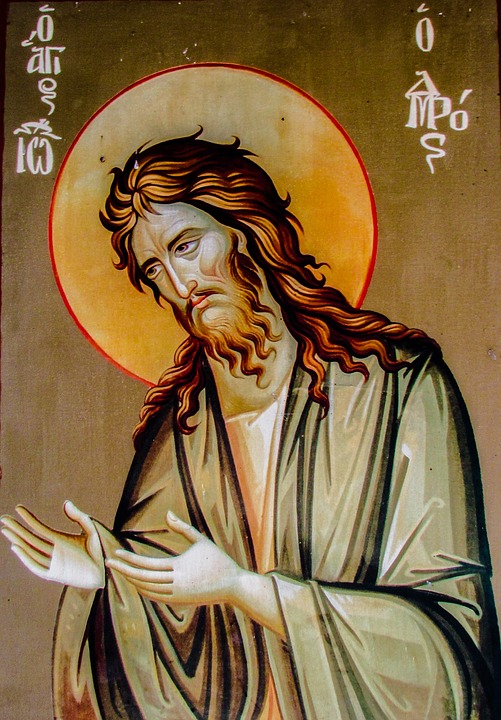
John the Baptist

Easter: Christ has risen!

In Christ’s resurrection, we are offered transformation. 

We – in and of ourselves – cannot transform ourselves into the fullness of who we are meant to be.

….This is the fourth Lenten season in a row when I have experienced medical challenges – surgeries, etc.   This year, I broke my left foot on March 19th.  

After March 19, I continued falling (mishaps with crutches, etc.).   In addition to a broken left foot, I subsequently sprained my right foot.  Ended up with medical boots on both feet.   Then….On the morning of April 6, I fell again (two boots makes navigation difficult).    I sent an email to a couple people about this, ending the email with “Anger doesn’t begin to describe…..”   One person replied with insightful observations about surrender.

It’s true.  I know it’s true – I reach such a point of surrender-to-God in 2016 with a subsequent transformation in 2016 (that surrender involved a homily at an Irish mass and a broken ankle!).

For Christ to truly transform us, we have to surrender ourselves and our greatest difficulties to God.

Surrendering doesn’t just mean some limited-scope prayer to God and “hoping” that something positive will happen.   It doesn’t mean we hang onto some aspect of what we supposedly surrender – as if what we surrender still somehow belongs to us.   No.   True surrender means that we no longer have possession (ownership) or control.

True surrender comes when we surrender our hardest challenges.  The challenges we don’t tell people about.  Challenges that we somehow feel tied to…..  Challenges that are eating away at our very being.

When we truly surrender these aspects of our lives to God and allow God to do whatever God wants to do (WE DON’T KNOW WHAT GOD’S GOING TO DO!), true and life-giving transformation of our very selves happens in and through God.  Galatians 2:20:  “I have been crucified with Christ; and it is no longer I who live, but Christ who lives in me. And the life I now live in the flesh I live by faith in the Son of God, who loved me and gave Himself for me.”

It’s Easter, Christ has risen!   A great time to surrender to experience transformation offered by the Risen Christ.

Kim Burkhardt blogs at A Parish Catechist (and is a member of the Association of Catholic Publishers). Blogging is sustainable via blog readership (i.e. readers/subscribers). If you are a new visitor, it would be great to have you subscribe to follow this blog (thank you!). If you know someone who would like this blog, please share it with them and invite them to subscribe (thank you!).

Good Friday, Tenebrae, grace, pending resurrection

Welcome to Good Friday.

In his book Beyond Tenebrae, author Bradley J. Birzer writes “I am fascinated by the recognition of Tenebrae (…..3 pm on Good Friday)…… The extinguishing of light, candle by candle, the stripping of the altar, the bearing of the books, the departure from the chapel in a deafening silence.” As we move through Holy Week, I am

God’s grace in our lives and the transformation offered us as a result of the resurrection are how I find my being within Christianity. I wrote in a recent post, “We are indeed ‘a resurrection people,’ our redemption is made possible as a result of Christ’s death on the cross.   There’s a redemptive joy possible through God’s ability to transfigure us – when we allow God to work in us – that motivates my continued prayer life…..”

As you experience Good Friday today, make it an encounter with Christ rather than just another day. Reflect: what are your plans for the upcoming Easter season (the time between Easter and Pentecost)? This is a great season within the liturgical year to surrender into a transformative relationship with Christ, allowing God to move us more fully into the people we are meant to be. If anyone is pondering whether it’s worth it to surrender into allowing God to transform our very being, just ponder how well one’s inner life and life circumstances are going without surrendering to God being in charge – that should satisfactorily answer whether to turn one’s life over to God. This opportunity to surrender is one in which “I have been Crucified with Christ. It is no longer I, but Christ who lives in me” (Galatians 2:20). We give up any pretense of running our own lives. Acts 17:28: “For it is in God that we live and move and have our being.”

Easter is coming! Alleluia!

Kim Burkhardt blogs at A Parish Catechist (and is a member of the Association of Catholic Publishers). Blogging is sustainable via blog readership (i.e. readers/subscribers). If you are a new visitor, it would be great to have you subscribe to follow this blog (thank you!). If you know someone who would like this blog, please share it with them and invite them to subscribe (thank you!).

Death and new life

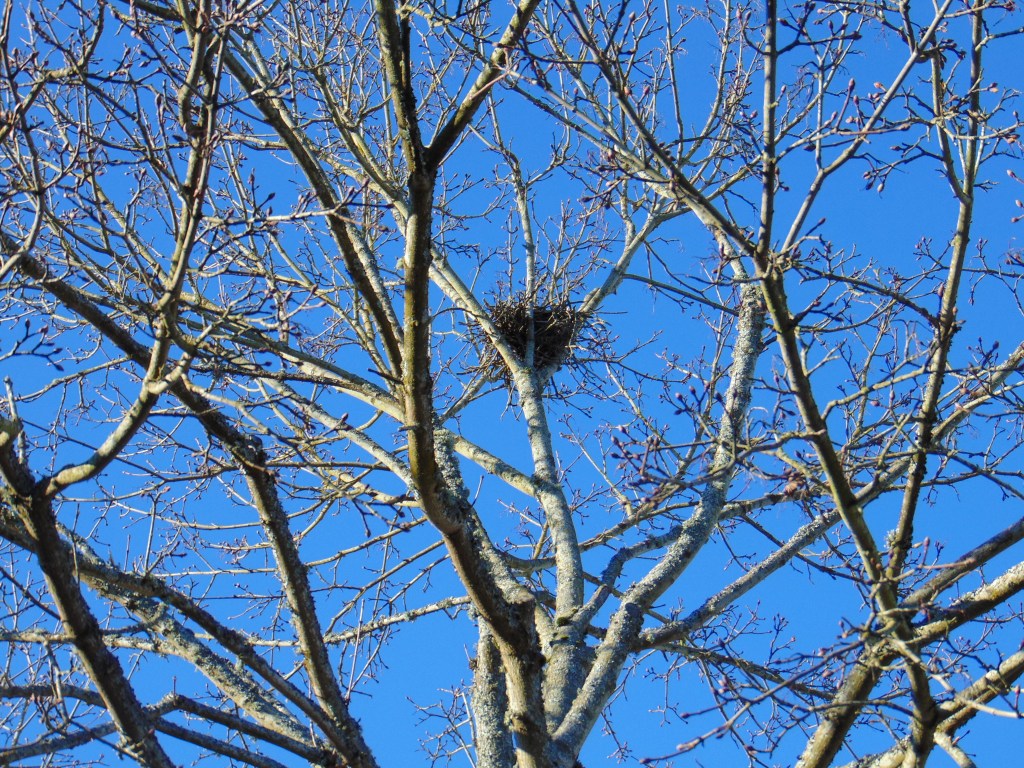
bird nest in tree

This image of an empty bird’s nest in a winter tree – with spring approaching – speaks visually to nature’s annual cycles of death and the anticipation of new life.

Seattle – where I live – is in the midst of a cold snap after a period of relative winter warmth. Many of us are ready for the increasing warmth and life that comes with the pending spring.

When I saw this empty bird’s nest and the similar-or-contrasting lack of leaves on the tree, I immediately thought of our own spiritual death, rebirth, and – for many people – the perpetual hope of new life. In Christianity, we learn to die to self. Christ died and rose again – for our salvation. Bird nests are often used year after year for the next year’s new baby birds. Annual cycles of new life. Soon, new leaves – another year of life (the color green of leaves symbolizes vibrancy) – will also begin to spring forth on this winter-cold, bare tree.

When I first tried to photograph this bird’s nest, I zoomed in with my camera in an attempt to photograph the bird’s nest and leaf-less tree branches – without the electrical and phone wires that are also visible when photographing the entire tree (i.e., the photo above).

I then realized that there is also value in photographing the broader tree showing the phone and electrical wires showing (see the photo below). Too often, we desire the vibrant new life that comes from dying to the darkest parts of ourselves…. Yet we let the wires in our lives – those distractions that prevent us from allowing God to rejuvenate new life in us – to prevent new vibrancy of life to emerge in us. Sticking to such distractions serves no good in our lives. How stubborn we can be in refusing to let go of that which keeps us bound to the darkness in and around us.

During this Lenten season, we anticipate the anniversary of Christ’s death and resurrection at Easter. Let us – during this Lenten season – allow God into our hearts to clean out that in each of us that needs to be cleansed. Welcome in new life of the spirit.

Allowing God to transform us into new life requires surrender. We give up control. We give up autonomy. In a sense, we give up whatever sense of “self” we cling to (“I may not like all of me, but ‘me’ is what I’ve got”). In today’s society, many of us must also begin to give up rampant individualism – an individualism that isolates us – to join the community of people around and among us. We are meant to live amongst one another.

Easter is coming.

bird nest in tree with wires


Kim Burkhardt blogs at A Parish Catechist and The Books of the Ages (and a member of the Association of Catholic Publishers). If you are a new visitor, it would be great to have you follow this blog (thank you!). If you know someone who would like this blog, please share it with them (thank you!). You can also support this blog by clicking here when you are going to shop on Amazon (that lands A Parish Catechist a commission on Amazon sales).

Lent in 40 days: Day One

Wooden cross

Welcome to Lent. A Parish Catechist looks forward to journeying with you for the next 40 days!

Major liturgical seasons of the Christian year include:

  • Advent: four weeks of anticipating Christmas
  • Christmas Day: Always on December 25
  • Christmas Season: Christmas Day until Epiphany (January 6)
  • Lent: 40 days of anticipating Easter (starts on Ash Wednesday)
  • Easter Day: The first Sunday after the first full moon after the Spring Equinox (therefore, a date between late March and late April)
  • Easter season: the fifty days between Easter Day and the day we celebrate Pentecost
  • Pentecost: The day when Holy Spirit descended upon the Apostles following Christ’s Ascension

This year, the beginning of Lent (i.e., Ash Wednesday) – due to Easter being a moveable feast – coincides with Valentine’s Day (February 14).

Just as Mardi Gras famously occurs the day before Ash Wednesday – a day of plenty before we begin 40 days of fasting, prayer, and alms giving – some Catholic schools planned ahead this year to celebrate Valentine’s Day on February 13.

What kind of fasting are you planning for Lent this year? Some restaurants know to offer “Fish on Fridays” during Lent to attract fasting guests. Food is famously a way to fast during Lent. We eat less, give up foods such as no-meat-on-Fridays or giving up sugar. What matters spiritually is that we abstain from something that we personally find difficult to give up. For several years, I couldn’t give up chocolate during Lent. I had to take a look at why I was so attached to chocolate (and how that was impacting my health!). We are to attach ourselves to God, not to earthly things. For many people, reducing the use of technology (such as phones) can be an earthly thing that is hard to set aside – reducing phone usage could be a good Lenten discipline.

What kind of enhanced prayer activity are you planning for Lent this year? Prayer is about having an active relationship with God. It is famously said that “There can be no faith life without prayer.” A Parish Catechist blogged in January about the value of prayer and how to approach prayer (please feel free to give that post a read). Lent is a great time to build up a regular prayer practice.

What kind of alms-giving are you planning for Lent this year? The U.S. Conference of Catholic Bishops (USCCB) have this to say about almsgiving during Lent: “The foundational call of Christians to charity is a frequent theme of the Gospels….  During Lent, we are asked to focus more intently on ‘almsgiving,’ which means donating money or goods to the poor and performing other acts of charity.  As one of the three pillars of Lenten practice, almsgiving is ‘a witness to fraternal charity’ and  ‘a work of justice pleasing to God.’ (Catechism of the Catholic Church, no. 2462).”  There are many types of social and economic need in our communities. Please consider being charitable in a way that makes a difference in your local community!

Kim Burkhardt blogs at A Parish Catechist and The Books of the Ages (and a member of the Association of Catholic Publishers). If you are a new visitor, it would be great to have you follow this blog (thank you!). If you know someone who would like this blog, please share it with them (thank you!). You can also support this blog by clicking here when you are going to shop on Amazon (that lands A Parish Catechist a commission on Amazon sales).