Book Review: Spirituality of the Christian East
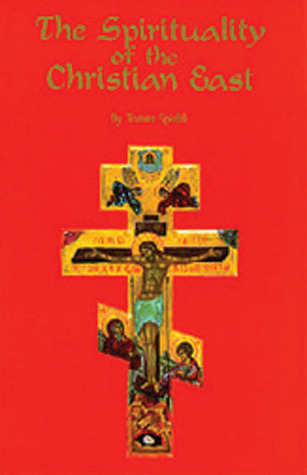
I came upon this book during my current phase of reading about the Christian East (i.e., Eastern Orthodox). As I read this book, I am surprised that it’s not more widely known and discussed among readers of Christianity.
The Spirituality of the Christian East, as summarized by Goodreads, was written by Tomas Spidlak, “Professor-emeritus of the Pontifical Oriental Institute at Rome, [who] dedicated his scholarly life to studying and teaching the theology and spirituality of the Christian East….”
What I find compelling about this book is its’ readable overview of the historical, philosophical, and cultural inputs of how Christianity developed. I purchased this book for its’ focus on the Christian East – which I am learning more about (the Christian East broadly as well as specific geographic regions of the Eastern Church – Russian, Greek, Coptic, Armenian, etc.) – yet, I am also recognizing that anyone wanting a historical overview of Christianity’s overall development will find an insightful and informative read in this book.
Philosophy wasn’t my favorite subject in college. At the time, I didn’t wrestle well with its’ abstractions….. I thought at the time that I should like philosophy since my mother declared to be a philosophy major (she studied two years at the University of Washington). Later, I learned that seminarians are required to study philosophy because of Greek philosophy’s impact on the early development of Christian theology. Therefore, I have made a new effort to take an interest in philosophy. In the book The Spirituality of the Christian East, I finally found an introductory about Greek philosophy’s impact on Christianity that make sense to me. It has given me a springboard for reading more about philosophy’s impact on Christianity more meaningfully.
…..As a reader from Western Christianity, I have also been surprised to discover in this book that the Eastern Orthodox tradition has its’ own set of recognized faith leaders over the centuries – historical saints, mystics (hesychasts), Desert Fathers, leaders. Symeon the New Theologian, etc. I shouldn’t find this surprising. It simply hadn’t occurred to me that the Orthodox tradition has its’ own figures that it recognizes by name.
This book is worth reading for anyone interested in an introduction to Eastern Orthodox Christianity and/or a historical overview of Christianity in general.
Kim Burkhardt blogs at A Parish Catechist. If you are a new visitor, it would be great to have you subscribe to follow this blog (it’s free – thank you!). If you know someone who would like this blog, please share it with them and invite them to subscribe (thank you!).