Already, but not yet…. Lenten lessons in faith
bread
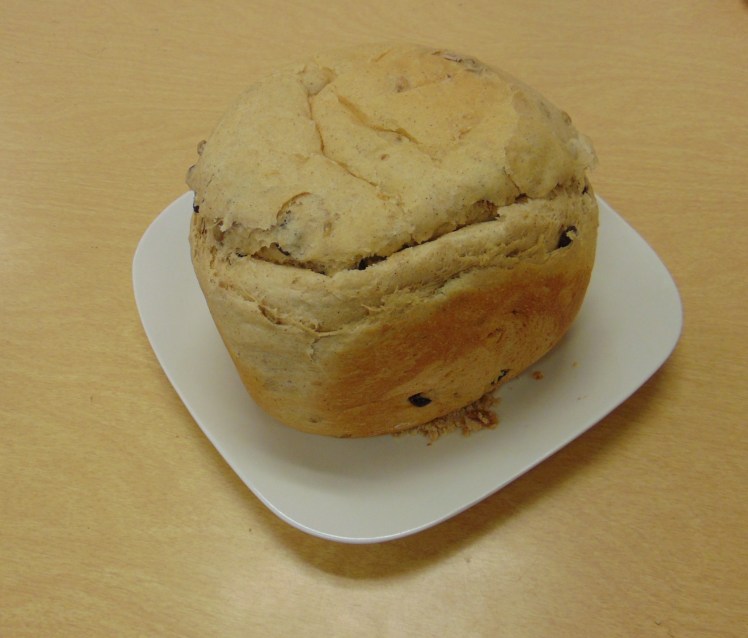
Loaf of homemade bread

“Already, but not yet” – as is said about our experience of the Kingdom of God.

I enjoy the smell of bread rising when I pour water, salt, sugar, an egg, olive oil, bread flour, cinnamon, and yeast into my bread maker and turn it on.  Part way through the bread-making process, I add raisins and sunflower seeds.

Recently, I was enjoying the yeast scent of baking, half-risen loaf of bread.   Forget waiting for the bread to fully rise – I wanted to open the bread maker and experience the yeast-laden bread, impatiently wanting what was only half risen.

My thoughts turned to the Risen Christ.   This year, as we enter the anticipatory season of Lent, we have 2,000 years of Christianity.  As is said, the Kingdom of God is “already [here], but not yet.”

To the degree that we experience God’s love for us and express love toward other people, the Kingdom of God is already here.  To the degree that we experience the frustrations of the human experience, we are reminded that the Kingdom of God is “not yet.”

Until “the not yet” comes, how do we live with our half-experience of the “already, but not yet?”

This Lenten season, we can again commit ourselves to deepening our faith within the “already.” If no yeast has yet been added to start one’s faith journey, yeast can now be added for a start to a faith journey.   For those of us already on a faith journey, we often have at least some inkling of which aspects of our faith experience need to flourish more robustly.  If our bread – faith – is rising but not rising well, Lent (anytime, really) is a good time to add the cinnamon, raisins, and sunflower seeds….

In my life, I actually have a hard time fasting. A problem with self-retraint, self-denial. For several years, I justified this during Lent: “I’m actively doing so many aspects of living a life of faith, who cares if I can’t fast?” We are so skilled at the nuance of making excuses… The fact that I lack the self-restraint to fast – to participate in this form of self-denial – actually indicates that there’s some lesson for me to learn with fasting. I’m certain that the lesson to learn has nothing to do with physical food….. I’m not sure yet what that lesson is, but I’m working toward finding out. I am going to trying fasting during Lent this year.

Kim Burkhardt blogs at A Parish Catechist (and is a member of the Association of Catholic Publishers). Blogging is sustainable via blog readership (i.e. readers/subscribers). If you are a new visitor, it would be great to have you subscribe to follow this blog (thank you!). If you know someone who would like this blog, please share it with them and invite them to subscribe (thank you!).

Faith Challenges: there are lessons in faith’s strivings

Understanding and accepting the tenets of one’s faith tradition can sometimes be a challenge. How can one God be a trinity of three persons? How could Jesus have been conceived by a virgin? What about ascensions into heaven? Are non-Christians excluded from heaven? Why do babies need to be washed clean of original sin in baptism (babies don’t act sinfully!)? Why do bad things happen to good people? Are some parts of the Old Testament religious metaphor rather than literal fact?

I have struggled with some of the questions listed above. I have journeyed with people who have struggled with some of the other questions listed above. I have talked to pastors who say they struggle to deliver sermons about the Trinity.

One of the lessons I have learned is that unexpected faith lessons come to light in the process of trying to make sense of religious tenets that don’t readily make sense. I don’t only mean figuring out that which we’re trying to understand – rather, unexpected faith lessons become apparent to us as we work to make sense of matters that don’t yet make sense to us. Beyond the unexpected lessons that we discover in trying to understand topics that challenge us, we sometimes find answers to the topics we set out to understand. Other times, we may not find answers or explanations to what challenges us. However, genuine effort to find answers to challenging questions can – in time – help us to “make peace” with remaining in one’s faith tradition. We find that a faith tradition as a whole can be true even if one (or a few) topics in that faith tradition don’t readily make sense to us. In addition, I find great value in the homilies (sermons) of pastors who readily communicate their own struggles and talk about their own efforts to understand specific topics they haven’t yet figured out.

The academic and theologian James Fowler did groundbreaking work on how we understand and navigate faith throughout our life stages in his book Stages of Faith. In that book, Fowler lays out six faith stages that people can progress through from early childhood into the more mature stages available as we move through life. The first three developmental stages are readily available by high school. Entering into the subsequent stages require us to actively engage in our faith in an “I am choosing to grow up in faith” manner – including making an intentional personal effort to make sense of faith in deeper ways and to work through life’s difficulties with a faith lens.

Kim Burkhardt blogs at A Parish Catechist and The Books of the Ages. If you are a new visitor, it would be great to have you follow this blog (thank you!). If you know someone who would like this blog post, please share it with them (thank you!).