Our faith stages: developmental growth
Clonmacnoise window

Growing in our faith is meant to involve life-long growth. Our religious understanding isn’t meant to stop after completing Sunday School. Just as our growth in other aspects of life continue maturing into adulthood, so should our faith.

The U.S. Conference of Catholic Bishops (USCCB) says the following: adult faith formation “fosters a baptismal spirituality for adults…to embrace the invitation and challenge of an ever deepening faith in Jesus.”

On many levels, our human experience involves continuing emotional and mental development throughout our adult lives. Job training develops us for the workforce. Continuing education and book reading foster our intellectual development. Just as we learn adult levels of emotional maturity throughout our lives and train as adults for workforce competence, adult faith formation must move beyond an introductory level to mature. Our faith life can only continue to mature through intentional development.

Individuals who grow up in a faith tradition and then continue to develop their knowledge and perceptions about religion – and engagement with their faith – navigate maturing stages described by development psychologists and theologians such as James Fowler.

For those who grow up in a faith tradition, learning one’s faith tradition is experienced early in life with sacraments, attending services, learning prayers, learning basic tenet’s of one’s faith tradition. For those who come to a faith tradition later, on, faith formation happens….well, later. Teen years and/or the early twenties are often a time for faith reflection and perhaps struggle. Do I believe in and accept the faith tradition I have been raised in? Can I see a path to greater and deeper faith maturity in my current faith tradition or another tradition? For those who continue on within an organized faith tradition, the teen-to-early-adult period is also one of transition: figuring out religious meaning on new levels (what are the underlying concepts represented by the symbolism of my faith tradition?, etc.), taking a deeper level of new responsibility for one’s faith (i.e., “this faith tradition was given to me as a child, now I’m evaluating my decision about if and how to stay, how to participate.” “I was given A, B, or C religious concepts as a child….What do these concepts mean to me now? Am I seeing these concepts differently or on a new level??). beyond “taking things at face value” or just “reciting back what you’ve heard.”).

As we navigate an adult level of faith, some adults need to navigate the faith stages of youth if those stages were not navigated earlier in life. Then – if we continue to grow in faith as adults – we surrender into additional levels of understanding faith and finding our way to new levels of relationship with God (and, therefore, with one another!).

The opportunity for faith to continue to develop and mature, however, is often stunted when there is no continued connection as an adult to faith formation. Adults can be surprised – if they take time away from religion or don’t engage with “beyond Sunday” faith formation within their religious tradition – to find out that their faith tradition offers a deeper level of understanding faith on a level of “come to weekend services and take faith concepts literally.”

An adult faith is one that continues to mature developmentally – deciding to take personal responsibility for one’s faith path, thinking through the faith concepts one was taught while growing up (if one grew up in a faith tradition), surrendering to new levels of understanding of religious concepts, etc. Many individuals who live an active faith as adults engage in – and experience – such maturing faith stages. Pastors recognize parishioners who navigate through such stages. Authors such as Jane Regan write about cultivating the maturing faith of adults (check out her book, “Toward an Adult Church“).

Further, there is the need for “life-long learning” of what faith traditions have to offer. There are boundless amounts of religious content available for we lay people to lean into – and an endless amount of ways for us to learn to bring that content into our lives. I am glad to be journeying with you via this blog.

Kim Burkhardt blogs at A Parish Catechist (and is a member of the Association of Catholic Publishers). Blogging is sustainable via blog readership (i.e. readers/subscribers). If you are a new visitor, it would be great to have you subscribe to follow this blog (thank you!). If you know someone who would like this blog, please share it with them and invite them to subscribe (thank you!).

You are invited: growing-in-faith events at ParishCatechist!

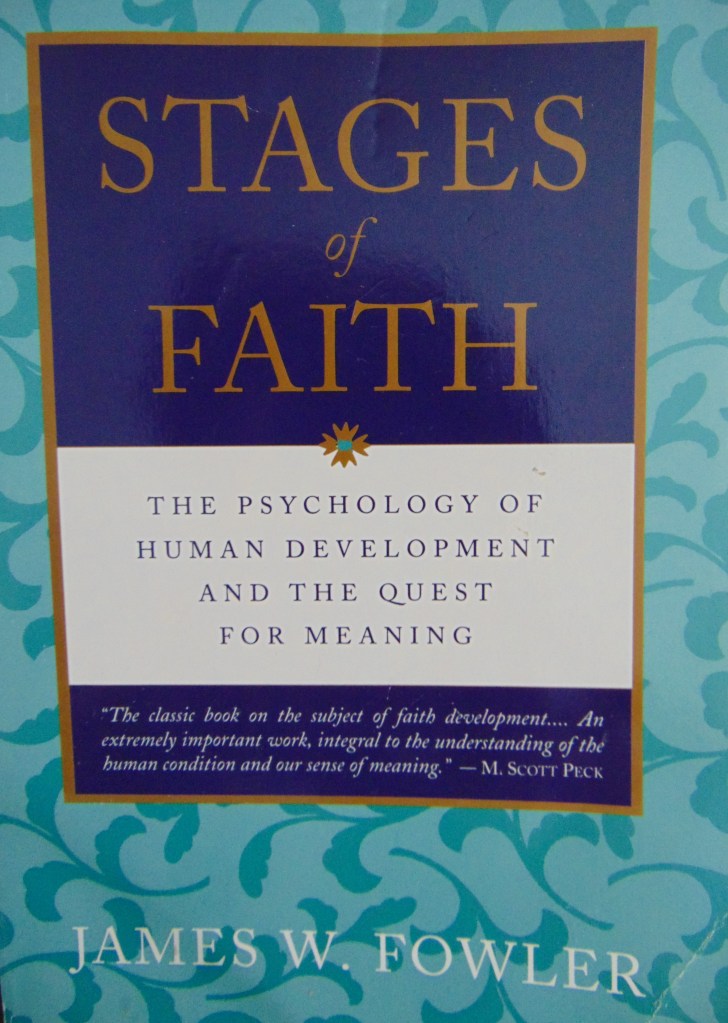
Growing up in faith doesn’t end when we graduate from high school. Really, adult faith is really builds upon a foundation at that point! Just as we expect to grow in career development and mental maturity throughout adulthood, growing in faith doesn’t stop at age eighteen. Research (and life experience!) shows that we can continue to grow and mature in faith throughout our lives. The theologian/academic/sociologist James Fowler describes in his book Stages of Faith that there are six developmental stages we can mature into in faith – three of which typically happen after high school and only happen if we actively engage in growing our faith. Fowler found through hundreds of interviews that some people settle into a high school level of faith in which they remain for the rest of their lives – even if they grow in other aspects of their lives (career development, emotional maturity, etc.). However, there’s no need to stay at a high school level of faith development when continued faith maturity is available!

A Parish Catechist is now offering several growing-in-faith events for individuals of all faith maturity levels, starting on June 30, 2024! Zoom with us for 30 minutes on your choice of upcoming Sunday or Tuesday evenings for insightful presentations followed by Q&A discussion sessions on a range of engaging grow-in-faith topics:

To attend the events on the flyer above, register here (you will receive Zoom invites to ALL sessions, attend the sessions you choose). You are welcome to attend!

Kim Burkhardt blogs at A Parish Catechist and The Books of the Ages (and a member of the Association of Catholic Publishers). If you are a new visitor, it would be great to have you follow this blog (thank you!). If you know someone who would like this blog, please share it with them (thank you!).

Book Review: Embodying Forgiveness

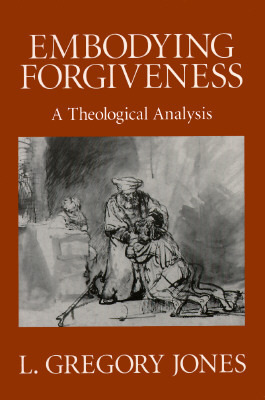
Embodying Forgiveness: A Theological Analysis

This book, Embodying Forgiveness by Methodist pastor L. Gregory Jones, makes forgiveness more possible by demonstrating its’ theological necessity. Therefore, this is an important grow-my-faith book for individuals committed to truly living their faith. The book challenges readers to grow in ways that can be uncomfortable (growth that’s challenging to achieve can move us with particular stride along the long-haul journey of genuine maturing in faith).

This is a book that must be read slowly. The concepts presented grab a reader’s attention such that one must pause to take in the book’s ideas, find the emotional capacity to live each aspect of the book’s insights.

Sample excerpts include:

  • “….people are mistaken if they think of Christian forgiveness primarily as absolution from guilt. The purpose of forgiveness is the restoration of communion [between parties] (page five).”
  • “Christian forgiveness involves a high cost, both for God and for those who embody it. It requires the disciplines of dying and rising with Christ, disciplines for which there are no shortcuts, no handy techniques to replace the risk and vulnerability of giving up ‘possession’ of one’s self, which is done through the practices of forgiveness and repentance. This does not involve self-denial, nor the ‘death’ of self through annihilation. Rather, it is learning to see oneself and one’s life in the context of communion [i.e., community] (pages 5-6).”

A worthwhile read!

Kim Burkhardt blogs at A Parish Catechist and The Books of the Ages (and a “Content Creator/Individual” member of the Association of Catholic Publishers). If you are a new visitor, it would be great to have you follow this blog (thank you!). If you know someone who would like this blog post, please share it with them (thank you!). You can also support this blog by clicking here when you are going to shop on Amazon (that lands A Parish Catechist a commission on Amazon sales).

Book Review: Stages of Faith (spoiler – a useful read!)

I have found this book to be a tremendous value in my own faith journey specifically and in my overall psychological development generally.

When I returned to church in 2016 – after a 20-year hiatus – the pastor with whom I connected listened to my story about my experience with church and he made a comment about my “stage of faith.” He rather suggested that my “stage of faith” was younger than my chronological age of maturity. Ouch! But, okay, was he perhaps correct? I took an interest in his turn of phrase, “stage of faith.” I Googled the phrase, found my way to this book by academic-sociologist-theologian James Fowler (in later conversations, I found out that the pastor had read this book).

Fowler had interviewed hundreds of people – from young children to seniors – to hear about how their experience faith and a search for meaning within a western context. Fowler drew from these interviews and from existing theories of psychological development to profile six descriptive/normative stages of faith development. Most people, it turns out, grow to somewhere between stages three and five….. I looked for myself in this book; discovered – in re-reading parts of the book several times – that my “stage of faith” was pretty close to where the pastor had guessed I was at – I had gotten stuck in the transition between stages three and four (a common place to get developmentally detoured, according to James Fowler).

When I read this book, I had known for some time that I had been “stuck” in my effort to grow further in faith; I wasn’t sure how to get “unstuck.” This book provided tremendous value in this regard. Once I identified “where I was” (i.e., 3.5), I re-read the next stage – stage four – to get an idea of where to head next. Once I saw a roadmap of the direction to head in (without this book being tied to a particular denomination), this helped me to begin moving forward, thankfully (the particulars of moving forward are guided by my denomination, as are each of us).

In addition to finding faith assistance from this book, I found in this book that various aspects of my faith-mental-emotional “developmental stages” weren’t entirely lined up in one neat age-chronology phase. Life wasn’t “tidy.” This book helped me to grow and mature various aspects of my self-hood to get my “various aspects” closer to one chronological age. I come back to this book occasionally to monitor my ongoing progress…. On the whole, a worthwhile read that I often recommend to people I meet.

Since I read this book, I have also sought-out and found additional topic-relevant books for follow up. For example, Jane Regan’s book Toward an Adult Church is a worthwhile read.

Kim Burkhardt blogs at A Parish Catechist and The Books of the Ages.