Pondering our spiritual landscape

Harrison Hot Springs

I was born in Colorado (a high-altitude, mountainous geography with some areas dry, flat, and/or farmland areas); I have spent most of my life in North America’s Pacific Northwest. When I periodically drive to Colorado to visit relatives, I am struck by the contrast of the lush geography of where I live and the simple beauty of the semi-arid geography found in parts of Wyoming located between Washington State/B.C./Oregon and Colorado. Wyoming’s dry stretches with layered, red cliffs and “red rocks” particularly attract my imagination.

We humans sometimes use our physical surroundings as an analogy for reflecting upon our spiritual, emotional, and intellectual lives. I am deeply rooted, for example, in the rainforest-esque rich landscape of where I live and I appreciate the opportunity to take photos such as the one above. I find it appealing to compare such geography to luscious experience of spiritual realms. Yet, arid geographies also have their beauty. 

Deserts can be analogous to dry periods in one’s spiritual life. We all experience spiritual deserts at one time or another (sometimes, for long, perplexing, and/or difficult periods!). Finding out way out of such periods can be challenging (listening for the quiet voice of the spirit inviting us out of such deserts can be helpful!). With that said, the beauty – and simplicity – of semi-arid geography can also be an opportunity to focus on our spiritual life without distraction. Rather than being a barren or desolate experience, such times can be fruitful opportunities to clear away the clutter in our faith journeys. Times to focus on simplicity and directness with clarity of vision. What really matters in our lives? What do I need to clear out of my life? When feeling emotionally depleted or spiritually bankrupt, going to dry, arid geography can sometimes help to to cultivate a focused relationship with the divine. Such simplicity draws some people to contemplative prayer and/or to a life in which we focus more on the inner experience of faith and on being of service to other people – the aspects of faith that matter – rather than opting for the avoiding-what-matters (or, avoiding-what-I-don’t-want-to-deal-with) distractions available in more abundant geographies and in cities.

For anyone interested in exploring contemplative prayer, please feel welcome to check out Contemplative Outreach or the writings of mystics (such as Teresa of Avila, John of the Cross, or Julian of Norwich). For anyone interested in spirituality in dry geographic locations, I came upon an appealing blog: 11 Sacred Places in New Mexico.

Kim Burkhardt blogs at A Parish Catechist and The Books of the Ages (and a member of the Association of Catholic Publishers). If you are a new visitor, it would be great to have you follow this blog (thank you!). If you know someone who would like this blog, please share it with them (thank you!). You can also support this blog by clicking here when you are going to shop on Amazon (that lands A Parish Catechist a commission on Amazon sales).


Further consideration of “Embodying Forgiveness”

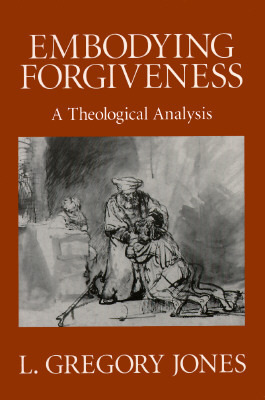
Embodying Forgiveness: A Theological Analysis

I reviewed L. Gregory Jones’ book Embodying Forgiveness: A Theological Analysis in early January. The book is important enough to discuss a second time. 

Embodying Forgiveness is not a quick read. It’s written rather academically. It is densely packed with important ideas that require thoughtful reading. The book is about a sometimes difficult topic that can take great commitment to apply in one’s life. The book also supports a well-lived faith in which we – as a friend often says – do the “adulting” of living one’s faith (i.e., we grow up and live out the responsibilities we are called to do. In fact, this book helps us “find our inner adult!”). This is the type of book to read when we want to move beyond “easy principles of faith” and fluffy phrases to a faith in which we grow and mature. In other words – it draws us toward meaningful liberation and to living in right relationship with God and the people in our lives. The principles in this book can be intimidating, but that doesn’t mean that the book is a “nonjoyous downer – it’s liberating. In this book, we learn about living for our community rather than being self-centric. We learn about giving up self without being a doormat.  Good news: the author draws readers toward practicing forgiveness, making it palatable when forgiveness feel unpalatable.

This book is so important that I’m posting several excerpts (hint: yes, this is an effort to tempt readers to read the book!):

  • “Forgiveness has long been hard to embody, even among those committed to its importance” (page xi).
  • “…the craft of forgiveness involves the ongoing and ever deepening process of unlearning sin through forgiveness and learning, through specific habits and practices, to live in communion – with the Triune God, with one another, and with the whole Creation” (page xii).
  • The ideas in this book move “beyond….pious, sentimental affirmations that ‘Jesus is my friend,'” to friendship being “a much more formative and transformative relationship” (page xiii).
  • “….forgiveness serves primarily not to absolve guilt but as a reminder, a gracious irritant, of what communion with God and with one another can and should be: and so it should enable and motivate our protest against any situation where people (either ourselves or others) are diminished or destroyed” (page xvi).
  • “….the purpose of forgiveness is the restoration of communion, the reconciliation of brokenness” (page 5).

I am the type of reader who thinks that a book worth reading should be read in its’ entirety. In the case of this book, reading even just a chapter or two – and really applying it in one’s life – would move a person forward in a faith well-lived. A worthwhile read!

Kim Burkhardt blogs at A Parish Catechist and The Books of the Ages (and a member of the Association of Catholic Publishers). If you are a new visitor, it would be great to have you follow this blog (thank you!). If you know someone who would like this blog, please share it with them (thank you!). You can also support this blog by clicking here when you are going to shop on Amazon (that lands A Parish Catechist a commission on Amazon sales).

Perspectives: how we engage with specific faith concepts

Christian writers and denominations variously emphasize different religious ideas. ”Are we justified by faith or by works,” etc…..

In being a person of faith, we don’t get to choose whether the principles of faith are applicable in our lives. Just as we don’t choose whether gravity affects our physical movement or whether we need oxygen to survive, we don’t get to choose whether being faithful is contingent upon growing in “love your neighbor,” whether we should live the ten commandments, if we should develop our prayer lives, etc.

While we don’t get to choose whether truths of faith are applicable in our lives, it’s interesting to ponder how we engage with these ideas. Right now, for example, I’m reading L. Gregory Jones’ book Embodying Forgiveness (an important read!). He states in the book’s early pages that we can only receive God’s grace through learning to forgive (that’s how I read what he said, anyway). Yes, forgiveness is a nonnegotiable, important practice and we receive grace by forgiving others (“forgive us our trespasses as we forgive….”). With that said, I have experienced God’s grace in a situation unrelated to forgiveness (I tell that story here). Just because I’ve experienced God’s loving grace in a situation other than one of forgiveness -seemingly at odds with what I read – doesn’t mean that I don’t accept the need to forgive others in order to be in good relationship with God and with the people around me. 

As for the question of whether we are justified by faith or by good works, I accept my denomination’s argument that we are justified by faith. There are people who do good works without being a person of faith – but one cannot be truly faithful without performing good deeds. A faithful life calls us to care for other people (i.e., “faith without works is dead”).

Some faith precepts “get our attention” at different times in our lives (and in different ways). That’s okay. Engaging with the faith principles that reach us at any given time will lead us in “continuous conversion.” “The first work of the Holy Spirit is conversion. Moved by grace, man turns towards God…..(CCC#1989).” As long as we are engaged in growing in faith – with a healthy level of discipline – we are moving forward (I am drawn to the idea of continuous conversion!). What matters most – I think – is that we allow God to direct us in the direction(s) God wants us to go. When dry periods in our faith experience come along – and they do – we must simply continue trying to grow in faith. Even John of the Cross (my second-favorite mystic, after Teresa of Avila with whom he worked) wrote of seemingly dry periods (he said to continuing praying even when prayer seems dry – or dark; he rightly said that we’ll see afterward that God has worked within us during dry/dark periods of prayer, even if we didn’t see it at the time).

Kim Burkhardt blogs at A Parish Catechist and The Books of the Ages (and a member of the Association of Catholic Publishers). If you are a new visitor, it would be great to have you follow this blog (thank you!). If you know someone who would like this blog, please share it with them (thank you!). You can also support this blog by clicking here when you are going to shop on Amazon (that lands A Parish Catechist a commission on Amazon sales).
Caring for others, appreciating their care for us

Orange and yellow sunset

Matthew 22: 34-40 is frequently quoted in this blog: “The greatest commandments are…love the Lord your God….and….love your neighbor as you love yourself.”

There’s a lot that goes into living each aspect of love God, love your neighbor, love yourself. Loving God involves investing time and effort into a continuing relationship with God. Loving our neighbors requires getting out of ourselves to care for others in a myriad of ways, large and small. Loving others “as we love ourselves” requires that we live lovingly within ourselves (and to live by faith’s principles – including moving away from behavior that causes any trouble, even for ourselves). 

How well do we put into practice loving other people? How well we care for other people is, surely, one of the greatest measures of how well we live our faith. So many aspects to being mindfully of other people’s welfare.

There’s a wonderful bumper sticker that says “Love your neighbor means everybody.”Fully living that bumper sticker requires bringing everything we learn in faith to the table. Truly being centered on kindness, thoughtfulness, caring, generosity, and unselfishness – in other words, focusing on loving the people around us – is what faith principles move us toward being. Christ said in Matthew 22:34-40, “All the Law and the demands of the Prophets hang on these two commandments.” 

Robert Hayden’s haunting poem Those Winter Sundays speaks both to quiet love-in-action and to the pain of not acknowledging receipt of love-in-action. Taking in this thoughtfully observant poem requires action on our part – coming to more fully appreciate the people who care for us (and to say so!) as well as prompting us to better care for the people around us. Caring for others is so often done quietly!

Those Winter Sundays

By Robert Hayden

Sundays too my father got up early

and put his clothes on the blueblack cold,

then with cracked hands that ached

from labor in the weekday weather made

banked fires ablaze.  No one ever thanked him.

I’d wake up and hear the cold splintering, breaking.

when the rooms were warm, he’d call,

and slowly I would rise and dress,

fearing the chronic angers of that house,

speaking indifferently to him,

who had driven out the cold

and polished my good shoes as well.

What did I know, what did I know

of love’s austere and lonely offices?

Kim Burkhardt blogs at A Parish Catechist and The Books of the Ages (and a “Content Creator/Individual” member of the Association of Catholic Publishers). If you are a new visitor, it would be great to have you follow this blog (thank you!). If you know someone who would like this blog post, please share it with them (thank you!). You can also support this blog by clicking here when you are going to shop on Amazon (that lands A Parish Catechist a commission on Amazon sales).

Faith: grasping toward knowing God

Two rows of trees

How well do we know and describe God? Individuals sometimes express frustration at the imperfections of how faith traditions talk about God (sometimes, people view religion negatively as a result). It was pointed out to me that our human attempts to communicate about God “merely reflect our human efforts that hint around various aspects of the contours of who God is.” Our communication about God is partial and imperfect and should be recognized as our limited human efforts to know the divinean effort to appreciate for what we do learn rather than an imperfection to criticize.

This idea of the scope of our incomplete perceptions hit home – from a surprising perspective – while visiting with my mother on Christmas day. Parents and children think that they know one another. Children of blind parents think they have a close grasp of their parents’ experience. Blind parents – like all parents – think that they know their own children. Hmmm….. My mother knew that I had blonde hair when I was a young child (I was born blonde)….. Well, fast forward to the present day….. When I showed up at my mother’s house this November for the Thanksgiving holiday, I chose not to tell her that I’d had my hair cut short after having long hair for many years (I hadn’t fully made peace with my new hair style). My mother learned of my haircut when one of my siblings commented on my haircut (a few years ago, my mother found out about that sibling’s tattoo when I commented on the tattoo!). Later that Thanksgiving evening (after I’d gone home), my sibling told my mother “that Kim’s hair looks darker now that it’s short” – my sibling suggested that I had perhaps dyed my hair….. A month later, on Christmas Day, my mother asked if I had dyed my hair when I got it cut this summer. ”No,” I said, “My hair is naturally brown. When my hair is longer, the summer sun has time to bleach some of the longer strands to blonde. Now that it’s short, all that’s visible is my hair’s natural brown color. (awkward pause…..) ”Hmmm, my hair has been brown since early childhood…..”  This generated an awkward moment – my mother was puzzled, I was surprised. I realized later (while driving home) that when I was ages four and five, when my hair naturally changed from blonde to brown, no one thought to tell my mother that the color of my hair had changed. Her parents, her grandparents, her siblings, my father, her friends – no one told her that her oldest child’s hair had changed from blonde to brown (it also didn’t occur to me as a child to tell my mother that the color of my hair had changed). I’ve now had naturally brown hair (with streaks of summer blonde) for most of my life; my mother thought for all these years that her daughter was still blonde! It came as a shock for my mother to find out that she’d been uninformed all these years about such a basic thing as the color of her her child’s hair; it came as a shock to me to find out that my own mother has thought all these years that I’m still blonde!

Transfer this Christmas Day conversation to our human efforts to know – and to communicate about – the nature of God. Ultimately, we humans are going to know as much about God as God reveals to us – finite amounts. We communicate about God to the degree that we know about God. What matters most regarding our knowledge of God is to know that God loves us and that God wants us to love both God and each other.We don’t need to fully understand God to positively live lives of faith.

Kim Burkhardt blogs at A Parish Catechist and The Books of the Ages (and a “Content Creator/Individual” member of the Association of Catholic Publishers). If you are a new visitor, it would be great to have you follow this blog (thank you!). If you know someone who would like this blog post, please share it with them (thank you!). You can also support this blog by clicking here when you are going to shop on Amazon (that lands A Parish Catechist a commission on Amazon sales).

Advent: hope, peace, joy, love

A home Advent wreath This Sunday – Dec. 17th – is the Third Sunday of Advent. This Sunday (and each day this week, if you are doing this at home), we light two purple candles and a pink candle on our Advent wreaths. Advent is a time for us to reflect upon, engage in, and renew our faith. There are four topics associated with Advent (i.e., faith-renewing reflections):
  • Hope: Hope is one of the three theological virtues – hope, faith, and charity – which are viewed by Catholics and Episcopalians as being infused in us by God at baptism (read more about theological and cardinal virtues here).  Read Pope Francis’ suggestions about cultivating hope here.  During Advent, we light candles of hope (light) during a season of darkness (northern hemisphere).
  • Peace: On a personal level, peace is more than “quiet, harmony, internal balance” that can be sought or achieved “for its’ own sake.”  Rather than seeking personal peace as an end in itself, peace is the result of sacrificial love – Christ’s sacrificial love for us and our sacrificial love for other people.  Pope Francis thoughts on this idea can be read about here.  Peace is a consequence of a faith well lived rather than something we can achieve for its’ own sake.
  • Joy: Joy “is the fruit of living all the virtues.”  In addition, joy comes from knowing “the love God has for us” (1 John 4:16) and from being of service to other people.  In short, joy comes from a life well-lived rather than a state of being that we can – or should – cultivate for its’ own sake (living for others helps produce joy rather than the self-focused activity of us seeking joy for our own sake).
  • Love (another of the three theological virtues!):Perfect love casts out fear” (1 John 4:18). In a world where we need more peace, casting away fear – via love – could go a long way toward achieving more peace (many ill human behaviors driven by fear.  Not just societal level wars – how many times have each of us made personal/localized decisions based on fear when we could have made better decisions?).  Love, therefore, is important for us to put into practice and to seek to cultivate in others.  When Jesus was asked by the Pharisees which of the commandments is greatest, he said “Love the Lord your God with all your heart, with all your soul, and with all your mind.’ This is the greatest and most important commandment. The second is like it: ‘Love your neighbor as you love yourself.’ All of Moses’ Teachings and the Prophets depend on these two commandments” (Matthew 22: 34-40).  Do you love the Lord your God with all your heart?  Do the people around you see in your behavior that you love them?  What goal could you set this Advent to be more loving?
Kim Burkhardt blogs at A Parish Catechist and The Books of the Ages (and a “Content Creator/Individual” member of the Association of Catholic Publishers). If you are a new visitor, it would be great to have you follow this blog (thank you!). If you know someone who would like this blog post, please share it with them (thank you!). You can also support this blog by clicking here when you are going to shop on Amazon (that lands A Parish Catechist a commission on Amazon sales).
Geography of Faith (poetic ponderings)

river

I heard recently that Thomas Merton used the phrase Geography of Grace. That phrase inspired me to try some poetic faith-geography imagery of my own, posted below:

Where do we travel in our faith journeys?

  • We move – seemingly unaware of the mechanics our own locomotion – toward new journeys of the soul prompted by the Holy Spirit
  • We wander unknown paths, exploring new faith terrain
  • We walk with others along their paths, supporting their faith journey
  • We head with belligerence, certainty, confusion, or uncertainty toward a dead end
  • We sing with joy and weightlessness toward the upper mountain heights of God’s love
  • We run along stream-side paths, delighting in the company of fellow faith travellers
  • We trod down dirt roads toward – or into the depths of – despair
  • We take joy in love-filled spaces of caring for one another
  • We wander down detours, looking for any useful lessons from the experience
  • We find our way out of detours!
  • We rest in grace-filled meadows
  • We explore “monasteries of the spirit” (such joy when these come along!)
  • We wonder when happening upon liminal places

May your faith journey be wonder-filled.

Kim Burkhardt blogs at A Parish Catechist and The Books of the Ages. If you are a new visitor, it would be great to have you follow this blog (thank you!). If you know someone who would like this blog post, please share it with them (thank you!). You can also support this blog by clicking here when you are going to shop on Amazon (that lands A Parish Catechist a commission on Amazon sales).

Faith Challenges: there are lessons in faith’s strivings

Understanding and accepting the tenets of one’s faith tradition can sometimes be a challenge. How can one God be a trinity of three persons? How could Jesus have been conceived by a virgin? What about ascensions into heaven? Are non-Christians excluded from heaven? Why do babies need to be washed clean of original sin in baptism (babies don’t act sinfully!)? Why do bad things happen to good people? Are some parts of the Old Testament religious metaphor rather than literal fact?

I have struggled with some of the questions listed above. I have journeyed with people who have struggled with some of the other questions listed above. I have talked to pastors who say they struggle to deliver sermons about the Trinity.

One of the lessons I have learned is that unexpected faith lessons come to light in the process of trying to make sense of religious tenets that don’t readily make sense. I don’t only mean figuring out that which we’re trying to understand – rather, unexpected faith lessons become apparent to us as we work to make sense of matters that don’t yet make sense to us. Beyond the unexpected lessons that we discover in trying to understand topics that challenge us, we sometimes find answers to the topics we set out to understand. Other times, we may not find answers or explanations to what challenges us. However, genuine effort to find answers to challenging questions can – in time – help us to “make peace” with remaining in one’s faith tradition. We find that a faith tradition as a whole can be true even if one (or a few) topics in that faith tradition don’t readily make sense to us. In addition, I find great value in the homilies (sermons) of pastors who readily communicate their own struggles and talk about their own efforts to understand specific topics they haven’t yet figured out.

The academic and theologian James Fowler did groundbreaking work on how we understand and navigate faith throughout our life stages in his book Stages of Faith. In that book, Fowler lays out six faith stages that people can progress through from early childhood into the more mature stages available as we move through life. The first three developmental stages are readily available by high school. Entering into the subsequent stages require us to actively engage in our faith in an “I am choosing to grow up in faith” manner – including making an intentional personal effort to make sense of faith in deeper ways and to work through life’s difficulties with a faith lens.

Kim Burkhardt blogs at A Parish Catechist and The Books of the Ages. If you are a new visitor, it would be great to have you follow this blog (thank you!). If you know someone who would like this blog post, please share it with them (thank you!).

Legos, faith….Didn’t anticipate this outcome

A recent trip down memory lane led me to wanting a Lego set (my maternal grandmother had Legos for us to play with when we were children…..). So, it seems that I’ve joined the Legos craze. I wasn’t going to be satisfied with just any of the latest “Legos sets.” I drove across town this morning in search of a Legos store where one can find “anything Legos.” I ended up combing through several bins and tables of individual Legos pieces in search of the pieces and colors I wanted. After a time, I realized “perhaps I’ve been here awhile?” I checked the time, I’d been combing through bins for two hours in search of the individual types of Legos pieces I was there to find. A bit manic, perhaps! Perhaps the store clerk was a bit amused (I was the only customer in the store for most of that two hours, so my active hunting through piles of Legos was readily observable). The money I paid for my carefully-selected bag of Legos was perhaps justified simply by the enjoyment of two hours searching intently through piles of Legos!

I subsequently spent much of the afternoon at home beginning to assemble the Legos creation I had envisioned – a Legos church. An unlikely way to spend my day off?

Then, disappointment. After so much effort to collect all the desired Legos pieces I could find, I found out at home (I rather suspected when leaving the store) that I don’t yet have enough pieces to finish erecting a church. I got the foundation laid, started the walls, installed doors and windows, and have something of an altar and tabernacle. Off to the side, I have Legos pieces for a steeple. There aren’t enough pieces, though, to complete the upper portion of the walls or a roof.

Perhaps, however, this is a case of art mimicking life. Or, more specifically, Legos mimicking how we experience faith. We can lay a foundation and start building a faithful life, but we’re really never done. Nor can we finish this on our own. We’ll likely never have all the pieces.

Perhaps I’ll never want a roof on this Legos church. If there were a roof, I’d never be able to see what’s inside. In faith, what’s inside needs to be made visible rather than hidden (i.e., the inside of this Legos church would be hidden to viewers if there were a roof) – we likewise lay ourselves (our insides) before God to be improved upon. We’re to take what we learn in church out into our lives and communities – our faith needs to be made visible by how we live (sometimes pastors say at the end of mass, ““Go forth, glorifying the Lord by your lives”).

In a sense, maybe my Legos church is as done as it is suppose to be. On with the continued building of life and faith.

Kim Burkhardt blogs at A Parish Catechist and The Books of the Ages. If you are a new visitor, it would be great to have you follow this blog (thank you!). If you know someone who would like this blog post, please share it with them (thank you!).

Hearing God’s voice….in stillness

…….It is often in the stillness where we hear – and can respond to – the promptings of God’s voice.

In 1 Kings Chapter 19 (19:11-13), we read: “The Lord said, ‘Go out and stand on the mountain in the presence of the Lord, for the Lord is about to pass by.’ Then a great and powerful wind tore the mountains apart and shattered the rocks before the Lord, but the Lord was not in the wind. After the wind there was an earthquake, but the Lord was not in the earthquake. After the earthquake came a fire, but the Lord was not in the fire. And after the fire came a gentle whisper. When Elijah heard it, he pulled his cloak over his face and went out and stood at the mouth of the cave. Then a voice said to him, ‘What are you doing here, Elijah?’”…..

Jesus also frequently went to quiet desert spaces to pray to his father. Prayed in solitude and stillness.

For us, a relationship with God likewise requires a willingness to “go inward” – to step away from life’s hustle and bustle encouraged by our outwardly-focused society and sit in stillness. Stillness is uncomfortable for some. Pausing to go inward isn’t always comfortable – we bump up against our own inner tumult. Yet, prayer can get us through such tumult.

When we find a relationship with God – an interactive, two-way interaction rather than a one-way monologue of intercessory prayers from us directed to God (we wouldn’t relate to the people in our lives exclusively via uni-directional monologues!) – there comes a discovery that God sits with us in prayer. God’s felt presence in our lives can – and does – provide “peace that passeth all understanding.”

We also experience a relationship with God by being of service to others – by working to improve the lives of other people (Jesus told his apostles that the greatest commandments are “Love God and love your neighbor” – Matthew 22: 36-40 ). Mother Teresa lived this in the streets of Calcutta. Richard Rohr focuses on the need for both rest in God’s presence and the need to be active in the world through his Center for Action and Contemplation.

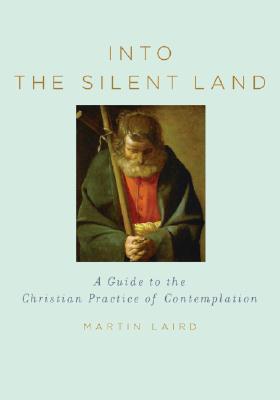
Wondering about how to go about stillness and prayer? Start praying. If you’re not praying yet, start praying twice per day for five minutes each time. Sit in stillness – go with whatever comes in that stillness and “become comfortable” with whatever comes in that stillness. Find someone with whom to discuss what you experience in stillness. Wondering how to pray, how to move deeper in prayer? Consider:

Kim Burkhardt blogs at A Parish Catechist and The Books of the Ages. If you are a new visitor, it would be great to have you follow this blog (thank you!). If you know someone who would like this blog post, please share it with them (thank you!).