Book Review: Corrie Ten Boom’s The Hiding Place

Book: The Hiding Place

I just took a break from reading another book to read (re-read?) Corrie Ten Boom’s The Hiding Place.

When I recently happened upon a copy of The Hiding Place, I thought “Yes, I read this.” Perhaps I did read it in high school or in my twenties. I decided to read it again – this time for its’ Christian insight. As I read it this time, I didn’t remember the details of the book. If I read it before, I think I probably read it as a historical account of WWII.

The book absolutely is a historical account of WWII and of a family who participated in Dutch resistance. It is also the account of a family who deeply put their Christian faith into practice.

Most evenings, I pick up the latest faith book I am reading to read a few pages before I go to sleep. Last night, I finished The Hiding Place and then found myself unable to sleep because of the distress of reading about the horrors in Germany’s concentration camps. I was also compelled – as the author intended – about the author’s conviction that we are compelled to forgive. At the end of the book, she wrote of spending time after the war – and after being released from Ravensbrück concentration camp – helping WWII survivors to heal and educating people about forgiveness (prompted significantly from her sister’s witness on this topic before dying). At the very end of the book, Corrie Ten Boom wrote of encountering a guard from Ravensbrück where her beloved sister Betsy perished. Forgive even him? She had to reach deep into herself to try forgiving, then ask God to help her forgive. Ten Boom wrote compellingly that it was God who made it possible for her to forgive.

For anyone trying to live a life of faith, this book is a must-read. Corrie Ten Boom absolutely challenges us to go farther than we think we can in putting our faith into practical practice.

Kim Burkhardt blogs at A Parish Catechist (and is a member of the Association of Catholic Publishers). Blogging is sustainable via blog readership (i.e. readers/subscribers). If you are a new visitor, it would be great to have you subscribe to follow this blog (thank you!). If you know someone who would like this blog, please share it with them and invite them to subscribe (thank you!).
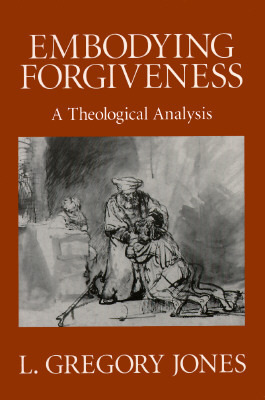
Further consideration of “Embodying Forgiveness”

Embodying Forgiveness: A Theological Analysis

I reviewed L. Gregory Jones’ book Embodying Forgiveness: A Theological Analysis in early January. The book is important enough to discuss a second time. 

Embodying Forgiveness is not a quick read. It’s written rather academically. It is densely packed with important ideas that require thoughtful reading. The book is about a sometimes difficult topic that can take great commitment to apply in one’s life. The book also supports a well-lived faith in which we – as a friend often says – do the “adulting” of living one’s faith (i.e., we grow up and live out the responsibilities we are called to do. In fact, this book helps us “find our inner adult!”). This is the type of book to read when we want to move beyond “easy principles of faith” and fluffy phrases to a faith in which we grow and mature. In other words – it draws us toward meaningful liberation and to living in right relationship with God and the people in our lives. The principles in this book can be intimidating, but that doesn’t mean that the book is a “nonjoyous downer – it’s liberating. In this book, we learn about living for our community rather than being self-centric. We learn about giving up self without being a doormat.  Good news: the author draws readers toward practicing forgiveness, making it palatable when forgiveness feel unpalatable.

This book is so important that I’m posting several excerpts (hint: yes, this is an effort to tempt readers to read the book!):

  • “Forgiveness has long been hard to embody, even among those committed to its importance” (page xi).
  • “…the craft of forgiveness involves the ongoing and ever deepening process of unlearning sin through forgiveness and learning, through specific habits and practices, to live in communion – with the Triune God, with one another, and with the whole Creation” (page xii).
  • The ideas in this book move “beyond….pious, sentimental affirmations that ‘Jesus is my friend,'” to friendship being “a much more formative and transformative relationship” (page xiii).
  • “….forgiveness serves primarily not to absolve guilt but as a reminder, a gracious irritant, of what communion with God and with one another can and should be: and so it should enable and motivate our protest against any situation where people (either ourselves or others) are diminished or destroyed” (page xvi).
  • “….the purpose of forgiveness is the restoration of communion, the reconciliation of brokenness” (page 5).

I am the type of reader who thinks that a book worth reading should be read in its’ entirety. In the case of this book, reading even just a chapter or two – and really applying it in one’s life – would move a person forward in a faith well-lived. A worthwhile read!

Kim Burkhardt blogs at A Parish Catechist and The Books of the Ages (and a member of the Association of Catholic Publishers). If you are a new visitor, it would be great to have you follow this blog (thank you!). If you know someone who would like this blog, please share it with them (thank you!). You can also support this blog by clicking here when you are going to shop on Amazon (that lands A Parish Catechist a commission on Amazon sales).

Perspectives: how we engage with specific faith concepts

Christian writers and denominations variously emphasize different religious ideas. ”Are we justified by faith or by works,” etc…..

In being a person of faith, we don’t get to choose whether the principles of faith are applicable in our lives. Just as we don’t choose whether gravity affects our physical movement or whether we need oxygen to survive, we don’t get to choose whether being faithful is contingent upon growing in “love your neighbor,” whether we should live the ten commandments, if we should develop our prayer lives, etc.

While we don’t get to choose whether truths of faith are applicable in our lives, it’s interesting to ponder how we engage with these ideas. Right now, for example, I’m reading L. Gregory Jones’ book Embodying Forgiveness (an important read!). He states in the book’s early pages that we can only receive God’s grace through learning to forgive (that’s how I read what he said, anyway). Yes, forgiveness is a nonnegotiable, important practice and we receive grace by forgiving others (“forgive us our trespasses as we forgive….”). With that said, I have experienced God’s grace in a situation unrelated to forgiveness (I tell that story here). Just because I’ve experienced God’s loving grace in a situation other than one of forgiveness -seemingly at odds with what I read – doesn’t mean that I don’t accept the need to forgive others in order to be in good relationship with God and with the people around me. 

As for the question of whether we are justified by faith or by good works, I accept my denomination’s argument that we are justified by faith. There are people who do good works without being a person of faith – but one cannot be truly faithful without performing good deeds. A faithful life calls us to care for other people (i.e., “faith without works is dead”).

Some faith precepts “get our attention” at different times in our lives (and in different ways). That’s okay. Engaging with the faith principles that reach us at any given time will lead us in “continuous conversion.” “The first work of the Holy Spirit is conversion. Moved by grace, man turns towards God…..(CCC#1989).” As long as we are engaged in growing in faith – with a healthy level of discipline – we are moving forward (I am drawn to the idea of continuous conversion!). What matters most – I think – is that we allow God to direct us in the direction(s) God wants us to go. When dry periods in our faith experience come along – and they do – we must simply continue trying to grow in faith. Even John of the Cross (my second-favorite mystic, after Teresa of Avila with whom he worked) wrote of seemingly dry periods (he said to continuing praying even when prayer seems dry – or dark; he rightly said that we’ll see afterward that God has worked within us during dry/dark periods of prayer, even if we didn’t see it at the time).

Kim Burkhardt blogs at A Parish Catechist and The Books of the Ages (and a member of the Association of Catholic Publishers). If you are a new visitor, it would be great to have you follow this blog (thank you!). If you know someone who would like this blog, please share it with them (thank you!). You can also support this blog by clicking here when you are going to shop on Amazon (that lands A Parish Catechist a commission on Amazon sales).

List: examples of faith being hard work, path to joy

Stairs, moss

Living Christianity is both hard work and a path to joy and freedom.

Examples of having to work at living Christianity include:

  • “It is easier for a camel to pass through the eye of a needle than for a rich man to enter the kingdom of God” (Matthew 19:24). Putting faith into practice – such as giving up our attachment to worldly goods – is a challenge.
  • The bumper sticker “Love your neighbor means everybody” (a reflection on Matthew 22: 34-40: “The greatest commandments are…love the Lord your God….and….love your neighbor as you love yourself.”) speaks to the heart of Christianity and of the Christian faith being hard work.  It’s easy to love the people we like. It’s harder to love people who we are naturally inclined to dislike (the disheveled homeless person who went through our trash and left a mess, a political figure we disagree with, the difficult relative, an argumentative person at work, etc.). Yet, “love your neighbor” does mean “everybody” – we don’t get to pick and choose. Many or all aspects of living the Christian faith are required to practice treating everyone with dignity and grace. Loving people is a verb – a self-giving action. If we were all to practice this well (hard work!), the world would be a better place.
  • The pastor and writer L. Gregory Jones writes (in his book Embodying Forgiveness) ““Christian forgiveness involves a high cost, both for God and for those who embody it. It requires the disciplines of dying and rising with Christ, disciplines for which there are no shortcuts, no handy techniques to replace the risk and vulnerability of giving up ‘possession’ of one’s self, which is done through the practices of forgiveness and repentance.” Yes, there is a ‘high cost’ to doing forgiveness – but also high rewards.

While there are plenty of examples of how living one’s faith is a lifelong effort (an “ongoing conversion,” in challenging ways such as those noted above), there are also joys:

  • “And the peace of God, which surpasses all comprehension, will guard your hearts and minds in Christ Jesus (Phillipians 4:7).”
  • “Blessed are those who hunger and thirst for righteousness, for they will be filled (Matthew 5:6).”
  • Living faith principles – including surrender to allowing God to transform us – turns us into the people God intends for us to be. God wants us to be happy and will – if we allow it – adjust who we are to that purpose.
  • In living out the principles of faith, we contribute positively to our communities – helping to make the world a better place.
  • Living faith principles teaches us to bring joy into the lives of other people – which is among the primary reasons for us to be alive. We are all God’s children; bringing joy into the lives of God’s children is a wonderful thing!

The Christian path is a great, joyous path. A loving path that turns us into better people.

Kim Burkhardt blogs at A Parish Catechist and The Books of the Ages (and a member of the Association of Catholic Publishers). If you are a new visitor, it would be great to have you follow this blog (thank you!). If you know someone who would like this blog, please share it with them (thank you!). You can also support this blog by clicking here when you are going to shop on Amazon (that lands A Parish Catechist a commission on Amazon sales).