Salvation history, the universe

Sunset colors

I have lately been pondering how the grand scope of the universe – the many number of galaxies, etc. – factors into what God pays attention to.

When we think of God – with the finite perspective of people – we tend to think of God in terms of God’s relationship with us humans.  About  humanity’s “salvation history.”   We humans are created in God’s image – we are loved by God so much that God gave his only son for our salvation.   We humans are infinitely loved by God.

For much of Judeo-Christian history, humanity’s understanding of the universe – and the size of the universe – was much smaller than the understanding we have now. It was much simpler, in a sense, to think of God solely in terms of God’s relationship to our salvation history.

We now know so much more about the grandeur of the size of the universe.

To think of us now in terms of being made in God’s image and for us to be God’s children takes on a perspective of a very different scale.

God is infinite enough to love us and “know us by name” and “know the number of hairs on our head” AND simultaneously be engaged in the astro-physics/geology of a VERY LARGE universe.   Wow.   We now receive photos of galaxies far beyond anything people knew in previous centuries.  Amazing.   And, this makes God even more amazing to us – that God can “know the number of hairs on our head” and simultaneously know the full geographic scope of all the galaxies that exist.  Does God watch in wonder at the colors and contours of various galaxies?

Yet, we with our human limitations struggle with the comparatively finite question of how to do a better job of “love God and love our neighbor.”  Back to earth….. What can we do today to be good to our families, friends, neighbors?

Kim Burkhardt blogs about faith at The Hermitage Within. Thank you for reading this faith blog and for sharing it with your friends. While you are here, please feel welcome to provide support to sustain this blog ($$).

Inspiring other’s faith by talking about our own brokenness

Stained glass windows at Assumption Church, Bellingham

I was struck by a recent article by Seattle Bishop Frank Schuster published in Northwest Catholic. In that article, Bishop Schuster (a friendly guy!) quotes both the famed Archbishop Fulton Sheen and poet-and-opium-addict Francis Thompson. Francis Thompson (who is new to me!) wrote poetic ideas such as “I fled [God], down the nights and down the days; I fled Him, down the arches of the years, I fled Him down the labyrinthine ways of my own mind; and in the midst of tears, I hid from Him and under running laughter.”

In our current times – when the U.S. surgeon general is talking about the dangers and health consequences of an “epidemic of loneliness,” I rather think we would do well to talk to other from a place of genuineness – including talking more often and more frankly about our own brokenness.

When we really talk about our human brokenness, we connect meaningfully with other people. Less isolation. Further, really talking about our human brokenness somehow allows us to see and connect with meaningful with the love and spiritual nourishment that God offers to us. It is, after all, in our brokenness that we need God.

When we interact with people, we are typically encouraged to “put our best foot forward.” We talk about how to achieve more, succeed more. We post photos of our great moments on social media. Yet, many people are also lonely, socially isolated. Too often, people are not connecting with people in faith communities or finding spiritual nourishment. Part of the solution to our woes, I think, is to really express ourselves – including our brokenness. In talking about our brokenness, we somehow become more receptive to the loving grace offered to us by God.

Try talking about your brokenness. Listen for God’s loving grace.

Kim Burkhardt blogs at A Parish Catechist. If you are a new visitor, it would be great to have you subscribe to follow this blog (it’s free – thank you!). If you know someone who would like this blog, please share it with them and invite them to subscribe (thank you!)

List: How many ways to pray (types of prayer)?

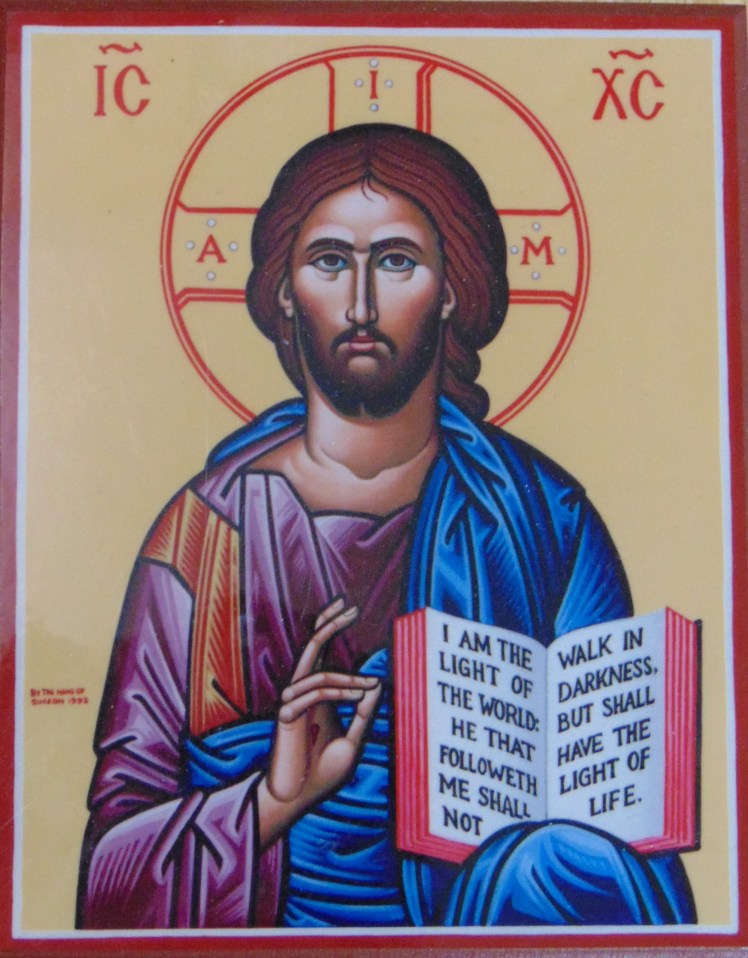
image of Christ
depiction of Christ

variety of prayer options available within Catholicism.

Catholic prayer is a vibrant and varied tradition, bringing to fullness a life-giving relationship between us and God. Jesus came “that we might have life, and have it more abundantly” (John 10:10). “…prayer is not merely an exchange of words, but it engages the whole person in a relationship with God the Father, through the Son, and in the Holy Spirit” (U.S. Conference of Catholic Bishops, USCCB).

How many ways are there to pray?

The essence of prayer is communication, a relationship with God, a being-with or being-in-the-presence-of. When we find a relationship with God – an interactive, two-way interaction rather than a one-way monologue (we wouldn’t relate to the people in our lives exclusively via uni-directional monologues!) – there comes a discovery that God is present with us in prayer.

A friend said to me, “prayer is a very personal communion with God that is meant to be personal, and unique to you….People are… very different in their personal experience in prayer, and that in itself is a beautiful thing.”

Just as we have many differing relationships with the various people in our lives – and a variety of ways that we communicate with the people in our lives – there are any number of ways of communicating with God. A prayer style that works for one person may be very different than what works for the next person. Here are several approaches to prayer:

  • Rote prayer (formal, memorized prayers – these are often provided to us by our houses of worship). Prayers such as the Lord’s Prayer are full of meaning and help us learn to pray. Such prayers give us ready prayer content that we can easily put to use.
  • Psalms. The Book of Psalms – which were meant to be sung – are summarized by Wikipedia thus: the Book of Psalms are “an anthology of Hebrew religious hymns…including hymns or songs of praise, communal and individual laments, royal psalms, imprecation, and individual thanksgivings.  The book also includes psalms of communal thanksgiving, wisdom, pilgrimage, and other categories.”
  • “Talking to God.” Our spontaneous thoughts and words directed to God. God wants to have a relationship with us; relationships are two-way, be open to feeling God’s presence in response.
  • Contemplative Prayer. Resting reflectively in prayer, without a need for words or any human language. Contemplative prayer can – and for some people, does – include a sense of God’s presence in prayer. For more information about contemplative prayer, visit Contemplative Outreach.
  • Praying the Rosary. The rosary is a reflective way of praying a set of rote prayers with a formulaic set of Catholic prayer beads (focusing time on specified topics). Instructions for praying the rosary is available here.
  • Lectio Divina. Lectio Divina “describes a way of reading the Scriptures whereby we gradually let go of our own agenda and open ourselves to what God wants to say to us” (this particular description provided by the Carmelites).
  • Singing at church. “Those who sing pray twice” (a popular phrase in churches).
  • Intercessory prayer. Intercessory prayer that we pray for other people. We come to God with the challenges of those who are in need of support.

My favorite Catholic pray-ers:

  • Teresa of Avila, (16th-century mystic, Doctor of the Church, Carmelite nun, reformer of the Carmelite religious order, Carmelite saint)
  • John of the Cross (16th-century mystic, Doctor of the Church, Carmelite monk and priest, co-reformer of the Carmelite religious order, Carmelite saint)
  • Edith Stein, Carmelite nun, Carmelite saint
  • Fr. Thomas Keating, founder of Contemplative Outreach

Books for further reading:

Clinging: The Experience of Prayer (Emilie Griffin)

The Tradition of Catholic Prayer (The Monks of Meinrad Monastery)

Kim Burkhardt blogs at A Parish Catechist (and is a member of the Association of Catholic Publishers). Blogging is sustainable via blog readership (i.e. readers/subscribers). If you are a new visitor, it would be great to have you subscribe to follow this blog (thank you!). If you know someone who would like this blog, please share it with them and invite them to subscribe (thank you!).

Living and experiencing faith: it really is about love

three candles
Trinity candles

I grew up in pews every Sunday, four years in parochial school. I believed in God, believed in having a relationship with God, felt a deep, meaningful connection to liturgical ritual (I was the type of child who would notice how much the sanctuary candles had burned down each week and would notice when the shortened candles would be replaced with new candles)….. I later left the pews in my mid-twenties, in part because I couldn’t intellectually accept everything in the Nicene Creed (specifically, the parts that I would later call “biologically implausibilities” – a virgin birth, the ascension….).

Later, a profound reconversion brought me back to the pews (I tell that story here ). It was the type of experience that makes this explanation palpable:

“The Greek Fathers liken man’s encounter with God to the experience of someone walking over the mountains in the mist: he takes a step forward and suddenly finds that he is on the edge of a precipice, with no sold ground beneath his foot but only a bottomless abyss.” Quote: The Orthodox Way (Revised Edition, page 13), Bishop Kallistos Ware

In my reconversion experience and in the time that followed, I deeply experienced that God loves me. I found tremendous value in reading Teresa of Avila’s autobiography and the writings of John of the Cross who “schematized the steps of mystical ascent—a self-communion that in quietude leads the individual from the inharmonious distractions of the world to the sublime peace of reunion between the soul and God.”

Experiencing that God loves us is life-changing. I came to recognize that “we can’t think our way to God.”

Wondering what faith is meant to be about? Whether your faith is on track? Wondering how to engage more deeply in faith?

Love really is the measure what faith is all about. Matthew 22: 34-40: “The greatest commandments are…love the Lord your God….and….love your neighbor as you love yourself.”

Having a loving interactive prayer relationship with God is absolutely part of what makes faith meaningful. An active prayer life is what animates an active faith. “There can be no faith without prayer” and “prayer is the respiration of faith” are quotes I’ve come across that make sense.

In my experience, an interactive prayer life is what subsequently animates faith made visible via “love the Lord your God…and…love your neighbor.”

Wondering about how to have an active prayer life?

The apostles asked, “Lord, teach us to pray.” Most of us aren’t born knowing how to pray. Thus, the apostle’s question resulted in them being given The Lord’s Prayer.

Rather than prayer being an activity, prayer is a relationship. There’s a faith song with a line “There’s a hunger in our hearts….” Yes, we do live with a hunger. A longing for a relationship with the divine.

There’s an explanation about prayer being a relationship that may be attributed to Fr. Mike Schmidt (i.e., “Bible in a year” podcast). The explanation goes something like this: Prayer is a two-way communication, like a phone call. You wouldn’t call someone, tell them something, then hang up without giving the other person an opportunity to respond. Prayer should be the same way. When we pray, it should be a two-way communication in which we communicate to God and allow God to be tangibly present to us in response.

So, how can we pray? Really, this question asks “how can we have a relationship with God?” Ultimately, there are as many ways to pray are there are people. A few examples of approaches to prayer:

  • Lectio Divina: Reflectfully reading and praying upon scripture and additional faith reading.
  • Contemplative prayer: simply being quiet in God’s presence. For more about this style of “Be still and know that I am God” prayer, check out the Contemplative Outreach network.
  • Attending church. Church services are a form of communal prayer.
  • Rote prayers (check out examples here of the prayers recited at church).

Beyond prayer – a place where we experience loving God and being loved by God – there is then loving our neighbor. For those of us who are “saints in training” rather than “saints already,” loving our neighbor is learned rather than an auto-pilot activity.

There are endless ways to love the people in our lives. There’s a phrase that may have come from Presbyterians: “Love your neighbor means everybody.” We don’t get to pick and choose who we are to love. We are to love everybody. For many of us, that’s a tall order.

How do we “love everybody?” If you’re like me, you’re not there yet. For starters, loving everybody means we can’t hate anybody. We need to become ever conscious of “how am I going to treat everyone I encounter with love and dignity?” How we achieve that varies depending on the context. “Whatsoever you do for the least of my fellows” – we take care of people who need our assistance. We treat everyone with dignity. We stand tall in being good to the people in our daily lives. There are endless ways to be good to everybody we encounter. For most of us, there are plenty of ways to continually improve at this – a good way to focus on growing in faithfulness.

Kim Burkhardt blogs at A Parish Catechist (and is a member of the Association of Catholic Publishers). Blogging is sustainable via blog readership (i.e. readers/subscribers). If you are a new visitor, it would be great to have you subscribe to follow this blog (thank you!). If you know someone who would like this blog, please share it with them and invite them to subscribe (thank you!).

Book Review: Preaching the Just Word (Burghardt)

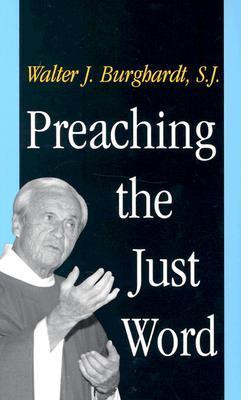
Book cover: Preaching the Just Word

I recently stumbled upon this book, Preaching the Just Word by Walter J. Burghardt, S.J. (i.e., a Jesuit). I took an immediate interest in the book because of the author’s name. My last name is Burkhardt. I found out a couple years ago that my paternal grandfather was actually born Burghardt, he started spelling his name with a K instead of G in high school or in his early 20’s – possibly to differentiate himself from his father and/or siblings because there had been multiple levels of “falling out” within the family…. So when I found this book and learned that there had been a prominent theologian named Burghardt (not a common name!), I hoped that I might be distantly related to the author! As it turns out, Walter Burghardt’s parents came to the New York area directly from Poland or Austria in the early 1900’s, whereas my Burghardt relatives moved from Germany to a German enclave in Russia’s Volga River region in the late 1700’s before migrating to the U.S.’s midwest farming region…. So, any unlikely biological connection between me and this book’s author would be very remote. Yet, I decided to read this book.

I am finding this book to be a worthwhile read already, just a few pages in. I’ve always been attracted to the inner mystical aspects of faith (my story is told here). In recent years, I’ve pondered how to attract people to exploring the inner aspects of faith (such as contemplative prayer) in an era that encourages people to live a frenetically outer life and ignore or avoid inward reflection (i.e., “who wants to go inward when this ultimately requires us work through the inner emotional challenges that are an inherent to being human?”). An inner, prayerful relationship with God is necessary to fully and vibrantly being a person of faith – and joyous (“a peace that passeth all understanding!”). Yet, Walter J. Burghardt rightly points out at the beginning of this book that a solely inward faith is wrongly individualistic (a modern-day form of selfishness). A “faith” that is solely focused on a personal relationship with God isn’t fully faith – this would merely be naval-gazing.

Burghardt explains that the ultimate point of the Christian life on earth is to love one another as we love ourselves. We are called to take care of one another in a radically self-sacrificing manner. We are called to live as part of an interwoven web of caring, socially connected to one another.

There’s a balance for each of us to be a person of faith: a joy-filled inner prayer life in which God nurtures a personal relationship with us combined with the necessary and just manifestations of this inward prayerful relationship: we become the people God intends us to be and we radically love and serve the people around us.

Kim Burkhardt blogs at A Parish Catechist (and is a member of the Association of Catholic Publishers). Blogging is sustainable via blog readership (i.e. readers/subscribers). If you are a new visitor, it would be great to have you subscribe to follow this blog (thank you!). If you know someone who would like this blog, please share it with them and invite them to subscribe (thank you!).

Book Review: Be healed (Bob Schuchts)

I was given a copy of this book: Be healed – A guide to encountering the powerful love of Jesus in your life (author: Bob Schuchts).

Because the book came to me with a recommendation from someone I respect, I started reading it with positive anticipation. I then got a few pages into the book and wondered, “Is this book along the lines of the old revival meetings in big tents? Can I get through this book?” I set it aside while I read another book.

When I came back to the book, I found that yes – this book resonates, meaninfully. The thrust of this book is such:

  • God loves us and wants us to be healthy and whole.
  • Healing in our lives happens when we allow God to love us. This requires a relationship in which we allow God into our lives.

A book worth reading!

Kim Burkhardt blogs at A Parish Catechist (and a member of the Association of Catholic Publishers). Blogging is sustainable via blog readership (i.e. readers/subscribers). If you are a new visitor, it would be great to have you subscribe to follow this blog (thank you!). If you know someone who would like this blog, please share it with them and invite them to subscribe (thank you!).

“Wordless sighs of the heart”

Candle

In my last post, I mentioned that I am re-reading The Tradition of Catholic Prayer from the Benedictine monks of Saint Meinrad Monastery. In that book, one of the types of prayer they mention is “wordless sighs of the heart.”

I am drawn to this phrase as this is one of the forms of prayer I have found meaningful. How about you?

,,,,,It’s been said, “There can be no faith life without prayer.” It’s also said that we cannot pray and continue sinning; when we really engage in prayer, we find that we have to allow God to change us for the better. Personally, I experience in prayer that God loves us!

True prayer goes beyond mere statements or superficial monologues directed in God’s direction. True prayer is dialogue, meaningful communication, presence. A “wordless sigh of the heart,” for example, is us opening ourselves bare before God.

How often does human prayer involve allowing our innermost selves to be fully transparent before God? Such vulnerability is a real interaction. While God certainly knows our hearts – God made us and knows us – it’s also true that we have free will. God doesn’t force us to into relationship; it’s up to us whether we are willing to be fully present before God.

When we aren’t in active relationship with God, the Holy Spirit occasionally knocks on our heart’s door; it’s up to us whether we respond to such promptings. We can also open our heart’s door to God by taking the initiative ourselves to communicate – God will show up when invited in. Sometimes, we feel God’s presence in prayer (I have!); other times, God may work “under the surface” in ways that we don’t observe; God working to change us “under our radar” is what John of the Cross wrote about in his book Dark Night of the Soul (“Dark Night” being a period of inner transition that isn’t fully transparent to us, rather than necessarily being a depressive period!).

There are many forms of prayer in which we have an active relationship with God. Contemplative prayer (for example, visit the network of Contemplative Outreach) is one way, being engaged while at church is another way – as aremeditative prayers such as praying the rosary, talking to God, heartfelt intercessions, prayers of praise (including music)……… What makes prayer meaningful is that we pray in a way that makes it relational. There are as many ways to pray as there are people!

Interested in learning more about prayer? Check out A Parish Catechist’s previous blog post, “How to Pray.” Also, find info here about A Parish Catechist’s Saturday morning Zoom calls about prayer.

Kim Burkhardt blogs at A Parish Catechist and The Books of the Ages (and a member of the Association of Catholic Publishers). Blogging is sustainable via blog readership (i.e. readers/subscribers). If you are a new visitor, it would be great to have you subscribe to follow this blog (thank you!). If you know someone who would like this blog, please share it with them and invite them to subscribe (thank you!). Also, your support ($$) to help sustain this blog is welcome.

The Tradition of Catholic Prayer (book review, reflections, invite)

Book The Tradition of Catholic Prayer

I recently started re-reading The Tradition of Catholic Prayer from the Benedictine monks of Saint Meinrad Monastery (I have a shelf dedicated to faith books that I return to re-read periodically). When we want to read about prayer, one of the natural places to turn is books written monks!

The depth and breadth of this book is summarized well on the book’s back cover, beginning with the following sentence: “Catholics have a rich and ancient prayer tradition that informs contemporary practice.” No wonder that people looking to deepen their prayer life look – among other places – to the Catholic Church. The variety of Catholic prayer experience and the historical context for this “rich and ancient prayer tradition” are covered engagingly in this very readable book. It’s worth a read for anyone looking to deepen their prayer life; it has helped nourish my ever-present hunger to sustain a rich and deep prayer life. I have been getting copies of this book into the hands of several people each year in recent years…..

A couple passages from this book and my reflections upon them:

  • “….the prayer of real people over the centuries….[who] opened their hearts and minds to God in prayer and came away changed by the living God whom they encountered” (page XI).” I have heard two sayings: “There can be no faith life without prayer” and “Prayer is a relationship (i.e., a relationship between the pray-er and God).” When we actively engage in prayer, we do open our hearts and minds to God; an encounter with “the living God” does change us. We can’t help but be changed by an encounter with God. I experienced as a result of an encounter with God in 2016 – after having heard it said in church innumerable times – that God loves me.

  • “As Benedictines [the monks who wrote this book] they practice prayer day in and day out, with their brothers in choir, alone in their cells, using formal rites and wordless sighs of the heart” (page XII). There are as many ways to pray and encounter God as there are people who pray – each of us is different and will therefore have our own relationship with God. Personally, my deepest experience of praying to or toward God – in addition to resting in God’s presence when God’s grace comes my direction – happens in “wordless sighs of the heart.” God doesn’t need the sentences and grammar of humanly-constructed language to receive what’s inside of us. Simply presenting oneself to God – in full inner transparency – is the prayer that I find most direct, prayerful, engaging, productive.

Daily prayer is transformative. Wondering how to pray? Check out this previous post on approaches to prayer. Also, attend our Saturday morning Zoom sessions about prayer (info here). Wishing you all the best in deepening your prayer life….

Kim Burkhardt blogs at A Parish Catechist and The Books of the Ages (and a member of the Association of Catholic Publishers). Blogging is sustainable via blog readership (i.e. readers/subscribers). If you are a new visitor, it would be great to have you subscribe to follow this blog (thank you!). If you know someone who would like this blog, please share it with them and invite them to subscribe (thank you!). Also, your support ($$) to help sustain this blog is welcome.

Fear-and-faith or fear-vs-faith?

When I was ten years old, we were playing dodge ball at school on a December afternoon.  I woke up in the hospital the next morning with a concussion and hairline skull fracture.

A month later, after physically recovering, I cued up to play dodge ball again.  A classmate who was cued up next to me said, “Kim, you don’t have play.”  In other words, “We know what happened to you.  You don’t have to prove anything to us.”  No, actually, I did need to play.  I needed to not end up afraid of a game that landed me in the hospital.  So, I played several times until I was satisfied that I wasn’t afraid of dodge ball.  I then gave up the game, having discovered that I had lost interest.

There were, however, other facets to fear stemming from that afternoon game of ball. Several years later, I happened upon a red ball of the fateful dodge ball type. Upon seeing that red ball, my stomach instantly tied up with fear. It hadn’t occurred to me at age ten that I needed to work through fear of the red ball; later, it took me too long to work through the lingering fear of that ball. Another facet of fear from that game was a social fear. I had been friends with the classmate who threw the dodge ball that had hit me in the head. He and I were socially awkward children. When I returned to school six days after landing in the hospital, I naturally looked around the school campus for him. I spotted him alone, navigating the playground. He, myself, and the likely the whole school knew that he had thrown the ball. Had his older brother told their mother about what happened at school? He and I – two awkward kids – never spoke again, apart from one awkward “hello” in the hallway during high school. On my end, I was racked with guilt. My concussion was my fault; I had gotten distracted watching another group of kids play hopscotch instead of paying attention to the ball that I should have dodged. But, I didn’t know how to talk to my classmate. He didn’t know how to talk to me. A friendship ended. If his mother found out what had happened at school, he may have been blamed for knocking a girl unconscious. ….When my mother and I discussed the dodge ball game in the days following the event, she blamed neither me nor the child who threw the ball – her view was that the school staff should have prevented the injury (she said so the school principal the day after the dodge ball game)…..

So much fear from that situation. My potential fear afterward of a game. My fear of red textured balls. Social anxiety for two children. My mother’s fear when the doctor spoke about the possibility of me ending up in a coma. At least some of these fears were understandable. Yet, the ending of a childhood friendship could have been prevented if the other child and I could have figured out how to talk to one another. Or, if the adults around us – teachers, parents – had perhaps thought to make sure that there wasn’t any lingering tension between the two of us.

The vast majority of us live with fear. Fear of all kinds of things. Some fears are understandable, even reasonable (fear of getting run over by an oncoming vehicle, for example). Too often, we allow fear to immobilize us.

Fear has consequences. Friendships ended, opportunities lost, lives stilted. Far too often, we don’t fully live because we allow our fears to hinder us. “I couldn’t take that job, I couldn’t try that new thing, I couldn’t learn to overcome X or Y obstacle, I couldn’t deal with A or B emotional issue, resolve a matter with that person…. How many ways do you allow fear to keep you from fully living your best life? How many regrets do you have because you allowed fear to hold you back?

Perfect love casts out all fear (1 John 4:18). I heard this any number of times over the years. This began to make sense after I returned to church in 2016. My return to church involved a re-conversion experience told here. In that re-conversion experience, I experienced that God loves me. In the time that followed, a person of faith took the time to care. When we are in a place of love, fear fades.

Decades after the dodge ball game (this week!), I was at a grocery store and saw red textured balls in the children’s toy section. Less stomach knotting when I see these red textured balls now, but still an instant memory of a dodge ball game on a school playground. And, the instant memory of a lost friend who now lives in another state. I know he’s living in another state because I looked him several years ago – thinking then that I should phone him. I had thought through the potential phone call when I looked him up several years ago – he would likely see my name on call display when I would call, likely invoking a reaction on his end. If he answered the phone, I would start the conversation by saying, “I am sorry.” He would know what I was sorry for. I would then remark, “It was my fault.” Beyond my introduction, I would then let him talk. I would talk only enough to keep the conversation going, if he was at a loss for words, with the goal of healing an old emotional wound…..

Yesterday afternoon, I looked him up again. Found what appeared to be a current phone number. Waited until he would likely be home from work, called the phone number intending to attempt to finally clear the air. A turning stomach when I dialed the number. Earlier in the day, I was hoping for reconciliation. When I actually dialed the number, I was unfortunately relieved to discover that the phone number was disconnected (“Upon dialing the number, I am nervous to talk to him. Can an old hurt actually be resolved decades later? Does he even want to hear from me after all this time? Is my attempted phone call to him self-serving?”)….. If circumstances allow us to cross paths again (say, a high school reunion), I am now ready to talk to him.

Some say that courage is acting even when we are afraid. Sure. There’s also more available to us, beyond our own courage. We know there are times when we don’t conjure up courage, when we detrimentally stay in fear.

Staying in fear is not trusting in God. If we allow fear to keep us in fear, then we believe – or resign ourselves to believing – that what we fear has more control over us than God can conquer. Feeling that the things we fear are bigger than God’s ability to lead us out of what scares us is not living in faith, no matter how faithful we might otherwise want to believe ourselves to be.

How willing are you to move beyond fear? If you might be willing to move beyond your fears that you allow to hinder your life (in whatever ways), try surrendering. Allow God to resolve your situation(s) and your fears. This is an act of faith, requiring a trusting relationship with God (there’s going to be prayer involved!). This might also involve a conversation with people in your life (“Hey, here’s a fear in my life…..I’m going to see about getting past this fear…..”).

God loves us. When we allow God’s love to be present to us, perfect love casts out fear.

Kim Burkhardt blogs at A Parish Catechist and The Books of the Ages (and a member of the Association of Catholic Publishers). If you are a new visitor, it would be great to have you follow this blog (thank you!). If you know someone who would like this blog, please share it with them (thank you!). Also, your support ($$) to help sustain this blog is welcome.

Living faith: challenging, rewarding, becoming who we should be

Seattle Sunset

We occasionally meet someone who has clearly become the person they were meant to be. I know such a person right now – aspiring to be like them helps push me forward in living my faith, to put faith concepts into practice.

Truly being a person of faith isn’t merely about sitting in a pew on Sundays.

Certainly, sitting in a pew is part of “showing up.” The pews are part of where we learn – a gateway into faith, so to speak.

Whether we are truly living our faith is about whether we engage when attending church combined with what we do outside of church.

This was articulated well by Bishop Frank Schuster (Seattle): “God doesn’t want to be an app that we pull up occasionally. Rather, God wants to be our operating system that runs our lives.”

What does it mean to have God be the operating system that runs our lives? Simply put, God is only going to be the operating system that runs our lives when we assent to allow this.

Assenting to allow God be our operating system means:

  • Learning about God and faith, to the limited degree that we can (another Seattle-area priest, Fr. Tim Clark, verbally observed that our efforts to understand God and describe God really only “get around the edges…. Think of God as a circle, with our efforts to understand God and describe God as sometimes touching some parts of that circle).
  • Assenting that it’s God who is the ultimate reality, that we are junior parties to a relationship with God, that we are meant to follow God’s lead.
  • Developing a prayer-centered relationship with God. Just as our relationships with people require communication and social interaction, having a relationship with God requires communication and social interaction – which happens in prayer. More on prayer here.
  • Truly letting God into our hearts. “It is no longer I, but God who lives in me” (Galatians 2:20). We often don’t do such a great job of transforming our lives on our own. Allowing God to shape us is crucial to becoming the people we are meant to be.
  • Loving the people around us. Christ was asked, which of the commandments is greatest? He responded in Matthew 22:34-40: “The greatest commandments are…love the Lord your God….and….love your neighbor as you love yourself.”
  • “Let all that you do be done in love” (1 Galatians 16:14). There’s a lot to unpack here. If we hold up everything we think and do to this standard, we can spend our entire lives getting closer to living the loving lives we are meant to live.

Interested in an improved prayer life? Reminder: faith sharing groups about our prayer lives are starting on Zoom with A Parish Catechist on Saturday, July 20 (8:00 am, Pacific Time). More info here (including a Zoom link) – we would love to have you join in!

Kim Burkhardt blogs at A Parish Catechist and The Books of the Ages (and a member of the Association of Catholic Publishers). If you are a new visitor, it would be great to have you follow this blog (thank you!). If you know someone who would like this blog, please share it with them (thank you!). Also, your support ($$) to help sustain this blog is welcome.