The Hermitage Within (an important location!)
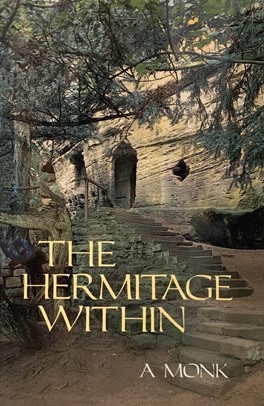
Book and Topic: The Hermitage Within
The Hermitage Within

I was looking up a url link to another book I am currently reading to prepare a book review; while looking up that other book, I happily came across the book The Hermitage Within on Liturgical Press’s website (I read a lot of books by Liturgical Press – they have great books!).

I wish I had thought of this phrase “The Hermitage Within” and had chosen this title as the name for my blog. This phrase gets to the heart of what I want to convey in this blog….

Liturgical Press summarizes this book with articulation I’ve been seeking to describe about people’s inner experience: “Not everyone can, or should, live as a hermit. Yet all Christians need an inner hermitage, a place apart where we come face-to-face with our true selves, and listen to the still small voice of God. It is a place of silence, of fear and fascination, of anguish and grace. The writer of this profound yet simple volume encourages us to find our own inner hermitage—a place of calm and contemplation, apart from the demands of the modern world, a place so silent that we can hear God. The desert, the mountain, and the temple provide the focus of the anonymous author’s reflections. He meditates on the wilderness experiences of such biblical persons as Jesus, John the Baptist, and Mary Magdalen. He considers the place held in the Christian story by Mount Sinai, the Mount of Olives, and Calvary. He ponders the idea of temples, using such images as our inner temple and Christ the temple, the foundation of the Church.”

I encourage everyone to connect with and cultivate regular time spent in your inner hermitage – such time can and should be nourishing. Western culture largely encourages us to be outwardly focused….. Sometimes it can be tempting to avoid the challenges of encountering the difficult aspects of our inner experience. Yet we must encounter these difficult aspects of our own inner experience, wrestle with these aspects of our experience, and surrender this to God’s healing grace. Further, there is much richness available to us within our own inner hermitage. It is in our own inner hermitage that we experience both the essence of our own self and a relationship with the divine. Yes, our own inner hermitage is an important place where we can “allow God in” so God can foster God’s healing grace in our lives.

Daily time spent alone in our own inner hermitage is important for encountering and cultivating those aspects of our life experience that can only be experienced by going inward. Going inward is an opportunity to experience rich vibrancy. For more of my reflections on our inner hermitage, visit my previous post Geography of Grace.

Kim Burkhardt blogs at A Parish Catechist. If you are a new visitor, it would be great to have you subscribe to follow this blog (it’s free – thank you!). If you know someone who would like this blog, please share it with them and invite them to subscribe (thank you!).

Book Review: Ars Celebrandi

Book
Ars Celebrandi: Celebrating and Concelebrating Mass

This book, written for priests to inspire artful presiding at mass, brings to life the nuts and bolts of how the Catholic mass brings liturgy – the work of the people – is celebrated. For the non-ordained among us, Ars Celebrandi: Celebrating and Concelebrating Mass provides insight into how the liturgy is designed to invigorate the faith of the faithful.

In practical terms, this book picks up where the General Instruction of the Roman Missal (the “GIRM”) ends….. The GIRM is the instruction manual of “how to do a Catholic mass,” whereas Ars Celebrandi gets into the art of how to preside.

Two examples of this book’s insights come from the foreward of Ars Celebrandi (written by Bishop Mark Seitz):

“The liturgy is the action of the entire people of God who are being more perfectly formed into the Body of Christ.  The Second Vatican Council’s seminal teaching that the people of God are called to full, conscious, and active participation is based upon this fundamental recognition.”

“The liturgy, as we know,  is a language and a certain style of communication that comes down to us from the ages but is also constantly adapting under the guidance of the Spirit in every age.  It a language of signs and symbols that are read universally by people in the church.  To be sure, there are regional and cultural aspects that are rightly represented as local communities worship, but these are secondary to the expressions that unite us across times and places.”

Then, we lay readers learn in this book about the complexity of presiding at church services. For example:

“[Presiding at a liturgy] involve a marriage of books and ministers. The liturgical norms [i.e., what is suppose to be done] encounter a real-time relationship with the individual persons ordained to carry them out….The relationship presumes that priests know the liturgical norms. However, the rules are complex. The books detailing them are many. Some laws keep changing….Furthermore, not every aspect of liturgy is prescribed. When presiding, a typical priest is suppose to do certain things, is free to do certain other things, and takes freedom to do even more….” [Subsequent paragraphs delve into specific examples of these “certain things” and “certain other things.}

Reading this book is of interest for we lay people in that we become more observant of the nuts and bolts of what happens at church. A book worth reading.

Kim Burkhardt blogs at A Parish Catechist. If you are a new visitor, it would be great to have you subscribe to follow this blog (it’s free – thank you!). If you know someone who would like this blog, please share it with them and invite them to subscribe (thank you!).
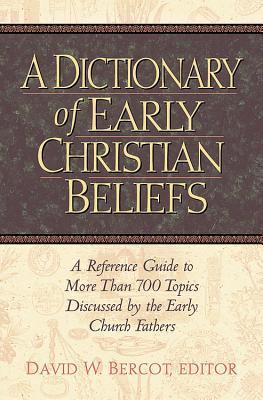
Book Review: Dictionary of Early Christian Beliefs

Dictionary: Early Christian Beliefs

There was a time when I would have read this reference book from cover to cover (I am among the readers who believe that when I read a book, I should read the entire book…..).

This is a useful, scholarly book to have on one’s bookshelf as a reference to inform one’s study of any number of topics. I am reading some of it now and plan to refer to it on occasion as the reference book it is intended to be.

Christianity is 2,000 years old. In 2024, the majority of us – with the possible exception of those Biblical scholars who specialize in Early Christian Literature – are not going to be familiar with the ins and outs of the topics discussed in the early church. Nor are most of us current on the etymology of what every word meant 2,000 years ago (“dictionary definitions” of words and the cultural context of vocabulary changes over time…).

“Sure,” some will say, “We know what early Christians were talking about. They were talking about Jesus, the resurrection, the gospels, and how to be Christian.” Yes, that’s true. But how exactly did those conversations unfold in Palestine, Greece, Turkey, etc. in, say, the year 75, 125, or 300 AD?

The gospels weren’t written down until several decades after Christ’s death. Jesus said during his lifetime that he would return during “this generation;” thus, it initially seemed unnecessary to Jesus’ contemporaries to write down his life and teachings for future generations…. Eventually, it started to become clear that he wasn’t coming back imminently, so his narrative began to be written for posterity. It then took time for the early church to decide which gospels – from among the gospels that were written down – are canonical (accepted as church doctrine). It wasn’t immediately clear to the early church that “the Bible” was going to include (and only include) Matthew, Mark, Luke, and John.

Likewise, it took time for the early church to develop and “come together” on any number of topics that we recognize today as “Christianity.”

So, precisely which “Christian topics” were under discussion in the early days of Christianity? This book – A Dictionary of Early Christian Beliefs – provides useful insights in to this question. Having this reference on one’s bookshelf can inform our understanding in any number of settings – when studying Sunday’s readings at church, when we want to learn more about a specific aspect of Christianity, when studying church history, etc.

A sampling of several topical entries in this 704-page resource include:

  • Christ, Divinity (how the early church came to understand this one topic gets 25 pages!)
  • Descent into Hades
  • Gifts of the spirit
  • “Keys of the Kingdom”
  • Patriarchs
  • Paul, apostle
  • Prayer
  • Rapture
  • Schism
  • At the end of the book, there are “Quotable quotes from the Early Christians.”

I appreciate having this book on my bookshelf.

Kim Burkhardt blogs at A Parish Catechist and The Books of the Ages (and a member of the Association of Catholic Publishers). If you are a new visitor, it would be great to have you follow this blog (thank you!). If you know someone who would like this blog, please share it with them (thank you!). You can also support this blog by clicking here when you are going to shop on Amazon (that lands A Parish Catechist a commission on Amazon sales).

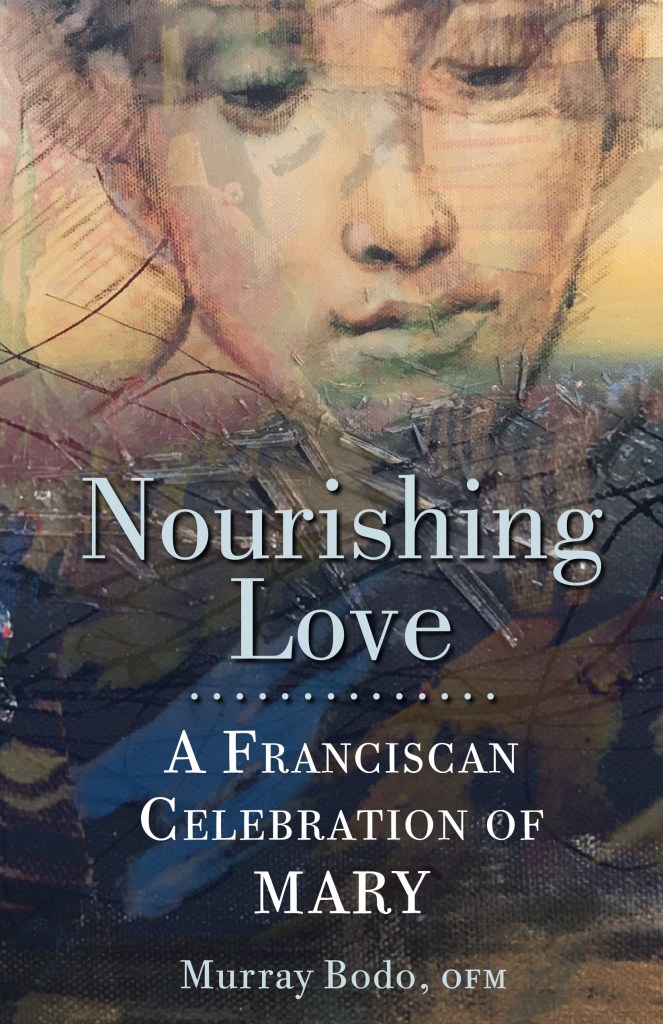
Book Review: Nourishing Love – A Franciscan Celebration of Mary

This book takes readers on a novel way of exploring Mary’s life (no, not a novel). For those of us who tend think of Mary either historically and/or as a saint, this book brings us an additional way to consider Mary.

Franciscan author (and priest) Murray Bodo offers us something similar to that of The Chosen TV series: a conceptual view of what it could have been like living Jesus’ or Mary’s lives – making their day-to-day lives more tangible for us than what many of us consider when reading the Gospels. Both this book and The Chosen contain historical aspects of the lives of Mary and Jesus (respectively). Reading historical accounts alone – however – don’t necessarily take us into thinking about the daily aspects what they did and felt as people.

In this book, Nourishing Love, there are reflections that take us to ponder, “what thoughts did Mary ponder?” After Jesus offered her and John to one another as mother-and-son, what conversations Mary and John have about Jesus? Possibly ponderings by Mary and possible – plausible – conversations between Mary and John are presented here to bring us into considering their lives on a very human level.

At one point in the book, the author writes, “Since Jesus was both God and man, he had his mother’s genes and was deeply influenced genetically, as most of us are, by his mother. He was Mary’s son, prompting us to imagine how Mary herself was in fact revealed in the person of her son.” Hmm….. Did genetics cause Jesus to look like his mother? Did Mary and Jesus share similar voice inflections? Did Jesus maintain some of Mary’s habits once he became an adult (ate the same foods for breakfast, had the same evening routines, etc.)? How much did Mary’s human personality influence Jesus’ human personality? The author of this book observes that the stories Mary told Jesus during his infancy and childhood may have influenced the types of stories Jesus chose to tell as an adult – including the parables he told. How she cared for the people around her could have been socially instructive for the human Jesus.

The way this book is constructed made me think of Ignatian exercises in terms of the creativity brought to subjects of faith. There’s a degree to which I felt uncomfortable with this book – I would more naturally gravitate to an academically-oriented sociological construct/analysis of people’s daily lives in first-century Palestine to get a sense of Mary’s life (that type of book would also be interesting!). Sometimes, though, discomfort is good. Discomfort can challenge us to consider topics in new ways; new perspectives help us grow.

Kim Burkhardt blogs at A Parish Catechist and The Books of the Ages (and a “Content Creator/Individual” member of the Association of Catholic Publishers). If you are a new visitor, it would be great to have you follow this blog (thank you!). If you know someone who would like this blog post, please share it with them (thank you!).