Growing through the seasons of the church year

I have spent time pondering the idea of growing in faith at times that organically or spontaneously occur in our own life cycle (I have experienced that!) or focusing on growing in step with the organized calendar of Christianity’s liturgical seasons.   Really, I don’t think it needs to be an either/or – it can be both/and.  Faith growth that sprouts at our own times – based upon the seasons and circumstances of our own personal lives – sprouts and grows depending upon our own situations.  Our own circumstances are infinitely varied.   With this growth, I like to think of it happening within a phrase I recently came upon – within “The Hermitage Within.” What, though, of faith development that is nurtured by liturgical seasons?

With Pentecost some time behind us, we are well into what the Christian liturgical calendar (for many liturgically-oriented denominations) calls “Ordinary Time” – the times in the year that are not part of Advent, Christmas, Lent, Easter.  Our first period of “Ordinary Time” in the annual liturgical  calendar (the calendar itself starts at the beginning of Advent) is between the Feast of the Baptism of the Lord (after the Christmas season) and the beginning of Lent.  Our second period of Ordinary Time happens between Pentecost and the beginning of Advent.

When we talk of “Ordinary Time” in our liturgical calendar, we are not simply describing “ordinary” time in the sense of “plain” or “a period of nothing special.” Rather, the term “ordinary” comes from the word “ordinal” – meaning numbered/ordered (“1st Week of Ordinary Time,” “2nd week of Ordinary Time,” etc.)

So, what are we – as parishioners – to do with this counted (ordinary) time on our liturgical calendar?    Our personal and communal faith need never be “ordinary” in the sense of “plain,” or “nothing special.”   God loves us and we are adopted daughters and sons of God.   We always have the opportunity to allow God to transform us into the people God intends for us to be – there is absolutely nothing “ordinary” about that!   Such transformation – when we surrender to allowing God to change us – truly is extraordinary.  We absolutely can surrender to this process year-round – including during “Ordinary Time.”

Liturgies – every church service we attend – is designed to help us surrender to this transformative encounter with God.

Looking for a deeper encounter with liturgy when you attend church?  Be fully present – attentive with no distraction.  Pray before church, ask God to help you to fully experience the service.  Get involved in church beyond attending on Sunday.   Volunteer at church – volunteering requires being attentive to what’s happening – a great bonus! Read faith books regularly. In short, be an attentive participant!

Kim Burkhardt blogs at A Parish Catechist. If you are a new visitor, it would be great to have you subscribe to follow this blog (it’s free – thank you!). If you know someone who would like this blog, please share it with them and invite them to subscribe (thank you!).

Book Review: Ars Celebrandi

Book
Ars Celebrandi: Celebrating and Concelebrating Mass

This book, written for priests to inspire artful presiding at mass, brings to life the nuts and bolts of how the Catholic mass brings liturgy – the work of the people – is celebrated. For the non-ordained among us, Ars Celebrandi: Celebrating and Concelebrating Mass provides insight into how the liturgy is designed to invigorate the faith of the faithful.

In practical terms, this book picks up where the General Instruction of the Roman Missal (the “GIRM”) ends….. The GIRM is the instruction manual of “how to do a Catholic mass,” whereas Ars Celebrandi gets into the art of how to preside.

Two examples of this book’s insights come from the foreward of Ars Celebrandi (written by Bishop Mark Seitz):

“The liturgy is the action of the entire people of God who are being more perfectly formed into the Body of Christ.  The Second Vatican Council’s seminal teaching that the people of God are called to full, conscious, and active participation is based upon this fundamental recognition.”

“The liturgy, as we know,  is a language and a certain style of communication that comes down to us from the ages but is also constantly adapting under the guidance of the Spirit in every age.  It a language of signs and symbols that are read universally by people in the church.  To be sure, there are regional and cultural aspects that are rightly represented as local communities worship, but these are secondary to the expressions that unite us across times and places.”

Then, we lay readers learn in this book about the complexity of presiding at church services. For example:

“[Presiding at a liturgy] involve a marriage of books and ministers. The liturgical norms [i.e., what is suppose to be done] encounter a real-time relationship with the individual persons ordained to carry them out….The relationship presumes that priests know the liturgical norms. However, the rules are complex. The books detailing them are many. Some laws keep changing….Furthermore, not every aspect of liturgy is prescribed. When presiding, a typical priest is suppose to do certain things, is free to do certain other things, and takes freedom to do even more….” [Subsequent paragraphs delve into specific examples of these “certain things” and “certain other things.}

Reading this book is of interest for we lay people in that we become more observant of the nuts and bolts of what happens at church. A book worth reading.

Kim Burkhardt blogs at A Parish Catechist. If you are a new visitor, it would be great to have you subscribe to follow this blog (it’s free – thank you!). If you know someone who would like this blog, please share it with them and invite them to subscribe (thank you!).

Book Review: Introduction to Eastern Christian Liturgies

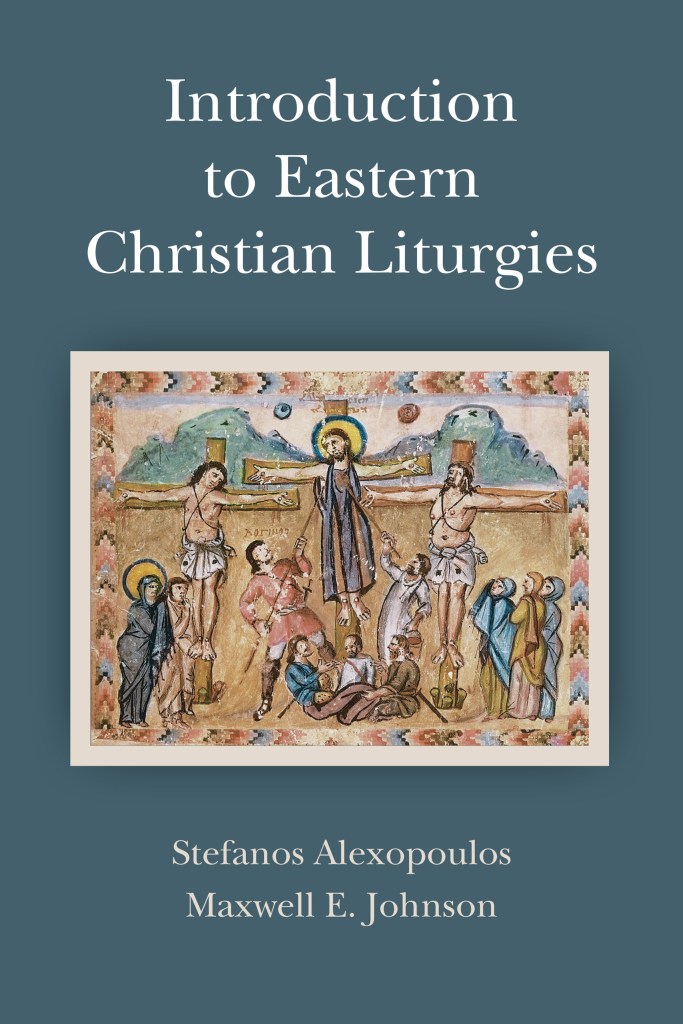
Book: Introduction to Eastern Christian Liturgies

This is an interesting and broadly-written book for anyone interested in the what-and-how of religious services in the various Eastern Orthodox churches – Armenian, Byzantine, Coptic, Ethiopian, Syrian, and Maronite traditions.

This densely-written academic text dives into intricate and comparative detail of many aspects of church services for each of these traditions – including historical developments of each tradition.

In this book, the reader learns:

  • In the early Syrian rite, baptism was viewed as “rebirth to something new” rather than the western view of baptism being our “death, rebirth, and rising with Christ” (pages 21-22).
  • I was surprised to discover that in the early centuries of the Syrian Orthodox tradition, the Syrians considered the Holy Spirit to be “Mother Holy Spirit” – complete with references in liturgical prayers about the Holy Spirit acting as the “womb” of people’s faith (page 23).

This book is worth reading.

Kim Burkhardt blogs at A Parish Catechist (and is a member of the Association of Catholic Publishers). Blogging is sustainable via blog readership (i.e. readers/subscribers). If you are a new visitor, it would be great to have you subscribe to follow this blog (thank you!). If you know someone who would like this blog, please share it with them and invite them to subscribe (thank you!).

Religious liturgical seasons and the faith experiences of individuals

visual display of liturgical seasons

With Christmas just around the corner, I have been pondering how to follow up on my previous post about the liturgical year and our faith journeys as individuals (the image above is a visual representation of Christianity’s liturgical seasons). In my last post, I wrote “On a personal level, Church seasons and religious holidays provide opportunities for us to journey deeper into our faith experience. When we truly engage in the processes provided in the Church’s liturgical calendar, what I have heard called ‘the genius of Christianity’s processes’ brings us into a deeper relationship with God. Our own inner workings are stirred in such a way that our spirituality broadens, deepens, and matures.”

There is a deep spiritual beauty in the flow of the church’s liturgical seasons that stirs us.

There’s also a question of whether one’s faith journey is expected to be organized around the liturgical seasons. Is Advent automatically when we should be prompted toward anticipatory hope (i.e., us looking forward to the Saviour’s birth)? While the established liturgical seasons offer rich faith development opportunities for us, each of us are also experiencing our faith journey at times and in ways that are specific to our own lives. For example, I’ve written about my re-conversion experience here; my re-conversion experience began unexpectedly in October, 2015 – during Ordinary Time. Similarly, I meet people who arrive at churches because they feel compelling faith stirrings that propel them into church pews. In the last couple of years, I have journeyed with several individuals who arrived at churches because they felt stirrings in which God was reorganizing their emotional lives in fruitful and amazing ways. They arrived in churches at times when they felt prompted by the workings of the Holy Spirit – not in accordance with a specific liturgical season.

Journeying with people whose inner lives are being transformed by the Holy Spirit is a blessed journey. Individuals having such experiences can’t be identified by looking for some outer clue (i.e., “look for the person where a specific color shirt standing at X location”). Rather, encountering people having such experiences requires talking with people – often, strangers – and listening to what they have to say (and, being attentive in looking for people having such experiences). People often want to talk about these experiences (I did!). Often, efforts to talk about such experiences can involve clunky or disjointed communication. We are all on our own journey toward a deeper relationship with God and it can be hard to articulate our own person encounter with the divine – especially if someone is new to such experiences. What I am finding is that there are ways to “talk around” such experiences – verbally acknowledge a person’s experience (“I recognize that you are having a profound inner experience”) and being present with the person. Reflectively find ways – even if the ways feel superficial – to compare notes on their and your faith journeys. Communicate joy that a person is experiencing a spiritual transformation.

What matters about liturgical seasons and our individual faith journeys? It matters that each of us be intentional about being on a faith journey. It matters that we respond to promptings of the Holy Spirit (those unexplainable inner promptings that come along occasionally). It matters that we be attentive to our inner experiences and look toward an ever deeper relationship with God (it can be tempting in today’s frenzied world to avoid one’s inner experiences). It matters that we learn to better love God and love our neighbor (putting faith into practical action in the aspects of our lives beyond our own internal experience). Engaging with religious liturgical seasons provides a communal structure for deepening our faith experience and for walking with each other in faith.

Kim Burkhardt blogs at A Parish Catechist (and is a member of the Association of Catholic Publishers). Blogging is sustainable via blog readership (i.e. readers/subscribers). If you are a new visitor, it would be great to have you subscribe to follow this blog (thank you!). If you know someone who would like this blog, please share it with them and invite them to subscribe (thank you!).

Coming soon: a new church year. New step in one’s faith?

visual display of liturgical seasons

Just as the earth has annual weather seasons, schools have academic years, some organizations have fiscal years, and we individuals have seasons in our lives, the church has a liturgical year – with established seasons.

The church year begins at the beginning of Advent – four weeks before Christmas. The six seasons in the liturgical calendar (each having a corresponding liturgical color) are:

  • Advent (purple, with one week of pink)
  • Christmas (white)
  • Lent (again, purple)
  • Triduum (red)
  • Easter (white)
  • Ordinary Time (green)

The church year lays out a calendrical way to walk through important faith themes.

As we approach a new liturgical year – beginning with Advent – on December 1, how is this important for us as individuals? In watching the Church seasons, we learn about religious themes that have been woven together over Christianity’s history. We collectively travel through faith seasons together. On a personal level, Church seasons and religious holidays provide opportunities for us to journey deeper into our faith experience. When we truly engage in the processes provided in the Church’s liturgical calendar, what I have heard called “the genius of Christianity’s processes” brings us into a deeper relationship with God. Our own inner workings are stirred in such a way that our spirituality broadens, deepens, and matures.

As we enter a new Church year on this upcoming First Sunday of Advent, what aspects of faith can you reflect upon this Advent season? Learning more about Church liturgy? Re-committing to a regular prayer life? Surrendering some aspect of your life to being changed – and improved upon – by God? Being kinder to and of more active service to the people around you?

If you would like to connect with Advent at home this year, print out the Advent calendar provided below for daily Advent thoughts, reflections, and tips.

Kim Burkhardt blogs at A Parish Catechist (and is a member of the Association of Catholic Publishers). Blogging is sustainable via blog readership (i.e. readers/subscribers). If you are a new visitor, it would be great to have you subscribe to follow this blog (thank you!). If you know someone who would like this blog, please share it with them and invite them to subscribe (thank you!).

Book Review: Introduction to Christian Worship

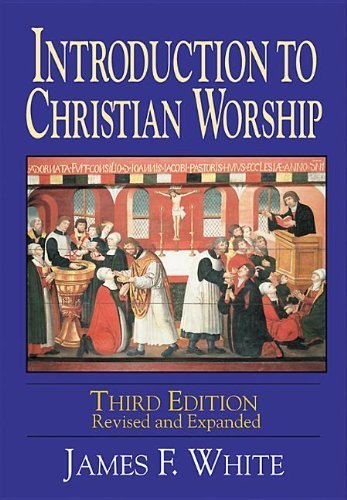
This book – Introduction to Christian Worship (Third Edition) by James F. White – is an academic book elucidating the how-and-why of how Christian church services are organized, how the structure of church services have developed and changed over the centuries (i.e., pastors, liturgists, interested congregants, academics, and religious historians).

This book covers every aspect of the Christian liturgy – both in minutia and comparative details on how (and why) Christian church services (and other aspects of Christian worship such as Christian Initiation, baptism, weddings, and anointing of the sick) are the same across denominations as well as detailed discussion of how various aspects of church liturgy vary among denominations. The history of how church liturgy developed over the centuries is widely covered throughout the book. The wide breadth – and detail – of knowledgeable insight demonstrate many years of comparative religious study by the author (he was, after all, an academic).

Among the very readable insights of this book is an interesting point about the Bible readings that many denominations hear read at church on Sunday (page 75 of the third edition). James White informs readers that the Catholic church developed its’ current cycle of biblical readings read at mass after Vatican II. Many Catholics know of the three-year cycles of readings known as years A, B, C (there is a two-year cycle for the readings at weekday masses); White informs readers that many Protestant denominations also adopted the same reading cycle for weekend services – meaning there is a broad level of uniformity among many denominations of which Bible passages are heard each Sunday (news to me! I knew that several denominations – such as Episcopalians, Anglicans, Presbyterians, perhaps Lutherans and Methodists – read many of the same readings at church on the same calendar as Catholics; this shared practice seems to be more uniform and widespread than I realized. Denominations that read these shared Bible readings each weekend read from “The Lectionary for Mass” for Catholics and “The Common Lectionary” for Protestants). This standardization of readings moved some Protestant pastors away from only reading self-selected Bible passages at church that supported the political views of pastors and/or their congregations.

James F. White’s Introduction to Christian Worship is an informative read for anyone interested in Christian liturgy.

Kim Burkhardt blogs at A Parish Catechist and The Books of the Ages (and a “Content Creator/Individual” member of the Association of Catholic Publishers). If you are a new visitor, it would be great to have you follow this blog (thank you!). If you know someone who would like this blog post, please share it with them (thank you!).

Experiencing the Liturgy of the Mass

Is church attendance defined simply as “something we attend?” Or something in which we are active participants? A form of prayer? How much a person engages in being present at mass depends on the person. Mass meant to be experienced – we are meant to be active participants and pray-ers.

There’s a lot to unpack about participating in mass:

First of all, there’s the concept of being fully present. The intention is for parishioners to enter into the mass as attentive and engaged attendees.

Be on time, pay attention, be engaged. If you don’t feel connected, there is an option of getting involved as a volunteer parishioner (becoming an usher, greeter, lector, etc.).

In addition, there are multiple ways to actively pray at mass. We all verbally recite the prayers of the mass. Beyond that, we can all pray personally during mass as a form of cultivating a relationship with God. God wants to have a relationship with us; relationships require communication. Prayer is a two-way communication in which we communicate our thoughts, feelings, hopes, and needs to God and are also receptive to allowing God to be present to us, with us. Find personal prayer styles that work for you.

Faith is a verb. Faith is something we do – cultivating a relationship with God, allowing God to be present to us, living out our faith by allowing God to turn us into better people, by being good and useful people in the world.

Understanding the Ritual of the Mass

It’s commonly known that the Catholic mass is a ritual and that the ritual has much the same formula – or format – each time we attend mass, with some variations. Some variations are easy to recognize. During the more exceptional times of the liturgical year, mass “ramps up” during Advent, Christmas, Lent, Easter, etc. (in this post, we are looking at the Latin Rite; the Latin Rite is one of multiple Catholic rites that are in communion with Rome). An Advent wreath is present at mass during the four weeks of Advent (heading into Christmas), with candles being lit at weekend masses (purple candles on three of the weeks, a pink candle the other week). The liturgical colors present at mass (i.e., the colors of banners, the priest’s vestments, and the like) change throughout the year, corresponding to the colors specified for each liturgical season (green for Ordinary Time, etc.). The Gloria and Alleluia are not sung during Lent. There are several Holy Days of Obligation throughout the year on which days Catholics are expected to attend mass and there are feast days for various saints throughout the year.

It’s less widely considered that there are sequentially specified “principal parts” of a Catholic mass that are referred to by those who prepare and deliver the mass (priests, liturgists, sacristans, etc.). There are four principal parts of the mass, to be precise – each spelled out as “The Order of the Mass.”

The Order of the Mass begins with the Introductory Rites (the priest’s procession into the church, the greeting, the penitential act, Glory to God, the collect). Thus begins the mass.

Then the mass moves into the first of the two main parts of the mass – The Liturgy of the Word. During the Liturgy of the Word, readings are read, the homily is delivered, parishioners participate in the Profession of Faith, and we have the Prayers of the Faithful.

During most of the calendar year, the three readings during the Liturgy of the Word at weekend masses come – in sequential order – from the Old Testament (read by parishioners who are lectors), the New Testament (also read by a lector), and a Gospel reading (read by a priest or deacon). In the weeks between Easter and Pentecost – commemorating the time between Christ’s resurrection and his Pentecost visit to the Apostles when he instructed them to go forth, carrying his message – both the first and second readings come from the Acts of the Apostles (New Testament) so as to focus on the mission of the Apostles to build the Church.

There is a three-year cycle of assigned readings for weekend masses and a two-year cycle for assigned readings for weekday masses; these cycles (Years A, B, and C) are repeated on an ongoing basis so that people who attend mass regularly hear the major themes of the Bible read over time.

The homily brings the message of the readings into our lives as prepared and delivered by the priest or deacon. The style and content of homilies vary from priest to priest, deacon to deacon.

Following the Liturgy of the Word, the mass moves into the second of the two main parts of the mass – the Liturgy of the Eucharist……..

The Liturgy of the Eucharist is the preparation for and the receiving of the Eucharist (Communion). Receiving the Eucharist is “the source and summit of our faith” – from which we derive and achieve the high point of our faith (physically receiving Jesus is immediate intimacy of receiving Christ within us). This part of the mass begins with the unconsecrated bread and wine being brought to the altar. Then the priest proceeds into consecrating the bread and wine. Consecration is when the bread and wine become the body and blood of Christ. Once the bread and wine are consecrated, the host and wine remain the body and blood of Christ. Sacristans – the parishioners who help set up before mass – set out an amount of bread (hosts) and wine thought to be enough for the number of people expected to attend mass, with a few additional communion hosts kept to be held in the Tabernacle for the next mass (DID YOU KNOW: the Tabernacle always has communion hosts – the physical presence of Christ – present every day of the year except Good Friday. Good Friday, heading into Easter, is the anniversary of Christ’s crucifixion, so on that day we don’t keep hosts recognizing Christ’s alive status in the Tabernacle). After the bread and wine are consecrated, mass attendees receive the Eucharist during the portion of the mass called The Communion Rite (i.e., the source and summit of our faith). After everyone “receives” (i.e., receives the Eucharist), remaining hosts are placed in the Tabernacle and any remaining wine/blood is consumed by the priest.

Finally, the fourth and final portion of the mass is the Concluding Rites – announcements, blessings, and dismissal. The dismissal is when the priest (with any special guests, lectors , and altar servers) process out of the sanctuary and nave of the church (i.e., exit the church).

Did you know? Priests, deacons, support staff, and volunteers involved in the mass have access to publications on the various aspects of the mass – publications such as the General Instruction of the Roman Missal (GIRM) and liturgical texts kept in the parish sacristy.

More about The Order of the Mass can be read on the USCCB website here (the U.S. Conference of Catholic Bishops).

Kim Burkhardt blogs at A Parish Catechist and The Books of the Ages. If you are a new visitor, it would be great to have you follow this blog (thank you!). If you know someone who would like this blog post, please share it with them (thank you!).