Redemption, hope, Lent…..
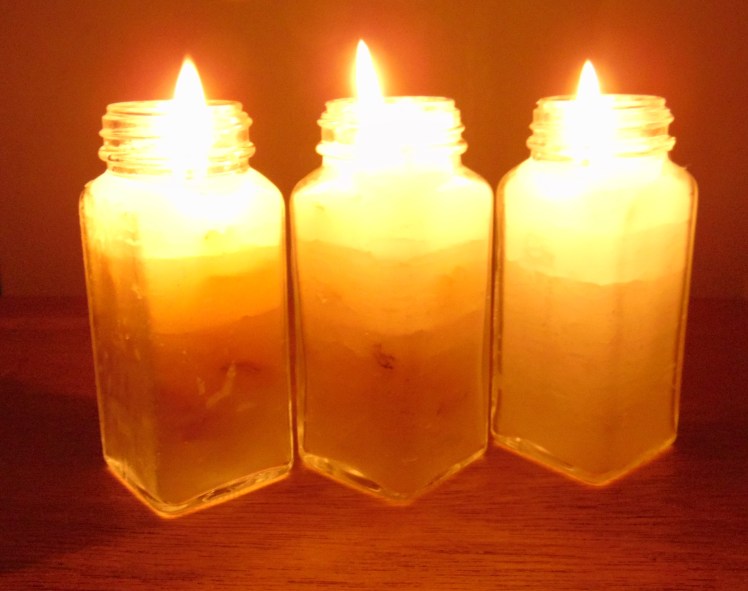
Trinity candles

When I had a re-conversion experience in 2016 (that story is told here), I had a profound experience of being loved by God. Love brings about hope.

More recently, in my master’s in theology program we’ve been reading through the first five books of the Hebrew Bible (the Torah/Pentateuch), the four canonical gospels, and the Acts of the Apostles. In reading the gospels of Mark and Matthew, I started getting discouraged. I thought, “Such a high degree of righteousness, self-sacrifice, etc. is required to enter the Kingdom of Heaven. I’ll never make it.” That discouragement is unnecessary, of course, because it is possible for us to do what’s presented to us – but I wasn’t seeing that. Further, I normally don’t take an interest in the future “Kingdom of Heaven” – I normally take the attitude that “Life is challenging. Forget about later – I need God now.” Then, someone changed my recent perspective yesterday – a reminder that our faith journey is meant to be done in community. We learn and apply charity in community. We learn to be faithful in community. Faith and spirituality are not a “me and God” endeavor – it’s socially about “us together in a faith community.”

What was said yesterday to change my perspective about feeling discouraged (“I’ll never make it to heaven – I’m not up for this righteousness business”)? A priest asked me about my theological studies. I told him, “We are trudging through the ‘who begat who’ in the Old Testament.'” He replied, “That’s important information, actually. You’ll notice that in Jesus’ lineage, it was mostly men who are listed in Genesis. But four of Jesus’ female ancestors are specifically listed.” That had also come up in class….. He reminded me, “All four of those women were pivotal. And, each of them did things that weren’t righteous. Jesus’ ancestors weren’t perfect – we don’t have to be either” [I forget how he worded this – something to the effect of these four women not being righteous].

All four of these women experienced some king of vulnerability. And, each of them did something unrighteous. Without them, there wouldn’t have been the historical lineage that brought us Jesus Christ.

One of the resources we’re using at school, Bible Odyssey, has this to say about these four women: “Tamar, daughter-in-law of Judah, was twice-widowed and childless. In Gen 38, she disguised herself, seduced her father-in-law, and conceived twin sons. Judah accused her of promiscuity, but ultimately even he recognized her as righteous. Rahab was a Canaanite prostitute, who was approached by Israelite spies (Josh 2, 6). By securing their safety she secured a future for herself and her family among the Israelites. Ruth was a Moabite and a childless widow (Ruth 1–4). She provided for herself and her mother-in-law by spending the night with their relative, Boaz, on the threshing floor. They married, and, with him, she carried on the family line. Bathsheba was already married when King David ordered for her to be brought to him. When she conceived David’s child, he had her husband killed and married her. Their first child died, but Bathsheba later ensured a place for herself and her family through their second son, Solomon (2 Sam 11–12; 1 Kgs 1).”

This comes back to what Christ said during his time on earth. “I didn’t come for the righteous. Those who are well don’t need a doctor. I came for sinners – the likes of the tax collectors and the prostitutes.”

Even Jesus’ ancestors did things that we wouldn’t want mentioned in the newspaper if we did those same things today. Yikes – Tamar, Rahab, Ruth, and Bathsheba (Jesus’ ancestors) didn’t just get a current events news story for their actions that would be forgotten in weeks or years. Their activities are in print for all future generations to read! Yet, we got Jesus Christ among their future descendants…..

Hmmm….. As for my earlier comment about “Forget about the future Kingdom of Heaven, I need God now.” We can have good lives today. Christ actually intends for our current social fabric – and our own lives and the lives of the people around us – to better than the difficulties that we often experience. If we truly apply the “Be-Attitudes” that we heard about in the Sunday readings a couple weeks ago, we can each contribute to a better world today.

Ash Wednesday is coming up next week. For Lent this year, I’m going to continue giving up something that I’ve recently started working to give up. I’m giving up continued frustration over a previous life difficulty that I neither caused nor had any control over. “Forgive us our trespasses as we forgive those who trespass against us.” It’s up to us to contribute to the world we want to live in. It is up to us to do “the heavy lifting.”

What are you giving up for Lent this year? In other words, what have you got to gain this year?

Kim Burkhardt blogs about faith at The Hermitage Within. Thank you for reading this faith blog and for sharing it with your friends. While you are here, please feel welcome to provide support to sustain this blog ($$).

Christianity: “A Path”

Nature path
Faith Path

In her book Centering Prayer and Inner Awakening, Cynthia Bourgeault tells a story about centering prayer guru Thomas Keating when he was the abbot of St. Joseph’s Abbey in Spenser, Massachusetts. “A few miles down the road from the abbey, a former Catholic retreat house had closed down and had been sold to a Buddhist group. When the facility reopened as the Insight Meditation Center….teaching the path of Vipassana…. suddenly the monks at St. Joseph’s began to notice an increase of people, almost inevitably young people, stopping by the monastery guest house asking for directions about how to get to the Insight Meditation Center! Dismayed but intrigued, Keating began to engage some of these young pilgrims in dialogue. What was it they were seeking at the Insight Meditation Center? To which the response nearly always came, in the vernacular of the Sixties, ‘A path, man! We’re seeking a Path!’ Discovering that the vast majority of these seekers had been raised as Christians, he asked the sixty-four-dollar question – ‘So, why don’t you search for a path within your own tradition?’ To which he received the genuinely astonished answer: ‘Christianity has a path?’ St. Joseph Monastery’s response was to develop the technique of Centering Prayer (which Keating then popularized when he was at Snowmass, Colorado) to help people in today’s modern context find Christianity’s long tradition of contemplative prayer.

It seems today – in the 2020’s – that there still seems to be a frequent lack of recognition that Christianity has “a path.”

What of that path? How do we get onto that “path?”

I tell some of my own journey to that path here. Having grown up Catholic and then having left for twenty years, I had a profound re-conversion experience in 2016. That re-conversion experience began when I attended a Friday evening mass for social reasons, vowing that “I wasn’t going to return to Catholicism” – a gift of God’s presence proved me wrong!

In the period following that Friday evening mass, I was graced with an unexpected period of contemplative prayer – I simply rested in God’s presence as I experienced God loving me. Emotional healing from a challenging period began as I reconnectws with God and church, God-via-church-and-prayer.

In the years since the autumn of 2016, I have slowly discovered Christianity’s “path.” Surrender to allowing God’s presence to work in our lives. “Love God and love your neighbor” (Matthew 22::36-40) (I often find it easier to love God “who is love” than to love sometimes-challenging people, while some people find it easier to “love the people we can see” than to love the God we can’t see). Accept that God’s will for us is “a narrow path” that’s hard to follow, but ultimately freeing. “Again I tell you, it is easier for a camel to pass through the eye of a needle than for someone who is rich to enter the kingdom of God” (Matthew 19:24) [Jesus goes on to say that this task is impossible for humans alone, but that all things are possible in God} [This “passing through the eye of a needle is said to be a metaphor referring to a “narrow entrance” at Jerusalem’s gate whereby a camel would have to kneel at night to pass through the narrow passage when the city’s gate had been closed for the night for security.]. Participate in having the parts of ourselves that aren’t in alignment with God’s will for us slowly “cut away” (God is the principal actor in this “cutting away,” but we can participate in allowing this process to unfold and doing what we can). As we grow in all of these things, we learn of “It is no longer I, but God who lives in me” (Galatians 2:20). We start encountering the Catholic “both/and” of having a taste of “heaven on earth” (i.e., heaven later, but we get a taste of it now); In thinking about heaven, I tell people that “I need God now.” In living God’s will for us, there’s freedom, joy, peace among people.

God loves us. And, yes, Christianity has “a path.”

Kim Burkhardt blogs about faith at The Hermitage Within. Thank you for reading this faith blog and for sharing it with your friends. While you are here, please feel welcome to provide support to sustain this blog ($$).

Surrendering to God transforming us

I was in high school when I was first introduced to surrendering to allowing God to change us. At the time, I was challenged by a particular type of life difficulty. I surrendered that difficulty to God and asked for assistance in having my life change. How I was living in the world did improve. I also developed the rudiments of an expanded prayer life. I still tell the story about my prayer life expanding at that time – I, as an adolescent, grew beyond the basics of childhood prayer (“Now I lay me down to sleep” and literal conceptions of Jesus sitting on a physical throne in the clouds) and saw my prayer life expand incrementally toward more of an interactional relationship with God.

In recent years, I surrendered again to allowing God be present in my life. This time, the surrender was broader. “God change me in whatever ways you want me to be different.” Again, my life is changing. I am experiencing emotional reorganizations that I couldn’t have anticipated – transformations beyond what I would have brought about on my own. More freedom, increased life functionality, some measure of more contentment. Growing commitment to being useful to other people. This came about from a prompting of the Holy Spirit – a moment at a church service in October, 2016 when I felt – and responded to – an invitation to allow God to be more fully present in my life (that story is told here).

God wants to be present in our lives. God wants us to be the people we are meant to be, to be fully alive. In the words of Timothy Radcliffe, “We are all radically incomplete. And, we need each other.” We, with our human limitations, need God’s movement in our lives to become the people who we are meant to be. We move toward being complete when we allow God to be the center of our lives and to act in changing us. Acts 17:28: For in God we live and move and have our being.

Allowing God to become the center of our lives, we cease to be the center of our lives. Ceasing to be the center of our live can feel threatening (“But what about me? I’m all I’ve got?”). It turns out that when we step out of the way, God brings freedom into our lives – we become the people we are meant to be and we become more useful in the world. God loves us!

Kim Burkhardt blogs at A Parish Catechist (and is a member of the Association of Catholic Publishers). Blogging is sustainable via blog readership (i.e. readers/subscribers). If you are a new visitor, it would be great to have you subscribe to follow this blog (thank you!). If you know someone who would like this blog, please share it with them and invite them to subscribe (thank you!).

Our perception of God, God’s love for us, our responsibility

A pastor told me a few months ago that humanity’s effort to describe God can be compared to God as being like a circle with our limited human efforts to describe God merely approaching various touching points of the circle; often, he said, without our descriptions actually touching the circle – let alone ever grasping the entire circle. We shouldn’t fret about the imperfections of our descriptions. Rather, he indicated, we should continue with our efforts as best we can.

I thought of that description when I took the photo (above) – an orange sunset shining through window shades onto my living room wall. Left to ourselves, we live in some measure of darkness (Fr. Timothy Radcliffe: “We are all radically incomplete”). At the same time, God loves us. To the degree that we allow God into our lives, we experience some of the light of God’s love for us (due to our finite capacity, we probably only sense some of that love, as if filtered sunlight making its’ way through the shades)!

Prayer, of course, is a significant aspect of how we allow God into our lives – how we experience a relationship with our God who loves us. Prayer is not meant to be a uni-directional monologue of us sending our thoughts, feelings, requests, or rote prayers to a Santa-God. The fullness of prayer is one in which we engage in a two-way, in-person relationship with our parent-God who wants to have a loving, engaging relationship with us and who wants to help us become the people we are meant to be.

In addition to God loving us, it is our job to love one another and to do what we can to shed light into the lives of our fellow humans (see the passage below from Matthew 22:34-40). Martin Luther King said, “Life’s most persistent and urgent question: What are you doing for others?” Loving other people and taking care of God’s children is what we are here to do.

The “60/40” plan prescribed for marriages is a principle that all of us can actually apply in our relationships with everyone so as to be the loving people we are meant to be. If each of us spends 60% of our time focusing on what we can do to be of service to the people around us and only 40% (or less!!!) of our time thinking about our needs, then everyone wins!

Kim Burkhardt blogs at A Parish Catechist and The Books of the Ages (and a member of the Association of Catholic Publishers). Blogging is sustainable via blog readership (i.e. readers/subscribers). If you are a new visitor, it would be great to have you subscribe to follow this blog (thank you!). If you know someone who would like this blog, please share it with them and invite them to subscribe (thank you!). Also, your support ($$) to help sustain this blog is welcome.

Fear-and-faith or fear-vs-faith?

When I was ten years old, we were playing dodge ball at school on a December afternoon.  I woke up in the hospital the next morning with a concussion and hairline skull fracture.

A month later, after physically recovering, I cued up to play dodge ball again.  A classmate who was cued up next to me said, “Kim, you don’t have play.”  In other words, “We know what happened to you.  You don’t have to prove anything to us.”  No, actually, I did need to play.  I needed to not end up afraid of a game that landed me in the hospital.  So, I played several times until I was satisfied that I wasn’t afraid of dodge ball.  I then gave up the game, having discovered that I had lost interest.

There were, however, other facets to fear stemming from that afternoon game of ball. Several years later, I happened upon a red ball of the fateful dodge ball type. Upon seeing that red ball, my stomach instantly tied up with fear. It hadn’t occurred to me at age ten that I needed to work through fear of the red ball; later, it took me too long to work through the lingering fear of that ball. Another facet of fear from that game was a social fear. I had been friends with the classmate who threw the dodge ball that had hit me in the head. He and I were socially awkward children. When I returned to school six days after landing in the hospital, I naturally looked around the school campus for him. I spotted him alone, navigating the playground. He, myself, and the likely the whole school knew that he had thrown the ball. Had his older brother told their mother about what happened at school? He and I – two awkward kids – never spoke again, apart from one awkward “hello” in the hallway during high school. On my end, I was racked with guilt. My concussion was my fault; I had gotten distracted watching another group of kids play hopscotch instead of paying attention to the ball that I should have dodged. But, I didn’t know how to talk to my classmate. He didn’t know how to talk to me. A friendship ended. If his mother found out what had happened at school, he may have been blamed for knocking a girl unconscious. ….When my mother and I discussed the dodge ball game in the days following the event, she blamed neither me nor the child who threw the ball – her view was that the school staff should have prevented the injury (she said so the school principal the day after the dodge ball game)…..

So much fear from that situation. My potential fear afterward of a game. My fear of red textured balls. Social anxiety for two children. My mother’s fear when the doctor spoke about the possibility of me ending up in a coma. At least some of these fears were understandable. Yet, the ending of a childhood friendship could have been prevented if the other child and I could have figured out how to talk to one another. Or, if the adults around us – teachers, parents – had perhaps thought to make sure that there wasn’t any lingering tension between the two of us.

The vast majority of us live with fear. Fear of all kinds of things. Some fears are understandable, even reasonable (fear of getting run over by an oncoming vehicle, for example). Too often, we allow fear to immobilize us.

Fear has consequences. Friendships ended, opportunities lost, lives stilted. Far too often, we don’t fully live because we allow our fears to hinder us. “I couldn’t take that job, I couldn’t try that new thing, I couldn’t learn to overcome X or Y obstacle, I couldn’t deal with A or B emotional issue, resolve a matter with that person…. How many ways do you allow fear to keep you from fully living your best life? How many regrets do you have because you allowed fear to hold you back?

Perfect love casts out all fear (1 John 4:18). I heard this any number of times over the years. This began to make sense after I returned to church in 2016. My return to church involved a re-conversion experience told here. In that re-conversion experience, I experienced that God loves me. In the time that followed, a person of faith took the time to care. When we are in a place of love, fear fades.

Decades after the dodge ball game (this week!), I was at a grocery store and saw red textured balls in the children’s toy section. Less stomach knotting when I see these red textured balls now, but still an instant memory of a dodge ball game on a school playground. And, the instant memory of a lost friend who now lives in another state. I know he’s living in another state because I looked him several years ago – thinking then that I should phone him. I had thought through the potential phone call when I looked him up several years ago – he would likely see my name on call display when I would call, likely invoking a reaction on his end. If he answered the phone, I would start the conversation by saying, “I am sorry.” He would know what I was sorry for. I would then remark, “It was my fault.” Beyond my introduction, I would then let him talk. I would talk only enough to keep the conversation going, if he was at a loss for words, with the goal of healing an old emotional wound…..

Yesterday afternoon, I looked him up again. Found what appeared to be a current phone number. Waited until he would likely be home from work, called the phone number intending to attempt to finally clear the air. A turning stomach when I dialed the number. Earlier in the day, I was hoping for reconciliation. When I actually dialed the number, I was unfortunately relieved to discover that the phone number was disconnected (“Upon dialing the number, I am nervous to talk to him. Can an old hurt actually be resolved decades later? Does he even want to hear from me after all this time? Is my attempted phone call to him self-serving?”)….. If circumstances allow us to cross paths again (say, a high school reunion), I am now ready to talk to him.

Some say that courage is acting even when we are afraid. Sure. There’s also more available to us, beyond our own courage. We know there are times when we don’t conjure up courage, when we detrimentally stay in fear.

Staying in fear is not trusting in God. If we allow fear to keep us in fear, then we believe – or resign ourselves to believing – that what we fear has more control over us than God can conquer. Feeling that the things we fear are bigger than God’s ability to lead us out of what scares us is not living in faith, no matter how faithful we might otherwise want to believe ourselves to be.

How willing are you to move beyond fear? If you might be willing to move beyond your fears that you allow to hinder your life (in whatever ways), try surrendering. Allow God to resolve your situation(s) and your fears. This is an act of faith, requiring a trusting relationship with God (there’s going to be prayer involved!). This might also involve a conversation with people in your life (“Hey, here’s a fear in my life…..I’m going to see about getting past this fear…..”).

God loves us. When we allow God’s love to be present to us, perfect love casts out fear.

Kim Burkhardt blogs at A Parish Catechist and The Books of the Ages (and a member of the Association of Catholic Publishers). If you are a new visitor, it would be great to have you follow this blog (thank you!). If you know someone who would like this blog, please share it with them (thank you!). Also, your support ($$) to help sustain this blog is welcome.

Living faith: challenging, rewarding, becoming who we should be

Seattle Sunset

We occasionally meet someone who has clearly become the person they were meant to be. I know such a person right now – aspiring to be like them helps push me forward in living my faith, to put faith concepts into practice.

Truly being a person of faith isn’t merely about sitting in a pew on Sundays.

Certainly, sitting in a pew is part of “showing up.” The pews are part of where we learn – a gateway into faith, so to speak.

Whether we are truly living our faith is about whether we engage when attending church combined with what we do outside of church.

This was articulated well by Bishop Frank Schuster (Seattle): “God doesn’t want to be an app that we pull up occasionally. Rather, God wants to be our operating system that runs our lives.”

What does it mean to have God be the operating system that runs our lives? Simply put, God is only going to be the operating system that runs our lives when we assent to allow this.

Assenting to allow God be our operating system means:

  • Learning about God and faith, to the limited degree that we can (another Seattle-area priest, Fr. Tim Clark, verbally observed that our efforts to understand God and describe God really only “get around the edges…. Think of God as a circle, with our efforts to understand God and describe God as sometimes touching some parts of that circle).
  • Assenting that it’s God who is the ultimate reality, that we are junior parties to a relationship with God, that we are meant to follow God’s lead.
  • Developing a prayer-centered relationship with God. Just as our relationships with people require communication and social interaction, having a relationship with God requires communication and social interaction – which happens in prayer. More on prayer here.
  • Truly letting God into our hearts. “It is no longer I, but God who lives in me” (Galatians 2:20). We often don’t do such a great job of transforming our lives on our own. Allowing God to shape us is crucial to becoming the people we are meant to be.
  • Loving the people around us. Christ was asked, which of the commandments is greatest? He responded in Matthew 22:34-40: “The greatest commandments are…love the Lord your God….and….love your neighbor as you love yourself.”
  • “Let all that you do be done in love” (1 Galatians 16:14). There’s a lot to unpack here. If we hold up everything we think and do to this standard, we can spend our entire lives getting closer to living the loving lives we are meant to live.

Interested in an improved prayer life? Reminder: faith sharing groups about our prayer lives are starting on Zoom with A Parish Catechist on Saturday, July 20 (8:00 am, Pacific Time). More info here (including a Zoom link) – we would love to have you join in!

Kim Burkhardt blogs at A Parish Catechist and The Books of the Ages (and a member of the Association of Catholic Publishers). If you are a new visitor, it would be great to have you follow this blog (thank you!). If you know someone who would like this blog, please share it with them (thank you!). Also, your support ($$) to help sustain this blog is welcome.

Book Review: Gerald May’s The Dark Night of the Soul

Gerald May's book: The Dark Night of the Soul

Teresa of Avila and her protege John of the Cross – two 16th-century Spaniards – are my favorite mystics and two of my favorite faith writers. When I began reading their books in 2017 or 2018, they articulated my own (more modest!) experience with contemplative prayer.

Since then, I have tried to explain to people that John of the Cross’s book Dark Night of the Soul is not about tribulations or depression. It’s not.

More recently, I came upon Gerald May’s book of the same title. Gerald May is a physician, psychiatrist, and writer of faith books). Gerald May, in his book, accessibly explains John of the Cross’s ideas in today’s language. I am grateful that he makes John of the Cross’s ideas more understandable to people than I have been able to present.

Treading into the Spiritual Depths: The (not depressing!) Dark Night of the Soul

In his book Dark Night of the Soul, John of the Cross writes about how the sometimes unviewable-to-us aspects of our inner faith journey are part of where God works within us to transform us (rather than this title being about a depressive view on things!). Attentiveness to our inner journey can allow us some small glimpse of when this (at least somewhat) unviewable aspect of our spiritual growth is being wrought within us – particularly if we have an active relationship with God in prayer.

Gerald May’s book of the same title speaks to this idea about “The Dark Night of the Soul”: “May emphasizes that the dark night is not necessarily a time of suffering and near despair, but a time of deep transition, a search for new orientation when things are clouded and full of mystery. The dark gives depth, dimension and fullness to the spiritual life.”

While John of the Cross’s book Dark Night of the Soul is not about suffering, modern day writer Gerald May does touch on the fact of suffering from a useful perspective on page nine of his book Dark Night of the Soul . His is a perspective that occurred to me in some fashion several years ago: “….suffering does not result from some divine purgation….Instead, suffering arises from the simple circumstances of life itself.”

Teresa of Avila and John of the Cross’s books are very worth reading. Gerald May’s book is also worth reading.

Kim Burkhardt blogs at A Parish Catechist and The Books of the Ages (and a member of the Association of Catholic Publishers). If you are a new visitor, it would be great to have you follow this blog (thank you!). If you know someone who would like this blog, please share it with them (thank you!). You can also support this blog by clicking here when you are going to shop on Amazon (that lands A Parish Catechist a commission on Amazon sales).

Rumi: Live where you fear to live

Abbey window Ballintubber

“Run from what’s comfortable. Forget safety. Live where you fear to live.” Rumi

Too often, we make decisions based on fear. “I couldn’t possibly travel alone. How would I navigate the travel experience on my own?” “I couldn’t live alone as a single person. (Because…..).” “I couldn’t (fill in the blank).”

Okay, I cheated. The fears I listed above are fears that I don’t experience. I have my own list of fears – sometimes making decisions in reaction to those fears. In some ways, people view me as living a fearless life – I simply never learned how to have some of the fears that many people have. In some other aspects of my life, I don’t live fearfully because I was taught growing up to be pragmatic about living my life as I see fit – a good skill in the sense that I learned a healthy dose of independence (perhaps not enough interdependence and cooperation). In other ways, I am occasionally immobilized by aspects of life that don’t seem to phase other people. We are each living our own experience….

When we make decisions based on fear, we spend our time trapped in self-constructed prisons rather than fulling living.

God does not want us to live partial lives, self-restricted due to fear-imposed limitations. Jesus came “…That you may have life and live it to the full” (John 10:10). Making decisions based on fear is not being trustful in God, nor are we – by so doing – living the lives God wants for us. Not living the lives God wants for us is shortchanging the God who gave us life and the lives we are given. We are not truly being people of faith when we make decisions based on fear.

Really, one cannot be both faithful and allow fear to limit any aspect of our lives. We all have fears of one sort or another. A full and abundant life is one in which we live anyway, living without allowing fears to hold us back, allowing fear to define what we are going to do or how we are going to live…..Rumi: “Live where you fear to live.”

There is also the truism that perfect love casts out fear (1 John 4:18). To the degree that we live in fear, fear is diminished to the degree that we learn to live in loving connections with God and the people in our lives. Not sure that there’s a correlative force between increased love and decreased levels of fear in our lives? On a macro scale, people living in war zones will be living in fear (not love). On an individual level, the same principle applies. Give it a try.

Kim Burkhardt blogs at A Parish Catechist and The Books of the Ages (and a member of the Association of Catholic Publishers). If you are a new visitor, it would be great to have you follow this blog (thank you!). If you know someone who would like this blog, please share it with them (thank you!). You can also support this blog by clicking here when you are going to shop on Amazon (that lands A Parish Catechist a commission on Amazon sales).

List: examples of faith being hard work, path to joy

Stairs, moss

Living Christianity is both hard work and a path to joy and freedom.

Examples of having to work at living Christianity include:

  • “It is easier for a camel to pass through the eye of a needle than for a rich man to enter the kingdom of God” (Matthew 19:24). Putting faith into practice – such as giving up our attachment to worldly goods – is a challenge.
  • The bumper sticker “Love your neighbor means everybody” (a reflection on Matthew 22: 34-40: “The greatest commandments are…love the Lord your God….and….love your neighbor as you love yourself.”) speaks to the heart of Christianity and of the Christian faith being hard work.  It’s easy to love the people we like. It’s harder to love people who we are naturally inclined to dislike (the disheveled homeless person who went through our trash and left a mess, a political figure we disagree with, the difficult relative, an argumentative person at work, etc.). Yet, “love your neighbor” does mean “everybody” – we don’t get to pick and choose. Many or all aspects of living the Christian faith are required to practice treating everyone with dignity and grace. Loving people is a verb – a self-giving action. If we were all to practice this well (hard work!), the world would be a better place.
  • The pastor and writer L. Gregory Jones writes (in his book Embodying Forgiveness) ““Christian forgiveness involves a high cost, both for God and for those who embody it. It requires the disciplines of dying and rising with Christ, disciplines for which there are no shortcuts, no handy techniques to replace the risk and vulnerability of giving up ‘possession’ of one’s self, which is done through the practices of forgiveness and repentance.” Yes, there is a ‘high cost’ to doing forgiveness – but also high rewards.

While there are plenty of examples of how living one’s faith is a lifelong effort (an “ongoing conversion,” in challenging ways such as those noted above), there are also joys:

  • “And the peace of God, which surpasses all comprehension, will guard your hearts and minds in Christ Jesus (Phillipians 4:7).”
  • “Blessed are those who hunger and thirst for righteousness, for they will be filled (Matthew 5:6).”
  • Living faith principles – including surrender to allowing God to transform us – turns us into the people God intends for us to be. God wants us to be happy and will – if we allow it – adjust who we are to that purpose.
  • In living out the principles of faith, we contribute positively to our communities – helping to make the world a better place.
  • Living faith principles teaches us to bring joy into the lives of other people – which is among the primary reasons for us to be alive. We are all God’s children; bringing joy into the lives of God’s children is a wonderful thing!

The Christian path is a great, joyous path. A loving path that turns us into better people.

Kim Burkhardt blogs at A Parish Catechist and The Books of the Ages (and a member of the Association of Catholic Publishers). If you are a new visitor, it would be great to have you follow this blog (thank you!). If you know someone who would like this blog, please share it with them (thank you!). You can also support this blog by clicking here when you are going to shop on Amazon (that lands A Parish Catechist a commission on Amazon sales).

Caring for others, appreciating their care for us

Orange and yellow sunset

Matthew 22: 34-40 is frequently quoted in this blog: “The greatest commandments are…love the Lord your God….and….love your neighbor as you love yourself.”

There’s a lot that goes into living each aspect of love God, love your neighbor, love yourself. Loving God involves investing time and effort into a continuing relationship with God. Loving our neighbors requires getting out of ourselves to care for others in a myriad of ways, large and small. Loving others “as we love ourselves” requires that we live lovingly within ourselves (and to live by faith’s principles – including moving away from behavior that causes any trouble, even for ourselves). 

How well do we put into practice loving other people? How well we care for other people is, surely, one of the greatest measures of how well we live our faith. So many aspects to being mindfully of other people’s welfare.

There’s a wonderful bumper sticker that says “Love your neighbor means everybody.”Fully living that bumper sticker requires bringing everything we learn in faith to the table. Truly being centered on kindness, thoughtfulness, caring, generosity, and unselfishness – in other words, focusing on loving the people around us – is what faith principles move us toward being. Christ said in Matthew 22:34-40, “All the Law and the demands of the Prophets hang on these two commandments.” 

Robert Hayden’s haunting poem Those Winter Sundays speaks both to quiet love-in-action and to the pain of not acknowledging receipt of love-in-action. Taking in this thoughtfully observant poem requires action on our part – coming to more fully appreciate the people who care for us (and to say so!) as well as prompting us to better care for the people around us. Caring for others is so often done quietly!

Those Winter Sundays

By Robert Hayden

Sundays too my father got up early

and put his clothes on the blueblack cold,

then with cracked hands that ached

from labor in the weekday weather made

banked fires ablaze.  No one ever thanked him.

I’d wake up and hear the cold splintering, breaking.

when the rooms were warm, he’d call,

and slowly I would rise and dress,

fearing the chronic angers of that house,

speaking indifferently to him,

who had driven out the cold

and polished my good shoes as well.

What did I know, what did I know

of love’s austere and lonely offices?

Kim Burkhardt blogs at A Parish Catechist and The Books of the Ages (and a “Content Creator/Individual” member of the Association of Catholic Publishers). If you are a new visitor, it would be great to have you follow this blog (thank you!). If you know someone who would like this blog post, please share it with them (thank you!). You can also support this blog by clicking here when you are going to shop on Amazon (that lands A Parish Catechist a commission on Amazon sales).