Living and experiencing faith: it really is about love

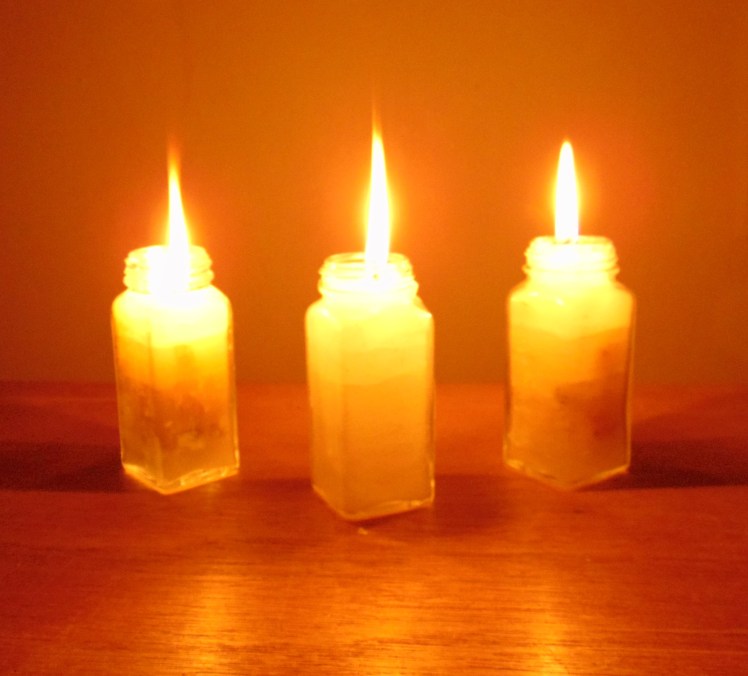
three candles
Trinity candles

I grew up in pews every Sunday, four years in parochial school. I believed in God, believed in having a relationship with God, felt a deep, meaningful connection to liturgical ritual (I was the type of child who would notice how much the sanctuary candles had burned down each week and would notice when the shortened candles would be replaced with new candles)….. I later left the pews in my mid-twenties, in part because I couldn’t intellectually accept everything in the Nicene Creed (specifically, the parts that I would later call “biologically implausibilities” – a virgin birth, the ascension….).

Later, a profound reconversion brought me back to the pews (I tell that story here ). It was the type of experience that makes this explanation palpable:

“The Greek Fathers liken man’s encounter with God to the experience of someone walking over the mountains in the mist: he takes a step forward and suddenly finds that he is on the edge of a precipice, with no sold ground beneath his foot but only a bottomless abyss.” Quote: The Orthodox Way (Revised Edition, page 13), Bishop Kallistos Ware

In my reconversion experience and in the time that followed, I deeply experienced that God loves me. I found tremendous value in reading Teresa of Avila’s autobiography and the writings of John of the Cross who “schematized the steps of mystical ascent—a self-communion that in quietude leads the individual from the inharmonious distractions of the world to the sublime peace of reunion between the soul and God.”

Experiencing that God loves us is life-changing. I came to recognize that “we can’t think our way to God.”

Wondering what faith is meant to be about? Whether your faith is on track? Wondering how to engage more deeply in faith?

Love really is the measure what faith is all about. Matthew 22: 34-40: “The greatest commandments are…love the Lord your God….and….love your neighbor as you love yourself.”

Having a loving interactive prayer relationship with God is absolutely part of what makes faith meaningful. An active prayer life is what animates an active faith. “There can be no faith without prayer” and “prayer is the respiration of faith” are quotes I’ve come across that make sense.

In my experience, an interactive prayer life is what subsequently animates faith made visible via “love the Lord your God…and…love your neighbor.”

Wondering about how to have an active prayer life?

The apostles asked, “Lord, teach us to pray.” Most of us aren’t born knowing how to pray. Thus, the apostle’s question resulted in them being given The Lord’s Prayer.

Rather than prayer being an activity, prayer is a relationship. There’s a faith song with a line “There’s a hunger in our hearts….” Yes, we do live with a hunger. A longing for a relationship with the divine.

There’s an explanation about prayer being a relationship that may be attributed to Fr. Mike Schmidt (i.e., “Bible in a year” podcast). The explanation goes something like this: Prayer is a two-way communication, like a phone call. You wouldn’t call someone, tell them something, then hang up without giving the other person an opportunity to respond. Prayer should be the same way. When we pray, it should be a two-way communication in which we communicate to God and allow God to be tangibly present to us in response.

So, how can we pray? Really, this question asks “how can we have a relationship with God?” Ultimately, there are as many ways to pray are there are people. A few examples of approaches to prayer:

  • Lectio Divina: Reflectfully reading and praying upon scripture and additional faith reading.
  • Contemplative prayer: simply being quiet in God’s presence. For more about this style of “Be still and know that I am God” prayer, check out the Contemplative Outreach network.
  • Attending church. Church services are a form of communal prayer.
  • Rote prayers (check out examples here of the prayers recited at church).

Beyond prayer – a place where we experience loving God and being loved by God – there is then loving our neighbor. For those of us who are “saints in training” rather than “saints already,” loving our neighbor is learned rather than an auto-pilot activity.

There are endless ways to love the people in our lives. There’s a phrase that may have come from Presbyterians: “Love your neighbor means everybody.” We don’t get to pick and choose who we are to love. We are to love everybody. For many of us, that’s a tall order.

How do we “love everybody?” If you’re like me, you’re not there yet. For starters, loving everybody means we can’t hate anybody. We need to become ever conscious of “how am I going to treat everyone I encounter with love and dignity?” How we achieve that varies depending on the context. “Whatsoever you do for the least of my fellows” – we take care of people who need our assistance. We treat everyone with dignity. We stand tall in being good to the people in our daily lives. There are endless ways to be good to everybody we encounter. For most of us, there are plenty of ways to continually improve at this – a good way to focus on growing in faithfulness.

Kim Burkhardt blogs at A Parish Catechist (and is a member of the Association of Catholic Publishers). Blogging is sustainable via blog readership (i.e. readers/subscribers). If you are a new visitor, it would be great to have you subscribe to follow this blog (thank you!). If you know someone who would like this blog, please share it with them and invite them to subscribe (thank you!).

Our perception of God, God’s love for us, our responsibility

A pastor told me a few months ago that humanity’s effort to describe God can be compared to God as being like a circle with our limited human efforts to describe God merely approaching various touching points of the circle; often, he said, without our descriptions actually touching the circle – let alone ever grasping the entire circle. We shouldn’t fret about the imperfections of our descriptions. Rather, he indicated, we should continue with our efforts as best we can.

I thought of that description when I took the photo (above) – an orange sunset shining through window shades onto my living room wall. Left to ourselves, we live in some measure of darkness (Fr. Timothy Radcliffe: “We are all radically incomplete”). At the same time, God loves us. To the degree that we allow God into our lives, we experience some of the light of God’s love for us (due to our finite capacity, we probably only sense some of that love, as if filtered sunlight making its’ way through the shades)!

Prayer, of course, is a significant aspect of how we allow God into our lives – how we experience a relationship with our God who loves us. Prayer is not meant to be a uni-directional monologue of us sending our thoughts, feelings, requests, or rote prayers to a Santa-God. The fullness of prayer is one in which we engage in a two-way, in-person relationship with our parent-God who wants to have a loving, engaging relationship with us and who wants to help us become the people we are meant to be.

In addition to God loving us, it is our job to love one another and to do what we can to shed light into the lives of our fellow humans (see the passage below from Matthew 22:34-40). Martin Luther King said, “Life’s most persistent and urgent question: What are you doing for others?” Loving other people and taking care of God’s children is what we are here to do.

The “60/40” plan prescribed for marriages is a principle that all of us can actually apply in our relationships with everyone so as to be the loving people we are meant to be. If each of us spends 60% of our time focusing on what we can do to be of service to the people around us and only 40% (or less!!!) of our time thinking about our needs, then everyone wins!

Kim Burkhardt blogs at A Parish Catechist and The Books of the Ages (and a member of the Association of Catholic Publishers). Blogging is sustainable via blog readership (i.e. readers/subscribers). If you are a new visitor, it would be great to have you subscribe to follow this blog (thank you!). If you know someone who would like this blog, please share it with them and invite them to subscribe (thank you!). Also, your support ($$) to help sustain this blog is welcome.

Loving God (Reflection, part two: Matthew 22:34-40)

I frequently quote Matthew 22: 34-40: “The greatest commandments are…love the Lord your God….and….love your neighbor as you love yourself.” In a recent post, I focused on the aspect of loving one’s neighbors (“love your neighbor means loving everybody”).

As mentioned in that recent blog post, there’s a lot that goes into living each aspect of love God, love your neighbor, love yourself.

For the aspect of loving God, loving God necessitates investing time and effort into a continuing relationship with God.

A crucial aspect of faith gets to “the heart” of a loving relationship with God: God is love, God loves us, and God wants to have a relationship with us. It is God’s very nature to love. Given that it is God’s inherent nature to love, the Catholic Catechism speaks to God’s nature needing to be Trinitarian – Father, Son, Holy Ghost – because God needed someone to love before God had humans to love; the three aspects of the Trinity could love each other – each aspect of itself – until we humans came along….and, of course, the Trinity continues loving each aspect of itself. Paragraph 221 of the Catechism reads: “God himself is an eternal exchange of love, Father, Son, and Holy Spirit, and he has destined us to share in that exchange.”).

Us loving God in response to God’s love for us requires intentionality on our part. A relationship with God happens in prayer. There can be no faith without prayer (I don’t recall where I first heard this. It’s true!). Westerners live in an activity-focused society; sitting in communal presence with God (prayer!) – as well as with the people in our lives – requires the willingness to pause contemplatively. Pausing contemplatively can be uncomfortable for those unfamiliar with the practice – forcing presence with inner experience that is sometimes avoided. The fruit of being present with God can bring us to the joy of loving God and experiencing being loved by God.

I have heard prayer compared to a phone call. We wouldn’t phone someone and say, “I’m calling to tell you about X.  Here’s what I have to say,”  then hang up, ending the call.  It’s the same way with prayer.  Too often, prayer is thought to be one way – us talking to God.  Remember to listen (“resting in God’s presence”). Prayer is a two-way communication – us communicating to God and – for many of us – allowing God to be present with us (a few saints sense direct verbal communication!).   Be still and know that I am God (Psalm 46:10).

Loving God is one of the aspects of how we are meant to live. Living in right relationship with God – loving God – turns out to be its’ own reward, bring joy to both God and to ourselves. 

Loving God also requires loving our neighbor.  Because each of us is a child of God, loving God inherently requires loving God’s children.  “If someone says, ‘I love God,; and hates his brother, he is a liar; for the one who does not love his brother whom he has seen, cannot love God whom he has not seen (1 John 4:20).”  To whatever degree we live “love all of God’s children,” we contribute to making this world a better place.

Kim Burkhardt blogs at A Parish Catechist and The Books of the Ages (and a “Content Creator/Individual” member of the Association of Catholic Publishers). If you are a new visitor, it would be great to have you follow this blog (thank you!). If you know someone who would like this blog post, please share it with them (thank you!). You can also support this blog by clicking here when you are going to shop on Amazon (that lands A Parish Catechist a commission on Amazon sales).

Caring for others, appreciating their care for us

Orange and yellow sunset

Matthew 22: 34-40 is frequently quoted in this blog: “The greatest commandments are…love the Lord your God….and….love your neighbor as you love yourself.”

There’s a lot that goes into living each aspect of love God, love your neighbor, love yourself. Loving God involves investing time and effort into a continuing relationship with God. Loving our neighbors requires getting out of ourselves to care for others in a myriad of ways, large and small. Loving others “as we love ourselves” requires that we live lovingly within ourselves (and to live by faith’s principles – including moving away from behavior that causes any trouble, even for ourselves). 

How well do we put into practice loving other people? How well we care for other people is, surely, one of the greatest measures of how well we live our faith. So many aspects to being mindfully of other people’s welfare.

There’s a wonderful bumper sticker that says “Love your neighbor means everybody.”Fully living that bumper sticker requires bringing everything we learn in faith to the table. Truly being centered on kindness, thoughtfulness, caring, generosity, and unselfishness – in other words, focusing on loving the people around us – is what faith principles move us toward being. Christ said in Matthew 22:34-40, “All the Law and the demands of the Prophets hang on these two commandments.” 

Robert Hayden’s haunting poem Those Winter Sundays speaks both to quiet love-in-action and to the pain of not acknowledging receipt of love-in-action. Taking in this thoughtfully observant poem requires action on our part – coming to more fully appreciate the people who care for us (and to say so!) as well as prompting us to better care for the people around us. Caring for others is so often done quietly!

Those Winter Sundays

By Robert Hayden

Sundays too my father got up early

and put his clothes on the blueblack cold,

then with cracked hands that ached

from labor in the weekday weather made

banked fires ablaze.  No one ever thanked him.

I’d wake up and hear the cold splintering, breaking.

when the rooms were warm, he’d call,

and slowly I would rise and dress,

fearing the chronic angers of that house,

speaking indifferently to him,

who had driven out the cold

and polished my good shoes as well.

What did I know, what did I know

of love’s austere and lonely offices?

Kim Burkhardt blogs at A Parish Catechist and The Books of the Ages (and a “Content Creator/Individual” member of the Association of Catholic Publishers). If you are a new visitor, it would be great to have you follow this blog (thank you!). If you know someone who would like this blog post, please share it with them (thank you!). You can also support this blog by clicking here when you are going to shop on Amazon (that lands A Parish Catechist a commission on Amazon sales).

Being a person of faith: more than mental beliefs about religion

Photo: Window at Clonmacnoise Monastery, Co. Offaly, Ireland

In his book Opening to God: Lectio Divina and Life as Prayer, Irish poet David G. Benner writes “Too often faith is reduced to beliefs. But cognitive ascent to propositions has very little to do with genuine faith, which is more a posture of the heart than of the mind. Faith in God is leaning with confidence into God. (page 32)”

I spent years “trying to think my way to God.” That doesn’t work. In 2016, I had a re-conversion experience in which I felt God’s love for me; my faith moved into “a posture of the heart” that I had been trying for years to experience (my faith story is told in more detail here.).

So, how does one move from merely “reducing faith to a set of beliefs” to faith that is experienced and lived? A few thoughts:

  • Certainly, a living faith does necessitate religious learning. Who is God? Who are we in relationship to God? What are the precepts of a life of faith? Individual faith traditions provide such instruction. It is then up to us to allow these precepts to move into our being and to incorporate these precepts into our lives (i.e., incorporate these ideas into how we relate to God, relate to other people, and live our lives).
  • Faith is experiential: a relationship with God. Faith becoming experiential involves doses of grace, surrender, prayer, and love. Living faith is made possible through grace given to us by God (in the Christian tradition, this grace is conferred upon us beginning with baptism….and then grace continues to show up at other times when God knocks on our door). Our portion of “doing faith” – what David G. Benner describes as “leaning with confidence into God” – requires surrender and prayer. Surrender is an emotional giving up, ascenting to allow God to take the driver’s seat in our lives. Prayer is where we participate in a relationship with God. Rather than prayer being a uni-directional monologue of us talking at or to God, prayer is relational and interactive. In prayer, we both communicate to God and receive the presence of God (analogy: our relationships with the people in our lives are likewise interactive rather than uni-directional). I write more about prayer here. The fruits of grace, surrender, and prayer become “the fruits of the spirit” listed in Galatians 5:22-23: “”love, joy, peace, forbearance, kindness, goodness, faithfulness, gentleness and self-control.”
  • We live our faith through how we live. Growing into being a person of faith involves allowing our inner work of faith (grace, surrender, prayer, and resulting love – listed above) to direct our being-ness in the world. A life of faith is absolutely about our own relationship with God, but it is also essentially more than that – life isn’t just about us personally or about our own relationship with God. We are here to be of service to all of God’s children. Everyone is a beloved child of God, our lives are measured to the degree that we move into loving God’s children in thought and deed. Living our faith is about “love God and love your neighbor” (Matthew 22: 36-40) and applyin the precepts of one’s faith tradition (“The Golden Rule,” “Christian charity,” etc.).

Faith is more than a set of beliefs – it is how we relate to the divine and live among God’s children. Acts 17:28: “It is in God that we live and move and have our being.”

Kim Burkhardt blogs at A Parish Catechist and The Books of the Ages. If you are a new visitor, it would be great to have you follow this blog (thank you!). If you know someone who would like this blog post, please share it with them (thank you!).

Loving our neighbor as a measure of our faith

When Christ was asked which of the commandments is greatest, he indicated, “Love God and love your neighbor” ((Matthew 22:36-40).

Further, he said in 1 John 4:20: “Whoever claims to love God yet hates a brother or sister is a liar. For whoever does not love their brother and sister, whom they have seen, cannot love God, whom they have not seen.” (Yet, we also must contend with Matthew 10:37…”Whoever loves father or mother more than me is not worthy of me, and whoever loves son or daughter more than me is not worthy of me.” The lesson here seems to be that we have to put God first….then everything else falls into place.)

Every person alive is a beloved child of God. Each of us is made in God’s image. Thus, loving God inherently requires loving each of God’s children who is made in God’s image – a spiritual fact as well as a faith lesson meant to instruct us on living well with the people around us.

At daily mass this last Thursday (August 24, the feast day for St. Bartholomew the apostle), the priest reflected in his homily about loving one another and about us all being children of God. It all sounded great. I found myself wishing that I could take credit for having written the homily/reflection! Then (fast forward a couple of days), I was walking around a local lake this morning with a friend and a friend of hers. While conversing, I grumbled about various people – and/or groups of people – in less than charitable terms. Yikes. Part of “the human condition” is that most of us have “room for improvement” in how we live our lives.

When we disagree with someone – or dislike how they behave – how often do we look at them as a beloved child of God? How often, rather, do we look at them – and engage with them – with the sentiment expressed in the photo of my cat shown below? Given that there’s at least a flicker of God’s image in the people we dislike the most, how can we dare treat them negatively and say that we “love God?” Yikes (again!) – I can see ample opportunities for my own improvement in this regard (“double yikes” to the times when I’ve said, “At least God loves that easy-to-dislike person, somebody’s got to…”)…. This question of how we treat people applies both individually and collectively – societies also too often deteriorate into disruptive and divisive us-versus-them mentalities that don’t achieve anything positive.

This fact that every one of us is a beloved child of God can and should permeate how we interact with each person we encounter. There’s a bumper sticker that reads, “Love your neighbor means everybody.” Part of a determined discipline to continually live better is to be ever better toward others than we are naturally inclined to be.

Kim Burkhardt blogs at A Parish Catechist and The Books of the Ages. If you are a new visitor, it would be great to have you follow this blog (thank you!). If you know someone who would like this blog post, please share it with them so they can subscribe (thank you!).