Book Review: The Lost Mary, Rediscovering the Mother of Jesus
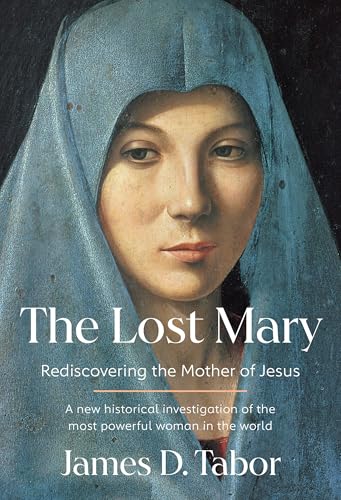
The Lost Mary

When I happened upon a blurb about this recently-published book, I checked to see if my local library has it. I was pleased to find out they had a copy and I checked it out. In amongst my other reading, I found time to read the first few chapters of the library copy before it came due; I couldn’t renew it as other patrons have holds on the book. I’ve found The Lost Mary – Rediscovering the Mother of Jesus to be thought-provoking enough to want my own copy.

Fortunately, the timing of this book’s recent publication dovetails nicely with my master’s in theology studies. We had learned in class that much of what we know about Mary comes from “The Gospel of James (or the Protoevangelium of James).” ….. It’s widely known that there are four “canonical gospels” – the gospels of Matthew, Mark, Luke, and John that are in the Bible. In addition to the four canonical gospels, there are other gospels – some of which are “heretical” and others that are not heretical….. I learned in my studies that the “non-heretical, non-canonical” gospels are read by the church and religious scholars to provide “supplementary history” that enrich what we know from the four canonical gospels. Rabbit hole – this lead to me ordering Robert J. Miller’s book The Complete Gospels and I read “The Gospel of James (or the Protoevangelium of James).” In the Protoevangelium of James, I discovered that Mary’s parents (Joachim and Anna) were wealthy and that Joseph functioned as more of a guardian than a spouse to Mary. I was curious to learn more.

Then, I came upon James D. Tabor’s book The Lost Mary – Rediscovering the Mother of Jesus.

What I find intriguing about this book is that the author – James D. Tabor – goes beyond what we commonly know today about Mary life to consider the historical context of her life. What was it like historically for Mary to be living in Judea at the time that she lived? Tabor looks into topics – and ponders to the sociological impact on Mary’s life of what was happening at the time – the daily details of Roman conquest, a description of the town where her parents were likely living when she was born, Joseph needing to look for a Hebrew midwife when Mary went into labor, the idea that Jesus likely visited his wealthy maternal grandparents when he was a child, etc. It’s never occurred to me to ponder Jesus’ childhood visits with extended relatives and other day-to-day aspects of Jesus and Mary’s lives. Therefore, I am finding it insightful to consider the ideas presented in this book. Does writer and historian James D. Tabor accurately figure out every possible aspect of Mary’s life? Who knows. Even if Tabor goes down some tangents that may be open for debate, Tabor is raising points that broaden and enrich the reader’s understanding of the teenager who gave birth to Jesus.

I am looking forward to having my own copy of this book that I can keep on my bookshelf as a reminder that we should want to know more about the life of Mary.

Kim Burkhardt blogs about faith at The Hermitage Within. Thank you for reading this faith blog and for sharing it with your friends. While you are here, please feel welcome to provide support to sustain this blog ($$). You can also $$ support this blog by clicking here here to do your Amazon shopping (if you click here before you start your Amazon shopping, Amazon pays us a commission when you shop via the link provided).
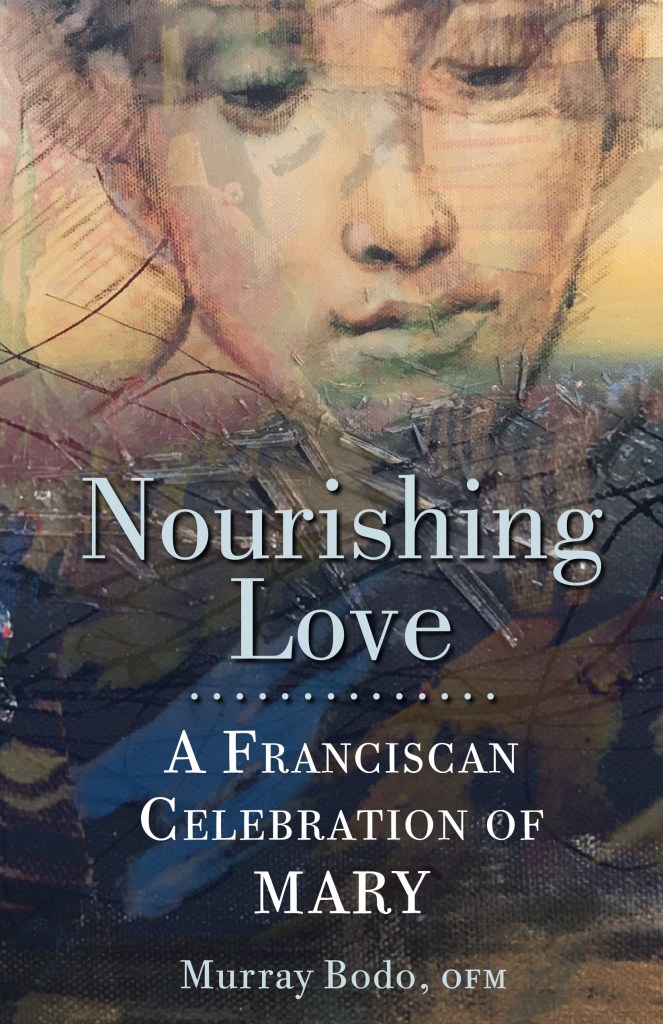

Book Review: Nourishing Love – A Franciscan Celebration of Mary

This book takes readers on a novel way of exploring Mary’s life (no, not a novel). For those of us who tend think of Mary either historically and/or as a saint, this book brings us an additional way to consider Mary.

Franciscan author (and priest) Murray Bodo offers us something similar to that of The Chosen TV series: a conceptual view of what it could have been like living Jesus’ or Mary’s lives – making their day-to-day lives more tangible for us than what many of us consider when reading the Gospels. Both this book and The Chosen contain historical aspects of the lives of Mary and Jesus (respectively). Reading historical accounts alone – however – don’t necessarily take us into thinking about the daily aspects what they did and felt as people.

In this book, Nourishing Love, there are reflections that take us to ponder, “what thoughts did Mary ponder?” After Jesus offered her and John to one another as mother-and-son, what conversations Mary and John have about Jesus? Possibly ponderings by Mary and possible – plausible – conversations between Mary and John are presented here to bring us into considering their lives on a very human level.

At one point in the book, the author writes, “Since Jesus was both God and man, he had his mother’s genes and was deeply influenced genetically, as most of us are, by his mother. He was Mary’s son, prompting us to imagine how Mary herself was in fact revealed in the person of her son.” Hmm….. Did genetics cause Jesus to look like his mother? Did Mary and Jesus share similar voice inflections? Did Jesus maintain some of Mary’s habits once he became an adult (ate the same foods for breakfast, had the same evening routines, etc.)? How much did Mary’s human personality influence Jesus’ human personality? The author of this book observes that the stories Mary told Jesus during his infancy and childhood may have influenced the types of stories Jesus chose to tell as an adult – including the parables he told. How she cared for the people around her could have been socially instructive for the human Jesus.

The way this book is constructed made me think of Ignatian exercises in terms of the creativity brought to subjects of faith. There’s a degree to which I felt uncomfortable with this book – I would more naturally gravitate to an academically-oriented sociological construct/analysis of people’s daily lives in first-century Palestine to get a sense of Mary’s life (that type of book would also be interesting!). Sometimes, though, discomfort is good. Discomfort can challenge us to consider topics in new ways; new perspectives help us grow.

Kim Burkhardt blogs at A Parish Catechist and The Books of the Ages (and a “Content Creator/Individual” member of the Association of Catholic Publishers). If you are a new visitor, it would be great to have you follow this blog (thank you!). If you know someone who would like this blog post, please share it with them (thank you!).

Feast day of St. Anne and St. Joachim (Jesus’ grandparents)

Today, July 26, is the feast day celebrating St. Anne and St. Joachim – the parents of the Virgin Mary.

Information about these two saints is available via Britannica and the Catholic News Agency.

One might think, “The Church sets aside a day (known as a feast day) to recognize the maternal grandparents of Jesus? Hmmm…. A person has to be very church-involved to think about there being a feast day recognizing Jesus’ maternal grandparents.”

Yes, there is a feast day to recognize Jesus’ maternal grandparents. This does make sense…. After all, they raised a daughter who was “immaculately conceived” so as to be worthy – without sin – of giving birth to a sinless son. They are involved lineally, therefore, in Christ’s presence on earth for humanity. Momentous indeed – worthy of a feast day.

One has to wonder what grandparents would have thought about Mary’s pregnancy and about the identity – status – of her son as Savior. Apparently, Joachim died before May became a mother. However, reports indicate that her parents had dedicated Mary to the “service of the Lord,” bringing her to the Temple of Jerusalem at age three to be raised at the Temple; they are said to have done so out of thanksgiving for having been given a child after their period of barrenness. (Hmmm….. I don’t know enough theology….I think of “The Lord” as referencing Jesus; the story goes that her parents brought Mary to be raised at the Temple before she conceived the Jesus. So, either her parents knew Mary’s intended fate or I’m missing something linguistically).

So, Mary’s parents were devout. They could have accepted being the grandparents of a Savior? Would it have been difficult for Mary’s mother to anticipate such a trajectory when Mary became pregnant prior to her marriage? Perhaps not, since they offered her to be raised at the Temple….. Further, they had been told by an angel that their child would be a “most wondrous child.”

Was Anne aware of Mary’s pre-marital conception prior to Mary’s marriage? Anne had given Mary to the Temple to be raised, so how aware was Anne of the daily details of Mary’s life – was Anne in a position to know that Mary had conceived pre-maritally? Joseph, Mary’s fiance, found out about Mary’s pre-marital pregnancy before he married her and considered “divorcing her quietly,” so it’s possible that Anne also knew about the pregnancy. It would be sociologically curious to find out more about the social mores of the time – to find out the social dynamics of how much Anne would have likely known about the daily life of her teenager who Anne had given to be raised at the Temple of Jerusalem. Did Anne see Mary daily, weekly, or monthly? Did Anne and Mary talk about Mary’s daily life? Was Anne involved in choosing a spouse for Mary, given that Mary was being raised at the Temple? Did Mary of regular contact with her extended family?

Family and lineage is known to have been socially important in Jesus’ time. Therefore, I would think it’s possible that Anne and Mary kept in touch. Further, it’s thought that Anne – after Joachim’s death – may have became a step-grandmother to several of the people who became Jesus’s apostles; if true, this would suggest close social ties within the community of which Mary lived (close social ties seem likely from what I do know).

Perhaps there are literary scholars and sociologists who know more about the time in which Mary lived…..who would have insights about how likely it would have been for Anne to know of Mary’s pre-marital conception of Jesus. Hmmm…..An archangel invited Mary to accept become the mother of Jesus. Then, Mary’s betrothed – Joseph – didn’t know how Jesus was conceived until an angel came to him when he was thinking of walking away from Mary for her pre-marital pregnancy. Would a similar angelic communication been brought to Anne about her grandchild prior to Jesus’ birth? An angel had told Anne (and Joachim) prior to Mary’s birth that Mary would be “a wondrous child” – did Mary tell her own mother that she had also been visited by an angel and that the angel had asked her to conceive? Hmm…. I pondered in a previous post about Mary (here) saying yes to God when asked to be Jesus’ mother – Mary had said yes willingly, I pondered the possibility that there may have been a previous potential mother who had “said no” to that request (given that the Mary response was optional); it now seems unlikely that there a previous request would have been needed given that an angel told Joachim and Anne that Mary would be a “wondrous child” (i.e., God and the angels must have thought it likely that Mary would say yes to God). While Mary’s “yes to God” was voluntary, it seems that she was created with an inclination toward a saintly response to God.

Kim Burkhardt blogs at A Parish Catechist and The Books of the Ages. If you are a new visitor, it would be great to have you follow this blog (thank you!). If you know someone who would like this blog post, please share it with them (thank you!).