Living and experiencing faith: it really is about love
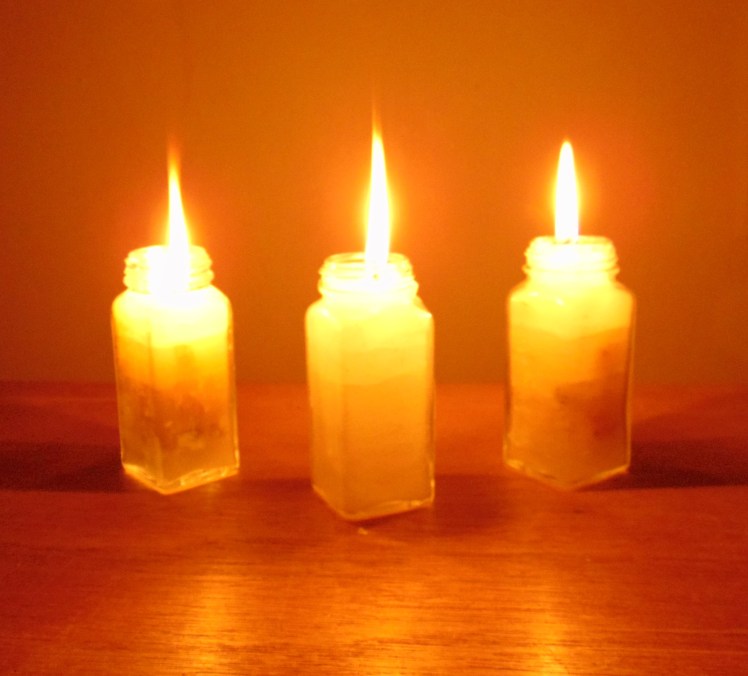
I grew up in pews every Sunday, four years in parochial school. I believed in God, believed in having a relationship with God, felt a deep, meaningful connection to liturgical ritual (I was the type of child who would notice how much the sanctuary candles had burned down each week and would notice when the shortened candles would be replaced with new candles)….. I later left the pews in my mid-twenties, in part because I couldn’t intellectually accept everything in the Nicene Creed (specifically, the parts that I would later call “biologically implausibilities” – a virgin birth, the ascension….).
Later, a profound reconversion brought me back to the pews (I tell that story here ). It was the type of experience that makes this explanation palpable:
“The Greek Fathers liken man’s encounter with God to the experience of someone walking over the mountains in the mist: he takes a step forward and suddenly finds that he is on the edge of a precipice, with no sold ground beneath his foot but only a bottomless abyss.” Quote: The Orthodox Way (Revised Edition, page 13), Bishop Kallistos Ware
In my reconversion experience and in the time that followed, I deeply experienced that God loves me. I found tremendous value in reading Teresa of Avila’s autobiography and the writings of John of the Cross who “schematized the steps of mystical ascent—a self-communion that in quietude leads the individual from the inharmonious distractions of the world to the sublime peace of reunion between the soul and God.”
Experiencing that God loves us is life-changing. I came to recognize that “we can’t think our way to God.”
Wondering what faith is meant to be about? Whether your faith is on track? Wondering how to engage more deeply in faith?
Love really is the measure what faith is all about. Matthew 22: 34-40: “The greatest commandments are…love the Lord your God….and….love your neighbor as you love yourself.”
Having a loving interactive prayer relationship with God is absolutely part of what makes faith meaningful. An active prayer life is what animates an active faith. “There can be no faith without prayer” and “prayer is the respiration of faith” are quotes I’ve come across that make sense.
In my experience, an interactive prayer life is what subsequently animates faith made visible via “love the Lord your God…and…love your neighbor.”
Wondering about how to have an active prayer life?
The apostles asked, “Lord, teach us to pray.” Most of us aren’t born knowing how to pray. Thus, the apostle’s question resulted in them being given The Lord’s Prayer.
Rather than prayer being an activity, prayer is a relationship. There’s a faith song with a line “There’s a hunger in our hearts….” Yes, we do live with a hunger. A longing for a relationship with the divine.
There’s an explanation about prayer being a relationship that may be attributed to Fr. Mike Schmidt (i.e., “Bible in a year” podcast). The explanation goes something like this: Prayer is a two-way communication, like a phone call. You wouldn’t call someone, tell them something, then hang up without giving the other person an opportunity to respond. Prayer should be the same way. When we pray, it should be a two-way communication in which we communicate to God and allow God to be tangibly present to us in response.
So, how can we pray? Really, this question asks “how can we have a relationship with God?” Ultimately, there are as many ways to pray are there are people. A few examples of approaches to prayer:
- Lectio Divina: Reflectfully reading and praying upon scripture and additional faith reading.
- Contemplative prayer: simply being quiet in God’s presence. For more about this style of “Be still and know that I am God” prayer, check out the Contemplative Outreach network.
- Attending church. Church services are a form of communal prayer.
- Rote prayers (check out examples here of the prayers recited at church).
Beyond prayer – a place where we experience loving God and being loved by God – there is then loving our neighbor. For those of us who are “saints in training” rather than “saints already,” loving our neighbor is learned rather than an auto-pilot activity.
There are endless ways to love the people in our lives. There’s a phrase that may have come from Presbyterians: “Love your neighbor means everybody.” We don’t get to pick and choose who we are to love. We are to love everybody. For many of us, that’s a tall order.
How do we “love everybody?” If you’re like me, you’re not there yet. For starters, loving everybody means we can’t hate anybody. We need to become ever conscious of “how am I going to treat everyone I encounter with love and dignity?” How we achieve that varies depending on the context. “Whatsoever you do for the least of my fellows” – we take care of people who need our assistance. We treat everyone with dignity. We stand tall in being good to the people in our daily lives. There are endless ways to be good to everybody we encounter. For most of us, there are plenty of ways to continually improve at this – a good way to focus on growing in faithfulness.
Kim Burkhardt blogs at A Parish Catechist (and is a member of the Association of Catholic Publishers). Blogging is sustainable via blog readership (i.e. readers/subscribers). If you are a new visitor, it would be great to have you subscribe to follow this blog (thank you!). If you know someone who would like this blog, please share it with them and invite them to subscribe (thank you!).

