Book Review: Bourgeault’s Centering Prayer and Inner Awakening

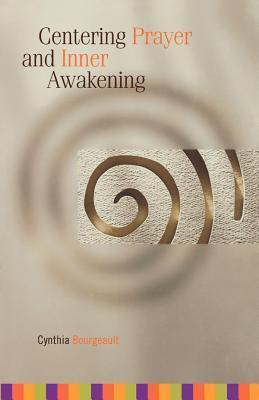
Book: Centering Prayer and Inner Awakening
Centering Prayer and Inner Awakening

I have been hearing for several years – mostly through Contemplative Outreach Northwest – about Episcopalian priest Cynthia Bourgeault. She is known for her active, thoughtful leadership within contemplative/mystical Christianity.

I finally got around to reading one of her books: Centering Prayer and Inner Awakening.

I am “beyond thrilled” to have come upon this book.

In 2016, I was gifted with a sustained period of contemplative prayer during which I had a solid sense of God loving me. This was “a gift I didn’t see coming.” The outline of that story is told here. A challenge I encountered was that I didn’t have the vocabulary to articulate my experience to people. A real challenge – I was experiencing something profoundly meaningful, but I had no means to talk to people about it (I’ve since seen a couple of other people wander into churches with a similar scenario – each time, a make an effort to “walk with them,” encouraging them as best I can along their journey…..). In time, through church attendance and involvement in Contemplative Outreach Northwest, I started grappling my way toward being more able to discuss the “outer contours” of my experience. A respected friend (who also happens to be Episcopalian, like Cynthia Bourgeault) pointed out that each of us has a different prayer relationship with God and that the best we can hope for is to find a few people with whom can share some basic aspects of our prayer experience in relating to God.

Then, I read Centering Prayer and Inner Awakening.

Actually, I skipped through several “how to” reflection portions of the book – that was information I didn’t need.

Early portions of the book, though, grabbed my attention. When Cynthia Bourgeault encountered “centering prayer” (i.e., how to learn to do contemplative prayer) groups as a priest, she said she immediately grasped the concept based on having grown up attending a Quaker school. I have periodically read about Quaker spirituality – this intrigued me.

Then, I got to later chapters of the book.

While God’s faith path for us within Christianity is a very different realm than the secular study of human psychology, Cynthia Bourgeault has artfully drawn from both in this book to discuss how we experience changes within our inner realm when Christ changes us via contemplative prayer. Of course, Bourgeault discusses within the book the very real differences between “doing Christianity” and “doing psychology.” I am currently reflecting – with an inner joy – upon Bourgeault’s artful communication within the later chapters of this book. It’s as if she put our inner human experience to poetry (I can’t take credit for this statement – I once heard someone else use this analogy in another context). In the next few weeks, I expect to be able to start talking more actively to people – based on this book – about my own inner changes and experience wrought by contemplative prayer.

And, I will be reading more of Cynthia Bourgeault’s books.

(For any reader who is interested, Teresa of Avila’s autobiography is also of tremendous interest regarding contemplative prayer.)

Kim Burkhardt blogs about faith at The Hermitage Within. Thank you for reading this faith blog and for sharing it with your friends. While you are here, please feel welcome to provide support to sustain this blog ($$).
Glory be to God

Photo of fountain
Fountain at Saint Martin’s University

Yesterday, I was on campus at Saint Martin’s University where I am starting a Master’s in Theological Studies MTS (I took the photo shown above while on campus).

While I was on campus, I joined the campus’s Benedictine monks (and a handful of students) for mid-day prayer in the campus chapel. Several recitations of the The Gloria Patri (Glory Be) were included in mid-day prayers.

The Gloria Patri, of course, is included at mass and in the rosary (“Glory be to the Father, and to the Son, and to the Holy Spirit as it was in the beginning, is now, and ever shall be, world without end. Amen). Thus, I’ve orally prayed it countless times. Yet, it specifically captured my attention during mid-day prayers yesterday.

We hear at mass “”Lord, although you have no need of our praise, yet our thanksgiving is itself your gift, since our praises add nothing to your greatness but profit us for salvation through Christ, Our Lord.”

“Sing a joyful song unto the Lord” (a popular hymn based on Psalm 100) is a great way to pray. There’s an adage that “those who sing pray twice.” This doesn’t just apply at church. Praying with joyful praise when we are alone at home is also a great way to pray!

There are plenty of ways to incorporate “joyful praise” into our personal prayer life:

  • Verbal thanks in prayer expressing appreciation for specific items for which we are grateful.
  • Prayerful and joyful music at home (uplifting!)
  • Being joyfully attentive to God in prayer
  • And…. (there’s no limit to how we can be joyful and praiseful)

Praise to God “profits us for salvation.” How might you regularly incorporate joyful praise into your personal prayer life?

Kim Burkhardt blogs about faith at The Hermitage Within. Thank you for reading this faith blog and for sharing it with your friends. While you are here, please feel welcome to provide support to sustain this blog ($$).

Faith resources – tools, not straight jackets

Divine Office
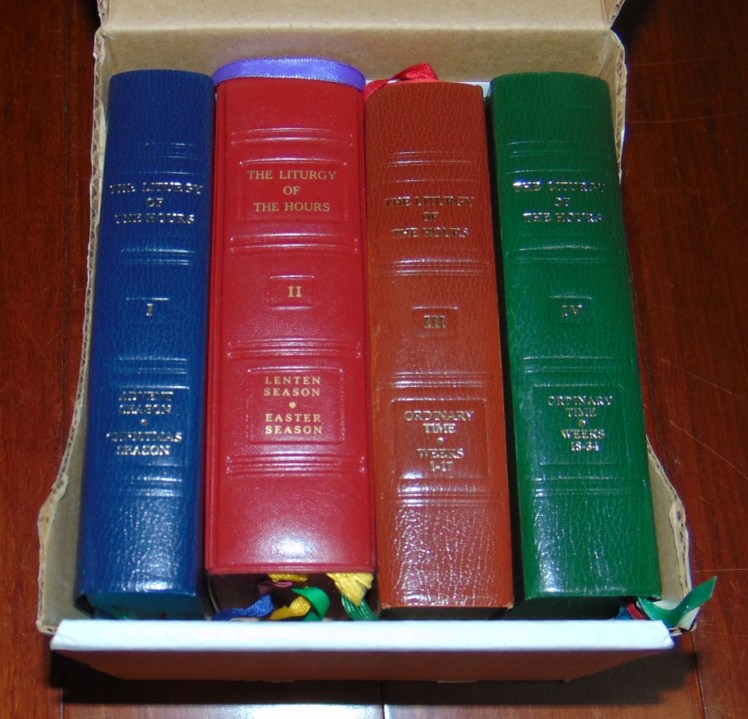
Liturgy of the Hours (Divine Office)

The ways through which we travel our faith journey – church attendance, types of prayer, etc. – are meant to nurture our faith journey. If anything we participate in feels as though it is constricting our faith journey, either something is amiss or we are ready for additional or different faith activities. Being attentive to any sense of constriction is an opportunity to look to adapt either ourselves or our situation. It is entirely good when we notice that we need to adjust – such observations mean we are engaged in our faith journey (or, sometimes, that we need to become more engaged). Our faith journey has developmental stages just as we experience stages in other aspects of our human development – stages in cognitive development (academics), stages in psychological and social development, etc.

By way of example, I am starting a Master’s in Theology in January (a “Masters in Theology Studies” or “MTS” for lay people rather than a Master’s in Divinity for pastors-in-training). At a recent meeting for registered MTS students, we were provided with the first of our faith formation sessions. We were told that Masters in Theological Studies degrees typically cover four academic subjects – scripture, ethics, systemic theology, and historical theology. In addition to academics, MTS programs – ours, at least – include the faith development of enrolled students (faith formation) because the degree should include our faith maturation in addition to a focus on academics (a whole person approach). During that day, we were instructed to start participating daily in Liturgy of the Hours (Divine Office) – the daily prescribed prayer life of the Church.

In recent years, my prayer life has principally been one of contemplative prayer – both at home and in small prayer groups via Contemplative Outreach. There are as many ways to pray as there are people; contemplative prayer has been personally fruitful for me. In contemplative prayer, I encounter periods of time in which I experience God loving me – which has been freeing me from difficult aspects of “the human condition.” As with anything else, I do also experience occasional dry periods in my experience with contemplative prayer. Therefore, I am now open to also praying Liturgy of the Hours (Diving Office).

Prior to being recently instructed to start participating in Liturgy of the Hours, I viewed the Divine Office remotely (“from afar”) as the prerogative of priests and avowed religious – a respected activity distant from my daily life. When we were recently told to start participating in this daily activity for the MTS program, part of me was intrigued. Another part of me was also relieved when we were told that Liturgy of the Hours is “a tool to help us pray, not a straight jacket to keep us from praying.” I am enjoying the journey into the Divine Office.

Kim Burkhardt blogs about faith at The Hermitage Within. Thank you for reading this faith blog and for sharing it with your friends. While you are here, please feel welcome to provide support to sustain this blog ($$).
Prayer: genuine engagement

Clonmacnoise window

On December 24, 2017, a pastor was driving me home from an evening Christmas Eve service. As we were winding through snowy roads, I was telling him about the angst I was feeling about a personal problem that was “eating up my insides” at the time. He asked if I had prayed about the matter. “No,” I replied, “I haven’t prayed about this. I have been having such a positive prayer relationship with God for the last year – I don’t want to ruin this positive prayer relationship by bringing my problems to God.” I can still feel this heavy weight of the subsequent silence in the car as the pastor’s face puckered. Finally – after a moment that lasted too long – he sternly replied, “You have to bring EVERYTHING to God.”

I got the point.

We are to bring our whole selves to God. Not just the parts we want to bring to prayer. There’s no point packaging ourselves – or our situations – to present to God as we would wish. Do we really think God doesn’t know the real dirt?

God doesn’t want to deal with any superficialities that we might “sugar coat” in prayer. Prayer becomes meaningful when we get real. God loves us, wants to have a real, meaningful relationship with us.

Prayer is also a long-haul relationship. Prayer doesn’t become meaningful when we pray as an equivalent to 30 second chats held in a busy hallway. Prayer becomes real when we make real and continuing time to be meaningfully present with God. The shape and form of being “meaningfully present” in prayer is going to be different for each of us. A faith person who I admire mentioned to me several years ago (after the Christmas Eve car ride mentioned above) that everyone one of us is going to have a different prayer relationship with God because of the different nature of who each of us is…. What matters for each of us is that we commit sustained, ongoing time to building personal “prayer”being present” time with God. The fruits of that prayer become clear and substantive when we continue such sustained, meaningful time in prayer.

Wondering about new ways to pray? Check out a ways-to-pray list in one of my previous blog posts.

Kim Burkhardt blogs about faith at A Parish Catechist. Thank you for reading this faith blog and for sharing it with your friends. While you are here, please feel welcome to provide support to sustain this blog ($$).

Prayer: “Wordless sighs of the heart”

Candle

When I read The Tradition of Catholic Prayer from the Benedictine monks of Saint Meinrad Monastery, one of the types of prayer they mention is “wordless sighs of the heart.”

I am drawn to this phrase – I find prayer to be most meaningful when it is heartfelt. How about you?

,,,,,It’s been said, “There can be no faith life without prayer.” It’s also said that we cannot pray and continue sinning; when we really engage in prayer, we find that we have to allow God to change us for the better. Personally, I experience in prayer that God loves us!

True prayer goes beyond mere statements or superficial monologues directed in God’s direction. True prayer is dialogue, meaningful communication, presence. A “wordless sigh of the heart,” for example, is us opening ourselves bare before God.

How often does human prayer involve allowing our innermost selves to be fully transparent before God? Such vulnerability is a real interaction. While God certainly knows our hearts – God made us and knows us – it’s also true that we have free will. God doesn’t force us to into relationship; it’s up to us whether we are willing to be fully present before God.

When we aren’t in active relationship with God, the Holy Spirit occasionally knocks on our heart’s door; it’s up to us whether we respond to such promptings. We can also open our heart’s door to God by taking the initiative ourselves to communicate – God will show up when invited in. Sometimes, we feel God’s presence in prayer (I have!); other times, God may work “under the surface” in ways that we don’t observe; God working to change us “under our radar” is what John of the Cross wrote about in his book Dark Night of the Soul (“Dark Night” being a period of inner transition that isn’t fully transparent to us, rather than necessarily being a depressive period!).

There are many forms of prayer in which we have an active relationship with God. Contemplative prayer (for example, visit the network of Contemplative Outreach) is one way, being engaged while at church is another way – as are meditative prayers such as praying the rosary, talking to God, heartfelt intercessions, prayers of praise (including music)……… What makes prayer meaningful is that we pray in a way that makes it relational. There are as many ways to pray as there are people!

Interested in learning more about prayer? Check out A Parish Catechist’s previous blog post, “List: ways to pray.

Kim Burkhardt blogs about faith at A Parish Catechist. Thank you for reading this faith blog and for sharing it with your friends. While you are here, please feel welcome to provide support to sustain this blog ($$).
Book Review: Paths to the Heart – Sufism and the Christian East

Book: Paths to the Heart
Paths to the Heart: Sufism and the Christian East

I have recently been reading books about Eastern Orthodox Christianity. I have a particular interest in the contemplative tradition within Christianity and have discovered that there is a strong contemplative aspect within the Eastern Orthodox tradition.

Paths to the Heart: Sufism and the Christian East is a compilation of presentations from a conference held shortly after 9/11 where a group of people met to discuss similarities of the religious views between the Christian East (i.e.., Eastern Orthodox) and Sufi Muslim.

I am more than half-way through this book. What emerges in this book is engaging observations about the contemplative aspects of Eastern Orthodox and Sufi Islam. For anyone interested in the contemplative aspects of Eastern Orthodox, Sufi Islam, or both….. Paths to the Heart: Sufism and the Christian East is an insightful read.

For my particular area of interest – the contemplative prayer aspect within Christianity – I am learning in this book about Hesychasm – described by Wikipedia as “a contemplative monastic tradition in the Eastern Christian traditions of the Eastern Orthodox Church and Eastern Catholic Churches in which stillness (hēsychia) is sought through uninterrupted Jesus prayer. While rooted in early Christian monasticism, it took its definitive form in the 14th century at Mount Athos.”

Kim Burkhardt blogs at A Parish Catechist. If you are a new visitor, it would be great to have you subscribe to follow this blog (it’s free – thank you!). If you know someone who would like this blog, please share it with them and invite them to subscribe (thank you!).

The many moods of prayer

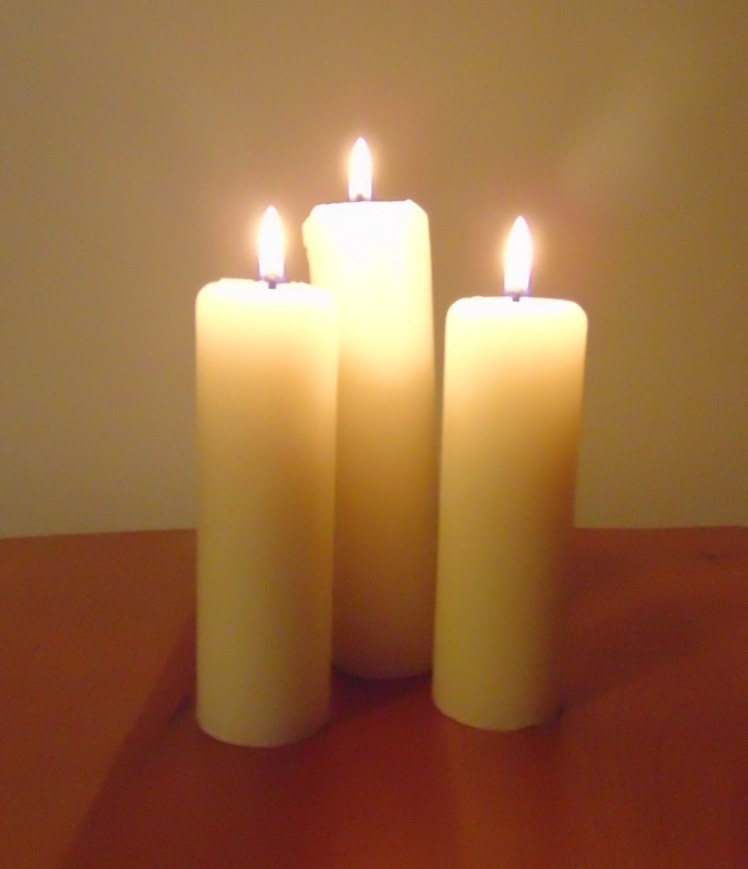
Trinity of candles

In the book Reading Lolita in Tehran, author Azar Nafisi writes of learning from her introverted husband about “the many moods and nuances of silence: the angry silence and the disapproving one; the appreciative silence and the loving one.”

There are, likewise, “many moods and nuances” in the silence of personal prayer:

  • The awe when we encounter God’s presence
  • The lonely distance when we feel separated from God
  • Our outpouring of self – our emotions and experiences – when we offer everything within us and within our lives to God
  • Angst when we bring the frustrations of our human experience to God

Then, there are the “many moods and nuances” of public prayer:

  • The psalms we sing in church to bring to God our wide range of human experience and petitions
  • Intercessory prayers we “offer up” at church
  • The joy inherent to our “songs of praise”
  • Rote prayers during services – The Lord’s Prayer, etc.
  • Prayers offered at public events

Just as there are many variables and phases in our relationships with people, there are changing variables and phases in our relationship with God.   This is a good thing.

Whatever we might expect of prayer, our prayer needs to be active, regular and ongoing, dynamic, and changing.  We grow and change over time.   Therefore, our relationship with God cannot be what it was when we were children.  Or when we were teenagers.  Or five years ago.   While God is ever God’s-self, the relationship between us and God is ever adjusting to “where we are” in that relationship and – if we actively pray on an ongoing basis – adjusting as we move through our lives………… 

How does one pray? 

Just as we have many differing relationships with the various people in our lives – and a variety of ways that we communicate with the people in our lives – there are any number of ways of communicating with God. A prayer style that works for one person may be very different than what works for the next person. Here are several approaches to prayer:

  • Rote prayer (formal, memorized prayers – these are often provided to us by our houses of worship). Prayers such as the Lord’s Prayer are full of meaning and help us learn to pray. Such prayers give us ready prayer content that we can easily put to use.
  • Psalms. The Book of Psalms – which were meant to be sung – are summarized by Wikipedia thus: the Book of Psalms are “an anthology of Hebrew religious hymns…including hymns or songs of praise, communal and individual laments, royal psalms, imprecation, and individual thanksgivings.  The book also includes psalms of communal thanksgiving, wisdom, pilgrimage, and other categories.”
  • “Talking to God.” Our spontaneous thoughts and words directed to God. God wants to have a relationship with us; relationships are two-way, be open to feeling God’s presence in response.
  • Contemplative Prayer. Resting reflectively in prayer, without a need for words or any human language. Contemplative prayer can – and for some people, does – include a sense of God’s presence in prayer. For more information about contemplative prayer, visit Contemplative Outreach.
  • Praying the Rosary. The rosary is a reflective way of praying a set of rote prayers with a formulaic set of Catholic prayer beads (focusing time on specified topics). Instructions for praying the rosary is available here.
  • Lectio Divina. Lectio Divina “describes a way of reading the Scriptures whereby we gradually let go of our own agenda and open ourselves to what God wants to say to us” (this particular description provided by the Carmelites).
  • Singing at church. “Those who sing pray twice” (a popular phrase in churches).
  • Intercessory prayer. Intercessory prayer that we pray for other people. We come to God with the challenges of those who are in need of support.

Kim Burkhardt blogs at A Parish Catechist. If you are a new visitor, it would be great to have you subscribe to follow this blog (it’s free – thank you!). If you know someone who would like this blog, please share it with them and invite them to subscribe (thank you!).

How many people pray? How do people pray?

According to Pew’s most recent “religious landscape study” (2023-2024), 44% of U.S. residents indicate praying daily:

If you are among the people who pray regularly, how do you pray?

The question “how do you pray” really asks “how do you have an interactive relationship with God?” There are as many experiences of prayer as their are people.

A prayer style that works for one person may be very different than what works for the next person.

Personally, my most meaningful prayer – and preferred way to pray – is contemplative prayer. simply being in God’s presence. No language necessary. In 2016, I was gifted with an extended – and unexpected – period of contemplative prayer in which I felt God’s presence loving me (that story surround that experience is told here); the experience set me on a new footing.

Several approaches to prayer include:

  • Rote prayer (formal, memorized prayers – these are often provided to us by our houses of worship). Prayers such as the Lord’s Prayer are full of meaning and help us learn to pray. Such prayers give us ready prayer content that we can easily put to use.
  • Psalms. The Book of Psalms – which were meant to be sung – are summarized by Wikipedia thus: the Book of Psalms are “an anthology of Hebrew religious hymns…including hymns or songs of praise, communal and individual laments, royal psalms, imprecation, and individual thanksgivings.  The book also includes psalms of communal thanksgiving, wisdom, pilgrimage, and other categories.”
  • “Talking to God.” Our spontaneous thoughts and words directed to God. God wants to have a relationship with us; relationships are two-way, be open to feeling God’s presence in response.
  • Contemplative Prayer. Resting reflectively in prayer, without a need for words or any human language. Contemplative prayer can – and for some people, does – include a sense of God’s presence in prayer. For more information about contemplative prayer, visit Contemplative Outreach.
  • Praying the Rosary. The rosary is a reflective way of praying a set of rote prayers with a formulaic set of Catholic prayer beads (focusing time on specified topics). Instructions for praying the rosary is available here.
  • Lectio Divina. Lectio Divina “describes a way of reading the Scriptures whereby we gradually let go of our own agenda and open ourselves to what God wants to say to us” (this particular description provided by the Carmelites).
  • Singing at church. “Those who sing pray twice” (a popular phrase in churches).
  • Intercessory prayer. Intercessory prayer that we pray for other people. We come to God with the challenges of those who are in need of support.

My favorite pray-ers:

  • Teresa of Avila, (16th-century mystic, Doctor of the Church, Carmelite nun, reformer of the Carmelite religious order, Carmelite saint)
  • John of the Cross (16th-century mystic, Doctor of the Church, Carmelite monk and priest, co-reformer of the Carmelite religious order, Carmelite saint)
  • Edith Stein, Carmelite nun, Carmelite saint
  • Fr. Thomas Keating, founder of Contemplative Outreach

Books for further reading:

Clinging: The Experience of Prayer (Emilie Griffin)

The Tradition of Catholic Prayer (The Monks of Meinrad Monastery)

Kim Burkhardt blogs at A Parish Catechist (and is a member of the Association of Catholic Publishers). If you are a new visitor, it would be great to have you subscribe to follow this blog (it’s free – thank you!). If you know someone who would like this blog, please share it with them and invite them to subscribe (thank you!).

List: How many ways to pray (types of prayer)?

image of Christ
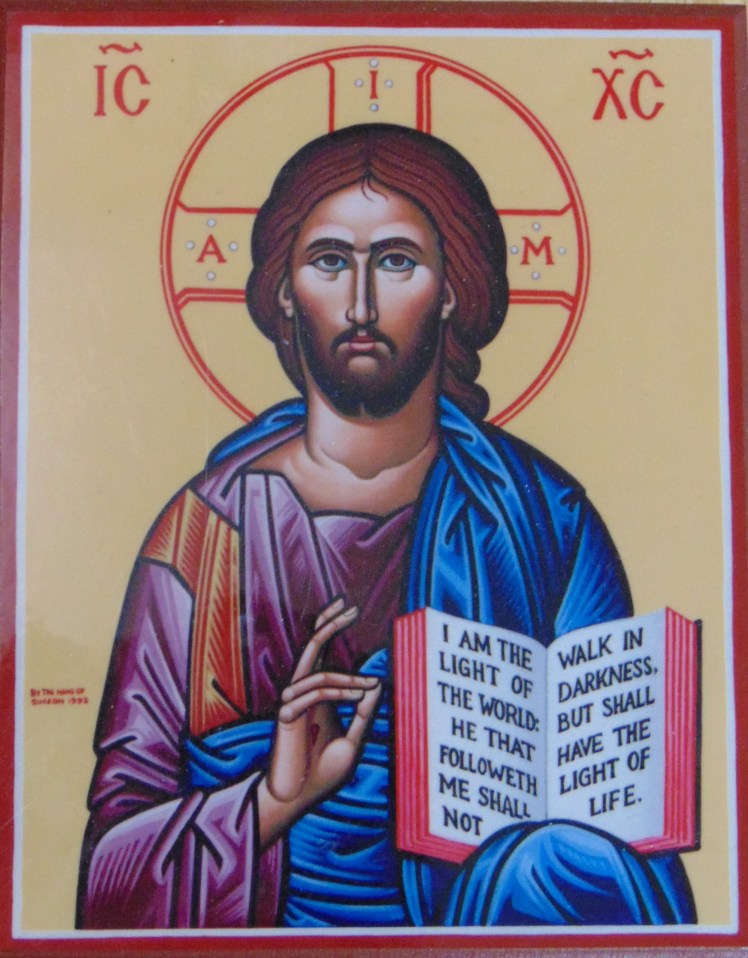
depiction of Christ

variety of prayer options available within Catholicism.

Catholic prayer is a vibrant and varied tradition, bringing to fullness a life-giving relationship between us and God. Jesus came “that we might have life, and have it more abundantly” (John 10:10). “…prayer is not merely an exchange of words, but it engages the whole person in a relationship with God the Father, through the Son, and in the Holy Spirit” (U.S. Conference of Catholic Bishops, USCCB).

How many ways are there to pray?

The essence of prayer is communication, a relationship with God, a being-with or being-in-the-presence-of. When we find a relationship with God – an interactive, two-way interaction rather than a one-way monologue (we wouldn’t relate to the people in our lives exclusively via uni-directional monologues!) – there comes a discovery that God is present with us in prayer.

A friend said to me, “prayer is a very personal communion with God that is meant to be personal, and unique to you….People are… very different in their personal experience in prayer, and that in itself is a beautiful thing.”

Just as we have many differing relationships with the various people in our lives – and a variety of ways that we communicate with the people in our lives – there are any number of ways of communicating with God. A prayer style that works for one person may be very different than what works for the next person. Here are several approaches to prayer:

  • Rote prayer (formal, memorized prayers – these are often provided to us by our houses of worship). Prayers such as the Lord’s Prayer are full of meaning and help us learn to pray. Such prayers give us ready prayer content that we can easily put to use.
  • Psalms. The Book of Psalms – which were meant to be sung – are summarized by Wikipedia thus: the Book of Psalms are “an anthology of Hebrew religious hymns…including hymns or songs of praise, communal and individual laments, royal psalms, imprecation, and individual thanksgivings.  The book also includes psalms of communal thanksgiving, wisdom, pilgrimage, and other categories.”
  • “Talking to God.” Our spontaneous thoughts and words directed to God. God wants to have a relationship with us; relationships are two-way, be open to feeling God’s presence in response.
  • Contemplative Prayer. Resting reflectively in prayer, without a need for words or any human language. Contemplative prayer can – and for some people, does – include a sense of God’s presence in prayer. For more information about contemplative prayer, visit Contemplative Outreach.
  • Praying the Rosary. The rosary is a reflective way of praying a set of rote prayers with a formulaic set of Catholic prayer beads (focusing time on specified topics). Instructions for praying the rosary is available here.
  • Lectio Divina. Lectio Divina “describes a way of reading the Scriptures whereby we gradually let go of our own agenda and open ourselves to what God wants to say to us” (this particular description provided by the Carmelites).
  • Singing at church. “Those who sing pray twice” (a popular phrase in churches).
  • Intercessory prayer. Intercessory prayer that we pray for other people. We come to God with the challenges of those who are in need of support.

My favorite Catholic pray-ers:

  • Teresa of Avila, (16th-century mystic, Doctor of the Church, Carmelite nun, reformer of the Carmelite religious order, Carmelite saint)
  • John of the Cross (16th-century mystic, Doctor of the Church, Carmelite monk and priest, co-reformer of the Carmelite religious order, Carmelite saint)
  • Edith Stein, Carmelite nun, Carmelite saint
  • Fr. Thomas Keating, founder of Contemplative Outreach

Books for further reading:

Clinging: The Experience of Prayer (Emilie Griffin)

The Tradition of Catholic Prayer (The Monks of Meinrad Monastery)

Kim Burkhardt blogs at A Parish Catechist (and is a member of the Association of Catholic Publishers). Blogging is sustainable via blog readership (i.e. readers/subscribers). If you are a new visitor, it would be great to have you subscribe to follow this blog (thank you!). If you know someone who would like this blog, please share it with them and invite them to subscribe (thank you!).

Living and experiencing faith: it really is about love

three candles
Trinity candles

I grew up in pews every Sunday, four years in parochial school. I believed in God, believed in having a relationship with God, felt a deep, meaningful connection to liturgical ritual (I was the type of child who would notice how much the sanctuary candles had burned down each week and would notice when the shortened candles would be replaced with new candles)….. I later left the pews in my mid-twenties, in part because I couldn’t intellectually accept everything in the Nicene Creed (specifically, the parts that I would later call “biologically implausibilities” – a virgin birth, the ascension….).

Later, a profound reconversion brought me back to the pews (I tell that story here ). It was the type of experience that makes this explanation palpable:

“The Greek Fathers liken man’s encounter with God to the experience of someone walking over the mountains in the mist: he takes a step forward and suddenly finds that he is on the edge of a precipice, with no sold ground beneath his foot but only a bottomless abyss.” Quote: The Orthodox Way (Revised Edition, page 13), Bishop Kallistos Ware

In my reconversion experience and in the time that followed, I deeply experienced that God loves me. I found tremendous value in reading Teresa of Avila’s autobiography and the writings of John of the Cross who “schematized the steps of mystical ascent—a self-communion that in quietude leads the individual from the inharmonious distractions of the world to the sublime peace of reunion between the soul and God.”

Experiencing that God loves us is life-changing. I came to recognize that “we can’t think our way to God.”

Wondering what faith is meant to be about? Whether your faith is on track? Wondering how to engage more deeply in faith?

Love really is the measure what faith is all about. Matthew 22: 34-40: “The greatest commandments are…love the Lord your God….and….love your neighbor as you love yourself.”

Having a loving interactive prayer relationship with God is absolutely part of what makes faith meaningful. An active prayer life is what animates an active faith. “There can be no faith without prayer” and “prayer is the respiration of faith” are quotes I’ve come across that make sense.

In my experience, an interactive prayer life is what subsequently animates faith made visible via “love the Lord your God…and…love your neighbor.”

Wondering about how to have an active prayer life?

The apostles asked, “Lord, teach us to pray.” Most of us aren’t born knowing how to pray. Thus, the apostle’s question resulted in them being given The Lord’s Prayer.

Rather than prayer being an activity, prayer is a relationship. There’s a faith song with a line “There’s a hunger in our hearts….” Yes, we do live with a hunger. A longing for a relationship with the divine.

There’s an explanation about prayer being a relationship that may be attributed to Fr. Mike Schmidt (i.e., “Bible in a year” podcast). The explanation goes something like this: Prayer is a two-way communication, like a phone call. You wouldn’t call someone, tell them something, then hang up without giving the other person an opportunity to respond. Prayer should be the same way. When we pray, it should be a two-way communication in which we communicate to God and allow God to be tangibly present to us in response.

So, how can we pray? Really, this question asks “how can we have a relationship with God?” Ultimately, there are as many ways to pray are there are people. A few examples of approaches to prayer:

  • Lectio Divina: Reflectfully reading and praying upon scripture and additional faith reading.
  • Contemplative prayer: simply being quiet in God’s presence. For more about this style of “Be still and know that I am God” prayer, check out the Contemplative Outreach network.
  • Attending church. Church services are a form of communal prayer.
  • Rote prayers (check out examples here of the prayers recited at church).

Beyond prayer – a place where we experience loving God and being loved by God – there is then loving our neighbor. For those of us who are “saints in training” rather than “saints already,” loving our neighbor is learned rather than an auto-pilot activity.

There are endless ways to love the people in our lives. There’s a phrase that may have come from Presbyterians: “Love your neighbor means everybody.” We don’t get to pick and choose who we are to love. We are to love everybody. For many of us, that’s a tall order.

How do we “love everybody?” If you’re like me, you’re not there yet. For starters, loving everybody means we can’t hate anybody. We need to become ever conscious of “how am I going to treat everyone I encounter with love and dignity?” How we achieve that varies depending on the context. “Whatsoever you do for the least of my fellows” – we take care of people who need our assistance. We treat everyone with dignity. We stand tall in being good to the people in our daily lives. There are endless ways to be good to everybody we encounter. For most of us, there are plenty of ways to continually improve at this – a good way to focus on growing in faithfulness.

Kim Burkhardt blogs at A Parish Catechist (and is a member of the Association of Catholic Publishers). Blogging is sustainable via blog readership (i.e. readers/subscribers). If you are a new visitor, it would be great to have you subscribe to follow this blog (thank you!). If you know someone who would like this blog, please share it with them and invite them to subscribe (thank you!).