More on the trajectories of our faith journeys…..

I wrote in my last post that I am interested in people “exploring and sharing the trajectories of our (faith) lives” with one another….I am interested in Augustine’s “interiority.”….. I’ve been trying to figure out for several years how to get church people today to talk to each other in more depth about how we each experience our faith…..”

It can take a long time, it seems, to uncover how to speak to one another about what we experience inwardly……

…..More of how to speak of my inner journey seems to be coming to light. So, here goes an effort to articulate some of my own experience…..

At a point in life when I was particularly discouraged – swallowed up in a dark emotional abyss – social circumstances led me to attend a Friday evening mass. I avowed that I was there as a one-off, with no intention of returning to the faith tradition of my childhood. Much to my surprise, the priest’s faith “filled an empty hole I had been walking around with” during the homily. On my way home, I fell off a curb and broke my ankle – rendering me stuck on the couch at home with no way to distract myself from considering the impact of that homily. By Monday, I decided that perhaps I needed to talk to the priest about returning to church. By the end of the month, I was a parishioner at a nearby parish and “no one could get rid of me with dynamite” (that story is told here).

In the period that followed, I had an extended period of feeling God loving me. Directly.

An inner transformation unfolded. Over time, I told several people that an inner reorganization was taking place, but I had no words to describe it. I wanted to discuss the particulars of it, but had no way to talk about it…… As an aside, the priest at the parish I joined seemed rather puzzled to see me at mass at least twice on many weekends. I needed what was happening at mass – being at mass contributed to this inward transformation.

The following summer, I heard mention at daily mass of Teresa of Avila – a “Doctor of the Church.” What? What is a “Doctor of the Church?” I must find out about this Teresa of Avila…….

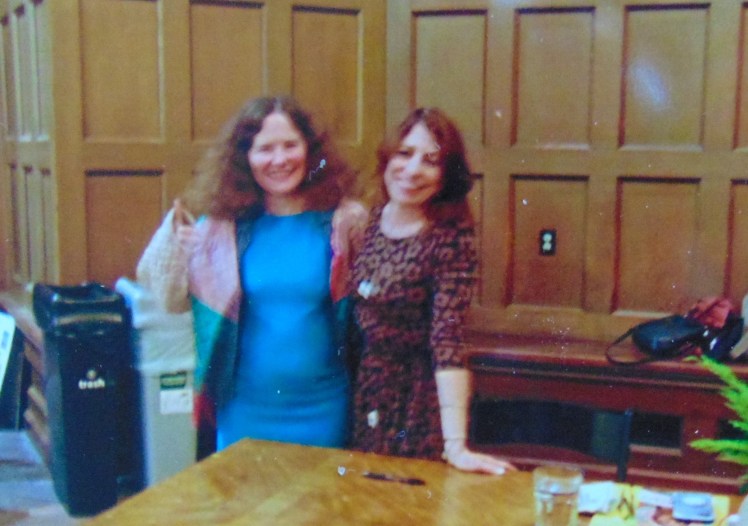
In the weeks that followed, I read Teresa of Avila’s autobiography. It provided me with much nourishment. I continued to read and re-read parts of it for a time. And, fortunately, I was able to meet the translator who had written the English copy I had read (Mirabai Starr came to Seattle on a book tour for one of her other books. I attended her presentation at St. Mark’s Episcopal Cathedral and she graciously signed my copy of her translation).

Later – perhaps another three or four years later – I was discussing Teresa of Avila with another nearby priest. This Trappist studied in Rome….. He said, “Oh, yes, I took a class once about Teresa of Avila.” I replied – simply – “Oh. I just understood her.” He looked at me and stammered. “You,” he said, “were given a GRACE.”

Yes, I had been given a grace that allowed me to “simply understand” Teresa of Avila. What was crucial to the story, however, was that the depth of the discouragement I had experienced (above) was such that God recognized my need for grace. Conditions dictate circumstances……

God loves us enough to offer us grace. Sometimes, that grace shows up when we particularly need it.

…..We have to be inwardly attentive enough to recognize this grace when it is offered. And, we have free will. It’s up to us whether or not we are going to accept this grace when it is offered…… Sometimes, I suppose, God may be very specific in these offers of grace to be sure we notice – I reference my “broken ankle story” as an example (I also acknowledge that I sometimes simply trip in the course of walking around….. I was born with faulty joints in my feet that render me physically clumsy. Make of that what you will…..).

…..”For God so loved the world that God gave his only son” for us (John 3:16). Absolute love for us – sacrificial love – is the only possible way that Jesus’ death on a cross and his resurrection makes any sense. The cross-and-resurrection story makes no sense at all when considered from a biology perspective. Self-sacrificing love, though – redeeming and loving beyond measure…… Such love is redemptive on a level that heals us……

So how does one go about describing an inner transformation of the sort I am writing about here? ……. I am currently reading Frederick Bauerschmidt’s Catholic Theology: An Introduction for one of my master’s in theology classes. In it, Bauerschmidt describes the differing Catholic and Protestant views on Justification by faith (i.e., do we experience justification by faith alone or by a combination of faith and our willingness to thus love people around us to therefore take care of the people around us), Bauerschmidt goes in depth about various theological ideas over the centuries about grace. There’s not simply the happening of “God’s grace and that’s that.” No. Rather, there are levels, types, degrees, and consequences of grace. For example (I’m gleaning this from Bauerschmidt’s book):

  • There’s prevenience grace – God providing us with grace because we need it (we need it because of original sin. If you wonder if original sin actually happened or actually exists, just turn on the evening news. No other explanation – psychological or otherwise – fully explains the scope of human brokenness).
  • There is “cooperative grace” in which we cooperate with God by allowing God to transform us when grace is offered. Oh, okay. Following the homily and broken ankle I mentioned earlier, it looks as though I participated in “cooperative grace” (it was the only good path forward at the time….).
  • At the Council of Trent (1545 – 1563), Catholics reasserted the traditional teaching that we are justified in Christ by a faith that is shaped by love of God (fides caritate fomata), a love that manifests itself in good works. The council’s Decree on Justification summarizes this process as ‘a transition (translatio) from the state in which a person is born a child of the first Adam to the state of grace and of adoption as children of God through the agency of the second Adam, Jesus Christ our savior’ (c. 4 in D 124). This transition ‘consists not only in the forgiveness of sins but also in the sanctification and renewal of the inward being by a willing acceptance of the grace and gifts whereby from being unjust becomes just…. (ch. 7…..)……”

So, when we are sufficiently inwardly attentive to God’s grace and we allow that grace to unfold, God changes us. God makes of us a new creation.

That inner transformation of becoming a new creation is experienced as truly miraculous.

At the same time, while I found the period of time I experienced to be truly transformative I also found it to be painfully slow. God, I found, offers us grace and still allows us to experience our daily foibles and the day-to-day consequences of our choices amidst “the human condition.” The parish priest I had during that time heard in the confessional the “too slow and human foibles” aspects of what goes on during periods of transformative change (I feel for him for what he found himself hearing in the confessional).

What I do know for sure:

  • We can experience God’s love for us.
  • What we hear in church about being made a new creation is for real.
  • God’s grace does happen.
  • The implementation of God’s grace in our lives is dependent upon our observation of this grace and our cooperative grace (i.e., God doesn’t act in our lives without our cooperation).
  • My day-to-day life today still has the very human hallmarks of the human condition (“saints we ain’t”). But, this “new creation” experience is yet transformative…. My prayer life is on a very different foundation than it was before “the homily and the broken ankle.”
  • God expects us to learn to love other people and to learn how to put that into practice. That’s what we’re here to do……

I hope to continue toward finding ways to facilitate conversations about our interior faith journeys……

Kim Burkhardt blogs about faith at The Hermitage Within. Thank you for reading this faith blog and for sharing it with your friends. While you are here, please feel welcome to provide support to sustain this blog ($$).


More on “Prayer – wordless sighs of the heart”… and “hearing from you”

In a previous post, “Prayer: Wordless Sighs of the Heart,” I mentioned that the Benedictine monks of Saint Meinrad Monastery mention in their book The Tradition of Catholic Prayer that “wordless sighs of the heart” is a type of prayer available to us. I love this type of prayer. Human language simply falla short for having a meaningful interaction with God in prayer. Vocabulary simply isn’t needed when we pray – we can simply be present with God. Prayer, at its’ most intimate – and therefore meaningful, is about presenting ourselves fully to the fullness of God.

In my readings, I recently came upon Paul’s letter to the Roman’s – Romans 8:26. I came upon it three times within about two weeks! Romans 8:26 says “…we do not know how to pray as we ought, but the Holy Spirit intercedes [for us] with groanings too deep for words.” Super! Paul was touching on this same important theme in the early decades of Christianity!

Regular readers may have noticed that I often blog about prayer. Why? While prayer is deeply personal (it is about each of us being intimately present with God) means it takes a particular type of creativity to describe prayer well, I want everyone to experience the richness of experiencing God’s presence in prayer. Because I want everyone to have a rich experience of prayer, I have started compiling a reference list of my blog posts on prayer to make it easy for readers to find a list of my blog post on prayer. You can find that list here (please check it out!). FYI, you will see that I am also compiling other topical lists of my blog posts on that same page……

Speaking of “what matters to each of us in our faith journeys,” I am expanding the “input” of this faith blog. In addition to you – readers – receiving blog posts on faith topics I choose to write about, this blog is being opened up to hearing from you. Is there a spirituality topic that you’ve been pondering for a time? Ask us about it. Is there a faith topic you have been pondering but you haven’t found an answer? Submit your question to this blog….. A Dear Hermitage Within” page has been added to this blog’s website so you can reach out with your question. Have a question about prayer? Ask. Want to know something about Christian liturgy? Ask. Curious about some aspect of religious history? Ask. Want to inquire about some aspect of theology? Ask. If you submit a question and we plan to write about it on this blog (you would remain anonymous, of course!), we will be sure to let you know by email. FYI – I will write some blog responses to submitted questions and may sometimes invite trusted faith writers to provide insights – pastors, theologians, etc….. Be sure to visit the “submit your question” page above when you would like to submit a faith question!

Kim Burkhardt blogs about faith at The Hermitage Within. Thank you for reading this faith blog and for sharing it with your friends. While you are here, please feel welcome to provide support to sustain this blog ($$).
People of faith, becoming Easter people….

St. John the Evangelist Church, Seattle

When I taught baptism preparation classes for parents and godparents, talking about baptism inherently required talking about Adam and Eve and “The Fall.” When we are baptized, we are given grace that helps us to reduce our tendency to sin – this human tendency to sin dates back to humanity’s fall in the Garden of Eden. When I would very quickly start talking about “The Fall” in these baptism prep classes – so that I could then get to the good part of explaining grace and baptism – I would tell parents and godparents that “the longer I am in church, the more convinced I am that ‘The Fall” happened with Adam and Eve. If you’re not sure that humanity’s ‘fall’ happened in the Garden of Eden, just turn on the news and listen to all the crazy things that we humans do. Humanity’s fall with Adam and Eve actually does an effective job of explaining our collective human faults……”

I have come to notice that the “church people” I most admire share a common quality. One way or another, each of them really, genuinely draw a connection between being people of faith to recognizing the darkest parts of themselves and facing-and-overcoming/improving those dark parts of themselves within the context of their faith. And, they talk about it. Often, this “talking about it” comes up in one-on-one conversations. I’ve heard people talk about overcoming depression, getting over being terrible to their spouses, about how there was a time when “they shouldn’t have had children” (and didn’t) to now being people who are visibly caring toward the people in their lives. The list goes on. Personally, I tend to talk about my challenges within prayer groups (a great place to find contemplative prayer groups is Contemplative Outreach).

This process of overcoming our darkest corners really pays off. We’ve all got dark corners in our lives. These are the parts of ourselves that we wouldn’t want to see described in the newspaper….. Being honest about this stuff takes courage. I think most of us are aware of the darkest parts of ourselves – whether we simply feel pulled down by it and don’t know what to do about it (that really does drag a person down emotionally) or if we take a hard, honest look at it “in the light of day.” Sometimes, getting honest about this stuff happens out of some kind of necessity (i.e., one’s particular form of darkness becomes manifest in some way that ends up requiring that it be addressed). Sometimes, people just want to become better people. No matter what path we take to really facing up to the darkest parts of ourselves, there is liberation to be found in letting God transform us. And, it really is God who transforms us. The best and most liberating transformation comes through our God who can – and will – bring about salvation.

Surrendering to letting God change our innermost selves can sometimes be terrifying. “My innermost self is ‘Who I am.’ What’s going to happen if I let God tamper with my innermost self?” What happens is that we become the people we are meant to be. We become better people. Transformation and freedom happen.

A couple of days ago, I had one of those “Murphy’s law” afternoons when “everything that can go wrong” does go wrong” (or, “things go wrong in ways that we couldn’t have even thought of”). I started coming unraveled. I recognized the unraveling when I shouted about that day’s version of “Murphy’s Law” and realized that my behavior was going to upset my cat (who had no control over my behavior). “Oh, my cat doesn’t need to be subjected to my unraveling.” I’ve been “doing church” long enough to know that this “unravelling” is no longer necessary when Murphy shows up and imposes his law. Further, I have experienced the process of God improving me enough to be able to shift toward that transforming process. I emotionally sat down and tapped into the transformative process I have learned in church. The unraveling began to reverse. There’s freedom in that. We don’t have be stuck in the worst parts of ourselves. We can become the people we want to see described in the newspaper (or, the church bulletin).

We are currently in the Easter season – the fifty days from Easter to Pentecost. God died for our sins and rose again so that we can join “the Risen Christ.” Our surrender in which we allow God to transform us means tapping into Jesus’s death and resurrection. This is truly beautiful. Transformative. It’s freely available to all of us. God wants to be in our lives. “Being the people we were meant to be” is an available option. Happy Easter.

Kim Burkhardt blogs about faith at The Hermitage Within. Thank you for reading this faith blog and for sharing it with your friends. While you are here, please feel welcome to provide support to sustain this blog ($$). You can also $$ support this blog by clicking here here to do your Amazon shopping (if you click here before you start your Amazon shopping, Amazon pays us a commission when you shop via the link provided).
Prayers of Praise and Thanksgiving

Divine Office
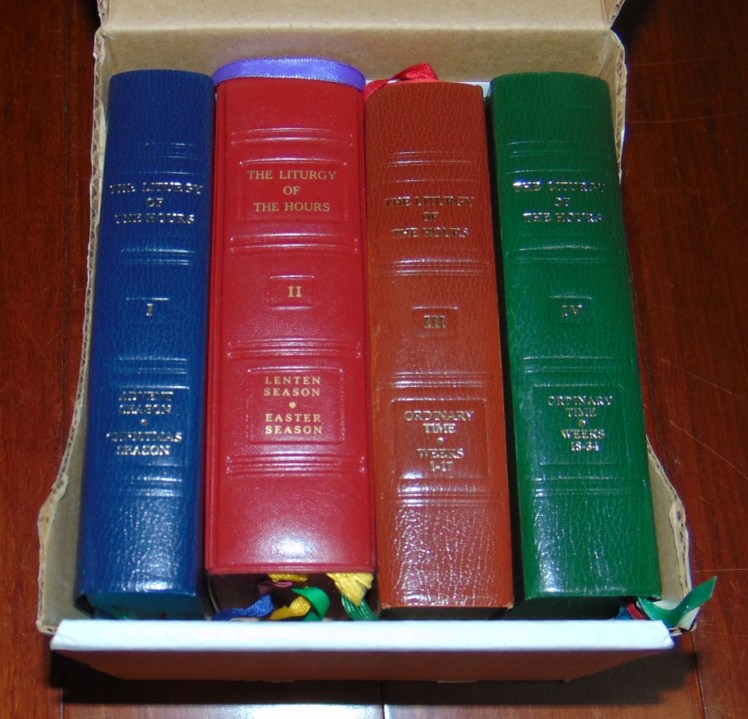
Liturgy of the Hours (Divine Office)

My prayer life in recent years began with a gifted period of contemplative prayer (as told here). Hands-down, my two favorite pray-ers are the contemplative mystics Teresa of Avila and John of the Cross (I still recall being at daily mass one day when Fr. Bryan Dolejsi mentioned Teresa of Avila being a Doctor of the Church. “What?” I wanted to know, “What is a Doctor of the Church and who is Teresa of Avila?” Those questions sent me off on a follow-up inquiry for which I am grateful). I experience joy within contemplative prayer and a movement toward becoming more of the person that God wants me to be.

An additional form of prayer recently entered my daily routine when I enrolled in theological studies. We were told to start daily participation in the morning and evening prayers of Liturgy of the Hours (see my previous post about this daily set of prayers that are prayed collectively by the Universal Church).

I am still finding my way into being consistently prayerful within the set daily structure of Liturgy of the Hours. In my previous post about Liturgy of the Hours, I mentioned being told that Liturgy of the Hours is meant to be a tool for prayer than a a straight jacket dictating how we are to pray (hmm…. I thrive prayerfully within a structured mass, why I am having to find my way within the structured Liturgy of the Hours?). I discussed this recently with a priest I see once a month – he told me to find one phrase in each day’s Liturgy of the Hours that I can grab onto and basically do Lectio Divina with that one phrase……

I recently took note that Liturgy of the Hours (also called “Divine Office”) starts with us asking God to come to our assistance – followed by the Glory Be and an Alelluiah.

Hmmm….. Within contemplative prayer, I experientially appreciate God’s loving presence and appreciate that God is acting to bring about positive change within me. Basically, adoration. A relational experience and receiving. I a starting to see a new opportunity within Liturgy of the Hours – learning a new way of appreciating God via the Glory Be and an Alelluiah. Contemplative adoration is a relationship, while the Glory Be and an Alelluiah are about praising God for God’s own sake. (Life’s not “all about us!!!”). Contemplative prayer and Liturgy of the Hours are complimentary – receiving in one, praising God for God’s own sake in the other. We hear at mass that God has no need of our praise, but that our praise is itself our gift to God.

There a good many ways to praise God. There are songs of praise, a thank you during the day, and – most importantly – thanking God by being of useful service to God’s children. Living a life of faith becomes living a life of gratitude. Alleluiah!

Kim Burkhardt blogs about faith at The Hermitage Within. Thank you for reading this faith blog and for sharing it with your friends. While you are here, please feel welcome to provide support to sustain this blog ($$).
Book Review: Bourgeault’s Centering Prayer and Inner Awakening

Book: Centering Prayer and Inner Awakening
Centering Prayer and Inner Awakening

I have been hearing for several years – mostly through Contemplative Outreach Northwest – about Episcopalian priest Cynthia Bourgeault. She is known for her active, thoughtful leadership within contemplative/mystical Christianity.

I finally got around to reading one of her books: Centering Prayer and Inner Awakening.

I am “beyond thrilled” to have come upon this book.

In 2016, I was gifted with a sustained period of contemplative prayer during which I had a solid sense of God loving me. This was “a gift I didn’t see coming.” The outline of that story is told here. A challenge I encountered was that I didn’t have the vocabulary to articulate my experience to people. A real challenge – I was experiencing something profoundly meaningful, but I had no means to talk to people about it (I’ve since seen a couple of other people wander into churches with a similar scenario – each time, a make an effort to “walk with them,” encouraging them as best I can along their journey…..). In time, through church attendance and involvement in Contemplative Outreach Northwest, I started grappling my way toward being more able to discuss the “outer contours” of my experience. A respected friend (who also happens to be Episcopalian, like Cynthia Bourgeault) pointed out that each of us has a different prayer relationship with God and that the best we can hope for is to find a few people with whom can share some basic aspects of our prayer experience in relating to God.

Then, I read Centering Prayer and Inner Awakening.

Actually, I skipped through several “how to” reflection portions of the book – that was information I didn’t need.

Early portions of the book, though, grabbed my attention. When Cynthia Bourgeault encountered “centering prayer” (i.e., how to learn to do contemplative prayer) groups as a priest, she said she immediately grasped the concept based on having grown up attending a Quaker school. I have periodically read about Quaker spirituality – this intrigued me.

Then, I got to later chapters of the book.

While God’s faith path for us within Christianity is a very different realm than the secular study of human psychology, Cynthia Bourgeault has artfully drawn from both in this book to discuss how we experience changes within our inner realm when Christ changes us via contemplative prayer. Of course, Bourgeault discusses within the book the very real differences between “doing Christianity” and “doing psychology.” I am currently reflecting – with an inner joy – upon Bourgeault’s artful communication within the later chapters of this book. It’s as if she put our inner human experience to poetry (I can’t take credit for this statement – I once heard someone else use this analogy in another context). In the next few weeks, I expect to be able to start talking more actively to people – based on this book – about my own inner changes and experience wrought by contemplative prayer.

And, I will be reading more of Cynthia Bourgeault’s books.

(For any reader who is interested, Teresa of Avila’s autobiography is also of tremendous interest regarding contemplative prayer.)

Kim Burkhardt blogs about faith at The Hermitage Within. Thank you for reading this faith blog and for sharing it with your friends. While you are here, please feel welcome to provide support to sustain this blog ($$).
Glory be to God

Photo of fountain
Fountain at Saint Martin’s University

Yesterday, I was on campus at Saint Martin’s University where I am starting a Master’s in Theological Studies MTS (I took the photo shown above while on campus).

While I was on campus, I joined the campus’s Benedictine monks (and a handful of students) for mid-day prayer in the campus chapel. Several recitations of the The Gloria Patri (Glory Be) were included in mid-day prayers.

The Gloria Patri, of course, is included at mass and in the rosary (“Glory be to the Father, and to the Son, and to the Holy Spirit as it was in the beginning, is now, and ever shall be, world without end. Amen). Thus, I’ve orally prayed it countless times. Yet, it specifically captured my attention during mid-day prayers yesterday.

We hear at mass “”Lord, although you have no need of our praise, yet our thanksgiving is itself your gift, since our praises add nothing to your greatness but profit us for salvation through Christ, Our Lord.”

“Sing a joyful song unto the Lord” (a popular hymn based on Psalm 100) is a great way to pray. There’s an adage that “those who sing pray twice.” This doesn’t just apply at church. Praying with joyful praise when we are alone at home is also a great way to pray!

There are plenty of ways to incorporate “joyful praise” into our personal prayer life:

  • Verbal thanks in prayer expressing appreciation for specific items for which we are grateful.
  • Prayerful and joyful music at home (uplifting!)
  • Being joyfully attentive to God in prayer
  • And…. (there’s no limit to how we can be joyful and praiseful)

Praise to God “profits us for salvation.” How might you regularly incorporate joyful praise into your personal prayer life?

Kim Burkhardt blogs about faith at The Hermitage Within. Thank you for reading this faith blog and for sharing it with your friends. While you are here, please feel welcome to provide support to sustain this blog ($$).
Faith resources – tools, not straight jackets

Divine Office
Liturgy of the Hours (Divine Office)

The ways through which we travel our faith journey – church attendance, types of prayer, etc. – are meant to nurture our faith journey. If anything we participate in feels as though it is constricting our faith journey, either something is amiss or we are ready for additional or different faith activities. Being attentive to any sense of constriction is an opportunity to look to adapt either ourselves or our situation. It is entirely good when we notice that we need to adjust – such observations mean we are engaged in our faith journey (or, sometimes, that we need to become more engaged). Our faith journey has developmental stages just as we experience stages in other aspects of our human development – stages in cognitive development (academics), stages in psychological and social development, etc.

By way of example, I am starting a Master’s in Theology in January (a “Masters in Theology Studies” or “MTS” for lay people rather than a Master’s in Divinity for pastors-in-training). At a recent meeting for registered MTS students, we were provided with the first of our faith formation sessions. We were told that Masters in Theological Studies degrees typically cover four academic subjects – scripture, ethics, systemic theology, and historical theology. In addition to academics, MTS programs – ours, at least – include the faith development of enrolled students (faith formation) because the degree should include our faith maturation in addition to a focus on academics (a whole person approach). During that day, we were instructed to start participating daily in Liturgy of the Hours (Divine Office) – the daily prescribed prayer life of the Church.

In recent years, my prayer life has principally been one of contemplative prayer – both at home and in small prayer groups via Contemplative Outreach. There are as many ways to pray as there are people; contemplative prayer has been personally fruitful for me. In contemplative prayer, I encounter periods of time in which I experience God loving me – which has been freeing me from difficult aspects of “the human condition.” As with anything else, I do also experience occasional dry periods in my experience with contemplative prayer. Therefore, I am now open to also praying Liturgy of the Hours (Diving Office).

Prior to being recently instructed to start participating in Liturgy of the Hours, I viewed the Divine Office remotely (“from afar”) as the prerogative of priests and avowed religious – a respected activity distant from my daily life. When we were recently told to start participating in this daily activity for the MTS program, part of me was intrigued. Another part of me was also relieved when we were told that Liturgy of the Hours is “a tool to help us pray, not a straight jacket to keep us from praying.” I am enjoying the journey into the Divine Office.

Kim Burkhardt blogs about faith at The Hermitage Within. Thank you for reading this faith blog and for sharing it with your friends. While you are here, please feel welcome to provide support to sustain this blog ($$).

Prayer: genuine engagement

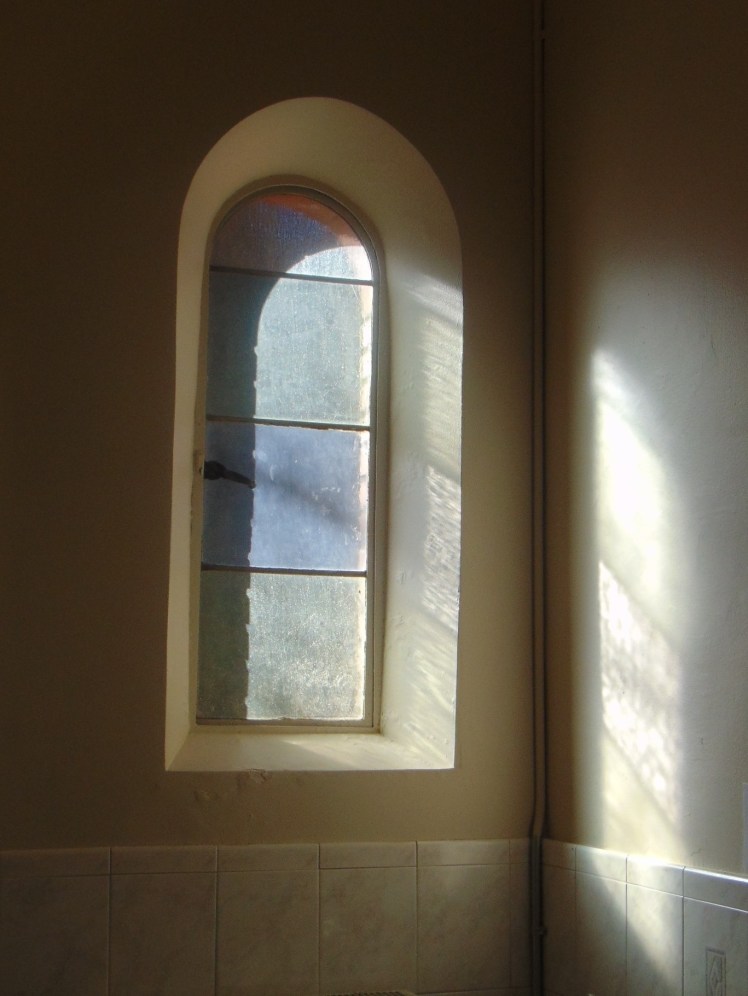
Clonmacnoise window

On December 24, 2017, a pastor was driving me home from an evening Christmas Eve service. As we were winding through snowy roads, I was telling him about the angst I was feeling about a personal problem that was “eating up my insides” at the time. He asked if I had prayed about the matter. “No,” I replied, “I haven’t prayed about this. I have been having such a positive prayer relationship with God for the last year – I don’t want to ruin this positive prayer relationship by bringing my problems to God.” I can still feel this heavy weight of the subsequent silence in the car as the pastor’s face puckered. Finally – after a moment that lasted too long – he sternly replied, “You have to bring EVERYTHING to God.”

I got the point.

We are to bring our whole selves to God. Not just the parts we want to bring to prayer. There’s no point packaging ourselves – or our situations – to present to God as we would wish. Do we really think God doesn’t know the real dirt?

God doesn’t want to deal with any superficialities that we might “sugar coat” in prayer. Prayer becomes meaningful when we get real. God loves us, wants to have a real, meaningful relationship with us.

Prayer is also a long-haul relationship. Prayer doesn’t become meaningful when we pray as an equivalent to 30 second chats held in a busy hallway. Prayer becomes real when we make real and continuing time to be meaningfully present with God. The shape and form of being “meaningfully present” in prayer is going to be different for each of us. A faith person who I admire mentioned to me several years ago (after the Christmas Eve car ride mentioned above) that everyone one of us is going to have a different prayer relationship with God because of the different nature of who each of us is…. What matters for each of us is that we commit sustained, ongoing time to building personal “prayer”being present” time with God. The fruits of that prayer become clear and substantive when we continue such sustained, meaningful time in prayer.

Wondering about new ways to pray? Check out a ways-to-pray list in one of my previous blog posts.

Kim Burkhardt blogs about faith at A Parish Catechist. Thank you for reading this faith blog and for sharing it with your friends. While you are here, please feel welcome to provide support to sustain this blog ($$).

Prayer: “Wordless sighs of the heart”

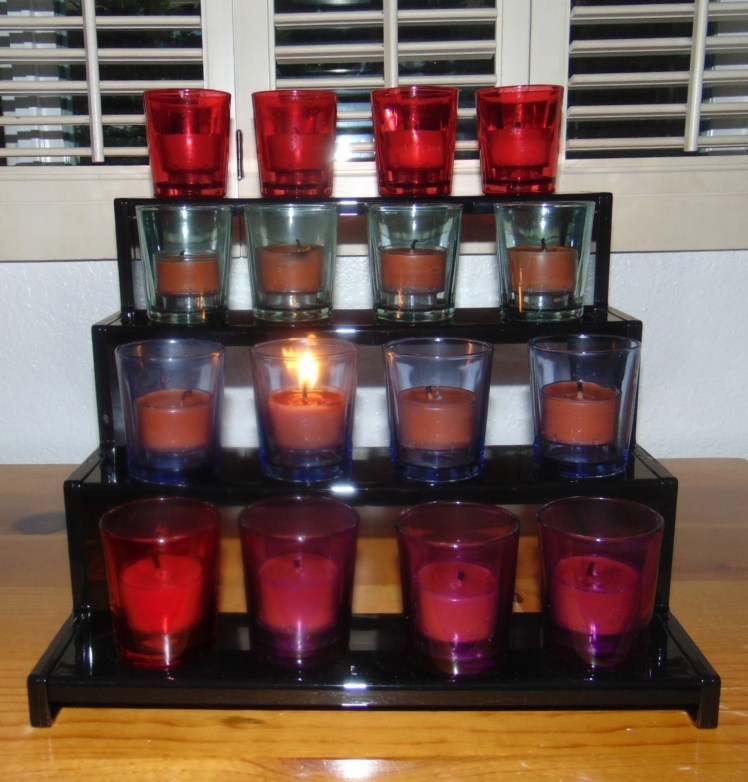
Candle

When I read The Tradition of Catholic Prayer from the Benedictine monks of Saint Meinrad Monastery, one of the types of prayer they mention is “wordless sighs of the heart.”

I am drawn to this phrase – I find prayer to be most meaningful when it is heartfelt. How about you?

,,,,,It’s been said, “There can be no faith life without prayer.” It’s also said that we cannot pray and continue sinning; when we really engage in prayer, we find that we have to allow God to change us for the better. Personally, I experience in prayer that God loves us!

True prayer goes beyond mere statements or superficial monologues directed in God’s direction. True prayer is dialogue, meaningful communication, presence. A “wordless sigh of the heart,” for example, is us opening ourselves bare before God.

How often does human prayer involve allowing our innermost selves to be fully transparent before God? Such vulnerability is a real interaction. While God certainly knows our hearts – God made us and knows us – it’s also true that we have free will. God doesn’t force us to into relationship; it’s up to us whether we are willing to be fully present before God.

When we aren’t in active relationship with God, the Holy Spirit occasionally knocks on our heart’s door; it’s up to us whether we respond to such promptings. We can also open our heart’s door to God by taking the initiative ourselves to communicate – God will show up when invited in. Sometimes, we feel God’s presence in prayer (I have!); other times, God may work “under the surface” in ways that we don’t observe; God working to change us “under our radar” is what John of the Cross wrote about in his book Dark Night of the Soul (“Dark Night” being a period of inner transition that isn’t fully transparent to us, rather than necessarily being a depressive period!).

There are many forms of prayer in which we have an active relationship with God. Contemplative prayer (for example, visit the network of Contemplative Outreach) is one way, being engaged while at church is another way – as are meditative prayers such as praying the rosary, talking to God, heartfelt intercessions, prayers of praise (including music)……… What makes prayer meaningful is that we pray in a way that makes it relational. There are as many ways to pray as there are people!

Interested in learning more about prayer? Check out A Parish Catechist’s previous blog post, “List: ways to pray.

Kim Burkhardt blogs about faith at A Parish Catechist. Thank you for reading this faith blog and for sharing it with your friends. While you are here, please feel welcome to provide support to sustain this blog ($$).

Book Review: Paths to the Heart – Sufism and the Christian East

Book: Paths to the Heart
Paths to the Heart: Sufism and the Christian East

I have recently been reading books about Eastern Orthodox Christianity. I have a particular interest in the contemplative tradition within Christianity and have discovered that there is a strong contemplative aspect within the Eastern Orthodox tradition.

Paths to the Heart: Sufism and the Christian East is a compilation of presentations from a conference held shortly after 9/11 where a group of people met to discuss similarities of the religious views between the Christian East (i.e.., Eastern Orthodox) and Sufi Muslim.

I am more than half-way through this book. What emerges in this book is engaging observations about the contemplative aspects of Eastern Orthodox and Sufi Islam. For anyone interested in the contemplative aspects of Eastern Orthodox, Sufi Islam, or both….. Paths to the Heart: Sufism and the Christian East is an insightful read.

For my particular area of interest – the contemplative prayer aspect within Christianity – I am learning in this book about Hesychasm – described by Wikipedia as “a contemplative monastic tradition in the Eastern Christian traditions of the Eastern Orthodox Church and Eastern Catholic Churches in which stillness (hēsychia) is sought through uninterrupted Jesus prayer. While rooted in early Christian monasticism, it took its definitive form in the 14th century at Mount Athos.”

Kim Burkhardt blogs at A Parish Catechist. If you are a new visitor, it would be great to have you subscribe to follow this blog (it’s free – thank you!). If you know someone who would like this blog, please share it with them and invite them to subscribe (thank you!).