Easter: Resurrection, surrender, transformation
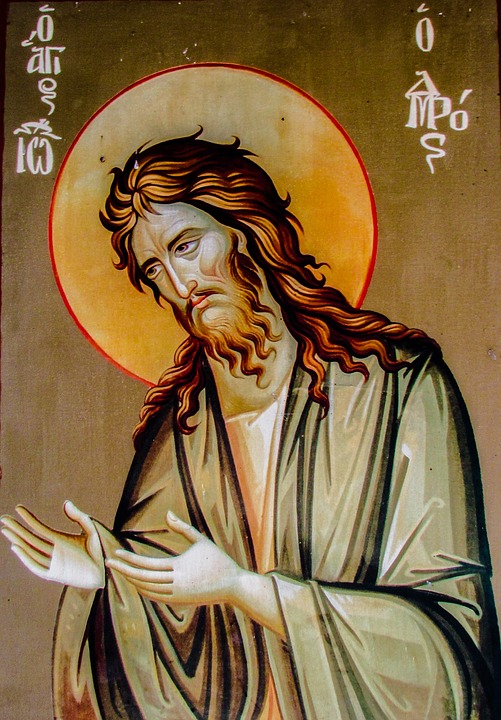
John the Baptist

Easter: Christ has risen!

In Christ’s resurrection, we are offered transformation. 

We – in and of ourselves – cannot transform ourselves into the fullness of who we are meant to be.

….This is the fourth Lenten season in a row when I have experienced medical challenges – surgeries, etc.   This year, I broke my left foot on March 19th.  

After March 19, I continued falling (mishaps with crutches, etc.).   In addition to a broken left foot, I subsequently sprained my right foot.  Ended up with medical boots on both feet.   Then….On the morning of April 6, I fell again (two boots makes navigation difficult).    I sent an email to a couple people about this, ending the email with “Anger doesn’t begin to describe…..”   One person replied with insightful observations about surrender.

It’s true.  I know it’s true – I reach such a point of surrender-to-God in 2016 with a subsequent transformation in 2016 (that surrender involved a homily at an Irish mass and a broken ankle!).

For Christ to truly transform us, we have to surrender ourselves and our greatest difficulties to God.

Surrendering doesn’t just mean some limited-scope prayer to God and “hoping” that something positive will happen.   It doesn’t mean we hang onto some aspect of what we supposedly surrender – as if what we surrender still somehow belongs to us.   No.   True surrender means that we no longer have possession (ownership) or control.

True surrender comes when we surrender our hardest challenges.  The challenges we don’t tell people about.  Challenges that we somehow feel tied to…..  Challenges that are eating away at our very being.

When we truly surrender these aspects of our lives to God and allow God to do whatever God wants to do (WE DON’T KNOW WHAT GOD’S GOING TO DO!), true and life-giving transformation of our very selves happens in and through God.  Galatians 2:20:  “I have been crucified with Christ; and it is no longer I who live, but Christ who lives in me. And the life I now live in the flesh I live by faith in the Son of God, who loved me and gave Himself for me.”

It’s Easter, Christ has risen!   A great time to surrender to experience transformation offered by the Risen Christ.

Kim Burkhardt blogs at A Parish Catechist (and is a member of the Association of Catholic Publishers). Blogging is sustainable via blog readership (i.e. readers/subscribers). If you are a new visitor, it would be great to have you subscribe to follow this blog (thank you!). If you know someone who would like this blog, please share it with them and invite them to subscribe (thank you!).
We are a resurrection people

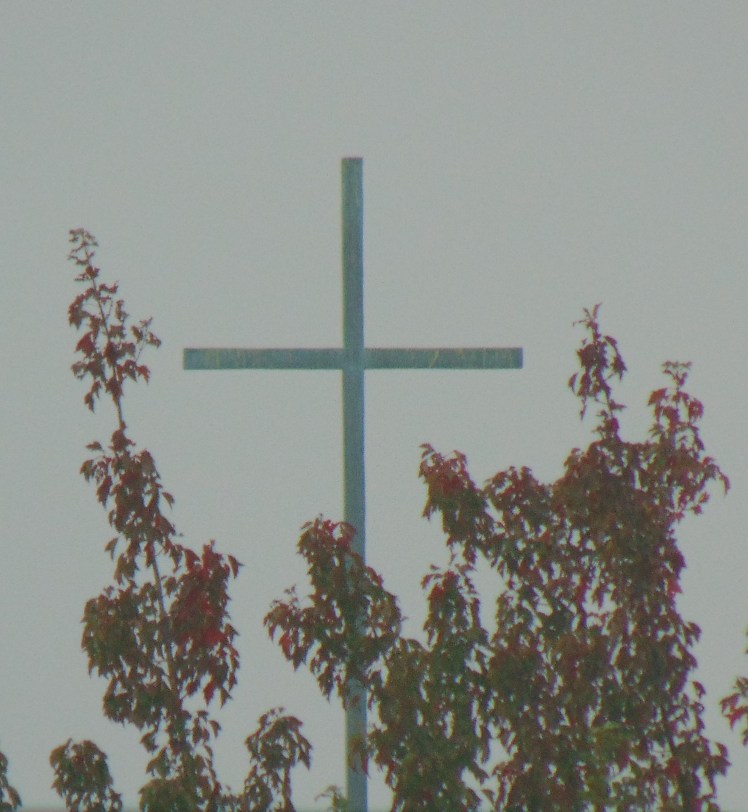
St. Benedict Steeple

“We are a resurrection people.”

This statement struck me when I recently started reading the book Guide for Celebrating Holy Week and The Triduum.

This statement resonates with what drives me to share with people about growing in faith.

We are indeed “A resurrection people,” a good phrase to discuss during this Lenten season.

Christ died for our salvation.   We don’t celebrate Easter each year for the sole purpose of being mournful about Christ’s death.   Yes, we look at Christ’s passion and our own sinful nature during Lent.   That’s not all, though.   Each Lenten season is an opportunity to celebrate that our redemption is made possible as a result of Christ’s death on the cross.   There’s a redemptive joy possible through God’s ability to transfigure us – when we allow God to work in us – that motivates my continued prayer life (prayer is a relationship with God in which we rest in God’s presence and take joy in that transformative relationship, allowing God to turn us into the people we are meant to be.  There is, too, everything else that prayer is – bringing all of our life to God, having a back-and-forth relationship).   There’s both the opportunity for joy and a responsibility that comes with redemption.

When we fully enter into our Christian faith tradition, we have the opportunity to experience the “already” aspect of the “already but not yet” Kingdom of God.   Specifically, Christ’s resurrection inaugurated the Kingdom of God, while, of course, the fullness of this is “yet to come” (as stated by the US Conference of Catholic Bishops:  “The tension is often described in terms of “already but not yet”: i.e., we already live in the grace of the kingdom, but it is not yet the completed kingdom.”).

We have the opportunity to really do a deep dive into the fullness of Christianity.   In doing so, God will bring us to the fullest measure of joy that we can experience in this life and to be a meaure of goodness in the lives of the people around us.   Further, we have a responsibility to do this.   Christ didn’t die on the cross so that we would bypass the opportunity to fully experience what we’re being offered.

Actively participating in Christianity provides a multitude of ways to “jump in to a life of faith with both feet.”  Being of service, participating in faith development programs at church – there are so many ways to get involved….

Kim Burkhardt blogs at A Parish Catechist (and is a member of the Association of Catholic Publishers). Blogging is sustainable via blog readership (i.e. readers/subscribers). If you are a new visitor, it would be great to have you subscribe to follow this blog (thank you!). If you know someone who would like this blog, please share it with them and invite them to subscribe (thank you!).

Death and new life

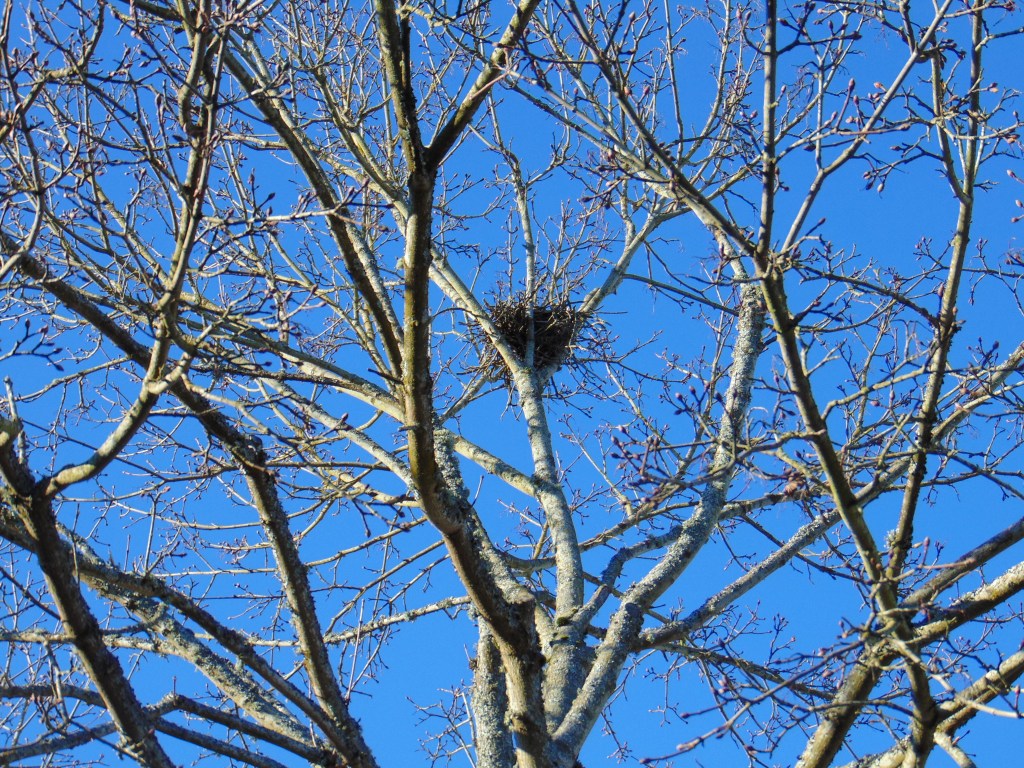
bird nest in tree

This image of an empty bird’s nest in a winter tree – with spring approaching – speaks visually to nature’s annual cycles of death and the anticipation of new life.

Seattle – where I live – is in the midst of a cold snap after a period of relative winter warmth. Many of us are ready for the increasing warmth and life that comes with the pending spring.

When I saw this empty bird’s nest and the similar-or-contrasting lack of leaves on the tree, I immediately thought of our own spiritual death, rebirth, and – for many people – the perpetual hope of new life. In Christianity, we learn to die to self. Christ died and rose again – for our salvation. Bird nests are often used year after year for the next year’s new baby birds. Annual cycles of new life. Soon, new leaves – another year of life (the color green of leaves symbolizes vibrancy) – will also begin to spring forth on this winter-cold, bare tree.

When I first tried to photograph this bird’s nest, I zoomed in with my camera in an attempt to photograph the bird’s nest and leaf-less tree branches – without the electrical and phone wires that are also visible when photographing the entire tree (i.e., the photo above).

I then realized that there is also value in photographing the broader tree showing the phone and electrical wires showing (see the photo below). Too often, we desire the vibrant new life that comes from dying to the darkest parts of ourselves…. Yet we let the wires in our lives – those distractions that prevent us from allowing God to rejuvenate new life in us – to prevent new vibrancy of life to emerge in us. Sticking to such distractions serves no good in our lives. How stubborn we can be in refusing to let go of that which keeps us bound to the darkness in and around us.

During this Lenten season, we anticipate the anniversary of Christ’s death and resurrection at Easter. Let us – during this Lenten season – allow God into our hearts to clean out that in each of us that needs to be cleansed. Welcome in new life of the spirit.

Allowing God to transform us into new life requires surrender. We give up control. We give up autonomy. In a sense, we give up whatever sense of “self” we cling to (“I may not like all of me, but ‘me’ is what I’ve got”). In today’s society, many of us must also begin to give up rampant individualism – an individualism that isolates us – to join the community of people around and among us. We are meant to live amongst one another.

Easter is coming.

bird nest in tree with wires


Kim Burkhardt blogs at A Parish Catechist and The Books of the Ages (and a member of the Association of Catholic Publishers). If you are a new visitor, it would be great to have you follow this blog (thank you!). If you know someone who would like this blog, please share it with them (thank you!). You can also support this blog by clicking here when you are going to shop on Amazon (that lands A Parish Catechist a commission on Amazon sales).