Easter: Resurrection, surrender, transformation
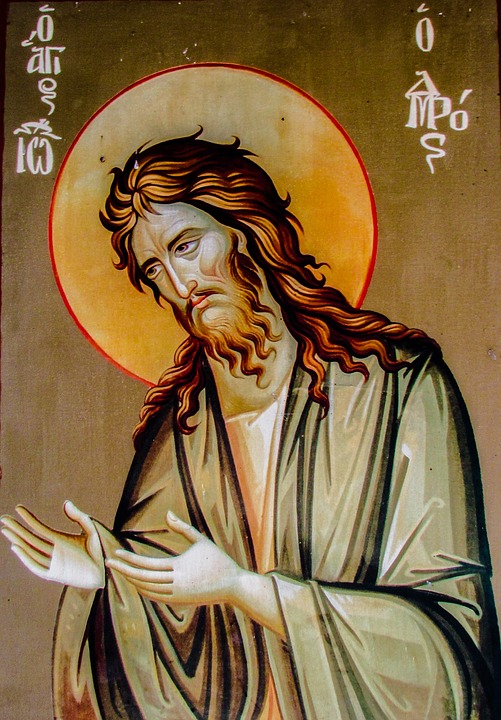
John the Baptist

Easter: Christ has risen!

In Christ’s resurrection, we are offered transformation. 

We – in and of ourselves – cannot transform ourselves into the fullness of who we are meant to be.

….This is the fourth Lenten season in a row when I have experienced medical challenges – surgeries, etc.   This year, I broke my left foot on March 19th.  

After March 19, I continued falling (mishaps with crutches, etc.).   In addition to a broken left foot, I subsequently sprained my right foot.  Ended up with medical boots on both feet.   Then….On the morning of April 6, I fell again (two boots makes navigation difficult).    I sent an email to a couple people about this, ending the email with “Anger doesn’t begin to describe…..”   One person replied with insightful observations about surrender.

It’s true.  I know it’s true – I reach such a point of surrender-to-God in 2016 with a subsequent transformation in 2016 (that surrender involved a homily at an Irish mass and a broken ankle!).

For Christ to truly transform us, we have to surrender ourselves and our greatest difficulties to God.

Surrendering doesn’t just mean some limited-scope prayer to God and “hoping” that something positive will happen.   It doesn’t mean we hang onto some aspect of what we supposedly surrender – as if what we surrender still somehow belongs to us.   No.   True surrender means that we no longer have possession (ownership) or control.

True surrender comes when we surrender our hardest challenges.  The challenges we don’t tell people about.  Challenges that we somehow feel tied to…..  Challenges that are eating away at our very being.

When we truly surrender these aspects of our lives to God and allow God to do whatever God wants to do (WE DON’T KNOW WHAT GOD’S GOING TO DO!), true and life-giving transformation of our very selves happens in and through God.  Galatians 2:20:  “I have been crucified with Christ; and it is no longer I who live, but Christ who lives in me. And the life I now live in the flesh I live by faith in the Son of God, who loved me and gave Himself for me.”

It’s Easter, Christ has risen!   A great time to surrender to experience transformation offered by the Risen Christ.

Kim Burkhardt blogs at A Parish Catechist (and is a member of the Association of Catholic Publishers). Blogging is sustainable via blog readership (i.e. readers/subscribers). If you are a new visitor, it would be great to have you subscribe to follow this blog (thank you!). If you know someone who would like this blog, please share it with them and invite them to subscribe (thank you!).


Surrendering to God transforming us

I was in high school when I was first introduced to surrendering to allowing God to change us. At the time, I was challenged by a particular type of life difficulty. I surrendered that difficulty to God and asked for assistance in having my life change. How I was living in the world did improve. I also developed the rudiments of an expanded prayer life. I still tell the story about my prayer life expanding at that time – I, as an adolescent, grew beyond the basics of childhood prayer (“Now I lay me down to sleep” and literal conceptions of Jesus sitting on a physical throne in the clouds) and saw my prayer life expand incrementally toward more of an interactional relationship with God.

In recent years, I surrendered again to allowing God be present in my life. This time, the surrender was broader. “God change me in whatever ways you want me to be different.” Again, my life is changing. I am experiencing emotional reorganizations that I couldn’t have anticipated – transformations beyond what I would have brought about on my own. More freedom, increased life functionality, some measure of more contentment. Growing commitment to being useful to other people. This came about from a prompting of the Holy Spirit – a moment at a church service in October, 2016 when I felt – and responded to – an invitation to allow God to be more fully present in my life (that story is told here).

God wants to be present in our lives. God wants us to be the people we are meant to be, to be fully alive. In the words of Timothy Radcliffe, “We are all radically incomplete. And, we need each other.” We, with our human limitations, need God’s movement in our lives to become the people who we are meant to be. We move toward being complete when we allow God to be the center of our lives and to act in changing us. Acts 17:28: For in God we live and move and have our being.

Allowing God to become the center of our lives, we cease to be the center of our lives. Ceasing to be the center of our live can feel threatening (“But what about me? I’m all I’ve got?”). It turns out that when we step out of the way, God brings freedom into our lives – we become the people we are meant to be and we become more useful in the world. God loves us!

Kim Burkhardt blogs at A Parish Catechist (and is a member of the Association of Catholic Publishers). Blogging is sustainable via blog readership (i.e. readers/subscribers). If you are a new visitor, it would be great to have you subscribe to follow this blog (thank you!). If you know someone who would like this blog, please share it with them and invite them to subscribe (thank you!).

Surrender – a perennial need

Candle

I wrote a post in July titled Surrender in Prayer. In that post, I wrote “Despite our western ideas about individual autonomy and self-agency, us permitting God’s agency to mold and shape us is liberating. God loves us, wants good for us and our world, and and has capacity for transformational good beyond our comprehension. There is no room for a negative outcome when we allow God to work within and through us.”

Surrendering to God’s will needs to be ongoing. The people who can stay in a perpetual state of surrender to God’ work in their lives – well, some of them are saints! They get the ongoing joy found in Acts 17:28: “For it is in him that we live and move and have our being.”

I live at times in Acts 17:28 – sometimes longer periods of time, sometimes shorter. Then, there are times when I get caught up in life’s challenges, fears, etc. It happened again yesterday. I arrived home in an emotional fit about one of life’s challenges. A few weeks ago, I spoke to a priest (who reads this blog) and mentioned some kind of discomfort about another challenge – he told me that I need to follow my own advice that I write about in this blog! Hmf!! ….I was then awake at 1:30 this morning fretting about the current life challenge. Embarrassingly, it took me until 5:00 am to come back to “surrender this in prayer.”

God loves us. When we surrender, God provides us with strength and turns us into better people. “I can do al things through Christ who gives me strength” (Philippians 4:13).

I see ways in which God has made me a better person in recent years. I look forward to God continuing to transform how I live in the world – (re) surrender required on my part.

Kim Burkhardt blogs at A Parish Catechist and The Books of the Ages (and a member of the Association of Catholic Publishers). If you are a new visitor, it would be great to have you follow this blog (thank you!). If you know someone who would like this blog, please share it with them (thank you!). You can also support this blog by clicking here when you are going to shop on Amazon (that lands A Parish Catechist a commission on Amazon sales).

Second Sunday in Lent: Reading Reflection

James Tissot's painting of Jesus praying

Many of Christianity’s denominations read the same Bible readings each Sunday – the three-year cycle of weekend readings decided upon by the Catholic church after Vatican II.

This Sunday, we hear in the First Reading of Abraham following God’s orders by going to a mountaintop to sacrifice his only son – the son he was given later in life to be the son who God had said would provide Abraham with countless descendants. At the last moment – when Abraham had demonstrated his willingness to follow God’s instructions – he was told not to sacrifice his son.

In the second reading (Romans 8:31-34), we hear reference to God not saving his own son – a son biologically descended from Abraham – from death.

In the Gospel reading, Jesus goes to a mountaintop – just as Abraham had gone to a mountaintop in the first reading (the readings each weekend are paired based upon shared topics or themes) – and is transfigured in dazzling white, having discourse with two prophets of old, all before three of Jesus’ apostles.

When we surrender to allow God to work in our lives, we are also transformed. To the degree that we allow God to work in our hearts, we become the people God meant for us to be. When we give up the false perception of being in control of our lives, it can be tempting to think that we are surrendering our independence and self-determination. How well is independence and self-determination working in today’s increasingly lonely, socially-distanced, and broken world? The people we are meant to be are people who are daughters and sons of God – daughters and sons who live in relationship with God and who are transformed through God’s love for us. We subsequently find ourselves transformed into living the two commandments Christ said are the two greatest: Love God and love your neighbor as yourself. Transformed into a life of joy that passes all understanding. In surrender, a new life is given to us.

Kim Burkhardt blogs at A Parish Catechist and The Books of the Ages (and a member of the Association of Catholic Publishers). If you are a new visitor, it would be great to have you follow this blog (thank you!). If you know someone who would like this blog, please share it with them (thank you!). You can also support this blog by clicking here when you are going to shop on Amazon (that lands A Parish Catechist a commission on Amazon sales).