Book Review: Eastern Catholic Theology in Action
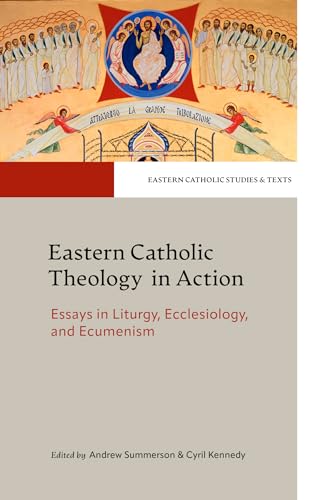
This book, Eastern Catholic Theology in Action – Essays in Liturgy, Ecclesiology, and Ecumenism, is part of a useful collection of resources being developed by The Catholic University of America Press.

I came upon this book recently while writing a paper exploring ecumenism within/among Roman Catholicism, Catholicism’s Eastern rites, and Eastern Orthodox traditions. While I had already read several books about Eastern rites and Orthodox traditions and have worked as a liturgist in the Roman Catholic rite, I spent far more time than I expected pulling together and synthesizing accurate and reflective information for my paper. I was initially self-critical (“Why did it take so much time to write this paper? I’ve already read several books about Eastern rites and traditions. Aren’t I more academically competent than this?”). Then, after I submitted my own academic paper for grading, I started reading in full the book Eastern Catholic Theology in Action (2024). The editors and publishers explain at the book’s beginning that too little academic and theological attention has been given to Eastern Catholic rites; The Catholic University of America Press has committed to changing this with a series of books – include this book. Reading this provided me with a sense of relief. I realized that the books I had already read (I reviewed some of them for this blog) were catechetically insightful for understanding the spirituality and liturgical perspectives of Eastern rites and traditions, but did not lay enough academic groundwork needed for the Master’s in Theology paper I wrote. Of note: the inside cover of this book (Eastern Catholic Theology in Action – Essays in Liturgy, Ecclesiology, and Ecumenism) states that scholars of Eastern Christianity often have little to offer when asked for an intro to Eastern Christian theology. Therefore, I appreciate The Catholic University of America Press’s commitment to ongoing scholarly attention to Eastern Catholic rites. My recent dismay at how hard I worked to write my own paper has produced enthusiasm for absorbing The Catholic University of America Press academic content on this subject. I bookmarked their website to keep track of additional pending publications about Eastern Catholic rites. This book is contributing to my academic development from reading books catechetically to thinking academically about ecclesial theology.

Eastern Catholic Theology in Action – Essays in Liturgy, Ecclesiology, and Ecumenism has been published to scholastically explore “the unique patrimony of the Eastern Catholic Churches, divided according to the categories of Liturgy, Theology, Spirituality, Discipline, and Culture.” The book provides a deep dive into the concepts I sought to discuss in my own brief paper. This book is a must-read for those seeking a deepened understanding of Eastern Catholic rites. Count The Catholic University of America Press as a go-to resource for Westerners wanting to learn about Eastern rites.

Kim Burkhardt blogs about faith at The Hermitage Within. Thank you for reading this faith blog and for sharing it with your friends. While you are here, please feel welcome to provide support to sustain this blog ($$).
More on “Prayer – wordless sighs of the heart”… and “hearing from you”

In a previous post, “Prayer: Wordless Sighs of the Heart,” I mentioned that the Benedictine monks of Saint Meinrad Monastery mention in their book The Tradition of Catholic Prayer that “wordless sighs of the heart” is a type of prayer available to us. I love this type of prayer. Human language simply falla short for having a meaningful interaction with God in prayer. Vocabulary simply isn’t needed when we pray – we can simply be present with God. Prayer, at its’ most intimate – and therefore meaningful, is about presenting ourselves fully to the fullness of God.

In my readings, I recently came upon Paul’s letter to the Roman’s – Romans 8:26. I came upon it three times within about two weeks! Romans 8:26 says “…we do not know how to pray as we ought, but the Holy Spirit intercedes [for us] with groanings too deep for words.” Super! Paul was touching on this same important theme in the early decades of Christianity!

Regular readers may have noticed that I often blog about prayer. Why? While prayer is deeply personal (it is about each of us being intimately present with God) means it takes a particular type of creativity to describe prayer well, I want everyone to experience the richness of experiencing God’s presence in prayer. Because I want everyone to have a rich experience of prayer, I have started compiling a reference list of my blog posts on prayer to make it easy for readers to find a list of my blog post on prayer. You can find that list here (please check it out!). FYI, you will see that I am also compiling other topical lists of my blog posts on that same page……

Speaking of “what matters to each of us in our faith journeys,” I am expanding the “input” of this faith blog. In addition to you – readers – receiving blog posts on faith topics I choose to write about, this blog is being opened up to hearing from you. Is there a spirituality topic that you’ve been pondering for a time? Ask us about it. Is there a faith topic you have been pondering but you haven’t found an answer? Submit your question to this blog….. A Dear Hermitage Within” page has been added to this blog’s website so you can reach out with your question. Have a question about prayer? Ask. Want to know something about Christian liturgy? Ask. Curious about some aspect of religious history? Ask. Want to inquire about some aspect of theology? Ask. If you submit a question and we plan to write about it on this blog (you would remain anonymous, of course!), we will be sure to let you know by email. FYI – I will write some blog responses to submitted questions and may sometimes invite trusted faith writers to provide insights – pastors, theologians, etc….. Be sure to visit the “submit your question” page above when you would like to submit a faith question!

Kim Burkhardt blogs about faith at The Hermitage Within. Thank you for reading this faith blog and for sharing it with your friends. While you are here, please feel welcome to provide support to sustain this blog ($$).

Book Review: An Immigration of Theology

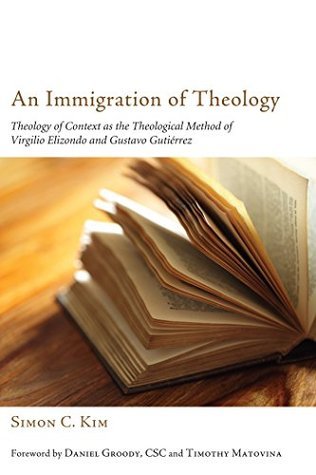
Book Cover: An Immigration of Theology
Book: An Immigration of Theology

I recently came upon An Immigration of Theology by Fr. Simon Kim and am intrigued with what the author has done with this book.

Goodreads summarizes this book, in part, with the following: “The theological reflections of Virgilio Elizondo and Gustavo Gutiérrez are examples of the ecclesial fruitfulness of the second half of the twentieth century. Following the directives of Pope John XXIII and the Second Vatican Council, [they] present the Gospel message in relevant terms to their own people…. Inspired by this moment in Church history, while at the same time recognizing the plight of their people….. [they] discovered a new way of doing theology by asking a specific set of questions based on their local context. By investigating where God is present in [their local context], both theologians have uncovered a hermeneutical lens in rereading Scripture and deepening our understanding of ecclesial tradition…. a theological method that takes seriously the contextual circumstances of their locale. By utilizing the common loci theologici of Scripture and tradition in conjunction with context and their own experience, [they] illustrate…. how every group must embrace their own unique theological reflection.”

I find this interesting – there seems to be the option in this book of stating that we must make theological concepts relevant to our own circumstances while also stating that theological principles are universal. What I am hoping to read in this book – now that I have it sitting on my coffee table – is that theological principles are universal in principle and also local in adaptation.

Kim Burkhardt blogs about faith at The Hermitage Within. Thank you for reading this faith blog and for sharing it with your friends. While you are here, please feel welcome to provide support to sustain this blog ($$).