More on the trajectories of our faith journeys…..

I wrote in my last post that I am interested in people “exploring and sharing the trajectories of our (faith) lives” with one another….I am interested in Augustine’s “interiority.”….. I’ve been trying to figure out for several years how to get church people today to talk to each other in more depth about how we each experience our faith…..”

It can take a long time, it seems, to uncover how to speak to one another about what we experience inwardly……

…..More of how to speak of my inner journey seems to be coming to light. So, here goes an effort to articulate some of my own experience…..

At a point in life when I was particularly discouraged – swallowed up in a dark emotional abyss – social circumstances led me to attend a Friday evening mass. I avowed that I was there as a one-off, with no intention of returning to the faith tradition of my childhood. Much to my surprise, the priest’s faith “filled an empty hole I had been walking around with” during the homily. On my way home, I fell off a curb and broke my ankle – rendering me stuck on the couch at home with no way to distract myself from considering the impact of that homily. By Monday, I decided that perhaps I needed to talk to the priest about returning to church. By the end of the month, I was a parishioner at a nearby parish and “no one could get rid of me with dynamite” (that story is told here).

In the period that followed, I had an extended period of feeling God loving me. Directly.

An inner transformation unfolded. Over time, I told several people that an inner reorganization was taking place, but I had no words to describe it. I wanted to discuss the particulars of it, but had no way to talk about it…… As an aside, the priest at the parish I joined seemed rather puzzled to see me at mass at least twice on many weekends. I needed what was happening at mass – being at mass contributed to this inward transformation.

The following summer, I heard mention at daily mass of Teresa of Avila – a “Doctor of the Church.” What? What is a “Doctor of the Church?” I must find out about this Teresa of Avila…….

In the weeks that followed, I read Teresa of Avila’s autobiography. It provided me with much nourishment. I continued to read and re-read parts of it for a time. And, fortunately, I was able to meet the translator who had written the English copy I had read (Mirabai Starr came to Seattle on a book tour for one of her other books. I attended her presentation at St. Mark’s Episcopal Cathedral and she graciously signed my copy of her translation).

Later – perhaps another three or four years later – I was discussing Teresa of Avila with another nearby priest. This Trappist studied in Rome….. He said, “Oh, yes, I took a class once about Teresa of Avila.” I replied – simply – “Oh. I just understood her.” He looked at me and stammered. “You,” he said, “were given a GRACE.”

Yes, I had been given a grace that allowed me to “simply understand” Teresa of Avila. What was crucial to the story, however, was that the depth of the discouragement I had experienced (above) was such that God recognized my need for grace. Conditions dictate circumstances……

God loves us enough to offer us grace. Sometimes, that grace shows up when we particularly need it.

…..We have to be inwardly attentive enough to recognize this grace when it is offered. And, we have free will. It’s up to us whether or not we are going to accept this grace when it is offered…… Sometimes, I suppose, God may be very specific in these offers of grace to be sure we notice – I reference my “broken ankle story” as an example (I also acknowledge that I sometimes simply trip in the course of walking around….. I was born with faulty joints in my feet that render me physically clumsy. Make of that what you will…..).

…..”For God so loved the world that God gave his only son” for us (John 3:16). Absolute love for us – sacrificial love – is the only possible way that Jesus’ death on a cross and his resurrection makes any sense. The cross-and-resurrection story makes no sense at all when considered from a biology perspective. Self-sacrificing love, though – redeeming and loving beyond measure…… Such love is redemptive on a level that heals us……

So how does one go about describing an inner transformation of the sort I am writing about here? ……. I am currently reading Frederick Bauerschmidt’s Catholic Theology: An Introduction for one of my master’s in theology classes. In it, Bauerschmidt describes the differing Catholic and Protestant views on Justification by faith (i.e., do we experience justification by faith alone or by a combination of faith and our willingness to thus love people around us to therefore take care of the people around us), Bauerschmidt goes in depth about various theological ideas over the centuries about grace. There’s not simply the happening of “God’s grace and that’s that.” No. Rather, there are levels, types, degrees, and consequences of grace. For example (I’m gleaning this from Bauerschmidt’s book):

  • There’s prevenience grace – God providing us with grace because we need it (we need it because of original sin. If you wonder if original sin actually happened or actually exists, just turn on the evening news. No other explanation – psychological or otherwise – fully explains the scope of human brokenness).
  • There is “cooperative grace” in which we cooperate with God by allowing God to transform us when grace is offered. Oh, okay. Following the homily and broken ankle I mentioned earlier, it looks as though I participated in “cooperative grace” (it was the only good path forward at the time….).
  • At the Council of Trent (1545 – 1563), Catholics reasserted the traditional teaching that we are justified in Christ by a faith that is shaped by love of God (fides caritate fomata), a love that manifests itself in good works. The council’s Decree on Justification summarizes this process as ‘a transition (translatio) from the state in which a person is born a child of the first Adam to the state of grace and of adoption as children of God through the agency of the second Adam, Jesus Christ our savior’ (c. 4 in D 124). This transition ‘consists not only in the forgiveness of sins but also in the sanctification and renewal of the inward being by a willing acceptance of the grace and gifts whereby from being unjust becomes just…. (ch. 7…..)……”

So, when we are sufficiently inwardly attentive to God’s grace and we allow that grace to unfold, God changes us. God makes of us a new creation.

That inner transformation of becoming a new creation is experienced as truly miraculous.

At the same time, while I found the period of time I experienced to be truly transformative I also found it to be painfully slow. God, I found, offers us grace and still allows us to experience our daily foibles and the day-to-day consequences of our choices amidst “the human condition.” The parish priest I had during that time heard in the confessional the “too slow and human foibles” aspects of what goes on during periods of transformative change (I feel for him for what he found himself hearing in the confessional).

What I do know for sure:

  • We can experience God’s love for us.
  • What we hear in church about being made a new creation is for real.
  • God’s grace does happen.
  • The implementation of God’s grace in our lives is dependent upon our observation of this grace and our cooperative grace (i.e., God doesn’t act in our lives without our cooperation).
  • My day-to-day life today still has the very human hallmarks of the human condition (“saints we ain’t”). But, this “new creation” experience is yet transformative…. My prayer life is on a very different foundation than it was before “the homily and the broken ankle.”
  • God expects us to learn to love other people and to learn how to put that into practice. That’s what we’re here to do……

I hope to continue toward finding ways to facilitate conversations about our interior faith journeys……

Kim Burkhardt blogs about faith at The Hermitage Within. Thank you for reading this faith blog and for sharing it with your friends. While you are here, please feel welcome to provide support to sustain this blog ($$).

Discussing the trajectories of our faith journeys….

I am reading a book about the domestic activities of women living in Colonial New England during the years 1650 – 1750 (Good Wives: Image and Reality….). The detective work that makes such books interests me. The book’s author combed through probate records and other such surviving documents from the time to identify aspects of people’s lives – the contents of people’s household possessions, etc. Probate records would identify things such as “this household had four rooms. “The family’s bed was kept in the parlour downstairs, while the spinning wheel was kept in one of the two upstairs rooms.” From that, deductions can be made about day-to-day domestic logistics…..

When I co-wrote my Irish great-great grandmother’s biography in 2016, we did the same sort of detective work. Much footwork to find public records combined with family interviews went into being able write the following “book cover” summary of the life of my great-great grandmother who died thirty-two years before I was born: “Harriet was born in Co. Sligo the day the U.S. Union Army reorganized during the U.S. Civil War – meaning she was born in Yeats Country two years ahead of William Butler Yeats. Ireland’s emerging railroad system allowed her family to move all over Ireland as her Schoolmaster father moved from job to job. She married in Dublin the year James Joyce was born in that city. Harriet spent the longest period of her life in Co. Wicklow. Stories survive of her reading turn-of-the-century news about the Boer War to an illiterate neighbour. Harriet spent forty years raising children with a blind spouse. She emigrated the year after the Titanic sank (three years before the 1916 uprising). She died the day the Soviets invaded Poland. Two grandsons participated in D-Day, while another participated in the invasion of Japan.”

I have three photos of Harriet. In one of those photos, she and my great-great grandfather were sitting on their front steps with two of their grandchildren (including my grandfather). Another photo taken nearly 100 years later shows me and three of my cousins sitting on those same stairs.

I was fortunate to visit the church in Co. Wicklow where Harriet’s father and her husband’s father served together on the parish vestry (i.e., parish council) in 1870.

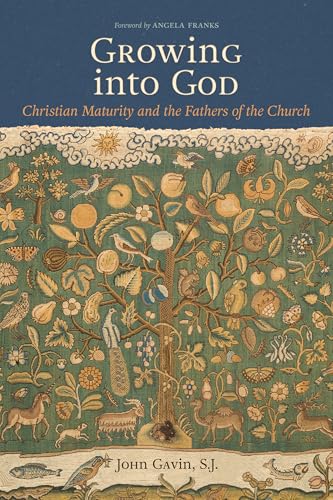
In another strand of reading, my current graduate studies instructed us to choose an aspect of theology and/or church history to explore for a paper. I am reading the autobiography of one of the Church fathers, Doctor of the Church Augustine (Confessions).

So, what do the daily domestic activities of women in Colonial New England and the life of an Irish housewife who had thirteen pregnancies (ten of her children survived to adulthood) have to do with St. Augustine in the 4th and 5th centuries in North Africa?

The common thread is exploring and sharing the trajectories of our lives. In the case of Augustine, I am interested in Augustine’s “interiority” (a phrase I just came across a few weeks ago). I’ve been trying to figure out for several years how to get church people today to talk to each other in more depth about how we each experience our faith. I am reading – and writing about – Augustine and his Confessions with a goal toward figuring out how to more actively get people talking. I’m thinking that using the word interiority might help in getting people to identify what it is I want people to discuss.

I am hoping that during the next while, I will better develop ideas about getting people to talk to each other about how we experience our faith journeys.

Kim Burkhardt blogs about faith at The Hermitage Within. Thank you for reading this faith blog and for sharing it with your friends. While you are here, please feel welcome to provide support to sustain this blog ($$).

God’s love for us, Jesus’ nature, no “tortuous logic”

I still have my “”A Child’s Bible” that our parish priest signed for me when I was about six. As shown in the photo above, the priest wrote on the inside cover, “To a beautiful child of God! God Bless you, Father John Smith.”

Years later, I experienced a profound re-conversion experience (that story is told here) that included an extended grace-filled period of God directly loving me.

Yet, I am also a person prone to over-thinking things. I can – and sometimes do – fixate on whatever topic comes across my mind’s ticker tape (when I was a child, I had a condition called synesthesia. From the time I started learning to read, I mentally and literally saw every word I thought scroll across a ticker-tape screen that continuously rolled across the inside my forehead. I would read the ticker-tape printed-words-on-a-screen as I thought. When I would think a word that I hadn’t yet learned to spell, I would literally stop whatever I was doing to think about how to spell the word so that I could ticker-tape the word. It was so habitually part of my experience that I took it for granted).

While my synesthesia wore off when I was about ten, I can still zero in on a topic until I have worn out every conceivable way of considering the topic or until I find a satisfactory-to-me answer to a perplexing or vexing topic. The good that sometimes results is that I will stick with something until I solve it (if there’s a problem at work, give the problem to me to solve so that everyone else can move on). On the flip-side, such stick-to-it-iveness can be sometimes be unnecessary and vexing. Let it go already!

So how does all of this tie together? It comes together in a textbook I am reading for my master’s program.

I’ve always been vexed by the conundrum of Jesus’ two-fold nature. How, oh how, could one person be both divine and human? Yes, I know, God can make happen whatever he wants. With that said – says my limited human reason – either you are human or your not. Either you are God or your not. I’ve discussed this with a number of people over the years and have struggled toward finding or making peace on the matter (not arriving – so far – at the point that “faith is above reason” within Pope John Paul’s encyclical titled Fides et Ratio – the mutually compatible topics of faith and reason). “What do you mean,” I would ask, “how could Jesus have not known until he was twelve [which I’ve heard proposed] that he was the son of God? How could you be a member of the Trinity and not know it?” I also understood when I heard someone ask if Jesus – as the son of a carpenter in first-century Palestine – was illiterate. How could there even be the potentiality that a member of the Trinity – even in human form – could be all-knowing and illiterate? PAUSE THE TICKER TAPE!!!!

So, in my current graduate program we are reading Frederick Bauerschmidt & James J. Buckley’s book Catholic Theology: An Introduction. Chapter four of this book rolls out descriptions of centuries-upon-centuries of heated debates among theologians trying to EXPLAIN how Jesus’ divine nature and human nature could co-exist in what we now call hypostatic union within one walking-and-breathing person. Bauerschmidt’s book calls some of these theological discussions “tortuous logic.” Discussion got so thick among theologians that the topic was “on the table” at the fourth ecumenical council – The Council of Chalcedon – in the year 451. If I would have been alive then (I’m glad I wasn’t – I like electric heating, hot showers, and air conditioning) – I would have wanted to be at the Council of Chalcedon. I do occasionally read science fiction or fantasy novels that include time travel……… If you’re like me and want to do a deep dive on the various over-the-centuries ideas to explain Jesus’s two-fold nature, Catholic Theology: An Introduction can be purchased online. As for me, I’m getting toward the end of chapter four of the above-mentioned book. I might – just might – also finally getting toward the end of my own personal ticker-tape on this topic. What text is currently scrolling across my ticker-tape at the moment? The ticker-tape is currently scrolling as follows:

  • Relief and comradery – I’m not alone in having debated this topic (when I was graduating from high school, my high school had each of us take a 2 – 3 hour career aptitude test to provide any as-yet-undecided graduating students some ideas of career choices. The test results suggested I might be good as a lawyer, psychologist, or police officer. It didn’t suggest that I consider becoming a fifth-century theologian).
  • The church discarded one group’s idea that “divine and human” meant “human, with divinity floating around within Jesus like a cloud.”
  • The church has settled on the Council of Chalcedon’s explanation that Jesus had two inseparable but unmixed natures (“Hey, wait a minute,” says my ticker-tape…..”Do the arguments above still apply?”).
  • …..We – as humans – can have both a physical nature and a soul as one united person. My soul and my physical body are unmixed, but inseparable. When my soul is vexed, so is my body. Medical science these days knows about psychosomatic illness – every aspect of our self-hood medically impacts every other aspect of our self-hood. If one part of us isn’t healthy, it impacts the rest of our self-hood. ……We are body and mind, Jesus was human and divine. Maybe this will start to make sense……..

Bottom line, God loves us. I know that God loves us. For God so loved the world…… How attached am I to the rational “mental gymnastics” – tortuous logic – in all of this when there are times – Fides et Fatio – that faith is above reason rather than replacing reason? A hypostatic union made possible the ultimate sacrificial love……..

Kim Burkhardt blogs about faith at The Hermitage Within. Thank you for reading this faith blog and for sharing it with your friends. While you are here, please feel welcome to provide support to sustain this blog ($$).
Cold rainy days and God

rainbow

I am watching the rain fall on this cold June morning in my Seattle-area suburb.

The heat should have been turned off a month ago. A week or so ago, I put away my space heaters that I use when I want a bit of extra heat. At the same time, I optimistically got out my air conditioning device-on-wheels (optimistically? It’s June!). At church yesterday, a fair number of people were wearing jackets during the service – my pew neighbors and I complained to each other that we were colder with our jackets on than we had been a week earlier (the church’s heating system has reportedly broken again…..).

These long-pause-looking-out-the-window moments – such as my current one this morning – offer the ability to reflect.

Yes, it’s cold, wet, and dreary in June. Yes, I’ve got a challenging personal circumstance that needs to change.

Yet, the rain gives us flowers.

Yet, we have the ability to pause and reflect about the God who loves us.

Ten years ago, I attended a church service as a person who was away from church and had no intention of returning regularly to church. However, the homily touched me in a way that brought me back to church (that story is told here). In the time that followed, I was graced with an emotionally-tangible period of God directly loving me. That grace-filled experience of being loved by God reduced the rough contours of a punctuatedly difficult period.

We are given free will. Love, by its’ very nature, is freely given and can only be received freely. …..I used to struggle with the idea of God being a three-part trinity until I read in the Catholic Catechism that God’s nature – being love – must be trinitarian (multi-selved) because love cannot exist without being shared…..God needed someone to love (i.e., love shared among God’s multi-parted self) until God created us to love. God does not force God’s love upon us. There are times, though – such as in my return-to-church experience – when God seems to try to get our attention…..

We all occasionally feel emotional nudges that seem to be trying to pull us in a particular direction. Those nudges are sometimes the Holy Spirit making an effort to get our attention.

Even in our busy, fast-paced lives, it’s good to follow those emotional nudges. God wants what’s good for us.

We live in a time when we are encouraged to focus externally. Go here, do that, by busy, be extroverted. Yet, the interiority written about by Augustine and the mystics is among the contexts where we encounter God. Of course, we also encounter God in the “Whatsoever you do for the least of my fellows, you did for me.” When I used to volunteer in the prison system, my Tuesday night visits to a combined federal-and-provincial women’s penitentiary were a time to be giving. I found – for me – that it was also a weekly respite from the pressures of my daily life. Self-giving and the experience of interiority when we go inward to be with God (rather than to be self-absorbed) are two sides of the same coin.

Some days, even the gray days provide a rainbow.

Kim Burkhardt blogs about faith at The Hermitage Within. Thank you for reading this faith blog and for sharing it with your friends. While you are here, please feel welcome to provide support to sustain this blog ($$).

More on “Prayer – wordless sighs of the heart”… and “hearing from you”

In a previous post, “Prayer: Wordless Sighs of the Heart,” I mentioned that the Benedictine monks of Saint Meinrad Monastery mention in their book The Tradition of Catholic Prayer that “wordless sighs of the heart” is a type of prayer available to us. I love this type of prayer. Human language simply falla short for having a meaningful interaction with God in prayer. Vocabulary simply isn’t needed when we pray – we can simply be present with God. Prayer, at its’ most intimate – and therefore meaningful, is about presenting ourselves fully to the fullness of God.

In my readings, I recently came upon Paul’s letter to the Roman’s – Romans 8:26. I came upon it three times within about two weeks! Romans 8:26 says “…we do not know how to pray as we ought, but the Holy Spirit intercedes [for us] with groanings too deep for words.” Super! Paul was touching on this same important theme in the early decades of Christianity!

Regular readers may have noticed that I often blog about prayer. Why? While prayer is deeply personal (it is about each of us being intimately present with God) means it takes a particular type of creativity to describe prayer well, I want everyone to experience the richness of experiencing God’s presence in prayer. Because I want everyone to have a rich experience of prayer, I have started compiling a reference list of my blog posts on prayer to make it easy for readers to find a list of my blog post on prayer. You can find that list here (please check it out!). FYI, you will see that I am also compiling other topical lists of my blog posts on that same page……

Speaking of “what matters to each of us in our faith journeys,” I am expanding the “input” of this faith blog. In addition to you – readers – receiving blog posts on faith topics I choose to write about, this blog is being opened up to hearing from you. Is there a spirituality topic that you’ve been pondering for a time? Ask us about it. Is there a faith topic you have been pondering but you haven’t found an answer? Submit your question to this blog….. A Dear Hermitage Within” page has been added to this blog’s website so you can reach out with your question. Have a question about prayer? Ask. Want to know something about Christian liturgy? Ask. Curious about some aspect of religious history? Ask. Want to inquire about some aspect of theology? Ask. If you submit a question and we plan to write about it on this blog (you would remain anonymous, of course!), we will be sure to let you know by email. FYI – I will write some blog responses to submitted questions and may sometimes invite trusted faith writers to provide insights – pastors, theologians, etc….. Be sure to visit the “submit your question” page above when you would like to submit a faith question!

Kim Burkhardt blogs about faith at The Hermitage Within. Thank you for reading this faith blog and for sharing it with your friends. While you are here, please feel welcome to provide support to sustain this blog ($$).

The Genesis creation stor(ies), Jesus’ parables, chaos, stability, change

Harrison Hot Springs

During this first term in my master’s in theology program, we’ve been reading through the first five books of the Hebrew Bible (the Torah/Pentateuch), the four canonical gospels, the Acts of the Apostles, and the Book of Revelation.

Our two courses – one on the Hebrew Bible and one for the New Testament – were chosen as our first two classes to lay a groundwork. Tear down “what we thought we new about the Bible” and learn to look at it in fresh ways through the insights provided through Biblical Studies.

The two combined classes and the class textbooks have – indeed – percolated an interesting combination of insights that has captured my imagination.

In Greek – the language through which the complete Bible first came to us – the word COSMOS (order) is opposite of the word CHAOS.

In the time of Old Testament at at the time of Jesus, water represented chaos.

When Genesis tells of God creating the world (there are actually two versions of the story), the water – chaos – was separated from land. In creating the world, God created order out of chaos. God can create order in the world and create a world in which we can inhabit.

In the New Testament stories when Jesus walked on water toward the disciples and calmed the tempestuous water storm(s), these weren’t just physically miraculous. Walking on water and calming storms on the sea likewise represented calming chaos. Jesus calms the chaos in our lives.

Yet, Jesus is also the disrupter.

While the Genesis creation story is told in the ways in which tell us of order being created in our world, Jesus spoke in parables.

I learned to consider parables in more depth this term from writer Bernard Brandon Scott in his book Hear then the Parable (a commentary on the Parables of Jesus). Parables, it turns out, developed as a distinct form of communicating lessons in the geographic area of Christ during the time of Jesus. Jesus was among the first people to use parables. In telling parables, Jesus brought about social disruption. He used parables to take us from “here is something with which you are familiar (A, B, C.)” to “I hereby compare A, B, or C to ‘a better way to live’ and/or ‘X is how to get to heaven.'” He disrupted our famliar ways of living to show us his path.

All of this still applies today. When we encounter storms in life, we can turn to our God who loves us and who shelters us amidst the chaos of storms. Yet, the God who loves us as we are – as the saying goes – “loves us too much to leave us the way we are.”

It is up to us to allow God to change us into the people we are meant to be. No easy undertaking. This is involves surrender. I am not the master of my destiny. Personally, I’m attracted to the person I come closer to being when I allow God to shift me toward becoming the person I am meant to be.

Our social order comes closer to the world God wants for us when more of us spend more time allowing God to transform us toward being the people we are meant to be.

Kim Burkhardt blogs about faith at The Hermitage Within. Thank you for reading this faith blog and for sharing it with your friends. While you are here, please feel welcome to provide support to sustain this blog ($$).

People of faith, becoming Easter people….

St. John the Evangelist Church, Seattle

When I taught baptism preparation classes for parents and godparents, talking about baptism inherently required talking about Adam and Eve and “The Fall.” When we are baptized, we are given grace that helps us to reduce our tendency to sin – this human tendency to sin dates back to humanity’s fall in the Garden of Eden. When I would very quickly start talking about “The Fall” in these baptism prep classes – so that I could then get to the good part of explaining grace and baptism – I would tell parents and godparents that “the longer I am in church, the more convinced I am that ‘The Fall” happened with Adam and Eve. If you’re not sure that humanity’s ‘fall’ happened in the Garden of Eden, just turn on the news and listen to all the crazy things that we humans do. Humanity’s fall with Adam and Eve actually does an effective job of explaining our collective human faults……”

I have come to notice that the “church people” I most admire share a common quality. One way or another, each of them really, genuinely draw a connection between being people of faith to recognizing the darkest parts of themselves and facing-and-overcoming/improving those dark parts of themselves within the context of their faith. And, they talk about it. Often, this “talking about it” comes up in one-on-one conversations. I’ve heard people talk about overcoming depression, getting over being terrible to their spouses, about how there was a time when “they shouldn’t have had children” (and didn’t) to now being people who are visibly caring toward the people in their lives. The list goes on. Personally, I tend to talk about my challenges within prayer groups (a great place to find contemplative prayer groups is Contemplative Outreach).

This process of overcoming our darkest corners really pays off. We’ve all got dark corners in our lives. These are the parts of ourselves that we wouldn’t want to see described in the newspaper….. Being honest about this stuff takes courage. I think most of us are aware of the darkest parts of ourselves – whether we simply feel pulled down by it and don’t know what to do about it (that really does drag a person down emotionally) or if we take a hard, honest look at it “in the light of day.” Sometimes, getting honest about this stuff happens out of some kind of necessity (i.e., one’s particular form of darkness becomes manifest in some way that ends up requiring that it be addressed). Sometimes, people just want to become better people. No matter what path we take to really facing up to the darkest parts of ourselves, there is liberation to be found in letting God transform us. And, it really is God who transforms us. The best and most liberating transformation comes through our God who can – and will – bring about salvation.

Surrendering to letting God change our innermost selves can sometimes be terrifying. “My innermost self is ‘Who I am.’ What’s going to happen if I let God tamper with my innermost self?” What happens is that we become the people we are meant to be. We become better people. Transformation and freedom happen.

A couple of days ago, I had one of those “Murphy’s law” afternoons when “everything that can go wrong” does go wrong” (or, “things go wrong in ways that we couldn’t have even thought of”). I started coming unraveled. I recognized the unraveling when I shouted about that day’s version of “Murphy’s Law” and realized that my behavior was going to upset my cat (who had no control over my behavior). “Oh, my cat doesn’t need to be subjected to my unraveling.” I’ve been “doing church” long enough to know that this “unravelling” is no longer necessary when Murphy shows up and imposes his law. Further, I have experienced the process of God improving me enough to be able to shift toward that transforming process. I emotionally sat down and tapped into the transformative process I have learned in church. The unraveling began to reverse. There’s freedom in that. We don’t have be stuck in the worst parts of ourselves. We can become the people we want to see described in the newspaper (or, the church bulletin).

We are currently in the Easter season – the fifty days from Easter to Pentecost. God died for our sins and rose again so that we can join “the Risen Christ.” Our surrender in which we allow God to transform us means tapping into Jesus’s death and resurrection. This is truly beautiful. Transformative. It’s freely available to all of us. God wants to be in our lives. “Being the people we were meant to be” is an available option. Happy Easter.

Kim Burkhardt blogs about faith at The Hermitage Within. Thank you for reading this faith blog and for sharing it with your friends. While you are here, please feel welcome to provide support to sustain this blog ($$). You can also $$ support this blog by clicking here here to do your Amazon shopping (if you click here before you start your Amazon shopping, Amazon pays us a commission when you shop via the link provided).
“Be not afraid”

Candle

We church goers like to think of ourselves as faithful people.

If one spends enough time in church, one is bound to hear about trusting in God. “Bring all of your challenges to God.”

I periodically ponder the presence of fear in people’s lives (both in my life and in the lives of other people). Everyone is afraid of something. Fear of getting seriously ill. Fear of losing a job. Fear of being alone. Fear of being publicly shamed. Fear of losing one’s home. Fear of being attacked at night on a “scary street corner.” Fear of making a wrong decision. Fear if making a major change in one’s life. There’s an endless list of things people fear…..

Perhaps I am able to ponder the topic of fear because the topics I fear sometimes differ from other people. This brings fear into stark perspective. I’d rather volunteer in a federal prison than carry a cell phone to “protect myself in an emergency.” I prefer traveling alone (this makes it easier to give my full attention to experiencing the place I am visiting), while apparently many people want to be social while travelling and some people are “afraid to travel alone.” A couple of years ago, several friends protested when I told them I was going to go camping alone ‘off road” with no cell phone (excuse me, but there’s no cell phone reception where I was going anyway…..) – one friend was so concerned that he insisted on paying my campground fees if I would go to a campground instead so that I could risk camping next to a crazy troublemaker instead of going-it-alone (the pay-campground-fees friend reads this blog – I can imagine the phone call I’m going to get…)….. My sisters also go camping off-road alone – maybe it’s a quirky family trait…. A couple years ago, another friend commented on his admiration of my willingness to occasionally pack up alone and move to a new city (I haven’t got the foggiest idea of how to be afraid of doing that – I like the adventure….). Sometimes I don’t understand why the people around me are afraid of things that don’t scare me, while other people don’t understand why I am afraid of the things I fear……

At present, I – as a condo dweller – am learning about condo association boards. I’ve been told that there are condo boards (not mine, fortunately) who drag their feet on making decisions about various matters affecting their condo communities. I suspect that this dragging-of-feet happens for various reasons – ranging from lack of knowledge about how to make certain decisions to fear (fear of not knowing what to do, fear of making the wrong decision, etc.).

In any event, most-or-all of us sometimes let fear stop us from doing things that are in our best interest. Myself included. There is an adage that perhaps “fear ought to be classed with stealing. It seems to cause more trouble.”

Yet…

One cannot truly be a person of faith – faithful – if we make decisions based on fear. When we let fear immobilize us, we are not trusting God. “My fear and/or the-thing-I-fear is bigger than God’s ability to get me through the-thing-I-fear.” “My fear belongs to me. My fear is mine – it’s intrinsically part of me. I’m not going to surrender my innermost self and/or my most gripping fears to God. God can’t have my innermost self.”

Truly being a person of faith means allowing God to walk us through our fears. God is for real and God is not smaller than our fears. Allowing God to walk us through our fears is often unlikely to result in us experiencing “the worst case scenario of what we fear” (i.e., “I’m afraid I’m going to experience ‘X-or-Y tragic outcome’ if I don’t sit at home immobolized by my fear”). I have experienced in recent years is that some of my best growth has happened when I surrendered to letting God walk me through something difficult challenge. Solutions are often found and I get through challenges in happier ways that I could have on my own. While some situations are not fixable, trusting God in difficult situations often ends up with me maturing in good and useful ways…….

Many are familiar with the popular hymn Be Not Afraid. This isn’t just a “nice song for church on Sunday” or a comforting song to listen to at funerals (while it is those things). Truly being a person of faith has to mean letting God walk us through the things we most fear.

Kim Burkhardt blogs about faith at The Hermitage Within. Thank you for reading this faith blog and for sharing it with your friends. While you are here, please feel welcome to provide support to sustain this blog ($$). You can also $$ support this blog by clicking here here to do your Amazon shopping (if you click here before you start your Amazon shopping, Amazon pays us a commission when you shop via the link provided).
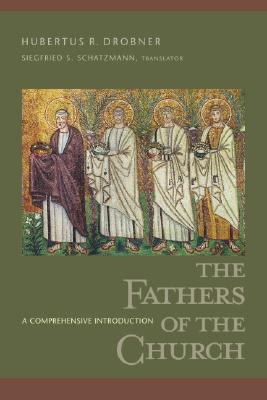
Book Review: The Lost Mary, Rediscovering the Mother of Jesus

The Lost Mary

When I happened upon a blurb about this recently-published book, I checked to see if my local library has it. I was pleased to find out they had a copy and I checked it out. In amongst my other reading, I found time to read the first few chapters of the library copy before it came due; I couldn’t renew it as other patrons have holds on the book. I’ve found The Lost Mary – Rediscovering the Mother of Jesus to be thought-provoking enough to want my own copy.

Fortunately, the timing of this book’s recent publication dovetails nicely with my master’s in theology studies. We had learned in class that much of what we know about Mary comes from “The Gospel of James (or the Protoevangelium of James).” ….. It’s widely known that there are four “canonical gospels” – the gospels of Matthew, Mark, Luke, and John that are in the Bible. In addition to the four canonical gospels, there are other gospels – some of which are “heretical” and others that are not heretical….. I learned in my studies that the “non-heretical, non-canonical” gospels are read by the church and religious scholars to provide “supplementary history” that enrich what we know from the four canonical gospels. Rabbit hole – this lead to me ordering Robert J. Miller’s book The Complete Gospels and I read “The Gospel of James (or the Protoevangelium of James).” In the Protoevangelium of James, I discovered that Mary’s parents (Joachim and Anna) were wealthy and that Joseph functioned as more of a guardian than a spouse to Mary. I was curious to learn more.

Then, I came upon James D. Tabor’s book The Lost Mary – Rediscovering the Mother of Jesus.

What I find intriguing about this book is that the author – James D. Tabor – goes beyond what we commonly know today about Mary life to consider the historical context of her life. What was it like historically for Mary to be living in Judea at the time that she lived? Tabor looks into topics – and ponders to the sociological impact on Mary’s life of what was happening at the time – the daily details of Roman conquest, a description of the town where her parents were likely living when she was born, Joseph needing to look for a Hebrew midwife when Mary went into labor, the idea that Jesus likely visited his wealthy maternal grandparents when he was a child, etc. It’s never occurred to me to ponder Jesus’ childhood visits with extended relatives and other day-to-day aspects of Jesus and Mary’s lives. Therefore, I am finding it insightful to consider the ideas presented in this book. Does writer and historian James D. Tabor accurately figure out every possible aspect of Mary’s life? Who knows. Even if Tabor goes down some tangents that may be open for debate, Tabor is raising points that broaden and enrich the reader’s understanding of the teenager who gave birth to Jesus.

I am looking forward to having my own copy of this book that I can keep on my bookshelf as a reminder that we should want to know more about the life of Mary.

Kim Burkhardt blogs about faith at The Hermitage Within. Thank you for reading this faith blog and for sharing it with your friends. While you are here, please feel welcome to provide support to sustain this blog ($$). You can also $$ support this blog by clicking here here to do your Amazon shopping (if you click here before you start your Amazon shopping, Amazon pays us a commission when you shop via the link provided).
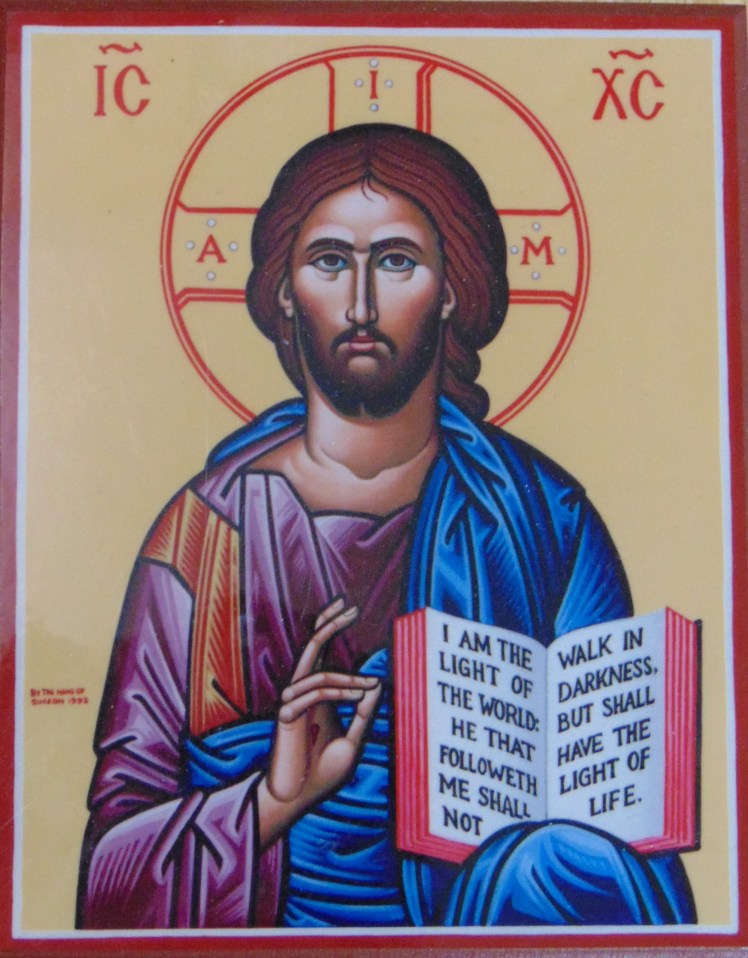
Living the Beatitudes: Practical Ponderings

St. John the Evangelist Church, Seattle

I have been looking at the Beatitudes (or, as I recently heard, The Be-Attitudes):

Matthew 5:1-12 (the Beatitudes are also found in Luke’s Gospel)

“Now when Jesus saw the crowds, he went up on a mountainside and sat down. His disciples came to him, and he began to teach them. He said:

Blessed are the poor in spirit, for theirs is the kingdom of heaven.
Blessed are those who mourn, for they will be comforted.
Blessed are the meek, for they will inherit the earth.
Blessed are those who hunger and thirst for righteousness, for they will be filled.
Blessed are the merciful, for they will be shown mercy.
Blessed are the pure in heart, for they will see God.
Blessed are the peacemakers, for they will be called children of God.
Blessed are those who are persecuted because of righteousness, for theirs is the kingdom of heaven.

Blessed are you when people insult you, persecute you and falsely say all kinds of evil against you because of me. Rejoice and be glad, because great is your reward in heaven, for in the same way they persecuted the prophets who were before you.”

In looking at the Beatitudes, each type of “blessed” listed in the Beatitudes can be viewed as virtuous ways of contributing positively to community well-being. It would seem – at least in part – that the Beatitudes were spoken of as a way to call us toward living as Jesus wants us to live. I find myself pondering the value and/or challenges for most of us ordinary folk in living up to each of the Beatitudes. I ponder the logistics of several of the individual Beatitudes as follows:

  • Blessed are those who mourn, for they will be comforted. Why will those who mourn be comforted? Because in order to mourn, one must have loved. We are called to “love one another.”
  • Blessed are those who hunger and thirst for righteousness, for they will be filled. This is a tough one and I have a lot to sayBased upon the wording of the Beatitudes (in English, anyway), several of the other beatitudes refer to people who already have these traits – either innate or cultivated.  It is another matter to consider “Blessed are those who hunger and thirst for righteousness, for they will be filled.”   We don’t hunger or thirst for qualities we already possess.  Rather, hungering for righteousness can imply the need to become righteous.  To put it another way, it’s one thing to “hunger and thirst for righteousness” and quite another matter to undergo the emotional and spiritual refinement necessary to become righteous. One can understand that righteousness of spirit and righteousness of action position a person to bring about positivity in the world (and, the person who hungers and thirsts for righteousness has somehow come to recognize righteousness and its’ value): God would therefore consider becoming righteous to a be a worthwhile trait – and a blessing to bestow upon anyone who wants to be righteous.  In thinking about righteousness, the example of Oskar Schindler comes to mind – Israel recognized him as a “Righteous Person” following WWII. Anyone who knows the story of Oskar Schindler (for many of us, such knowledge is the result of the movie Schindler’s List) knows that finding one’s way to righteousness is not always a smooth or easy task.  Sometimes, the process of becoming righteous is daunting.  In Oskar Schindler’s case, he started out as a less-than-humanitarian industrialist and an opportunistic member of the Nazi party during WWII.   During the war, he slowly began to face the human atrocities of the Nazi regime.  Based on how he’s been depicted, I don’t know that he “hungered and thirsted for righteousness” prior to seeing the atrocities of WWII, but somehow he got around to righteousness.   In time, he made great personal sacrifice to save the lives of 1,200 Jews – earning him the later status in Israel of Righteous Person.   He became recognized as a righteous person as the result of “doing the right thing” at a great personal price.  “Doing the right thing” even when there is personal sacrifice involved, I suppose, meets the definition of being righteous. The daunting task of becoming and/or being led to righteousness (those who hunger for righteousness will be satisfied) requires that we surrender our own self-interest for doing what is for the greater good.   The spiritual crucible of refinement for becoming righteous can therefore be challenging (at least for those of us who aren’t born to naturally be like St. Therese of Liseuax) – the person willing to undergo this process is worthy of God’s attention.   Anyone who “hungers and thirsts for righteousness” may be in any pre-righteous stage of being human – ranging from saintly (or nearly so) to grumpy, irritable, or otherwise troublesome.  Yet, the person who “hungers and thirsts for righteousness” wants to be righteousness – a valued trait.  A reading of the Sermon on the Mount indicates God’s willingness to bring the willing person into a valued spiritual status.  It’s up to the person to cooperate with being led to righteousness.  I find myself pondering the emotional/spiritual crucible necessary to become righteous…..
  • Blessed are the merciful, for they will be shown mercy. Basically, treat each other the way you want to be treated and act in a way that creates kind and good communities. How well do we step out of our perspective to be kind to others? It’s often easy to be merciful to the endearing child you love who spilled their milk. However. how merciful are we to the person who rear-ends our car when we are two car payments from getting the car paid off (that happened to a friend of mine. Her eighteen-year-old daughter had just started driving and rear-ended my friend at a stop sign when her daughter was following her – totaling her car two months before it was due to be paid off)? How patient or merciful are we when a politician whose policies we disagree with makes a legitimately human mistake? How merciful are we toward the irritable relative “who has always been difficult” or the bull-headed neighbor who painted their house an awful lime green to spite a neighbor they don’t like?
  • Blessed are the pure in heart, for they will see God. For most of us ordinary mortals, it’s easy to come up with a funny punchline for this one: “Yeah, I’m pure of heart – on a bad day, I am pure $#@!#.” Jokes aside, though, I wonder if perhaps there could have been a better English translation on this one from the original Greek. Blessed are those who are purely good? Blessed are those who purely love? I’m sure this one has something to do with having a “better heart” than what I have on a bad day………
  • Blessed are the peacemakers, for they will be called children of God. I am finding a lot to consider with this one – up there with “Blessed are those who hunger and thirst for righteousness.” It’s straightforward to understand why God values peacemakers. Peacemakers work toward positive relations among God’s children. How much is required, though, to be a peacemaker? A genuine peacemaker moves beyond simply having a distaste for conflict or a passive fairy tale notion of being a pacifist. Peacemaking takes real effort. On a personal scale, we must focus not only on our own perspective and desires to really work to build understanding with the people with whom we disagree – working to build personal bridges when conflict occurs. We have to recognize when we are in the wrong and step up to fix our mistakes. Sometimes that’s easier said than done. On a national scale, peacemakers must learn about international relations and study how/why conflict occurs – and engage in bringing people together toward meaningful solutions. Again, no easy task. Blessed are the genuine peacemakers – peacemakers move beyond their own needs ty help move the world toward being a better place.

Kim Burkhardt blogs about faith at The Hermitage Within. Thank you for reading this faith blog and for sharing it with your friends. While you are here, please feel welcome to provide support to sustain this blog ($$).