Book Review: Bourgeault’s Centering Prayer and Inner Awakening

Book: Centering Prayer and Inner Awakening
Centering Prayer and Inner Awakening

I have been hearing for several years – mostly through Contemplative Outreach Northwest – about Episcopalian priest Cynthia Bourgeault. She is known for her active, thoughtful leadership within contemplative/mystical Christianity.

I finally got around to reading one of her books: Centering Prayer and Inner Awakening.

I am “beyond thrilled” to have come upon this book.

In 2016, I was gifted with a sustained period of contemplative prayer during which I had a solid sense of God loving me. This was “a gift I didn’t see coming.” The outline of that story is told here. A challenge I encountered was that I didn’t have the vocabulary to articulate my experience to people. A real challenge – I was experiencing something profoundly meaningful, but I had no means to talk to people about it (I’ve since seen a couple of other people wander into churches with a similar scenario – each time, a make an effort to “walk with them,” encouraging them as best I can along their journey…..). In time, through church attendance and involvement in Contemplative Outreach Northwest, I started grappling my way toward being more able to discuss the “outer contours” of my experience. A respected friend (who also happens to be Episcopalian, like Cynthia Bourgeault) pointed out that each of us has a different prayer relationship with God and that the best we can hope for is to find a few people with whom can share some basic aspects of our prayer experience in relating to God.

Then, I read Centering Prayer and Inner Awakening.

Actually, I skipped through several “how to” reflection portions of the book – that was information I didn’t need.

Early portions of the book, though, grabbed my attention. When Cynthia Bourgeault encountered “centering prayer” (i.e., how to learn to do contemplative prayer) groups as a priest, she said she immediately grasped the concept based on having grown up attending a Quaker school. I have periodically read about Quaker spirituality – this intrigued me.

Then, I got to later chapters of the book.

While God’s faith path for us within Christianity is a very different realm than the secular study of human psychology, Cynthia Bourgeault has artfully drawn from both in this book to discuss how we experience changes within our inner realm when Christ changes us via contemplative prayer. Of course, Bourgeault discusses within the book the very real differences between “doing Christianity” and “doing psychology.” I am currently reflecting – with an inner joy – upon Bourgeault’s artful communication within the later chapters of this book. It’s as if she put our inner human experience to poetry (I can’t take credit for this statement – I once heard someone else use this analogy in another context). In the next few weeks, I expect to be able to start talking more actively to people – based on this book – about my own inner changes and experience wrought by contemplative prayer.

And, I will be reading more of Cynthia Bourgeault’s books.

(For any reader who is interested, Teresa of Avila’s autobiography is also of tremendous interest regarding contemplative prayer.)

Kim Burkhardt blogs about faith at The Hermitage Within. Thank you for reading this faith blog and for sharing it with your friends. While you are here, please feel welcome to provide support to sustain this blog ($$).
Book Review: The Ecumenical Councils of the Catholic Church

Book: The Ecumenical Councils of the Catholic Church
Book: The Ecumenical Councils

This book – The Ecumenical Councils of the Catholic Church: A History (author: Joseph E. Kelly) – is anything but a dry read.  

More than just a book for religious historians, this book provides wide details and context on how church leaders came together – and sometimes didn’t come together – over the centuries to debate and articulate Christian theology.

I count myself among the bibliophiles who believe that every word of a book should be read to consider the book as having been read.   In the case of this book, there is so much historical detail about each council, and historical context surrounding each council, and absorbing trivia that I am finding myself selectively choosing how much to summarily read about each time period the first time through this book (I may satisfy myself with selectively reading the book once through and keeping it a reference book).   “Really?,” I found myself pondering.  “A, B, X, Y really happened at this or that council or during this or that period in Church history?!?!?”  As I read, I am scribbling trivia on sticky-notes to tell friends and fellow church folk about what I am learning about the history of the Christianity’s twenty-one ecumenical councils.  As many of us know, the first council was the Council of Nicea in 325 through to Vatican II in the 1960’s. 

Just this afternoon, I learned that an Empress was involved in the second council of Nicea in 786/7.   Some councils were more ecumenical than others – in some cases, the councils were more heavily attended by bishops from the east than bishops from the west; today, individual denominations decide for themselves which of these historical councils were “ecumenical” (of note, the book’s author provides a listing within the book of which denominations consider with councils to have been ecumenical).

For non-historians, reading this book seriously will take the reader into reading additional books to learn more about the history and context of what was happening at the time of each council. 

There’s plenty in this book for both historians and fans of religious trivia.   It’s a book that really needs to be read over time so as to really absorb the content covered for each time period.

Kim Burkhardt blogs about faith at The Hermitage Within. Thank you for reading this faith blog and for sharing it with your friends. While you are here, please feel welcome to provide support to sustain this blog ($$).
Book Review: An Immigration of Theology

Book Cover: An Immigration of Theology
Book: An Immigration of Theology

I recently came upon An Immigration of Theology by Fr. Simon Kim and am intrigued with what the author has done with this book.

Goodreads summarizes this book, in part, with the following: “The theological reflections of Virgilio Elizondo and Gustavo Gutiérrez are examples of the ecclesial fruitfulness of the second half of the twentieth century. Following the directives of Pope John XXIII and the Second Vatican Council, [they] present the Gospel message in relevant terms to their own people…. Inspired by this moment in Church history, while at the same time recognizing the plight of their people….. [they] discovered a new way of doing theology by asking a specific set of questions based on their local context. By investigating where God is present in [their local context], both theologians have uncovered a hermeneutical lens in rereading Scripture and deepening our understanding of ecclesial tradition…. a theological method that takes seriously the contextual circumstances of their locale. By utilizing the common loci theologici of Scripture and tradition in conjunction with context and their own experience, [they] illustrate…. how every group must embrace their own unique theological reflection.”

I find this interesting – there seems to be the option in this book of stating that we must make theological concepts relevant to our own circumstances while also stating that theological principles are universal. What I am hoping to read in this book – now that I have it sitting on my coffee table – is that theological principles are universal in principle and also local in adaptation.

Kim Burkhardt blogs about faith at The Hermitage Within. Thank you for reading this faith blog and for sharing it with your friends. While you are here, please feel welcome to provide support to sustain this blog ($$).
Book Review: Spirituality of the Christian East

Book: The Spirituality of the Christian East
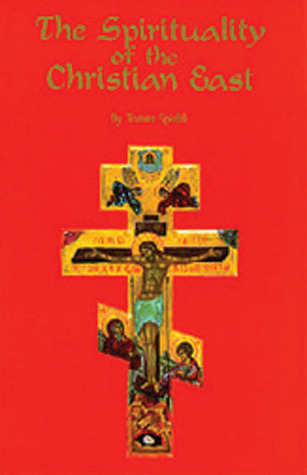
Book Cover: The Spirituality of the Christian East

I came upon this book during my current phase of reading about the Christian East (i.e., Eastern Orthodox). As I read this book, I am surprised that it’s not more widely known and discussed among readers of Christianity.

The Spirituality of the Christian East, as summarized by Goodreads, was written by Tomas Spidlak, “Professor-emeritus of the Pontifical Oriental Institute at Rome, [who] dedicated his scholarly life to studying and teaching the theology and spirituality of the Christian East….”

What I find compelling about this book is its’ readable overview of the historical, philosophical, and cultural inputs of how Christianity developed. I purchased this book for its’ focus on the Christian East – which I am learning more about (the Christian East broadly as well as specific geographic regions of the Eastern Church – Russian, Greek, Coptic, Armenian, etc.) – yet, I am also recognizing that anyone wanting a historical overview of Christianity’s overall development will find an insightful and informative read in this book.

Philosophy wasn’t my favorite subject in college.   At the time, I didn’t wrestle well with its’ abstractions…..   I thought at the time that I should like philosophy since my mother declared to be a philosophy major (she studied two years at the University of Washington).   Later, I learned that seminarians are required to study philosophy because of Greek philosophy’s impact on the early development of Christian theology.   Therefore, I have made a new effort to take an interest in philosophy.   In the book The Spirituality of the Christian East, I finally found an introductory about Greek philosophy’s impact on Christianity that make sense to me. It has given me a springboard for reading more about philosophy’s impact on Christianity more meaningfully.

…..As a reader from Western Christianity, I have also been surprised to discover in this book that the Eastern Orthodox tradition has its’ own set of recognized faith leaders over the centuries – historical saints, mystics (hesychasts), Desert Fathers, leaders. Symeon the New Theologian, etc. I shouldn’t find this surprising. It simply hadn’t occurred to me that the Orthodox tradition has its’ own figures that it recognizes by name.

This book is worth reading for anyone interested in an introduction to Eastern Orthodox Christianity and/or a historical overview of Christianity in general.

Kim Burkhardt blogs at A Parish Catechist. If you are a new visitor, it would be great to have you subscribe to follow this blog (it’s free – thank you!). If you know someone who would like this blog, please share it with them and invite them to subscribe (thank you!).

Book Review: Paths to the Heart – Sufism and the Christian East

Book: Paths to the Heart
Paths to the Heart: Sufism and the Christian East

I have recently been reading books about Eastern Orthodox Christianity. I have a particular interest in the contemplative tradition within Christianity and have discovered that there is a strong contemplative aspect within the Eastern Orthodox tradition.

Paths to the Heart: Sufism and the Christian East is a compilation of presentations from a conference held shortly after 9/11 where a group of people met to discuss similarities of the religious views between the Christian East (i.e.., Eastern Orthodox) and Sufi Muslim.

I am more than half-way through this book. What emerges in this book is engaging observations about the contemplative aspects of Eastern Orthodox and Sufi Islam. For anyone interested in the contemplative aspects of Eastern Orthodox, Sufi Islam, or both….. Paths to the Heart: Sufism and the Christian East is an insightful read.

For my particular area of interest – the contemplative prayer aspect within Christianity – I am learning in this book about Hesychasm – described by Wikipedia as “a contemplative monastic tradition in the Eastern Christian traditions of the Eastern Orthodox Church and Eastern Catholic Churches in which stillness (hēsychia) is sought through uninterrupted Jesus prayer. While rooted in early Christian monasticism, it took its definitive form in the 14th century at Mount Athos.”

Kim Burkhardt blogs at A Parish Catechist. If you are a new visitor, it would be great to have you subscribe to follow this blog (it’s free – thank you!). If you know someone who would like this blog, please share it with them and invite them to subscribe (thank you!).

Book Review: Spiritual Direction in the Early Christian East

Book cover
Authors: Irenee Halisherr, Foreward Bishop Kalistsos Ware

I very much enjoyed finding this book, Spiritual Direction in the Early Christian East. I was equally thrilled to discover that it was published by Cistercian Publications (I worked for a Cistercian monk-priest for a time……).

This is among books written on very specific topics – it’s great to find such books when they are written on a topic of personal interest. I take an interest in the history of religious thought in the Medieval period and earlier. I am also currently exploring spiritual direction. Thus, I was excited to order this book and read it.

A number of passages in the foreward prove tangible to the reader interested in spiritual direction:

  • “The ministry of the spiritual father is already foreshadowed in the New Testament; ‘Though you have countless guides in Christ, you do not have many fathers. For I became your father in Christ Jesus through the Gospel.’ (1 Cor 4:15)”
  • “He helps his children in Christ precisely because he is willing to share himself with them, identifying his own life with theirs.”

Within the book itself, any number of passages artfully describe spiritual direction:

  • “Desert fathers have, if not brought into being….at least, systemized this magnificent thing….’the divine art of healing another.'”
  • “We should examine ….[the qualities]…. the Byzantines deemed most necessary to the exercise of spiritual direction.” This section of the book starts with discussion of any would-be spiritual director needing to possess the quality of charity with the aspect of charity that involves being loving ( spoiler alert: read the book to discover the other deemed-necessary qualities!).
  • Later chapters of the book discuss how to enter into spiritual direction as a directee in such a way as to benefit from receiving spiritual direction – a useful topic of instruction.

In addition, any number of passages interestingly discuss Eastern Christianity:

  • “This book is addressed to Western Christians interested in the East: the main intention is to make them breathe the spirit of which animated the great spiritual masters of the past….”
  • “Almost all the documents [referenced in the main of the book] belong to monastic literature. It could not be otherwise. Spiritual direction was not taught and practiced to perfection except among monks.”
  • “….abba Elias and abba Dorotheos….devoted themselves to a large monastery of virgins in Antripe, upper Egypt…..Their role, which they assumed spontaneously out of compassion consisted in maintaining or re-establishing peace among the some three hundred ascetrie (women ascetics) who had been accepted there…..” [Note: I now find myself wondering what literature is available for learning more about ascetrie!]

Spiritual Direction in the Early Christian East is an important contribution to books on spiritual direction and literature about Eastern Christianity – particularly the practice of spiritual direction. I encourage anyone interested in one or both topics to pick up this book.

Kim Burkhardt blogs at A Parish Catechist. If you are a new visitor, it would be great to have you subscribe to follow this blog (it’s free – thank you!). If you know someone who would like this blog, please share it with them and invite them to subscribe (thank you!).

Book Review: Ars Celebrandi

Book
Ars Celebrandi: Celebrating and Concelebrating Mass

This book, written for priests to inspire artful presiding at mass, brings to life the nuts and bolts of how the Catholic mass brings liturgy – the work of the people – is celebrated. For the non-ordained among us, Ars Celebrandi: Celebrating and Concelebrating Mass provides insight into how the liturgy is designed to invigorate the faith of the faithful.

In practical terms, this book picks up where the General Instruction of the Roman Missal (the “GIRM”) ends….. The GIRM is the instruction manual of “how to do a Catholic mass,” whereas Ars Celebrandi gets into the art of how to preside.

Two examples of this book’s insights come from the foreward of Ars Celebrandi (written by Bishop Mark Seitz):

“The liturgy is the action of the entire people of God who are being more perfectly formed into the Body of Christ.  The Second Vatican Council’s seminal teaching that the people of God are called to full, conscious, and active participation is based upon this fundamental recognition.”

“The liturgy, as we know,  is a language and a certain style of communication that comes down to us from the ages but is also constantly adapting under the guidance of the Spirit in every age.  It a language of signs and symbols that are read universally by people in the church.  To be sure, there are regional and cultural aspects that are rightly represented as local communities worship, but these are secondary to the expressions that unite us across times and places.”

Then, we lay readers learn in this book about the complexity of presiding at church services. For example:

“[Presiding at a liturgy] involve a marriage of books and ministers. The liturgical norms [i.e., what is suppose to be done] encounter a real-time relationship with the individual persons ordained to carry them out….The relationship presumes that priests know the liturgical norms. However, the rules are complex. The books detailing them are many. Some laws keep changing….Furthermore, not every aspect of liturgy is prescribed. When presiding, a typical priest is suppose to do certain things, is free to do certain other things, and takes freedom to do even more….” [Subsequent paragraphs delve into specific examples of these “certain things” and “certain other things.}

Reading this book is of interest for we lay people in that we become more observant of the nuts and bolts of what happens at church. A book worth reading.

Kim Burkhardt blogs at A Parish Catechist. If you are a new visitor, it would be great to have you subscribe to follow this blog (it’s free – thank you!). If you know someone who would like this blog, please share it with them and invite them to subscribe (thank you!).

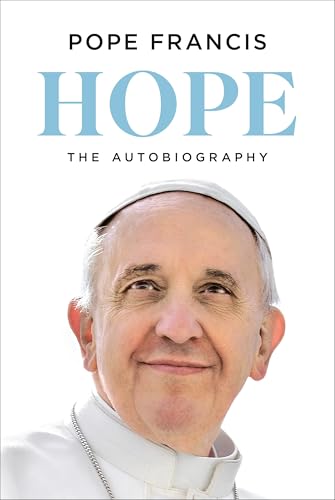
Book Review: Hope – Pope Francis’ Autobiography

Book
Pope Francis’ autobiography

Several weeks ago, a friend gave me a copy of Pope Francis’ autobiography.

I looked forward to reading it out of interest about Pope Francis and because I recently worked with a guy who had moved from Buenos Aires to Seattle and had known the Pope when he was the Buenos Aires archbishop.

When I started reading the book, Pope Francis was still Pope. I discovered on the inside cover that this is the first papal autobiography by a sitting pope. In our digital age, we want to know about our leaders in a way that makes an autobiography makes sense.

I am just a few pages into the book. Already, I learned that Pope Francis was the son of Italian ancestors – an insightful discovery about a pope not born in Italy. I look forward to reading the rest of the book.

Normally, I would wait to post a book review until I had finished reading the book. In this instance, it’s worth posting now that Pope Francis’ autobiography is available for readers who are interested in the new timeliness of this book. Certainly a book worth picking up for people interested in current affairs.

Kim Burkhardt blogs at A Parish Catechist (and is a member of the Association of Catholic Publishers). If you are a new visitor, it would be great to have you subscribe to follow this blog (it’s free – thank you!). If you know someone who would like this blog, please share it with them and invite them to subscribe (thank you!).

Book Review: J.R.R. Tolkien’s Sanctifying Myth (Birzer)

Book cover: Tolkien's Sanctifying Myth
Book cover for book about Tolkien

This book – J.R.R. Tolkien’s Sanctifying Myth, Understanding Middle Earth by Bradley J. Birzer – is a book I’ve been wishing existed ever since I read The Fellowship: The Literary Lives of the Inklings: J.R.R. Tolkien, C.S. Lewis, Owen Barfield, Charles Williams (that book is also a good read).

When I read The Fellowship: The Literary Lives of the Inklings, I enjoyed getting more acquainted with the literary aspects of Tolkien, Lewis, and the people around them. Yet, as I also found myself deeply curious about the religious relationship – and what I was sure must have included strains – between a British (South African!) Catholic and an Ulster Protestant (that aspect wasn’t delved into particularly in The Fellowship: The Literary lives..).

Birzer’s book Sanctifying Myth takes a sociological look into Tolkien and mythology. Tolkien, for example, considers myth to by sociologically necessary for humanity and to be every bit as tangible as scientific learning. This book also provides a deep dive into the religious relationship and tensions between Tolkien and Lewis. For example, Tolkien considered his Hobbit books to be more Christian in nature than C.S. Lewis’ The Screwtape Letters! There are also other curious tidbits in this book. For example, when Tolkien’s son Christopher enlisted in WWII, an RAF form asked Christopher Tolkien to list his father’s occupation; he listed his father’s occupation as “wizard.”

Most evenings, I read a book for a few minutes before going to sleep. At present, I am reading Sanctifying Myth before going to sleep. However, I am finding that I need to read this book earlier in the day; there’s enough stimulation and tension in the book to keep a person awake…..

I will be reading more books by author Bradley J. Birzer.

Kim Burkhardt blogs at A Parish Catechist (and is a member of the Association of Catholic Publishers). Blogging is sustainable via blog readership (i.e. readers/subscribers). If you are a new visitor, it would be great to have you subscribe to follow this blog (thank you!). If you know someone who would like this blog, please share it with them and invite them to subscribe (thank you!).

Book Review: Introduction to Eastern Christian Liturgies

Book: Introduction to Eastern Christian Liturgies

This is an interesting and broadly-written book for anyone interested in the what-and-how of religious services in the various Eastern Orthodox churches – Armenian, Byzantine, Coptic, Ethiopian, Syrian, and Maronite traditions.

This densely-written academic text dives into intricate and comparative detail of many aspects of church services for each of these traditions – including historical developments of each tradition.

In this book, the reader learns:

  • In the early Syrian rite, baptism was viewed as “rebirth to something new” rather than the western view of baptism being our “death, rebirth, and rising with Christ” (pages 21-22).
  • I was surprised to discover that in the early centuries of the Syrian Orthodox tradition, the Syrians considered the Holy Spirit to be “Mother Holy Spirit” – complete with references in liturgical prayers about the Holy Spirit acting as the “womb” of people’s faith (page 23).

This book is worth reading.

Kim Burkhardt blogs at A Parish Catechist (and is a member of the Association of Catholic Publishers). Blogging is sustainable via blog readership (i.e. readers/subscribers). If you are a new visitor, it would be great to have you subscribe to follow this blog (thank you!). If you know someone who would like this blog, please share it with them and invite them to subscribe (thank you!).