Book Review: Spiritual Direction in the Early Christian East
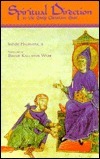
Book cover
Authors: Irenee Halisherr, Foreward Bishop Kalistsos Ware

I very much enjoyed finding this book, Spiritual Direction in the Early Christian East. I was equally thrilled to discover that it was published by Cistercian Publications (I worked for a Cistercian monk-priest for a time……).

This is among books written on very specific topics – it’s great to find such books when they are written on a topic of personal interest. I take an interest in the history of religious thought in the Medieval period and earlier. I am also currently exploring spiritual direction. Thus, I was excited to order this book and read it.

A number of passages in the foreward prove tangible to the reader interested in spiritual direction:

  • “The ministry of the spiritual father is already foreshadowed in the New Testament; ‘Though you have countless guides in Christ, you do not have many fathers. For I became your father in Christ Jesus through the Gospel.’ (1 Cor 4:15)”
  • “He helps his children in Christ precisely because he is willing to share himself with them, identifying his own life with theirs.”

Within the book itself, any number of passages artfully describe spiritual direction:

  • “Desert fathers have, if not brought into being….at least, systemized this magnificent thing….’the divine art of healing another.'”
  • “We should examine ….[the qualities]…. the Byzantines deemed most necessary to the exercise of spiritual direction.” This section of the book starts with discussion of any would-be spiritual director needing to possess the quality of charity with the aspect of charity that involves being loving ( spoiler alert: read the book to discover the other deemed-necessary qualities!).
  • Later chapters of the book discuss how to enter into spiritual direction as a directee in such a way as to benefit from receiving spiritual direction – a useful topic of instruction.

In addition, any number of passages interestingly discuss Eastern Christianity:

  • “This book is addressed to Western Christians interested in the East: the main intention is to make them breathe the spirit of which animated the great spiritual masters of the past….”
  • “Almost all the documents [referenced in the main of the book] belong to monastic literature. It could not be otherwise. Spiritual direction was not taught and practiced to perfection except among monks.”
  • “….abba Elias and abba Dorotheos….devoted themselves to a large monastery of virgins in Antripe, upper Egypt…..Their role, which they assumed spontaneously out of compassion consisted in maintaining or re-establishing peace among the some three hundred ascetrie (women ascetics) who had been accepted there…..” [Note: I now find myself wondering what literature is available for learning more about ascetrie!]

Spiritual Direction in the Early Christian East is an important contribution to books on spiritual direction and literature about Eastern Christianity – particularly the practice of spiritual direction. I encourage anyone interested in one or both topics to pick up this book.

Kim Burkhardt blogs at A Parish Catechist. If you are a new visitor, it would be great to have you subscribe to follow this blog (it’s free – thank you!). If you know someone who would like this blog, please share it with them and invite them to subscribe (thank you!).

Book Review: Ars Celebrandi

Book
Ars Celebrandi: Celebrating and Concelebrating Mass

This book, written for priests to inspire artful presiding at mass, brings to life the nuts and bolts of how the Catholic mass brings liturgy – the work of the people – is celebrated. For the non-ordained among us, Ars Celebrandi: Celebrating and Concelebrating Mass provides insight into how the liturgy is designed to invigorate the faith of the faithful.

In practical terms, this book picks up where the General Instruction of the Roman Missal (the “GIRM”) ends….. The GIRM is the instruction manual of “how to do a Catholic mass,” whereas Ars Celebrandi gets into the art of how to preside.

Two examples of this book’s insights come from the foreward of Ars Celebrandi (written by Bishop Mark Seitz):

“The liturgy is the action of the entire people of God who are being more perfectly formed into the Body of Christ.  The Second Vatican Council’s seminal teaching that the people of God are called to full, conscious, and active participation is based upon this fundamental recognition.”

“The liturgy, as we know,  is a language and a certain style of communication that comes down to us from the ages but is also constantly adapting under the guidance of the Spirit in every age.  It a language of signs and symbols that are read universally by people in the church.  To be sure, there are regional and cultural aspects that are rightly represented as local communities worship, but these are secondary to the expressions that unite us across times and places.”

Then, we lay readers learn in this book about the complexity of presiding at church services. For example:

“[Presiding at a liturgy] involve a marriage of books and ministers. The liturgical norms [i.e., what is suppose to be done] encounter a real-time relationship with the individual persons ordained to carry them out….The relationship presumes that priests know the liturgical norms. However, the rules are complex. The books detailing them are many. Some laws keep changing….Furthermore, not every aspect of liturgy is prescribed. When presiding, a typical priest is suppose to do certain things, is free to do certain other things, and takes freedom to do even more….” [Subsequent paragraphs delve into specific examples of these “certain things” and “certain other things.}

Reading this book is of interest for we lay people in that we become more observant of the nuts and bolts of what happens at church. A book worth reading.

Kim Burkhardt blogs at A Parish Catechist. If you are a new visitor, it would be great to have you subscribe to follow this blog (it’s free – thank you!). If you know someone who would like this blog, please share it with them and invite them to subscribe (thank you!).
Book Review: Hope – Pope Francis’ Autobiography

Book
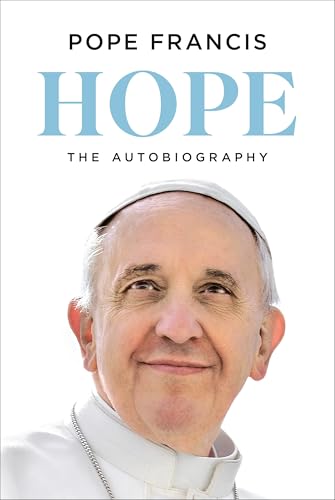
Pope Francis’ autobiography

Several weeks ago, a friend gave me a copy of Pope Francis’ autobiography.

I looked forward to reading it out of interest about Pope Francis and because I recently worked with a guy who had moved from Buenos Aires to Seattle and had known the Pope when he was the Buenos Aires archbishop.

When I started reading the book, Pope Francis was still Pope. I discovered on the inside cover that this is the first papal autobiography by a sitting pope. In our digital age, we want to know about our leaders in a way that makes an autobiography makes sense.

I am just a few pages into the book. Already, I learned that Pope Francis was the son of Italian ancestors – an insightful discovery about a pope not born in Italy. I look forward to reading the rest of the book.

Normally, I would wait to post a book review until I had finished reading the book. In this instance, it’s worth posting now that Pope Francis’ autobiography is available for readers who are interested in the new timeliness of this book. Certainly a book worth picking up for people interested in current affairs.

Kim Burkhardt blogs at A Parish Catechist (and is a member of the Association of Catholic Publishers). If you are a new visitor, it would be great to have you subscribe to follow this blog (it’s free – thank you!). If you know someone who would like this blog, please share it with them and invite them to subscribe (thank you!).
Book Review: J.R.R. Tolkien’s Sanctifying Myth (Birzer)

Book cover: Tolkien's Sanctifying Myth
Book cover for book about Tolkien

This book – J.R.R. Tolkien’s Sanctifying Myth, Understanding Middle Earth by Bradley J. Birzer – is a book I’ve been wishing existed ever since I read The Fellowship: The Literary Lives of the Inklings: J.R.R. Tolkien, C.S. Lewis, Owen Barfield, Charles Williams (that book is also a good read).

When I read The Fellowship: The Literary Lives of the Inklings, I enjoyed getting more acquainted with the literary aspects of Tolkien, Lewis, and the people around them. Yet, as I also found myself deeply curious about the religious relationship – and what I was sure must have included strains – between a British (South African!) Catholic and an Ulster Protestant (that aspect wasn’t delved into particularly in The Fellowship: The Literary lives..).

Birzer’s book Sanctifying Myth takes a sociological look into Tolkien and mythology. Tolkien, for example, considers myth to by sociologically necessary for humanity and to be every bit as tangible as scientific learning. This book also provides a deep dive into the religious relationship and tensions between Tolkien and Lewis. For example, Tolkien considered his Hobbit books to be more Christian in nature than C.S. Lewis’ The Screwtape Letters! There are also other curious tidbits in this book. For example, when Tolkien’s son Christopher enlisted in WWII, an RAF form asked Christopher Tolkien to list his father’s occupation; he listed his father’s occupation as “wizard.”

Most evenings, I read a book for a few minutes before going to sleep. At present, I am reading Sanctifying Myth before going to sleep. However, I am finding that I need to read this book earlier in the day; there’s enough stimulation and tension in the book to keep a person awake…..

I will be reading more books by author Bradley J. Birzer.

Kim Burkhardt blogs at A Parish Catechist (and is a member of the Association of Catholic Publishers). Blogging is sustainable via blog readership (i.e. readers/subscribers). If you are a new visitor, it would be great to have you subscribe to follow this blog (thank you!). If you know someone who would like this blog, please share it with them and invite them to subscribe (thank you!).
Book Review: Introduction to Eastern Christian Liturgies

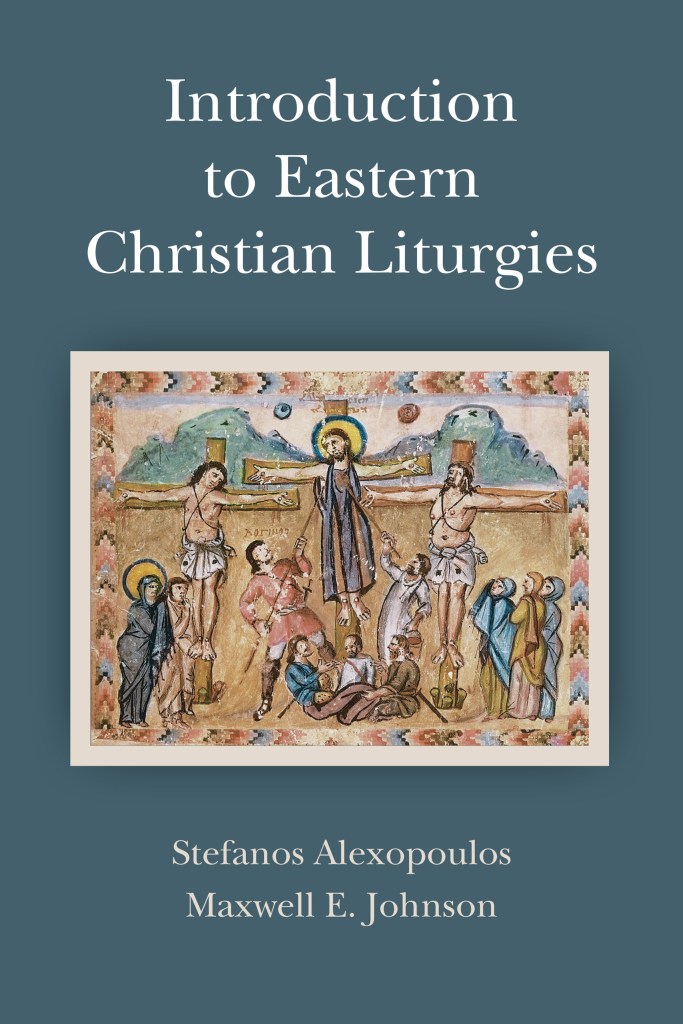
Book: Introduction to Eastern Christian Liturgies

This is an interesting and broadly-written book for anyone interested in the what-and-how of religious services in the various Eastern Orthodox churches – Armenian, Byzantine, Coptic, Ethiopian, Syrian, and Maronite traditions.

This densely-written academic text dives into intricate and comparative detail of many aspects of church services for each of these traditions – including historical developments of each tradition.

In this book, the reader learns:

  • In the early Syrian rite, baptism was viewed as “rebirth to something new” rather than the western view of baptism being our “death, rebirth, and rising with Christ” (pages 21-22).
  • I was surprised to discover that in the early centuries of the Syrian Orthodox tradition, the Syrians considered the Holy Spirit to be “Mother Holy Spirit” – complete with references in liturgical prayers about the Holy Spirit acting as the “womb” of people’s faith (page 23).

This book is worth reading.

Kim Burkhardt blogs at A Parish Catechist (and is a member of the Association of Catholic Publishers). Blogging is sustainable via blog readership (i.e. readers/subscribers). If you are a new visitor, it would be great to have you subscribe to follow this blog (thank you!). If you know someone who would like this blog, please share it with them and invite them to subscribe (thank you!).

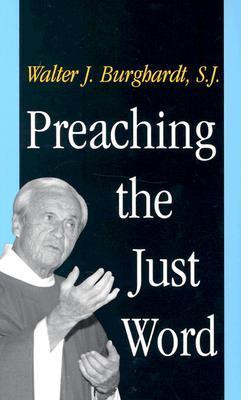
Book Review: Preaching the Just Word (Burghardt)

Book cover: Preaching the Just Word

I recently stumbled upon this book, Preaching the Just Word by Walter J. Burghardt, S.J. (i.e., a Jesuit). I took an immediate interest in the book because of the author’s name. My last name is Burkhardt. I found out a couple years ago that my paternal grandfather was actually born Burghardt, he started spelling his name with a K instead of G in high school or in his early 20’s – possibly to differentiate himself from his father and/or siblings because there had been multiple levels of “falling out” within the family…. So when I found this book and learned that there had been a prominent theologian named Burghardt (not a common name!), I hoped that I might be distantly related to the author! As it turns out, Walter Burghardt’s parents came to the New York area directly from Poland or Austria in the early 1900’s, whereas my Burghardt relatives moved from Germany to a German enclave in Russia’s Volga River region in the late 1700’s before migrating to the U.S.’s midwest farming region…. So, any unlikely biological connection between me and this book’s author would be very remote. Yet, I decided to read this book.

I am finding this book to be a worthwhile read already, just a few pages in. I’ve always been attracted to the inner mystical aspects of faith (my story is told here). In recent years, I’ve pondered how to attract people to exploring the inner aspects of faith (such as contemplative prayer) in an era that encourages people to live a frenetically outer life and ignore or avoid inward reflection (i.e., “who wants to go inward when this ultimately requires us work through the inner emotional challenges that are an inherent to being human?”). An inner, prayerful relationship with God is necessary to fully and vibrantly being a person of faith – and joyous (“a peace that passeth all understanding!”). Yet, Walter J. Burghardt rightly points out at the beginning of this book that a solely inward faith is wrongly individualistic (a modern-day form of selfishness). A “faith” that is solely focused on a personal relationship with God isn’t fully faith – this would merely be naval-gazing.

Burghardt explains that the ultimate point of the Christian life on earth is to love one another as we love ourselves. We are called to take care of one another in a radically self-sacrificing manner. We are called to live as part of an interwoven web of caring, socially connected to one another.

There’s a balance for each of us to be a person of faith: a joy-filled inner prayer life in which God nurtures a personal relationship with us combined with the necessary and just manifestations of this inward prayerful relationship: we become the people God intends us to be and we radically love and serve the people around us.

Kim Burkhardt blogs at A Parish Catechist (and is a member of the Association of Catholic Publishers). Blogging is sustainable via blog readership (i.e. readers/subscribers). If you are a new visitor, it would be great to have you subscribe to follow this blog (thank you!). If you know someone who would like this blog, please share it with them and invite them to subscribe (thank you!).

Book Review: The Sacristy Manual

Book cover

The Sacristy Manual is a how-to read for church volunteers and staff involved in supporting the flow of a church service – liturgists, sacristans, etc.

Really, this book is a good for anyone curious about the set-up and flow of a Catholic mass. Who sets up for mass? What is involved in setting up? What items are needed? What items are kept in the sacristy?

Aren’t masses pretty much the same from week to week? Why a need to prepare? Masses don’t happen in auto-pilot. The doors of the church need to be opened, lights need to be turned on. The liturgical books read by the priest need to be opened to the appropriate pages for that weeks’ readings. The seasonal flow of the liturgy is planned and organized. Candles in the sanctuary are lit (altar servers often do this). Communion hosts need to be set out. Seasonal banners are hung in the sanctuary. If there’s a special liturgy, incense and other special-event considerations need to be prepared. Volunteers are coordinated. Much of the preparation for mass happens in the sacristy.

For anyone interested in a hands-on look at the nuance of mass logistics from week to week, this is a great primer.

Kim Burkhardt blogs at A Parish Catechist and The Books of the Ages (and a member of the Association of Catholic Publishers). If you are a new visitor, it would be great to have you follow this blog (thank you!). If you know someone who would like this blog, please share it with them (thank you!).

Book Review: The Search for the Twelve Apostles

image, book cover

I took a recent interest in “Early Christian Literature” – Christian literature written after the time of Paul. I was rather surprised to not find a systemic overview of the early centuries of Christianity.

I then happened upon this book, The Search for the Twelve Apostles by William Steuart McBirnie, Ph.D. The author spent decades traveling to the Holy Land, Europe, etc. to find and visit places where the twelve apostles spent time and to study their lives.

As I read this book, I am finding the topic interesting. The author starts the book with a description of his trips to places where the apostles spent time and his own discovery that not much is written about the early centuries of Christianity.

The chapters dedicated to each apostle are written in a rather dry academic style, but I don’t fault the author – I appreciate his effort to write about the lives of the apostles. I am glad to be learning where each apostle likely spent time.

Kim Burkhardt blogs at A Parish Catechist (and is a member of the Association of Catholic Publishers). Blogging is sustainable via blog readership (i.e. readers/subscribers). If you are a new visitor, it would be great to have you subscribe to follow this blog (thank you!). If you know someone who would like this blog, please share it with them and invite them to subscribe (thank you!).

Book Review: Corrie Ten Boom’s The Hiding Place

Book: The Hiding Place

I just took a break from reading another book to read (re-read?) Corrie Ten Boom’s The Hiding Place.

When I recently happened upon a copy of The Hiding Place, I thought “Yes, I read this.” Perhaps I did read it in high school or in my twenties. I decided to read it again – this time for its’ Christian insight. As I read it this time, I didn’t remember the details of the book. If I read it before, I think I probably read it as a historical account of WWII.

The book absolutely is a historical account of WWII and of a family who participated in Dutch resistance. It is also the account of a family who deeply put their Christian faith into practice.

Most evenings, I pick up the latest faith book I am reading to read a few pages before I go to sleep. Last night, I finished The Hiding Place and then found myself unable to sleep because of the distress of reading about the horrors in Germany’s concentration camps. I was also compelled – as the author intended – about the author’s conviction that we are compelled to forgive. At the end of the book, she wrote of spending time after the war – and after being released from Ravensbrück concentration camp – helping WWII survivors to heal and educating people about forgiveness (prompted significantly from her sister’s witness on this topic before dying). At the very end of the book, Corrie Ten Boom wrote of encountering a guard from Ravensbrück where her beloved sister Betsy perished. Forgive even him? She had to reach deep into herself to try forgiving, then ask God to help her forgive. Ten Boom wrote compellingly that it was God who made it possible for her to forgive.

For anyone trying to live a life of faith, this book is a must-read. Corrie Ten Boom absolutely challenges us to go farther than we think we can in putting our faith into practical practice.

Kim Burkhardt blogs at A Parish Catechist (and is a member of the Association of Catholic Publishers). Blogging is sustainable via blog readership (i.e. readers/subscribers). If you are a new visitor, it would be great to have you subscribe to follow this blog (thank you!). If you know someone who would like this blog, please share it with them and invite them to subscribe (thank you!).

Book Review: Be healed (Bob Schuchts)

I was given a copy of this book: Be healed – A guide to encountering the powerful love of Jesus in your life (author: Bob Schuchts).

Because the book came to me with a recommendation from someone I respect, I started reading it with positive anticipation. I then got a few pages into the book and wondered, “Is this book along the lines of the old revival meetings in big tents? Can I get through this book?” I set it aside while I read another book.

When I came back to the book, I found that yes – this book resonates, meaninfully. The thrust of this book is such:

  • God loves us and wants us to be healthy and whole.
  • Healing in our lives happens when we allow God to love us. This requires a relationship in which we allow God into our lives.

A book worth reading!

Kim Burkhardt blogs at A Parish Catechist (and a member of the Association of Catholic Publishers). Blogging is sustainable via blog readership (i.e. readers/subscribers). If you are a new visitor, it would be great to have you subscribe to follow this blog (thank you!). If you know someone who would like this blog, please share it with them and invite them to subscribe (thank you!).