Book Review: Preaching the Just Word (Burghardt)

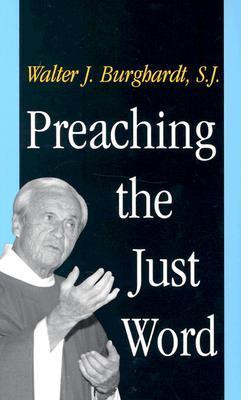
Book cover: Preaching the Just Word

I recently stumbled upon this book, Preaching the Just Word by Walter J. Burghardt, S.J. (i.e., a Jesuit). I took an immediate interest in the book because of the author’s name. My last name is Burkhardt. I found out a couple years ago that my paternal grandfather was actually born Burghardt, he started spelling his name with a K instead of G in high school or in his early 20’s – possibly to differentiate himself from his father and/or siblings because there had been multiple levels of “falling out” within the family…. So when I found this book and learned that there had been a prominent theologian named Burghardt (not a common name!), I hoped that I might be distantly related to the author! As it turns out, Walter Burghardt’s parents came to the New York area directly from Poland or Austria in the early 1900’s, whereas my Burghardt relatives moved from Germany to a German enclave in Russia’s Volga River region in the late 1700’s before migrating to the U.S.’s midwest farming region…. So, any unlikely biological connection between me and this book’s author would be very remote. Yet, I decided to read this book.

I am finding this book to be a worthwhile read already, just a few pages in. I’ve always been attracted to the inner mystical aspects of faith (my story is told here). In recent years, I’ve pondered how to attract people to exploring the inner aspects of faith (such as contemplative prayer) in an era that encourages people to live a frenetically outer life and ignore or avoid inward reflection (i.e., “who wants to go inward when this ultimately requires us work through the inner emotional challenges that are an inherent to being human?”). An inner, prayerful relationship with God is necessary to fully and vibrantly being a person of faith – and joyous (“a peace that passeth all understanding!”). Yet, Walter J. Burghardt rightly points out at the beginning of this book that a solely inward faith is wrongly individualistic (a modern-day form of selfishness). A “faith” that is solely focused on a personal relationship with God isn’t fully faith – this would merely be naval-gazing.

Burghardt explains that the ultimate point of the Christian life on earth is to love one another as we love ourselves. We are called to take care of one another in a radically self-sacrificing manner. We are called to live as part of an interwoven web of caring, socially connected to one another.

There’s a balance for each of us to be a person of faith: a joy-filled inner prayer life in which God nurtures a personal relationship with us combined with the necessary and just manifestations of this inward prayerful relationship: we become the people God intends us to be and we radically love and serve the people around us.

Kim Burkhardt blogs at A Parish Catechist (and is a member of the Association of Catholic Publishers). Blogging is sustainable via blog readership (i.e. readers/subscribers). If you are a new visitor, it would be great to have you subscribe to follow this blog (thank you!). If you know someone who would like this blog, please share it with them and invite them to subscribe (thank you!).

Book Review: The Sacristy Manual

Book cover

The Sacristy Manual is a how-to read for church volunteers and staff involved in supporting the flow of a church service – liturgists, sacristans, etc.

Really, this book is a good for anyone curious about the set-up and flow of a Catholic mass. Who sets up for mass? What is involved in setting up? What items are needed? What items are kept in the sacristy?

Aren’t masses pretty much the same from week to week? Why a need to prepare? Masses don’t happen in auto-pilot. The doors of the church need to be opened, lights need to be turned on. The liturgical books read by the priest need to be opened to the appropriate pages for that weeks’ readings. The seasonal flow of the liturgy is planned and organized. Candles in the sanctuary are lit (altar servers often do this). Communion hosts need to be set out. Seasonal banners are hung in the sanctuary. If there’s a special liturgy, incense and other special-event considerations need to be prepared. Volunteers are coordinated. Much of the preparation for mass happens in the sacristy.

For anyone interested in a hands-on look at the nuance of mass logistics from week to week, this is a great primer.

Kim Burkhardt blogs at A Parish Catechist and The Books of the Ages (and a member of the Association of Catholic Publishers). If you are a new visitor, it would be great to have you follow this blog (thank you!). If you know someone who would like this blog, please share it with them (thank you!).

Book Review: The Search for the Twelve Apostles

image, book cover

I took a recent interest in “Early Christian Literature” – Christian literature written after the time of Paul. I was rather surprised to not find a systemic overview of the early centuries of Christianity.

I then happened upon this book, The Search for the Twelve Apostles by William Steuart McBirnie, Ph.D. The author spent decades traveling to the Holy Land, Europe, etc. to find and visit places where the twelve apostles spent time and to study their lives.

As I read this book, I am finding the topic interesting. The author starts the book with a description of his trips to places where the apostles spent time and his own discovery that not much is written about the early centuries of Christianity.

The chapters dedicated to each apostle are written in a rather dry academic style, but I don’t fault the author – I appreciate his effort to write about the lives of the apostles. I am glad to be learning where each apostle likely spent time.

Kim Burkhardt blogs at A Parish Catechist (and is a member of the Association of Catholic Publishers). Blogging is sustainable via blog readership (i.e. readers/subscribers). If you are a new visitor, it would be great to have you subscribe to follow this blog (thank you!). If you know someone who would like this blog, please share it with them and invite them to subscribe (thank you!).

Book Review: Corrie Ten Boom’s The Hiding Place

Book: The Hiding Place

I just took a break from reading another book to read (re-read?) Corrie Ten Boom’s The Hiding Place.

When I recently happened upon a copy of The Hiding Place, I thought “Yes, I read this.” Perhaps I did read it in high school or in my twenties. I decided to read it again – this time for its’ Christian insight. As I read it this time, I didn’t remember the details of the book. If I read it before, I think I probably read it as a historical account of WWII.

The book absolutely is a historical account of WWII and of a family who participated in Dutch resistance. It is also the account of a family who deeply put their Christian faith into practice.

Most evenings, I pick up the latest faith book I am reading to read a few pages before I go to sleep. Last night, I finished The Hiding Place and then found myself unable to sleep because of the distress of reading about the horrors in Germany’s concentration camps. I was also compelled – as the author intended – about the author’s conviction that we are compelled to forgive. At the end of the book, she wrote of spending time after the war – and after being released from Ravensbrück concentration camp – helping WWII survivors to heal and educating people about forgiveness (prompted significantly from her sister’s witness on this topic before dying). At the very end of the book, Corrie Ten Boom wrote of encountering a guard from Ravensbrück where her beloved sister Betsy perished. Forgive even him? She had to reach deep into herself to try forgiving, then ask God to help her forgive. Ten Boom wrote compellingly that it was God who made it possible for her to forgive.

For anyone trying to live a life of faith, this book is a must-read. Corrie Ten Boom absolutely challenges us to go farther than we think we can in putting our faith into practical practice.

Kim Burkhardt blogs at A Parish Catechist (and is a member of the Association of Catholic Publishers). Blogging is sustainable via blog readership (i.e. readers/subscribers). If you are a new visitor, it would be great to have you subscribe to follow this blog (thank you!). If you know someone who would like this blog, please share it with them and invite them to subscribe (thank you!).

Book Review: Be healed (Bob Schuchts)

I was given a copy of this book: Be healed – A guide to encountering the powerful love of Jesus in your life (author: Bob Schuchts).

Because the book came to me with a recommendation from someone I respect, I started reading it with positive anticipation. I then got a few pages into the book and wondered, “Is this book along the lines of the old revival meetings in big tents? Can I get through this book?” I set it aside while I read another book.

When I came back to the book, I found that yes – this book resonates, meaninfully. The thrust of this book is such:

  • God loves us and wants us to be healthy and whole.
  • Healing in our lives happens when we allow God to love us. This requires a relationship in which we allow God into our lives.

A book worth reading!

Kim Burkhardt blogs at A Parish Catechist (and a member of the Association of Catholic Publishers). Blogging is sustainable via blog readership (i.e. readers/subscribers). If you are a new visitor, it would be great to have you subscribe to follow this blog (thank you!). If you know someone who would like this blog, please share it with them and invite them to subscribe (thank you!).

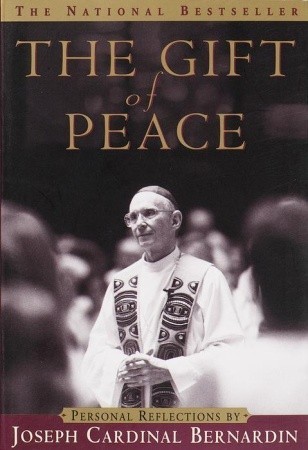
Book Review: The Gift of Peace

Book: The Gift of Peace

The Washington State Library for the Blind sent my mother an audio copy of Joseph Cardinal Bernardin’s book The Gift of Peace. My mother liked the book, so she ordered a print copy for me. I hadn’t heard of the book or the author; I wasn’t entirely sold on reading it….. Once I started reading the book….well… I’m sold.

This book of personal reflections includes reflections about prayer that resonate with my own experience and/or provide further encouragement in prayer:

  • “….it [an intro to a particular style of prayer] certainly introduced me to the importance of prayer and the fact that prayer is not a one-sided practice. Rather, prayer involves speaking and listening on both sides. [page four]” Blogger note (i.e., Kim Burkhardt): I find my best experience with prayer to be when I am simply quiet and allow God’s presence to be present.
  • “I decided to give God the first hour of my day, no matter what, to be with him in prayer and meditation where I wold try to open the door even wider to his entrance. This put my life in a new and uplifting perspective; I also found that I was able to share the struggles of my own spiritual journey with others. [page six]” Blogger note (i.e., Kim Burkhardt): I likewise found that active prayer makes it possible for me to share “the struggles of my own spiritual journey with others.”
  • “To close the gap between what I am and what God wants of me, I must empty myself and let Jesus come in and take over. [page 16]”
  • “[Jesus] wants me to focus on the essentials of his message…..Essentials ask us to to give true witness and to love others more. Nonessentials close us in on ourselves. [pages 16-17]”.

I am finding this book to be transparently, refreshingly self-revealing about the human journey in faith. A worthwhile read.

Kim Burkhardt blogs at A Parish Catechist and The Books of the Ages (and a member of the Association of Catholic Publishers). If you are a new visitor, it would be great to have you follow this blog (thank you!). If you know someone who would like this blog, please share it with them (thank you!). You can also support this blog by clicking here when you are going to shop on Amazon (that lands A Parish Catechist a commission on Amazon sales).

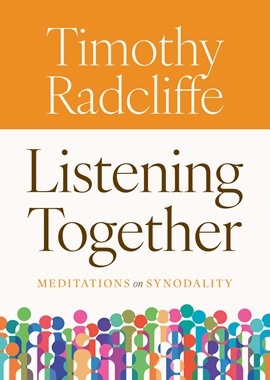
Book Review: Timothy Radcliffe, Listening Together

Book: Listening Together, Meditations on Synodality

Pope Francis convened a College of Bishops “Synod on Synodality” in Rome last October in which a worldwide group of bishops and lay people gathered for discussion following worldwide parish-level synodal listening sessions. The synod began with a series of talks by the engaging Dominican Timothy Radcliffe [Timothy Radcliffe served for several years as Master General of the Order of Preachers (Dominicans)]. Radcliffe’s presentations can be watched online here:

Now, wonderfully, Timothy Radcliffe’s conference presentations are available in print. Liturgical Press has published his collected presentations in a new book: Timothy Radcliffe: Listening Together. The publisher indicates that this book also contains “Radcliffe’s further reflections on our current challenges and where we could be headed as a church.”

I watched Timothy Radcliffe’s synodal presentations (from a computer in Seattle!). Timothy Radcliffe is thoughtful and articulate. I quoted his “We are all radically incomplete” statement from the Synod in one of my earlier blog posts here; he’s got plenty more insightful points to consider in his synodal presentations. I recently received a copy of the “Listening Together” book and look forward to spending time with it – much as one would spend time with a good friend! Given the historical nature of the synod meetings in Rome and Radcliffe’s thoughtful presentations, this book is bound to become “a book for history.”

Kim Burkhardt blogs at A Parish Catechist and The Books of the Ages (and a member of the Association of Catholic Publishers). If you are a new visitor, it would be great to have you follow this blog (thank you!). If you know someone who would like this blog, please share it with them (thank you!). You can also support this blog by clicking here when you are going to shop on Amazon (that lands A Parish Catechist a commission on Amazon sales).

Update: Faith reading challenge – Brothers Karamazov

In March, I challenged readers to consider reading Dostoevsky’s The Brothers Karamazov and to read it from a faith perspective.

In March, I stated: “I attended a state university and we read The Brothers Karamazov as secular literature. While we read the book as secular literature, I do remember our instructor posing a question about a particular point for one of the books’ characters. I found myself responding as seeing the character as analagous to a friend of mine who was serving as a spiritual guide for me at the time. My instructor and classmates found this odd and laughed as such. It was an awkward moment…….Since then, I have periodically heard reference to “The Brothers K” as being a book – in part – about faith. Goodreads (an online book portal) says of the book, ‘Through the gripping events of their story, Dostoevsky portrays the whole of Russian life, is social and spiritual striving, in what was both the golden age and a tragic turning point in Russian culture.’ Put May 1 on your calendar as the date to start reading The Brothers Karamazov through the lens of faith. I will post dates to begin discussing the book.”

We are now into the month of May. I did start to try reading “The Brothers K” again. In addition, a reader of this blog indicated that she accepted the challenge to read the book and has started reading – that’s great.

When I got a few pages into “The Brothers K” this time, I discovered that – indeed – the book includes more faith insights than I noticed the first time around. From the beginning, the book talks about faith being about love! Love is the root of what Christianity is about! When I first read the book for a secular literature class in college, I didn’t fully appreciate how infused the book is with faith concepts. Now, I see it.

Unfortunately, I am discovering that this very long Russian novel is a “bigger read” than I have an attention span for at this time. I am putting the book back on my bookshelf – with a fuller appreciation of what Dostoevsky put into the book.

For readers of this blog who open the pages of “The Brothers K,” I applaud your decision to read it!

Kim Burkhardt blogs at A Parish Catechist and The Books of the Ages (and a member of the Association of Catholic Publishers). If you are a new visitor, it would be great to have you follow this blog (thank you!). If you know someone who would like this blog, please share it with them (thank you!). You can also support this blog by clicking here when you are going to shop on Amazon (that lands A Parish Catechist a commission on Amazon sales).

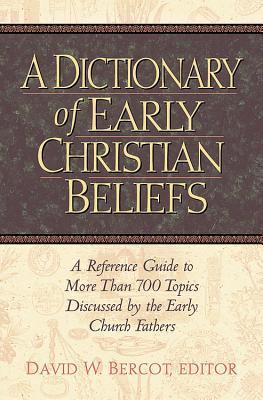
Book Review: Dictionary of Early Christian Beliefs

Dictionary: Early Christian Beliefs

There was a time when I would have read this reference book from cover to cover (I am among the readers who believe that when I read a book, I should read the entire book…..).

This is a useful, scholarly book to have on one’s bookshelf as a reference to inform one’s study of any number of topics. I am reading some of it now and plan to refer to it on occasion as the reference book it is intended to be.

Christianity is 2,000 years old. In 2024, the majority of us – with the possible exception of those Biblical scholars who specialize in Early Christian Literature – are not going to be familiar with the ins and outs of the topics discussed in the early church. Nor are most of us current on the etymology of what every word meant 2,000 years ago (“dictionary definitions” of words and the cultural context of vocabulary changes over time…).

“Sure,” some will say, “We know what early Christians were talking about. They were talking about Jesus, the resurrection, the gospels, and how to be Christian.” Yes, that’s true. But how exactly did those conversations unfold in Palestine, Greece, Turkey, etc. in, say, the year 75, 125, or 300 AD?

The gospels weren’t written down until several decades after Christ’s death. Jesus said during his lifetime that he would return during “this generation;” thus, it initially seemed unnecessary to Jesus’ contemporaries to write down his life and teachings for future generations…. Eventually, it started to become clear that he wasn’t coming back imminently, so his narrative began to be written for posterity. It then took time for the early church to decide which gospels – from among the gospels that were written down – are canonical (accepted as church doctrine). It wasn’t immediately clear to the early church that “the Bible” was going to include (and only include) Matthew, Mark, Luke, and John.

Likewise, it took time for the early church to develop and “come together” on any number of topics that we recognize today as “Christianity.”

So, precisely which “Christian topics” were under discussion in the early days of Christianity? This book – A Dictionary of Early Christian Beliefs – provides useful insights in to this question. Having this reference on one’s bookshelf can inform our understanding in any number of settings – when studying Sunday’s readings at church, when we want to learn more about a specific aspect of Christianity, when studying church history, etc.

A sampling of several topical entries in this 704-page resource include:

  • Christ, Divinity (how the early church came to understand this one topic gets 25 pages!)
  • Descent into Hades
  • Gifts of the spirit
  • “Keys of the Kingdom”
  • Patriarchs
  • Paul, apostle
  • Prayer
  • Rapture
  • Schism
  • At the end of the book, there are “Quotable quotes from the Early Christians.”

I appreciate having this book on my bookshelf.

Kim Burkhardt blogs at A Parish Catechist and The Books of the Ages (and a member of the Association of Catholic Publishers). If you are a new visitor, it would be great to have you follow this blog (thank you!). If you know someone who would like this blog, please share it with them (thank you!). You can also support this blog by clicking here when you are going to shop on Amazon (that lands A Parish Catechist a commission on Amazon sales).
Book Review: Martin Laird’s ‘Into the Silent Land’

Book Cover: Into the Silent Land

I was recently given a copy of Martin Laird’s Into the Silent Land: Christian Practice of Contemplation.

As a contemplative pray-er, I find this book refreshing. Rather than only being a how-to book on the mechanics of how to pray contemplatively, this is the type of contemplative prayer book I look for: a description of what happens when we do a deep dive into contemplative prayer. It is – to paraphrase a speaker I heard once – the “poetry of our lives” that demonstrates the animation of one’s prayer life when prays contemplatively. Such poetry – it seems to me – helps lead readers into the experience of contemplative prayer via surrender into what we read in the books’ text.

A few “poetry of our prayer lives” excerpts:

  • “Silence is an urgent necessity for us: silence is necessary if we are to hear God speaking in eternal silence; our own silence is necessary if God is to hear us” (page 2).
  • “This book…proceeds from an ancient Christian view that the foundation of every land is silence (Ws 18:24), where God simply and perpetually gives himself” (page 6).
  • “…the grace of Christian wholeness that flowers in silence….dispels (the) illusion of separation [from God]” (page 16).

This is a short book, but it takes a long time to read – its’ contents are contemplated rather than merely read. It contributes meaningfully to one’s prayer life. This is a book I will keep.

Kim Burkhardt blogs at A Parish Catechist and The Books of the Ages (and a member of the Association of Catholic Publishers). If you are a new visitor, it would be great to have you follow this blog (thank you!). If you know someone who would like this blog, please share it with them (thank you!). You can also support this blog by clicking here when you are going to shop on Amazon (that lands A Parish Catechist a commission on Amazon sales).