Book Review: The Gift of Peace
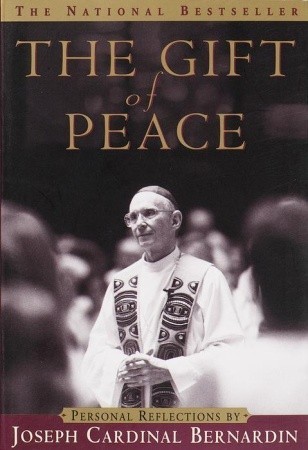
Book: The Gift of Peace

The Washington State Library for the Blind sent my mother an audio copy of Joseph Cardinal Bernardin’s book The Gift of Peace. My mother liked the book, so she ordered a print copy for me. I hadn’t heard of the book or the author; I wasn’t entirely sold on reading it….. Once I started reading the book….well… I’m sold.

This book of personal reflections includes reflections about prayer that resonate with my own experience and/or provide further encouragement in prayer:

  • “….it [an intro to a particular style of prayer] certainly introduced me to the importance of prayer and the fact that prayer is not a one-sided practice. Rather, prayer involves speaking and listening on both sides. [page four]” Blogger note (i.e., Kim Burkhardt): I find my best experience with prayer to be when I am simply quiet and allow God’s presence to be present.
  • “I decided to give God the first hour of my day, no matter what, to be with him in prayer and meditation where I wold try to open the door even wider to his entrance. This put my life in a new and uplifting perspective; I also found that I was able to share the struggles of my own spiritual journey with others. [page six]” Blogger note (i.e., Kim Burkhardt): I likewise found that active prayer makes it possible for me to share “the struggles of my own spiritual journey with others.”
  • “To close the gap between what I am and what God wants of me, I must empty myself and let Jesus come in and take over. [page 16]”
  • “[Jesus] wants me to focus on the essentials of his message…..Essentials ask us to to give true witness and to love others more. Nonessentials close us in on ourselves. [pages 16-17]”.

I am finding this book to be transparently, refreshingly self-revealing about the human journey in faith. A worthwhile read.

Kim Burkhardt blogs at A Parish Catechist and The Books of the Ages (and a member of the Association of Catholic Publishers). If you are a new visitor, it would be great to have you follow this blog (thank you!). If you know someone who would like this blog, please share it with them (thank you!). You can also support this blog by clicking here when you are going to shop on Amazon (that lands A Parish Catechist a commission on Amazon sales).

Book Review: Timothy Radcliffe, Listening Together

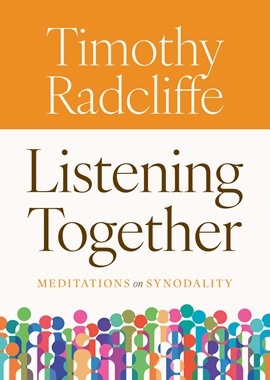
Book: Listening Together, Meditations on Synodality

Pope Francis convened a College of Bishops “Synod on Synodality” in Rome last October in which a worldwide group of bishops and lay people gathered for discussion following worldwide parish-level synodal listening sessions. The synod began with a series of talks by the engaging Dominican Timothy Radcliffe [Timothy Radcliffe served for several years as Master General of the Order of Preachers (Dominicans)]. Radcliffe’s presentations can be watched online here:

Now, wonderfully, Timothy Radcliffe’s conference presentations are available in print. Liturgical Press has published his collected presentations in a new book: Timothy Radcliffe: Listening Together. The publisher indicates that this book also contains “Radcliffe’s further reflections on our current challenges and where we could be headed as a church.”

I watched Timothy Radcliffe’s synodal presentations (from a computer in Seattle!). Timothy Radcliffe is thoughtful and articulate. I quoted his “We are all radically incomplete” statement from the Synod in one of my earlier blog posts here; he’s got plenty more insightful points to consider in his synodal presentations. I recently received a copy of the “Listening Together” book and look forward to spending time with it – much as one would spend time with a good friend! Given the historical nature of the synod meetings in Rome and Radcliffe’s thoughtful presentations, this book is bound to become “a book for history.”

Kim Burkhardt blogs at A Parish Catechist and The Books of the Ages (and a member of the Association of Catholic Publishers). If you are a new visitor, it would be great to have you follow this blog (thank you!). If you know someone who would like this blog, please share it with them (thank you!). You can also support this blog by clicking here when you are going to shop on Amazon (that lands A Parish Catechist a commission on Amazon sales).

Update: Faith reading challenge – Brothers Karamazov

In March, I challenged readers to consider reading Dostoevsky’s The Brothers Karamazov and to read it from a faith perspective.

In March, I stated: “I attended a state university and we read The Brothers Karamazov as secular literature. While we read the book as secular literature, I do remember our instructor posing a question about a particular point for one of the books’ characters. I found myself responding as seeing the character as analagous to a friend of mine who was serving as a spiritual guide for me at the time. My instructor and classmates found this odd and laughed as such. It was an awkward moment…….Since then, I have periodically heard reference to “The Brothers K” as being a book – in part – about faith. Goodreads (an online book portal) says of the book, ‘Through the gripping events of their story, Dostoevsky portrays the whole of Russian life, is social and spiritual striving, in what was both the golden age and a tragic turning point in Russian culture.’ Put May 1 on your calendar as the date to start reading The Brothers Karamazov through the lens of faith. I will post dates to begin discussing the book.”

We are now into the month of May. I did start to try reading “The Brothers K” again. In addition, a reader of this blog indicated that she accepted the challenge to read the book and has started reading – that’s great.

When I got a few pages into “The Brothers K” this time, I discovered that – indeed – the book includes more faith insights than I noticed the first time around. From the beginning, the book talks about faith being about love! Love is the root of what Christianity is about! When I first read the book for a secular literature class in college, I didn’t fully appreciate how infused the book is with faith concepts. Now, I see it.

Unfortunately, I am discovering that this very long Russian novel is a “bigger read” than I have an attention span for at this time. I am putting the book back on my bookshelf – with a fuller appreciation of what Dostoevsky put into the book.

For readers of this blog who open the pages of “The Brothers K,” I applaud your decision to read it!

Kim Burkhardt blogs at A Parish Catechist and The Books of the Ages (and a member of the Association of Catholic Publishers). If you are a new visitor, it would be great to have you follow this blog (thank you!). If you know someone who would like this blog, please share it with them (thank you!). You can also support this blog by clicking here when you are going to shop on Amazon (that lands A Parish Catechist a commission on Amazon sales).

Book Review: Dictionary of Early Christian Beliefs

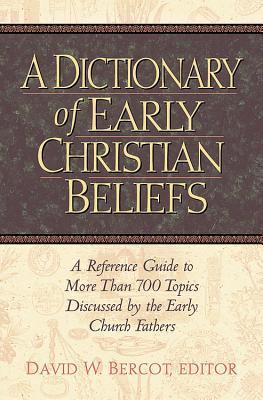
Dictionary: Early Christian Beliefs

There was a time when I would have read this reference book from cover to cover (I am among the readers who believe that when I read a book, I should read the entire book…..).

This is a useful, scholarly book to have on one’s bookshelf as a reference to inform one’s study of any number of topics. I am reading some of it now and plan to refer to it on occasion as the reference book it is intended to be.

Christianity is 2,000 years old. In 2024, the majority of us – with the possible exception of those Biblical scholars who specialize in Early Christian Literature – are not going to be familiar with the ins and outs of the topics discussed in the early church. Nor are most of us current on the etymology of what every word meant 2,000 years ago (“dictionary definitions” of words and the cultural context of vocabulary changes over time…).

“Sure,” some will say, “We know what early Christians were talking about. They were talking about Jesus, the resurrection, the gospels, and how to be Christian.” Yes, that’s true. But how exactly did those conversations unfold in Palestine, Greece, Turkey, etc. in, say, the year 75, 125, or 300 AD?

The gospels weren’t written down until several decades after Christ’s death. Jesus said during his lifetime that he would return during “this generation;” thus, it initially seemed unnecessary to Jesus’ contemporaries to write down his life and teachings for future generations…. Eventually, it started to become clear that he wasn’t coming back imminently, so his narrative began to be written for posterity. It then took time for the early church to decide which gospels – from among the gospels that were written down – are canonical (accepted as church doctrine). It wasn’t immediately clear to the early church that “the Bible” was going to include (and only include) Matthew, Mark, Luke, and John.

Likewise, it took time for the early church to develop and “come together” on any number of topics that we recognize today as “Christianity.”

So, precisely which “Christian topics” were under discussion in the early days of Christianity? This book – A Dictionary of Early Christian Beliefs – provides useful insights in to this question. Having this reference on one’s bookshelf can inform our understanding in any number of settings – when studying Sunday’s readings at church, when we want to learn more about a specific aspect of Christianity, when studying church history, etc.

A sampling of several topical entries in this 704-page resource include:

  • Christ, Divinity (how the early church came to understand this one topic gets 25 pages!)
  • Descent into Hades
  • Gifts of the spirit
  • “Keys of the Kingdom”
  • Patriarchs
  • Paul, apostle
  • Prayer
  • Rapture
  • Schism
  • At the end of the book, there are “Quotable quotes from the Early Christians.”

I appreciate having this book on my bookshelf.

Kim Burkhardt blogs at A Parish Catechist and The Books of the Ages (and a member of the Association of Catholic Publishers). If you are a new visitor, it would be great to have you follow this blog (thank you!). If you know someone who would like this blog, please share it with them (thank you!). You can also support this blog by clicking here when you are going to shop on Amazon (that lands A Parish Catechist a commission on Amazon sales).
Book Review: Martin Laird’s ‘Into the Silent Land’

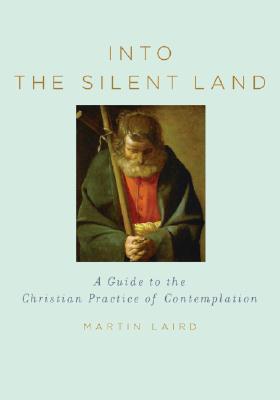
Book Cover: Into the Silent Land

I was recently given a copy of Martin Laird’s Into the Silent Land: Christian Practice of Contemplation.

As a contemplative pray-er, I find this book refreshing. Rather than only being a how-to book on the mechanics of how to pray contemplatively, this is the type of contemplative prayer book I look for: a description of what happens when we do a deep dive into contemplative prayer. It is – to paraphrase a speaker I heard once – the “poetry of our lives” that demonstrates the animation of one’s prayer life when prays contemplatively. Such poetry – it seems to me – helps lead readers into the experience of contemplative prayer via surrender into what we read in the books’ text.

A few “poetry of our prayer lives” excerpts:

  • “Silence is an urgent necessity for us: silence is necessary if we are to hear God speaking in eternal silence; our own silence is necessary if God is to hear us” (page 2).
  • “This book…proceeds from an ancient Christian view that the foundation of every land is silence (Ws 18:24), where God simply and perpetually gives himself” (page 6).
  • “…the grace of Christian wholeness that flowers in silence….dispels (the) illusion of separation [from God]” (page 16).

This is a short book, but it takes a long time to read – its’ contents are contemplated rather than merely read. It contributes meaningfully to one’s prayer life. This is a book I will keep.

Kim Burkhardt blogs at A Parish Catechist and The Books of the Ages (and a member of the Association of Catholic Publishers). If you are a new visitor, it would be great to have you follow this blog (thank you!). If you know someone who would like this blog, please share it with them (thank you!). You can also support this blog by clicking here when you are going to shop on Amazon (that lands A Parish Catechist a commission on Amazon sales).
Book Review: The Person…Readings in Human Nature

The Person

I came upon this The Person…Readings in Human Nature – edited by William O Stephens – recently in a Little Free Library. While skimming through it at the Little Free Library, I found the book to be – as per the book’s description – be an anthology of modern and historical perspectives on “personhood” from well-recognized writers and philosophers over the centuries (our modern view of personhood is actually a fairy recent perspective….).

I’ve always taken an interest in the psychology of human development. I brought home this particular book as it speaks to a particular interest I have at the moment: the distinct impact of living a Christian life on the human person (and, how a person lives their life).

Many of the historical and contemporary thinkers whose perspectives are included in this book are secular. One of them is St. Thomas Aquinas (13th century). The opportunity to look at these multiple perspectives is interesting…..

Anyone who has ever sat in a church pew knows that what we hear of Christianity on Sunday is suppose to be applied in our lives…. And, that it isn’t always applied in people’s lives Monday through Saturday.

Last Wednesday, I was at mass listening to an Ash Wednesday homily. During the homily, it occurred to me that the perspective was a perspective that has infused my life “more than I had realized.” I found myself noticing that the perspective offered in the homily was a perspective that I had learned growing in my denomination and that it had fundamentally become part of my worldview….. Several years ago, I was struggling through a difficult period. Myself and the people around me were trying to make sense of my situation and how I might move out of the difficult period. I was away from church at the time and simply saw my perspective at the time as “my perspective” (and, a perspective – if you would have asked me at the time – was a perspective no different than anyone else’s. Or, since we all have a perspective, I might have thought my perspective to be a secular one since I wasn’t religiously active at the time)….. As we searched for ways to mentally frame both my situation and a solution, I noticed that myself and secular folks around me at the time were framing an effort to find a solution very differently. I didn’t have a sense at the time of what those differing perspectives were…… Later – during last Wednesday’s Ash Wednesday homily – I realized that the perspective I was applying at the time was rooted in a very Catholic perspective; even though I wasn’t religiously active at the time. Having grown up Catholic, I had absorbed a world view that was more distinct than I had realized. Fish don’t realize they are swimming in water as water is what they know.

A solution to my above-mentioned challenge was found later – in the Catholic pews to which I had returned. Allowing God to work in my life brought me to a solution to a vexing challenge.

I am looking forward to reading at least several sections The Person…Readings in Human Nature. I look forward to reflecting via this book – from the perspective of “how we live in the world as persons” – the distinctiveness of the worldview I pondered on Ash Wednesday. How well I apply that worldview to living well and being of service is always up for review…..

Kim Burkhardt blogs at A Parish Catechist and The Books of the Ages (and a member of the Association of Catholic Publishers). If you are a new visitor, it would be great to have you follow this blog (thank you!). If you know someone who would like this blog, please share it with them (thank you!). You can also support this blog by clicking here when you are going to shop on Amazon (that lands A Parish Catechist a commission on Amazon sales).
Further consideration of “Embodying Forgiveness”

Embodying Forgiveness: A Theological Analysis

I reviewed L. Gregory Jones’ book Embodying Forgiveness: A Theological Analysis in early January. The book is important enough to discuss a second time. 

Embodying Forgiveness is not a quick read. It’s written rather academically. It is densely packed with important ideas that require thoughtful reading. The book is about a sometimes difficult topic that can take great commitment to apply in one’s life. The book also supports a well-lived faith in which we – as a friend often says – do the “adulting” of living one’s faith (i.e., we grow up and live out the responsibilities we are called to do. In fact, this book helps us “find our inner adult!”). This is the type of book to read when we want to move beyond “easy principles of faith” and fluffy phrases to a faith in which we grow and mature. In other words – it draws us toward meaningful liberation and to living in right relationship with God and the people in our lives. The principles in this book can be intimidating, but that doesn’t mean that the book is a “nonjoyous downer – it’s liberating. In this book, we learn about living for our community rather than being self-centric. We learn about giving up self without being a doormat.  Good news: the author draws readers toward practicing forgiveness, making it palatable when forgiveness feel unpalatable.

This book is so important that I’m posting several excerpts (hint: yes, this is an effort to tempt readers to read the book!):

  • “Forgiveness has long been hard to embody, even among those committed to its importance” (page xi).
  • “…the craft of forgiveness involves the ongoing and ever deepening process of unlearning sin through forgiveness and learning, through specific habits and practices, to live in communion – with the Triune God, with one another, and with the whole Creation” (page xii).
  • The ideas in this book move “beyond….pious, sentimental affirmations that ‘Jesus is my friend,'” to friendship being “a much more formative and transformative relationship” (page xiii).
  • “….forgiveness serves primarily not to absolve guilt but as a reminder, a gracious irritant, of what communion with God and with one another can and should be: and so it should enable and motivate our protest against any situation where people (either ourselves or others) are diminished or destroyed” (page xvi).
  • “….the purpose of forgiveness is the restoration of communion, the reconciliation of brokenness” (page 5).

I am the type of reader who thinks that a book worth reading should be read in its’ entirety. In the case of this book, reading even just a chapter or two – and really applying it in one’s life – would move a person forward in a faith well-lived. A worthwhile read!

Kim Burkhardt blogs at A Parish Catechist and The Books of the Ages (and a member of the Association of Catholic Publishers). If you are a new visitor, it would be great to have you follow this blog (thank you!). If you know someone who would like this blog, please share it with them (thank you!). You can also support this blog by clicking here when you are going to shop on Amazon (that lands A Parish Catechist a commission on Amazon sales).
Book Review: Embodying Forgiveness

Embodying Forgiveness: A Theological Analysis

This book, Embodying Forgiveness by Methodist pastor L. Gregory Jones, makes forgiveness more possible by demonstrating its’ theological necessity. Therefore, this is an important grow-my-faith book for individuals committed to truly living their faith. The book challenges readers to grow in ways that can be uncomfortable (growth that’s challenging to achieve can move us with particular stride along the long-haul journey of genuine maturing in faith).

This is a book that must be read slowly. The concepts presented grab a reader’s attention such that one must pause to take in the book’s ideas, find the emotional capacity to live each aspect of the book’s insights.

Sample excerpts include:

  • “….people are mistaken if they think of Christian forgiveness primarily as absolution from guilt. The purpose of forgiveness is the restoration of communion [between parties] (page five).”
  • “Christian forgiveness involves a high cost, both for God and for those who embody it. It requires the disciplines of dying and rising with Christ, disciplines for which there are no shortcuts, no handy techniques to replace the risk and vulnerability of giving up ‘possession’ of one’s self, which is done through the practices of forgiveness and repentance. This does not involve self-denial, nor the ‘death’ of self through annihilation. Rather, it is learning to see oneself and one’s life in the context of communion [i.e., community] (pages 5-6).”

A worthwhile read!

Kim Burkhardt blogs at A Parish Catechist and The Books of the Ages (and a “Content Creator/Individual” member of the Association of Catholic Publishers). If you are a new visitor, it would be great to have you follow this blog (thank you!). If you know someone who would like this blog post, please share it with them (thank you!). You can also support this blog by clicking here when you are going to shop on Amazon (that lands A Parish Catechist a commission on Amazon sales).
Book Review: This is My Body, A Call to Eucharistic Revival

Book: This is My Body

I was recently given Bishop Robert Barron’s book This is My Body: A Call to Eucharistic Revival. When I started reading it, I quickly found it as readable and engaging as Henri Nouwen’s book With Burning Hearts.

The author, Bishop Robert Barron, wrote this book as part of a U.S. “call to Eucharistic renewal” (he helped initiate a U.S. call to Eucharistic renewal while the Chair of the Committee on Evangelization and Catechesis for the United States Conference of Catholic Bishops, USCCB). This book is engaging because it takes readers to the deeper meaning of faith concepts we’re meant to learn; he does so in an easily readable and interesting manner – plenty of “ah ha” moments. At the risk of reviewing this book with too much hyperbole, I stopped earmarking interesting pages after a few pages because I was earmarking most pages.

Here are two excerpts from This is My Body, A Call to Eucharistic Revival:

….”The opening line of the book of Genesis tells us that ‘in the beginning, God created the heavens and the eart’ (Gen. 1:1). Why did God, who is perfect in every way and who stands in need of nothing outside himself, bother to create at all? There are mythologies and philosophies galore – both ancient and modern – that speak of God needing the universe or benefiting from it in some fashion, but Catholic theology has always repudiated these approaches and affirmed God’s total self-sufficiency….God created the heaven and earth ‘of his own goodness and almighty power, not for the increase of his own happiness.'”

“Love, in the theological sense, is not a feeling or a sentiment, though it is often accompanied by those psychological states. In its essence, love is an act of the will, more precisely, the willing of the good of the other as other. To love is really to want what is good for someone else and then to act on that desire.”

This book is intentionally priced affordably to get it into the hands of readers. I am passing along copies to fellow readers who live in my community. If you are looking for something to read, you can order it online here.

Kim Burkhardt blogs at A Parish Catechist and The Books of the Ages (and a “Content Creator/Individual” member of the Association of Catholic Publishers). If you are a new visitor, it would be great to have you follow this blog (thank you!). If you know someone who would like this blog post, please share it with them (thank you!). You can also support this blog by clicking here when you are going to shop on Amazon (that lands A Parish Catechist a commission on Amazon sales).
Book Review: Playing with Dragons – Living with Suffering and God

I heard of this book recently while watching a “Great Course” about the history of the Old Testament. The Great Courses presenter who mentioned this book was discussing the cultural context of how dragons came to be mentioned in the Hebrew Bible; in the context of that presentation, he referred to this book Playing with Dragons in the same sense of the book’s Goodreads summary, saying (in effect): “This is a book for those want to go beyond standard discussions of faith and suffering.”

There are multiple layers of opportunity for understanding the depths of religious meaning. The academic/sociologist/theologian James Fowler chronicles in his book Stages of Faith the six stages we have the opportunities to progress through in faith as we age; too often, we adults settle for remaining perpetually in a high-school level of a stage three faith (as described by Fowler). In hindsight, I got stuck for some years as an adult in a transition moving from a stage three faith to stage four faith (a common occurrence, according to Fowler). It took time for me to begin growing in faith again; once I did, I was happy to discover new depths of religious insight – such as metaphors provided to us in Biblical texts and religious ritual. Therefore, I looked forward to Andy Angel’s book Playing with Dragons, Living with Suffering and God when I found recently found the book. I, as the Goodreads summary for this book mentions, “find standard discussions of faith and suffering frustrating” – I often find such discussions inadequate.

Personally, I accept that suffering is “part of the human condition” and a consequence of original sin. God gave us humans the opportunity to have a naturally happy time of it on earth; that opportunity was destroyed through free will via “original sin.” I don’t find the concept of original sin to be a limiting and heavy weight put on humanity; rather, we are provided with the opportunity to move beyond it through baptism and by nurturing a right relationship with God and the people around us.

In this Playing with Dragons book, I am hoped for discussion about how dragons are provided as a metaphor for us to wrestle on a human level with the challenges we must contend with during this lifetime.

This book is summarized on Goodreads as follows: “There be dragons all over the Bible. From the great sea monsters of Genesis to the great dragon of Revelation, dragons appear as the Bible opens and closes, and they pop their grisly heads up at various junctures in between. How did they get there and what on earth (or indeed in heaven) are they doing there? This is a book for those who find standard discussions of faith and suffering frustrating. Andy Angel opens up the rich biblical tradition of living with God in the midst of suffering. He takes the reader on a journey of exploration through biblical texts that are often overlooked on account of their strangeness–texts about dragons. He shows how these peculiar passages open up a language of prayer through suffering in which people share their anger, weariness, disillusionment, and even joy in suffering with God. Angel explores how such “weird” Scriptures open up a whole new way of praying and reveal a God who approves of honest spirituality, a spirituality that the Bible holds open but too many of its interpreters do not.”

What I found in the book was a cultural and religious context of the Old Testament – how and why dragons were symbolic representations of the challenges we wrestle with and – importantly – that metaphor provides us with a way to “wrestle with life’s challenges” in ways that literal vocabulary fails us. Epic dramas are useful.

Kim Burkhardt blogs at A Parish Catechist and The Books of the Ages (and a “Content Creator/Individual” member of the Association of Catholic Publishers). If you are a new visitor, it would be great to have you follow this blog (thank you!). If you know someone who would like this blog post, please share it with them (thank you!).