Book Review: Daily strengths for daily needs

Thank you to A Parish Catechist friend Karen Chartier for this book review. Much appreciated!

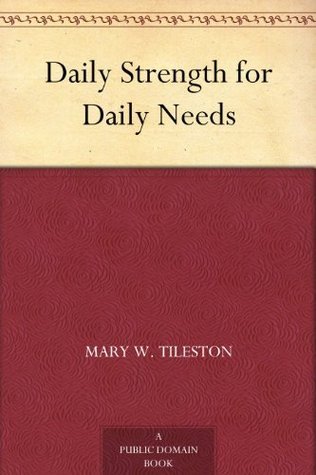
Book Review: Daily Strengths for Daily Needs

Mary W. Tileston

The Family Inspirational Library

Copyright 1928

Mary Tileston’s book Daily Strengths for Daily Needs offers a compilation of quotes from thoughtful, spiritual thinkers throughout the ages, from those found in the Bible to R.W. Emerson, to Marcus Antoninus, to George Elliot, to St. Frances de Sales — and scores of others.

Published first in 1884, it remains pertinent to the present. ‘In these days of great emotion and radical changes, we need the steady, persistent and refreshing inspiration of spiritual thoughts, which, entering the texture of our life in the morning, will guide and refresh us through the day, or, in the evening, give a sense of confidence and peace.’ opens the preface, and both the need and the outcomes outlined are relevant.

I was given this book by a friend and have been inspired by it throughout the year. I highly recommend it. Below are examples of quotes of Tileson’s book.

The one who will be found in trial capable of great acts of love, is ever the one who is always doing considerate small ones.          F. W. Robertson

A man is relieved and gay when he has put his heart into his work and done his best; but what he has said or done otherwise, shall give him no peace.                   R. W. Emerson

We may, if we choose, make the worst of one another.  Everyone has his weak points; everyone has his faults; we may make the worst of these; we may fix our attention constantly upon these.  But we may also make the best of one another.  We may forgive, even as we hope to be forgiven…By loving whatever is loveable in those around us, love will flow back from them to us, and life will become a pleasure instead of a pain; and earth will become like heaven; and we shall become not unworthy followers of Him whose name is Love.                      A. P. Stanley

Book Reviewer: Karen Chartier

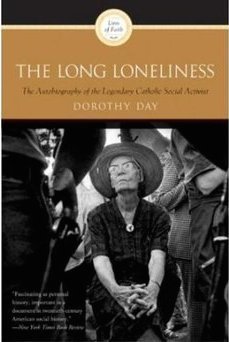
Book Review: Dorothy Day’s Autobiography – The Long Loneliness

Dorothy Day is one of those occasional figures whose lives – and how they live their lives – captures our attention….. In her case, part of how she captivates our attention is because she absolutely – and unfailingly – lived her conscience. It is possible to live one’s conscience.

In her autobiography (The Long Loneliness), Dorothy Day tells her story of growing up, becoming a journalist, her involvement in the Greenwich village scene and political anarchy, and on to her conversion to Catholicism and founding the Catholic Worker Movement.

This is one of the books that I read slowly; I read it slowly to take in the fullness of her life and how she lived her convictions, being a force for good in the world. I will read it again.

Kim Burkhardt blogs at A Parish Catechist and The Books of the Ages.

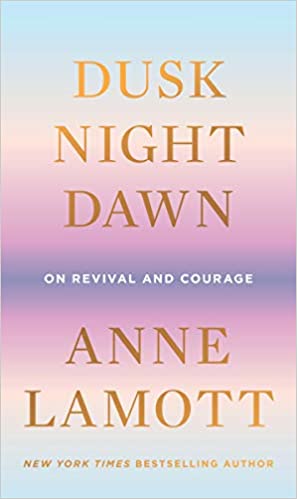
Book Review: Anne Lamott’s Dusk Night Dawn

It somehow took me until 2020 to hear of Anne Lamott. …..Came upon one of her quotes on social media. When I mentioned the quote that I’d come across, a friend said “I love Anne Lamott.”

When I then read two of Anne Lamott’s books, including Dusk Night Dawn, I discovered why my friend Sue “loves Anne Lamott.” She’s a good writer, yes. She’s real, she’s real-like-us (ordinary people can see ourselves in her). When Lamott writes about her life, faith, and the world and society in which we find ourselves,, she writes about real life lessons and tackles some of life’s subjects that people would often rather avoid. She’s not shy about taking – and sharing – a social and political perspective on life and the world in which we live.

I am keeping two of Anne’s books on my bookshelf at home. A real-like-us writer. Refreshing.

Kim Burkhardt blogs at A Parish Catechist and The Books of the Ages.

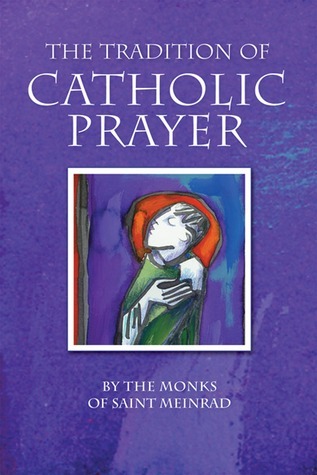
The Tradition of Catholic Prayer: Book review, reflections

In their book The Tradition of Catholic Prayer, The Benedictine monks of Saint Meinrad Monastery (editors: Christian Raab and Harry Hagan) bring us a rich and rewarding read. When we want to read about prayer, it’s natural to want to turn to monks!

The depth and breadth of this book are summarized well on the book’s back cover, beginning with the following sentence: “Catholics have a rich and ancient prayer tradition that informs contemporary practice.” No wonder that people looking to deepen their prayer life look – among other places – to the Catholic Church. The variety of Catholic prayer experience and the historical context for this “rich and ancient prayer tradition” are covered engagingly in this very readable book. It’s worth a read for anyone looking to deepen their prayer life; it has helped nourish my ever-present hunger to sustain an rich and deep prayer life.

Kim Burkhardt blogs at A Parish Catechist and The Books of the Ages.

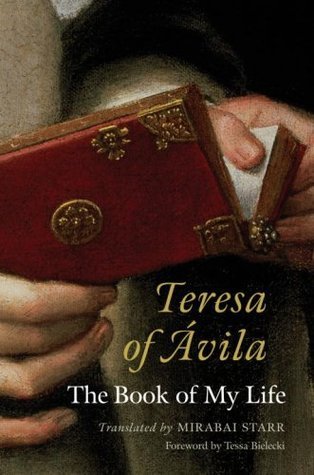
Teresa of Avila (autobiography): book review, reflection

It must have been 2017 where I first heard of Teresa of Avila. Fr. Bryan Dolejsi mentioned her one weekday at St. Benedict parish (Seattle), calling her a “Doctor of the Church.” “What,” I wondered, “is a Doctor of the Church….and there is a woman recognized as a Doctor of the Church? I must find out who she is!” That led me to a Seattle Public Library copy of Mirabai Starr‘s English translation of the autobiography of this 16th century Spanish mystic.

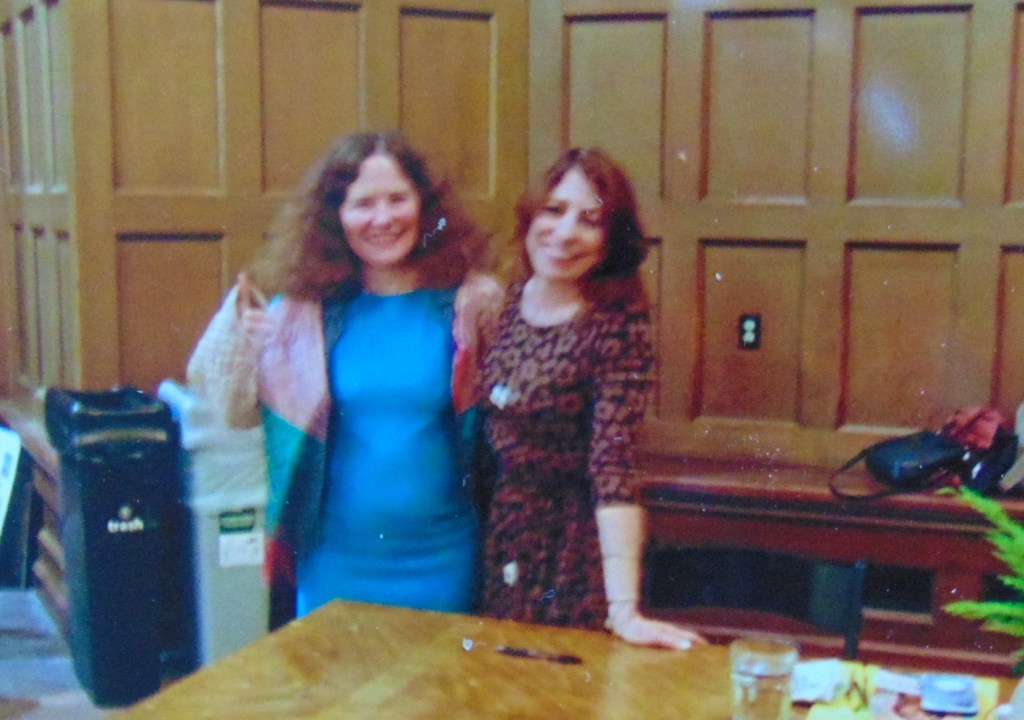
Now, my own dog-eared and frequently-consulted copy of this book is on my bookshelf. Inside the front cover is a photograph of me with the translator, Mirabai Starr, at her speaking engagement at St. Mark’s Cathedral (Episcopal) in Seattle (yes, Mirabai graciously autographed my copy of the book).

Teresa of Avila’s autobiography – her life, her mystical, contemplative experience – has actively nourished my own prayer life. When I returned to church in 2016, it was a result of a “God moment” (including a broken ankle, long story) in which God gifted me an unanticipated and emotionally nourishing period of contemplative prayer. I didn’t have the vocabulary to talk about the inner state I was experiencing (now, I know to call that period of time “an encounter with God”); Teresa’s autobiography provided me with exquisite articulation about mystical prayer. Since finding and eagerly re-reading this book over time, I’ve heard people refer to the writings of Teresa and her protege (John of the Cross) as poetry-about-prayer. I don’t feel that a “poetry” description gives justice to their writing (accurate perhaps, but the description pales); I prefer to think of the writing of these two Carmelite saints as “the voice of lived experience.”

Kim Burkhardt blogs at A Parish Catechist and The Books of the Ages.