Twists and turns amongst Catholic rites – with a surprise

I started reading about Eastern Catholic rites and Eastern Orthodox traditions in 2023. I periodically visit their weekend services.
I was surprised to learn that there are more than twenty Catholic rites in full communion with Rome (Eritrean Rite, Byzantine Rite, etc.) and a similar number of Orthodox traditions (Greek Orthodox, Russian Orthodox, Ukrainian Orthodox, Syrian Orthodox, Coptic Orthodox, Eritrean Orthodox, Byzantine Orthodox, etc.). When I recently tried to identify all the rites and traditions, I was grateful to find a list here (scroll down to page two).
If anyone wants to take a deep dive down this rabbit hole of learning about Eastern Churches, here’s a list of relevant books I’ve read in the last three years (the last time I moved, I looked for a residence with enough wall space for my bookshelves!):
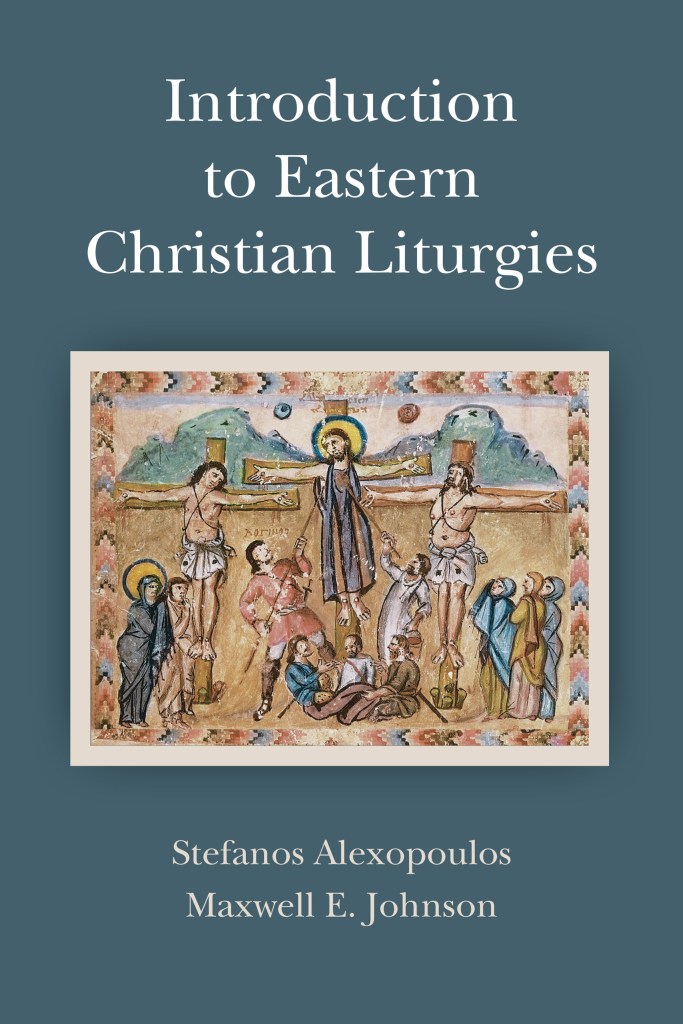
- Alexpoulus, Stefanos and Johnson, Maxwell E. Introduction to Eastern Christian Liturgies. Liturgical Press Academic, 2022.
- Contributors: Ware, Bishop Kallistos, et.al. Paths to the Heart: Sufism and the Christian East. World Wisdom, Inc., 2002.
- Drobner, Hubertus R. Fathers of the Church: A Comprehensive Introduction. Baker Publishing Group, 2007.
- Halisherr, Irenee (SJ), with forerward by Bishop Kalistos Ware. Spiritual Direction in the Early Christian East. Cistsercian Publications, 1990.
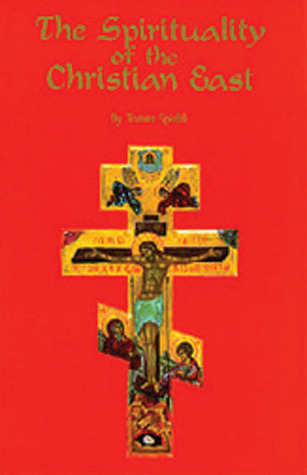
- Spidlik, Tomas (SJ), translated by Anthony P. Gythiel. The Spirituality of the Christian East: A Systemic Handbook. Cistercian Publications, Inc., 1986.
- Ware, Metropolitan Kallistos. The Orthodox Way. St. Vladimir’s Seminary Press, 2018.
- White, James. F. Introduction to Christian Worship, Third Edition. Abingdon Press, 1980, 1990, 2000.
I find it interesting how much these rites and traditions have in common and, alternately, the distinct ways in which “each lung breaths.” Pope John Paul wrote in his 1995 encyclical Ut Unum Sint, in gist, “Living only within the western or eastern church is like living with only one lung; both traditions are needed for the full breath of the Christian faith. “
In looking at how much these rites and traditions have in common, one can start by looking at the liturgy (i.e. how a service is structured). Anyone who is familiar with the liturgy of one rite can visit another rite – even in another language – and anticipate the general flow of the service: the mass or divine liturgy (depending up on the rite or tradition) begins with the priest processing into the church (typically with music), then there are readings and a homily, then there is the Eucharist (holy communion), then the closing of the service. We also share belief in the Kerygma (belief in Jesus, that in his death and resurrection he has conquered sin and death). There’s plenty that we share in common…..
What fascinates me at the moment is something I read this month in Drobner’s Fathers of the Church: A Comprehensive Introduction. It turns out that there were churches/groups in the early days of Christianity that didn’t Hellenize. What ?!?!
I had to put down Drobner’s Fathers of the Church: A Comprehensive Introduction. I was floored at the very idea that there might be non-Hellenized Christianity. What exactly would that look like?
Anyone generally familiar with the history and development of Christianity knows that as the apostles and early Church fathers led the church, aspects of Greek (i.e., Hellenistic) philosophy (neoplatonic thought, etc.) were incorporated into how most of us understand Christianity. Concepts of duality, the construct of the Trinity, etc. – Hellenistic philosophy has significantly impacted how Christianity is taught to many of us. Therefore, I was stunned that there would be non-Hellenized Christians. What would this look like?
I, in much surprise, went down an online rabbit hole to learn more about “Non-Hellenized Christianity.” It turns out that there are still small numbers of Non-Hellenized or little-Hellenized Christians around, some of whose rites are in communion with Rome. They perceive Christianity much like early Hebrew Christianity, with little or no input of Greek philosophy. They have more of a focus on one’s community in the here-and-now and less focus on the kingdom to come, less focus on various aspects of duality, etc.
I don’t know yet how much time I will spend learning about non-Hellenized Christianity. I did wonder how non-Hellenized Christianity could be reconciled with broader Christian thought. Hmmm….. Isn’t the Holy Spirit moving us toward a fuller understanding of how God wants us to understand Christian theology? Therefore, wasn’t an incorporation of Hellenistic philosophy necessary for the full expression of Christian theology (since that’s the road that Christianity went down)? On the other hand, part of me is attracted to a simpler Christianity. Part of me has always had some discomfort with having incorporated secular philosophy into Christian thought (I am not alone in raising this question)…. How to think about this? I am still taking this in. So far, I have decided that grasping non-Hellenistic Christianity must fall under “breathing with both lungs” (see above).
There is always more to learn….
Kim Burkhardt blogs about faith at The Hermitage Within. Thank you for reading this faith blog and for sharing it with your friends. While you are here, please feel welcome to provide support to sustain this blog ($$).