List: How many ways to pray (types of prayer)?

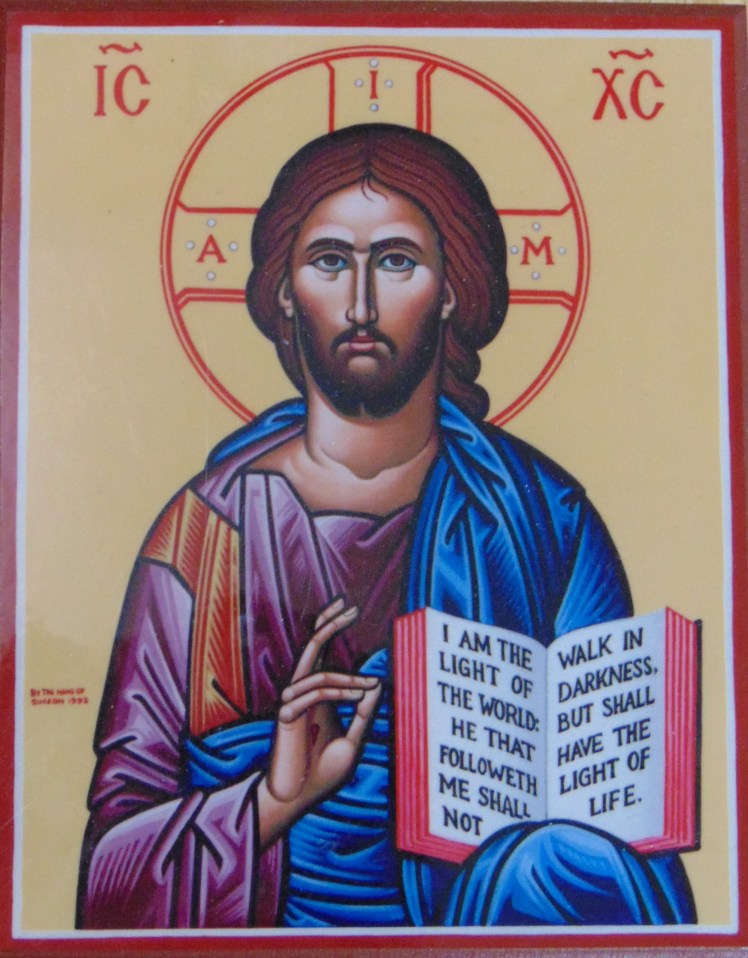
image of Christ
depiction of Christ

variety of prayer options available within Catholicism.

Catholic prayer is a vibrant and varied tradition, bringing to fullness a life-giving relationship between us and God. Jesus came “that we might have life, and have it more abundantly” (John 10:10). “…prayer is not merely an exchange of words, but it engages the whole person in a relationship with God the Father, through the Son, and in the Holy Spirit” (U.S. Conference of Catholic Bishops, USCCB).

How many ways are there to pray?

The essence of prayer is communication, a relationship with God, a being-with or being-in-the-presence-of. When we find a relationship with God – an interactive, two-way interaction rather than a one-way monologue (we wouldn’t relate to the people in our lives exclusively via uni-directional monologues!) – there comes a discovery that God is present with us in prayer.

A friend said to me, “prayer is a very personal communion with God that is meant to be personal, and unique to you….People are… very different in their personal experience in prayer, and that in itself is a beautiful thing.”

Just as we have many differing relationships with the various people in our lives – and a variety of ways that we communicate with the people in our lives – there are any number of ways of communicating with God. A prayer style that works for one person may be very different than what works for the next person. Here are several approaches to prayer:

  • Rote prayer (formal, memorized prayers – these are often provided to us by our houses of worship). Prayers such as the Lord’s Prayer are full of meaning and help us learn to pray. Such prayers give us ready prayer content that we can easily put to use.
  • Psalms. The Book of Psalms – which were meant to be sung – are summarized by Wikipedia thus: the Book of Psalms are “an anthology of Hebrew religious hymns…including hymns or songs of praise, communal and individual laments, royal psalms, imprecation, and individual thanksgivings.  The book also includes psalms of communal thanksgiving, wisdom, pilgrimage, and other categories.”
  • “Talking to God.” Our spontaneous thoughts and words directed to God. God wants to have a relationship with us; relationships are two-way, be open to feeling God’s presence in response.
  • Contemplative Prayer. Resting reflectively in prayer, without a need for words or any human language. Contemplative prayer can – and for some people, does – include a sense of God’s presence in prayer. For more information about contemplative prayer, visit Contemplative Outreach.
  • Praying the Rosary. The rosary is a reflective way of praying a set of rote prayers with a formulaic set of Catholic prayer beads (focusing time on specified topics). Instructions for praying the rosary is available here.
  • Lectio Divina. Lectio Divina “describes a way of reading the Scriptures whereby we gradually let go of our own agenda and open ourselves to what God wants to say to us” (this particular description provided by the Carmelites).
  • Singing at church. “Those who sing pray twice” (a popular phrase in churches).
  • Intercessory prayer. Intercessory prayer that we pray for other people. We come to God with the challenges of those who are in need of support.

My favorite Catholic pray-ers:

  • Teresa of Avila, (16th-century mystic, Doctor of the Church, Carmelite nun, reformer of the Carmelite religious order, Carmelite saint)
  • John of the Cross (16th-century mystic, Doctor of the Church, Carmelite monk and priest, co-reformer of the Carmelite religious order, Carmelite saint)
  • Edith Stein, Carmelite nun, Carmelite saint
  • Fr. Thomas Keating, founder of Contemplative Outreach

Books for further reading:

Clinging: The Experience of Prayer (Emilie Griffin)

The Tradition of Catholic Prayer (The Monks of Meinrad Monastery)

Kim Burkhardt blogs at A Parish Catechist (and is a member of the Association of Catholic Publishers). Blogging is sustainable via blog readership (i.e. readers/subscribers). If you are a new visitor, it would be great to have you subscribe to follow this blog (thank you!). If you know someone who would like this blog, please share it with them and invite them to subscribe (thank you!).

Good Friday, Tenebrae, grace, pending resurrection

Welcome to Good Friday.

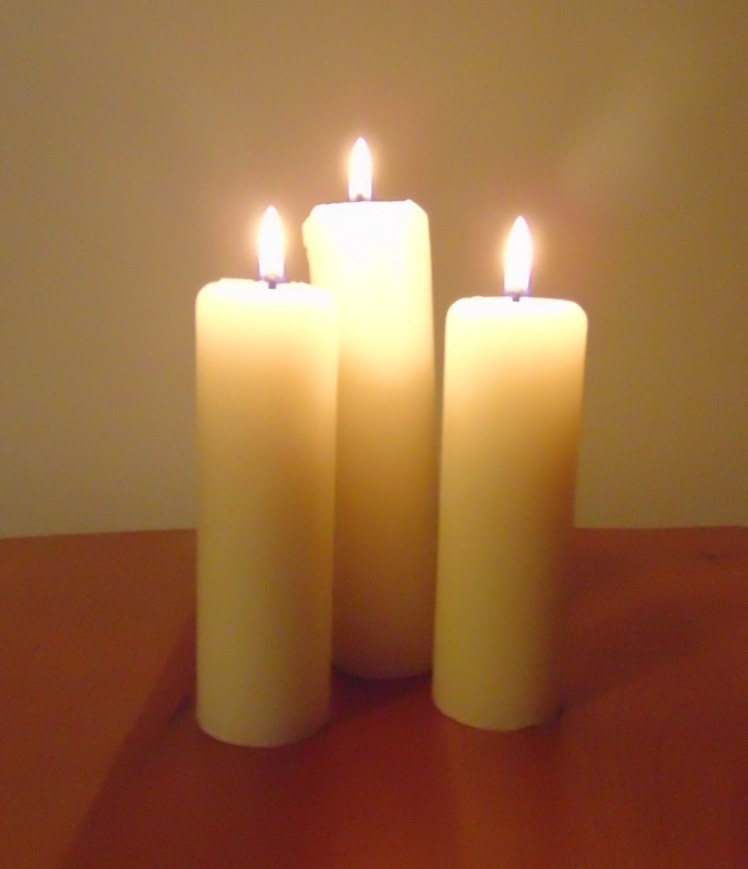
In his book Beyond Tenebrae, author Bradley J. Birzer writes “I am fascinated by the recognition of Tenebrae (…..3 pm on Good Friday)…… The extinguishing of light, candle by candle, the stripping of the altar, the bearing of the books, the departure from the chapel in a deafening silence.” As we move through Holy Week, I am

God’s grace in our lives and the transformation offered us as a result of the resurrection are how I find my being within Christianity. I wrote in a recent post, “We are indeed ‘a resurrection people,’ our redemption is made possible as a result of Christ’s death on the cross.   There’s a redemptive joy possible through God’s ability to transfigure us – when we allow God to work in us – that motivates my continued prayer life…..”

As you experience Good Friday today, make it an encounter with Christ rather than just another day. Reflect: what are your plans for the upcoming Easter season (the time between Easter and Pentecost)? This is a great season within the liturgical year to surrender into a transformative relationship with Christ, allowing God to move us more fully into the people we are meant to be. If anyone is pondering whether it’s worth it to surrender into allowing God to transform our very being, just ponder how well one’s inner life and life circumstances are going without surrendering to God being in charge – that should satisfactorily answer whether to turn one’s life over to God. This opportunity to surrender is one in which “I have been Crucified with Christ. It is no longer I, but Christ who lives in me” (Galatians 2:20). We give up any pretense of running our own lives. Acts 17:28: “For it is in God that we live and move and have our being.”

Easter is coming! Alleluia!

Kim Burkhardt blogs at A Parish Catechist (and is a member of the Association of Catholic Publishers). Blogging is sustainable via blog readership (i.e. readers/subscribers). If you are a new visitor, it would be great to have you subscribe to follow this blog (thank you!). If you know someone who would like this blog, please share it with them and invite them to subscribe (thank you!).
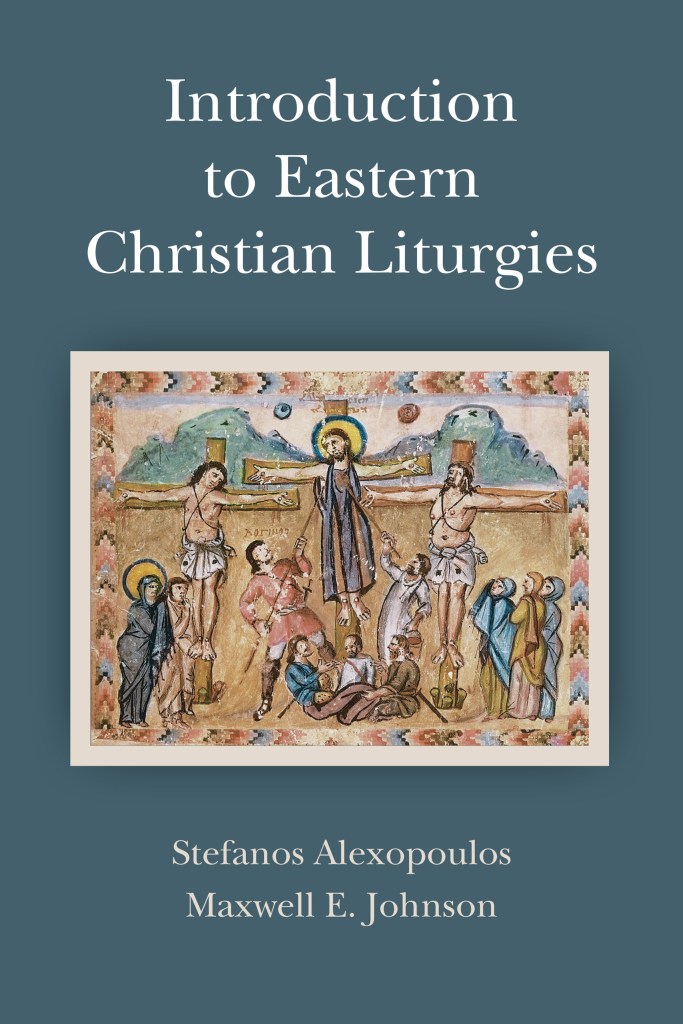
Book Review: Introduction to Eastern Christian Liturgies

Book: Introduction to Eastern Christian Liturgies

This is an interesting and broadly-written book for anyone interested in the what-and-how of religious services in the various Eastern Orthodox churches – Armenian, Byzantine, Coptic, Ethiopian, Syrian, and Maronite traditions.

This densely-written academic text dives into intricate and comparative detail of many aspects of church services for each of these traditions – including historical developments of each tradition.

In this book, the reader learns:

  • In the early Syrian rite, baptism was viewed as “rebirth to something new” rather than the western view of baptism being our “death, rebirth, and rising with Christ” (pages 21-22).
  • I was surprised to discover that in the early centuries of the Syrian Orthodox tradition, the Syrians considered the Holy Spirit to be “Mother Holy Spirit” – complete with references in liturgical prayers about the Holy Spirit acting as the “womb” of people’s faith (page 23).

This book is worth reading.

Kim Burkhardt blogs at A Parish Catechist (and is a member of the Association of Catholic Publishers). Blogging is sustainable via blog readership (i.e. readers/subscribers). If you are a new visitor, it would be great to have you subscribe to follow this blog (thank you!). If you know someone who would like this blog, please share it with them and invite them to subscribe (thank you!).

Feast Day of Hildegard von Bingen

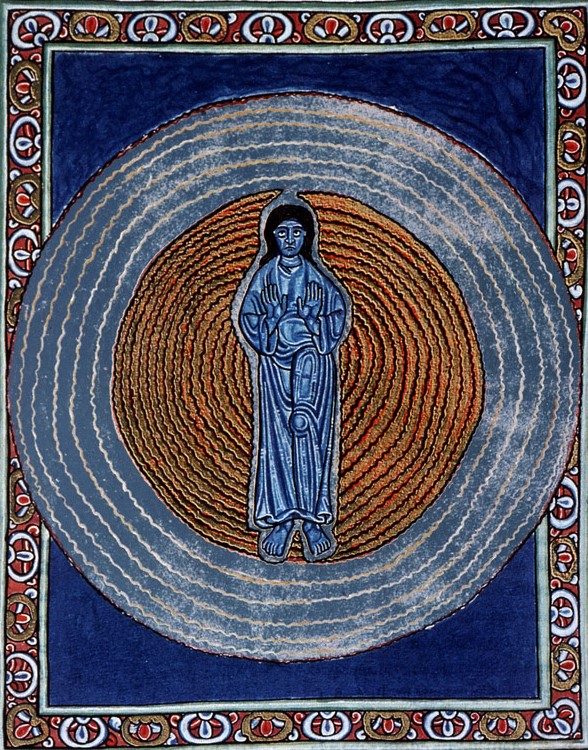
Above: Hildegard’s own artwork of the Trinity

Today – September 17 – is the Feast Day of Hildegard von Bingen: a saint, polymath (a person with significant multiple talents), and Doctor of the Church (Doctors of the Church are saints recognized for having made significant contributions to the Catholic Church).

I have been listening to Hildegard’s music for several years. She lived her life in the region of Germany where my father’s mother’s ancestors later lived and was a Benedictine (I am a parishioner at a St. Benedict parish – another personal reason to like her!).

Hildegard – with her wide-ranging interests, talents, activities, and achievements – is broadly popular across many social strata.

The following summary of Hildegard’s life comes from Wikipedia:

Hildegard of Bingen c. 1098 – 17 September 1179)…. was a German Benedictine abbess and polymath active as a writer, composer, philosopher, mystic, visionary, and as a medical writer and practitioner during the High Middle Ages. She is one of the best-known composers of sacred mononphony, as well as the most recorded in modern history. She has been considered by scholars to be the founder of scientific natural history in Germany.”Hildegard of Bingen… c. 1098 – 17 September 1179)…. was a German Benedictine abbess and polymath active as a writer, composer, philosopher, mystic, visionary, and as a medical writer and practitioner during the High Middle Ages. She is one of the best-known composers of sacred mononphony, as well as the most recorded in modern history. She has been considered by scholars to be the founder of scientific natural history in Germany. Hildegard’s convent elected her as magistra (mother superior) in 1136. She founded the monasteries of Rupertsberg in 1150 and Eibingen in 1165. Hildegard wrote theological, botanical, and medicinal works, as well as letters, hymns, and antiphons for the liturgy. She wrote poems, and supervised miniature illuminations in the Rupertsberg manuscript of her first work, Scivias. There are more surviving chants by Hildegard than by any other composer from the entire Middle Ages, and she is one of the few known composers to have written both the music and the words. One of her works, the Ordo Virtutum, is an early example of liturgical drama and arguably the oldest surviving morality play. She is noted for the invention of a constructed language known as Lingua Ignota.”

A timeline of her achievements is listed here by worldhistory.org .

If you would like to read up on individual saints, Hildegard’s life story provides many interesting facets to read up on.

Kim Burkhardt blogs at A Parish Catechist and The Books of the Ages. If you are a new visitor, it would be great to have you follow this blog (thank you!). If you know someone who would like this blog post, please share it with them (thank you!).