Pondering religious imagination….

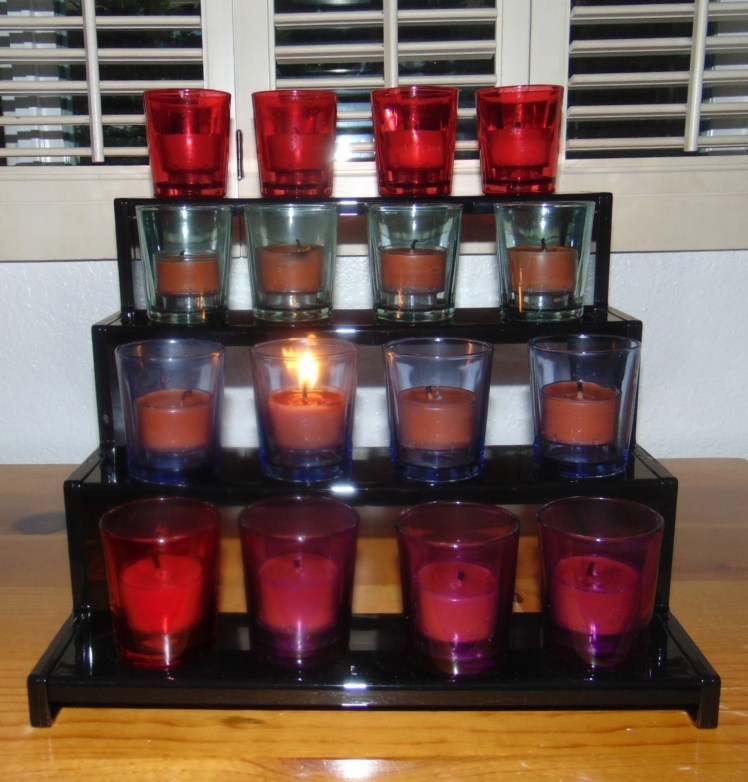
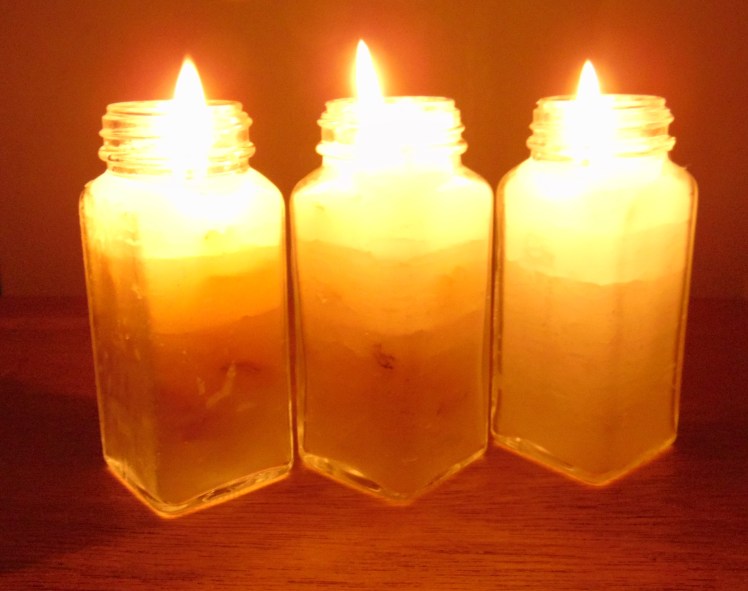
Trinity of candles

I was recently given Frank J. Cunningham’s Vesper Time: The Spiritual Practice of Growing Older. Early in the book, he mentions “The Catholic Imagination.”

I am intrigued by the phrase. I happened across the phrase once before and immediately recognized that yes, there is a “Catholic Imagination.”

When I first encountered the phrase “A/The Catholic imagination,” I recalled an experience circa 2011. In 2011, I was trying to discuss a matter with a couple of non-Catholics (they were both lovely, well-meaning people). We went in circles, got nowhere. They were trying one mental and verbal approach to exploring the matter at hand, I recognized that I was clearly approaching the subject very differently. At the time, I could recognize a difference in approaches, but I couldn’t articulate the contours of either approach. When I later “happened across” the phrase “The Catholic imagination,” I instantly recognized that my involvement in the above-mentioned discussion (2011) was attempting to frame the topic via a Catholic imagination while the other two parties were employing a secular approach. Even though I was a lapsed Catholic at the time, “The Catholic Imagination” had so thoroughly infused my thinking while growing up that it stayed with me even when I was away from church.

Google’s AI effectively synthesizes several credible-source descriptions of “The Catholic imagination”: “The Catholic imagination is a worldview seeing God’s presence in the physical world, viewing earthly life, objects, and experiences as channels of grace, rooted in the belief that Jesus’s humanity makes the sacred accessible through the material. It’s a sacramental perspective, finding deeper meaning and spiritual significance in everyday things, stories, and rituals, encompassing themes of sin, redemption, and ultimate hope through a framework of divine providence and the ‘complex of opposites’ (light/dark, good/evil).”

For those who live within – and/or were raised within – a particular faith tradition, do you recognize your tradition’s “style of imagination?” Do you see that “style of imagination” infusing how you see and interact with the people and events around you? Religious imagination truly exerts a powerful influence on how we live in the world – from how we interpret meaning within events, themes, etc. to how we communicate and interact with the people in our lives. It’s easy enough to know whether or not we bring explicitly-stated religious ideas into our daily life (“I believe that God is present in my life,” “I am religiously accountable for my behavior,” etc.). It’s another matter to recognize perhaps more implicitly-incorporated ideas – a ritualized pattern of looking at daily patterns in our lives or bringing a “complex of opposites” perspective into seeing the events in our lives that might not be shared by neighbors or co-workers (good/evil, light/dark, etc.).

Hmmm…… It might be interesting to undertake psychological studies contrasting people with a particular religious imagination to to people without such a perspective. For example, is there a distinct psychological roadmap to learning life’s “shades of gray” for individuals with a “complex of opposites” worldview? Maybe such studies have already been done?

Kim Burkhardt blogs about faith at The Hermitage Within. Thank you for reading this faith blog and for sharing it with your friends. While you are here, please feel welcome to provide support to sustain this blog ($$).
Book Review: The Music of Silence

The Music of Silence
Book: The Music of Silence

I somehow keep encountering Benedictine spirituality. The first monastery I ever visited was Westminster Abbey in Mission, B.C. [I was four and had just recently been baptized. My parents decided we would visit Westminster Abbey where we attended a Latin mass ( a lot to take in for a post-Vatican II four-year-old who was still new to attending mass….)]. In 2016, I joined St. Benedict parish in Seattle. Since 2016, I have read several books on contemplative spirituality written by Benedictines. I give people copies of The Tradition of Catholic Prayer from the Benedictine St. Meinrad Monastery. I am now enrolled in a Master’s in Theology at a Benedictine university (St. Martin’s University) ….And so it goes….

Most recently, I came upon – and ordered a copy of – The Music of Silence: Entering the Sacred Space of Monastic Experience. When the book arrived, I was both surprised and not surprised that the authors are O.S.B. – of the Order of St. Benedict.

This book is proving to be everything I hoped for. Goodreads (the Internet Movie Database – IMDB – of published books) describes this book simply: The Music of Silence is “[a] collection of meditations describes the sacred nature of the monastic chant, the qualities of faith, and the peace-inducing properties of silence and listening.”

A vibrant faith life must – by definition – include both an outward life of service and an inner stillness in which we encounter God’s presence. The Music of Silence is among the written music articulating an inner environment of nurturing a personally-enriching stillness and encountering God’s presence.

Much to my gleeful surprise, this book comes with a CD of Gregorian chant (yes, I still buy and listen to CDs….). While I have occasionally listened to Gregorian chant over the years, I am now finding a richer receptivity for such chant. Perhaps my local library has CDs of Gregorian chant…..

Kim Burkhardt blogs about faith at The Hermitage Within. Thank you for reading this faith blog and for sharing it with your friends. While you are here, please feel welcome to provide support to sustain this blog ($$).
Christianity: “A Path”

Nature path
Faith Path

In her book Centering Prayer and Inner Awakening, Cynthia Bourgeault tells a story about centering prayer guru Thomas Keating when he was the abbot of St. Joseph’s Abbey in Spenser, Massachusetts. “A few miles down the road from the abbey, a former Catholic retreat house had closed down and had been sold to a Buddhist group. When the facility reopened as the Insight Meditation Center….teaching the path of Vipassana…. suddenly the monks at St. Joseph’s began to notice an increase of people, almost inevitably young people, stopping by the monastery guest house asking for directions about how to get to the Insight Meditation Center! Dismayed but intrigued, Keating began to engage some of these young pilgrims in dialogue. What was it they were seeking at the Insight Meditation Center? To which the response nearly always came, in the vernacular of the Sixties, ‘A path, man! We’re seeking a Path!’ Discovering that the vast majority of these seekers had been raised as Christians, he asked the sixty-four-dollar question – ‘So, why don’t you search for a path within your own tradition?’ To which he received the genuinely astonished answer: ‘Christianity has a path?’ St. Joseph Monastery’s response was to develop the technique of Centering Prayer (which Keating then popularized when he was at Snowmass, Colorado) to help people in today’s modern context find Christianity’s long tradition of contemplative prayer.

It seems today – in the 2020’s – that there still seems to be a frequent lack of recognition that Christianity has “a path.”

What of that path? How do we get onto that “path?”

I tell some of my own journey to that path here. Having grown up Catholic and then having left for twenty years, I had a profound re-conversion experience in 2016. That re-conversion experience began when I attended a Friday evening mass for social reasons, vowing that “I wasn’t going to return to Catholicism” – a gift of God’s presence proved me wrong!

In the period following that Friday evening mass, I was graced with an unexpected period of contemplative prayer – I simply rested in God’s presence as I experienced God loving me. Emotional healing from a challenging period began as I reconnectws with God and church, God-via-church-and-prayer.

In the years since the autumn of 2016, I have slowly discovered Christianity’s “path.” Surrender to allowing God’s presence to work in our lives. “Love God and love your neighbor” (Matthew 22::36-40) (I often find it easier to love God “who is love” than to love sometimes-challenging people, while some people find it easier to “love the people we can see” than to love the God we can’t see). Accept that God’s will for us is “a narrow path” that’s hard to follow, but ultimately freeing. “Again I tell you, it is easier for a camel to pass through the eye of a needle than for someone who is rich to enter the kingdom of God” (Matthew 19:24) [Jesus goes on to say that this task is impossible for humans alone, but that all things are possible in God} [This “passing through the eye of a needle is said to be a metaphor referring to a “narrow entrance” at Jerusalem’s gate whereby a camel would have to kneel at night to pass through the narrow passage when the city’s gate had been closed for the night for security.]. Participate in having the parts of ourselves that aren’t in alignment with God’s will for us slowly “cut away” (God is the principal actor in this “cutting away,” but we can participate in allowing this process to unfold and doing what we can). As we grow in all of these things, we learn of “It is no longer I, but God who lives in me” (Galatians 2:20). We start encountering the Catholic “both/and” of having a taste of “heaven on earth” (i.e., heaven later, but we get a taste of it now); In thinking about heaven, I tell people that “I need God now.” In living God’s will for us, there’s freedom, joy, peace among people.

God loves us. And, yes, Christianity has “a path.”

Kim Burkhardt blogs about faith at The Hermitage Within. Thank you for reading this faith blog and for sharing it with your friends. While you are here, please feel welcome to provide support to sustain this blog ($$).
Book Review: Bourgeault’s Centering Prayer and Inner Awakening

Book: Centering Prayer and Inner Awakening
Centering Prayer and Inner Awakening

I have been hearing for several years – mostly through Contemplative Outreach Northwest – about Episcopalian priest Cynthia Bourgeault. She is known for her active, thoughtful leadership within contemplative/mystical Christianity.

I finally got around to reading one of her books: Centering Prayer and Inner Awakening.

I am “beyond thrilled” to have come upon this book.

In 2016, I was gifted with a sustained period of contemplative prayer during which I had a solid sense of God loving me. This was “a gift I didn’t see coming.” The outline of that story is told here. A challenge I encountered was that I didn’t have the vocabulary to articulate my experience to people. A real challenge – I was experiencing something profoundly meaningful, but I had no means to talk to people about it (I’ve since seen a couple of other people wander into churches with a similar scenario – each time, a make an effort to “walk with them,” encouraging them as best I can along their journey…..). In time, through church attendance and involvement in Contemplative Outreach Northwest, I started grappling my way toward being more able to discuss the “outer contours” of my experience. A respected friend (who also happens to be Episcopalian, like Cynthia Bourgeault) pointed out that each of us has a different prayer relationship with God and that the best we can hope for is to find a few people with whom can share some basic aspects of our prayer experience in relating to God.

Then, I read Centering Prayer and Inner Awakening.

Actually, I skipped through several “how to” reflection portions of the book – that was information I didn’t need.

Early portions of the book, though, grabbed my attention. When Cynthia Bourgeault encountered “centering prayer” (i.e., how to learn to do contemplative prayer) groups as a priest, she said she immediately grasped the concept based on having grown up attending a Quaker school. I have periodically read about Quaker spirituality – this intrigued me.

Then, I got to later chapters of the book.

While God’s faith path for us within Christianity is a very different realm than the secular study of human psychology, Cynthia Bourgeault has artfully drawn from both in this book to discuss how we experience changes within our inner realm when Christ changes us via contemplative prayer. Of course, Bourgeault discusses within the book the very real differences between “doing Christianity” and “doing psychology.” I am currently reflecting – with an inner joy – upon Bourgeault’s artful communication within the later chapters of this book. It’s as if she put our inner human experience to poetry (I can’t take credit for this statement – I once heard someone else use this analogy in another context). In the next few weeks, I expect to be able to start talking more actively to people – based on this book – about my own inner changes and experience wrought by contemplative prayer.

And, I will be reading more of Cynthia Bourgeault’s books.

(For any reader who is interested, Teresa of Avila’s autobiography is also of tremendous interest regarding contemplative prayer.)

Kim Burkhardt blogs about faith at The Hermitage Within. Thank you for reading this faith blog and for sharing it with your friends. While you are here, please feel welcome to provide support to sustain this blog ($$).
Advent and Christmas: Being Present to One Another

Candle

I visited a friend yesterday. She’s terminally ill and is aware that “this is probably her last Christmas.” She and I have a storied bond. Our mothers were friends since they were four years old. Then, our mothers brought her and I into the world three days apart. Now that she’s entering the final phase of her life, I’ve thought of something said two or three years ago by another friend – a triplet (two identical sisters and a third fraternal sister). One of the identicals was dying, the other identical said “I don’t know how to do this” (i.e., how to be “alone” – she’s never “not had” her identical). In my own measured way, I understand – I’ve never “not had” the friend who was born three days before me.

I was lying awake in the early hours of this morning, unable to sleep and pondering yesterday’s visit. These ponderings relate to a host of other recent ponderings – there’s a lot to unpack. Bottom line, being present in people’s lives matters.

Yesterday – for those of us in the Northern Hemisphere – was the first day after the Winter Solstice. The day after the shortest day of the year. Yesterday had a brief more amount more of daylight that the day before.

When we are truly present in each other’s lives, that presence matters. Being consciously present brings light and joy into people’s lives.

During this morning’s 2:00 am hour, I laid awake in bed listening to my cat’s breath (she finally sleeps with me, two years after I adopted her). I thought of the times when either someone has been present in my life or when I have been present in someone’s life. All of us remember such moments in our lives. We can all bring to mind stories of people who have present to us and times we have been present for someone else.

There’s a Christmas lesson here.

Christ came into the world to be present with humanity. We celebrate this every Christmas (for those interested in liturgical seasons, since we celebrate Jesus’ birthday on December 25 we celebrate Jesus’s conception – the Feast of the Anunciation – nine months earlier on March 25. Further, we celebrate the Feast Day of John the Baptist – who “leapt in his mother’s womb” when Mary came to visit his pregnant mother – on June 24).

We are called by our faith to be present in people’s lives and to bring positivity where we can:

  • Churches are present in the community by providing social services (soup kitchens, food banks, etc.). We are all called to meet the needs in our communities through active volunteerism.
  • One of my friends has taken on leading a grief and loss support group – a great service.
  • We can all find ways to communicate the message of God’s loving presence. Through our baptism, we are called to be “priests, prophets, and kings.”

When I tell stories about being present to other people I become animated (at other times, I am occasionally told that my conversational tone is rather flat or monotone!). I am seeing that other people’s willingness to be present in my life and me being present to other people has been integral to the times when my life has been most transformed.

Please don’t get the idea that I always to do a great job of being present in other people’s lives. This blog post came to be because I am seeing the poignancy – both from being present and from having people be present with me – of how being present transforms lives. All of us have someone with whom we can be present. During this Advent and Christmas season, we can all share the joy of Christ’s love.

Kim Burkhardt blogs about faith at The Hermitage Within. Thank you for reading this faith blog and for sharing it with your friends. While you are here, please feel welcome to provide support to sustain this blog ($$).
Integrating ourselves into our faith

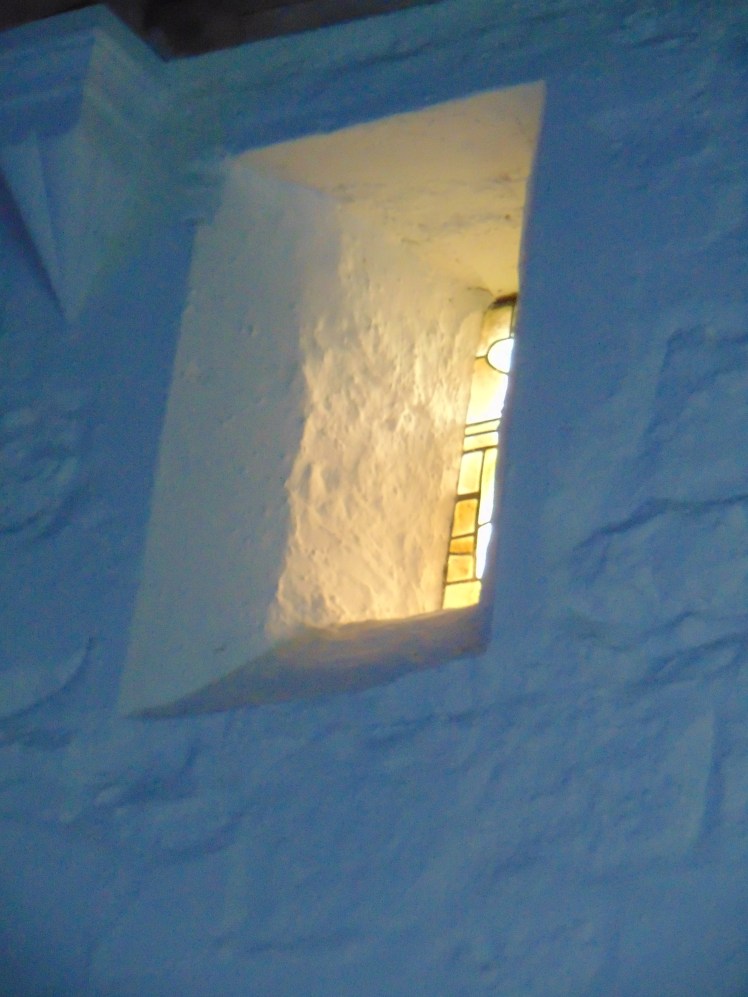
Clonmacnoise window

Sometimes, multiple threads weave themselves into our awareness such that we come to recognize each thread as belonging to one tapestry.

Such has happened in reference to several books I’ve come across in recent years.

Several years ago, a comment someone made about “stages of faith” led me to James Fowler’s book of that title (Stages of Faith). I learned in that book about the developmental faith stages we progress through as we age and (hopefully!) mature. I come back to that book occasionally.

Since then, I have come across faith-related books such as The Deeply Formed Life and a book called Integral Spirituality (there are actually several books with that phrase part of their titles). While I haven’t yet read those two books, I brought them home to at least ponder their titles and/or topics. This led me to a phrase within Catholicism called Integral Human Development – the full development of each person.

I considered these books and topics as I explored how to fully bring together what then seemed to be disparate (compartmentalized) aspects of my life and the experience of living as a person of faith.

Truly, being a person of faith must mean what I will call “integral faith development.”

To truly be people of faith, we can’t be “church people” on Sunday morning, work people during the week (Monday to Friday, 9:00 – 5:00 – or whenever we work), athletes at the gym or the beach, etc.

Being a person of faith means that our faith must integrate into every aspect of our lives. And, every aspect of our lives must integrate into our faith.

This doesn’t mean that everyone who goes to church should give up their job, their athletic activities, etc. to become “church ladies.”

It means that we can’t compartmentalize our Sunday morning pew from the rest of our lives.

When I first read James Fowler’s Stages of Faith, I came to recognize that the various aspects of my own human development had developed at different rates. I did well academically in school – my mental development was great! The development of my social, emotional, and career aspects were “all over the map” in terms of development. My faith development? I had been away from church for twenty years and had left my faith development in a high school phase. Yikes! I don’t think I’m alone in this. I am calling this a “mountain peaks” approach to “non-integrated human development.” I was born in a mountainous geographic region and now live in another region where we have mountain peaks, several snow-capped (inactive) volcanoes, and an ocean – I notice each mountain peak within a mountain range being a different height. When we live our lives in such a way that each aspect of our development – emotions, mental development, social development, faith development – is in a different age-phase, we are living with differing developmental “mountain peaks” within who we are. Such a non-integrated way of living doesn’t result in personal health, well-being, or maturity. When I recognized that the then-segmented aspects of myself had been developing at different rates, I set out to bring the various aspects of myself into developmental alignment. I reviewed various models of faith and psychological development and “mapped out” which of my own mountain peaks were at higher and lower levels of development. I gave myself a couple of years to bring the lower mountain peaks up to approximately the same age-level of development as the higher peaks. The end result? A more content and more functional self.

However, there’s more to this than just a well-developed and well-rounded self. While the outcome I described in the previous paragraph is absolutely beneficial, the pew we sit in at church doesn’t exist solely to be a self-help pew. Sitting in a pew on Sunday and being a person of faith is about “love God and love your neighbor,” fully growing into a relationship with God, allowing God to turn us into the people God wants us to be, being present and lovingly impactful in the lives of God’s children (we are all God’s children – including the driver who smashed up your car, the politician you don’t like, the bully at your child’s school, the operator who accidentally dropped your call, the relative you dislike, etc. and etc.).

We can’t fully live into being a person of faith by compartmentalizing each part of our lives. We have to bring our lives into our faith – our joys, our successes, our athletic activities, our family events, our recent car accident, our difficult boss, etc. We have to bring our faith into all aspects of our lives – finding ways to talk about being a person of faith in the community (even if we live in a secular city), into driving and the crows we hate (I confessed in the confessional once that my irritation with heavy traffic was resulting in angry irritation directed at crows who were in the roadway. I learned to pray the Hail Mary while driving…..), etc.

We are people of faith when we integrate all aspects of our lives. We grow into living the Gospels in our lives.

Kim Burkhardt blogs about faith at The Hermitage Within. Thank you for reading this faith blog and for sharing it with your friends. While you are here, please feel welcome to provide support to sustain this blog ($$).
Entering Advent, Entering Light

The life of faith turns our ideas upside down.

As we entered a new church year this past weekend, we moved out of the liturgical color of green. When I sit at traffic light and see the light turn green, I – in my impatience – start talking to the driver ahead of me: “Okay, driver who hasn’t  instantly accelerated (thereby slowing down my effort to get where I’m going), green means take your foot off your brake and put your foot on the accelerator.  Green means go.”

Instead of getting the green light to go full speed ahead during Lent, we shift into purple.

“Great,” we might be tempted to say.  “Purple is the color for royalty.  We shift into royal gear.”

Not so fast.  During Advent, we are invited to slow down.  Further, it is not us who is the royalty.

On the first Sunday of Advent, we heard in the second reading – Romans 13: 11-14 – to waken from our sleep.  We heard to throw off the works of darkness and to put on the armor of light.  We heard in the Gospel that we know neither the day nor the hour when Christ will return.  We await in watchfulness.

For all this upside-downness, turning to Christ and Christ’s royal return really does turn our life upside-down. A right-side-up, as we discover.

“For it is no longer I, but Christ who lives in me”- Galatians 2:20.  When we let Christ live in us, he transforms our very being (during this time of both waiting and living anew during the Catholic both/and!).  We become a new creation.  The light of Christ – during this darkest time of the geographic year (for those of us in the Northern hemisphere) – transforms our very being. 

We are a week past Christ the King.  It is Christ who is the royalty.  We, as servants, must learn to serve.  The more we learn to live in faith’s juxtapositions, the more God leads us into the fullness of life that God intends for us. (Also, the people who know me and who read this blog remind me occasionally that I sometimes grow into the concepts I write about slower than I write about them. Humility is good for us!)

Kim Burkhardt blogs about faith at The Hermitage Within. Thank you for reading this faith blog and for sharing it with your friends. While you are here, please feel welcome to provide support to sustain this blog ($$).

Faith resources – tools, not straight jackets

Divine Office
Liturgy of the Hours (Divine Office)

The ways through which we travel our faith journey – church attendance, types of prayer, etc. – are meant to nurture our faith journey. If anything we participate in feels as though it is constricting our faith journey, either something is amiss or we are ready for additional or different faith activities. Being attentive to any sense of constriction is an opportunity to look to adapt either ourselves or our situation. It is entirely good when we notice that we need to adjust – such observations mean we are engaged in our faith journey (or, sometimes, that we need to become more engaged). Our faith journey has developmental stages just as we experience stages in other aspects of our human development – stages in cognitive development (academics), stages in psychological and social development, etc.

By way of example, I am starting a Master’s in Theology in January (a “Masters in Theology Studies” or “MTS” for lay people rather than a Master’s in Divinity for pastors-in-training). At a recent meeting for registered MTS students, we were provided with the first of our faith formation sessions. We were told that Masters in Theological Studies degrees typically cover four academic subjects – scripture, ethics, systemic theology, and historical theology. In addition to academics, MTS programs – ours, at least – include the faith development of enrolled students (faith formation) because the degree should include our faith maturation in addition to a focus on academics (a whole person approach). During that day, we were instructed to start participating daily in Liturgy of the Hours (Divine Office) – the daily prescribed prayer life of the Church.

In recent years, my prayer life has principally been one of contemplative prayer – both at home and in small prayer groups via Contemplative Outreach. There are as many ways to pray as there are people; contemplative prayer has been personally fruitful for me. In contemplative prayer, I encounter periods of time in which I experience God loving me – which has been freeing me from difficult aspects of “the human condition.” As with anything else, I do also experience occasional dry periods in my experience with contemplative prayer. Therefore, I am now open to also praying Liturgy of the Hours (Diving Office).

Prior to being recently instructed to start participating in Liturgy of the Hours, I viewed the Divine Office remotely (“from afar”) as the prerogative of priests and avowed religious – a respected activity distant from my daily life. When we were recently told to start participating in this daily activity for the MTS program, part of me was intrigued. Another part of me was also relieved when we were told that Liturgy of the Hours is “a tool to help us pray, not a straight jacket to keep us from praying.” I am enjoying the journey into the Divine Office.

Kim Burkhardt blogs about faith at The Hermitage Within. Thank you for reading this faith blog and for sharing it with your friends. While you are here, please feel welcome to provide support to sustain this blog ($$).

Book Review: An Immigration of Theology

Book Cover: An Immigration of Theology
Book: An Immigration of Theology

I recently came upon An Immigration of Theology by Fr. Simon Kim and am intrigued with what the author has done with this book.

Goodreads summarizes this book, in part, with the following: “The theological reflections of Virgilio Elizondo and Gustavo Gutiérrez are examples of the ecclesial fruitfulness of the second half of the twentieth century. Following the directives of Pope John XXIII and the Second Vatican Council, [they] present the Gospel message in relevant terms to their own people…. Inspired by this moment in Church history, while at the same time recognizing the plight of their people….. [they] discovered a new way of doing theology by asking a specific set of questions based on their local context. By investigating where God is present in [their local context], both theologians have uncovered a hermeneutical lens in rereading Scripture and deepening our understanding of ecclesial tradition…. a theological method that takes seriously the contextual circumstances of their locale. By utilizing the common loci theologici of Scripture and tradition in conjunction with context and their own experience, [they] illustrate…. how every group must embrace their own unique theological reflection.”

I find this interesting – there seems to be the option in this book of stating that we must make theological concepts relevant to our own circumstances while also stating that theological principles are universal. What I am hoping to read in this book – now that I have it sitting on my coffee table – is that theological principles are universal in principle and also local in adaptation.

Kim Burkhardt blogs about faith at The Hermitage Within. Thank you for reading this faith blog and for sharing it with your friends. While you are here, please feel welcome to provide support to sustain this blog ($$).

Salvation history, the universe

Sunset colors

I have lately been pondering how the grand scope of the universe – the many number of galaxies, etc. – factors into what God pays attention to.

When we think of God – with the finite perspective of people – we tend to think of God in terms of God’s relationship with us humans.  About  humanity’s “salvation history.”   We humans are created in God’s image – we are loved by God so much that God gave his only son for our salvation.   We humans are infinitely loved by God.

For much of Judeo-Christian history, humanity’s understanding of the universe – and the size of the universe – was much smaller than the understanding we have now. It was much simpler, in a sense, to think of God solely in terms of God’s relationship to our salvation history.

We now know so much more about the grandeur of the size of the universe.

To think of us now in terms of being made in God’s image and for us to be God’s children takes on a perspective of a very different scale.

God is infinite enough to love us and “know us by name” and “know the number of hairs on our head” AND simultaneously be engaged in the astro-physics/geology of a VERY LARGE universe.   Wow.   We now receive photos of galaxies far beyond anything people knew in previous centuries.  Amazing.   And, this makes God even more amazing to us – that God can “know the number of hairs on our head” and simultaneously know the full geographic scope of all the galaxies that exist.  Does God watch in wonder at the colors and contours of various galaxies?

Yet, we with our human limitations struggle with the comparatively finite question of how to do a better job of “love God and love our neighbor.”  Back to earth….. What can we do today to be good to our families, friends, neighbors?

Kim Burkhardt blogs about faith at The Hermitage Within. Thank you for reading this faith blog and for sharing it with your friends. While you are here, please feel welcome to provide support to sustain this blog ($$).