Teresa of Avila: “Missing the Mark”
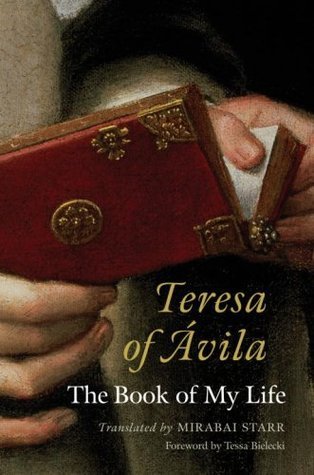
Teresa of Avila, The Book of My Life

Today is the feast day of my favorite saint and Doctor of the Church, Teresa of Avila. When I learned of her in 2017 and read her autobiography, her writings about mystical prayer brought me much “comfort and joy” (a summer reading equivalent of a Christmas gift, one might say).

In her autobiography, which I continue to come back to time and again, she worked to come up with vocabulary to describe her religious experiences. When she spoke of sin, she spoke of “missing the mark.” I thought that she came up with this phrase. I learned today that that’s not the whole story.

It turns out that the English word sin comes from the Greek words hamartia (ἁμαρτήσῃ) and/or the verb hamartano (ἁμαρτάνω), which translate to “to miss the target” (as in archery) or “to err.”

So….while sinning is not something to aim for, we don’t need to be hyper critical of ourselves (i.e., beat ourselves with a mental or emotional hammer) every time we “miss the mark” in sin. While certain specific sinful instances that cause much trouble certainly call for serious personal reflection, everyday sin is a case of us “missing the mark” in being the positive people God wants us to be.

We are called to cooperate with God’s grace to become the positive people God intends for us to be. This is a life-time “saints in training” job for us. Living the principles we learn in church and continually striving to do better is a more positive approach to dealing with the realities of our “human condition” (original sin) than to perennial criticize ourselves for being a saints-we-ain’t. A committed stance of being a saint-in-training can reduce how often we have to engage in serious reflection and clean-up the messes that stem from our darker moments of causing harm. What really matters in how we view our sinful natures is that we commit to allowing God to make us better and that we actively cooperate with God’s grace in working to be better people. Given our imperfect natures, such active cooperation does require vigilant and sustained effort on our part and a willingness to work hard at overcoming the particular ways in which we each fall short.

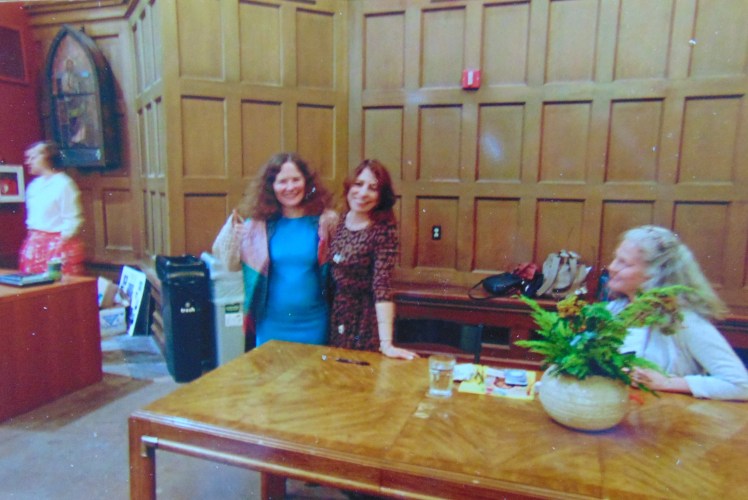
If you are looking for inspirational faith reading, Mirabai Starr’s translation of Teresa’s The Book of My Life is a great read (I was fortunate to have Mirabai autograph my copy of Teresa’s autobiography when Mirabai spoke in Seattle several years ago). Hint: Mirabai Starr lists on her website a number of texts she translated that are great reads (check it out!).
Kim Burkhardt blogs about faith at The Hermitage Within. Thank you for reading this faith blog and for sharing it with your friends. While you are here, please feel welcome to provide support to sustain this blog ($$).
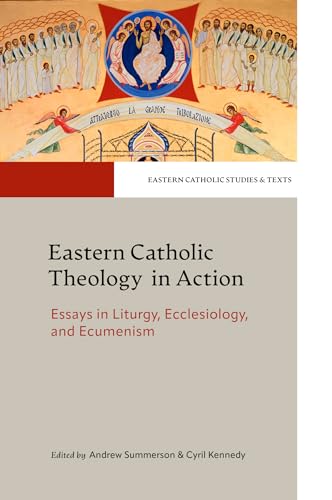
Book Review: Eastern Catholic Theology in Action

This book, Eastern Catholic Theology in Action – Essays in Liturgy, Ecclesiology, and Ecumenism, is part of a useful collection of resources being developed by The Catholic University of America Press.

I came upon this book recently while writing a paper exploring ecumenism within/among Roman Catholicism, Catholicism’s Eastern rites, and Eastern Orthodox traditions. While I had already read several books about Eastern rites and Orthodox traditions and have worked as a liturgist in the Roman Catholic rite, I spent far more time than I expected pulling together and synthesizing accurate and reflective information for my paper. I was initially self-critical (“Why did it take so much time to write this paper? I’ve already read several books about Eastern rites and traditions. Aren’t I more academically competent than this?”). Then, after I submitted my own academic paper for grading, I started reading in full the book Eastern Catholic Theology in Action (2024). The editors and publishers explain at the book’s beginning that too little academic and theological attention has been given to Eastern Catholic rites; The Catholic University of America Press has committed to changing this with a series of books – include this book. Reading this provided me with a sense of relief. I realized that the books I had already read (I reviewed some of them for this blog) were catechetically insightful for understanding the spirituality and liturgical perspectives of Eastern rites and traditions, but did not lay enough academic groundwork needed for the Master’s in Theology paper I wrote. Of note: the inside cover of this book (Eastern Catholic Theology in Action – Essays in Liturgy, Ecclesiology, and Ecumenism) states that scholars of Eastern Christianity often have little to offer when asked for an intro to Eastern Christian theology. Therefore, I appreciate The Catholic University of America Press’s commitment to ongoing scholarly attention to Eastern Catholic rites. My recent dismay at how hard I worked to write my own paper has produced enthusiasm for absorbing The Catholic University of America Press academic content on this subject. I bookmarked their website to keep track of additional pending publications about Eastern Catholic rites. This book is contributing to my academic development from reading books catechetically to thinking academically about ecclesial theology.

Eastern Catholic Theology in Action – Essays in Liturgy, Ecclesiology, and Ecumenism has been published to scholastically explore “the unique patrimony of the Eastern Catholic Churches, divided according to the categories of Liturgy, Theology, Spirituality, Discipline, and Culture.” The book provides a deep dive into the concepts I sought to discuss in my own brief paper. This book is a must-read for those seeking a deepened understanding of Eastern Catholic rites. Count The Catholic University of America Press as a go-to resource for Westerners wanting to learn about Eastern rites.

Kim Burkhardt blogs about faith at The Hermitage Within. Thank you for reading this faith blog and for sharing it with your friends. While you are here, please feel welcome to provide support to sustain this blog ($$).