Book Review: Preaching the Just Word (Burghardt)

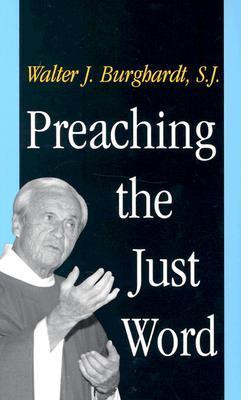
Book cover: Preaching the Just Word

I recently stumbled upon this book, Preaching the Just Word by Walter J. Burghardt, S.J. (i.e., a Jesuit). I took an immediate interest in the book because of the author’s name. My last name is Burkhardt. I found out a couple years ago that my paternal grandfather was actually born Burghardt, he started spelling his name with a K instead of G in high school or in his early 20’s – possibly to differentiate himself from his father and/or siblings because there had been multiple levels of “falling out” within the family…. So when I found this book and learned that there had been a prominent theologian named Burghardt (not a common name!), I hoped that I might be distantly related to the author! As it turns out, Walter Burghardt’s parents came to the New York area directly from Poland or Austria in the early 1900’s, whereas my Burghardt relatives moved from Germany to a German enclave in Russia’s Volga River region in the late 1700’s before migrating to the U.S.’s midwest farming region…. So, any unlikely biological connection between me and this book’s author would be very remote. Yet, I decided to read this book.

I am finding this book to be a worthwhile read already, just a few pages in. I’ve always been attracted to the inner mystical aspects of faith (my story is told here). In recent years, I’ve pondered how to attract people to exploring the inner aspects of faith (such as contemplative prayer) in an era that encourages people to live a frenetically outer life and ignore or avoid inward reflection (i.e., “who wants to go inward when this ultimately requires us work through the inner emotional challenges that are an inherent to being human?”). An inner, prayerful relationship with God is necessary to fully and vibrantly being a person of faith – and joyous (“a peace that passeth all understanding!”). Yet, Walter J. Burghardt rightly points out at the beginning of this book that a solely inward faith is wrongly individualistic (a modern-day form of selfishness). A “faith” that is solely focused on a personal relationship with God isn’t fully faith – this would merely be naval-gazing.

Burghardt explains that the ultimate point of the Christian life on earth is to love one another as we love ourselves. We are called to take care of one another in a radically self-sacrificing manner. We are called to live as part of an interwoven web of caring, socially connected to one another.

There’s a balance for each of us to be a person of faith: a joy-filled inner prayer life in which God nurtures a personal relationship with us combined with the necessary and just manifestations of this inward prayerful relationship: we become the people God intends us to be and we radically love and serve the people around us.

Kim Burkhardt blogs at A Parish Catechist (and is a member of the Association of Catholic Publishers). Blogging is sustainable via blog readership (i.e. readers/subscribers). If you are a new visitor, it would be great to have you subscribe to follow this blog (thank you!). If you know someone who would like this blog, please share it with them and invite them to subscribe (thank you!).
Monasteries of the Spirit (poetic ponderings)

Last year, I composed a poetic pondering about our human experience of faith. That blog post as well received, so I’m trying another poetic pondering with a look toward our personal faith engagement. (Note: I took the photo above at the centuries-old Clonmacnoise monastic ruins in Western Ireland.)

Monasteries of the Spirit

Monasteries of the Spirit are:

  • Grace-filled spaces, a place of rest and nourishment
  • Environments where we can encounter God’s love

Monasteries of the Spirit are also a space of last year’s poetic ponderings:

  • We move – seemingly unaware of the mechanics our own locomotion – through journeys of the soul prompted by the Holy Spirit
  • We sing with joy and weightlessness toward the upper mountain heights of God’s love
  • We wonder when happening upon liminal places

How do we be seek out Monasteries of the Spirit? Through an engaged faith journey:

  • Regular engaged participation in one’s faith tradition.
  • An active prayer life with attentiveness to – and surrender to – promptings of the Holy Spirit. These promptings nudge us toward an inner relationship with God through prayer.

May your faith journey be wonder-filled.

Kim Burkhardt blogs at A Parish Catechist (and is a member of the Association of Catholic Publishers). Blogging is sustainable via blog readership (i.e. readers/subscribers). If you are a new visitor, it would be great to have you subscribe to follow this blog (thank you!). If you know someone who would like this blog, please share it with them and invite them to subscribe (thank you!).

Surrendering to God transforming us

I was in high school when I was first introduced to surrendering to allowing God to change us. At the time, I was challenged by a particular type of life difficulty. I surrendered that difficulty to God and asked for assistance in having my life change. How I was living in the world did improve. I also developed the rudiments of an expanded prayer life. I still tell the story about my prayer life expanding at that time – I, as an adolescent, grew beyond the basics of childhood prayer (“Now I lay me down to sleep” and literal conceptions of Jesus sitting on a physical throne in the clouds) and saw my prayer life expand incrementally toward more of an interactional relationship with God.

In recent years, I surrendered again to allowing God be present in my life. This time, the surrender was broader. “God change me in whatever ways you want me to be different.” Again, my life is changing. I am experiencing emotional reorganizations that I couldn’t have anticipated – transformations beyond what I would have brought about on my own. More freedom, increased life functionality, some measure of more contentment. Growing commitment to being useful to other people. This came about from a prompting of the Holy Spirit – a moment at a church service in October, 2016 when I felt – and responded to – an invitation to allow God to be more fully present in my life (that story is told here).

God wants to be present in our lives. God wants us to be the people we are meant to be, to be fully alive. In the words of Timothy Radcliffe, “We are all radically incomplete. And, we need each other.” We, with our human limitations, need God’s movement in our lives to become the people who we are meant to be. We move toward being complete when we allow God to be the center of our lives and to act in changing us. Acts 17:28: For in God we live and move and have our being.

Allowing God to become the center of our lives, we cease to be the center of our lives. Ceasing to be the center of our live can feel threatening (“But what about me? I’m all I’ve got?”). It turns out that when we step out of the way, God brings freedom into our lives – we become the people we are meant to be and we become more useful in the world. God loves us!

Kim Burkhardt blogs at A Parish Catechist (and is a member of the Association of Catholic Publishers). Blogging is sustainable via blog readership (i.e. readers/subscribers). If you are a new visitor, it would be great to have you subscribe to follow this blog (thank you!). If you know someone who would like this blog, please share it with them and invite them to subscribe (thank you!).

Our perception of God, God’s love for us, our responsibility

A pastor told me a few months ago that humanity’s effort to describe God can be compared to God as being like a circle with our limited human efforts to describe God merely approaching various touching points of the circle; often, he said, without our descriptions actually touching the circle – let alone ever grasping the entire circle. We shouldn’t fret about the imperfections of our descriptions. Rather, he indicated, we should continue with our efforts as best we can.

I thought of that description when I took the photo (above) – an orange sunset shining through window shades onto my living room wall. Left to ourselves, we live in some measure of darkness (Fr. Timothy Radcliffe: “We are all radically incomplete”). At the same time, God loves us. To the degree that we allow God into our lives, we experience some of the light of God’s love for us (due to our finite capacity, we probably only sense some of that love, as if filtered sunlight making its’ way through the shades)!

Prayer, of course, is a significant aspect of how we allow God into our lives – how we experience a relationship with our God who loves us. Prayer is not meant to be a uni-directional monologue of us sending our thoughts, feelings, requests, or rote prayers to a Santa-God. The fullness of prayer is one in which we engage in a two-way, in-person relationship with our parent-God who wants to have a loving, engaging relationship with us and who wants to help us become the people we are meant to be.

In addition to God loving us, it is our job to love one another and to do what we can to shed light into the lives of our fellow humans (see the passage below from Matthew 22:34-40). Martin Luther King said, “Life’s most persistent and urgent question: What are you doing for others?” Loving other people and taking care of God’s children is what we are here to do.

The “60/40” plan prescribed for marriages is a principle that all of us can actually apply in our relationships with everyone so as to be the loving people we are meant to be. If each of us spends 60% of our time focusing on what we can do to be of service to the people around us and only 40% (or less!!!) of our time thinking about our needs, then everyone wins!

Kim Burkhardt blogs at A Parish Catechist and The Books of the Ages (and a member of the Association of Catholic Publishers). Blogging is sustainable via blog readership (i.e. readers/subscribers). If you are a new visitor, it would be great to have you subscribe to follow this blog (thank you!). If you know someone who would like this blog, please share it with them and invite them to subscribe (thank you!). Also, your support ($$) to help sustain this blog is welcome.

“Wordless sighs of the heart”

Candle

In my last post, I mentioned that I am re-reading The Tradition of Catholic Prayer from the Benedictine monks of Saint Meinrad Monastery. In that book, one of the types of prayer they mention is “wordless sighs of the heart.”

I am drawn to this phrase as this is one of the forms of prayer I have found meaningful. How about you?

,,,,,It’s been said, “There can be no faith life without prayer.” It’s also said that we cannot pray and continue sinning; when we really engage in prayer, we find that we have to allow God to change us for the better. Personally, I experience in prayer that God loves us!

True prayer goes beyond mere statements or superficial monologues directed in God’s direction. True prayer is dialogue, meaningful communication, presence. A “wordless sigh of the heart,” for example, is us opening ourselves bare before God.

How often does human prayer involve allowing our innermost selves to be fully transparent before God? Such vulnerability is a real interaction. While God certainly knows our hearts – God made us and knows us – it’s also true that we have free will. God doesn’t force us to into relationship; it’s up to us whether we are willing to be fully present before God.

When we aren’t in active relationship with God, the Holy Spirit occasionally knocks on our heart’s door; it’s up to us whether we respond to such promptings. We can also open our heart’s door to God by taking the initiative ourselves to communicate – God will show up when invited in. Sometimes, we feel God’s presence in prayer (I have!); other times, God may work “under the surface” in ways that we don’t observe; God working to change us “under our radar” is what John of the Cross wrote about in his book Dark Night of the Soul (“Dark Night” being a period of inner transition that isn’t fully transparent to us, rather than necessarily being a depressive period!).

There are many forms of prayer in which we have an active relationship with God. Contemplative prayer (for example, visit the network of Contemplative Outreach) is one way, being engaged while at church is another way – as aremeditative prayers such as praying the rosary, talking to God, heartfelt intercessions, prayers of praise (including music)……… What makes prayer meaningful is that we pray in a way that makes it relational. There are as many ways to pray as there are people!

Interested in learning more about prayer? Check out A Parish Catechist’s previous blog post, “How to Pray.” Also, find info here about A Parish Catechist’s Saturday morning Zoom calls about prayer.

Kim Burkhardt blogs at A Parish Catechist and The Books of the Ages (and a member of the Association of Catholic Publishers). Blogging is sustainable via blog readership (i.e. readers/subscribers). If you are a new visitor, it would be great to have you subscribe to follow this blog (thank you!). If you know someone who would like this blog, please share it with them and invite them to subscribe (thank you!). Also, your support ($$) to help sustain this blog is welcome.

The Tradition of Catholic Prayer (book review, reflections, invite)

Book The Tradition of Catholic Prayer

I recently started re-reading The Tradition of Catholic Prayer from the Benedictine monks of Saint Meinrad Monastery (I have a shelf dedicated to faith books that I return to re-read periodically). When we want to read about prayer, one of the natural places to turn is books written monks!

The depth and breadth of this book is summarized well on the book’s back cover, beginning with the following sentence: “Catholics have a rich and ancient prayer tradition that informs contemporary practice.” No wonder that people looking to deepen their prayer life look – among other places – to the Catholic Church. The variety of Catholic prayer experience and the historical context for this “rich and ancient prayer tradition” are covered engagingly in this very readable book. It’s worth a read for anyone looking to deepen their prayer life; it has helped nourish my ever-present hunger to sustain a rich and deep prayer life. I have been getting copies of this book into the hands of several people each year in recent years…..

A couple passages from this book and my reflections upon them:

  • “….the prayer of real people over the centuries….[who] opened their hearts and minds to God in prayer and came away changed by the living God whom they encountered” (page XI).” I have heard two sayings: “There can be no faith life without prayer” and “Prayer is a relationship (i.e., a relationship between the pray-er and God).” When we actively engage in prayer, we do open our hearts and minds to God; an encounter with “the living God” does change us. We can’t help but be changed by an encounter with God. I experienced as a result of an encounter with God in 2016 – after having heard it said in church innumerable times – that God loves me.

  • “As Benedictines [the monks who wrote this book] they practice prayer day in and day out, with their brothers in choir, alone in their cells, using formal rites and wordless sighs of the heart” (page XII). There are as many ways to pray and encounter God as there are people who pray – each of us is different and will therefore have our own relationship with God. Personally, my deepest experience of praying to or toward God – in addition to resting in God’s presence when God’s grace comes my direction – happens in “wordless sighs of the heart.” God doesn’t need the sentences and grammar of humanly-constructed language to receive what’s inside of us. Simply presenting oneself to God – in full inner transparency – is the prayer that I find most direct, prayerful, engaging, productive.

Daily prayer is transformative. Wondering how to pray? Check out this previous post on approaches to prayer. Also, attend our Saturday morning Zoom sessions about prayer (info here). Wishing you all the best in deepening your prayer life….

Kim Burkhardt blogs at A Parish Catechist and The Books of the Ages (and a member of the Association of Catholic Publishers). Blogging is sustainable via blog readership (i.e. readers/subscribers). If you are a new visitor, it would be great to have you subscribe to follow this blog (thank you!). If you know someone who would like this blog, please share it with them and invite them to subscribe (thank you!). Also, your support ($$) to help sustain this blog is welcome.

Acknowledging our sins at mass: The Confiteor

Photo of a red apple

At Catholic masses, we acknowledge our sins at the beginning of mass:

The Confiteor

I confess to almighty God,
and to you my brothers and sisters, that I have greatly sinned,
in my thoughts and in my words,
in what I have done and what I have failed to do,
through my faults, through my faults, through my most grievous faults;
therefore I ask the blessed Mary ever-virgin,
all the angels and saints,
and you my brothers and sisters
to pray for me to the Lord our God

We all know that we’re imperfect – part of “The human condition.” Lately, I’ve been commenting “If anyone is wondering about human sinfulness, just turn on the evening news” (i.e, human sinfulness is reported on daily!).

Our human imperfections are not viewed universally as caused by sin or by human brokenness. Some would argue that while we humans aren’t perfect, calling us sinful has an unnecessary harmful emotional effect; some counter-argue that an alternate and better route to improved well-being is that human effort is all we need to overcome our imperfections: social training, psychological and social supports, a good family environment, and “pull yourself up by your bootstraps.” Thes things, in and of themselves, are all important and good (and, arguably, not enough).

Again…..turn on the evening news. We humans do plenty wrong. The longer I sit in pews, the more convinced I am that we’ve inherited a sinful nature (Adam and Eve, the apple….). However, this view isn’t one for keeping us down (“I’m unredeemable, horrible!”). Rather, there’s freedom. When we surrender and allow God to work in our lives, God redeems us. Allowing God to transform us is an unequivacal path to becoming better people.

Several years ago (2016), I surrendered in prayer to allow God to do whatever he wanted in me. This occurred after a re-conversion experience in which I felt God’s love….. Yet, part of me was apprehensive. “What’s God going to do to me (or in me?)?” In hindsight, this fear was ridiculous. God is love, God loves us, God wants the best for us. What exactly did I think that a loving God was going to do “to me” or “in me?” Now that I’ve had some time following that surrender, I’m seeing the result of God working in me. I am becoming happier and I am starting to be nicer to other people. Pretty good results.

As time unfolds, I am also finding deeper meaning in confessing The Confiteor at mass. Confessing publicly that we have sinned is an acknowledgement of our human imperfection and an education into who we are and Church teaching. Further, such public confession has social value. When we acknowledge together that we are all sinners, then we have to forgive one another – none of us holier (above our neighbor in the pew next to us), nor can we condemn the person in the pew next to us. Further, we call others to pray for us while we also pray for everyone else. The Confiteor is a great prayer!

Join A Parish Catechist’s Zoom call on Tuesday evening at 7:00 pm Pacific to discuss topics of faith – such as the Nicene Creed and The Confiteor. Small group sharing is one of the ways we broaden and deepen our faith. You are welcome: Zoom sign in passcode is 898 322 8983 .

Kim Burkhardt blogs at A Parish Catechist and The Books of the Ages (and a member of the Association of Catholic Publishers). If you are a new visitor, it would be great to have you follow this blog (thank you!). If you know someone who would like this blog, please share it with them (thank you!). Also, your support ($$) to help sustain this blog is welcome.

Living faith: challenging, rewarding, becoming who we should be

Seattle Sunset

We occasionally meet someone who has clearly become the person they were meant to be. I know such a person right now – aspiring to be like them helps push me forward in living my faith, to put faith concepts into practice.

Truly being a person of faith isn’t merely about sitting in a pew on Sundays.

Certainly, sitting in a pew is part of “showing up.” The pews are part of where we learn – a gateway into faith, so to speak.

Whether we are truly living our faith is about whether we engage when attending church combined with what we do outside of church.

This was articulated well by Bishop Frank Schuster (Seattle): “God doesn’t want to be an app that we pull up occasionally. Rather, God wants to be our operating system that runs our lives.”

What does it mean to have God be the operating system that runs our lives? Simply put, God is only going to be the operating system that runs our lives when we assent to allow this.

Assenting to allow God be our operating system means:

  • Learning about God and faith, to the limited degree that we can (another Seattle-area priest, Fr. Tim Clark, verbally observed that our efforts to understand God and describe God really only “get around the edges…. Think of God as a circle, with our efforts to understand God and describe God as sometimes touching some parts of that circle).
  • Assenting that it’s God who is the ultimate reality, that we are junior parties to a relationship with God, that we are meant to follow God’s lead.
  • Developing a prayer-centered relationship with God. Just as our relationships with people require communication and social interaction, having a relationship with God requires communication and social interaction – which happens in prayer. More on prayer here.
  • Truly letting God into our hearts. “It is no longer I, but God who lives in me” (Galatians 2:20). We often don’t do such a great job of transforming our lives on our own. Allowing God to shape us is crucial to becoming the people we are meant to be.
  • Loving the people around us. Christ was asked, which of the commandments is greatest? He responded in Matthew 22:34-40: “The greatest commandments are…love the Lord your God….and….love your neighbor as you love yourself.”
  • “Let all that you do be done in love” (1 Galatians 16:14). There’s a lot to unpack here. If we hold up everything we think and do to this standard, we can spend our entire lives getting closer to living the loving lives we are meant to live.

Interested in an improved prayer life? Reminder: faith sharing groups about our prayer lives are starting on Zoom with A Parish Catechist on Saturday, July 20 (8:00 am, Pacific Time). More info here (including a Zoom link) – we would love to have you join in!

Kim Burkhardt blogs at A Parish Catechist and The Books of the Ages (and a member of the Association of Catholic Publishers). If you are a new visitor, it would be great to have you follow this blog (thank you!). If you know someone who would like this blog, please share it with them (thank you!). Also, your support ($$) to help sustain this blog is welcome.

Into the mist…..List: welcoming God into our daily lives

“The Greek Fathers liken man’s encounter with God to the experience of someone walking over the mountains in the mist: he takes a step forward and suddenly finds that he is on the edge of a precipice, with no sold ground beneath his foot but only a bottomless abyss.”

The Orthodox Way (Revised Edition, page 13), Bishop Kallistos Ware

The passage above is my favorite quote from the Orthodox tradition.

Beginning in October, 2016, I was gifted with an extended period of contemplative prayer (more of that story is told here). I didn’t have words at the time to describe what I was experiencing. Not only did I not have words to describe the experience, no human words were needed in prayer during that period. I experienced that prayer can simply be – in the type of rich abundance written about by Teresa of Avila and John of the Cross – “being with God.” Later, I heard a Seattle priest talk about experiencing “an encounter with God” he had in his twenties while living in the U.S. Southwest. Ah, the words to describe my prayer experience from 2016 and extending for a time: an encounter with God.

The extended prayer encounter I experienced began with a responding to a prompting of the Holy Spirit. We all occasionally feel an emotional tug encouraging us to act. Sometimes we respond. In 2016, I responded.

I’ve come to recognize since 2016 that we can all see the opportunity to be loved by God. Related to this, we can also continually learn to better love the people around us (Matthew 22: 34-40: “The greatest commandments are…love the Lord your God….and….love your neighbor as you love yourself”).

Just as I took time to learn to do photography – and thereby recognized that a misty day was a great time for the photo of Seattle’s Green Lake shown above (with “Duck Island” in the background, where my maternal grandmother learned to swim), we can all look for opportunities for “the experience of someone walking over the mountains in the mist: he takes a step forward and suddenly finds that he is on the edge of a precipice, with no sold ground beneath his foot but only a bottomless abyss.” Those moments – those steps – are moments of grace offered to us by God. Yet, we can be open to those moments of grace.

Ways of being open to God’s grace:

  • Make regular time to participate in your faith tradition.
  • Read writings of the mystics. A few reading suggestions are offered here.
  • Make time to step away from busyness. Westerners, for the most part, live in “busyness”. We need to “do this, go there, run from one life experience to another.” In so doing, we ignore our inner life. We ignore any emotional ugliness or challenges that we’d rather ignore. We also lose the opportunity to resolve “the ugly stuff” and we lose the opportunity to be with God. We reduce the opportunity to notice the “emotional tugs” that are promptings of the Holy Spirit inviting us into encounters with God.
  • Make time for prayer and solitude.
  • Be reflectively observant about what goes on around you and of what comes out of prayer and solitude.

Kim Burkhardt blogs at A Parish Catechist and The Books of the Ages (and a member of the Association of Catholic Publishers). If you are a new visitor, it would be great to have you follow this blog (thank you!). If you know someone who would like this blog, please share it with them (thank you!).

Prayer: two-way communication (interesting in an MRI)

Daily prayer is a critical component of a faith-filled life. There’s a saying: “There can be no faith without prayer” (source uncertain). Within a theistic vision of faith, a life of faith must involve a relationship with the divine. Our relationships with the people in our lives are defined by relationship: social interactions. This also applies in our faith life – there can be no spiritual life without a relationship with God. Thus, a relationship with God through prayer.

Relationships are two-way. I like the analogy of comparing prayer to a phone call (it might be Fr. Mike Schmitz, “Bible in a Year” who put forward this analogy). We don’t sustain relationships with the people in our lives by phoning someone and saying, “I’m calling to tell you X” – then hanging up. Rather, a phone call is a give-and-take, two-way interaction. Prayer is the same way. We don’t just send our communication to God in a one-way phone call.  We both communicate to God in prayer and also rest in stillness to allow God to present to us.

This two-way nature of communication with God came to mind yesterday morning. I normally view prayer-based two-way-communication-with-God as “me communicating with God in a style that suits my prayer style, while God’s response is to be present with me in prayer.” That concept was “tested” yesterday morning. I was at a medical clinic getting an MRI. I knew I was going to be in the MRI tube/machine for about an hour and wouldn’t be able to move. Perhaps five minutes into the MRI, I realized “This would be a good time for prayer. I’m rendered unable to do anything other than to lay perfectly still while I’m in this machine. Prayer would be a good use of my time. ” So, I started to pray. I wasn’t thinking of imploring God’s aid; rather, this could be a good time to simply spend time with God. A brief moment after I started to pray, a perfectly audible voice asked me – plain as day – “Are you okay?”

Smile, irony….. The perfectly audible voice asking me “Are you okay” was the MRI technician speaking through the MRI’s microphone to ask if I felt physically comfortable in the machine.

“Yes,” I replied with a smile (“This is an ironic moment of communication,” I thought), “I am okay.” (….well…. I want my test results, but…yes….In this moment, I am okay…”).

There are many ways to pray:

  • Talking to God as we would talk to a friend (either verbally or through what’s often called “mental prayer”)
  • Simply being present with God, resting-in-God’s-presence as I’ve heard this called (we can do this anywhere)
  • Lectio Divina (a method of praying the scriptures reflectfully)
  • Attending church services (church is itself a form of prayer)
  • Religious singing (“Those who sing pray twice”)
  • Contemplative prayer (for example, learn about this form of prayer through an organization called Contemplative Outreach)

Interested in reading more about prayer? A couple of great books include:

Clinging: The Experience of Prayer (Emilie Griffin)

The Tradition of Catholic Prayer (The Monks of Meinrad Monastery)

Kim Burkhardt blogs at A Parish Catechist and The Books of the Ages (and a member of the Association of Catholic Publishers). If you are a new visitor, it would be great to have you follow this blog (thank you!). If you know someone who would like this blog, please share it with them (thank you!). You can also support this blog by clicking here when you are going to shop on Amazon (that lands A Parish Catechist a commission on Amazon sales).