Prayer: two-way communication (interesting in an MRI)

Daily prayer is a critical component of a faith-filled life. There’s a saying: “There can be no faith without prayer” (source uncertain). Within a theistic vision of faith, a life of faith must involve a relationship with the divine. Our relationships with the people in our lives are defined by relationship: social interactions. This also applies in our faith life – there can be no spiritual life without a relationship with God. Thus, a relationship with God through prayer.

Relationships are two-way. I like the analogy of comparing prayer to a phone call (it might be Fr. Mike Schmitz, “Bible in a Year” who put forward this analogy). We don’t sustain relationships with the people in our lives by phoning someone and saying, “I’m calling to tell you X” – then hanging up. Rather, a phone call is a give-and-take, two-way interaction. Prayer is the same way. We don’t just send our communication to God in a one-way phone call.  We both communicate to God in prayer and also rest in stillness to allow God to present to us.

This two-way nature of communication with God came to mind yesterday morning. I normally view prayer-based two-way-communication-with-God as “me communicating with God in a style that suits my prayer style, while God’s response is to be present with me in prayer.” That concept was “tested” yesterday morning. I was at a medical clinic getting an MRI. I knew I was going to be in the MRI tube/machine for about an hour and wouldn’t be able to move. Perhaps five minutes into the MRI, I realized “This would be a good time for prayer. I’m rendered unable to do anything other than to lay perfectly still while I’m in this machine. Prayer would be a good use of my time. ” So, I started to pray. I wasn’t thinking of imploring God’s aid; rather, this could be a good time to simply spend time with God. A brief moment after I started to pray, a perfectly audible voice asked me – plain as day – “Are you okay?”

Smile, irony….. The perfectly audible voice asking me “Are you okay” was the MRI technician speaking through the MRI’s microphone to ask if I felt physically comfortable in the machine.

“Yes,” I replied with a smile (“This is an ironic moment of communication,” I thought), “I am okay.” (….well…. I want my test results, but…yes….In this moment, I am okay…”).

There are many ways to pray:

  • Talking to God as we would talk to a friend (either verbally or through what’s often called “mental prayer”)
  • Simply being present with God, resting-in-God’s-presence as I’ve heard this called (we can do this anywhere)
  • Lectio Divina (a method of praying the scriptures reflectfully)
  • Attending church services (church is itself a form of prayer)
  • Religious singing (“Those who sing pray twice”)
  • Contemplative prayer (for example, learn about this form of prayer through an organization called Contemplative Outreach)

Interested in reading more about prayer? A couple of great books include:

Clinging: The Experience of Prayer (Emilie Griffin)

The Tradition of Catholic Prayer (The Monks of Meinrad Monastery)

Kim Burkhardt blogs at A Parish Catechist and The Books of the Ages (and a member of the Association of Catholic Publishers). If you are a new visitor, it would be great to have you follow this blog (thank you!). If you know someone who would like this blog, please share it with them (thank you!). You can also support this blog by clicking here when you are going to shop on Amazon (that lands A Parish Catechist a commission on Amazon sales).
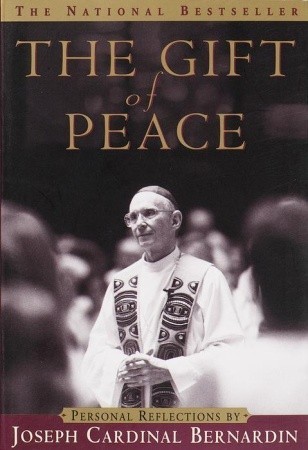
Book Review: The Gift of Peace

Book: The Gift of Peace

The Washington State Library for the Blind sent my mother an audio copy of Joseph Cardinal Bernardin’s book The Gift of Peace. My mother liked the book, so she ordered a print copy for me. I hadn’t heard of the book or the author; I wasn’t entirely sold on reading it….. Once I started reading the book….well… I’m sold.

This book of personal reflections includes reflections about prayer that resonate with my own experience and/or provide further encouragement in prayer:

  • “….it [an intro to a particular style of prayer] certainly introduced me to the importance of prayer and the fact that prayer is not a one-sided practice. Rather, prayer involves speaking and listening on both sides. [page four]” Blogger note (i.e., Kim Burkhardt): I find my best experience with prayer to be when I am simply quiet and allow God’s presence to be present.
  • “I decided to give God the first hour of my day, no matter what, to be with him in prayer and meditation where I wold try to open the door even wider to his entrance. This put my life in a new and uplifting perspective; I also found that I was able to share the struggles of my own spiritual journey with others. [page six]” Blogger note (i.e., Kim Burkhardt): I likewise found that active prayer makes it possible for me to share “the struggles of my own spiritual journey with others.”
  • “To close the gap between what I am and what God wants of me, I must empty myself and let Jesus come in and take over. [page 16]”
  • “[Jesus] wants me to focus on the essentials of his message…..Essentials ask us to to give true witness and to love others more. Nonessentials close us in on ourselves. [pages 16-17]”.

I am finding this book to be transparently, refreshingly self-revealing about the human journey in faith. A worthwhile read.

Kim Burkhardt blogs at A Parish Catechist and The Books of the Ages (and a member of the Association of Catholic Publishers). If you are a new visitor, it would be great to have you follow this blog (thank you!). If you know someone who would like this blog, please share it with them (thank you!). You can also support this blog by clicking here when you are going to shop on Amazon (that lands A Parish Catechist a commission on Amazon sales).
Book Review: Gerald May’s The Dark Night of the Soul

Gerald May's book: The Dark Night of the Soul

Teresa of Avila and her protege John of the Cross – two 16th-century Spaniards – are my favorite mystics and two of my favorite faith writers. When I began reading their books in 2017 or 2018, they articulated my own (more modest!) experience with contemplative prayer.

Since then, I have tried to explain to people that John of the Cross’s book Dark Night of the Soul is not about tribulations or depression. It’s not.

More recently, I came upon Gerald May’s book of the same title. Gerald May is a physician, psychiatrist, and writer of faith books). Gerald May, in his book, accessibly explains John of the Cross’s ideas in today’s language. I am grateful that he makes John of the Cross’s ideas more understandable to people than I have been able to present.

Treading into the Spiritual Depths: The (not depressing!) Dark Night of the Soul

In his book Dark Night of the Soul, John of the Cross writes about how the sometimes unviewable-to-us aspects of our inner faith journey are part of where God works within us to transform us (rather than this title being about a depressive view on things!). Attentiveness to our inner journey can allow us some small glimpse of when this (at least somewhat) unviewable aspect of our spiritual growth is being wrought within us – particularly if we have an active relationship with God in prayer.

Gerald May’s book of the same title speaks to this idea about “The Dark Night of the Soul”: “May emphasizes that the dark night is not necessarily a time of suffering and near despair, but a time of deep transition, a search for new orientation when things are clouded and full of mystery. The dark gives depth, dimension and fullness to the spiritual life.”

While John of the Cross’s book Dark Night of the Soul is not about suffering, modern day writer Gerald May does touch on the fact of suffering from a useful perspective on page nine of his book Dark Night of the Soul . His is a perspective that occurred to me in some fashion several years ago: “….suffering does not result from some divine purgation….Instead, suffering arises from the simple circumstances of life itself.”

Teresa of Avila and John of the Cross’s books are very worth reading. Gerald May’s book is also worth reading.

Kim Burkhardt blogs at A Parish Catechist and The Books of the Ages (and a member of the Association of Catholic Publishers). If you are a new visitor, it would be great to have you follow this blog (thank you!). If you know someone who would like this blog, please share it with them (thank you!). You can also support this blog by clicking here when you are going to shop on Amazon (that lands A Parish Catechist a commission on Amazon sales).
Surrender – a perennial need

Candle

I wrote a post in July titled Surrender in Prayer. In that post, I wrote “Despite our western ideas about individual autonomy and self-agency, us permitting God’s agency to mold and shape us is liberating. God loves us, wants good for us and our world, and and has capacity for transformational good beyond our comprehension. There is no room for a negative outcome when we allow God to work within and through us.”

Surrendering to God’s will needs to be ongoing. The people who can stay in a perpetual state of surrender to God’ work in their lives – well, some of them are saints! They get the ongoing joy found in Acts 17:28: “For it is in him that we live and move and have our being.”

I live at times in Acts 17:28 – sometimes longer periods of time, sometimes shorter. Then, there are times when I get caught up in life’s challenges, fears, etc. It happened again yesterday. I arrived home in an emotional fit about one of life’s challenges. A few weeks ago, I spoke to a priest (who reads this blog) and mentioned some kind of discomfort about another challenge – he told me that I need to follow my own advice that I write about in this blog! Hmf!! ….I was then awake at 1:30 this morning fretting about the current life challenge. Embarrassingly, it took me until 5:00 am to come back to “surrender this in prayer.”

God loves us. When we surrender, God provides us with strength and turns us into better people. “I can do al things through Christ who gives me strength” (Philippians 4:13).

I see ways in which God has made me a better person in recent years. I look forward to God continuing to transform how I live in the world – (re) surrender required on my part.

Kim Burkhardt blogs at A Parish Catechist and The Books of the Ages (and a member of the Association of Catholic Publishers). If you are a new visitor, it would be great to have you follow this blog (thank you!). If you know someone who would like this blog, please share it with them (thank you!). You can also support this blog by clicking here when you are going to shop on Amazon (that lands A Parish Catechist a commission on Amazon sales).
Book Review: Martin Laird’s ‘Into the Silent Land’

Book Cover: Into the Silent Land

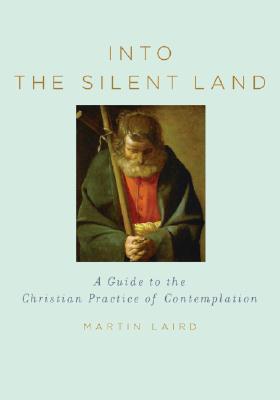
I was recently given a copy of Martin Laird’s Into the Silent Land: Christian Practice of Contemplation.

As a contemplative pray-er, I find this book refreshing. Rather than only being a how-to book on the mechanics of how to pray contemplatively, this is the type of contemplative prayer book I look for: a description of what happens when we do a deep dive into contemplative prayer. It is – to paraphrase a speaker I heard once – the “poetry of our lives” that demonstrates the animation of one’s prayer life when prays contemplatively. Such poetry – it seems to me – helps lead readers into the experience of contemplative prayer via surrender into what we read in the books’ text.

A few “poetry of our prayer lives” excerpts:

  • “Silence is an urgent necessity for us: silence is necessary if we are to hear God speaking in eternal silence; our own silence is necessary if God is to hear us” (page 2).
  • “This book…proceeds from an ancient Christian view that the foundation of every land is silence (Ws 18:24), where God simply and perpetually gives himself” (page 6).
  • “…the grace of Christian wholeness that flowers in silence….dispels (the) illusion of separation [from God]” (page 16).

This is a short book, but it takes a long time to read – its’ contents are contemplated rather than merely read. It contributes meaningfully to one’s prayer life. This is a book I will keep.

Kim Burkhardt blogs at A Parish Catechist and The Books of the Ages (and a member of the Association of Catholic Publishers). If you are a new visitor, it would be great to have you follow this blog (thank you!). If you know someone who would like this blog, please share it with them (thank you!). You can also support this blog by clicking here when you are going to shop on Amazon (that lands A Parish Catechist a commission on Amazon sales).
Lent in 40 days: Day One

Wooden cross

Welcome to Lent. A Parish Catechist looks forward to journeying with you for the next 40 days!

Major liturgical seasons of the Christian year include:

  • Advent: four weeks of anticipating Christmas
  • Christmas Day: Always on December 25
  • Christmas Season: Christmas Day until Epiphany (January 6)
  • Lent: 40 days of anticipating Easter (starts on Ash Wednesday)
  • Easter Day: The first Sunday after the first full moon after the Spring Equinox (therefore, a date between late March and late April)
  • Easter season: the fifty days between Easter Day and the day we celebrate Pentecost
  • Pentecost: The day when Holy Spirit descended upon the Apostles following Christ’s Ascension

This year, the beginning of Lent (i.e., Ash Wednesday) – due to Easter being a moveable feast – coincides with Valentine’s Day (February 14).

Just as Mardi Gras famously occurs the day before Ash Wednesday – a day of plenty before we begin 40 days of fasting, prayer, and alms giving – some Catholic schools planned ahead this year to celebrate Valentine’s Day on February 13.

What kind of fasting are you planning for Lent this year? Some restaurants know to offer “Fish on Fridays” during Lent to attract fasting guests. Food is famously a way to fast during Lent. We eat less, give up foods such as no-meat-on-Fridays or giving up sugar. What matters spiritually is that we abstain from something that we personally find difficult to give up. For several years, I couldn’t give up chocolate during Lent. I had to take a look at why I was so attached to chocolate (and how that was impacting my health!). We are to attach ourselves to God, not to earthly things. For many people, reducing the use of technology (such as phones) can be an earthly thing that is hard to set aside – reducing phone usage could be a good Lenten discipline.

What kind of enhanced prayer activity are you planning for Lent this year? Prayer is about having an active relationship with God. It is famously said that “There can be no faith life without prayer.” A Parish Catechist blogged in January about the value of prayer and how to approach prayer (please feel free to give that post a read). Lent is a great time to build up a regular prayer practice.

What kind of alms-giving are you planning for Lent this year? The U.S. Conference of Catholic Bishops (USCCB) have this to say about almsgiving during Lent: “The foundational call of Christians to charity is a frequent theme of the Gospels….  During Lent, we are asked to focus more intently on ‘almsgiving,’ which means donating money or goods to the poor and performing other acts of charity.  As one of the three pillars of Lenten practice, almsgiving is ‘a witness to fraternal charity’ and  ‘a work of justice pleasing to God.’ (Catechism of the Catholic Church, no. 2462).”  There are many types of social and economic need in our communities. Please consider being charitable in a way that makes a difference in your local community!

Kim Burkhardt blogs at A Parish Catechist and The Books of the Ages (and a member of the Association of Catholic Publishers). If you are a new visitor, it would be great to have you follow this blog (thank you!). If you know someone who would like this blog, please share it with them (thank you!). You can also support this blog by clicking here when you are going to shop on Amazon (that lands A Parish Catechist a commission on Amazon sales).

Transformation in Christ: Representation in Imagery

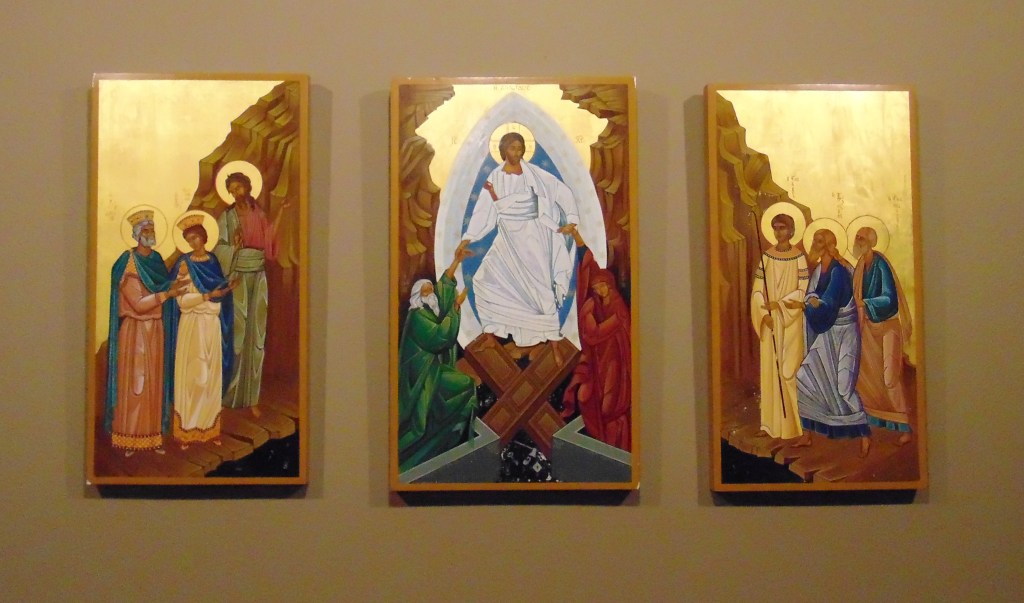
anastasis

When I saw the iconography shown above – at St. Andrew’s Episcopal Church’s chapel in Seattle – I was drawn to it. Then, drawn back to it again and again. This iconographpy depicts Anastasis: Jesus descending into Hades to retrieve Adam and Eve between his own death on Friday and his resurrection on Sunday. Compelling. I am still coming back to this imagery.

This imagery gets to the heart of Christianity. Christianity is about God’s love for us, God’s grace in our lives, our surrender to allow God to transform us into the people we are meant to be. W are meant to be God’s daughters and sons who live in God’s love and who love one another.

I had already encountered God’s loving grace – starting at an Irish-language mass in 2016 (that story is told here) – and have continued moving through a faith transformation… including when I came across the Anastasis image above. We humans surrendering to God’s transformative grace is redemptive – when we experience this, we then want to grow in faith. As a result of such experience, I am now learning to talk about God’s transformative nature (I’m such an introvert that I’m having to take workshops to “come out of my shell” and more outwardly demonstrate what I’m learning and experiencing).

More recently, I came upon French artist James Tissot’s depiction of Jesus praying alone at night on a mountaintop:

James Tissot's painting of Jesus praying

This image of the illuminated Christ is also compelling.  Jesus is shown illumined on a mountain top in prayer, illumined in his relationship with God the father. Further, God transforms us through Christ. God the father transforms us – transforms our faith experience in prayer. This is an image through which I yearn to continue experiencing God’s transformative grace.  How can one not want to grow in faith – connect with God’s love for us – when seeing this depiction of Christ illumined in prayer? ”It is in him that we live and move and have our being” (Acts 17:28).

Prayer gets to the heart of having a faith in we have a relationship with God and allow God to turn us into the people God wants us to be. I wrote more on prayer in my recent monks-in-training post.

Kim Burkhardt blogs at A Parish Catechist and The Books of the Ages (and a member of the Association of Catholic Publishers). If you are a new visitor, it would be great to have you follow this blog (thank you!). If you know someone who would like this blog, please share it with them (thank you!). You can also support this blog by clicking here when you are going to shop on Amazon (that lands A Parish Catechist a commission on Amazon sales).
We can all strive to be monks-in-training!

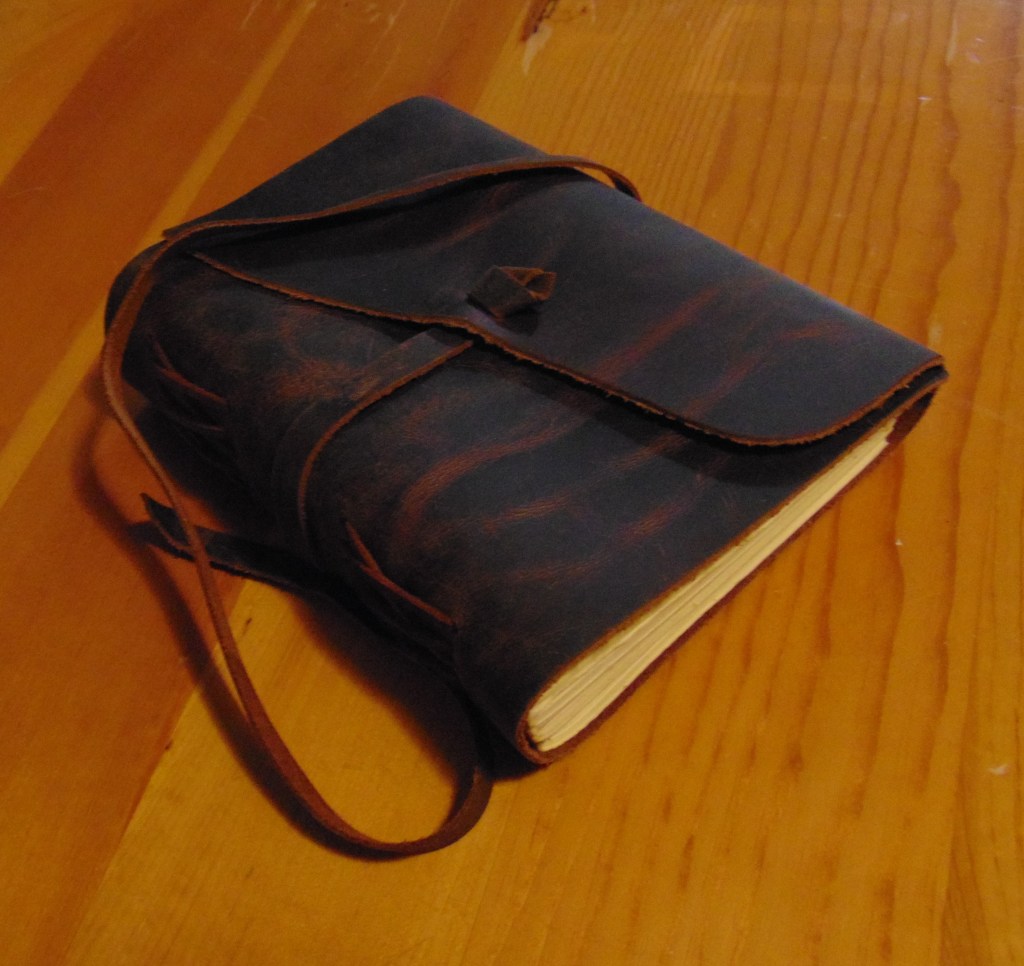
leather-bound book
Book with leather binding

I was recently given a leather-bound journal.

Leather-bound books can bring to mind monks hand-copying books in medieval monasteries (surviving copies of such books sometimes have page border notations such as “it is very cold”). Alternately, we may think of learned scholars in the earliest days of books who wandered from place to place via dirt roads with a leather-bound manuscript in their possession.

We sometimes connect such imagery with thoughts of more spiritual times. ”If I lived in a medieval monastery, I would have been more faith-focused than I am today in a technologically-advanced city in the twenty-first century.”  Different times and places each have their own zeitgeist, certainly. And, of course, there are places specifically dedicated to faith pursuits.

We can all be people of faith.Teresa of Avila, a sixteenth-century mystic in Spain, took on reforming the Carmelite religious order (she was a Carmelite nun) to return it to a more religiously-focused character than it had been for a period of time. Just as specifically religious environments can undergo re-invigoration, we can work to make our own lives spiritually vigorous even if we live in a secular environment. A commitment to growing in faith, participating in a faith tradition, daily prayer, making time regularly for activities such as reading faith-focused books and participating in faith-sharing groups, sharing about our faith development efforts (with a friend, a prayer group, a spiritual director, a pastor, etc.), living one’s faith by being of service to others – we can be faith-filled through a combination of all these things.

Daily prayer is a critical component of a faith-filled life. There’s a saying: “There can be no faith without prayer” (source uncertain). Within a theistic vision of faith, a life of faith must involve a relationship with the divine. Our relationships with the people in our lives are defined by relationship: social interactions. This also applies in our faith life – there can be no faith without a relationship with God. Our relationship with God unfolds in two ways – through focused interaction with God (prayer!) and by being of service to God’s children (every human being is a child of God). In the Acts of the Apostles (Acts 1:14), we read that the apostles – following Jesus’ ascension – “all joined together constantly in prayer, along with the women and Mary the mother of Jesus, and with his brothers.”

Not sure how to pray? Not sure how to deepen one’s prayer life? The first thing to know is to pray daily. Relationships aren’t built sporadically – they develop and grow through sustained interaction. Further, relationships are two-way. I like the analogy of comparing prayer to a phone call. We don’t sustain relationships with the people in our lives by phoning someone and saying, “I’m calling to tell you X” – then hanging up. Rather, a phone call is a give-and-take, two-way interaction. Prayer is the same way. We don’t just send our communication to God in a one-way phone call.  We both communicate to God in prayer and also rest in stillness to allow God to present to us.

There are many ways to pray:

  • Talking to God as we would talk to a friend (either verbally or through what’s often called “mental prayer”)
  • Lectio Divina (a method of praying the scriptures reflectfully)
  • Attending church services (church is itself a form of prayer)
  • Religious singing (“Those who sing pray twice”)
  • Contemplative prayer (for example, learn about this form of prayer through an organization called Contemplative Outreach)

Interested in reading more about prayer? A couple of great books include:

Clinging: The Experience of Prayer (Emilie Griffin)

The Tradition of Catholic Prayer (The Monks of Meinrad Monastery)

Kim Burkhardt blogs at A Parish Catechist and The Books of the Ages (and a member of the Association of Catholic Publishers). If you are a new visitor, it would be great to have you follow this blog (thank you!). If you know someone who would like this blog, please share it with them (thank you!). You can also support this blog by clicking here when you are going to shop on Amazon (that lands A Parish Catechist a commission on Amazon sales).
Prayer: Standing on the Threshold

Rev. Maria Grazia Angelini O.S.B. wrote – in an article addressed to the October, 2023 Synod in Rome: “As we prepare to celebrate the Eucharist, let us permit ourselves a little ‘statio‘ on the threshold. Since listening to the Word is never – for anyone – a matter of course. To make it possible, we are asked to stand on the threshold. We are asked to gather from dispersion the thoughts of the mind and the feelings of the heart, to rediscover in them an open question, indeed an invocation. Only in this way will it be possible to hear the Word, the delivery of the body and blood of Jesus, the Son. The words of Jesus, the words all of the Holy Scriptures are our “mother tongue’. And yet there is always a need to regain possession of that language. Such a need is signaled precisely by Jesus’ supreme gesture.”

So it must always be, too, with prayer. Rather than prayer being an activity sometimes thought merely to be a uni-directional communication from us to God, prayer is meant – and in its’ fullness is – a “gather[ing] from dispersion [of] the thoughts of the mind and the feelings of the heart” to pausing on the threshold of our own existence, willing to vulnerably be in the presence of God. In such instances, when in private prayer, no human language needed. God’s presence to us in prayer is fullness of prayer.

Certainly, there are also times for additional forms of prayer – talking to God about our lives (either our own prayer or psalms), intercessory prayer, rote prayer, being in community of prayer at church….. My own favorite prayer is when vulnerably feeling God’s presence is the totality of the prayer experience (my second-favorite prayer is when we sing in exultation at church services such as Easter and Christmas!). Dry periods of prayer – when we don’t feel God’s presence – can also have value (though less exultative on our end); John of the Cross aptly points out that willing to allow God to be present within us allows God to form and change us – even if we don’t sense change that is happening “beneath the surface” while it is happening. The beneficial/productive work God does within us at such times becomes clear to us later. God loves us.

Kim Burkhardt blogs at A Parish Catechist and The Books of the Ages. If you are a new visitor, it would be great to have you follow this blog (thank you!). If you know someone who would like this blog post, please share it with them (thank you!).

List: How many ways to pray (types of prayer)?

The Benedictine monks of Saint Meinrad Monastery succinctly state on the back cover of their book The Tradition of Catholic Prayer, “Catholics have a rich and ancient prayer tradition that informs contemporary practice….” It’s no wonder that people seek out the variety of prayer options available within Catholicism.

Catholic prayer is a vibrant and varied tradition, bringing to fullness a life-giving relationship between us and God. Jesus came “that we might have life, and have it more abundantly” (John 10:10). “…prayer is not merely an exchange of words, but it engages the whole person in a relationship with God the Father, through the Son, and in the Holy Spirit” (U.S. Conference of Catholic Bishops, USCCB).

How many ways are there to pray?

The essence of prayer is communication, a relationship with God, a being-with or being-in-the-presence-of. When we find a relationship with God – an interactive, two-way interaction rather than a one-way monologue (we wouldn’t relate to the people in our lives exclusively via uni-directional monologues!) – there comes a discovery that God is present with us in prayer.

A friend said to me, “prayer is a very personal communion with God that is meant to be personal, and unique to you….People are… very different in their personal experience in prayer, and that in itself is a beautiful thing.”

Just as we have many differing relationships with the various people in our lives – and a variety of ways that we communicate with the people in our lives – there are any number of ways of communicating with God. A prayer style that works for one person may be very different than what works for the next person. Here are several approaches to prayer:

  • Rote prayer (formal, memorized prayers – these are often provided to us by our houses of worship). Prayers such as the Lord’s Prayer are full of meaning and help us learn to pray. Such prayers give us ready prayer content that we can easily put to use.
  • Psalms. The Book of Psalms – which were meant to be sung – are summarized by Wikipedia thus: the Book of Psalms are “an anthology of Hebrew religious hymns…including hymns or songs of praise, communal and individual laments, royal psalms, imprecation, and individual thanksgivings.  The book also includes psalms of communal thanksgiving, wisdom, pilgrimage, and other categories.”
  • “Talking to God.” Our spontaneous thoughts and words directed to God. God wants to have a relationship with us; relationships are two-way, be open to feeling God’s presence in response.
  • Contemplative Prayer. Resting reflectively in prayer, without a need for words or any human language. Contemplative prayer can – and for some people, does – include a sense of God’s presence in prayer. For more information about contemplative prayer, visit Contemplative Outreach.
  • Praying the Rosary. The rosary is a reflective way of praying a set of rote prayers with a formulaic set of Catholic prayer beads (focusing time on specified topics). Instructions for praying the rosary is available here.
  • Lectio Divina. Lectio Divina “describes a way of reading the Scriptures whereby we gradually let go of our own agenda and open ourselves to what God wants to say to us” (this particular description provided by the Carmelites).
  • Singing at church. “Those who sing pray twice” (a popular phrase in churches).
  • Intercessory prayer. Intercessory prayer that we pray for other people. We come to God with the challenges of those who are in need of support.

My favorite Catholic pray-ers:

  • Teresa of Avila, (16th-century mystic, Doctor of the Church, Carmelite nun, reformer of the Carmelite religious order, Carmelite saint)
  • John of the Cross (16th-century mystic, Doctor of the Church, Carmelite monk and priest, co-reformer of the Carmelite religious order, Carmelite saint)
  • Edith Stein, Carmelite nun, Carmelite saint
  • Fr. Thomas Keating, founder of Contemplative Outreach

Books for further reading:

Clinging: The Experience of Prayer (Emilie Griffin)

The Tradition of Catholic Prayer (The Monks of Meinrad Monastery)

Kim Burkhardt blogs at A Parish Catechist and The Books of the Ages. If you are a new visitor, it would be great to have you follow this blog (thank you!). If you know someone who would like this blog post, please share it with them (thank you!).