We can all strive to be monks-in-training!

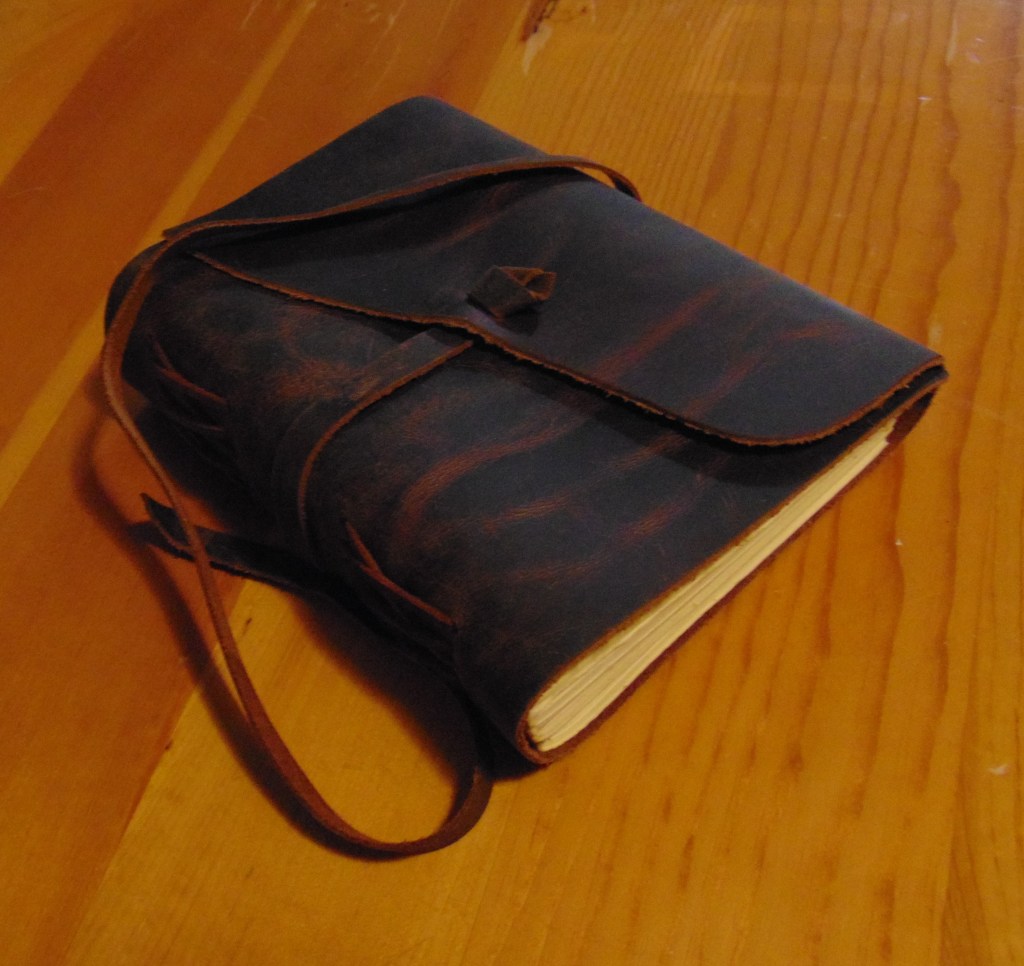
leather-bound book
Book with leather binding

I was recently given a leather-bound journal.

Leather-bound books can bring to mind monks hand-copying books in medieval monasteries (surviving copies of such books sometimes have page border notations such as “it is very cold”). Alternately, we may think of learned scholars in the earliest days of books who wandered from place to place via dirt roads with a leather-bound manuscript in their possession.

We sometimes connect such imagery with thoughts of more spiritual times. ”If I lived in a medieval monastery, I would have been more faith-focused than I am today in a technologically-advanced city in the twenty-first century.”  Different times and places each have their own zeitgeist, certainly. And, of course, there are places specifically dedicated to faith pursuits.

We can all be people of faith.Teresa of Avila, a sixteenth-century mystic in Spain, took on reforming the Carmelite religious order (she was a Carmelite nun) to return it to a more religiously-focused character than it had been for a period of time. Just as specifically religious environments can undergo re-invigoration, we can work to make our own lives spiritually vigorous even if we live in a secular environment. A commitment to growing in faith, participating in a faith tradition, daily prayer, making time regularly for activities such as reading faith-focused books and participating in faith-sharing groups, sharing about our faith development efforts (with a friend, a prayer group, a spiritual director, a pastor, etc.), living one’s faith by being of service to others – we can be faith-filled through a combination of all these things.

Daily prayer is a critical component of a faith-filled life. There’s a saying: “There can be no faith without prayer” (source uncertain). Within a theistic vision of faith, a life of faith must involve a relationship with the divine. Our relationships with the people in our lives are defined by relationship: social interactions. This also applies in our faith life – there can be no faith without a relationship with God. Our relationship with God unfolds in two ways – through focused interaction with God (prayer!) and by being of service to God’s children (every human being is a child of God). In the Acts of the Apostles (Acts 1:14), we read that the apostles – following Jesus’ ascension – “all joined together constantly in prayer, along with the women and Mary the mother of Jesus, and with his brothers.”

Not sure how to pray? Not sure how to deepen one’s prayer life? The first thing to know is to pray daily. Relationships aren’t built sporadically – they develop and grow through sustained interaction. Further, relationships are two-way. I like the analogy of comparing prayer to a phone call. We don’t sustain relationships with the people in our lives by phoning someone and saying, “I’m calling to tell you X” – then hanging up. Rather, a phone call is a give-and-take, two-way interaction. Prayer is the same way. We don’t just send our communication to God in a one-way phone call.  We both communicate to God in prayer and also rest in stillness to allow God to present to us.

There are many ways to pray:

  • Talking to God as we would talk to a friend (either verbally or through what’s often called “mental prayer”)
  • Lectio Divina (a method of praying the scriptures reflectfully)
  • Attending church services (church is itself a form of prayer)
  • Religious singing (“Those who sing pray twice”)
  • Contemplative prayer (for example, learn about this form of prayer through an organization called Contemplative Outreach)

Interested in reading more about prayer? A couple of great books include:

Clinging: The Experience of Prayer (Emilie Griffin)

The Tradition of Catholic Prayer (The Monks of Meinrad Monastery)

Kim Burkhardt blogs at A Parish Catechist and The Books of the Ages (and a member of the Association of Catholic Publishers). If you are a new visitor, it would be great to have you follow this blog (thank you!). If you know someone who would like this blog, please share it with them (thank you!). You can also support this blog by clicking here when you are going to shop on Amazon (that lands A Parish Catechist a commission on Amazon sales).

Prayer: Standing on the Threshold

Rev. Maria Grazia Angelini O.S.B. wrote – in an article addressed to the October, 2023 Synod in Rome: “As we prepare to celebrate the Eucharist, let us permit ourselves a little ‘statio‘ on the threshold. Since listening to the Word is never – for anyone – a matter of course. To make it possible, we are asked to stand on the threshold. We are asked to gather from dispersion the thoughts of the mind and the feelings of the heart, to rediscover in them an open question, indeed an invocation. Only in this way will it be possible to hear the Word, the delivery of the body and blood of Jesus, the Son. The words of Jesus, the words all of the Holy Scriptures are our “mother tongue’. And yet there is always a need to regain possession of that language. Such a need is signaled precisely by Jesus’ supreme gesture.”

So it must always be, too, with prayer. Rather than prayer being an activity sometimes thought merely to be a uni-directional communication from us to God, prayer is meant – and in its’ fullness is – a “gather[ing] from dispersion [of] the thoughts of the mind and the feelings of the heart” to pausing on the threshold of our own existence, willing to vulnerably be in the presence of God. In such instances, when in private prayer, no human language needed. God’s presence to us in prayer is fullness of prayer.

Certainly, there are also times for additional forms of prayer – talking to God about our lives (either our own prayer or psalms), intercessory prayer, rote prayer, being in community of prayer at church….. My own favorite prayer is when vulnerably feeling God’s presence is the totality of the prayer experience (my second-favorite prayer is when we sing in exultation at church services such as Easter and Christmas!). Dry periods of prayer – when we don’t feel God’s presence – can also have value (though less exultative on our end); John of the Cross aptly points out that willing to allow God to be present within us allows God to form and change us – even if we don’t sense change that is happening “beneath the surface” while it is happening. The beneficial/productive work God does within us at such times becomes clear to us later. God loves us.

Kim Burkhardt blogs at A Parish Catechist and The Books of the Ages. If you are a new visitor, it would be great to have you follow this blog (thank you!). If you know someone who would like this blog post, please share it with them (thank you!).

List: How many ways to pray (types of prayer)?

The Benedictine monks of Saint Meinrad Monastery succinctly state on the back cover of their book The Tradition of Catholic Prayer, “Catholics have a rich and ancient prayer tradition that informs contemporary practice….” It’s no wonder that people seek out the variety of prayer options available within Catholicism.

Catholic prayer is a vibrant and varied tradition, bringing to fullness a life-giving relationship between us and God. Jesus came “that we might have life, and have it more abundantly” (John 10:10). “…prayer is not merely an exchange of words, but it engages the whole person in a relationship with God the Father, through the Son, and in the Holy Spirit” (U.S. Conference of Catholic Bishops, USCCB).

How many ways are there to pray?

The essence of prayer is communication, a relationship with God, a being-with or being-in-the-presence-of. When we find a relationship with God – an interactive, two-way interaction rather than a one-way monologue (we wouldn’t relate to the people in our lives exclusively via uni-directional monologues!) – there comes a discovery that God is present with us in prayer.

A friend said to me, “prayer is a very personal communion with God that is meant to be personal, and unique to you….People are… very different in their personal experience in prayer, and that in itself is a beautiful thing.”

Just as we have many differing relationships with the various people in our lives – and a variety of ways that we communicate with the people in our lives – there are any number of ways of communicating with God. A prayer style that works for one person may be very different than what works for the next person. Here are several approaches to prayer:

  • Rote prayer (formal, memorized prayers – these are often provided to us by our houses of worship). Prayers such as the Lord’s Prayer are full of meaning and help us learn to pray. Such prayers give us ready prayer content that we can easily put to use.
  • Psalms. The Book of Psalms – which were meant to be sung – are summarized by Wikipedia thus: the Book of Psalms are “an anthology of Hebrew religious hymns…including hymns or songs of praise, communal and individual laments, royal psalms, imprecation, and individual thanksgivings.  The book also includes psalms of communal thanksgiving, wisdom, pilgrimage, and other categories.”
  • “Talking to God.” Our spontaneous thoughts and words directed to God. God wants to have a relationship with us; relationships are two-way, be open to feeling God’s presence in response.
  • Contemplative Prayer. Resting reflectively in prayer, without a need for words or any human language. Contemplative prayer can – and for some people, does – include a sense of God’s presence in prayer. For more information about contemplative prayer, visit Contemplative Outreach.
  • Praying the Rosary. The rosary is a reflective way of praying a set of rote prayers with a formulaic set of Catholic prayer beads (focusing time on specified topics). Instructions for praying the rosary is available here.
  • Lectio Divina. Lectio Divina “describes a way of reading the Scriptures whereby we gradually let go of our own agenda and open ourselves to what God wants to say to us” (this particular description provided by the Carmelites).
  • Singing at church. “Those who sing pray twice” (a popular phrase in churches).
  • Intercessory prayer. Intercessory prayer that we pray for other people. We come to God with the challenges of those who are in need of support.

My favorite Catholic pray-ers:

  • Teresa of Avila, (16th-century mystic, Doctor of the Church, Carmelite nun, reformer of the Carmelite religious order, Carmelite saint)
  • John of the Cross (16th-century mystic, Doctor of the Church, Carmelite monk and priest, co-reformer of the Carmelite religious order, Carmelite saint)
  • Edith Stein, Carmelite nun, Carmelite saint
  • Fr. Thomas Keating, founder of Contemplative Outreach

Books for further reading:

Clinging: The Experience of Prayer (Emilie Griffin)

The Tradition of Catholic Prayer (The Monks of Meinrad Monastery)

Kim Burkhardt blogs at A Parish Catechist and The Books of the Ages. If you are a new visitor, it would be great to have you follow this blog (thank you!). If you know someone who would like this blog post, please share it with them (thank you!).
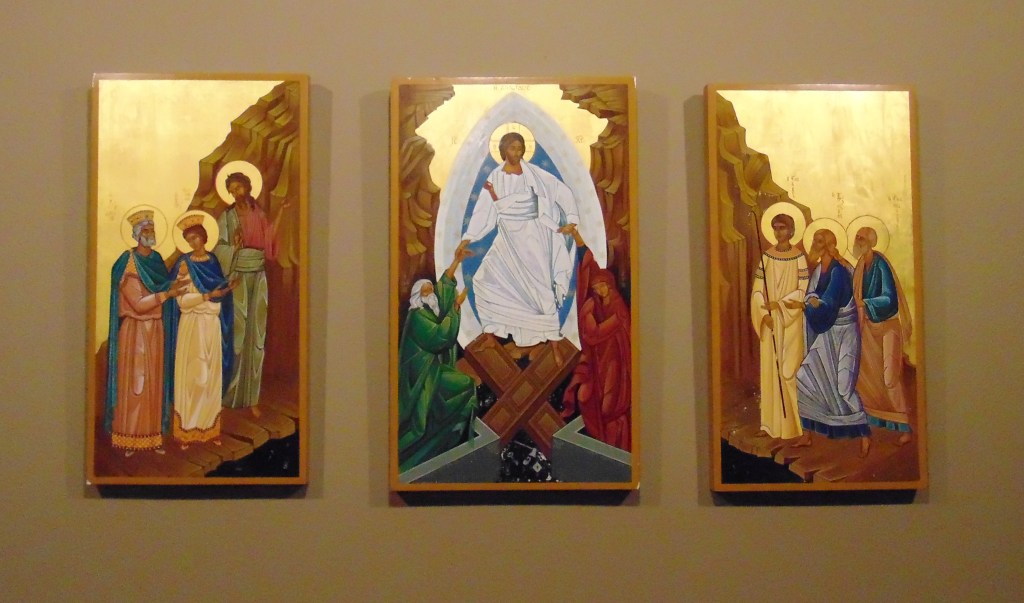
Getting to the best in prayer: relational, loving, healing

In the mainstream view of the general public, prayer is sometimes reduced to being viewed as “a uni-directional monologue of us making intercessory requests to God when we need something.”

If our human relationships were limited to uni-directional monologues, that would make for very dry relationships (i.e., transactional rather than interactional) – we likely wouldn’t have many engaging connections with people. Likewise, prayer in its’ fullness is also more than a uni-directional monologue. A rich prayer life is relational and interactive: a two-way communication in which we relate with God (with us as the junior communicator), both offering and receiving wide-ranging communication – including our sense of God’s loving presence.

What about prayer and our questions about why God allows suffering in the world? Isn’t prayer about asking God to fix our problems?

God didn’t create the world to be a world in which we suffer. God made us in order to have us to love. Love, by its’ nature, is two-way and interactional. Further, love – by definition – can’t be forced. Since love can’t be forced, we were given the option of whether or not to love God in return. Further, we have the option of whether to live in right relationship with God. Adam and Eve chose to break this right relationship with God by eating of the forbidden fruit. Since then, we humans haven’t always lived in right relationship with God (I’ve heard it argued that the root of sin is selfishness and/or disobedience). Thus, we live in a troubled, broken world.

Gerald May (a physician, psychiatrist, and writer of faith books) looks at the fact of suffering from another perspective on page nine of his faith book Dark Night of the Soul (May’s book is a reflection on John of the Cross’s original book of the same name). His is a perspective that occurred to me in some fashion several years ago: “….suffering does not result from some divine purgation….Instead, suffering arises from the simple circumstances of life itself.” In their book Healing as a Parish Ministry, Leo Thomas and Jan Alkire state – along a similar lines – about faith healing typically not curing natural consequences of what happens in life – that faith healing is often more of about bringing us into the fullness of who God wants us to be (a very healing experience!)

Personally, I don’t view prayer as only being about us bringing our list of problems to “Santa in the sky” to be fixed. Rather, the first focus of prayer is about entering into an ongoing – and interactive – relationship with God. When we let God into our hearts – when we surrender to letting God live within us (“It is no longer I, but God who lives in me,” Galatians 2:20), God can – and does – transform us into the people that God intended us to be. Then, we become better and emotionally/mentally happier people (at best, we experience a “peace that passeth all understanding”), people who contribute good in the world.

What about praying for healing and praying when we feel so challenged in life that we need God regarding our challenges? What about when we are seriously ill?

There absolutely are times when we need God. Ill health, life challenges. Having an active prayer relationship with God all the time – makes an interactive relationship with God more accessible to us much of the time (there are sometimes dry prayer periods). Just as human parents want to hear from their grown kids throughout the year – not just in times of need – God wants to have an ongoing, interactive relationship with us on an ongoing basis.

Sometimes, miraculous healing does occur through prayer. Jesus performed miracles and healed people. We hear stories today of miraculous healing. Other times, we pray in times of illness and we don’t experience direct healing of specific illnesses.

Sometimes there are ‘healing in prayer’ situations in prayer. We hear of medical healings. There are also cases of emotional and mental healing in difficult times.

Yes, there is healing in prayer

God loves us, wants to have a relationship with us and wants to heal us.

In their Healing as a Parish Ministry book (above), Leo Thomas and Jan Alkire quote Verla A. Mooth’s “Forgiveness and Healing” publication when stating on stating on page 43 of their book: “….The miracle of redemption is that God should change us……This transforming love is poured out in our hearts through the Holy Spirit who is given to us. It can only be a giving and forgiving love.” As such, we become more vibrant and able to live more fully – and, in many ways – healthier lives.

As an example of healing found in prayer, I returned to church in 2016. I returned with a painful neuropathic condition in which a stress response is involved (Complex Regional Pain Syndrome includes hyper-stimulation of the sympathetic nervous system). Prayer very slowly had a calming and healing effect, calming my sympathetic nervous system. I now have periods of being symptom-free from Complex Regional Pain Syndrome.

For more recent reflections about the fullness of prayer, see my previous post here.

Kim Burkhardt blogs at A Parish Catechist and The Books of the Ages. If you are a new visitor, it would be great to have you follow this blog (thank you!). If you know someone who would like this blog post, please share it with them (thank you!).
Being a person of faith: more than mental beliefs about religion

Photo: Window at Clonmacnoise Monastery, Co. Offaly, Ireland

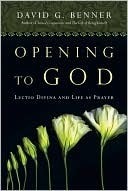
In his book Opening to God: Lectio Divina and Life as Prayer, Irish poet David G. Benner writes “Too often faith is reduced to beliefs. But cognitive ascent to propositions has very little to do with genuine faith, which is more a posture of the heart than of the mind. Faith in God is leaning with confidence into God. (page 32)”

I spent years “trying to think my way to God.” That doesn’t work. In 2016, I had a re-conversion experience in which I felt God’s love for me; my faith moved into “a posture of the heart” that I had been trying for years to experience (my faith story is told in more detail here.).

So, how does one move from merely “reducing faith to a set of beliefs” to faith that is experienced and lived? A few thoughts:

  • Certainly, a living faith does necessitate religious learning. Who is God? Who are we in relationship to God? What are the precepts of a life of faith? Individual faith traditions provide such instruction. It is then up to us to allow these precepts to move into our being and to incorporate these precepts into our lives (i.e., incorporate these ideas into how we relate to God, relate to other people, and live our lives).
  • Faith is experiential: a relationship with God. Faith becoming experiential involves doses of grace, surrender, prayer, and love. Living faith is made possible through grace given to us by God (in the Christian tradition, this grace is conferred upon us beginning with baptism….and then grace continues to show up at other times when God knocks on our door). Our portion of “doing faith” – what David G. Benner describes as “leaning with confidence into God” – requires surrender and prayer. Surrender is an emotional giving up, ascenting to allow God to take the driver’s seat in our lives. Prayer is where we participate in a relationship with God. Rather than prayer being a uni-directional monologue of us talking at or to God, prayer is relational and interactive. In prayer, we both communicate to God and receive the presence of God (analogy: our relationships with the people in our lives are likewise interactive rather than uni-directional). I write more about prayer here. The fruits of grace, surrender, and prayer become “the fruits of the spirit” listed in Galatians 5:22-23: “”love, joy, peace, forbearance, kindness, goodness, faithfulness, gentleness and self-control.”
  • We live our faith through how we live. Growing into being a person of faith involves allowing our inner work of faith (grace, surrender, prayer, and resulting love – listed above) to direct our being-ness in the world. A life of faith is absolutely about our own relationship with God, but it is also essentially more than that – life isn’t just about us personally or about our own relationship with God. We are here to be of service to all of God’s children. Everyone is a beloved child of God, our lives are measured to the degree that we move into loving God’s children in thought and deed. Living our faith is about “love God and love your neighbor” (Matthew 22: 36-40) and applyin the precepts of one’s faith tradition (“The Golden Rule,” “Christian charity,” etc.).

Faith is more than a set of beliefs – it is how we relate to the divine and live among God’s children. Acts 17:28: “It is in God that we live and move and have our being.”

Kim Burkhardt blogs at A Parish Catechist and The Books of the Ages. If you are a new visitor, it would be great to have you follow this blog (thank you!). If you know someone who would like this blog post, please share it with them (thank you!).
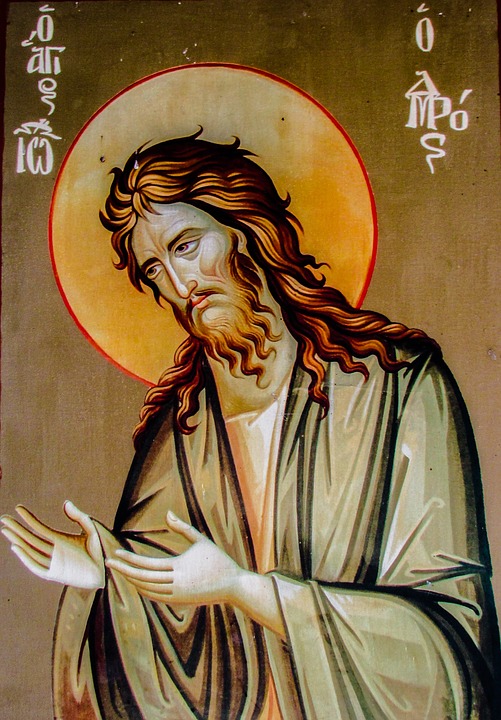
Hearing God’s voice….in stillness

…….It is often in the stillness where we hear – and can respond to – the promptings of God’s voice.

In 1 Kings Chapter 19 (19:11-13), we read: “The Lord said, ‘Go out and stand on the mountain in the presence of the Lord, for the Lord is about to pass by.’ Then a great and powerful wind tore the mountains apart and shattered the rocks before the Lord, but the Lord was not in the wind. After the wind there was an earthquake, but the Lord was not in the earthquake. After the earthquake came a fire, but the Lord was not in the fire. And after the fire came a gentle whisper. When Elijah heard it, he pulled his cloak over his face and went out and stood at the mouth of the cave. Then a voice said to him, ‘What are you doing here, Elijah?’”…..

Jesus also frequently went to quiet desert spaces to pray to his father. Prayed in solitude and stillness.

For us, a relationship with God likewise requires a willingness to “go inward” – to step away from life’s hustle and bustle encouraged by our outwardly-focused society and sit in stillness. Stillness is uncomfortable for some. Pausing to go inward isn’t always comfortable – we bump up against our own inner tumult. Yet, prayer can get us through such tumult.

When we find a relationship with God – an interactive, two-way interaction rather than a one-way monologue of intercessory prayers from us directed to God (we wouldn’t relate to the people in our lives exclusively via uni-directional monologues!) – there comes a discovery that God sits with us in prayer. God’s felt presence in our lives can – and does – provide “peace that passeth all understanding.”

We also experience a relationship with God by being of service to others – by working to improve the lives of other people (Jesus told his apostles that the greatest commandments are “Love God and love your neighbor” – Matthew 22: 36-40 ). Mother Teresa lived this in the streets of Calcutta. Richard Rohr focuses on the need for both rest in God’s presence and the need to be active in the world through his Center for Action and Contemplation.

Wondering about how to go about stillness and prayer? Start praying. If you’re not praying yet, start praying twice per day for five minutes each time. Sit in stillness – go with whatever comes in that stillness and “become comfortable” with whatever comes in that stillness. Find someone with whom to discuss what you experience in stillness. Wondering how to pray, how to move deeper in prayer? Consider:

Kim Burkhardt blogs at A Parish Catechist and The Books of the Ages. If you are a new visitor, it would be great to have you follow this blog (thank you!). If you know someone who would like this blog post, please share it with them (thank you!).

Ponderings on self-revealing love

Yikes.

I am reading David G. Benner’s book, Opening to God, Lectio Divina and Life as Prayer. Early in the book, he writes “Genuine prayer always begins in the heart and is offered by act of opening our self as we turn toward God in faith” (page 18). “Growth in prayer is learning to open more and more of our selves to God” (page 19). Benner also goes on to write on the following page, “….God is ever reaching out in self-revealing love….”

Yikes…..the passage “God is ever reaching out in self-revealing love” hit me like a ton if bricks. In the context of prayer, I began experiencing God’s love via prayer in October, 2016 [I tell of how I “heard the words” growing up that “Jesus loves us,” but I heard it much like children in the Charlie Brown movies heard their teacher’s voice as “wah…wah…wah” – words that we don’t actually take in. It wasn’t until October, 2016 that I actually experienced – in prayer – that God loves me. Experiencing that God loves us sure gets a person’s attention!]. Yet, reading Benner’s passage last night about “self-revealing love” got my attention in quite another way.

We are meant to have rich relationships with both God and each other. Christ indicated that the greatest commandments are to “Love God and love your neighbor” ((Matthew 22:36-40)….. Add to that “self-revealing love” – insight toward a solution for a particular and vexing challenge. Many first-world countries are experiencing an “epidemic of loneliness” (see the U.S. Surgeon General’s 2023 report on the “Epidemic of Loneliness“). I myself have spent much of my life feeling varying degrees of social isolation – the awkward introvert, feeling like the ignored, boring, and lonely social wallflower who senses a wall between me and the world. Why waste time making this self-revelation? Because we’ve all got room to grow and because showing our own experience is part of the poetry of sharing the human experience…..

Related to the topic of social isolation, the idea of “self-revealing love” isn’t just suppose to be God’s self-revelations to us. As we are to “love God and love our neighbor,” how many of us engage in self-revealing love with one another? Frankly, I don’t do that well – if at all. When I read Benner’s passage about God’s self-revealing love to us in prayer, I moved from “God provides us with self-revealing love” to the emotional weight of thinking – by extension – “We humans should self-revealing as part of ‘love one another.’ I don’t do that. I don’t self-reveal nearly enough.” No wonder I’m boring and lonely. I come across as a blank slate in which people aren’t able to see who lives under my skin. I then immediately and easily thought of people who engage in self-revealing love in their social and family interactions. We all want to be around those people!

A public example of a self-revealing individual – who self-reveals as an act of love – is the priest and popular author Henri Nouwen. Nouwen was willing to self-disclose in his popular books that he spent years struggling with self-doubt and conflictedness about his sexuality. What a “self-revealing love” gift to share with readers (I – as a reader – was moved when I read that. “Wow! We don’t often hear priests talk about their inner experience regarding their sexuality….”). This wasn’t just self-revelation: it was self-revelation in a vulnerable sort of way that helps lay readers see their own humanity in a respected faith leader. It seems to me that this was one of the aspects of lovingness that makes Nouwen’s writings so well read (there’s a quote on the Henri Nouwen Society website from a reader who mentions Nouwen’s willingness to live vulnerably).

Self-revelations in our social interactions add a level of depth to our relationships with one another and can – should – be part of how we love. Of course, there are appropriate parameters – what time we brush our teeth, etc. can border on the ridiculous; I’m referring to self-disclosing those aspects of ourselves that make us human. Some of the people I know who are most appreciated in their social circles are people who both love the people around them and make themselves transparent with gusto. For those of us either don’t self-disclose or love (or both) with gusto, there’s a challenge in learning how to do so! One prayer that is consistently useful and that could help with this topic is one that allows God to turn me into a better human (it’s a form of surrender): “God turn me into the person you want me to be. Help! You’re going to change me better than I can!”

Kim Burkhardt blogs at A Parish Catechist and The Books of the Ages. If you are a new visitor, it would be great to have you follow this blog (thank you!). If you know someone who would like this blog post, please share it with them so they can subscribe (thank you!).

Book Review: Opening to God (David G. Benner)

I was hooked when I read the back cover of David Benner’s Opening to God: Lectio Divina and Life as Prayer.

I read these excerpts from the book’s back cover as poetry describing the best I have experienced in prayer: “Prayer is not just communication with God: it is communion with God. As we open ourselves to him, God does the spiritual work of transformation in us…….discover openness to God as the essence of prayer…..Move beyond words [in prayer] to become not merely someone who prays, but someone whose entire life is prayer in union with God.”

Okay, I haven’t yet gotten to living as “someone whose entire life is prayer,” but my prayer life has joyously moved beyond “words communicated to God” to prayer being a relationship – without the need for human language” (as I mention in several previous blog posts such as this one). In my case, such prayer was given to me as a grace.

I started reading this book last night. Happily, the book is living up to the book’s description – a descriptive book about the dynamics of prayer being a meaningful relationship with God. A worthwhile read about what prayer can be and is meant to be.

Kim Burkhardt blogs at A Parish Catechist and The Books of the Ages. If you are a new visitor, it would be great to have you follow this blog (thank you!). If you know someone who would like this blog post, please share it with them so they can subscribe (thank you!).

Interested in the contours of your inner faith journey?

As an introvert and as one easily drawn to religious ritual, the contours of the inward journey – both my journey and the journeys of other people – have always been of interest to me. Do you also take an interest in the experience of the inner faith journey?

Some people, I hear, avoid their inner experience. The human condition inherently includes challenges – including dark corners within our individual psyches and the uncomfortable emotional debris we acquire from bumping up against life’s difficulties. Thus, some people prefer to focus outwardly so as to avoid the darkness and difficulties that lie within. Some societies encourage an outward-focused, extroverted existence.

Yet, our inner journeys are ever so remarkable and worth engaging in! Any darkness that is avoided doesn’t go away by ignoring it. One has to engage with it, sort through it, walk through it. “Wrestle one’s demons,” if you will. Engaging with one’s inner experience can lead to healing from life’s ragged edges, to a more fruitful wholeness, and to the amazing relationship with God that God wants to have with us – a journey that is very worth the trip.

A number of ponderings are offered below from writers, quotes, and books about engaging with our inward faith experience:

Treading into the Spiritual Depths: The (not depressing!) Dark Night of the Soul

Teresa of Avila and her protege John of the Cross – 16th-century Spaniards – are my two favorite mystics. In his book Dark Night of the Soul, John of the Cross writes about how the sometimes unviewable-to-us aspects of our inner faith journey are part of where God works within us to transform us (rather than this title being about a depressive view on things!). Attentiveness to our inner journey can allow us to at least a glimpse of when this (at least somewhat) unviewable aspect of our spiritual growth is being wrought within us – particularly if we have an active relationship with God in prayer (I write about such prayer here).

Gerald May’s book of the same title speaks to this idea about “The Dark Night of the Soul”: “May emphasises that the dark night is not necessarily a time of suffering and near despair, but a time of deep transition, a search for new orientation when things are clouded and full of mystery. The dark gives depth, dimension and fullness to the spiritual life.”

Is there joy in the inner experience?

Absolutely. Irish writer John O’Donohue articulates this well: “I would love to live like a river flows, carried by the surprise of its own unfolding.”

Prayer is also where we inwardly have a personal relationship with God via prayer. When such a relationship is an active one, it can be amazing and fruitful. I sometimes write about the particulars of an active prayer life; please feel welcome to read one such blog posting here.

The Inner Journey and Walking

I’m known for walking. All over town. Friends started something of a “Where’s Waldo” conversation about where they see me pop up around town (they were entertained by this conversation!). “I – or we – saw Kim walking ‘over here,’ at ‘X intersection’ or at ‘Y location….'” As a result of people knowing that I walk, a friend gave me a book called Wanderers: A history of women walking and a book by Thich Nhat Hanh called How to walk. I loved both books. Walking, as discussed by these books, is a time when some people – myself included – ponder. It turns out that a search on Goodreads for books titled “Women who walk leads to a long listing of relevant books. There is even a network called Women Who Walk.

Enjoy the inner journey!

Kim Burkhardt blogs at A Parish Catechist and The Books of the Ages. If you are a new visitor, it would be great to have you follow this blog (thank you!). If you know someone who would like this blog post, please share it with them so they can subscribe (thank you!).

List: several aspects of an inner relationship with God

Every one of us are daughters and sons of God.

God loves us wants to have a relationship with each of us.

Relationships, to truly be a relationship, are two-way and interactive. A great analogy I heard about our relationship with God being two-way is that of comparing prayer to a phone call. We typically wouldn’t call a person we know only to tell them something and then hang up; rather, the dialog goes back and forth – with both parties participating in communication. Prayer is the meant to be the same way – two way and interactive, not just uni-directional thoughts from us sent to God.

We know what it is like to interact socially with the people in our lives – family, friends, co-workers, etc. We value human relationships that are rich, varied, and interactive.

A relationship with God is an inner experience that happens in prayer.

There are many ways to pray, from intercessions (“Hey God, I/we need this-or-that, please help out”) to lectio divina, attending church (“those who sing pray twice”), and contemplative prayer (and, and, and). My favorite book about the many types of prayer is The Tradition of Catholic Prayer from the monks of St. Meinrad Abbey (it can be purchased online!).

Personally, I find the greatest depth of inner social interaction with God through contemplative prayer. No human language is necessary in such prayer. Rather, it’s simply – and meaningfully – being in (and feeling!) God’s presence.

I began experiencing contemplative prayer as a grace given in 2016. It began with one of those “promptings of the Holy Spirit” that many of us feel from time to time (these are initiated by the Holy Spirit, we can’t initiate these promptings but we can opt to be receptive to these promptings and respond!). The prompting I experience in 2016 happened, naturally enough, at a church service; during the homily (sermon), the priest’s faith filled an empty hole I’d been walking around with but hadn’t been able to fill. I sat with that experience in the days that followed; this grace resulted in an extended period of feeling God’s presence – and love – in contemplative prayer. Since then, my experience of contemplative prayer has brought about wonderful positives:

  • A sense of God’s presence in my life (i.e., a social connection in prayer)
  • An experience of God’s love for me
  • Emotional rest from life’s challenges by “resting in God’s presence” in prayer
  • Allowing God to more fully turn me into the person God wants me to be (we are suppose to be saints-in-training!)
  • Letting God emotionally rearrange my emotional and psychological experience such that I am gradually-but-noticeably becoming emotionally healthier and happier – and becoming a better person to the people around me. In the New Testament, Galatians 5:22-3 states that “the fruit of the Spirit is love, joy, peace, longsuffering, kindness, goodness, faithfulness, gentleness, self-control.”

A great place to learn about contemplative prayer is the organization Contemplative Outreach.

Interested in having a two-way, interactive relationship with God? Try taking up prayer twice per day, five to fifteen minutes each time. Stick with it, ask God to be present in your life. Notice and respond to any promptings that come your way. Not sure how to pray? If you’d like to try multiple approaches to prayer, maybe try reading the book mentioned above (The Tradition of Catholic Prayer) to learn more about prayer or check out the Contemplative Outreach website. Most importantly:

  1. Pray daily and actively
  2. There is no wrong way to pray. Each of us is an individual; how we connect with God will be unique to us.

Kim Burkhardt blogs at A Parish Catechist and The Books of the Ages. If you are a new visitor, it would be great to have you follow this blog (thank you!). If you know someone who would like this blog post, please share it with them (thank you!).