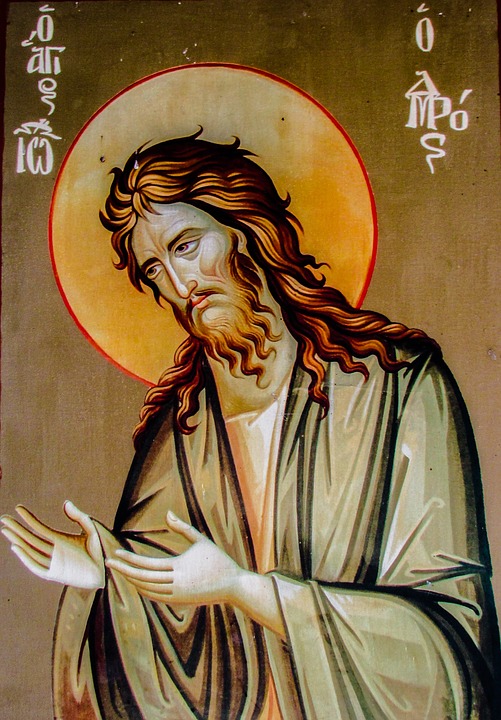
Being a person of faith: more than mental beliefs about religion

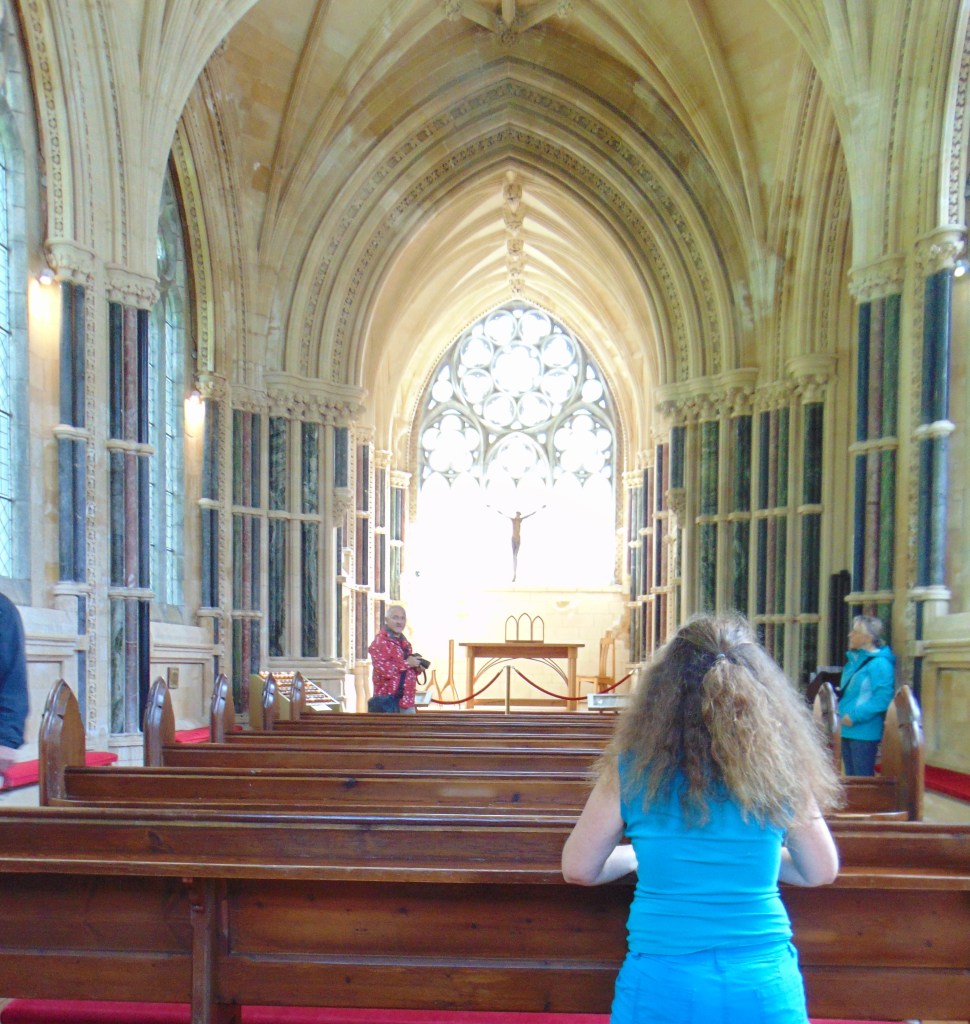
Photo: Window at Clonmacnoise Monastery, Co. Offaly, Ireland

In his book Opening to God: Lectio Divina and Life as Prayer, Irish poet David G. Benner writes “Too often faith is reduced to beliefs. But cognitive ascent to propositions has very little to do with genuine faith, which is more a posture of the heart than of the mind. Faith in God is leaning with confidence into God. (page 32)”

I spent years “trying to think my way to God.” That doesn’t work. In 2016, I had a re-conversion experience in which I felt God’s love for me; my faith moved into “a posture of the heart” that I had been trying for years to experience (my faith story is told in more detail here.).

So, how does one move from merely “reducing faith to a set of beliefs” to faith that is experienced and lived? A few thoughts:

  • Certainly, a living faith does necessitate religious learning. Who is God? Who are we in relationship to God? What are the precepts of a life of faith? Individual faith traditions provide such instruction. It is then up to us to allow these precepts to move into our being and to incorporate these precepts into our lives (i.e., incorporate these ideas into how we relate to God, relate to other people, and live our lives).
  • Faith is experiential: a relationship with God. Faith becoming experiential involves doses of grace, surrender, prayer, and love. Living faith is made possible through grace given to us by God (in the Christian tradition, this grace is conferred upon us beginning with baptism….and then grace continues to show up at other times when God knocks on our door). Our portion of “doing faith” – what David G. Benner describes as “leaning with confidence into God” – requires surrender and prayer. Surrender is an emotional giving up, ascenting to allow God to take the driver’s seat in our lives. Prayer is where we participate in a relationship with God. Rather than prayer being a uni-directional monologue of us talking at or to God, prayer is relational and interactive. In prayer, we both communicate to God and receive the presence of God (analogy: our relationships with the people in our lives are likewise interactive rather than uni-directional). I write more about prayer here. The fruits of grace, surrender, and prayer become “the fruits of the spirit” listed in Galatians 5:22-23: “”love, joy, peace, forbearance, kindness, goodness, faithfulness, gentleness and self-control.”
  • We live our faith through how we live. Growing into being a person of faith involves allowing our inner work of faith (grace, surrender, prayer, and resulting love – listed above) to direct our being-ness in the world. A life of faith is absolutely about our own relationship with God, but it is also essentially more than that – life isn’t just about us personally or about our own relationship with God. We are here to be of service to all of God’s children. Everyone is a beloved child of God, our lives are measured to the degree that we move into loving God’s children in thought and deed. Living our faith is about “love God and love your neighbor” (Matthew 22: 36-40) and applyin the precepts of one’s faith tradition (“The Golden Rule,” “Christian charity,” etc.).

Faith is more than a set of beliefs – it is how we relate to the divine and live among God’s children. Acts 17:28: “It is in God that we live and move and have our being.”

Kim Burkhardt blogs at A Parish Catechist and The Books of the Ages. If you are a new visitor, it would be great to have you follow this blog (thank you!). If you know someone who would like this blog post, please share it with them (thank you!).

Hearing God’s voice….in stillness

…….It is often in the stillness where we hear – and can respond to – the promptings of God’s voice.

In 1 Kings Chapter 19 (19:11-13), we read: “The Lord said, ‘Go out and stand on the mountain in the presence of the Lord, for the Lord is about to pass by.’ Then a great and powerful wind tore the mountains apart and shattered the rocks before the Lord, but the Lord was not in the wind. After the wind there was an earthquake, but the Lord was not in the earthquake. After the earthquake came a fire, but the Lord was not in the fire. And after the fire came a gentle whisper. When Elijah heard it, he pulled his cloak over his face and went out and stood at the mouth of the cave. Then a voice said to him, ‘What are you doing here, Elijah?’”…..

Jesus also frequently went to quiet desert spaces to pray to his father. Prayed in solitude and stillness.

For us, a relationship with God likewise requires a willingness to “go inward” – to step away from life’s hustle and bustle encouraged by our outwardly-focused society and sit in stillness. Stillness is uncomfortable for some. Pausing to go inward isn’t always comfortable – we bump up against our own inner tumult. Yet, prayer can get us through such tumult.

When we find a relationship with God – an interactive, two-way interaction rather than a one-way monologue of intercessory prayers from us directed to God (we wouldn’t relate to the people in our lives exclusively via uni-directional monologues!) – there comes a discovery that God sits with us in prayer. God’s felt presence in our lives can – and does – provide “peace that passeth all understanding.”

We also experience a relationship with God by being of service to others – by working to improve the lives of other people (Jesus told his apostles that the greatest commandments are “Love God and love your neighbor” – Matthew 22: 36-40 ). Mother Teresa lived this in the streets of Calcutta. Richard Rohr focuses on the need for both rest in God’s presence and the need to be active in the world through his Center for Action and Contemplation.

Wondering about how to go about stillness and prayer? Start praying. If you’re not praying yet, start praying twice per day for five minutes each time. Sit in stillness – go with whatever comes in that stillness and “become comfortable” with whatever comes in that stillness. Find someone with whom to discuss what you experience in stillness. Wondering how to pray, how to move deeper in prayer? Consider:

Kim Burkhardt blogs at A Parish Catechist and The Books of the Ages. If you are a new visitor, it would be great to have you follow this blog (thank you!). If you know someone who would like this blog post, please share it with them (thank you!).

Ponderings on self-revealing love

Yikes.

I am reading David G. Benner’s book, Opening to God, Lectio Divina and Life as Prayer. Early in the book, he writes “Genuine prayer always begins in the heart and is offered by act of opening our self as we turn toward God in faith” (page 18). “Growth in prayer is learning to open more and more of our selves to God” (page 19). Benner also goes on to write on the following page, “….God is ever reaching out in self-revealing love….”

Yikes…..the passage “God is ever reaching out in self-revealing love” hit me like a ton if bricks. In the context of prayer, I began experiencing God’s love via prayer in October, 2016 [I tell of how I “heard the words” growing up that “Jesus loves us,” but I heard it much like children in the Charlie Brown movies heard their teacher’s voice as “wah…wah…wah” – words that we don’t actually take in. It wasn’t until October, 2016 that I actually experienced – in prayer – that God loves me. Experiencing that God loves us sure gets a person’s attention!]. Yet, reading Benner’s passage last night about “self-revealing love” got my attention in quite another way.

We are meant to have rich relationships with both God and each other. Christ indicated that the greatest commandments are to “Love God and love your neighbor” ((Matthew 22:36-40)….. Add to that “self-revealing love” – insight toward a solution for a particular and vexing challenge. Many first-world countries are experiencing an “epidemic of loneliness” (see the U.S. Surgeon General’s 2023 report on the “Epidemic of Loneliness“). I myself have spent much of my life feeling varying degrees of social isolation – the awkward introvert, feeling like the ignored, boring, and lonely social wallflower who senses a wall between me and the world. Why waste time making this self-revelation? Because we’ve all got room to grow and because showing our own experience is part of the poetry of sharing the human experience…..

Related to the topic of social isolation, the idea of “self-revealing love” isn’t just suppose to be God’s self-revelations to us. As we are to “love God and love our neighbor,” how many of us engage in self-revealing love with one another? Frankly, I don’t do that well – if at all. When I read Benner’s passage about God’s self-revealing love to us in prayer, I moved from “God provides us with self-revealing love” to the emotional weight of thinking – by extension – “We humans should self-revealing as part of ‘love one another.’ I don’t do that. I don’t self-reveal nearly enough.” No wonder I’m boring and lonely. I come across as a blank slate in which people aren’t able to see who lives under my skin. I then immediately and easily thought of people who engage in self-revealing love in their social and family interactions. We all want to be around those people!

A public example of a self-revealing individual – who self-reveals as an act of love – is the priest and popular author Henri Nouwen. Nouwen was willing to self-disclose in his popular books that he spent years struggling with self-doubt and conflictedness about his sexuality. What a “self-revealing love” gift to share with readers (I – as a reader – was moved when I read that. “Wow! We don’t often hear priests talk about their inner experience regarding their sexuality….”). This wasn’t just self-revelation: it was self-revelation in a vulnerable sort of way that helps lay readers see their own humanity in a respected faith leader. It seems to me that this was one of the aspects of lovingness that makes Nouwen’s writings so well read (there’s a quote on the Henri Nouwen Society website from a reader who mentions Nouwen’s willingness to live vulnerably).

Self-revelations in our social interactions add a level of depth to our relationships with one another and can – should – be part of how we love. Of course, there are appropriate parameters – what time we brush our teeth, etc. can border on the ridiculous; I’m referring to self-disclosing those aspects of ourselves that make us human. Some of the people I know who are most appreciated in their social circles are people who both love the people around them and make themselves transparent with gusto. For those of us either don’t self-disclose or love (or both) with gusto, there’s a challenge in learning how to do so! One prayer that is consistently useful and that could help with this topic is one that allows God to turn me into a better human (it’s a form of surrender): “God turn me into the person you want me to be. Help! You’re going to change me better than I can!”

Kim Burkhardt blogs at A Parish Catechist and The Books of the Ages. If you are a new visitor, it would be great to have you follow this blog (thank you!). If you know someone who would like this blog post, please share it with them so they can subscribe (thank you!).

Book Review: Opening to God (David G. Benner)

I was hooked when I read the back cover of David Benner’s Opening to God: Lectio Divina and Life as Prayer.

I read these excerpts from the book’s back cover as poetry describing the best I have experienced in prayer: “Prayer is not just communication with God: it is communion with God. As we open ourselves to him, God does the spiritual work of transformation in us…….discover openness to God as the essence of prayer…..Move beyond words [in prayer] to become not merely someone who prays, but someone whose entire life is prayer in union with God.”

Okay, I haven’t yet gotten to living as “someone whose entire life is prayer,” but my prayer life has joyously moved beyond “words communicated to God” to prayer being a relationship – without the need for human language” (as I mention in several previous blog posts such as this one). In my case, such prayer was given to me as a grace.

I started reading this book last night. Happily, the book is living up to the book’s description – a descriptive book about the dynamics of prayer being a meaningful relationship with God. A worthwhile read about what prayer can be and is meant to be.

Kim Burkhardt blogs at A Parish Catechist and The Books of the Ages. If you are a new visitor, it would be great to have you follow this blog (thank you!). If you know someone who would like this blog post, please share it with them so they can subscribe (thank you!).

Interested in the contours of your inner faith journey?

As an introvert and as one easily drawn to religious ritual, the contours of the inward journey – both my journey and the journeys of other people – have always been of interest to me. Do you also take an interest in the experience of the inner faith journey?

Some people, I hear, avoid their inner experience. The human condition inherently includes challenges – including dark corners within our individual psyches and the uncomfortable emotional debris we acquire from bumping up against life’s difficulties. Thus, some people prefer to focus outwardly so as to avoid the darkness and difficulties that lie within. Some societies encourage an outward-focused, extroverted existence.

Yet, our inner journeys are ever so remarkable and worth engaging in! Any darkness that is avoided doesn’t go away by ignoring it. One has to engage with it, sort through it, walk through it. “Wrestle one’s demons,” if you will. Engaging with one’s inner experience can lead to healing from life’s ragged edges, to a more fruitful wholeness, and to the amazing relationship with God that God wants to have with us – a journey that is very worth the trip.

A number of ponderings are offered below from writers, quotes, and books about engaging with our inward faith experience:

Treading into the Spiritual Depths: The (not depressing!) Dark Night of the Soul

Teresa of Avila and her protege John of the Cross – 16th-century Spaniards – are my two favorite mystics. In his book Dark Night of the Soul, John of the Cross writes about how the sometimes unviewable-to-us aspects of our inner faith journey are part of where God works within us to transform us (rather than this title being about a depressive view on things!). Attentiveness to our inner journey can allow us to at least a glimpse of when this (at least somewhat) unviewable aspect of our spiritual growth is being wrought within us – particularly if we have an active relationship with God in prayer (I write about such prayer here).

Gerald May’s book of the same title speaks to this idea about “The Dark Night of the Soul”: “May emphasises that the dark night is not necessarily a time of suffering and near despair, but a time of deep transition, a search for new orientation when things are clouded and full of mystery. The dark gives depth, dimension and fullness to the spiritual life.”

Is there joy in the inner experience?

Absolutely. Irish writer John O’Donohue articulates this well: “I would love to live like a river flows, carried by the surprise of its own unfolding.”

Prayer is also where we inwardly have a personal relationship with God via prayer. When such a relationship is an active one, it can be amazing and fruitful. I sometimes write about the particulars of an active prayer life; please feel welcome to read one such blog posting here.

The Inner Journey and Walking

I’m known for walking. All over town. Friends started something of a “Where’s Waldo” conversation about where they see me pop up around town (they were entertained by this conversation!). “I – or we – saw Kim walking ‘over here,’ at ‘X intersection’ or at ‘Y location….'” As a result of people knowing that I walk, a friend gave me a book called Wanderers: A history of women walking and a book by Thich Nhat Hanh called How to walk. I loved both books. Walking, as discussed by these books, is a time when some people – myself included – ponder. It turns out that a search on Goodreads for books titled “Women who walk leads to a long listing of relevant books. There is even a network called Women Who Walk.

Enjoy the inner journey!

Kim Burkhardt blogs at A Parish Catechist and The Books of the Ages. If you are a new visitor, it would be great to have you follow this blog (thank you!). If you know someone who would like this blog post, please share it with them so they can subscribe (thank you!).

List: several aspects of an inner relationship with God

Every one of us are daughters and sons of God.

God loves us wants to have a relationship with each of us.

Relationships, to truly be a relationship, are two-way and interactive. A great analogy I heard about our relationship with God being two-way is that of comparing prayer to a phone call. We typically wouldn’t call a person we know only to tell them something and then hang up; rather, the dialog goes back and forth – with both parties participating in communication. Prayer is the meant to be the same way – two way and interactive, not just uni-directional thoughts from us sent to God.

We know what it is like to interact socially with the people in our lives – family, friends, co-workers, etc. We value human relationships that are rich, varied, and interactive.

A relationship with God is an inner experience that happens in prayer.

There are many ways to pray, from intercessions (“Hey God, I/we need this-or-that, please help out”) to lectio divina, attending church (“those who sing pray twice”), and contemplative prayer (and, and, and). My favorite book about the many types of prayer is The Tradition of Catholic Prayer from the monks of St. Meinrad Abbey (it can be purchased online!).

Personally, I find the greatest depth of inner social interaction with God through contemplative prayer. No human language is necessary in such prayer. Rather, it’s simply – and meaningfully – being in (and feeling!) God’s presence.

I began experiencing contemplative prayer as a grace given in 2016. It began with one of those “promptings of the Holy Spirit” that many of us feel from time to time (these are initiated by the Holy Spirit, we can’t initiate these promptings but we can opt to be receptive to these promptings and respond!). The prompting I experience in 2016 happened, naturally enough, at a church service; during the homily (sermon), the priest’s faith filled an empty hole I’d been walking around with but hadn’t been able to fill. I sat with that experience in the days that followed; this grace resulted in an extended period of feeling God’s presence – and love – in contemplative prayer. Since then, my experience of contemplative prayer has brought about wonderful positives:

  • A sense of God’s presence in my life (i.e., a social connection in prayer)
  • An experience of God’s love for me
  • Emotional rest from life’s challenges by “resting in God’s presence” in prayer
  • Allowing God to more fully turn me into the person God wants me to be (we are suppose to be saints-in-training!)
  • Letting God emotionally rearrange my emotional and psychological experience such that I am gradually-but-noticeably becoming emotionally healthier and happier – and becoming a better person to the people around me. In the New Testament, Galatians 5:22-3 states that “the fruit of the Spirit is love, joy, peace, longsuffering, kindness, goodness, faithfulness, gentleness, self-control.”

A great place to learn about contemplative prayer is the organization Contemplative Outreach.

Interested in having a two-way, interactive relationship with God? Try taking up prayer twice per day, five to fifteen minutes each time. Stick with it, ask God to be present in your life. Notice and respond to any promptings that come your way. Not sure how to pray? If you’d like to try multiple approaches to prayer, maybe try reading the book mentioned above (The Tradition of Catholic Prayer) to learn more about prayer or check out the Contemplative Outreach website. Most importantly:

  1. Pray daily and actively
  2. There is no wrong way to pray. Each of us is an individual; how we connect with God will be unique to us.

Kim Burkhardt blogs at A Parish Catechist and The Books of the Ages. If you are a new visitor, it would be great to have you follow this blog (thank you!). If you know someone who would like this blog post, please share it with them (thank you!).
Important aspects sought in interior spirituality: encounters with God, personal transformation, love

I am active in prayer groups – in addition to broader church involvement – and talk to people frequently about prayer. On a related note, I wonder when I attend church services why I don’t hear more conversations in church pews about the interior aspects of how people experience their faith. Perhaps these conversations happen most often in small groups that come together for this purpose. Perhaps, too, it’s my role to cultivate such conversations (thus, this blog post as a step in that direction).

I participated in a recent discussion in which a phrase came up that is currently being used by the U.S. Conference of Catholic Bishops (USCCB) in their National Eucharistic Revival: Encountering Christ. I’ve heard folks use the word encounter before in faith settings (“an encounter with God,” marriage encounter, etc.). I am now realizing that this may be a key word that people might use if there were to be more of the conversations about how people experience faith. It seems – I haven’t quantified this in statistically validated surveys – that the main topics of interest to people regarding the interior aspects of how we experience faith (or want to experience faith) are:

Encounters with God

Any number of saints write about their encounters with God. Some everyday people talk about their encounters with God. It seems that these encounters are initiated by God. We can cultivate being welcome receivers of such encounters (deepening an active prayer life, etc.). We can also respond to the inner promptings provided occasionally by the Holy Spirit – those “emotional nudgings” that we can either respond to or ignore (some nudgings are more obvious or poignant than others). It also seems that we are more likely to notice – and engage with – these promptings if we regularly connect meaningfully with our inner lives – something not always encouraged in our outwardly-focused culture (also, some people avoid the inner life to avoid inner challenges; having inner challenges is a universally human experience) – can make it easier to notice and reply to the Holy Spirit’s “emotional nudgings” welcoming us to an encounter with God.

What are these encounters with God? While the contours of each encounter is going to be personal to us, these encounters involve us sensing God’s presence – often with God making it possible for us to be somehow transformed. These encounters can range from a one-time occurrence to an ongoing or recurring experience. I responded to such an “emotional nudging” at a church service in 2016. I had been away from church for some years and attended a special service for social reasons – with the explicit intention of “I am only coming to this service for social reasons; I am NOT returning to church.” When I arrived, the service became more socially meaningful than I anticipated and the homily (sermon) impacted me – my sense was that the priest’s faith filled in empty hole in my soul that I hadn’t been able to fill. As the evening unfolded, I then stepped off a curb wrong on my way home from the service and broke my ankle – which left me on the couch at home; I was stuck not being able to actively distract myself from the “emotional nudging” I had experienced at church. Within days, this experience brought me back to church. In an extended period that followed, I experienced daily contemplative prayer that was given to me; I felt God’s presence in that prayer. All of this led to my faith broadening in wonderful ways and my emotional life growing and maturing in positive ways.

A crucial aspect of encounters with God gets to “the heart” of a relationship with God: God is love and God loves us. It is God’s very nature to love. Given that it is God’s inherent nature to love, the Catholic Catechism speaks to God’s nature needing to be Trinitarian – Father, Son, Holy Ghost – because God needed someone to love before God had humans to love; the three aspects of the Trinity could love each aspect of itself until we humans came along….and, of course, the Trinity continues loving each aspect of itself. Paragraph 221 of the Catechism reads: “God himself is an eternal exchange of love, Father, Son, and Holy Spirit, and he has destined us to share in that exchange.”).

Personal Transformation

  • How do we mature in faith?
  • How are we maturing – or not maturing – in faith? What are the roadblocks that we encounter in this regard? How can we get around these roadblocks?
  • How can we grow through the most stubborn and challenging emotional difficulties and life challenges?

The Fruits of the Spirit – the outcomes of growing in faith – are listed in the New Testament (Galatians 5:22-23): love, joy, peace, forbearance, kindness, goodness, faithfulness, gentleness, and self-control.

Then, the most important result of growing in faith: love of God and neighbor

When Christ was asked which of the commandments was greatest, he replied that the two greatest commandments are Love God and love your neighbor (Matthew 22:36-40).

How well are we present to the people in our lives – our loved ones, friends, neighbors, co-workers, etc? How much do we attend to their daily needs? How often do we buy people flowers, send them cards, etc? Do we step up to “be there” when someone is having a difficult time? Do we listen? Loving people necessarily involves being present to them. People need each other. Being present involves focusing upon the person – taking an interest in their emotional state and interacting so they sense our interest in them (not thinking about what we’re going to interject when they are done with their next sentence!). When I stayed with a cousin following her surgery, I was moving around her house looking for physical activities to do that would be helpful (wash dishes, etc.); she finally told me, “Please stop. I just need you to be here. Come, sit with me.”

Beyond caring about the people who we are happy to have in our lives, we can’t say that we love God if we don’t love our neighbor – all of our neighbors, including strangers. Every person alive is a child of God. We are called to be good to everyone. Of course, we find that some people are easy to love, while some are harder to love. It’s easy to be nice to the people we like. We are measured, I suppose, by how well we treat the people we find hardest to get along with. Sometimes I do well in this regard, sometimes I don’t.

In today’s lonely and divisive world (us-against-them political divisions, etc.), each of us becoming more kind toward “the other side” would go along way toward improving our social divisions (it’s not just about waiting for them to “see the light” and be nice to us!)….. Loving more of the people we come into contact with – taking the time to acknowledge people – would also go along way toward reducing what the U.S. Surgeon General is calling our Epidemic of Loneliness. There’s a saying that gets posted occasionally (source unknown): Always be a little kinder than is necessary.

Kim Burkhardt blogs at A Parish Catechist and The Books of the Ages. If you are a new visitor, it would be great to have you follow this blog (thank you!). If you know someone who would like this blog post, please share it with them (thank you!

Prayer: a heart-and-soul, “all in” activity

A couple of years ago, I read a title for a social media post that stayed with me: “Worry is not a plan.” If you need to get something done or figure out how to do something, worrying about it is not “an activity or a plan that counts toward doing something.”

That statement of “worry is not a plan” is eye-catching because it is insightful about how we emotionally engage with challenging aspects of our lives.

Prayer, on the other hand, is a meaningful activity – fruitful in and of itself (and quite the opposite of worry! In prayer, we are to allow God to be in control rather than worrying that nothing positive is going to happen. Further, God has no ill intention when we give God the reigns.). It is most meaningful when we emotionally engage with prayer.

A perusal of Google Trends (a free online way to look up what people have been searching for online since 2004), indicates that people are searching more often for information about “how to pray.”

There are a good variety of “techniques” for prayer. When I teach classes for people interested in joining my denomination, one of the topics we cover is “types of prayer, ways to pray” (with an assignment to start praying if they aren’t already!) There is intercessory prayer (asking God to intercede – or help – with this or that), contemplative prayer, lectio divina, attending church services (yes, being at church is – in and of itself – prayer, “talking to God” (in a general yet personal sort of way), denomination-specific techniques such as using prayer beads (rosaries, etc.), singing (did you know that the psalms were all meant to be sung and that “everyone who sings prays twice”?) the list goes on. Some approaches to prayer will suit one person, while other forms of prayer work better for the next person. What matters most about prayer is that “we are all in” when we pray.

What’s being “all in” when we pray? It involves actually engaging. Being present. Being present to God. Prayer is communication, a two-way communication – not just us talking at God. When we phone people we know, we wouldn’t just talk at them (one-directional communication) and then hang up, without listening to them in reply; it’s the same with God when we pray – prayer is meant to be a a meaningful, two-way connection (give-and-take).

When I pray, there is rarely human language involved. Perhaps surprisingly, human language isn’t necessarily necessary to communicate within prayer. I tend only to use human language in prayer when doing intercessory prayer (a small percentage of my prayer time). Most of the time, my prayer experience involves “resting in God’s presence” (a phrase from Contemplative Outreach). In other words, “Be still and know that I am God” (Psalm 46:10). Being in God’s presence, allowing God’s presence to be within my conscious awareness, surrendering to allow God turn me into the person that God wants me to be – this for me leads me toward feeling the fullness of God’s love and toward being a better human being. Feeling God’s presence is an aspect of communication and a productive one at that (like having a loved one or a pet with you in front of a fire when you are feeling down). Feeling loved by God is a form of communication. Sensing that God is changing how I live in the world is a fruitful aspect of prayer.

Prayer in which “we are all in” is life-changing. A meaningful relationship with God is only possible with prayer. Having an active life of faith is only possible with prayer.

We each our best approach to prayer by trying out prayer. Wondering how to have a meaningful relationship with God? Pray regular – at least twice per day, five minutes each time (if that feels like a lot, there are some prayer practices that pray for 20 minutes to an hour at a time – or more). Try out the various types of prayer listed earlier in this post. There is absolutely no “right type of prayer.” There are a number of types of prayer that most certainly have time-tested value; it’s also true that we are all individuals and we all connect with God in our own way.

“How,” might you ask, “will I know when I have found an approach to prayer that works for me?” You’ll know. Prayer will become something that you won’t be able to live without – any more than you can live without air or water.

Kim Burkhardt blogs at A Parish Catechist and The Books of the Ages. If you are a new visitor to this parishcatechist.org blog, you are invited to start following this blog (thank you!)!

Surrender in Prayer

Prayer is communication, a relationship with God. A few thoughts about this prayer relationship and about our role of surrender within this prayer relationship:

Be still and know that I am God (Psalm 46:10).

Relationships are two-way, interactive.

We typically wouldn’t call someone on the phone and have a one-way communication whereby we solely speak to the other person without giving the other person an opportunity to speak, then hang up. Just as human communication is a two-way process, our prayer time with God is meant to be a two-way relationship; we communicate to God and receive God’s communication to us.

In order for us to have a two-way prayer relationship with God, we have to listen to – and be present to – God’s presence in our lives. God wants to have a relationship with us.

How do we go about listening to God’s presence in prayer? My own experience with this is reflected in both Psalm 46:10 (“Be still and know that I am God”) and Contemplative Outeach’s concept of “resting in God’s presence.” Can everyone expect to hear God’s voice in the sense of hearing human language spoken to us by God? Hearing spoken language directed to me by God isn’t something I experience. What I personally experience in prayer is feeling God’s presence; feeling loved by God, feeling that God is directing the course in which I move in life because I am allowing God to do so – this “more than suffices” in my view as two-way communication. The love found in God’s presence provides “peace that passes all understanding” (Phillipians 4:7).

It is in our surrender that we win…..

Our relationship with God is a relationship that happens only when we choose to participate in such a relationship. Again, God the creator wants to have a relationship with us. We have free will; no relationship is a true relationship when it is forced – rather, God gives us the option of whether we are willing to have God be present in our lives.

Our God-and-us relationship is one of creator-and-created, parent-and-child.

Within this creator-and-created relationship, there is a natural place for our surrender to God as our leader-who-molds-and-fashions-our-will-toward-good.

Despite our western ideas about individual autonomy and self-agency, us permitting God’s agency to mold and shape us is liberating. God loves us, wants good for us and our world, and and has capacity for transformational good beyond our comprehension. There is no room for a negative outcome when we allow God to work within and through us.

He must become greater, I must become less (John 3:30).

When we allow God to work in and through us, this leads naturally toward life becoming about God – and, by extension, us focusing on God’s other children – rather than our life being about us. We move out of the way, more of our being becomes about God’s presence within us. Rather than us being me-centered, we become God-centered. In time, this turns into “It is no longer I, but God who lives in me” (Galatians 2:20). As a result, we experience the “peace that passes all understanding” (Phillipians 4:7).

Kim Burkhardt blogs at A Parish Catechist and The Books of the Ages. If you are a new visitor, you are invited to click through and start following this blog (thank you!).

The Tradition of Catholic Prayer: Book review, reflections

In their book The Tradition of Catholic Prayer, The Benedictine monks of Saint Meinrad Monastery (editors: Christian Raab and Harry Hagan) bring us a rich and rewarding read. When we want to read about prayer, it’s natural to want to turn to monks!

The depth and breadth of this book are summarized well on the book’s back cover, beginning with the following sentence: “Catholics have a rich and ancient prayer tradition that informs contemporary practice.” No wonder that people looking to deepen their prayer life look – among other places – to the Catholic Church. The variety of Catholic prayer experience and the historical context for this “rich and ancient prayer tradition” are covered engagingly in this very readable book. It’s worth a read for anyone looking to deepen their prayer life; it has helped nourish my ever-present hunger to sustain an rich and deep prayer life.

Kim Burkhardt blogs at A Parish Catechist and The Books of the Ages.